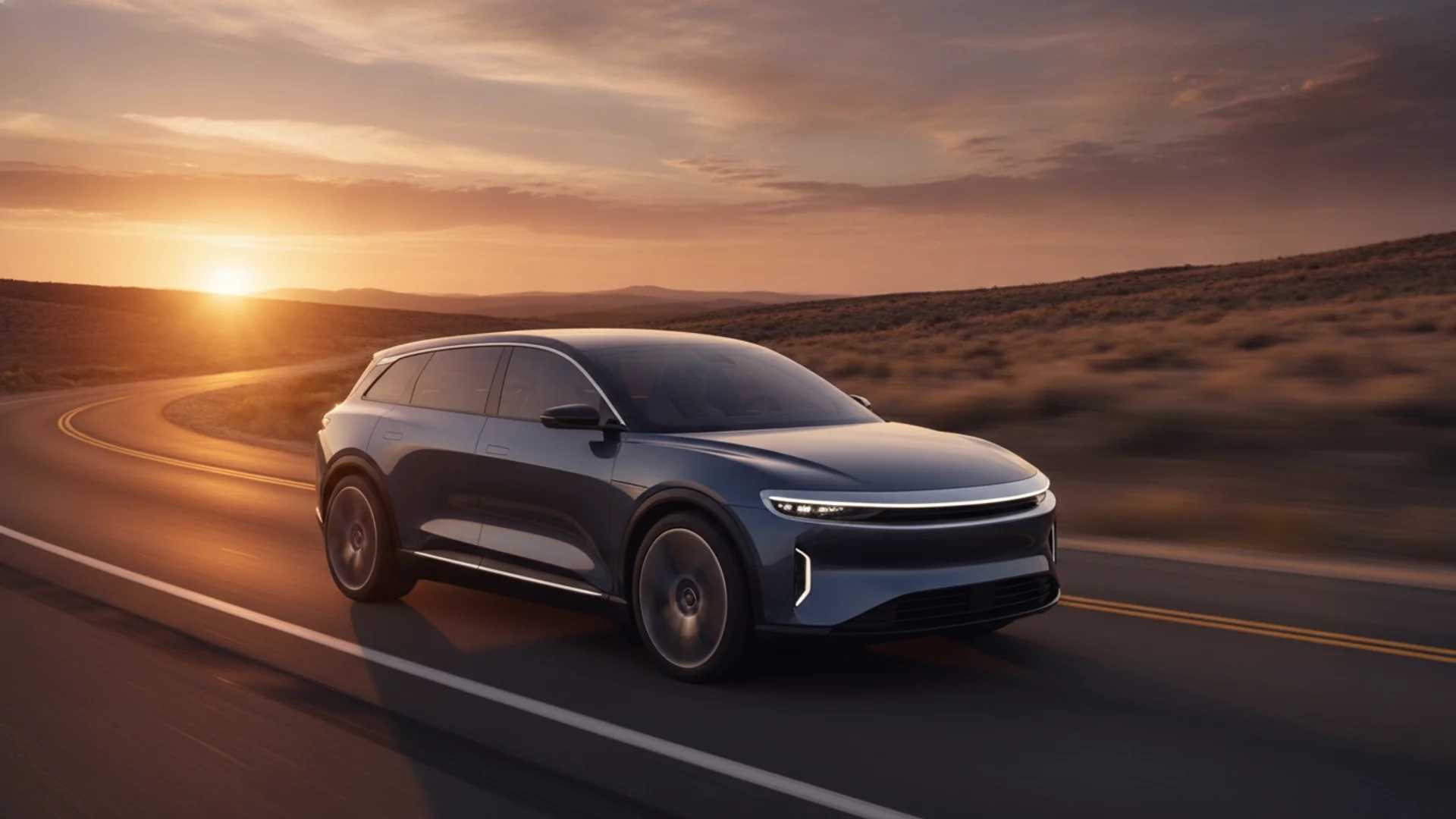
The way Lucid solves the gap between shipping a vehicle and shipping its full capability set, and the way most legacy carmakers don't, is by treating the SUV body as a hardware shell waiting for software to catch up. Lucid Group (NASDAQ: LCID) announced it has begun rolling out an over-the-air software update that brings hands-free highway driving to the Gravity SUV in North America. The Air sedan got the same capability fourteen months ago. The hardware to enable it has been bolted into every Gravity that left the Casa Grande plant. What changed today is a software package, not a sensor.
That distance, between the day the hardware shipped and the day the hardware became useful, is the real story. It is a small confession about how Lucid actually builds cars, and a window into a philosophy of the automobile that the industry is still arguing about in public.
Key takeaways
- Gravity owners waited 14 months after the Air got hands-free highway driving because adapting the ADAS stack to a taller, heavier SUV required a full sensor geometry re-validation.
- UX 3.6 activates hardware already installed in every Gravity sold since late 2024, no service visit, no sensor retrofit required.
- BlueCruise and Super Cruise both lock hands-free to higher trims and charge ~$800 CAD/year after the free period; Lucid has announced neither restriction nor subscription for Gravity.
- Lucid shipped the Gravity at its full 828-hp, 440-mile hardware spec on day one and treated software capability as the iterative release schedule, not the other way around.
- Lucid hasn't disclosed its geofence boundaries with the granularity Ford and GM have, meaning real-world coverage limits will be community-mapped by owners within weeks of rollout.
The Promise Gap: Why Gravity Waited Over a Year
Lucid told Gravity reservation holders that hands-free highway driving would arrive with the vehicle. It did not. The Air sedan had the feature first, and the Gravity owners who took delivery in late 2024 and through 2025 watched the calendar turn over while a sticker on the spec sheet stayed greyed out in the configurator. Lucid has started rolling out one of its most significant software updates yet for the Gravity SUV, adding hands-free driving capabilities alongside a range of new navigation, charging, and convenience features.
A fourteen-month gap between Air and Gravity is not trivial, and it is not solely a story of organisational slowness. Adapting a driver-assist stack across two different vehicle architectures is harder than the marketing copy suggests. The Gravity sits taller, weighs more, distributes that weight differently, and presents a different sensor geometry to the world. Camera mounting angles change. Radar return profiles change. The validation matrix balloons.
The way Tesla solves this, and the way Lucid does not, is by treating the entire fleet as a continuous data-collection layer and pushing capability updates with a tolerance for public-beta behaviour. Lucid's deliberate pace signals a different risk appetite. The company is not rolling capability to a customer base of millions who tacitly accepted beta status. It is rolling capability to a customer base measured in the low tens of thousands, where each owner paid six figures and expects the feature to work on the morning it arrives.
The promise gap is real. The reason behind it is more defensible than the gap itself makes it look.
What UX 3.6 Actually Delivers: Feature Anatomy
The hands-free component is the headline, but UX 3.6 is broader than a single feature drop. Lucid Group has begun rolling out an over-the-air (OTA) software update for the Gravity SUV in North America, headlined by hands-free drive assist for highway use alongside navigation, lighting and charging improvements.Lucid's three-row SUV, the Gravity, just got some big feature upgrades thanks to a software update.
The hands-free system uses the Gravity's existing sensor array. No service-centre visit. No hardware retrofit. These features utilize the Gravity's sensor array to monitor road conditions and maintain vehicle positioning without constant driver input. Lucid engineers developed these updates to be delivered via over-the-air installations, allowing current owners to access the new tools without visiting a service center.
That detail matters more than it reads on first pass. It means Lucid sold the Gravity in 2024 and 2025 with every sensor needed for the 2026 capability already installed and powered. The hardware bill of materials was provisioned ahead of the software's readiness date. That is the inverse of how the industry has historically priced and packaged ADAS, usually a higher trim, a more expensive sensor pod, a hardware-defined upgrade path that locks the lower trims out forever.
Google Maps live data integration is the second piece, and it is not a cosmetic add. Routing, charger availability, and lane-level guidance all benefit from a mapping layer that updates faster than the in-car cartography refresh cycle. The Gravity's latest OTA package shows how software-defined vehicles can gain meaningful capabilities long after the point of sale.
Stripped of the marketing language, UX 3.6 is a platform maturation event, not a feature release. The Gravity is being told what it can do now.
Gear worth having
As an Amazon Associate, ThinkEV earns a small commission from qualifying purchases — at no extra cost to you.

Lectron Level 2 J1772 Charger (40A, WiFi)
Smart WiFi charger with real-time energy monitoring. 40A / 9.6 kW, J1772 with a NEMA 14-50 plug, schedule charging right from your phone.
As an Amazon Associate, ThinkEV earns from qualifying purchases — at no extra cost to you.
How Lucid's Sensor Stack Compares to BlueCruise and Super Cruise
Hands-free is not new in this price band. Ford and GM have been shipping it on mass-market vehicles for years. The relevant question is not whether Lucid arrived, but how its implementation reads against the established players.
Ford BlueCruise and GM Super Cruise both operate inside geofenced highway corridors that the manufacturers have surveyed and mapped at lane precision. The system only goes hands-off where the map says it can. Ford's BlueCruise is restricted to higher Mustang Mach-E trims, and Super Cruise on the Chevy Blazer EV is similarly trim-gated to the RS and SS. The trim-gating is itself a tell about how legacy OEMs think, capability as an upsell at order, not an unlock on the vehicle you already own.
Lucid has not been fully explicit about its mapped-road requirements, which is itself a piece of information. The company's published material talks about highway use but not about the geofence boundaries with the granularity that Ford and GM have offered. That silence will not last; once owners start mapping the unlock zones in real driving, the practical coverage will be community-documented within weeks.
Then there is the subscription question. Both BlueCruise and Super Cruise convert to a paid annual subscription after the free period, around $800 CAD a year. It is one of the quieter hidden costs of EV ownership, and it has become the de facto business model for legacy hands-free driving in North America.
Lucid has not announced a subscription model for Gravity hands-free. The silence cuts two ways. It could be an architectural choice, capability bundled with the vehicle, the way Tesla has historically priced Autopilot, or a deferred decision the company has not wanted to make public while the rollout is still fresh. The reveal date on that pricing structure will say more about Lucid's long-term commercial thinking than the feature launch itself does.
Gear worth having
As an Amazon Associate, ThinkEV earns a small commission from qualifying purchases — at no extra cost to you.

WeatherTech FloorLiner for Tesla Model 3
Deep-channel liners that trap every drop of slush and salt. The difference between a ruined interior and a showroom-fresh cabin after a Canadian winter.
As an Amazon Associate, ThinkEV earns from qualifying purchases — at no extra cost to you.
Engineering Philosophy: Ship Hardware, Iterate Software
The Gravity launched with 828 horsepower and an EPA range north of 440 miles. Those numbers were not provisional. The hardware shipped at its full performance specification on day one. The software did not.
Read as engineering philosophy, that ordering is deliberate. Lucid is treating hardware as table-stakes and software as the iterative deliverable. The car is the platform; the capability set is the release schedule. That model is familiar from Tesla, but Lucid is running it with a tighter quality-assurance cadence and a smaller customer base, fewer disengagements broadcast on YouTube, fewer regulatory inquiries, fewer beta-driver edge cases publicly aired.
Lucid's 900V electrical architecture is the structural argument for this approach. It is overprovisioned on purpose. Future ADAS workloads, higher sensor counts, more compute, more thermal load on the inference silicon, will not run into power-distribution bottlenecks that a 400V architecture would impose. The company has built a vehicle whose ceiling sits well above its current floor, and the OTA update cadence is what closes the distance over time.
That is also the unspoken counter-argument to the buyers who watched the Gravity ship without hands-free and felt shortchanged. The feature they wanted was not impossible at launch, it was unfinished. The hardware to host it was already installed, paid for, and waiting. The cost to the buyer was patience, not money or hardware obsolescence.
Lucid's recent Air Pure recall in Canada, tied to a Gen 4 inverter that could cut drive power mid-trip, complicates the story. Software-defined-vehicle philosophy works only if the underlying hardware reliability earns the customer's trust. Lucid's quality narrative still has unresolved chapters.
Gear worth having
As an Amazon Associate, ThinkEV earns a small commission from qualifying purchases — at no extra cost to you.

Anti-Slip Leather Steering Wheel Cover
A grippy leather wrap that warms a cold wheel in winter and saves your palms in summer. Instant cabin upgrade.
As an Amazon Associate, ThinkEV earns from qualifying purchases — at no extra cost to you.
The LCID Context: Why This Update Lands With Stakes Attached
Every feature delivery from Lucid is now also an investor confidence signal. The company is burning cash quarter over quarter, and the Gravity is its volume bet. The Air sedan, for all its engineering achievement, is a low-volume luxury product. Lucid's path to viability runs through the Gravity selling at a scale the Air never approached.
In a $80,000-plus three-row SUV in 2026, hands-free highway driving is no longer a differentiator. It is a checkbox. Tesla, Mercedes, BMW, Genesis, Rivian, and Cadillac all offer some form of it. The Kia EV9 and Hyundai Ioniq 9 both ship Highway Driving Assist 2, including hands-free lane changes, as standard equipment on upper trims, no OTA wait required.
Lucid's delayed delivery shifted the narrative for fourteen months. The story was: can Lucid actually deliver software? Today's rollout reframes it: Lucid delivers software deliberately. That reframing only holds if the rollout works as advertised, if the disengagement rate stays low, if the geofence coverage expands credibly, and if the next OTA arrives on a cadence shorter than the gap that preceded this one. The narrative is rebuildable. It is not yet rebuilt.
What This Says About the SUV ADAS Arms Race in 2026
The competitive frame has moved. Highway hands-free is settled territory. The Kia EV9 and Hyundai Ioniq 9 ship HDA2 hands-free as standard on higher trims rather than as a post-sale unlock. BYD's God's Eye driver-assist suite has set a different bar in China, with vertical-integration economics that turn intelligent driving into a near-commodity feature. The premium SUV segment in North America no longer competes on whether hands-free exists. It competes on what comes next.
What comes next is urban ADAS. City-street capability, unprotected left turns, four-way stops, pedestrian-dense environments, complex merges, is where the next decade of differentiation lives. Tesla's FSD beta has been operating in that domain, with the caveats and disengagement statistics the public is now familiar with. Lucid has not announced city-street capability for Gravity or Air.
That absence is not a defect. It is a positioning choice. Lucid is shipping a highway hands-free system in 2026 that needs to be excellent, validated, and unembarrassing. The company does not currently have the engineering or capital headroom to also chase the urban-ADAS frontier. Choosing depth over breadth on a known feature is a more defensible bet than half-shipping two frontiers at once.
The real test for Lucid is the cadence after this update. UX 3.6 cannot be a one-shot. If it is followed by UX 3.7 and 3.8 on a sub-quarter cadence, the software-defined-vehicle thesis holds. If the next OTA slides another fourteen months, the thesis is rhetoric.
Gear worth having
As an Amazon Associate, ThinkEV earns a small commission from qualifying purchases — at no extra cost to you.
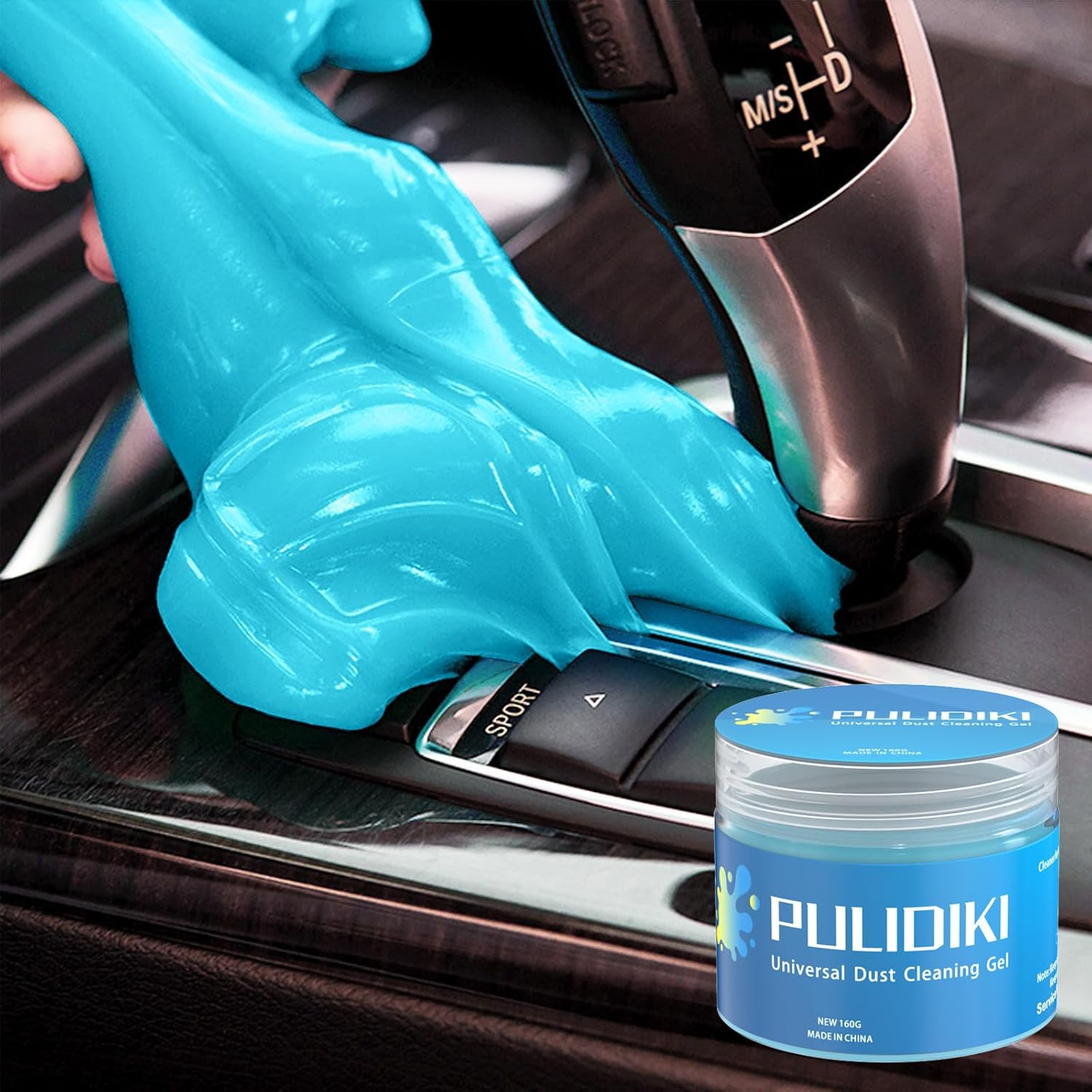
PULIDIKI Car Cleaning Gel (Detailing Putty)
Press it into vents, buttons, and seams and it lifts out dust you did not know was there. Weirdly satisfying, genuinely useful.
As an Amazon Associate, ThinkEV earns from qualifying purchases — at no extra cost to you.
The Software-Defined Vehicle In Its Honest Form
The Gravity getting hands-free fourteen months after the Air is not the story. The story is that Lucid sold a vehicle in 2024 with the sensors, compute, and electrical headroom for a capability it had not yet finished writing, and then finished writing it. That is the software-defined-vehicle model in its honest form, not a slogan, but a delivery schedule visible to every owner who unlocks a new menu on their morning commute.
The bets to watch from here: whether Lucid prices hands-free as a free unlock or follows Ford and GM into the subscription column; whether the next OTA arrives in months rather than quarters; whether the urban-ADAS gap closes before the EV9 and the Ioniq 9 do it first. The hardware case for Lucid was always strong. The software cadence is the variable that decides whether the Gravity becomes a volume product or another beautiful object the market admires and does not buy.
Hands-free on the Gravity is the floor of what Lucid promised. The ceiling is still unbuilt.
Gear worth having
As an Amazon Associate, ThinkEV earns a small commission from qualifying purchases — at no extra cost to you.

WixGear Magnetic Air Vent Phone Mount (2-Pack)
A magnet strong enough that your phone never flinches over potholes or rail crossings. Two in the box, one for each car.
As an Amazon Associate, ThinkEV earns from qualifying purchases — at no extra cost to you.

Founder & Chief Editor
Vlad Pereira is the founder and chief editor of ThinkEV.ca, the Canadian electric-vehicle publication he writes and edits from Courtenay, British Columbia. He covers EV pricing, federal and provincial rebates, charging costs, and the Chinese manufacturers now entering Canada, from the buyer's side rather than the press-fleet side. ThinkEV is a venture of Vlad Pereira Online; his writing on health, income and the long game lives at vladpereira.com.
Frequently asked questions
Will Gravity owners in Canada get UX 3.6 at the same time?
Does hands-free driving cost extra on top of the purchase price?
Does UX 3.6 change anything for Air sedan owners?
What highways does the hands-free system actually work on?
Was the Gravity's sensor hardware always capable of hands-free driving?
More EV & road-trip finds
Affordable upgrades worth a look — tap any to check the price on Amazon.
 ★ 4,050
Touchscreen Mist Screen Cleaner Kit
View on Amazon ★ 537
★ 537USB Star Projector Roof Light
View on Amazon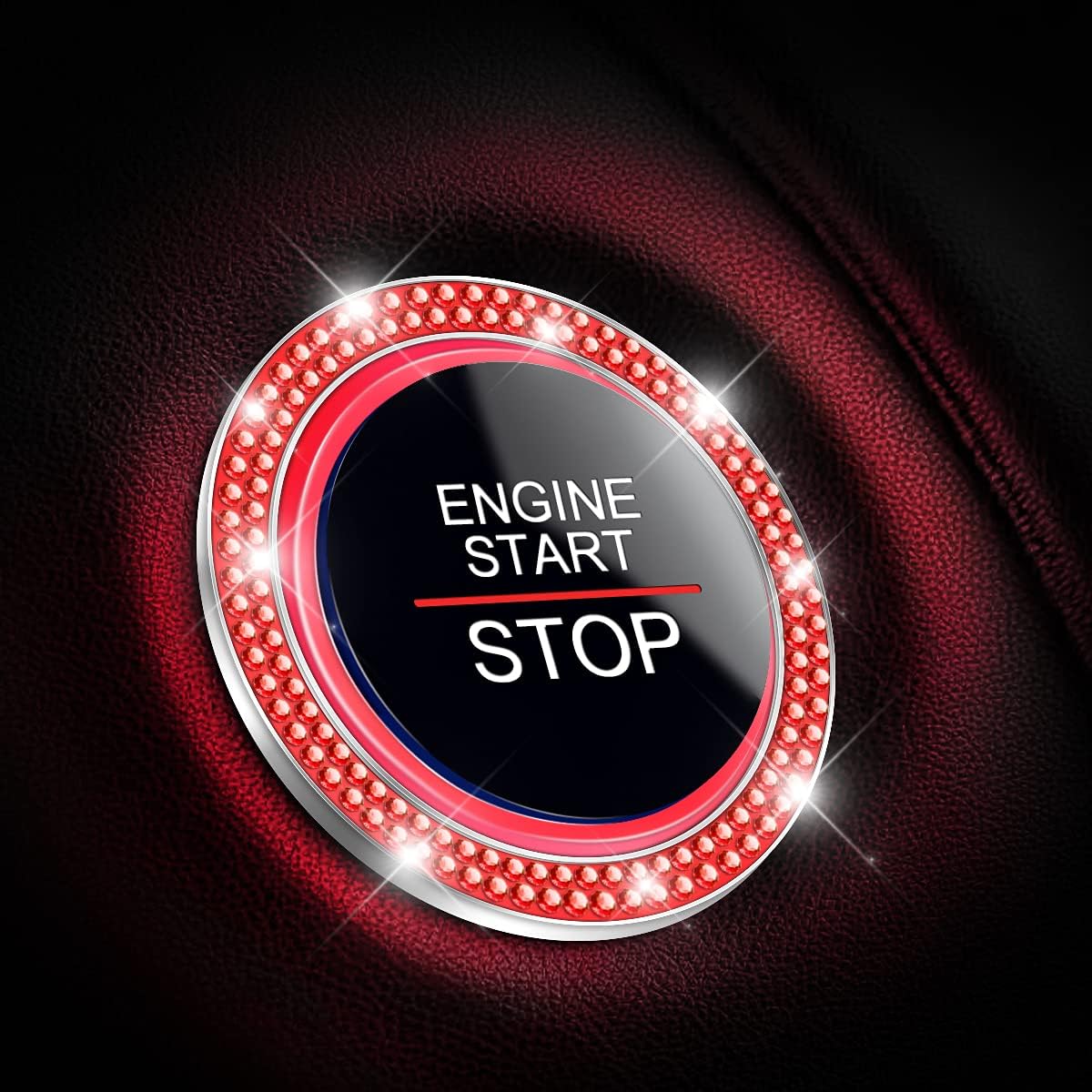 ★ 1,083
Crystal Push-Start Button Ring (2-Pack)
View on Amazon ★ 27,769
Car Cup Holder Coasters (4-Pack)
View on Amazon ★ 308
★ 308Coiled Lightning Car Cable for iPhone (2-Pack)
View on Amazon ★ 119
★ 119Foldable Waterproof Trunk Organizer
View on Amazon ★ 392
★ 392Large Cup Holder Adapter (32-40oz)
View on Amazon ★ 12,051
Windex Electronics Screen Wipes
View on AmazonRead, Plan, Then Stay Current
Explore our expert articles to understand incentives and ownership costs, use the map to pressure-test charging reality, then subscribe so new EV coverage comes straight to you.
Continue Reading
Xiaomi's Xring D100 Chip Targets 2027 Driver-Assist Debut
California's $3,500 EV Rebate Leaves Tesla Out
BYD Seagull With LiDAR at $13K: A Sub-$15K First
What Driver-Assist Features Actually Do, and What They Don't
Tesla Q3 2026 Earnings: Flat Revenue, Falling Profits