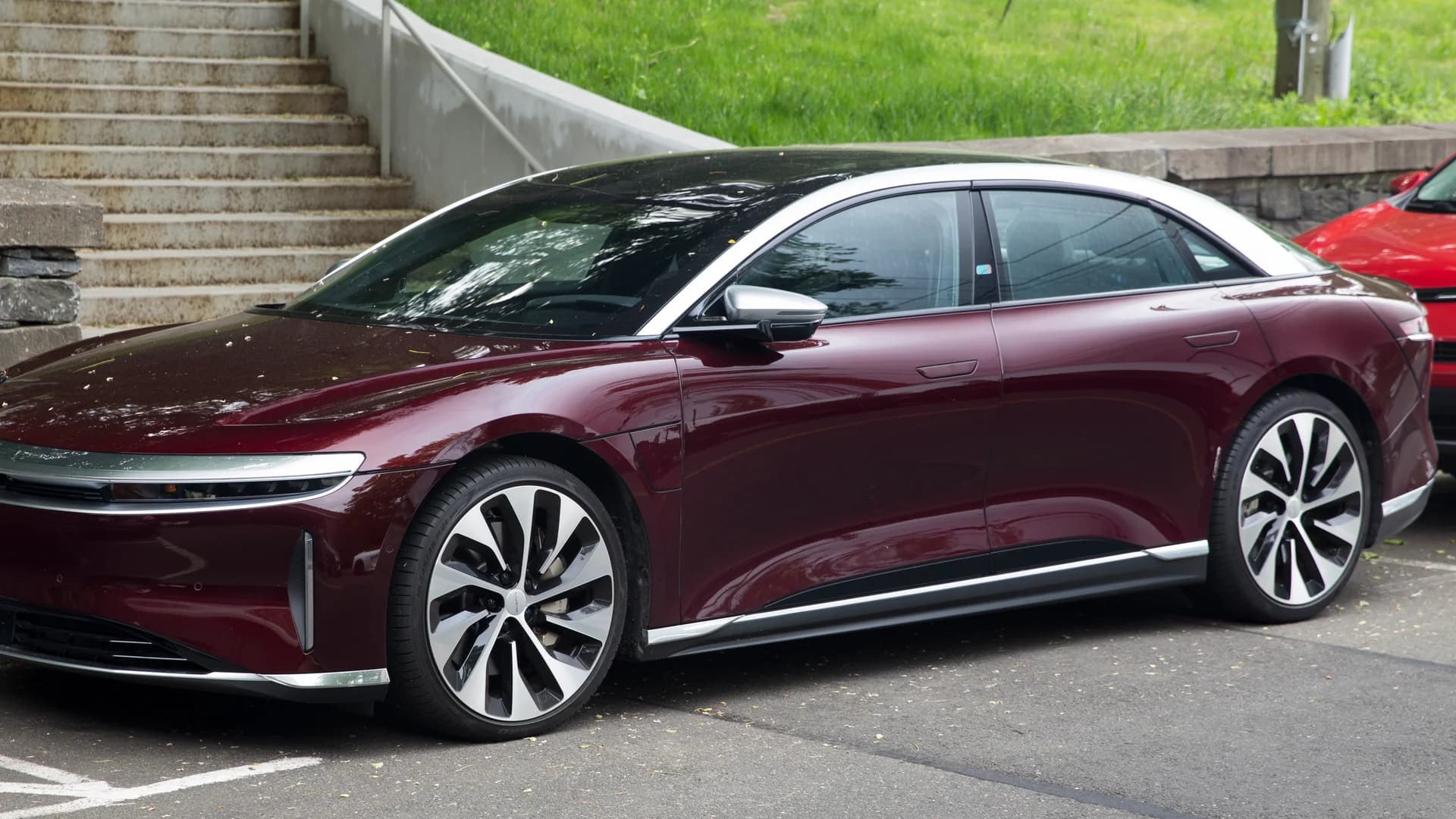
Your Lucid Air Pure could lose all drive power mid-highway with no warning. If you're one of the 82 Canadian owners in the recall pool, here's what you actually need to do, not in two weeks, this week.
Lucid is recalling vehicles because of a damaged inverter that can cut drive power, and the company will push an over-the-air software update plus replace the inverter free of charge. The fix costs you nothing. The risk while you wait is real but not catastrophic. And because the Pure runs a single rear motor with no backup, if that inverter dies mid-lane, you're not limping to the shoulder, you're stopped in traffic.
Key takeaways
- 82 Canadian Air Pure RWD owners are affected, all built between September 13, 2023, and December 12, 2024.
- The Gen 4 inverter can fail mid-drive with no warning, leaving a single-motor Pure unable to move at all.
- Lucid's two-step fix starts with an OTA diagnostic push, don't book a service appointment until your app prompts you.
- Check your VIN now at Transport Canada's recall database (tc.canada.ca) or safercar.gov, no letter required.
- Lucid has not issued a stop-drive order but recommends avoiding solo 110 km/h highway runs until the OTA inspection clears the car, because the failure leaves a single-motor Pure unable to creep to the shoulder.
Which Lucid Air Pure Models Are Actually Affected?
The recall is narrow and specific. Vehicles with a fourth-generation inverter built between September 13, 2023, and December 12, 2024, are affected by this issue, and that build window covers a slice of 2024 and 2025 Air Pure RWD production, with an expanded population now including some 2026 units as Lucid widened the scope.
Originally the recall was sized at 2,039 units. Lucid Motors initially announced it was recalling 2,039 Air Pure electric sedans because they may lose power while driving due to a damaged inverter. That figure has since grown. Transport Canada and NHTSA filings now show the expanded recall covers 82 units of the 2024 to 2026 Lucid Air Pure RWD in Canada and 3,627 units in the U.S., a sharp expansion from the initial population once Lucid finished mapping which VINs received the suspect Gen 4 inverter batch.
What's NOT in the recall, and this matters if you're scanning your driveway and starting to worry:
- Air Touring AWD, different drive architecture, not affected.
- Air Grand Touring, dual motor, separate inverter spec, not affected.
- Air Sapphire, tri-motor performance trim, not affected.
- Any Air Pure built before September 13, 2023, or after December 12, 2024, different inverter generation, not affected.
The specific part is the Gen 4 inverter. Not the battery. Not the motor. Not the high-voltage harness. One component, one supplier run, one build window. If your VIN falls outside that window, you can stop reading and go enjoy your car.
What Actually Goes Wrong, and Why It's a Safety Issue
An inverter does one job: it converts the battery's DC power into the AC power the motor needs to spin. Take the inverter offline and the motor has nothing to work with. The wheels stop turning. The car stops moving.
The Gen 4 inverter, the part responsible for converting direct current into alternating current, may fail due to continuous mechanical harmonics. In plain language: vibration over time wears down internal components until the inverter throws bad signals or cuts out entirely. There's no slow warning. No limp-home mode. No "service powertrain soon" message giving you a week to book an appointment.
This is where the Air Pure's drivetrain layout becomes the safety story. The Pure is the only rear-wheel drive model in Lucid's portfolio, so if the rear drive unit stops providing motivation, the car can no longer move, as would be the case with an all-wheel drive model. On a dual-motor AWD car, an inverter failure on one axle means the other axle keeps you rolling. On the Pure, there is no other axle.
Affected cars could lose drive power without much warning under certain conditions. If that happens on a 400-series highway, in a left lane, at 110 km/h, you have a problem that goes beyond inconvenience, you have a stranded car in a live travel lane with no ability to creep to the shoulder under its own power.
This is why the recall isn't just paperwork. Lucid's drivetrain is otherwise one of the most engineering-respected in the industry, the underlying efficiency story is real, and you can read the broader question of whether Lucid's business model holds together for the company-level context. But a recall this specific, with a failure mode this binary, deserves a fast response from owners.
Gear worth having
As an Amazon Associate, ThinkEV earns a small commission from qualifying purchases — at no extra cost to you.

Portable Level 2 EV Charger (40A, NEMA 14-50)
Throw it in the trunk and charge anywhere with a 240V outlet. 40A portable with NEMA 14-50 plug. Your road-trip insurance policy.
As an Amazon Associate, ThinkEV earns from qualifying purchases — at no extra cost to you.
What Lucid Will Do to Fix Your Car
The fix comes in two stages, and the first one happens without you visiting a service centre.
Lucid will release an over-the-air software update to inspect the issue, and the EV maker will replace the inverter free of charge. Step one is the OTA, a software push that lets Lucid's diagnostics look inside the inverter's behaviour signatures and flag the units showing early signs of the failure pattern. If your car passes the inspection, the software update itself is your remedy. No appointment needed.
If your car gets flagged, you move to step two: hardware replacement. Owners will get a software update, while some cars may need hardware replacement. Lucid covers parts, labour, and the loaner arrangement. You pay nothing.
The order of operations matters here, because it tells you how to plan:
- Watch your Lucid app and email for the OTA notification. That's the trigger.
- Don't book a service appointment preemptively, Lucid wants the software to do the triage first.
- If flagged for hardware, Lucid's customer-care team coordinates the swap, including transport if you're far from a service location.
- Keep your registration address current with Lucid so the recall mailing reaches you.
The free-fix structure is standard for safety recalls and is the part that usually keeps long-term resale impact small. The bigger logistical question for Canadian owners is service-centre proximity, which is the next thing to plan around.
How to Check If Your VIN Is Recalled Right Now
You don't have to wait for a letter. Three databases let you check your VIN today.
Gear worth having
As an Amazon Associate, ThinkEV earns a small commission from qualifying purchases — at no extra cost to you.

WeatherTech FloorLiner for Tesla Model 3
Deep-channel liners that trap every drop of slush and salt. The difference between a ruined interior and a showroom-fresh cabin after a Canadian winter.
As an Amazon Associate, ThinkEV earns from qualifying purchases — at no extra cost to you.
- Transport Canada's vehicle recall database at tc.canada.ca/en/recall-safety/vehicle-safety-recalls, search by VIN, get the full open-recall list for your specific car. This is the authoritative Canadian source and is updated within days of a recall filing.
- NHTSA's safercar.gov, useful if you imported the car cross-border or want to cross-check against the U.S. Filing. Same VIN, same answer.
- Your Lucid app and owner portal, should flag the recall directly. If it doesn't show anything but Transport Canada confirms your VIN is affected, call Lucid.
Lucid's customer care line in North America is 1-888-99-LUCID. Have your VIN ready. The VIN is the 17-character string on your dash at the base of the windshield, on your insurance pink slip, and on your registration. If you bought the car used, the original purchase paperwork has it too.
One Canadian-specific note: Lucid's physical service footprint here is still extremely limited compared to Tesla or the legacy luxury brands. There are no traditional dealerships. If you're outside the GTA or Vancouver, the hardware replacement step may involve Lucid arranging transport rather than you driving the car in. That's not a bad thing, given the failure mode, you probably don't want to drive 800 km to a service location anyway.
Gear worth having
As an Amazon Associate, ThinkEV earns a small commission from qualifying purchases — at no extra cost to you.
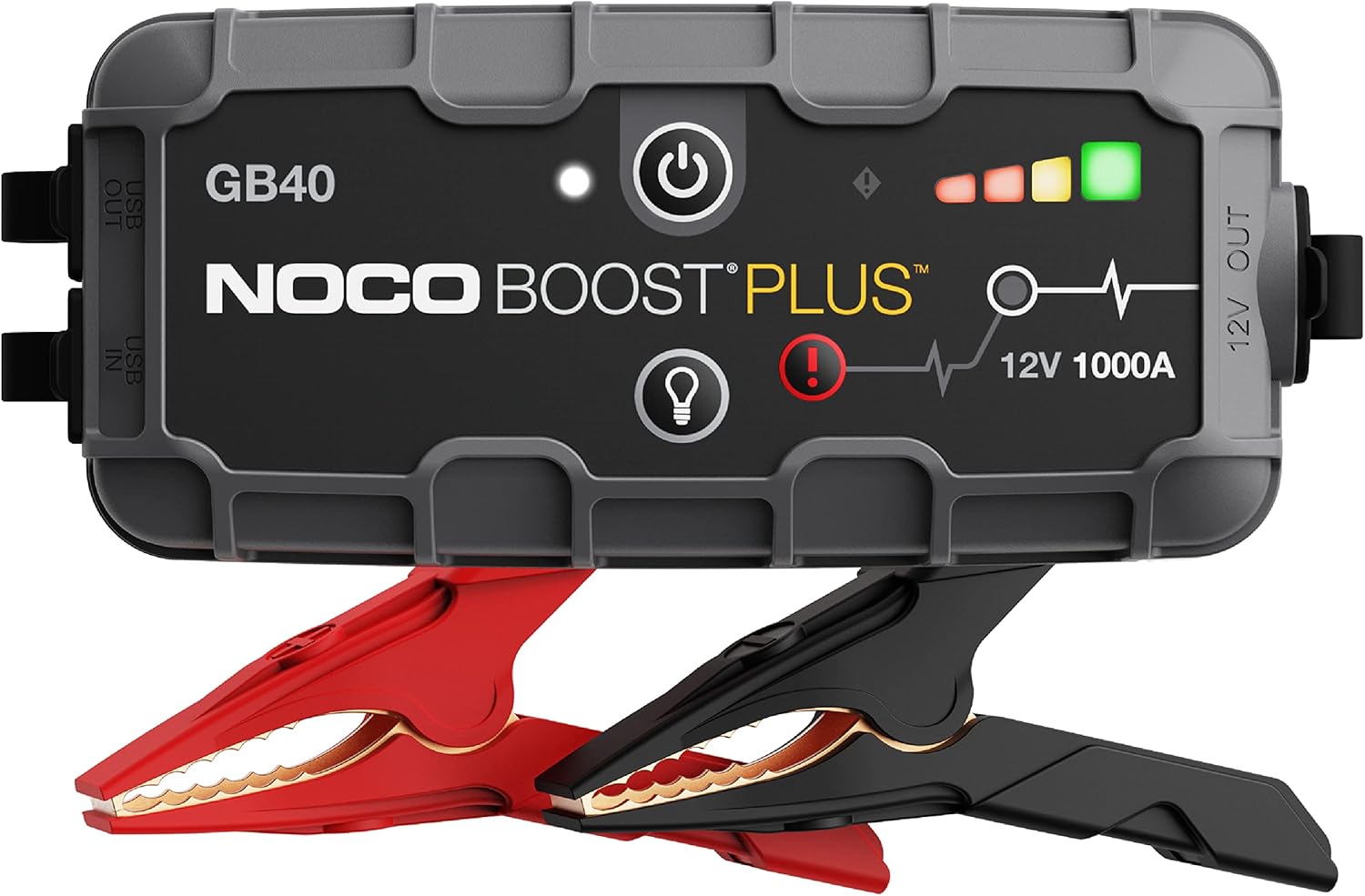
NOCO Boost Plus GB40 Jump Starter
A 1000A lithium jump starter that fits in your glovebox and works on any 12V battery. Your insurance against a dead 12V in a parking lot.
As an Amazon Associate, ThinkEV earns from qualifying purchases — at no extra cost to you.
Should You Keep Driving Your Air Pure Until the Fix?
This is the question every affected owner is asking, and the answer has nuance.
Lucid has not issued a stop-drive order. That's important. A stop-drive, the kind Hyundai issued for certain Kona EVs in 2024, or the kind GM has issued for Bolt battery defects, would mean park the car immediately and don't move it until repaired. Lucid is not saying that. The car is considered driveable while you wait for the OTA inspection.
But "driveable" doesn't mean "drive it like nothing's wrong." The failure is probabilistic. Not every affected unit will fail, and the units that do fail won't all fail tomorrow. The risk profile suggests being smart about how and where you drive in the interim:
- Avoid solo long-distance highway runs until your car has been inspected and cleared. The failure mode is worst at speed, and shoulder-recovery is hardest on rural divided highways.
- Take any warning light or power hesitation seriously. Pull over. Call Lucid. Don't try to push through.
- Keep your roadside-assistance number programmed in the car's contacts, Lucid roadside is available to owners and they will dispatch a flatbed if the car becomes immobile.
- City driving is the lowest-risk profile. Lower speeds mean lower stakes if power cuts out, and shoulders are closer.
If your commute is 200 km a day across the QEW or the 401, talk to Lucid about whether they can prioritise your VIN in the OTA rollout. Affected owners with high daily mileage have grounds to ask for expedited inspection. The recall infrastructure exists for cases exactly like that.
Does This Recall Affect the Air Pure's Canadian Resale Value?
Probably less than you'd think, and for reasons that aren't entirely about this recall.
The Air Pure starts around $138,000 CAD in Canada. That price puts it well above the federal iZEV rebate threshold, the iZEV programme caps eligibility at $55,000 MSRP for base trims, which excludes every Lucid sold in Canada, so there's no rebate math to recalculate. Provincial programmes don't pick up the slack at this price point either. If you're shopping in this segment, you're paying full freight regardless, and the recall doesn't change that calculus.
Recalls with free OTA-plus-hardware remedies historically have minimal long-term resale impact, especially when the fix is documented in service records. A buyer two years from now searching a VIN will see the recall closed, the inverter replaced under warranty, and a clean ownership chain. That's not a value killer, in some cases it's a value protector, because the new inverter is fresher than the rest of the car.
The bigger resale risk for Air Pure owners in Canada has nothing to do with this specific recall. It's Lucid's broader brand uncertainty here, limited dealer network, parts-supply questions, and the company's well-documented financial position. The Lucid Air has had a tough run lately. Last month, Lucid recalled some Air Pure rear-wheel-drive models because loose half-shaft bolts could cause a loss of propulsion. Two propulsion-related recalls inside a year is a pattern, and patterns affect buyer confidence more than any single recall does.
If you're thinking about selling, the recall isn't the reason to act now. The reason to act now, or wait, is your read on where Lucid the company is heading. For context on the EV market the Air Pure competes in, the Canadian EV pricing landscape for 2026 and 2027 gives you a comparison baseline, and the segment of EVs under $50K in Canada for 2026 shows where most of the market actually shops, which is to say, not in your price bracket. The Air Pure is a rare car in Canada, which helps resale value in theory but kills your buyer pool in practice, there just aren't that many people shopping at this price point for this brand.
Gear worth having
As an Amazon Associate, ThinkEV earns a small commission from qualifying purchases — at no extra cost to you.

Amazon Basics Seat Belt Cutter and Window Hammer
The 10-dollar tool you hope to never use: cuts a jammed belt and shatters a window in an emergency. Mount it within reach.
As an Amazon Associate, ThinkEV earns from qualifying purchases — at no extra cost to you.
What To Do If You Own A 2024 To 2026 Air Pure RWD
If you own a 2024 to 2026 Lucid Air Pure RWD: check your VIN at Transport Canada's recall database today, watch your Lucid app for the OTA inspection rollout, and adjust your driving patterns toward shorter and lower-speed routes until you're cleared. The fix is free, the company is handling it, and the resale impact is small. The window where this needs your attention is short, measured in weeks, not months.
What to watch from here: whether Lucid's expanded VIN scope holds at 82 Canadian units or grows again as more inverter batches get flagged. Two propulsion-related Air Pure recalls inside a year is the pattern worth tracking, not this single filing. If a third drops in 2026, the conversation shifts from "isolated supplier issue" to something owners and buyers need to price in directly.
Gear worth having
As an Amazon Associate, ThinkEV earns a small commission from qualifying purchases — at no extra cost to you.

Roadside Emergency Safety Kit
Jumper cables, a portable air compressor, tow strap, first aid, and more for when something goes wrong between chargers. Canadian winters do not forgive the unprepared.
As an Amazon Associate, ThinkEV earns from qualifying purchases — at no extra cost to you.

Founder & Chief Editor
Vlad Pereira is the founder and chief editor of ThinkEV.ca, the Canadian electric-vehicle publication he writes and edits from Courtenay, British Columbia. He covers EV pricing, federal and provincial rebates, charging costs, and the Chinese manufacturers now entering Canada, from the buyer's side rather than the press-fleet side. ThinkEV is a venture of Vlad Pereira Online; his writing on health, income and the long game lives at vladpereira.com.
Frequently asked questions
Can you still drive the Air Pure while waiting for the fix?
Does this recall affect Canadian resale value long-term?
How long will the hardware replacement actually take?
Why are only 82 Canadian units affected when the U.S. has 3,627?
Will Lucid provide a loaner if your car needs hardware replacement?
More EV & road-trip finds
Affordable upgrades worth a look — tap any to check the price on Amazon.
 ★ 2,941
Microfiber Cleaning Cloths (Multi-Pack)
View on Amazon ★ 537
★ 537USB Star Projector Roof Light
View on Amazon ★ 900
★ 900Personalized Photo Car Air Freshener
View on Amazon ★ 27,769
Car Cup Holder Coasters (4-Pack)
View on Amazon ★ 12,834
P3 Kill A Watt Electricity Usage Monitor
View on Amazon ★ 87
★ 87Car Window Sun Shades for Kids (4-Pack)
View on Amazon ★ 392
★ 392Large Cup Holder Adapter (32-40oz)
View on Amazon ★ 96,686
PULIDIKI Car Cleaning Gel (Detailing Putty)
View on AmazonRead, Plan, Then Stay Current
Explore our expert articles to understand incentives and ownership costs, use the map to pressure-test charging reality, then subscribe so new EV coverage comes straight to you.
Continue Reading
Tesla Q3 2026 Earnings: Flat Revenue, Falling Profits
BYD Denza B8 Suspension Trick Defeats Traffic Boot in Viral Clip

Zenos E10 Returns at £115,000, A Different Car Entirely
Jaecoo J5 EV Uber Discount: $31,500 Fleet Math Changes
VW ID.4 80% Charge Cap Rolls Out This Week, With Opt-Out