BYD just put a 4nm autonomous driving chip inside a car that costs the equivalent of $14,000 USD. That single detail rewrites every assumption Western automakers have spent the last decade building about who gets to have a self-driving future and at what price the technology stops being a flagship indulgence.
The way Tesla solves intelligent driving, and the way Mercedes, BMW, and General Motors still don't, is by owning the silicon. BYD's stated ambition with its latest God's Eye system is to "democratize" self-driving tech, and the company is now backing that language with a chip foundry-grade announcement that legacy OEMs cannot easily answer. The autonomy demo is the headline. The manufacturing thesis underneath it is the actual story.
Key takeaways
- BYD's in-house Xuanji A3 is the first automotive-grade 4nm chip China has produced, deployed in a $14,000 car.
- God's Eye 5.0 pushes lidar down to entry-level trim, something no Western OEM has done.
- BYD's crash-cost coverage pledge is an engineering confidence statement, not an insurance product.
- Owning chip, battery chemistry, and e-axle means BYD's cost curve compresses on a schedule supplier-dependent OEMs cannot match.
- Unlike Huawei's ADS 3.0, which stays premium, God's Eye 5.0 deliberately walks the autonomy stack down the trim ladder.
The Xuanji A3: what 4nm actually means for a $14,000 car
The Xuanji A3 is the first automotive-grade processor China has produced at the 4-nanometer node, the same generational node class that powers flagship consumer smartphones. BYD developed it in-house. It did not license a Nvidia Orin variant. It did not buy a Mobileye EyeQ6. It built the chip the way Apple builds its M-series silicon, treating the processor as a load-bearing piece of the product strategy rather than a parts-bin choice.
A 4nm node does two things that matter for autonomous driving. It compresses more transistors into less die area, which lowers heat output and power draw, both critical when you are stuffing autonomy compute into a compact car with a 60 kWh battery. And it lifts the ceiling on computational throughput, the raw TOPS budget that any L3 or L4 system needs to fuse camera, radar, and lidar inputs in real time.
Tesla solved this same problem by designing its FSD chip in-house, but it deploys that silicon in vehicles starting north of $40,000. BYD is deploying its in-house chip in the Seagull-class price band, a vehicle category where Western OEMs treat lane-keep assist as a marketing point. The cost delta is not incremental. It is a different category of product.
The spec-as-philosophy read here is direct. A company that makes its own 4nm chip is signalling that it intends to control the cadence of intelligent-driving capability the way it already controls battery chemistry. The Xuanji A3 is BYD telling the supplier ecosystem that it does not need their roadmap. That posture matters far more than the chip's benchmark numbers.
God's Eye 5.0: three tiers, one philosophy
God's Eye is not one system. It is now a three-tier architecture, with the top tier targeting L4 capability, the middle tier sitting at L2++, and the entry tier delivering highway ADAS as a baseline. The choice that matters, the one most coverage glided past, is that LIDAR has been pushed down to entry-level trim. No Western OEM has done this. Mercedes still treats lidar as a Drive Pilot flagship feature. GM uses cameras and radar across Super Cruise. BMW reserves its high-resolution sensor stack for the iX and 7-Series.
BYD's tiering strategy reads as software-defined, not hardware-differentiated. The same compute substrate runs across trims; the autonomy ceiling lifts via OTA as regulation, validation, and customer subscription permit. This is the architectural mirror of how Tesla expanded FSD capability over its fleet, but executed on a hardware bill of materials that costs a fraction of Tesla's.
Huawei's ADS 3.0 sits at the other end of the philosophical spectrum. Huawei's intelligent-driving stack is excellent, but it is priced and positioned as a premium feature pack reserved for vehicles like the Aito M9 and the Stelato S9. ADS 3.0 stays at the top of the range. God's Eye 5.0 deliberately walks down it. The two systems represent different theories of how China's autonomous future will be distributed across the consumer market.
For Canadian readers tracking how this lands, the broader landscape of autonomous driving approaches, Tesla FSD, Waymo, and the failed Cruise programme sets the comparison frame. BYD's tiered, vertically-integrated bet is closer to Tesla's than to Waymo's, but executed at price points neither has approached.
Gear worth having
As an Amazon Associate, ThinkEV earns a small commission from qualifying purchases — at no extra cost to you.

TP-Link Kasa Smart Plug with Energy Monitoring
Track exactly how much electricity your Level 1 charger uses and schedule it for off-peak hours. Know your real cost per kWh.
As an Amazon Associate, ThinkEV earns from qualifying purchases — at no extra cost to you.
Vertical integration as a philosophical bet
BYD controls battery cells, electric motors, power semiconductors, the inverter stack, and now the AI compute platform. There are roughly four companies in the global auto industry that can make that claim, and three of them are also in China. Vertical integration of this depth is not a procurement preference. It is an industrial-policy posture expressed through engineering choices.
The cost mathematics are not subtle. Every tier-one supplier in the bill of materials carries a margin. Every margin compounds across the product lifecycle. When BYD owns the chip, the cell chemistry, and the e-axle, the per-unit cost curve compresses on a schedule no supplier-dependent OEM can match. This is the same logic that made BYD's LFP costs untouchable in 2023: own the stack, own the curve, own the ability to absorb a price cut without bleeding margin.
The Xuanji A3 changes the update cadence question, too. A Mobileye customer waits for Mobileye's roadmap. A Qualcomm customer waits for Snapdragon Ride iterations. A BYD vehicle running Xuanji A3 waits for BYD. The feedback loop between a software bug, a validation result, and a chip-level architectural change collapses from years to quarters. Over a five-year product cycle, that delta is structural rather than incremental.
This is what BYD's first in-house 4nm smart-driving chip reveals about the new global silicon war, the fight is no longer about who has the best ADAS demo at the auto show. It is about who controls the silicon, the chemistry, and the software in the same building.
The liability signal most coverage missed: crash cost coverage
Buried in the announcement was a commitment that received less attention than it deserved. BYD pledged that vehicles operating under God's Eye would have their crash costs covered by the company. This is not an insurance product. It is an engineering confidence statement dressed as a consumer-facing benefit, and the distinction matters.
When a manufacturer offers to absorb the financial consequences of a system failure, it is making an internal validation claim public. The actuarial exposure forces the engineering teams to be honest about edge cases. Waymo made a structurally similar, though differently shaped, commitment when it deployed commercial robotaxis without a safety driver, putting its operational reliability into open evidence.
Gear worth having
As an Amazon Associate, ThinkEV earns a small commission from qualifying purchases — at no extra cost to you.

Lectron Level 2 J1772 Charger (40A, WiFi)
Smart WiFi charger with real-time energy monitoring. 40A / 9.6 kW, J1772 with a NEMA 14-50 plug, schedule charging right from your phone.
As an Amazon Associate, ThinkEV earns from qualifying purchases — at no extra cost to you.
What this means practically: the incentive structure around validation rigor changes. A supplier-dependent OEM can plausibly blame a tier-one provider when a system underperforms. A vertically integrated manufacturer offering crash-cost coverage cannot. The buck stops at the building that designed the chip and the building that wrote the perception stack, and at BYD, those are the same building.
The commitment is also a competitive signal. Western OEMs running ADAS systems carefully shape their consumer-facing language to limit liability exposure. BYD is moving in the opposite direction, and the move only makes sense if the company believes its system is materially safer than what it is replacing on the road.
Gear worth having
As an Amazon Associate, ThinkEV earns a small commission from qualifying purchases — at no extra cost to you.
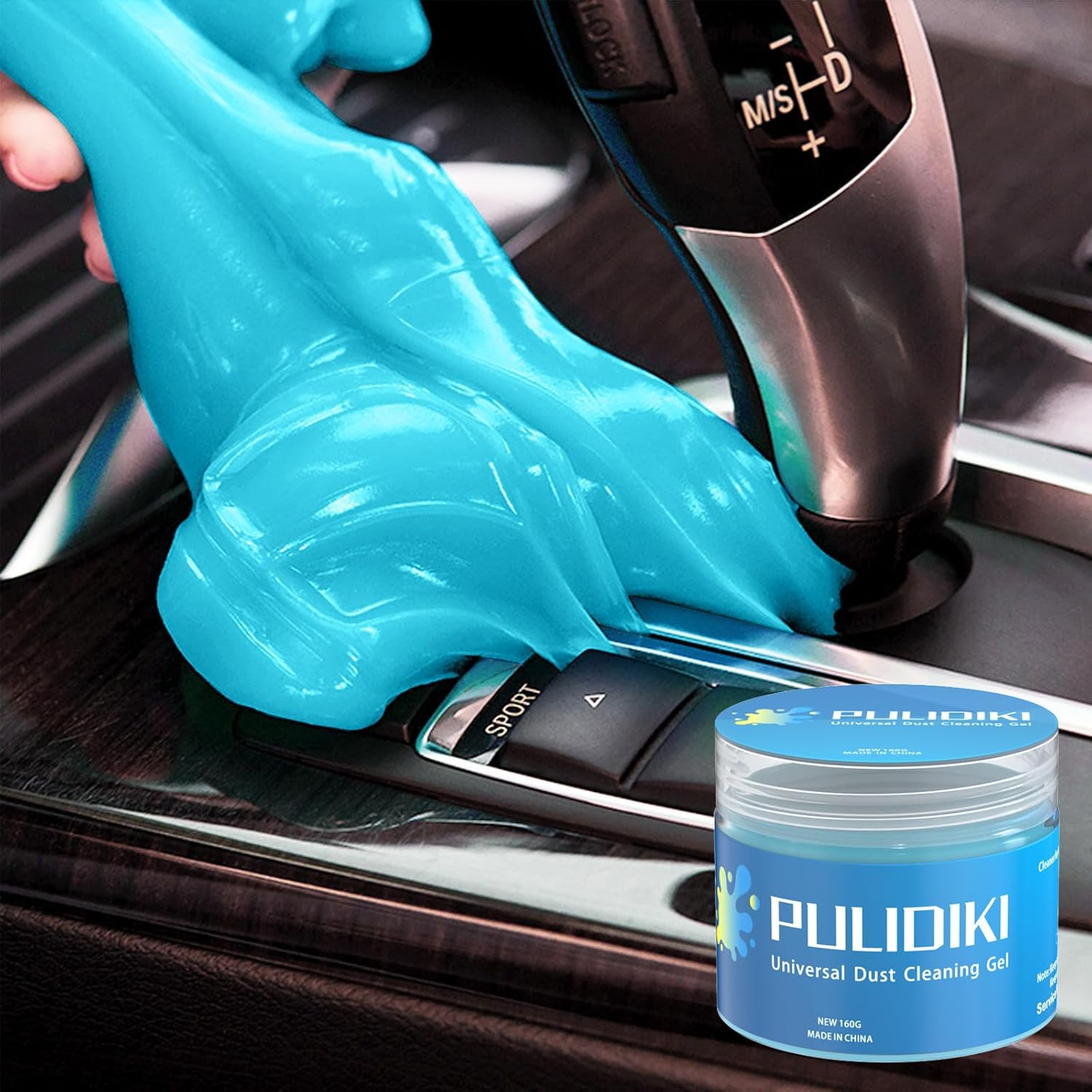
PULIDIKI Car Cleaning Gel (Detailing Putty)
Press it into vents, buttons, and seams and it lifts out dust you did not know was there. Weirdly satisfying, genuinely useful.
As an Amazon Associate, ThinkEV earns from qualifying purchases — at no extra cost to you.
The 2027 legislative gate and what BYD is actually building toward
The hardware ceiling and the regulatory ceiling are not the same ceiling. BYD is building God's Eye 5.0 for a market that does not yet legally exist. Chinese legislation is widely expected to formalise consumer-deployed L3 and L4 operation by 2027, and BYD's architecture appears calibrated to flip a capability switch the moment that legal window opens.
The contrast with XPeng is instructive. XPeng's XNGP system is already live across 243 Chinese cities, handling urban intersections and complex night driving on a fleet that is materially smaller than BYD's. XPeng has the software lead today. BYD is not trying to match XPeng on coverage maps. It is building the substrate that will scale past XPeng in a single OTA push the moment regulation permits, across a fleet that ships in the millions.
This is the architectural difference between catching up and leapfrogging. A fleet without the hardware headroom cannot OTA into L4. A fleet with Xuanji A3 silicon, hardware-redundant lidar, and pre-validated perception stacks can, provided the software clears Chinese type-approval. The hardware is the long-lead-time item. BYD is shipping it now and waiting for the law to catch up to what the silicon can already do.
Reading the global picture, robotaxis are already operational in Shenzhen, Wuhan, and other Chinese cities under municipal pilot frameworks that have moved faster than anything North America has approved. The 2027 horizon is not speculative. It is the codification of capability that is already on the road under pilot status.
What this means for every other automaker still buying chips off the shelf
GM, Volkswagen, Stellantis, Ford, Hyundai, and Toyota remain structurally dependent on Mobileye, Qualcomm, or Nvidia for their ADAS silicon roadmaps. This is not a criticism of any individual decision, these are excellent suppliers with serious products. It is an observation about the industrial architecture. A roadmap purchased from a supplier is a roadmap shared with every other customer of that supplier.
BYD's in-house chip shortens the feedback loop between software iteration and hardware capability in a way that supplier-dependent OEMs cannot replicate without years of investment. The cost delta compounds across model cycles. The capability delta compounds across software releases. This is not a one-year competitive advantage. It is a structural one, and the legacy OEMs need to either build their own silicon (which Ford and GM are attempting in limited form) or accept that the autonomy ceiling on their next-decade products is being set in someone else's foundry.
For the North American export question, this picture is complicated. Connected-vehicle security scrutiny under the US Commerce Department's 2024 investigation framework has not lifted, and Canadian regulatory posture continues to track Washington on connected-vehicle data flows. BYD vehicles approved for Canadian sale through Transport Canada Appendix G will likely arrive with God's Eye features disabled or constrained, the regulatory friction sits at the data layer, not the engineering layer. How the under-$50K EV market in Canada is being reshaped by Chinese entrants is going to be the policy story of 2026 and 2027, and God's Eye 5.0 will be the technical centrepiece of that argument.
Gear worth having
As an Amazon Associate, ThinkEV earns a small commission from qualifying purchases — at no extra cost to you.

WixGear Magnetic Air Vent Phone Mount (2-Pack)
A magnet strong enough that your phone never flinches over potholes or rail crossings. Two in the box, one for each car.
As an Amazon Associate, ThinkEV earns from qualifying purchases — at no extra cost to you.
This Is A Manufacturing-Philosophy Story, Not A Chip Story
The Xuanji A3 announcement is not a chip story. It is a manufacturing-philosophy story, and the philosophy is that intelligent driving belongs in the same vehicles that ordinary people buy, on the same cost curve as the battery and the motor. BYD is betting that vertical integration is the only way to make that math work, and the bet now has silicon behind it.
The next signal worth watching is whether Chinese legislation hits its expected 2027 timeline and whether BYD's first major OTA after that point actually delivers L3 functionality at the entry tier. If both happen, the global autonomy roadmap effectively forks, one branch defined by the regulatory and procurement cadences of Western OEMs, the other defined by what a single vertically integrated manufacturer can ship to a million-vehicle fleet in a single update. The structural advantage of owning the stack is about to become measurable in features per quarter rather than dollars per chip.
If you're tracking how this lands in the Canadian market specifically, the question is no longer whether Chinese intelligent-driving systems are technically competitive. They are. The question is which features the regulatory framework will permit to cross the border and on what timeline. That answer is going to define the second half of this decade.
Gear worth having
As an Amazon Associate, ThinkEV earns a small commission from qualifying purchases — at no extra cost to you.
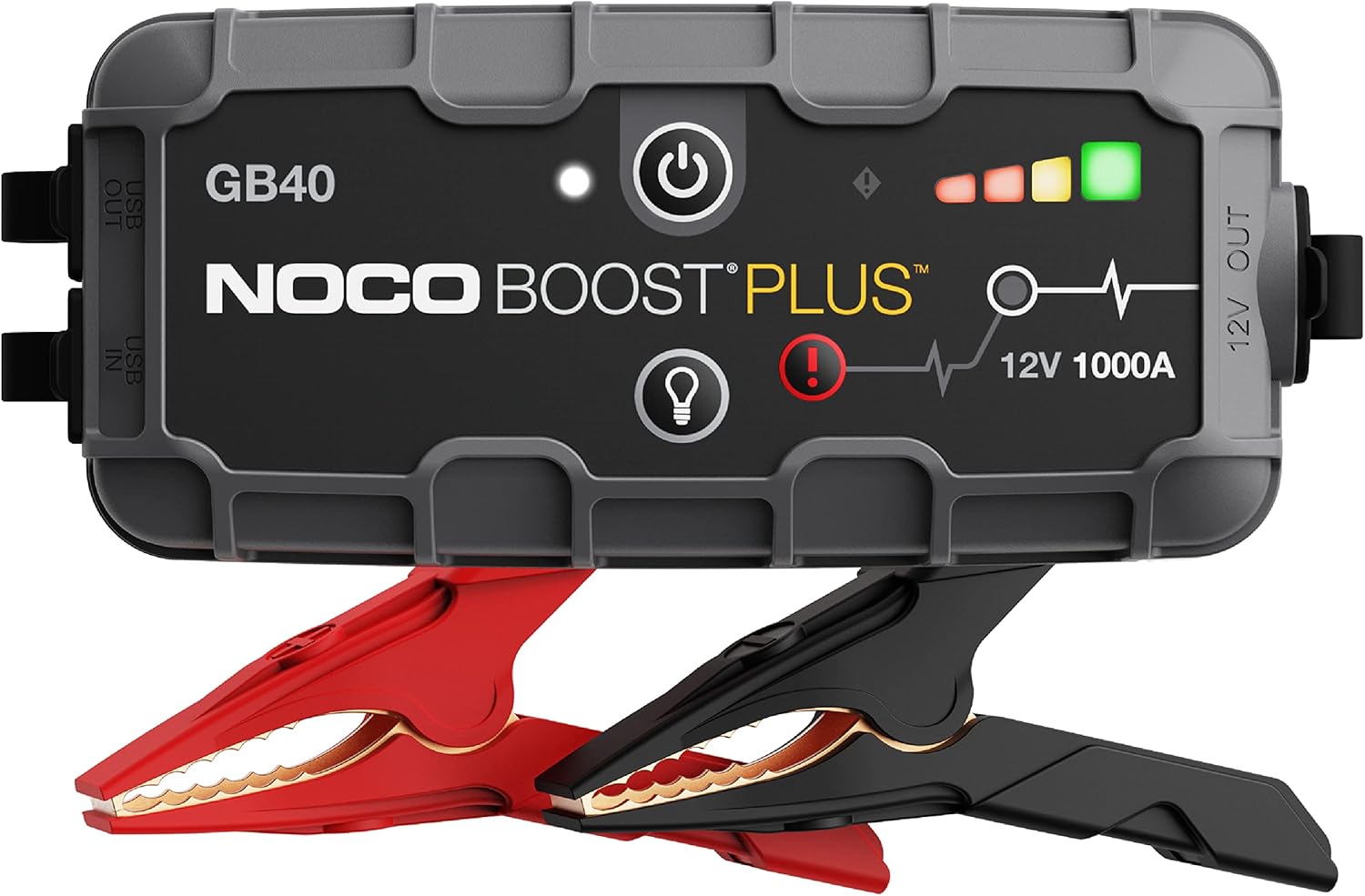
NOCO Boost Plus GB40 Jump Starter
A 1000A lithium jump starter that fits in your glovebox and works on any 12V battery. Your insurance against a dead 12V in a parking lot.
As an Amazon Associate, ThinkEV earns from qualifying purchases — at no extra cost to you.

Founder & Chief Editor
Vlad Pereira is the founder and chief editor of ThinkEV.ca, the Canadian electric-vehicle publication he writes and edits from Courtenay, British Columbia. He covers EV pricing, federal and provincial rebates, charging costs, and the Chinese manufacturers now entering Canada, from the buyer's side rather than the press-fleet side. ThinkEV is a venture of Vlad Pereira Online; his writing on health, income and the long game lives at vladpereira.com.
Frequently asked questions
Will God's Eye 5.0 ever be available on BYD vehicles sold in Canada?
What does BYD's crash-cost coverage actually cover?
How does the Xuanji A3 chip compare to what Nvidia sells automakers?
Is lidar now standard on entry-level BYD trims?
Does this mean BYD is ahead of Tesla on self-driving?
More EV & road-trip finds
Affordable upgrades worth a look — tap any to check the price on Amazon.
 ★ 1,340
Car Seat Gap Filler (Universal)
View on Amazon ★ 308
★ 308Coiled Lightning Car Cable for iPhone (2-Pack)
View on Amazon ★ 87
★ 87Car Window Sun Shades for Kids (4-Pack)
View on Amazon ★ 68
★ 68WeatherTech FloorLiner for Tesla Model 3
View on Amazon ★ 47,507
HOMEXCEL Microfiber Cloths (12-Pack)
View on Amazon ★ 55
★ 55LED Car Door Logo Projector Light
View on Amazon ★ 4,626
HoogaLife Hanging Car Diffuser (2-Pack)
View on Amazon ★ 4,424
Sun Visor Card and Document Organizer
View on AmazonRead, Plan, Then Stay Current
Explore our expert articles to understand incentives and ownership costs, use the map to pressure-test charging reality, then subscribe so new EV coverage comes straight to you.
Continue Reading

BYD Xuanji A3: China's First In-House 4nm EV Chip
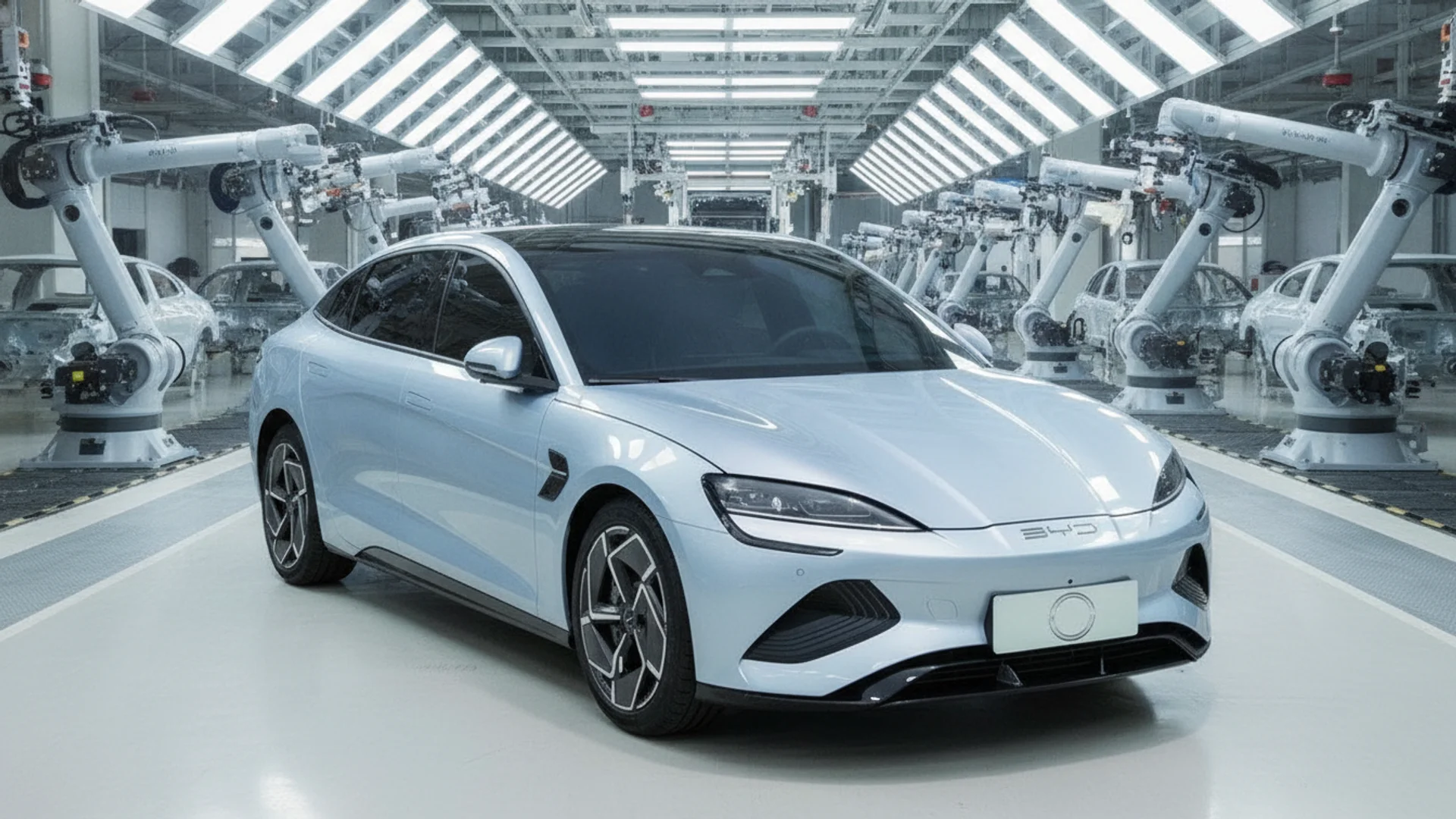
How BYD Builds EVs So Cheaply: The Vertical Integration Playbook
Why Chinese EVs Are Cheap: Production or the Yuan?
BYD Great Seagull: A Bigger $10,000 EV Hatch Is Coming

BYD Denza Z9 GT Adds $50K Tri-Motor Trim to China's Top GT