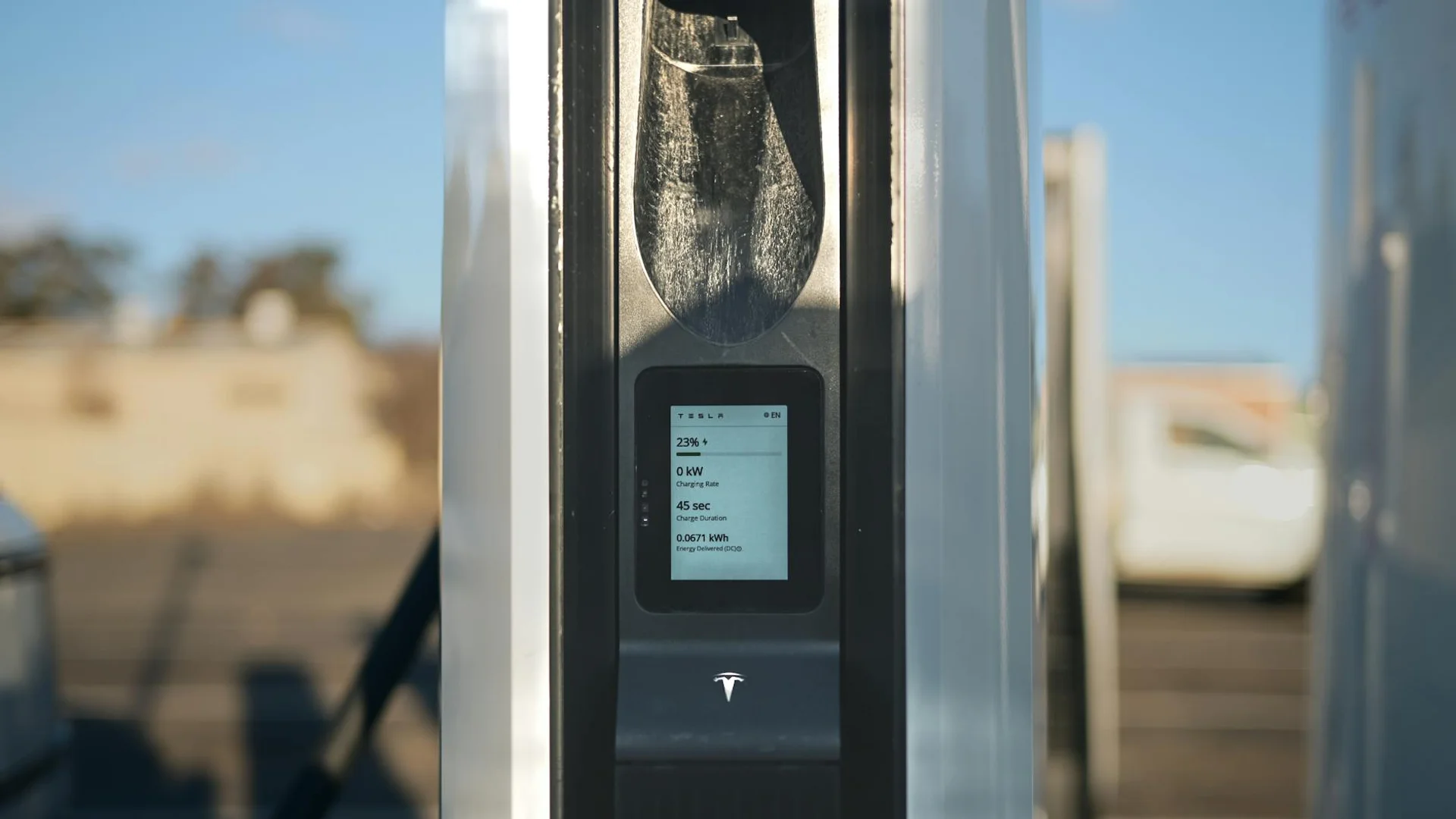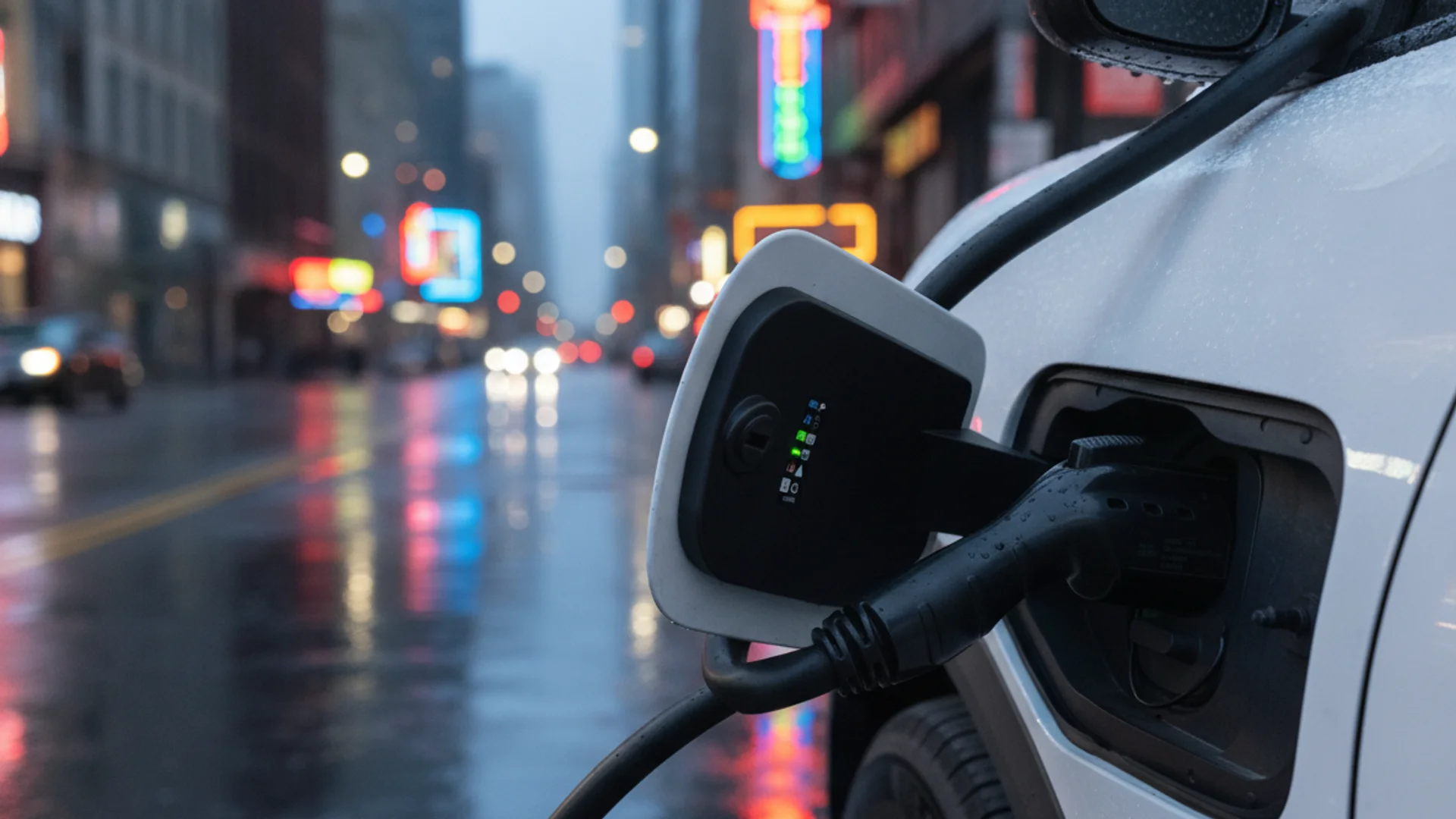
Eight thousand public DC fast-charge ports run from Victoria to St. John's, and the most common question first-timers still ask is whether they need a membership card. The short answer: no, not usually. The longer answer explains why the FLO app and a contactless credit card between them will open roughly 95% of the country's public stations, why an RFID card is still worth carrying, and why the per-kWh price on the screen has almost nothing to do with the network's logo.
Canada's public charging network has scale now. What it does not yet have is a single unified experience. Five major operators, a dozen provincial and municipal players, three connector standards mid-transition, and per-kWh rates that swing from $0.16 to $0.45 depending on which parking lot you pull into. The infrastructure is real. The learning curve is real too.
Key takeaways
- FLO's free RFID card plus a contactless credit card unlocks roughly 95% of Canada's public stations.
- Electrify Canada's Pass+ membership only pays off after two to three highway fast-charge sessions per month.
- DC fast chargers slow to a trickle past 80% state of charge, that's battery chemistry, not network failure.
- Electric Circuit dominates Quebec with 3,500 stations; skipping the free RFID card there is a false economy.
- ISO 15118 contactless tap-to-charge on new DCFC installations eliminated the app-required barrier that plagued 2020-era chargers.
Quick Answer: What You Actually Need to Charge Anywhere
Install the FLO app, add a payment method, and order the free RFID card. That single move opens the largest national footprint plus, through roaming, several regional networks. Add the Electric Circuit card if you drive anywhere near Quebec, the province's Hydro-Québec network is dense enough that skipping it is a false economy.
Keep a physical credit card in the console. Most new DC fast chargers installed after 2024 accept a contactless tap directly at the pedestal, no app required. This is the ISO 15118 contactless standard that regulators pushed for, and it is the single biggest quality-of-life improvement Canadian public charging has seen in a decade.
For a cross-network layer that avoids per-network roaming fees, the ChargeLab app lets drivers access several Canadian public charging networks without roaming fees, including SureCharge, Filgo, Nova Scotia Power, and the Ivy Charging Network. That coverage matters more than it sounds, Ivy alone runs most of Ontario's highway-corridor fast chargers under a joint Hydro One and Ontario Power Generation banner.
Connector strategy depends on your model year. NACS (the former Tesla connector) is rolling out across non-Tesla stations through 2026 and 2027, and most 2025-and-newer EVs from GM, Ford, Hyundai, Kia, and Rivian ship with either a native NACS port or a CCS-to-NACS adapter in the boot. Older CCS-only vehicles still work everywhere non-Tesla, and Tesla's Supercharger network is now open to CCS vehicles via the Magic Dock at select sites.
Gear worth having
As an Amazon Associate, ThinkEV earns a small commission from qualifying purchases — at no extra cost to you.

NACS to J1772 Adapter
Use Tesla destination chargers with any J1772 EV. Opens up thousands of extra charging locations across Canada.
As an Amazon Associate, ThinkEV earns from qualifying purchases — at no extra cost to you.
Level 1, Level 2, DCFC: What Each Speed Actually Delivers
A Level 2 public station adds roughly 30 to 50 kilometres of range per hour of charging. This is not a speed. It is a philosophy. Level 2 is designed for the time you were already going to be somewhere, a mall, a hotel, a downtown parking garage, a workplace lot. It is not a highway pit stop. Pulling off the 401 to sit at a 7 kW curbside charger for two hours is a strategy error, not a charging plan.
DC fast chargers are the pit-stop tier. A modern 150 kW to 350 kW station will add 100 to 300 kilometres of range in 20 to 40 minutes, depending on the vehicle's peak acceptance rate, the battery's state of charge, and the pack temperature. Two important caveats: the station's advertised output is a ceiling, not a promise, and the vehicle's onboard charging limit sets the actual floor. A Hyundai Ioniq 5 will pull 235 kW from a 350 kW pedestal on a warm battery near 20% state of charge. That same car will trickle at 50 kW past 80%. The DC fast charger is not slow. The battery chemistry is protecting itself.
Level 1, the 120-volt household outlet, is almost entirely absent from Canadian public networks. Where it exists, it is a workplace trickle-charge courtesy at office towers and a handful of civic parking lots. Adding four to six kilometres of range per hour, Level 1 exists at public sites only where the alternative was no charging at all.
The practical implication for planning a Canadian trip: DC fast chargers are the corridor tool, Level 2 is the destination tool, and if a station's peak output is listed as 25 kW or 50 kW it is still a DCFC on paper but you should plan the stop like a Level 2. If the specific network's numbers matter to your route, the province-by-province charging cost breakdown shows what each speed tier costs to fill a 60 kWh pack in every jurisdiction.
The Major Networks: FLO, Electrify Canada, Electric Circuit, Tesla, Sun Country
FLO is the closest thing Canada has to a national charging network. Ontario and Quebec density is the strongest, but the coverage extends coast to coast through partnerships with utilities and municipalities. Per-kWh pricing on FLO DCFC sits in the $0.25 to $0.40 range depending on province, with Level 2 typically billed by the hour at $1.00 to $2.50. FLO's RFID card is the one to carry.
Electrify Canada concentrates on highway corridors, the Trans-Canada, the 401, the Coquihalla, the 20 through Quebec. Pay-as-you-go rates run $0.35 to $0.45 per kWh; the Pass+ membership drops the number to roughly $0.28 to $0.33, and the break-even hits at two to three fast-charge sessions a month. If you drive intercity more than a couple of times a month, the math works out. If you charge at home most weeks and hit a highway station once a season, don't bother.
Electric Circuit, the Hydro-Québec network, dominates its home province. SureCharge, Filgo, Nova Scotia Power, and Ivy take care of most other regional footprints east of Ontario, but inside Quebec, Electric Circuit is the network. Roughly 3,500 stations, Level 2 pricing at $2.50 to $3.00 per hour, DCFC pricing near $0.35 to $0.50 per kWh. The physical RFID card is free to order and it works on the first tap every time, which is not true of every network's app-based session start.
Tesla's Supercharger network is the interesting recent development. Non-Tesla NACS-native vehicles can plug in directly at supported sites, and CCS vehicles can use the Magic Dock adapter at a growing number of stations. Tesla's peak pricing runs comparable to Electrify Canada at roughly $0.40 to $0.55 per kWh for non-Tesla drivers, with off-peak windows that can drop the number substantially. The uptime, at least anecdotally, remains the best in the industry.
Gear worth having
As an Amazon Associate, ThinkEV earns a small commission from qualifying purchases — at no extra cost to you.

Heavy-Duty Outdoor Timer (Preconditioning)
Schedule your Level 1 charger or block-heater outlet, rated for the outdoors. Warm the battery on grid power before you leave, not on your range.
As an Amazon Associate, ThinkEV earns from qualifying purchases — at no extra cost to you.
Sun Country Highway fills the gaps everyone else leaves alone, rural British Columbia, the Prairies, the Maritimes stretches where a highway exit might be the only charging option for 200 kilometres. Most sites are Level 2 rather than DCFC, and pricing is often free or fee-only. The network exists because it was built when nobody else was building.
Toronto's Green P curbside expansion is worth watching separately. Municipal networks, city-owned parking authorities adding Level 2 chargers to on-street bays, are the next density layer, and Green P is the largest Canadian pilot at that scale. Whether municipal L2 becomes a genuine alternative to home charging for apartment and condo dwellers is one of the open questions in Canadian charging policy right now, and it connects directly to the broader condo and apartment charging problem that Level 2 pricing bands cannot solve on their own.
Gear worth having
As an Amazon Associate, ThinkEV earns a small commission from qualifying purchases — at no extra cost to you.

Grizzl-E Classic Level 2 EV Charger (40A)
Canadian-made and rated for minus 40C winters. 40A / 9.6 kW, NEMA 14-50, indoor/outdoor, 24-ft cable. The charger built for Canadian weather.
As an Amazon Associate, ThinkEV earns from qualifying purchases — at no extra cost to you.
How Payment Actually Works: Apps, RFID, Credit Tap, and Roaming
The federal push for contactless credit card acceptance on new DCFC installations is the reason a modern highway fast charger is a much simpler experience than one from 2020. Tap the card at the pedestal, plug in, walk away. No app download, no account creation, no phone signal required. This is the ISO 15118 contactless standard, and it is now on most new fast-charger installations across the country.
RFID cards are the fallback that earns its keep in the exact places you need a fallback: highway corridors with weak cell signal, remote sites where the app cannot authenticate against the network's server. The FLO card works on FLO stations plus a growing list of roaming partners. The Electric Circuit card works on Electric Circuit and, through Hydro-Québec's roaming agreements, on selected FLO stations in Quebec. Carrying both is not overkill; it is cheap insurance.
HoneyBadger is a name that surprises drivers who have not encountered it. Some Canadian networks, including the Ivy Charging Network, run private-installation charging that uses the HoneyBadger app for session management and payment. If you plug in at what looks like an unbranded pedestal in a corporate lot or condo parking garage, HoneyBadger is often the answer.
Roaming agreements, where one network's card or app initiates a session on another network's hardware, are expanding but not universal. The direction of travel is toward interoperability; the current state is a patchwork. Before a long trip away from your home network, check the specific stations on your route in the operator's app.
The ChargeLab layer is worth understanding as a category, not just a product. ChargeLab Rewards works with existing OCPP-compatible home chargers from brands such as Autel, Leviton, Siemens, and Wallbox. The pitch: link your home charger to the grid-participation program, get paid for load shifting, and use the same app for public network access. Up to CA$350 per year back to the driver is not a life-changing number, but it is a real one, and it is the first Canadian program to close the loop between home charging economics and public charging convenience through a single app.
Gear worth having
As an Amazon Associate, ThinkEV earns a small commission from qualifying purchases — at no extra cost to you.
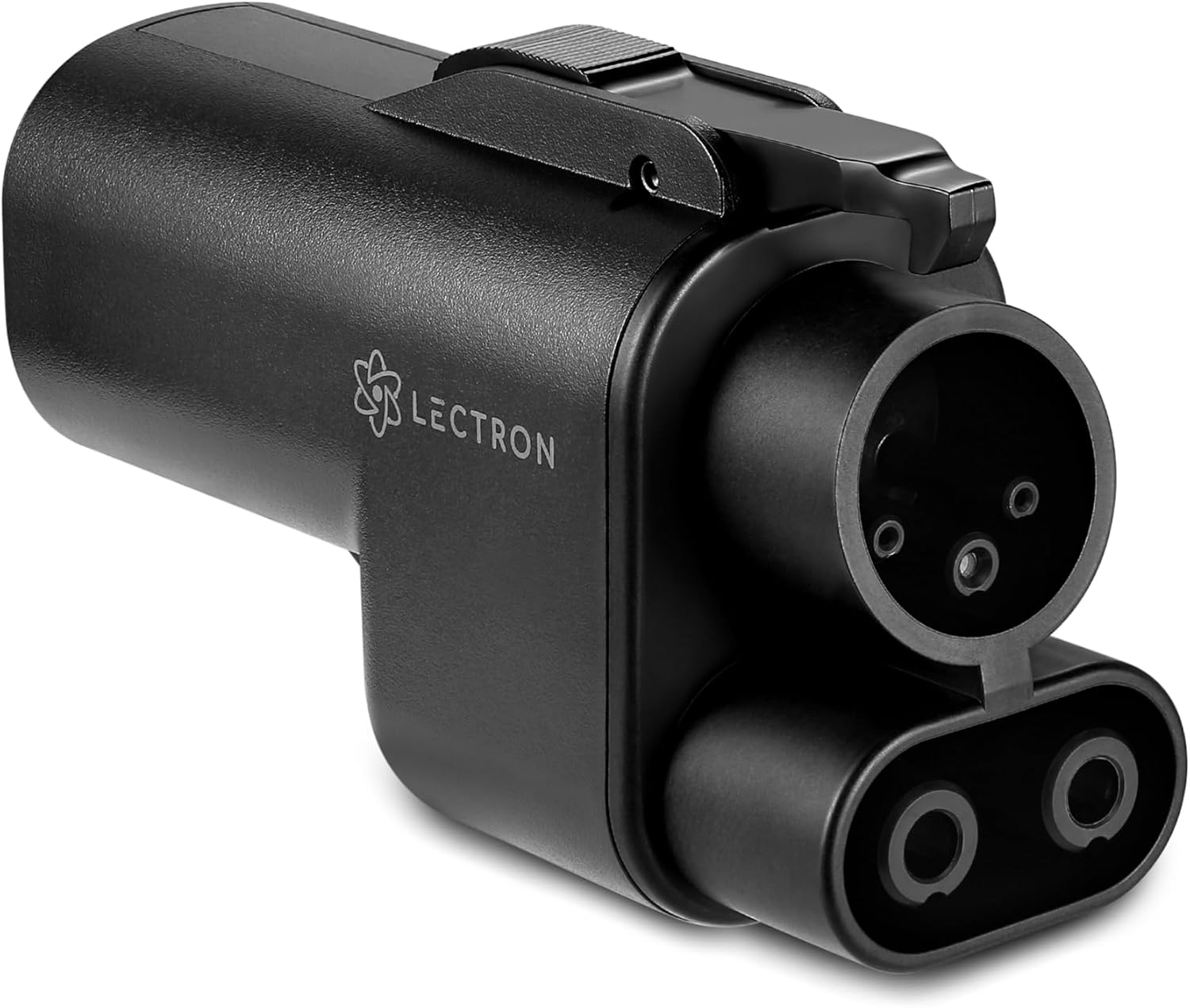
Lectron NACS to CCS Fast-Charge Adapter
Unlock every CCS fast charger for your Tesla, up to 500A DC. Never get stranded at a non-Tesla DC station again.
As an Amazon Associate, ThinkEV earns from qualifying purchases — at no extra cost to you.
Pricing Transparency, Cost Bands, and What the Numbers Mean Per 100 km
Public DCFC pricing ranges from roughly $0.16 per kWh at the cheapest provincial networks to $0.45 or higher at premium highway stations. A 60 kWh fill therefore costs somewhere between $9.60 and $27, plus tax, plus any idle fees. That is a 180% swing on the same electricity, and it maps almost entirely to which network you plugged into.
Per-kWh billing is the fair standard. Per-minute billing, still in use at some older stations and at some networks in specific provincial contexts, penalises drivers of slower-charging vehicles by charging them for time rather than energy delivered. A car that peaks at 50 kW pays the same per-minute rate as one that pulls 250 kW; the second driver gets five times the energy for the same money. The 2026 audit note on ChargePoint's per-minute billing quirks covers this failure mode in detail, worth reading before you assume a low per-minute number is a bargain.
Membership plans on the major networks, Electrify Canada's Pass+, FLO's Passport tiers, Electric Circuit's frequent-user options, break even at roughly two to three DCFC sessions per month for most price bands. Below that cadence, the monthly fee eats the savings. Above it, the plans pay for themselves quickly.
The install-count numbers hide the reliability story. Canada's 25,000-plus public ports grew roughly 28% in 2025, and the pace is accelerating through 2026. But major urban cores, Vancouver, Toronto, Montreal, are seeing demand outpace supply during peak hours, and highway-corridor reliability remains the persistent frustration that install-count press releases will not fix. If you want the full breakdown of what "operational" actually means at a Canadian charging site, the reliability side of the public-charger install count is where the argument lives.
The number to watch through late 2026 is whether the federal Zero Emission Vehicle Infrastructure Program's next funding tranche prioritises new installs or existing-station reliability upgrades. Install count is easy to announce. Uptime is harder to fund. If the next NRCan announcement moves the balance toward maintenance and reliability grants, even by a small margin, the practical experience of Canadian public charging will improve faster than any new-install headline can deliver.
Gear worth having
As an Amazon Associate, ThinkEV earns a small commission from qualifying purchases — at no extra cost to you.

Lectron Level 2 J1772 Charger (40A, WiFi)
Smart WiFi charger with real-time energy monitoring. 40A / 9.6 kW, J1772 with a NEMA 14-50 plug, schedule charging right from your phone.
As an Amazon Associate, ThinkEV earns from qualifying purchases — at no extra cost to you.

Founder & Chief Editor
Vlad Pereira is the founder and chief editor of ThinkEV.ca, the Canadian electric-vehicle publication he writes and edits from Courtenay, British Columbia. He covers EV pricing, federal and provincial rebates, charging costs, and the Chinese manufacturers now entering Canada, from the buyer's side rather than the press-fleet side. ThinkEV is a venture of Vlad Pereira Online; his writing on health, income and the long game lives at vladpereira.com.
Frequently asked questions
Can I use one app for every Canadian charging network?
Is the Electrify Canada Pass+ membership actually worth it?
Do Tesla Superchargers work with non-Tesla EVs in Canada?
What happens if the app won't load at a remote charging stop?
Why does the same network charge different prices in different provinces?
More EV & road-trip finds
Affordable upgrades worth a look — tap any to check the price on Amazon.
 ★ 1,340
Car Seat Gap Filler (Universal)
View on Amazon ★ 692
★ 692USB-A to USB-C CarPlay Adapter (3-Pack)
View on Amazon ★ 119
★ 119Foldable Waterproof Trunk Organizer
View on Amazon ★ 392
★ 392Large Cup Holder Adapter (32-40oz)
View on Amazon ★ 9,349
Auto Detailing Brush Set (10-Piece)
View on Amazon ★ 537
★ 537USB Star Projector Roof Light
View on Amazon ★ 1,083
Crystal Push-Start Button Ring (2-Pack)
View on Amazon ★ 4,424
Sun Visor Card and Document Organizer
View on AmazonRead, Plan, Then Stay Current
Explore our expert articles to understand incentives and ownership costs, use the map to pressure-test charging reality, then subscribe so new EV coverage comes straight to you.
Continue Reading
EV Charging in Canada 2026: Networks, Cost, Setup
Public EV Chargers in Canada: 33,000 Now, 447,000
How Long to Charge an EV: The Three Numbers That Matter

Level 3 DC Fast Chargers Explained for Canadian EV Owners
How Long Does It Take to Charge an Electric Car? (2026 Guide)