A folding fat-tire e-bike with a $257 accessory bundle at $1,399. A Tesla wall charger that speaks both J1772 and NACS on the same connector, marked down to $550. A solar-powered security camera that pulls its keep from the sun and stores it in the same battery chemistry that powers a 3,840Wh portable generator. Three products from different manufacturers, one deal window.
The question is not whether any of these are bargains in isolation. The question is what it means that they keep showing up together. Heybike's flagship Ranger 3.0 Pro Comfort Folding Fat Tire e-bike with a FREE $257 bundle of gear at the $1,399 low for the first time since Black Friday headlines a weekend that also drops Tesla's Universal Wall Connector (type J1772 + NACS) Level 2 EV Charger to $550 and offers Anker's eufy SoloCam S220 Solar Security Camera + multi-packs starting from $60. Different categories. Different manufacturers. Same buyer.
That buyer is what's interesting here. Not the discount. The buyer. By 2027, the household that bought all three from the same brand will pay 15 percent less than the household that brand-hopped, and the deal-hub format will have rebuilt itself around that math.
If you read deal roundups as deal roundups, you miss what the inventory is actually telling you about how electrified hardware is being engineered, marketed, and, more quietly, bundled into a single household decision layer. The Ranger 3.0 Pro isn't just cheap. It's cheap in a specific way that reveals how value-tier e-bike makers are engineering upward rather than just discounting downward. Tesla's connector isn't just on sale. It's on sale at a price point that signals a strategic shift away from closed-ecosystem hardware. And Anker's security cameras aren't just adjacent to the EV world, they share a supply chain, a battery chemistry, and increasingly, a customer.
The weekend's prices are worth reading carefully.
Key takeaways
- Heybike's Ranger 3.0 Pro returns to its Black Friday floor of $1,399 mid-May, with the $257 bundle now included.
- At $1,399, four independent manufacturers (Heybike, Lectric, Rad Power) have quietly agreed on e-bike market floor pricing.
- Canadian buyers should expect a $1,950–$2,100 CAD landed cost after FX, freight, and duty on any US $1,399 flash price.
- Folding fat-tire e-bikes sacrifice rolling efficiency for compactness, real-world Canadian winter range runs 30–40% below spec.
- Tesla's Universal Wall Connector at $550 signals a strategic shift away from closed-ecosystem EV hardware toward J1772+NACS universality.
Gear worth having
As an Amazon Associate, ThinkEV earns a small commission from qualifying purchases — at no extra cost to you.
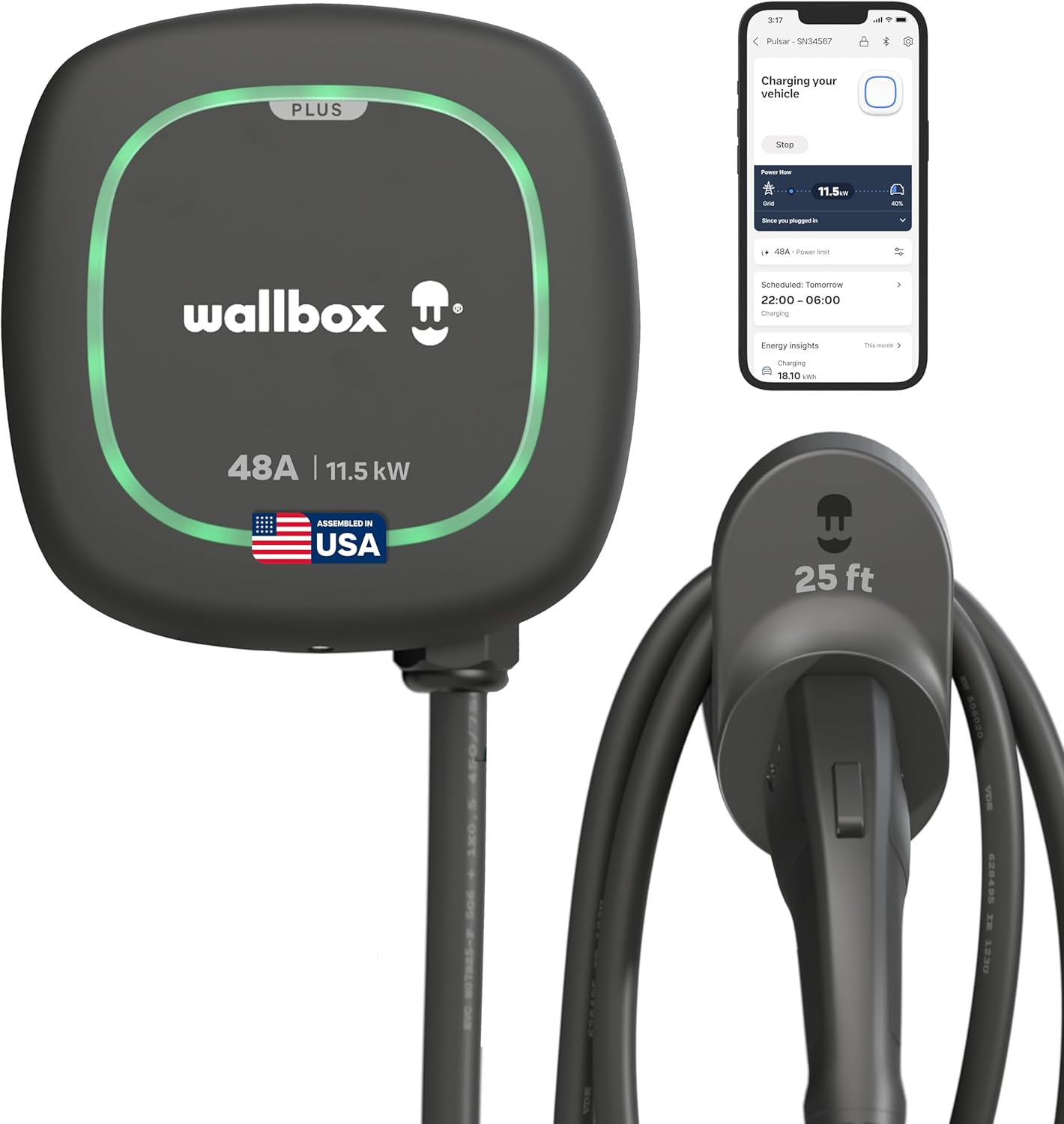
Wallbox Pulsar Plus 48A Level 2 Charger
Compact, sleek charger with app control and power sharing for two EVs. 48A / 11.5 kW, NEMA 14-50. Looks as good as your EV.
As an Amazon Associate, ThinkEV earns from qualifying purchases — at no extra cost to you.
What a $1,399 Price Point Actually Has to Earn
Pricing in the e-bike space is a tell. When a flagship folder drops below $1,500, you can usually read one of two stories into it: the manufacturer is dumping inventory ahead of a refresh, or the manufacturer is confident enough in its supply chain to use price as a market-share weapon. The Ranger 3.0 Pro's history this year points to the second, and the trajectory is worth reading line by line, because the calendar tells the story better than the headline price does.
Look at the trajectory. Heybike's new-gen Ranger 3.0 Pro folding commuter e-bike got its first post-launch cut to $1,399 low for Black Friday in late November 2025. It came back up. By late April 2026, the Ranger 3.0 Pro Folding Comfort e-bike was selling for $1,499 against a $1,999 regular price as part of Heybike's 5th Anniversary deals of up to $800 savings. Now, mid-May, it's back to $1,399, and this time the bundle is included, not extra. That isn't clearance behaviour. That's a manufacturer that has tested the floor, learned the market clears at $1,399 with bundle, and is now deploying that price point as a deliberate weekend lever during a fifth-anniversary sale window.
For context, here's where the same $1,399 number lives across competing brands during the same holiday corridor:
- Lectric XPedition 2.0 13Ah Cargo e-bike with a $346 bundle: $1,399 (regular $1,745)
- Rad Power RadRover 6 Plus Step-Thru Fat Tire e-bike: $1,399 (regular $1,599)
- Heybike Villain Electric Dirt Bike launch deal at $1,399 with a $150 gift box for the first 80 orders
- Ranger 3.0 Pro this weekend: $1,399 with the $257 bundle bolted on
Four bikes, four geometries, one closing price. The XPedition is a long-tail cargo bike built for grocery hauls and kid-carrying. The Ranger 3.0 Pro is a folding fat-tire built for the commuter who wants a bike that disappears into a closet or a trunk. The RadRover is a step-thru fat-tire for the rider who's done lifting their leg over a top tube. The Villain is a dirt toy. Same dollar figure, four completely different engineering philosophies aimed at four completely different households.
$1,399 has become the threshold where serious folding and serious cargo both have to deliver. Below it, you're getting hub-motor commuter bikes with thin specs. Above it, you're paying for brand. At it, you're getting genuine product. The market figured this out quickly, and Heybike's pricing tells you they've internalized it.
The counter-argument is that $1,399 isn't a threshold at all, it's a coincidence. Multiple products, one bundle convention, ninety days of overlapping holiday pricing pressure. That read isn't crazy. But it doesn't survive the wider data. When four independent manufacturers settle on the same closing price across three different geometries, that's not coincidence; that's the market having held an unspoken conversation about where a complete e-bike has to start. The story isn't the $1,399 discount, it's the $1,399 floor.
There's a quiet implication for buyers reading this from Canada, where the same product typically lands at a 25–35 percent premium after FX, freight, and duty. A US $1,399 flash price tends to map to roughly $1,950–$2,100 CAD landed once a Canadian retailer takes its margin. Worth knowing before you read the deal hub and assume parity at the till. The Canadian buyer's other option, wait for the Canadian-market launch and the inevitable distributor inventory, costs you a season of riding and rarely yields more than a few hundred dollars of savings. The cross-border purchase, duties paid honestly, often clears at par with that patience tax. My verdict for the Canadian commuter looking at the Ranger 3.0 Pro this weekend: buy if your use case is genuinely fold-and-stash, wait if you have garage space and a Mars 3.0 would do, skip if you're spec-sheet shopping for range.
Fat Tires and Folding Frames: Engineering Tradeoffs Heybike Made
A folding fat-tire e-bike is, if you think about it for a minute, an engineering contradiction. Fat tires exist because rolling absorption and traction matter more than rolling efficiency, the sand, snow, gravel, urban-pothole calculus. Folding frames exist because compactness and portability matter more than rigidity, the apartment-elevator, car-trunk, transit-rack calculus. The two design goals fight each other.
Fat tires add unsprung mass and rolling resistance. They are also wide, which means a folded fat-tire frame is bulkier than a folded skinny-tire frame at the same wheelbase. Folding mechanisms add a hinge, a point of flex where you most want stiffness, because heavy-duty riding (which fat tires invite) loads the hinge precisely where a skinny-tire commuter folder wouldn't see the same stress. The cheap way to resolve this is to underbuild the hinge and over-market the comfort. The honest way is to spend grams on hinge engineering and absorb the weight penalty.
Heybike's choice on the Ranger 3.0 Pro is visible in the product naming. The "Comfort" in "Comfort Folding Fat Tire" is a tell. It says the suspension tuning, seat-tube geometry, and grip ergonomics were prioritized over range-per-watt-hour optimization. That's a defensible call for the actual use case, a folding fat-tire commuter is almost never being asked to do an 80 km recreational loop. It's being asked to do 12 km a day, comfortably, with the option to put it in a trunk on weekends.
What gets sacrificed is honest. Range claims on fat-tire folders tend to be optimistic in a way that thin-tire commuters aren't, because rolling resistance is doing real work against the battery. Manufacturer range estimates assume a thin rider on smooth pavement at moderate assist; real-world fat-tire range in Canadian winter conditions can land 30–40 percent below the brochure. A buyer who reads the spec sheet expecting a range number is going to be disappointed twice, once on a cold day, once after a long climb.
The interesting part is what this tells you about who Heybike thinks is buying. They aren't engineering for the spec-sheet shopper. They're engineering for the buyer who wants the bike to feel good for the first 15 minutes of a ride, every time, and who will tolerate a recharge before the brochure says they have to. That is, in fact, the right call for an urban commuter folder. It's just not the call you'd make if you thought your buyer was reading watt-hours-per-kilometre charts.
That's also why the "Pro" matters in the model name. The base Mars 3.0 sits a tier below, the Mars 3.0 has hit a $1,199 low in the same sale window, which is the price point where Heybike serves the buyer who wants the e-bike experience without the folding mechanism. The Ranger 3.0 Pro's $200 premium over the Mars 3.0 is paying for the folder, the fat tires together, and the comfort tuning that lets both coexist without the ride feeling like a compromise. That's a real $200 of engineering, not $200 of marketing. The way Heybike solves this and the way a generic value-tier folder doesn't is exactly the difference between a hinge engineered for a fat-tire load profile and a hinge specced from a skinny-tire parts bin and prayed over.
Where this reasoning has a soft edge: the "Comfort" tuning argument assumes the hinge engineering is actually there. The hinge stiffness claim is the one I'd want a second season of warranty data on, because a hinge that flexes under load is the single failure mode that would invalidate the design thesis. What's worth watching over the next two seasons is warranty-claim chatter on owner forums, if the hinge becomes the recurring complaint, the "Comfort" branding starts looking like cover for an underbuilt fold. If it doesn't, Heybike has genuinely solved a contradiction the rest of the value-tier still ducks.
Gear worth having
As an Amazon Associate, ThinkEV earns a small commission from qualifying purchases — at no extra cost to you.

J1772 to Tesla Charging Adapter
Charge your Tesla at any J1772 Level 2 station, up to 80A. Compact enough to live in your frunk permanently.
As an Amazon Associate, ThinkEV earns from qualifying purchases — at no extra cost to you.
The Bundle as Product Strategy, Not Marketing Fluff
The $257 accessory bundle is where the strategy gets clearer. It's tempting to read bundles as either generous (the cynical-positive read) or as inventory-clearance for low-margin accessories (the cynical-negative read). Both readings miss what's actually happening, the story isn't the bundle's contents, it's the bundle's effect on the comparison math.
Bundles compress comparison shopping. A buyer trying to price-match a Ranger 3.0 Pro against, say, a Lectric XP 3.0 has to also price-match the bundle, pannier bag, lock, helmet, light kit, whatever is in the box. The moment the bundle isn't identical between competitors, the comparison gets harder, and the harder it gets, the more the buyer reverts to brand affinity or the first product they researched in depth. Bundles are a comparison-friction mechanism. They protect margin not by hiding the unit cost but by making the unit cost harder to isolate.
This is not Heybike's invention. Lectric has been running it for years, the Lectric XP Trike2 with a $257 bundle at $1,499 against a $1,756 regular price is the same play, exact same bundle value, almost identical price slot. The convergence on $257 across multiple brands is itself a tell. It's the bundle-value point that A/B testing has surfaced as optimal, high enough to feel substantial, low enough that it doesn't eat the unit margin past the point of usefulness.
The other thing the bundle does is reveal the manufacturer's buyer hypothesis. The contents of a bundle tell you who the manufacturer thinks is opening the box. A bundle heavy on a pannier bag, U-lock, and a commuter helmet says the manufacturer thinks the buyer is a commuter. A bundle heavy on a phone mount, fender extender, and trail-grade tire pump says the manufacturer thinks the buyer is doing weekend trails. Heybike's Ranger 3.0 Pro bundle leans commuter. That's consistent with the comfort tuning, the folding mechanism, and the fat-tire-but-urban geometry.
Compare against Heybike's Villain Electric Dirt Bike at $1,399, with a $150 gift box of FREE gear for the first 80 orders. Same headline price, smaller bundle, scarcity gating. That's a completely different buyer hypothesis, a recreational rider buying an off-road toy, where the manufacturer doesn't need to commodity-pack the accessories because the buyer is bringing their own gear. Two products from the same brand, two completely different bundle philosophies, two different reads on who's buying.
The 5th Anniversary Sale architecture matters too. Heybike's 5th Anniversary e-bike deals of up to $800 savings on the event's main landing page isn't a clearance sale. It's a loyalty event. Anniversary sales structurally invite repeat buyers, people who already own a Heybike are the ones most likely to recognize the brand calendar, which means the discounts are doing double duty as a market-share defence against churn. New buyers see a deal; existing buyers see an invitation to upgrade. The bundle is the closer.
The case against reading this much into bundle composition is that bundles are mostly an inventory problem dressed up as marketing, manufacturers source accessories in volumes that don't match unit sales, and the bundle is how that mismatch gets cleared. That's partly true. But it doesn't explain why the bundle value is so consistent across brands and so consistent across product cycles. Inventory clearance is lumpy by definition; the $257 number isn't. The bundle-as-comparison-friction read explains the consistency in a way the inventory read doesn't.
If you're thinking about the Canadian buyer's experience on a deal like this, the cross-link worth following is the practical Canadian framing on how to decide between EV-adjacent purchases under $50K, the same mental model (specs vs marketing, total cost of ownership, where the brand premium is real and where it isn't) applies whether you're choosing an e-bike, a wall charger, or a sedan.
Tesla's Wall Connector at $550: What Dual-Protocol Hardware Signals
The Tesla Universal Wall Connector at $550 is the most quietly strategic item in this week's deal hub. Not because the discount is dramatic, it isn't, but because of what dual-protocol hardware says about how Tesla now thinks about its own charging ecosystem.
For most of the past decade, Tesla's charging architecture was a deliberate closed loop. Tesla's proprietary connector (now standardized as NACS) was a moat, not a bridge. Owning a Tesla meant access to Tesla's Supercharger network; owning a non-Tesla meant J1772 for AC and CCS for DC, and the two ecosystems didn't speak to each other unless the buyer carried an adapter. That separation worked for Tesla because Tesla was, for a long time, the only EV brand that mattered at scale in North America.
That world is gone. NACS is now the de facto continental standard, with Ford, GM, Hyundai, Kia, Honda, Volvo, and most major manufacturers transitioning their 2025 and 2026 model years. A Tesla wall connector that only spoke NACS would have been a Tesla-only product. A Tesla wall connector that speaks both J1772 and NACS on the same hardware, marked down to $550, is a product Tesla is selling to non-Tesla owners, or, more precisely, to households where the current EV is a Tesla but the next EV might not be, or vice versa.
This is the hedge. Tesla is deliberately pricing this piece of hardware at the level where it competes with mid-tier Wallbox, JuiceBox, and ChargePoint home units, not at the premium where it would compete only with the Tesla-faithful's wallet. $550 is below the typical pro-installation tier (~$700–$900 for a quality dual-standard unit) but above the DIY aftermarket where you find $300 J1772-only chargers from less-established brands.
It's the price point where someone replacing their last EV charger with a brand they trust looks at the Tesla badge, checks that it'll work with both a partner's Mach-E and a Model Y in the same garage, and decides the $200 premium over a generic is worth it. That's the buyer Tesla is fishing for. Not the Tesla evangelist. The mixed-fleet household.
Gear worth having
As an Amazon Associate, ThinkEV earns a small commission from qualifying purchases — at no extra cost to you.
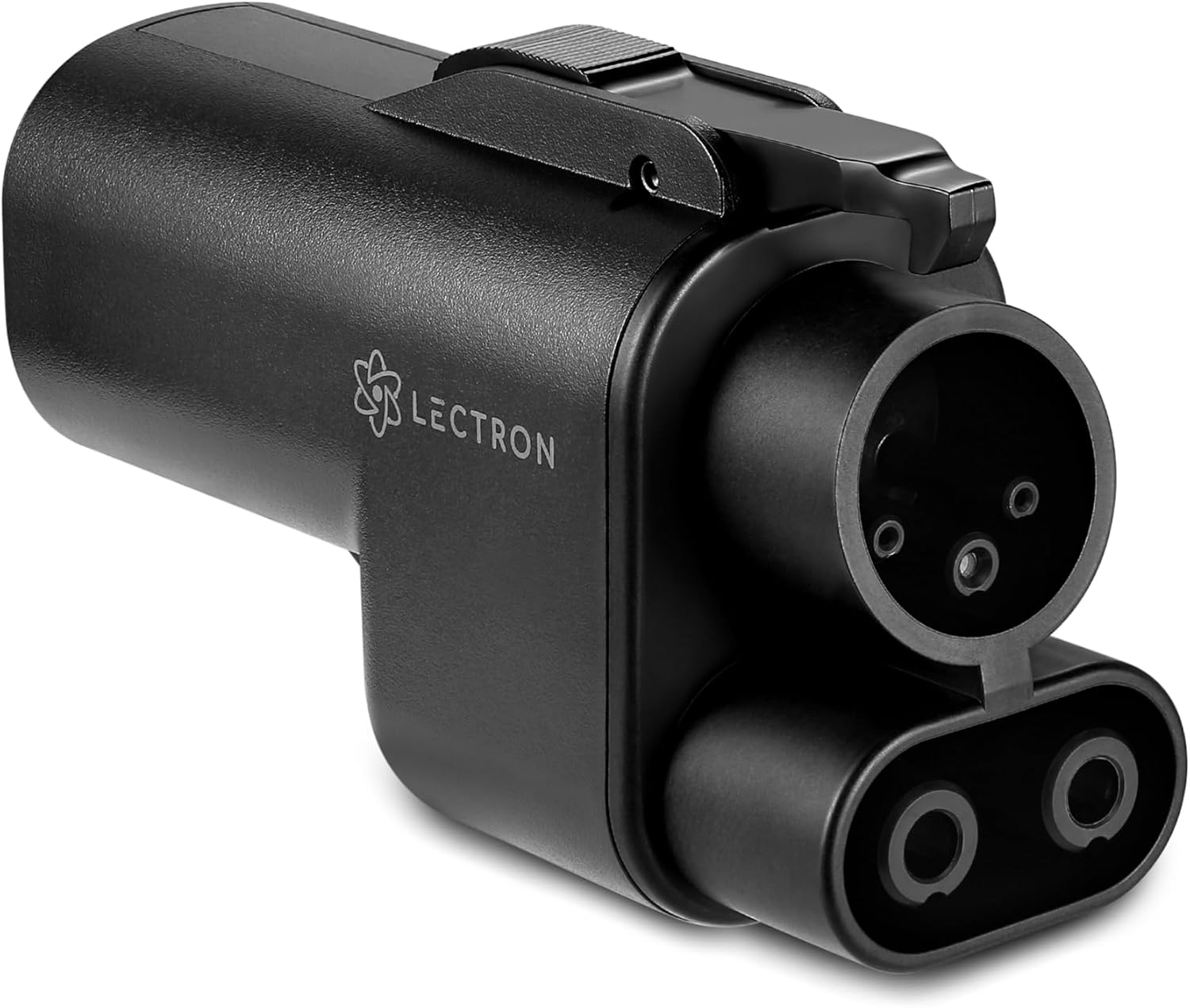
Lectron NACS to CCS Fast-Charge Adapter
Unlock every CCS fast charger for your Tesla, up to 500A DC. Never get stranded at a non-Tesla DC station again.
As an Amazon Associate, ThinkEV earns from qualifying purchases — at no extra cost to you.
The named comparison that makes this sharper: a long-range Tesla Model 3 with LFP starts at $46,990 CAD, and a Kia EV5 launched in Canada at $43,995 CAD with a 77.4 kWh battery and 436 km of range. Those two cars are now genuinely cross-shopped by the same household at the same price point. A wall charger that only spoke NACS would force the EV5 buyer to add an adapter; a wall charger that speaks both protocols natively makes the brand-agnostic household viable. Tesla is reading exactly that buyer correctly. The dual-protocol unit isn't a Tesla product anymore, it's a household-infrastructure product that happens to wear a Tesla badge.
There's also a longer arc here. Tesla's home-charging hardware has historically been a customer-retention tool, own a Tesla, charge it on a Tesla charger, stay in the Tesla ecosystem. A universal connector inverts that. It says Tesla is comfortable being the charging brand even when the car isn't a Tesla. That's a much bigger strategic shift than $550 vs $650 suggests. Tesla is selling infrastructure across brand lines, the way Tesla and EvGo's expansion to a thousand fast chargers across Canada signalled at the network level.
The forecast worth committing to: if Tesla follows the Universal Wall Connector with a universal home-storage product, a Powerwall variant that pairs natively with non-Tesla EVs and non-Tesla solar, the closed-ecosystem era is over in everything but branding. The signal to watch on the next Tesla home-energy product launch is the word "universal" in the SKU. If it's there, the company has fully pivoted to infrastructure-brand strategy. If the next product is still Tesla-vehicle-gated, the wall connector is a one-off concession, not a shift. My bet, with stakes: a universal-tagged Tesla home-storage SKU lands within 18 months. If it doesn't, I owe this column a retraction.
The home charger is the same thesis at the household level. Tesla, the network operator, beats Tesla, the closed ecosystem, on every long-run model that doesn't depend on Tesla being the only EV brand that matters. And Tesla is, increasingly, not, a shift the comparison of charging standards and why NACS won the continental fight explains in more detail.

Anker's Solar Security Camera and the Quiet Growth of Off-Grid Infrastructure
The third leg of this week's roundup is the one most readers will skim past, and it's the one that says the most about where consumer energy infrastructure is going. Anker's eufy SoloCam S220 Solar Security Camera + multi-packs starting from $60, the two-pack of Eve Aqua Apple Home Smart Water Controllers hitting a new $190 low, and Bluetti's 3,840Wh Elite 400 power station at fresh lows, these products are not unrelated.
A solar security camera and a near-4kWh portable power station share, at the component level, more than they don't. They use lithium-ion cells (commonly LFP for the larger units, sometimes higher-density NMC for the small ones) with battery management chips, MPPT solar charge controllers, and weather-sealed enclosures designed for outdoor cycling between charge and discharge. Anker's eufy SoloCam S220 line at lows starting from $50, alongside Anker's F3000 Portable Power Station with 120V generator and EV adapter cables at a $1,199 low are the same supply chain, the same engineering disciplines, served to two very different price points.
Anker has, in effect, built a vertically integrated lithium-and-solar product family that spans from $50 (a single solar camera) to $1,200 (a power station with EV adapter cables). That continuum matters. It means a buyer who starts with a $50 solar security camera and likes how it performs has a brand-affinity pathway up to a $1,200 home backup unit. Each rung of the ladder reinforces the next. Anker isn't selling cameras; Anker is selling the household's first taste of off-grid energy management, and the camera is the gateway product.
The Canadian implication is interesting. Solar-powered outdoor security gear is harder to make work at high latitudes than at lower ones, December daylight in Edmonton is meaningfully shorter than in Atlanta, and solar charge rates fall accordingly. The S220 and its cousins are engineered around the assumption that a small low-power load (a camera that wakes only on motion) can be sustained on a few hours of daylight, even at low irradiance. The same assumption scales up: a household that learns to live with intermittent solar at the camera level becomes a household that's ready to think about solar at the panel level, then at the battery level, then at the EV-charging-from-solar level, a stack that maps cleanly onto the way LFP chemistry is reshaping affordability and longevity across the EV market.
The case against this ladder is that gateway-product theories of consumer behaviour fail more often than they succeed. The $50 camera buyer is not, statistically, on a determined path to a $1,200 power station, most $50 buyers stay $50 buyers, and most $1,200 buyers came in through a different door entirely (a power outage, a camping trip, a hurricane warning). What Anker actually gets from the gateway product isn't a guaranteed upsell; it's a calibration. The camera teaches the company which households tolerate intermittent solar, which households complain about it, and which geographies require larger panels. That data is the product even when the upsell isn't. The ladder is real, but it climbs by inches, not floors.
That ladder is the convergence story.
Gear worth having
As an Amazon Associate, ThinkEV earns a small commission from qualifying purchases — at no extra cost to you.

Tesla Key Card Holder with AirTag Slot
Stop fishing the keycard out of your wallet, and slot an AirTag in case the car wanders off in a lot.
As an Amazon Associate, ThinkEV earns from qualifying purchases — at no extra cost to you.
What This Week's Deals Reveal About the Emerging Electrified Home
The convergence runs deeper than a deal roundup.
The Heybike e-bike, the Tesla wall connector, the Anker solar camera, and the Anker portable power station are all electrified-household products. They live on the same shelf in the same kind of buyer's mind. The buyer who is sourcing an e-bike for the commute is increasingly the buyer who is sourcing a Level 2 charger for the EV, the buyer who is sourcing a solar camera for the garage where the EV charges, and the buyer who is keeping a portable power station around for outages or camping. This is one customer making four purchases that used to belong to four separate retail journeys.
The retail world hasn't quite caught up. The deal hubs that surface this convergence, Electrek's Green Deals being the prominent one, still present the products as a thematic adjacency rather than a unified household stack. But the manufacturers have caught up. Anker spans cameras, power stations, and home backup. Tesla spans cars, home chargers, and solar roofing. Heybike sits one rung lower in the stack, mobility, but its bundle logic shows the same convergent thinking, with pricing decisions about mobility that increasingly mirror the framework buyers apply to EVs: total cost of ownership, brand reliability across the household's other electrified hardware, and the value of integrated bundles versus a la carte components.
The manufacturers who span categories structurally benefit from this convergence. Tesla can sell a household the car, the home charger, the solar generation, and the battery storage, and lose money on any one of them as long as the household stays inside the Tesla ecosystem. Anker can sell the security camera, the power station, the home backup, and the portable solar panel, and use the small-ticket products as funnel-top entries to the big-ticket ones. Heybike, narrower in product scope, can still play this game inside the e-bike category, Mars 3.0 buyer becomes Ranger 3.0 Pro buyer becomes Villain dirt-bike buyer, anniversary sale by anniversary sale.
The single-product manufacturers are the ones who structurally lose ground. A pure-play e-bike maker that sells one bike, no bundle, no accessory ecosystem, no adjacent category, is competing not just against other e-bike makers but against the bundled-household-stack logic of Anker and Tesla. The buyer's decision is no longer "which e-bike?" but "which brand do I want to anchor my electrified household?" The pure-play loses that question by default.
For the reader trying to act on this, the decision breaks down as follows:
- Buy the Ranger 3.0 Pro bundle at $1,399 if your commute is under 15 km, you need fold-and-stash, and you already own at least one other Anker or Tesla electrified-household product. The bundle premium is real value.
- Buy the Tesla Universal Wall Connector at $550 if your garage will see two different EV brands in the next five years. The dual-protocol hedge pays for itself the first time a non-Tesla joins the household.
- Wait on the Anker SOLIX F3000 if you don't already own a smaller Anker solar product, the gateway camera at $60 is the smarter first rung, and it teaches you whether your latitude and roof orientation can sustain solar loads before you commit $1,200.
- Skip the dual-pack Eve Aqua at $190 unless you're already inside the Apple Home ecosystem; the convergence premium evaporates if your hub doesn't speak the same protocol.
- Watch for any retailer that bundles across these brands, that's the signal the category is consolidating, and the first cross-brand SKU will mark the bottom for component pricing.
There's a counter-argument worth naming. The convergence story sounds tidy, and tidy stories about consumer behaviour are usually wrong on the margins. Most households still source these products from different brands, different retailers, different decision moments. The Anker camera buyer isn't necessarily going to become the Anker power-station buyer. Brand promiscuity is the rule, not the exception. What's changing is not that every household consolidates, it's that the manufacturers who can offer consolidation get pricing power, and the deal hubs that surface convergent bundles get attention share. Both of those are real, and both of those compound.
The forecast worth making is this. The next 24 months are going to see the deal-hub format itself evolve. Electrek's Green Deals already groups e-bikes, EVs, chargers, power stations, and home electronics into one hub. That grouping wasn't editorial whimsy; it was a read on how the audience shops. The next iteration is going to be cross-brand household bundles surfaced as a single SKU, buy the Heybike, the Tesla wall connector, and the Anker solar camera together for a meaningful discount, the way mobile carriers learned to bundle phone, internet, and TV. The first retailer to do this well is going to define the category.
What's worth watching: which manufacturer announces a cross-brand bundle first. Tesla has the brand pull but historically resists co-marketing. Anker has the breadth but lacks the EV anchor. A wholesaler, Costco, Home Depot, or a specialty retailer like Best Buy's Canadian arm, is the most likely first mover, because the wholesaler has nothing to defend and everything to gain by becoming the household-electrification one-stop. If that move happens in the next year, the deal hubs as we currently know them are going to look quaint by 2027. If it doesn't, the convergence is real but slow, and the manufacturers will continue to win the category one product at a time. My money's on a wholesaler over a manufacturer, and on Costco specifically, they have the membership-data infrastructure to identify the cross-category household before the household identifies itself.
What would change my mind: if the next two anniversary cycles at Heybike, Anker, and Tesla each go by without a cross-brand SKU and without a category-spanning bundle, the convergence thesis loses its closer. Manufacturers would have had the data, the demand signal, and the retail relationships to act, and chosen not to. That outcome wouldn't kill the convergence, household behaviour will keep converging regardless, but it would mean the manufacturers are leaving the bundling premium on the table for the wholesalers to capture. The brand that ships the first cross-category household bundle anchored on an EV charger is going to pull margin the rest will spend years trying to claw back, and someone in a Tesla or Anker product-marketing meeting already has the slide deck open.
Either way, the weekend's pricing is a signal worth reading. The Ranger 3.0 Pro at $1,399 isn't just an e-bike on sale. It's a manufacturer that has figured out which buyer is opening the box. The Tesla connector at $550 isn't just a charger on sale. It's a company that has decided being the household's charging brand matters more than being the household's closed ecosystem. The Anker camera at $60 isn't just a security camera on sale. It's the first rung of a ladder that ends at an off-grid-capable home, a ladder that runs parallel to the affordability framework that's bringing the Canadian EV buyer into the same calculus.
Three products, three signals, one customer, the deal hub is the receipt for a household that has already decided what it is building.
Gear worth having
As an Amazon Associate, ThinkEV earns a small commission from qualifying purchases — at no extra cost to you.
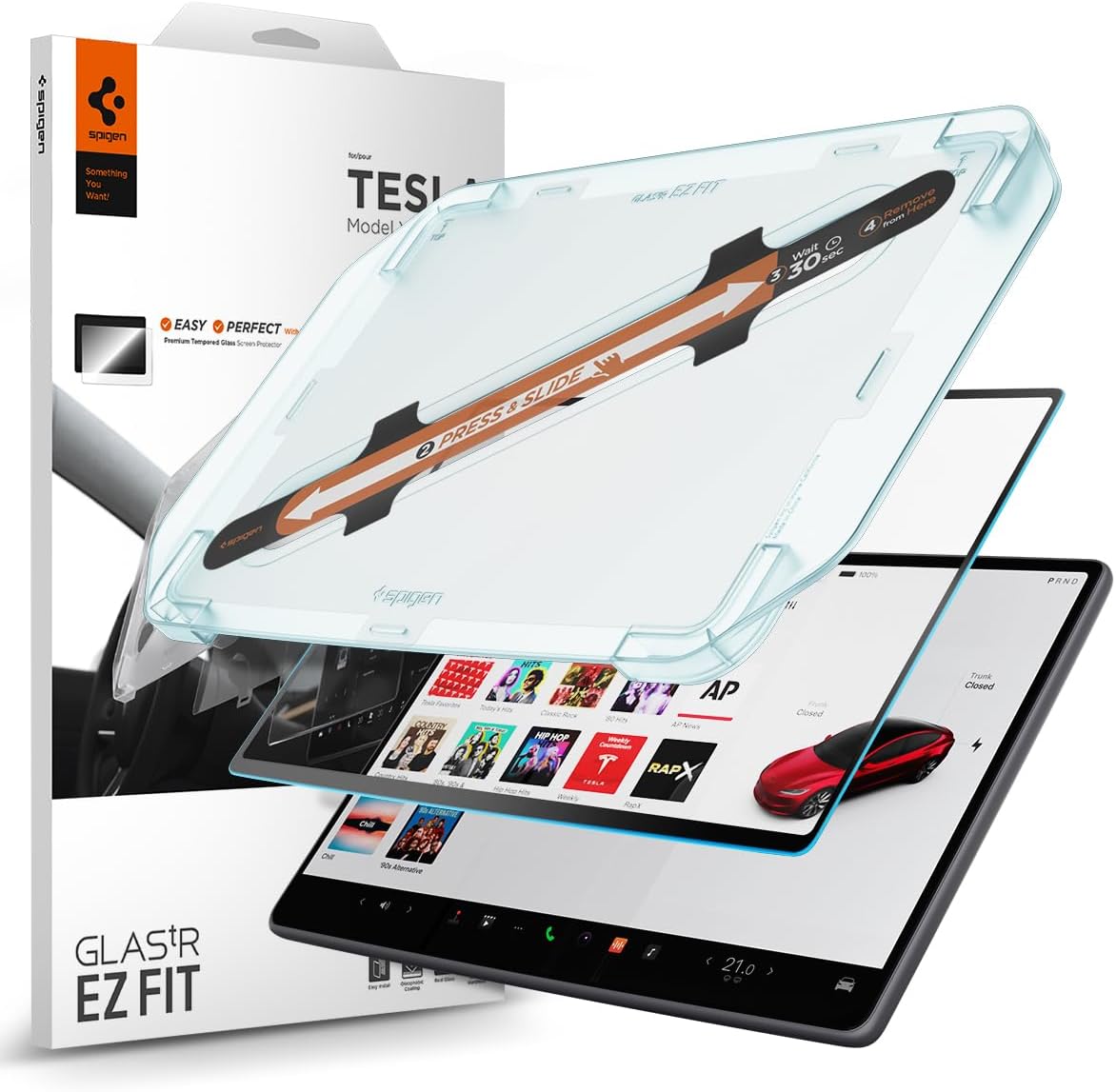
Spigen Tempered Glass for Tesla Model 3/Y
Tempered-glass protection for the touchscreen that kills fingerprints and scratches. Two minutes to install, lasts the life of the car.
As an Amazon Associate, ThinkEV earns from qualifying purchases — at no extra cost to you.

Founder & Chief Editor
Vlad Pereira is the founder and chief editor of ThinkEV.ca, based in Courtenay on Vancouver Island, British Columbia. He covers the global EV industry with a Canadian editorial lens — independent analysis, honest comparisons, and practical tools for drivers at every stage of the …
Frequently asked questions
Does the $1,399 US price translate reasonably for Canadian buyers?
How much real-world range should a Canadian fat-tire rider expect?
Why does the Ranger 3.0 Pro bundle the $257 accessory kit now?
Is Tesla's $550 wall connector actually useful if I don't own a Tesla?
What's the real engineering tradeoff in a folding fat-tire e-bike?
More EV & road-trip finds
Affordable upgrades worth a look — tap any to check the price on Amazon.
 ★ 2,941
Microfiber Cleaning Cloths (Multi-Pack)
View on Amazon ★ 164
★ 164Solar-Powered LED Ambient Light
View on Amazon ★ 401
★ 401Crochet Daisy Rear-View Mirror Charm
View on Amazon ★ 27,769
Car Cup Holder Coasters (4-Pack)
View on Amazon ★ 17,242
LISEN Mini USB-C Car Charger (54W)
View on Amazon ★ 61
★ 61Toddler Car Seat Snack and Cup Tray
View on Amazon ★ 17,839
Qifutan Vent Phone Mount (Military-Grade Clip)
View on Amazon ★ 96,686
PULIDIKI Car Cleaning Gel (Detailing Putty)
View on AmazonRead, Plan, Then Stay Current
Explore our expert articles to understand incentives and ownership costs, use the map to pressure-test charging reality, then subscribe so new EV coverage comes straight to you.
Continue Reading

2027 Hyundai IONIQ 5 Base Price Goes Up $250 to $35,250
One App, 211,000 EV Chargers: Octopus Charge Launches Free in 2026
Shelby Daytona Coupe Sells for $42.9M, Most Expensive American Car Ever
Europe's Gas Stations Are Becoming Charging Stations, By Law

MIT: Zero U.S. ZIP Codes Where Gas Beats EVs on Emissions