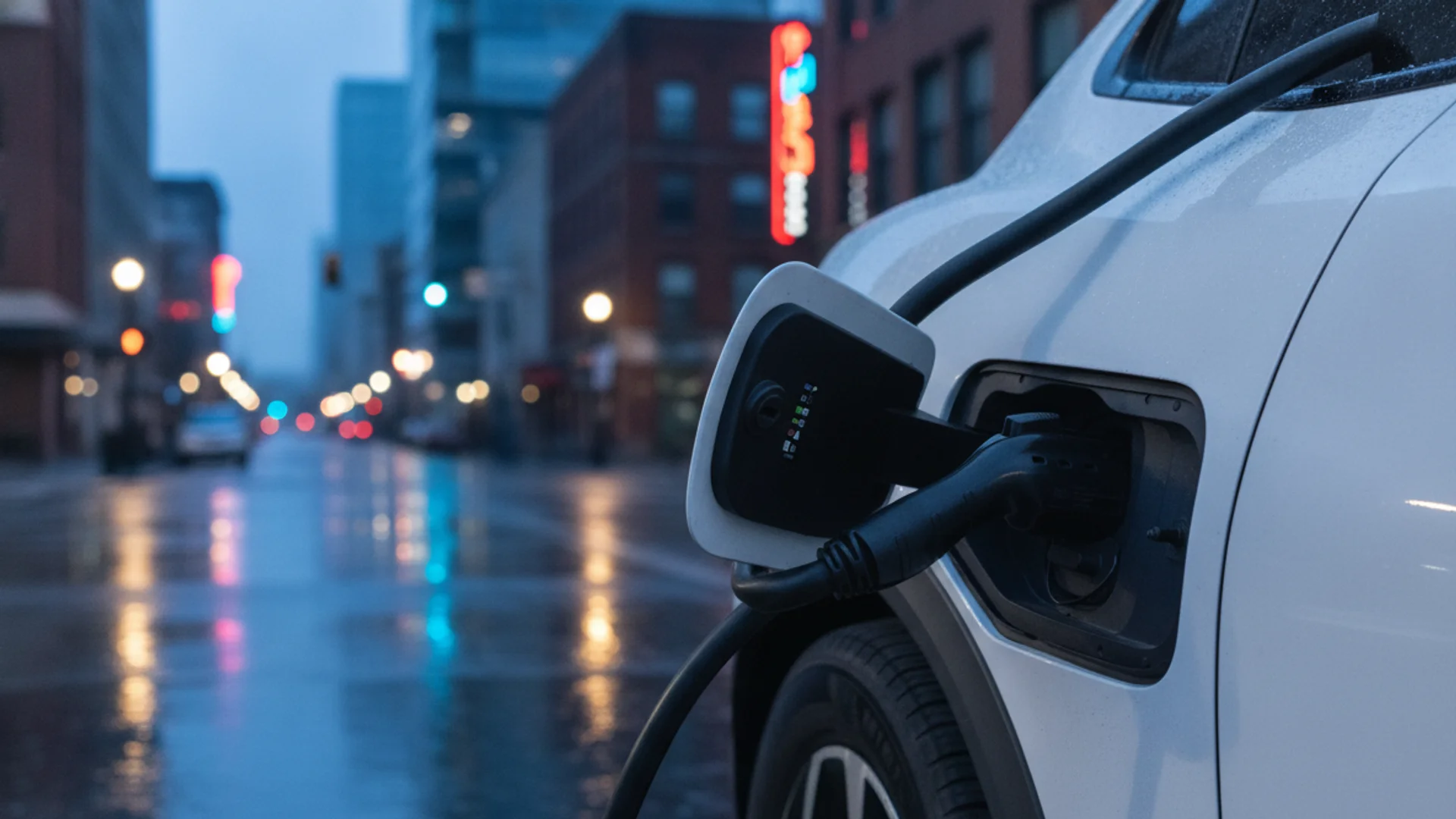
Three plugs walk into a parking garage. Only one of them is going to be there in five years. That is the short version of the North American connector war, and the answer at this point is not close: NACS has become the dominant standard, CCS1 is being phased out for new vehicles, J1772 keeps doing its quiet job at home, and CHAdeMO is on its way out entirely. If you are shopping a 2026 EV, or living with a 2022 one, the practical questions are which port is on the car, which port is on the stall, and which adapter closes the gap.
NACS is the right long-term call. CCS1 owners are not stranded. J1772 is genuinely permanent. The rest of this guide is the receipts.
Key takeaways
- FLO converted 65% of its Canadian charging fleet to NACS connectors by 2026.
- The 2026 Chevy Bolt switching from CCS1 to NACS signals the connector war is effectively over.
- J1772 persists inside every CCS1 plug and every home charger, it isn't going anywhere for at least a decade.
- Ford switched to NACS in 2023 for Supercharger access, not because the plug is smaller.
- CCS1 owners aren't stranded, dual-head stalls are the new norm, and adapters for NACS-only Superchargers are now sold openly.
Quick Answer: Which Connector Does Your EV Use?
If you bought a Tesla in the last decade, you have a NACS port. If you are buying a 2025-or-later Ford, GM, Honda, Nissan, Rivian, or Toyota EV, you also have NACS, Tesla's connector, standardized as SAE J3400, handles both AC and DC through one port up to 250 kW and is being adopted by Ford, GM, Rivian, and others from 2025. If you drive a 2024-or-older non-Tesla EV, you have a J1772 port for AC charging and a CCS1 port for DC fast charging, sometimes physically stacked, sometimes on the same combo plug.
Gear worth having
As an Amazon Associate, ThinkEV earns a small commission from qualifying purchases — at no extra cost to you.
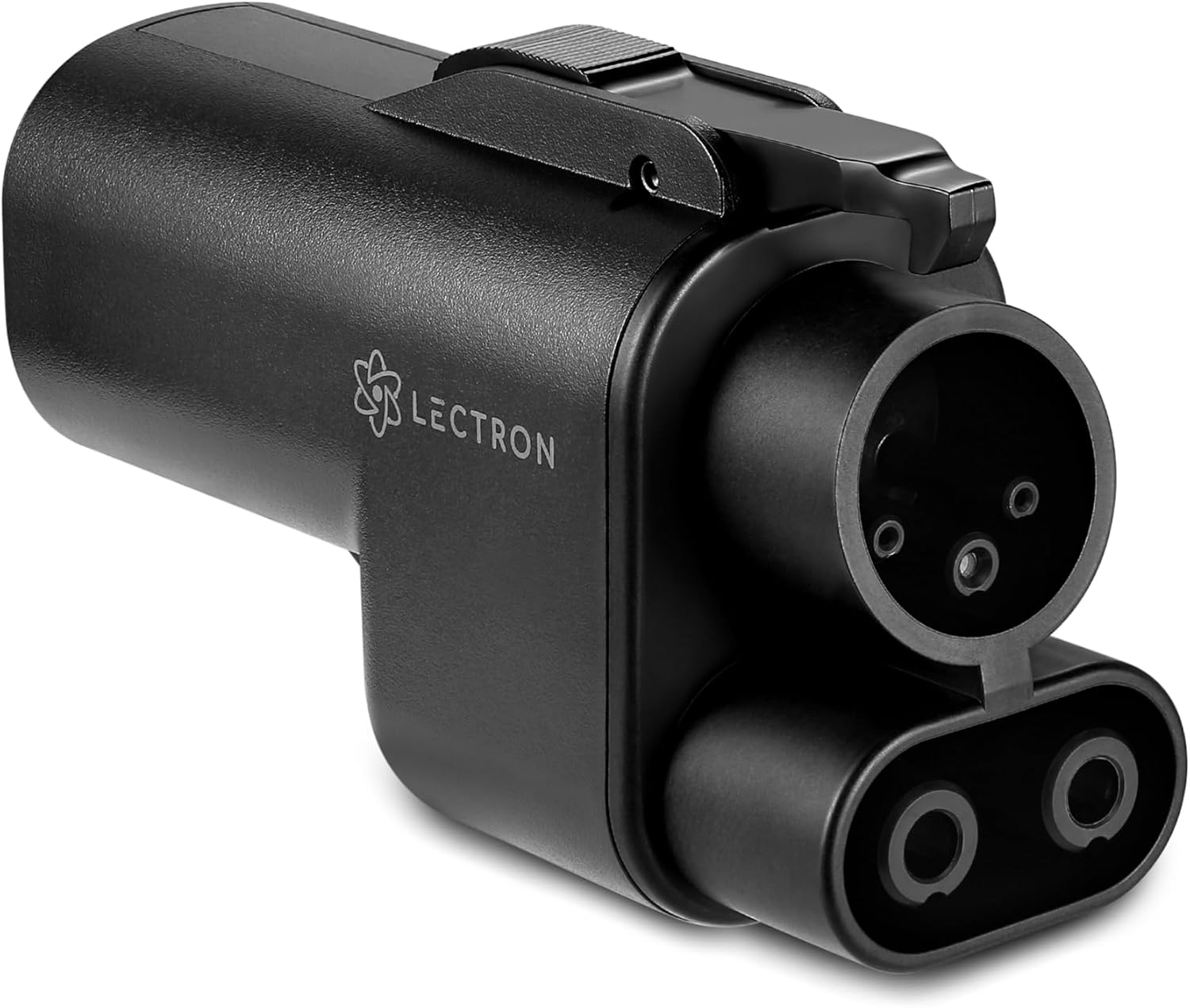
Lectron NACS to CCS Fast-Charge Adapter
Unlock every CCS fast charger for your Tesla, up to 500A DC. Never get stranded at a non-Tesla DC station again.
As an Amazon Associate, ThinkEV earns from qualifying purchases — at no extra cost to you.
The exceptions matter. CHAdeMO is the legacy DC connector on older Nissan Leaf and Mitsubishi Outlander models, now being phased out, plan around it, not with it. And Tesla owners in Canada have always carried a small J1772 adapter in the frunk to use public Level 2 stations. That is the entire universe. Two AC standards, two DC standards, one of each on its way out.
The single-number summary a buyer needs:
- NACS (SAE J3400): one port, AC + DC, up to 250 kW native. Default on every 2025+ Ford, GM, Rivian, Hyundai, Honda, Nissan, Toyota, and Mercedes EV.
- CCS1: two-part combo plug, up to 350 kW DC. Default on non-Tesla EVs 2015–2024. Still supported everywhere; no longer specced into new programs.
- J1772: five-pin AC-only, Level 1 and Level 2 up to ~19 kW. Lives on every home charger and inside every CCS1 plug.
- CHAdeMO: legacy DC only, capped at ~62.5 kW on North American installs. Older Leafs, Outlanders. Skip.
For a longer read on how this argument played out, see the CCS-vs-NACS charging standard war and what it costs current CCS owners.
J1772: The Connector That Never Gets Credit
J1772 is the plug you actually use every day, and almost nobody thinks about it. J1772 (a five-pin connector) handles Level 1 (120V) and Level 2 (240V) AC charging, which covers virtually all home chargers and the bulk of public stations. Every non-Tesla EV sold in Canada plugs into it at home; Teslas use it too, with the small J1772 adapter that ships with the car. If you have ever charged an EV overnight in a Canadian driveway, you used J1772.
It has no DC capability. That is not a limitation, it is a scope decision. A Level 2 charger adds roughly 40 kilometres of range per hour. This is not a speed. It is a philosophy: overnight replenishment, not roadside refuelling. The connector was designed for the job it does, and it does that job on every public Level 2 stall from a Petro-Canada parkade to a municipal community centre.
CCS1 did not replace J1772 for fast charging, it extended it. CCS (CCS1) is the DC fast-charging connector on most non-Tesla EVs to date. It is a J1772 plug with two extra high-power DC pins added below it. The J1772 upper section is literally the same connector, with two beefy DC pins bolted underneath. Which is why J1772 is the standard that is not going anywhere: it lives on inside CCS1, it lives on every home charger, and it lives on the adapter Tesla owners still keep in the frunk. It will keep doing this job quietly for another decade regardless of what happens at fast-charge networks.
CCS1: The Standard That Almost Won
CCS1 was supposed to be the answer. CCS (Combined Charging System) is a charging standard that was developed primarily in Europe by a group of German automakers, plus GM and Ford. In its North American form, termed CCS1, the plug and port layout consists of the round J1772 five-pin layout used for AC charging, plus two stout DC charging pins added in a separate area underneath, amounting to a large albeit unified connector. It was the fast-charge standard on every non-Tesla EV from roughly 2015 through 2024, and CCS (J1772 Combo) adds DC pins for DC fast charging up to 350 kW on most non-Tesla EVs, a real, capable, forward-compatible plug.
The problem was never the engineering. The problem was the network. Electrify Canada built out over 350 CCS1 stations. FLO, Petro-Canada Charging, ChargePoint, and the provincial networks piled on. And meanwhile Tesla ran its Supercharger network, the largest, most reliable, most geographically dense fast-charge network in North America, behind a different plug. When Ford defected to NACS in 2023, the argument was over. GM followed. Everyone followed.
Gear worth having
As an Amazon Associate, ThinkEV earns a small commission from qualifying purchases — at no extra cost to you.

Digital Tire Pressure Gauge
Low tires quietly cost 5 to 10 percent of your range. A 10-second check with an accurate digital gauge keeps every kWh on the road.
As an Amazon Associate, ThinkEV earns from qualifying purchases — at no extra cost to you.
CCS1 owners are not obsolete. Every Electrify Canada stall still works, and dual-head cabinets have quietly become the norm on new builds. The friction point is the NACS-only Supercharger stall, a growing subset of the network, where a CCS1 car needs an adapter that OEMs and Tesla now sell openly. This is a real inconvenience, not a crisis. The clearest technical read on the transition sits in is NACS standardization a mistake, a Canadian buyer's guide, and the network-side reality is mapped in how public EV charging works in Canada: networks and payment.
CCS1 is not banned or sunset. It is just no longer being specced into new vehicle programs. Those are different sentences.
Gear worth having
As an Amazon Associate, ThinkEV earns a small commission from qualifying purchases — at no extra cost to you.

Grizzl-E Classic Level 2 EV Charger (40A)
Canadian-made and rated for minus 40C winters. 40A / 9.6 kW, NEMA 14-50, indoor/outdoor, 24-ft cable. The charger built for Canadian weather.
As an Amazon Associate, ThinkEV earns from qualifying purchases — at no extra cost to you.
NACS (SAE J3400): How Tesla's Plug Became Everyone's Plug
Tesla's connector had a physical advantage the industry ignored for a decade. It handles both AC and DC in one smaller plug. Teslas use it, and a growing list of other automakers are adding NACS ports. One port, not two. Roughly half the size of a CCS1 plug. The engineering was better, and the market did not care, because network compatibility and standards politics ran the argument, until they didn't.
The forcing function was published in September 2024. In September 2024, the J3400 standard was finalized, effectively allowing other automakers and suppliers to develop NACS charging solutions without Tesla's cooperation. Once the standard was open, the argument for holding out on CCS1 collapsed. Ford had already announced. GM followed. By 2025 the roster included Ford, GM, Rivian, Hyundai, Honda, Nissan, Toyota, and Mercedes on the OEM side. NACS became SAE J3400 became the North American default.
The clearest signal that the transition is done is the vehicle nobody expected. The charging port was switched from CCS to NACS on the 2026 Chevrolet Bolt, GM's cheapest, highest-volume EV, previously a CCS1 poster child, moved onto the new plug in a single model year. When a $30,000 economy EV ships with NACS, the standard war is not "unfolding." It is over.
The Canadian network side moved just as fast. FLO converted 65% of its Canadian charging fleet to NACS connectors by 2026. ChargePoint and EVgo followed comparable trajectories in the U.S. Petro-Canada Charging is mixed. Electrify Canada is upgrading. The older municipal CCS1 stations, the ones installed by a city or a utility as one-off pilots between 2019 and 2022, lag hardest, and they will keep lagging, because nobody is replacing capital equipment on a five-year cycle unless someone forces it.
The point about NACS that gets missed: it was Supercharger access, not the connector, that closed the debate. Ford did not switch to NACS because the plug was smaller. Ford switched because a NACS port is the only way its customers get to plug into the 2,000-plus Supercharger stalls in North America without a $200 accessory. Every subsequent adoption ran the same math.
For the software side of the same shift, GM's Energy Pass and the one-login story for 70% of the U.S. fast-charging grid is the closest analogue: hardware standardization was step one, network-account fragmentation is step two.
Gear worth having
As an Amazon Associate, ThinkEV earns a small commission from qualifying purchases — at no extra cost to you.

MECMO J1772 Charger Holster (Wall Mount)
A weatherproof dock for the J1772 nozzle so your charging handle has a home instead of the garage floor.
As an Amazon Associate, ThinkEV earns from qualifying purchases — at no extra cost to you.
Adapters, Canadian Networks, and What to Actually Buy
The adapter market is not confusing if you know which direction you are converting.
CCS1 vehicle plugging into a NACS-only stall: you need a CCS1-to-NACS adapter (also called a "Magic Dock" in Tesla's Supercharger nomenclature when the stall provides one). Tesla sells the adapter directly for around $200 CAD; third-party units from Lectron and A2Z EV cost less and carry mixed reliability reviews. Buy the OEM adapter if the OEM sells one for your car. Ford, GM, Rivian, and Hyundai all now ship or sell branded adapters for their pre-NACS fleets. One number the box does not print: OEM CCS1-to-NACS adapters for Ford and GM cap throughput at roughly 150 kW at Supercharger V3 stalls, the full 250 kW the NACS port can theoretically deliver is reserved for native NACS vehicles. If your CCS1 car normally peaks at 190 kW on a 350 kW Electrify Canada stall, the Supercharger session will be visibly slower. Not broken, just slower.
NACS vehicle plugging into a legacy CCS1 or J1772 station: the J1772-to-NACS adapter is usually bundled with the car. Every Tesla has shipped with one for a decade. New Ford, GM, and Rivian NACS-equipped models include one in the delivery kit. This direction is essentially solved.
Canadian network state, mid-2026:
- Supercharger: open to non-Tesla NACS vehicles across most of southern Canada and expanding north.
- FLO: 65% NACS conversion complete; majority of DCFC stalls now serve both plugs directly.
- Petro-Canada Charging: mixed fleet, check the app before you commit to a stop.
- Electrify Canada: mid-upgrade, dual-head cabinets on new builds.
- Municipal one-off CCS1 stations: stay CCS1-only until physically replaced.
A note on Chinese EVs entering Canada: the Canadian EV tariff cut from 100% to 6.1% on January 16, 2026 opened a 49,000-unit annual quota, and the vehicles coming through it, BYD's early Canadian slate, the Volvo EX30, others queued behind them, arrive with CCS1 ports. That is a deliberate call on the manufacturer side. CCS (J1772 Combo) adds DC pins for DC fast charging up to 350 kW on most non-Tesla EVs, and CCS1 remains compatible with every Electrify Canada, Electrify America, and ChargePoint DC station on the continent. Chinese OEMs are shipping the plug the installed base still supports; the NACS adapter is a $200 problem they are letting the buyer solve. The depreciation side of the same call is worked through in Chinese EV resale value in Canada, a depreciation guide.
Buying advice, unhedged: if you are choosing between two comparable 2026 EVs and one has NACS while the other has CCS1, take NACS. Not because CCS1 is broken, because NACS eliminates the adapter question at Superchargers, which is the network you actually want access to. If your only option is a CCS1 car (an older lease return, a leftover 2024 inventory unit at a real discount), buy it with confidence and budget $200 for the adapter. You are not being sold a paperweight. You are being sold a car that plugs into every fast-charge network in North America with one small accessory.
The connector fight ended eighteen months ago. The network-app fight has barely started, and that one will decide whether your NACS port actually charges your car on a Tuesday night in Kingston.
Gear worth having
As an Amazon Associate, ThinkEV earns a small commission from qualifying purchases — at no extra cost to you.

Lectron Level 2 J1772 Charger (40A, WiFi)
Smart WiFi charger with real-time energy monitoring. 40A / 9.6 kW, J1772 with a NEMA 14-50 plug, schedule charging right from your phone.
As an Amazon Associate, ThinkEV earns from qualifying purchases — at no extra cost to you.

Founder & Chief Editor
Vlad Pereira is the founder and chief editor of ThinkEV.ca, the Canadian electric-vehicle publication he writes and edits from Courtenay, British Columbia. He covers EV pricing, federal and provincial rebates, charging costs, and the Chinese manufacturers now entering Canada, from the buyer's side rather than the press-fleet side. ThinkEV is a venture of Vlad Pereira Online; his writing on health, income and the long game lives at vladpereira.com.
Frequently asked questions
Can I charge my 2022 CCS1 car at a Supercharger today?
Does NACS work at home chargers, or just fast-charge stations?
Which Canadian fast-charge networks still have CCS1 stalls?
Is CHAdeMO completely dead, or can I still find stations?
If I buy a 2025 EV with NACS, do I need any adapters at all?
More EV & road-trip finds
Affordable upgrades worth a look — tap any to check the price on Amazon.
 ★ 87
★ 87Car Window Sun Shades for Kids (4-Pack)
View on Amazon ★ 68
★ 68WeatherTech FloorLiner for Tesla Model 3
View on Amazon ★ 12,051
Windex Electronics Screen Wipes
View on Amazon ★ 314
★ 314Mini USB LED Ambient Lamps (4-Pack)
View on Amazon ★ 900
★ 900Personalized Photo Car Air Freshener
View on Amazon ★ 979
★ 979Leather Headrest Purse Hook
View on Amazon ★ 692
★ 692USB-A to USB-C CarPlay Adapter (3-Pack)
View on Amazon ★ 121
★ 121Foldable Windshield Sun Umbrella
View on AmazonRead, Plan, Then Stay Current
Explore our expert articles to understand incentives and ownership costs, use the map to pressure-test charging reality, then subscribe so new EV coverage comes straight to you.
Continue Reading
Is NACS Standardization a Mistake? A 2026 Guide
Why Is My EV Charging Slow? The Three Real Layers
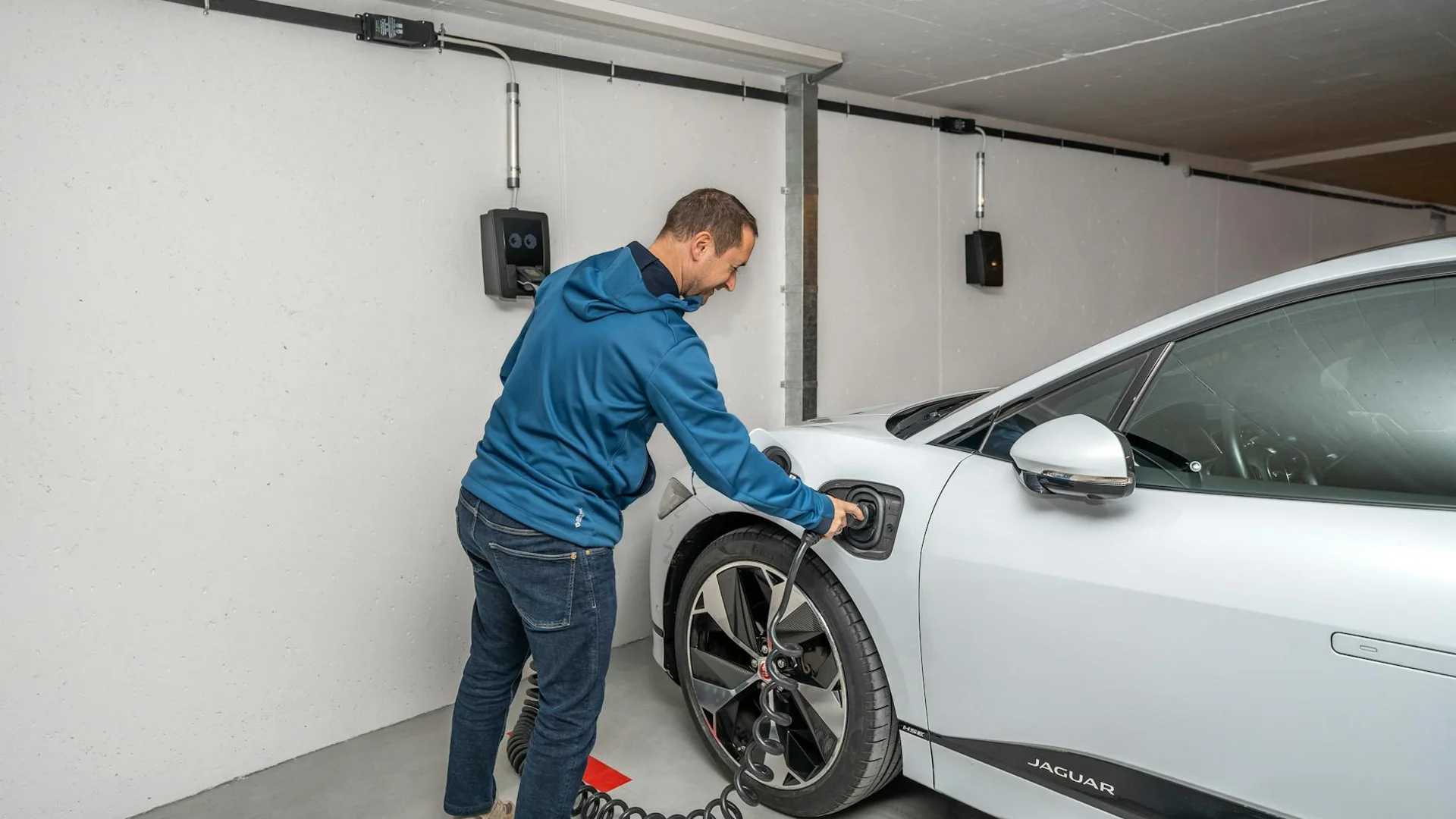
Level 2 Plug-and-Charge: J1772 vs CCS Data Explained
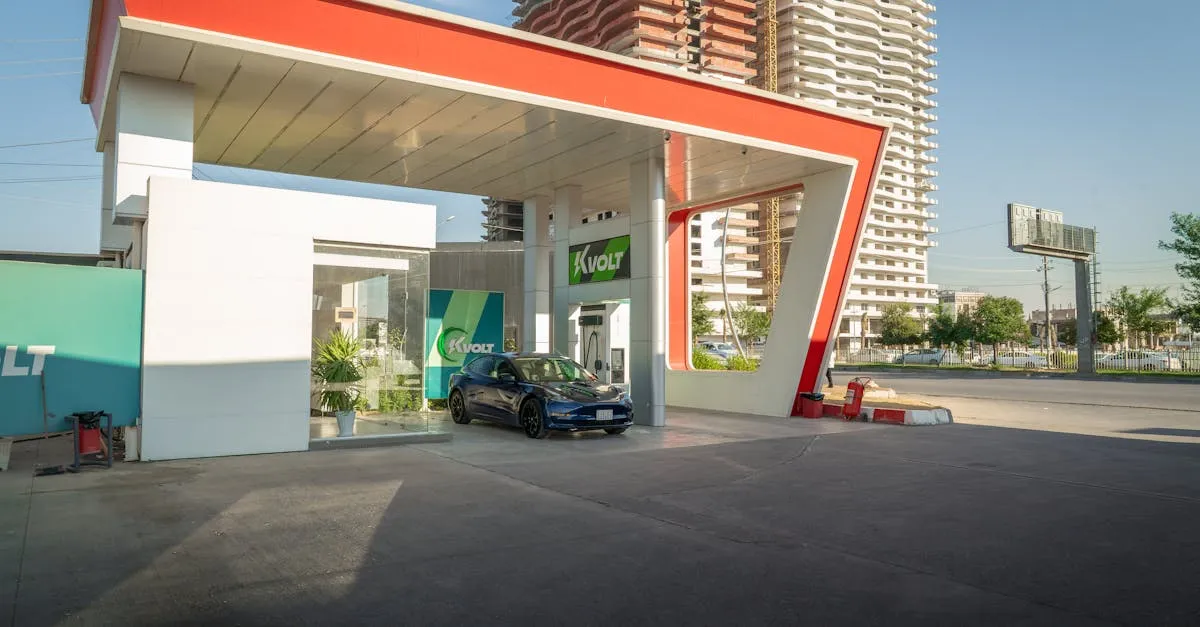
Tesla and EVgo's 1,000 New Fast Chargers in Canada
EV Battery Degradation: What's Normal and How to Slow It