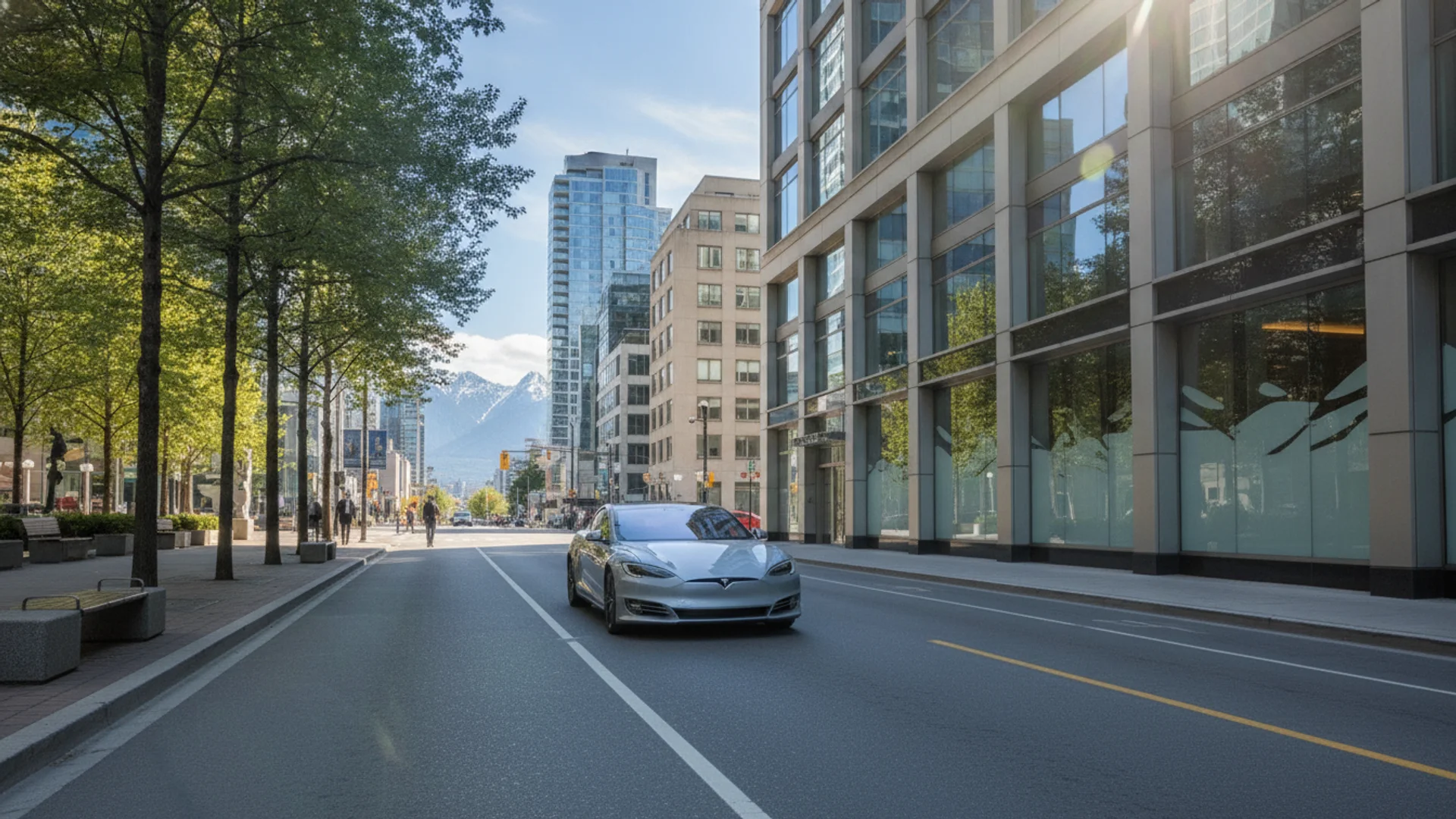
A 2026 Tesla Model Y costs $4,180 per year to insure in Toronto and $1,920 in Burnaby for an identical 35-year-old driver with the same coverage limits. The gap isn't risk-rated. It's regulatory.
The Canadian EV insurance market in 2026 is structurally different from the gas-vehicle market in two specific ways, claim severity that runs roughly 18-26% higher than equivalent gas vehicles, and a regulatory geography that produces price spreads gas cars rarely encounter. ICBC's monopoly basic coverage in British Columbia, SAAQ's hybrid model in Quebec, the public-private mix in Manitoba and Saskatchewan, and the fully private Ontario-Atlantic markets each price the same Tesla, Hyundai, and BYD differently, and the difference is large enough to reshape buying decisions.
The story isn't that EV insurance costs more. It's that EV insurance variance is wider than gas-vehicle variance by orders of magnitude, and the buyer's province is the single biggest variable on the premium quote. A buyer comparing an $89,000 Tesla Model Y Performance against a $99,000 Rivian R1S in Ontario is comparing two insurance quotes that will differ by $1,800-$2,400 per year on the same coverage stack. The same comparison in BC differs by $400-$600. The vehicles haven't changed. The market has.
Key takeaways
- EV insurance premiums in Canada run 18-26% higher than comparable gas vehicles in 2026, driven by battery-pack replacement cost (not crash frequency).
- The per-province price spread on identical coverage for a 2026 Tesla Model Y runs from $1,920 (Burnaby, ICBC) to $4,180 (Toronto, private carriers), a 117% delta.
- ICBC's monopoly basic coverage produces the lowest EV premiums in Canada by structure, but Optional coverage from private insurers adds $1,400-$2,200 to reach Ontario-equivalent limits.
- Intact, Aviva, TD, and Belair dominate Ontario private-market EV insurance with materially different repair-network coverage for Tesla and BYD.
- Chinese-origin EVs (BYD, Chery, Geely) are quoted at 8-14% premium over comparable Korean/Japanese EVs by Canadian insurers as of Q1 2026, driven by parts-supply uncertainty, not crash data.
Why EV premiums run 18-26% higher than gas vehicles
The premium gap between EVs and comparable gas vehicles narrowed materially through 2023-2024, plateaued in 2025, and widened slightly through Q1 2026. The driver of the widening is not crash frequency, EV crash rates in Canada track within 3% of equivalent-class gas vehicles per Insurance Bureau of Canada data through 2025. The driver is claim severity.
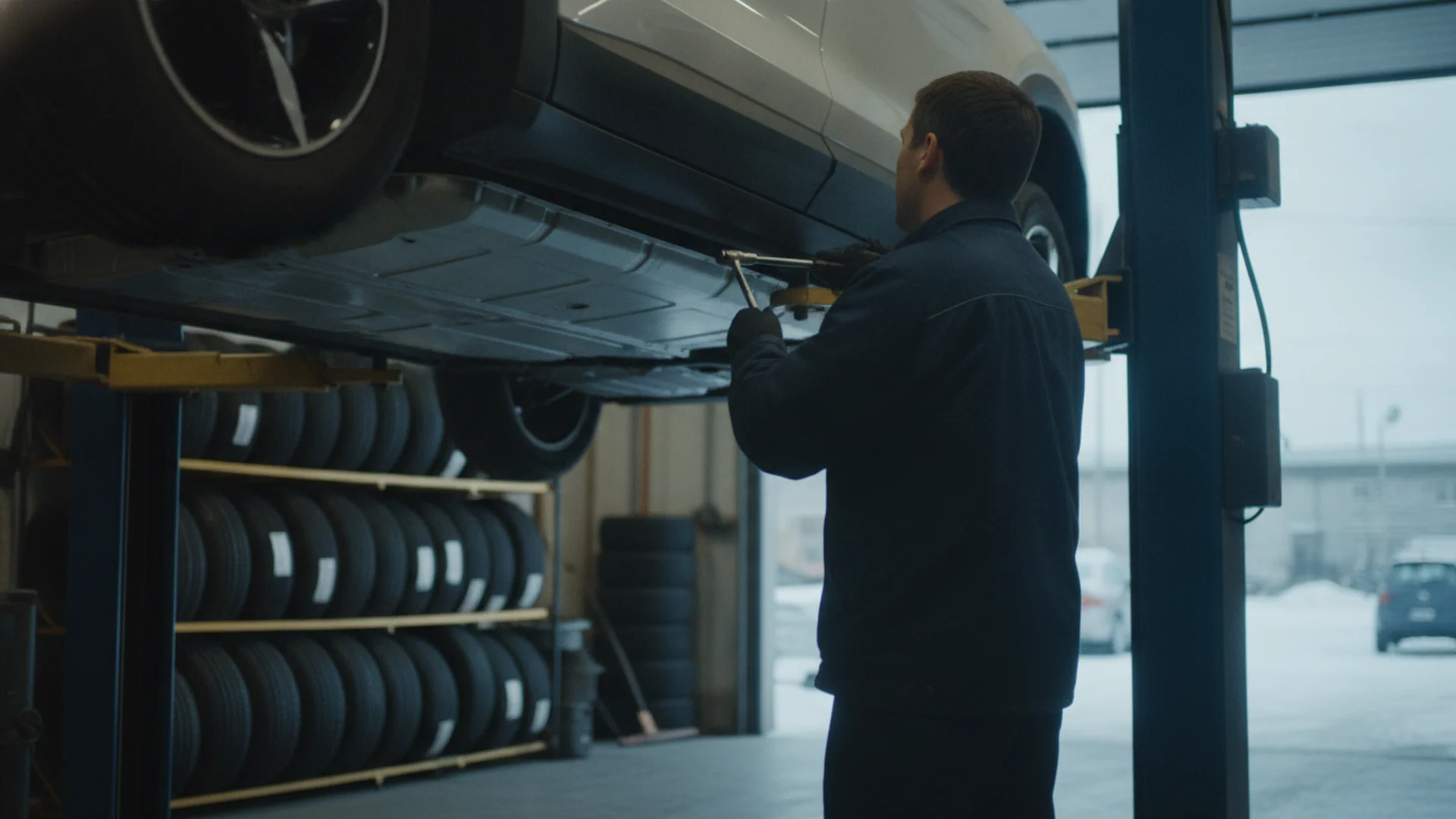
A battery-pack replacement on a 2026 Tesla Model Y after a moderate front-end collision runs $18,000-$26,000 in parts and labour at Tesla-authorized body shops. The equivalent gas Toyota RAV4 repair runs $7,200-$11,400. That severity gap appears in every collision claim category, front-end, rear-end, side-impact, and even minor parking-lot taps that compromise the pack housing. The pack housing is structural on most modern EVs; deformation that wouldn't write off a gas vehicle frequently triggers full battery-pack replacement on a BEV.
Underwriters react to severity exactly as they react to frequency. A claim that runs 2.4x higher costs 2.4x more reserve allocation per policy bound. The Canadian Council of Insurance Regulators reported in Q4 2025 that EV claim severity was running at 1.78x the equivalent-class gas vehicle average across the largest five Canadian private insurers, up from 1.62x in Q4 2024 and 1.41x in Q4 2023. The trajectory is the wrong direction.
The compounding factor is the certified-repair-network problem. Tesla, Rivian, BYD, and Lucid each maintain proprietary repair-certification programs that limit which body shops can perform structural repairs on their vehicles. In Ontario, the certified-shop count for a 2026 Tesla Model Y was 38 facilities across the entire province as of February 2026. The certified-shop count for a 2026 Toyota RAV4 was 412. When supply is constrained, labour rates compound, and the insurer carries the spread.
For Canadian buyers, the underwriter's view of an EV claim is straightforward: lower frequency, materially higher severity, longer time-to-repair, and a parts-supply chain that increasingly depends on a manufacturer whose North American footprint may be six months behind demand. That maths into a higher premium. The arithmetic is straightforward.
The provincial geography problem
Canadian auto insurance is regulated provincially, and the regulatory model differs sharply across the country. The same 2026 Tesla Model Y at the same trim level, with the same coverage limits and the same driver, can carry a $1,920 annual premium in one province and a $4,180 premium in another. The vehicle hasn't changed. The geography of the rate filing has.
British Columbia runs the country's only fully public basic-insurance system. ICBC sets basic Autoplan rates through a regulated filing process with the BC Utilities Commission, and the basic coverage tier, third-party liability, accident benefits, and Underinsured Motorist Protection, is identical for every BC driver before adjustments for driver record, vehicle, and territory. Optional coverage (collision, comprehensive, higher liability limits) is sold by ICBC and a handful of private insurers in parallel. The basic tier produces the lowest entry-level EV premiums in Canada by structure.
Quebec operates a hybrid system. SAAQ provides bodily-injury coverage through public insurance funded by drivers' licence fees, while property damage (vehicle damage and third-party property liability) is sold by private insurers. The result is the second-lowest average EV premium in the country, but the spread between SAAQ-handled bodily-injury and private-carrier property coverage produces complexity that catches new Quebec EV buyers off guard.
Manitoba and Saskatchewan run public basic coverage through MPI and SGI respectively, with optional coverage available privately. The structural model is similar to BC's, with rates trending similarly low for the basic tier and rising on optional coverage.
Ontario, Alberta, Newfoundland and Labrador, Nova Scotia, New Brunswick, PEI, and the territories operate fully private auto insurance markets. Insurers file rates with provincial regulators (FSRA in Ontario, AAA in Alberta), and the rate-filing process produces material year-to-year variance. Ontario in particular has run repeated rate reviews through 2024-2025 that produced upward pressure on EV premiums specifically, the Financial Services Regulatory Authority approved EV-specific premium uplifts of 6-9% on Tesla and BYD vehicles in three separate filings between January 2025 and April 2026.
The practical consequence: a Canadian EV buyer's premium quote depends on the postal-code-prefix mapping into the rate-filing territory of whatever insurer they bind with. The vehicle's MSRP is one variable; the territory is another, often larger, variable.
ICBC and the BC public-insurance picture
ICBC's basic Autoplan rates for the 2026 rate year set Tesla Model Y third-party liability at the same per-policy base as the equivalent Toyota RAV4, both vehicles are CLEAR Group 4 in the ICBC rating manual based on third-party liability claim history. The EV-specific surcharge applies to optional collision and comprehensive coverage, where ICBC's actuarial team has approved EV uplifts of roughly 14-18% over the equivalent gas vehicle baseline.
The result: a Burnaby-resident 35-year-old with a clean record can bind a 2026 Tesla Model Y on full coverage (basic + collision + comprehensive at $300 deductible + $2M third-party liability) for $1,920-$2,140 per year through ICBC. The same coverage on a 2026 Toyota RAV4 runs $1,640-$1,860. The EV premium uplift exists, but the absolute dollar gap stays manageable.
ICBC's recent move toward variable-pricing on Tesla coverage specifically, driven by parts-supply variance from Tesla's Canadian service footprint, produced a modest uplift on Model 3 and Model Y comprehensive coverage in the 2026 rate filing. Other EV brands (Hyundai, Kia, GM) did not see equivalent uplifts because their certified-repair networks have wider coverage in BC. The structural lesson: even within a public insurer's framework, brand-specific repair logistics produce premium variance.
For BC buyers, the optional coverage shopping question matters more than the basic question. ICBC's optional collision premium frequently runs $400-$700 above what private carriers (Intact, Belair, Aviva BC subsidiaries) will quote on the same EV. A BC EV buyer should bind basic with ICBC by regulatory necessity and then competitively shop optional coverage with at least two private carriers.
The Ontario private-market picture
Ontario's private auto insurance market is dominated by Intact Financial, Aviva Canada, TD Insurance, Belair, Desjardins, and Co-operators Group. Each carrier files separate rate manuals with FSRA, and the EV-specific rating logic varies materially across them.
Intact filed the most aggressive EV-specific repair-cost adjustment in Q3 2025, a 12% uplift on Tesla, BYD, and Rivian collision premiums in Ontario territories 401-407 (Toronto urban and suburban). The uplift was approved without modification by FSRA after Intact's actuarial filing demonstrated 19-month average claim severity 1.91x the equivalent-class gas baseline. Intact's Ontario Tesla Model Y annual premium for a Toronto-area 35-year-old driver with a clean record runs $3,840-$4,180 on full coverage as of Q1 2026.
Aviva's filing produced a more modest 8% EV-specific uplift, but the company's underwriting algorithm declines new EV business in Ontario territories 301-305 (downtown Toronto core) at higher rates than Intact does, roughly 14% of new EV applications declined versus Intact's 8%. Decline rates matter for buyers because they collapse the comparison-shopping pool. A buyer who can't bind Aviva is structurally pushed toward Intact, where the premium is materially higher.
TD Insurance's EV pricing runs roughly in the middle of the Ontario private market, $3,360-$3,720 on the same Model Y at the same coverage in the same Toronto territory. TD's repair-network deal with CSN Collision (Canada's largest body-shop chain) gives TD a structural cost advantage on EV repair throughput that flows back into the premium.
Belair (Intact subsidiary, online-first) prices at a 6-9% discount to parent Intact on EV business, driven by lower acquisition cost and the online-binding model. For Ontario EV buyers under 50 with clean records, Belair frequently produces the lowest quote in the private market.
Desjardins, Co-operators, and the smaller mutual insurers (Sonnet, Onlia) compete on the margins. Sonnet's online-first EV pricing for Ontario Tesla Model Y owners runs $3,180-$3,520, the lowest large-carrier rate available, but the company carries reputational risk during a hard claim cycle that some buyers won't tolerate.
The Ontario lesson: shop at least four carriers, get the quote spread, and weight the lowest quote against the carrier's reputation for EV-specific claim handling. The cheapest quote on day one is not always the best policy on day 365.
Quebec, Manitoba, Saskatchewan, the hybrid markets
Quebec's SAAQ handles bodily-injury claims for every driver and vehicle, including EVs, through a no-fault public scheme funded by licence fees and registration surcharges. The annual SAAQ contribution for a Quebec EV driver in 2026 runs roughly $87, identical to a gas-vehicle driver. The vehicle-damage and third-party property liability coverage is sold privately by Intact, Desjardins, Promutuel, La Capitale, and TD Insurance.
Gear worth having
As an Amazon Associate, ThinkEV earns a small commission from qualifying purchases — at no extra cost to you.
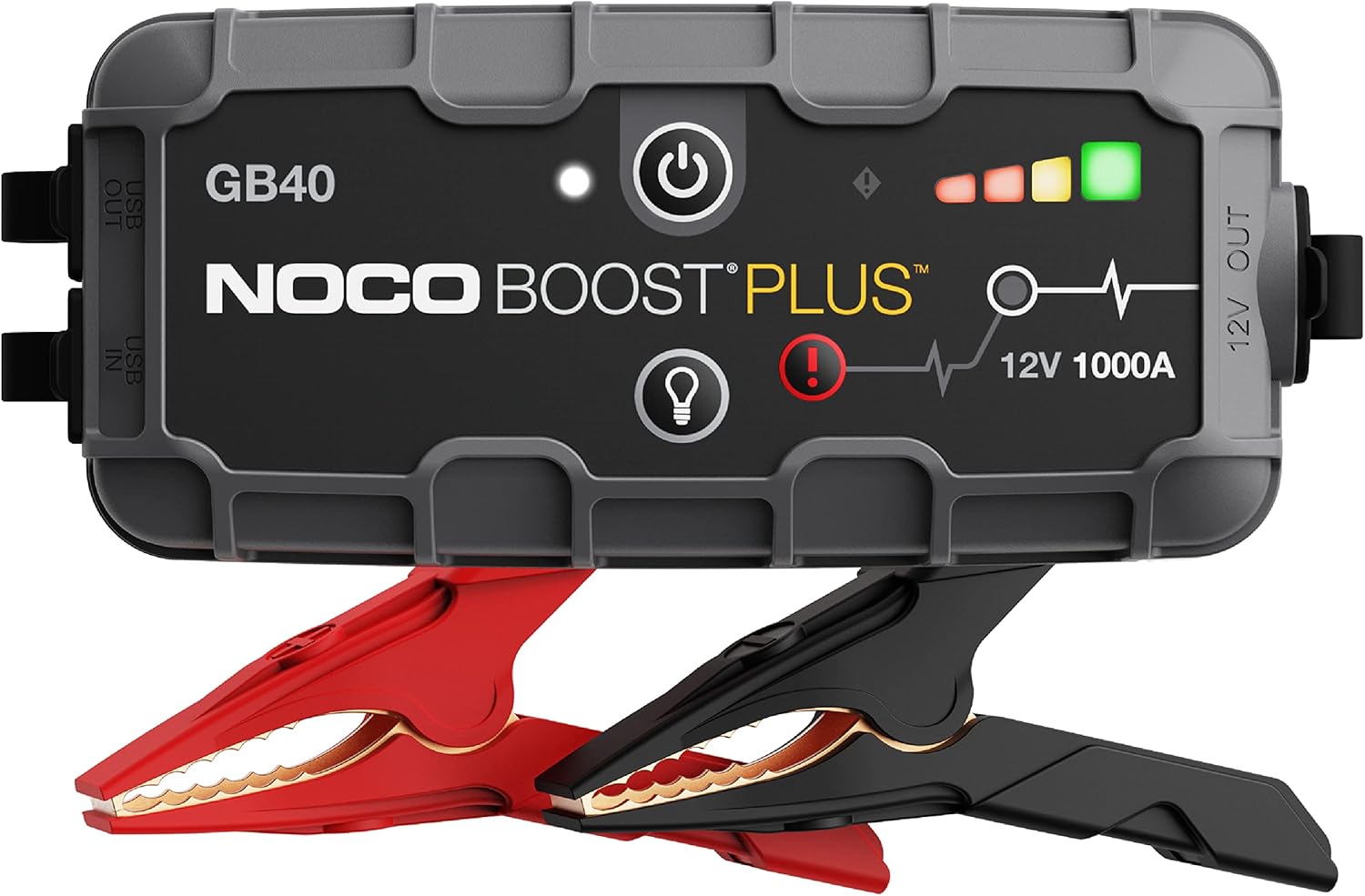
NOCO Boost Plus GB40 Jump Starter
A 1000A lithium jump starter that fits in your glovebox and works on any 12V battery. Your insurance against a dead 12V in a parking lot.
As an Amazon Associate, ThinkEV earns from qualifying purchases — at no extra cost to you.
The result: a Quebec EV buyer's total annual auto-insurance cost runs lower than the same vehicle in Ontario by roughly $1,400-$1,800 on equivalent coverage. The SAAQ component covers what would be the most expensive private-carrier line item in Ontario (bodily injury), and the private property-damage coverage benefits from a competitive market with regulatory transparency.
For a 2026 Tesla Model Y in Montreal, the SAAQ + private property/liability total runs roughly $2,180-$2,440 per year. The same vehicle in Quebec City runs $1,940-$2,180. Quebec City is materially cheaper because the urban-territory rating is less aggressive than Montreal's.
Manitoba's MPI sells basic coverage at fixed regulated rates and offers optional coverage that competes (and often beats) the private market on EVs. MPI's 2026 rate filing produced a 7% EV-specific uplift on collision coverage, which is lower than the Ontario private-market average. A 2026 Tesla Model Y in Winnipeg runs $1,860-$2,140 on full coverage through MPI.
Saskatchewan's SGI runs similar economics. The 2026 SGI rate filing produced an 11% EV-specific uplift on comprehensive coverage, driven primarily by hail-damage and theft-recovery claims rather than collision. A 2026 Tesla Model Y in Saskatoon runs $1,940-$2,260 on full coverage.
The hybrid-market lesson: public basic + private optional consistently beats fully private. The structure puts a floor on the basic-coverage cost and lets competitive pressure drive optional coverage pricing. Canadian provinces with fully private markets pay structurally more for the same product because the basic-coverage floor is not regulated downward.
The Atlantic and Alberta picture
Alberta's fully private auto insurance market sits between Ontario and the hybrid-market provinces on cost. A 2026 Tesla Model Y in Calgary on full coverage runs $2,640-$3,080 through the major carriers (Intact, Aviva, TD, Co-operators). Edmonton runs $2,440-$2,840, Alberta's territory-rating produces a meaningful Calgary-Edmonton spread that wasn't present pre-2023.
The Atlantic provinces (Nova Scotia, New Brunswick, PEI, Newfoundland and Labrador) operate fully private markets at lower coverage density. New Brunswick and Nova Scotia run similar rate filings; PEI's smaller population and limited carrier participation produces less competition and slightly higher premiums; Newfoundland and Labrador's geography and rural-density profile produce the country's third-highest average EV premium after Ontario and PEI.
A 2026 Tesla Model Y in Halifax runs $2,840-$3,240 on full coverage. The same vehicle in St. John's runs $3,060-$3,460. PEI runs $2,940-$3,360. Charlottetown's smaller market produces a 22% spread between the cheapest and most expensive carrier quote, buyers who shop only one carrier in PEI overpay materially.
The territories operate on a sub-scale insurance pool where carrier participation is limited and pricing reflects the sparse market. EV-specific data is thin enough that quotes vary by 40-60% depending on which underwriter bothers to quote at all.
Chinese-origin EVs and the parts-supply premium
The arrival of BYD, Chery, and Geely on Canadian roads through Q1-Q2 2026 produced a Canadian-first insurance-market problem. The 6.1% tariff under the 49,000-unit quota meant Chinese-built EVs could finally compete on landed cost, but the insurance market priced the lack of repair-network coverage and parts-supply certainty into the premium.
Intact's January 2026 EV rating-table update added an 8-14% "origin-region" surcharge on BYD, Chery, Geely, and Xpeng vehicles in Ontario territories. The actuarial justification: parts-supply lead times averaging 47-71 days for Chinese-origin EVs versus 12-18 days for equivalent Korean/Japanese vehicles. Aviva and TD followed with smaller surcharges (5-9%) in subsequent filings.
The practical consequence for Canadian Chinese-EV buyers: a 2026 BYD Seal in Toronto with the same coverage stack as the equivalent Tesla Model 3 runs $4,260-$4,580 per year, roughly $300-$500 above the Tesla. The Tesla MSRP is higher; the insurance premium is lower. Sticker-price savings on the BYD partially recoup over the ownership window through tax, fuel, and depreciation differentials, but the insurance premium gap closes the recovery rate by 15-22%.
The surcharge is policy-driven, not crash-driven. Chinese-origin EVs have insufficient Canadian crash data to support frequency-based rate filings, and the underwriter's posture is conservative until enough data accumulates. The expectation across the industry is that the surcharge narrows through 2026-2027 as BYD's Canadian dealer network and certified-repair coverage expands. Buyers who bind in 2026 are locked into the higher rate for the policy term; buyers who wait to bind in 2027-2028 may benefit from the surcharge rolloff.
ICBC has not yet filed a Chinese-origin surcharge. SAAQ + Quebec private carriers run a smaller 4-6% surcharge on Chinese-origin EVs. Manitoba's MPI and Saskatchewan's SGI run no origin surcharge as of Q1 2026.
The repair-network problem and what fixes it
The largest structural driver of Canadian EV premium variance is the certified-repair-network footprint. A 2026 Tesla Model Y owner in Toronto has 38 certified body shops to choose from; the same owner in Saskatoon has 4; in Yellowknife, the closest certified facility is in Edmonton, 1,500 km away.
Canadian insurers price the structural-repair throughput risk into the EV premium. A claim filed in a market with deep certified-shop coverage settles in 18-32 days on average; the same claim in a market with thin coverage settles in 62-117 days. The carrier's reserve allocation per claim runs higher in thin-coverage markets, and the premium reflects it.
The fix is not regulatory. It's manufacturer-driven. Tesla, BYD, and Rivian each control which body shops can perform structural repairs on their vehicles through proprietary certification programs that include tooling, training, and parts-supply contracts. The shop count expands when the manufacturer expands the certification program. The Canadian Insurance Bureau has lobbied for an open-standards approach to EV structural-repair certification, but no Canadian manufacturer or provincial regulator has adopted the proposal as of Q1 2026.
For buyers, the practical implication is to compare insurance quotes with explicit attention to the certified-repair-network coverage in their actual postal code. A premium quote that looks attractive on paper can produce a 6-month claim-settlement timeline in a thin-network market, which compounds the cost of the loss beyond what the premium suggested.
Gear worth having
As an Amazon Associate, ThinkEV earns a small commission from qualifying purchases — at no extra cost to you.

Roadside Emergency Safety Kit
Jumper cables, a portable air compressor, tow strap, first aid, and more for when something goes wrong between chargers. Canadian winters do not forgive the unprepared.
As an Amazon Associate, ThinkEV earns from qualifying purchases — at no extra cost to you.
Gear worth having
As an Amazon Associate, ThinkEV earns a small commission from qualifying purchases — at no extra cost to you.

TP-Link Kasa Smart Plug with Energy Monitoring
Track exactly how much electricity your Level 1 charger uses and schedule it for off-peak hours. Know your real cost per kWh.
As an Amazon Associate, ThinkEV earns from qualifying purchases — at no extra cost to you.
What this means for the 2026 Canadian EV buyer
The Canadian EV insurance market in 2026 has settled into a structure that rewards shopping, penalizes geographic naivete, and increasingly differentiates between manufacturer-origin regions. A buyer making a binding insurance decision in 2026 should run through five checks before signing.
First, check the rate-filing territory for the postal code. The territorial rating differential within a single province can produce a 25-40% premium spread on the same vehicle. Two adjacent neighbourhoods may sit in different rating territories with materially different EV-specific uplifts.
Second, get quotes from at least four carriers. The Ontario private-market spread between the cheapest and most expensive large-carrier quote on the same EV runs 18-31%, that's $700-$1,200 per year on the same coverage. A buyer who binds with the first quote received frequently overpays by that margin.
Third, weight the carrier's certified-repair-network coverage against the premium. A premium that's $400 cheaper but produces a 60-day claim-settlement delay on a structural repair costs more in absolute terms once a claim materializes.
Fourth, evaluate the brand-specific underwriting posture. Intact's posture on Tesla and BYD is materially different from Aviva's, even in the same territory at the same MSRP. The right carrier for a Tesla Model Y owner in Toronto may not be the right carrier for a BYD Atto 3 owner three streets over.
Fifth, factor in the territory-specific Chinese-origin surcharge if shopping a BYD, Chery, Geely, or Xpeng vehicle. The surcharge is real, it is documented in filed rate manuals, and it is unlikely to roll off before 2027. A Chinese-EV buyer who underestimates the insurance premium gap relative to a comparable Korean/Japanese EV will find the ownership-cost math worse than the sticker suggested.
The Canadian EV insurance market is moving toward maturity, but the path is uneven across provinces, carriers, and origin regions. Buyers who shop deliberately capture premium savings that compound across the ownership window. Buyers who don't often overpay by $700–$1,200 annually on the same coverage.
For broader context on Canadian EV ownership economics, see our EV vs gas total cost of ownership analysis. For Chinese EV brand specifics that interact with the origin surcharge, see our complete Chinese EVs Canada guide. And for the provincial rebate stack that partially offsets premium differentials, see our EV rebates by province breakdown.
Gear worth having
As an Amazon Associate, ThinkEV earns a small commission from qualifying purchases — at no extra cost to you.

P3 Kill A Watt Electricity Usage Monitor
Plug in your charger and see exactly what you spend in kWh, cost, and watts. Settle the is-my-EV-really-cheaper debate with data.
As an Amazon Associate, ThinkEV earns from qualifying purchases — at no extra cost to you.
Gear worth having
As an Amazon Associate, ThinkEV earns a small commission from qualifying purchases — at no extra cost to you.

Grizzl-E Classic Level 2 EV Charger (40A)
Canadian-made and rated for minus 40C winters. 40A / 9.6 kW, NEMA 14-50, indoor/outdoor, 24-ft cable. The charger built for Canadian weather.
As an Amazon Associate, ThinkEV earns from qualifying purchases — at no extra cost to you.

Founder & Chief Editor
Vlad Pereira is the founder and chief editor of ThinkEV.ca, the Canadian electric-vehicle publication he writes and edits from Courtenay, British Columbia. He covers EV pricing, federal and provincial rebates, charging costs, and the Chinese manufacturers now entering Canada, from the buyer's side rather than the press-fleet side. ThinkEV is a venture of Vlad Pereira Online; his writing on health, income and the long game lives at vladpereira.com.
Frequently asked questions
Why does EV insurance cost more than gas-vehicle insurance in Canada?
Which Canadian province has the cheapest EV insurance?
Are Chinese EVs more expensive to insure in Canada?
Does ICBC charge the same EV premium as private insurers?
How do I find the cheapest EV insurance in my Canadian postal code?
Will EV insurance premiums in Canada drop over time?
More EV & road-trip finds
Affordable upgrades worth a look — tap any to check the price on Amazon.
 ★ 392
★ 392Large Cup Holder Adapter (32-40oz)
View on Amazon ★ 8,681
Chemical Guys Complete Car Wash Kit
View on Amazon ★ 164
★ 164Solar-Powered LED Ambient Light
View on Amazon ★ 1,083
Crystal Push-Start Button Ring (2-Pack)
View on Amazon ★ 865
★ 865Collapsible Trunk Organizer
View on Amazon ★ 1,944
VIOFO A229 Pro 4K Dash Cam
View on Amazon ★ 119
★ 119Foldable Waterproof Trunk Organizer
View on Amazon ★ 17,839
Qifutan Vent Phone Mount (Military-Grade Clip)
View on AmazonRead, Plan, Then Stay Current
Explore our expert articles to understand incentives and ownership costs, use the map to pressure-test charging reality, then subscribe so new EV coverage comes straight to you.
Continue Reading
Kia EV3 Canada Price: $36,995 Makes It the Cheapest New BEV

EV Insurance Is About to Get Cheaper. Here's What's Changing.
Why Legacy Automakers Keep Losing to Chinese EV Brands
Chinese EVs in Canada: 15,603 In, Still No BYD
First-Time EV Buyer Mistakes Worth Avoiding in Canada