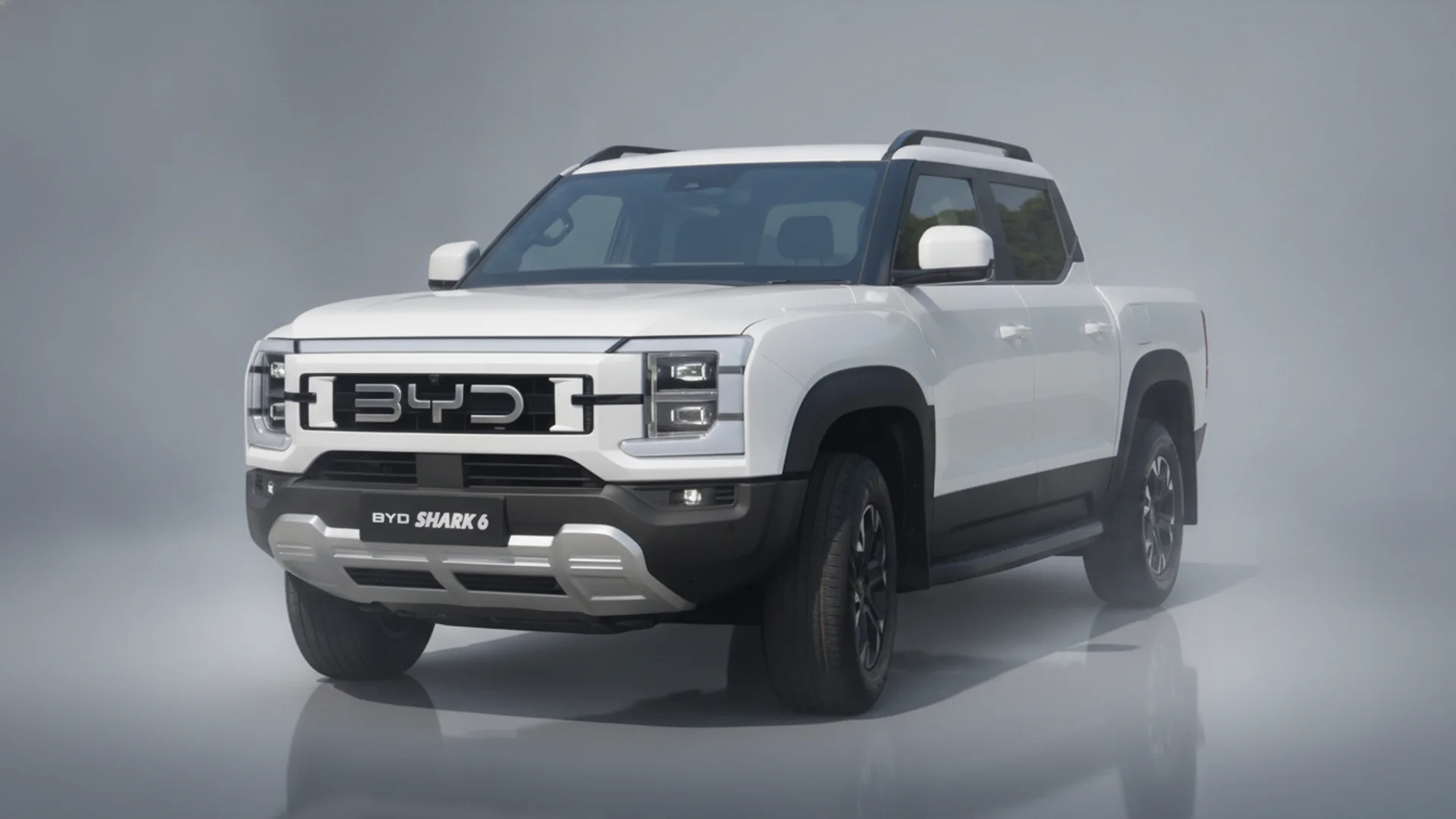
Ford Ranger starts at $43,000 in Canada. Toyota Tacoma starts at $48,000. The question for the BYD Shark 6 is not whether it undercuts the incumbents, it will, but whether the savings actually reach the buyer or get absorbed somewhere between the Shenzhen export invoice and the Canadian dealer floor.
I'd put the defensible mid-trim band at $55,000 to $62,000 CAD, and I refuse to round it to a single number. The reasons sit downstream of the January 16, 2026 tariff reset, the EVAP country-of-origin wall, and a dealer network still working out what a first-wave Chinese pickup is worth in a market that has never priced one.
Key takeaways
- BYD Shark 6 mid-trim will likely land $55,000–$62,000 CAD, with no confirmed MSRP yet.
- The January 16, 2026 tariff drop from 100% to 6.1% is what makes sub-$65,000 math possible.
- Federal EVAP rebate is off the table, China-built exclusion applies regardless of final price.
- 90 km WLTP electric range drops to roughly 60–70 km in a Toronto February, plan accordingly.
- The Shark's real competitor may be the F-150 PowerBoost hybrid at $62,000–$68,000, not the Ranger.
Quick Answer for Canadian Buyers in 2026
No confirmed Canadian MSRP exists for the BYD Shark 6. Every figure in circulation, including mine, is an estimate anchored to the Chinese and Australian pricing, the new tariff rate, and a dealer margin nobody has published yet. Call it $55,000 to $62,000 CAD for a mid-trim. Base trims may land lower; a loaded Performance variant will push the top end.
Import permits opened March 1, 2026, under the framework announced January 16, 2026, which moved the Chinese-EV surtax from 100% to 6.1% inside a 49,000-unit annual quota. Above the quota, the rate reverts to 100%, a detail that will matter if 2027 demand runs hot.
The federal EVAP rebate is almost certainly off the table. EVAP pays up to $5,000, caps the final transaction value at $50,000, and, the load-bearing exclusion, bars China-built vehicles on country-of-origin grounds regardless of price. The Shark 6 fails on manufacture alone. Provincial offsets vary; BC and Quebec buyers may recover some of the gap, Ontario buyers will not.
Key points to anchor on before the rest of this guide:
- Estimated mid-trim band: $55,000 to $62,000 CAD, no confirmed MSRP
- Tariff: 6.1% inside a 49,000-unit annual quota, 100% above it
- Federal EVAP: excluded on country-of-origin grounds, independent of price
- Drivetrain: DMO plug-in hybrid, 436PS combined, 90 km WLTP electric range
- Availability: late 2026, BC and Ontario first, allocations tight
Gear worth having
As an Amazon Associate, ThinkEV earns a small commission from qualifying purchases — at no extra cost to you.

Magnetic EV Charger Plug Cover
A magnetic cap that keeps rain, road salt, and grit out of your home charger handle between sessions.
As an Amazon Associate, ThinkEV earns from qualifying purchases — at no extra cost to you.
The Tariff Math That Sets the Floor
The 100%-to-6.1% move on January 16, 2026 is what made a sub-$65,000 band defensible at all. At 100%, the Shark 6 was a thought experiment. At 6.1%, it is a product.
Run the arithmetic. On a notional $45,000 USD export price, roughly where the Chinese and Australian numbers triangulate for a mid-trim, the tariff adds about $3,700 to $4,200 CAD before freight, PDI, provincial sales tax, and dealer margin. That is the floor the sticker sits on, not the sticker itself.
Two variables keep the band wide. The first is the final Chinese export price BYD actually invoices to its Canadian subsidiary, which is a decision BYD makes based on where it wants the Shark to compete, against the Ranger at $43,000, against the Tacoma at $48,000, or above both as a technology flagship. The second is dealer markup. First-wave Chinese EV launches in Canada have seen $3,000 to $8,000 over sticker on constrained allocations, and the Shark will arrive constrained.
The reasonable objection here is that BYD, as a Shenzhen-headquartered Chinese multinational manufacturing conglomerate with its own vertically integrated battery supply, could simply eat the tariff and the dealer margin to buy market share, the way it has in Australia and across Europe. It could. The counter is that Canada is a 49,000-unit quota market in a tariff regime that could revert on political cycle, not a volume play worth bleeding on. BYD's incentive is to price the Shark where the margin per unit is defensible under a reinstated 100% surtax, not where the Ranger-and-Tacoma crossover shoppers would most readily switch. That asymmetry is why the band starts at $55,000 and not at $48,000.
The 49,000-unit quota is a soft ceiling, not a hard one for the Shark specifically, it covers all Chinese EVs entering Canada, and BYD's passenger lineup will take the lion's share. Shark allocations inside that quota are a BYD-internal decision. Watch the Q3 2026 invoices. That is when the band narrows to a number.
For the deeper tariff and quota walkthrough, the full tariff math on the Shark's Canadian landed price carries the sensitivities out past my $62,000 ceiling.
Specs Worth Knowing Before You Compare It to a Ranger or Tacoma
The DMO platform is the technical argument. BYD pairs a 1.5T petrol engine with dual electric motors, 231PS front, 204PS rear, for a combined 436PS and 650Nm, with a 0 to 100 km/h time of 5.7 seconds. For a mid-size pickup, that is not a number. It is a provocation.
Electric range is 90 km WLTP from a 29.6 kWh battery, with 675 km total on the combined drivetrain. Ninety kilometres is the useful number. The Canadian commuter who logs under 45 km each way runs this truck as a BEV Monday to Friday and burns petrol only on the weekend trip north. That is a genuinely different ownership proposition than the Ranger or the Tacoma, which burn fuel on every commute whether you want them to or not. WLTP is a European standard. Canada is not Europe, in several relevant respects, real-world winter range on 90 km WLTP will land closer to 60 to 70 km in a Toronto February, and that is the number to budget against.
Payload and tow ratings for Canadian-spec trim are not yet confirmed. The Australian Shark 6 is rated at 2,500 kg braked towing, below the Ranger's 3,500 kg and the Tacoma's 2,948 kg. If BYD lands Canada on the Australian figure, the Shark competes on efficiency and torque, not on hauling. If they certify to 3,500 kg for the Canadian market, the comparison shifts materially. This is a real data gap. For the full spec sheet treatment, the complete Shark 6 Canadian specs and lineup guide carries the drivetrain and dimensions out to the trim level.
Against the incumbents, the Shark has to clear a specific bar. Ranger at $43,000. Tacoma at $48,000. At $55,000 to $62,000, the Shark is not the cheap option, it is the technology option, and the pitch is efficiency and electric commuting, not pure dollar savings. The closer comparison may not be the Ranger at all. It is the Ford F-150 PowerBoost hybrid at $62,000 to $68,000 CAD, which lands in the Shark's upper band with a nameplate Canadians already trust, a dealer network measured in hundreds of rooftops, and a tow rating north of 5,000 kg. The Shark wins on electric-only commuting and acceleration. It loses on brand familiarity, service footprint, and resale certainty. A buyer choosing between them is choosing a thesis about which risks age better over a seven-year hold.
A fair pushback on the DMO pitch runs like this: a 90 km electric range on a pickup is a solution in search of a problem, because a work truck is a work truck and nobody buys a mid-size pickup to commute. The data disagrees. Statistics Canada's commuting surveys show the median one-way commute for a Canadian pickup owner outside the trades sits well under 25 km, and the segment's fastest-growing buyer cohort over the last five years is the suburban daily driver who hauls a trailer twice a year. For that buyer, 90 km of electric commuting is the entire argument. For the trades buyer who tows 300 km on a Monday, it is irrelevant. The Shark targets the first buyer. Reviewers who grade it on the second buyer's checklist get the verdict wrong.
A second pushback runs the opposite direction, that the DMO platform is overbuilt for the commuter and underbuilt for the trades, splitting the difference in a way that satisfies neither. There is something to that. A 436PS combined output and a 5.7-second 0-100 time are specs the suburban commuter does not need and the trades buyer cannot cash in on at 2,500 kg of towing. The Shark 6 sits inside a BYD lineup that also spans the e6 taxi, the ETP3, the T5, and the E-Vali, a product family built on fleet economics first and consumer positioning second. The Shark inherits that DNA. The acceleration is a side effect of the dual-motor architecture, not a design brief. Which is fine, as long as the buyer understands they are paying for engineering elegance, not for a trades-grade work tool.
Gear worth having
As an Amazon Associate, ThinkEV earns a small commission from qualifying purchases — at no extra cost to you.
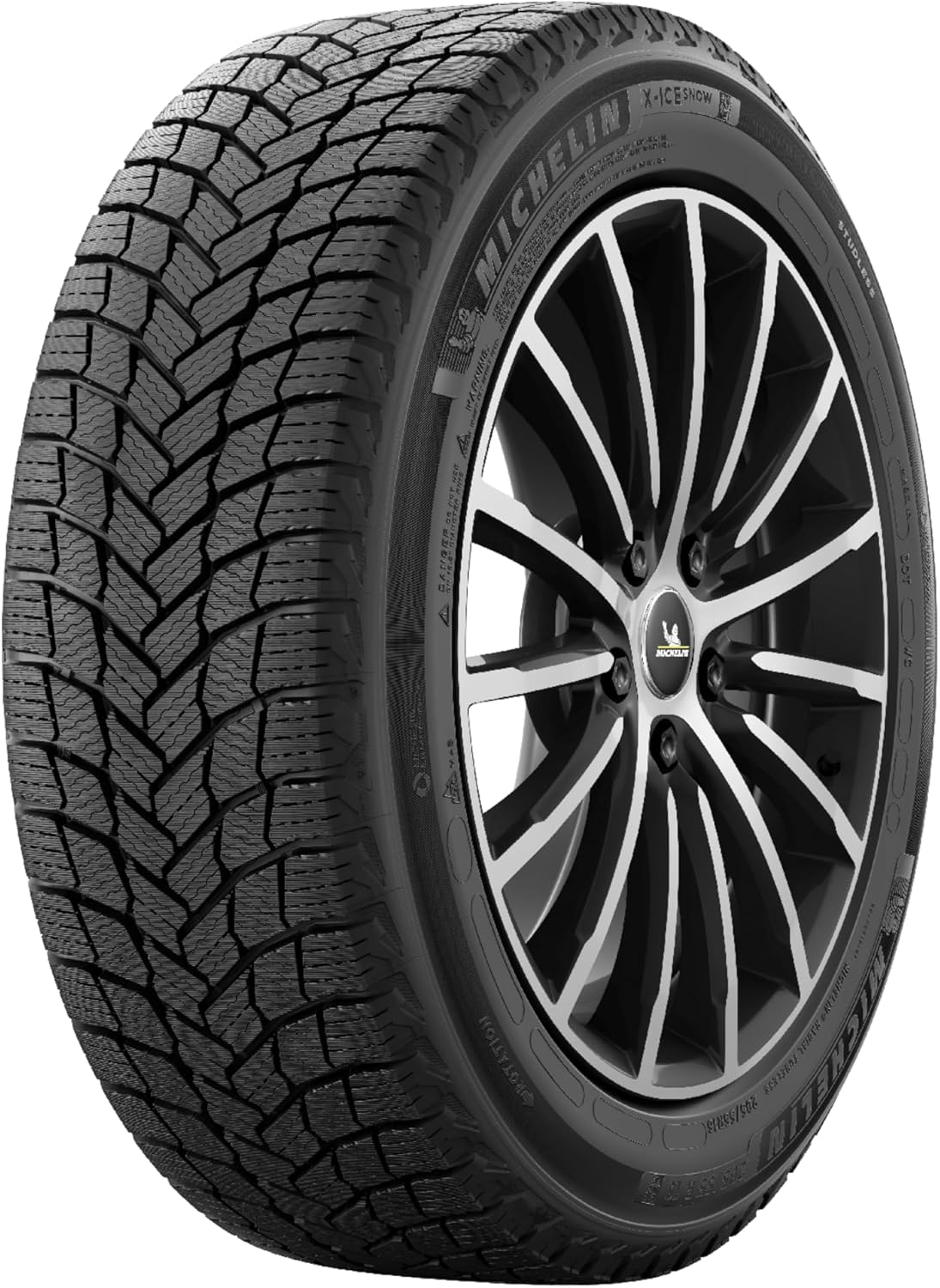
Michelin X-Ice Snow Tires (EV-rated)
EV-specific winter tires with low rolling resistance that recover up to 15 percent of cold-weather range. Mandatory in Quebec, smart everywhere else.
As an Amazon Associate, ThinkEV earns from qualifying purchases — at no extra cost to you.
Gear worth having
As an Amazon Associate, ThinkEV earns a small commission from qualifying purchases — at no extra cost to you.

Grizzl-E Classic Level 2 EV Charger (40A)
Canadian-made and rated for minus 40C winters. 40A / 9.6 kW, NEMA 14-50, indoor/outdoor, 24-ft cable. The charger built for Canadian weather.
As an Amazon Associate, ThinkEV earns from qualifying purchases — at no extra cost to you.
The Incentive Wall: Why the $55K Band Is a Problem
The federal EVAP program, launched February 2026 to replace the retired iZEV rebate, pays up to $5,000 for a BEV with a final transaction value under $50,000, declining toward $2,000 by 2030. The $50,000 cap is waived for Canadian-built vehicles. The country-of-origin exclusion for China-built vehicles is not waived for anything.
The Shark 6 fails EVAP on two independent tests. It is Chinese-manufactured, so it is excluded on origin grounds regardless of price. And at a $55,000-plus mid-trim band, it would breach the MSRP ceiling anyway. Either exclusion is sufficient. Both apply.
Provincial programs are where the Shark buyer recovers whatever is recoverable, and the geographic variance is sharp. British Columbia's SCRAP-IT program and the provincial CleanBC Go Electric rebate framework may apply to a PHEV in the Shark's class, depending on the final provincial ruling on vehicle category, PHEV pickups are a new administrative category for most provincial programs, and 2026 is the first year the paperwork has to catch up. Quebec's Roulez vert program carries its own rules and its own country-of-origin posture. Ontario, which has no active provincial EV rebate as of 2026, offers no offset at all.
The practical consequence is that a BC buyer and an Ontario buyer looking at identical Shark 6 trucks on identical invoices could face a net-of-incentive gap of $3,000 to $5,000 depending on how the provincial category rulings land. That is not a trivial spread on a $58,000 truck. For broader context on how Chinese-brand economics interact with Canadian incentive policy, the analysis of whether the Shark actually lands in Canada carries the policy argument further than this guide needs to.
A reasonable push-back is that incentives are a secondary variable, the Shark's electric-commuting savings versus a petrol Ranger over a seven-year hold are worth more in fuel displacement than any provincial rebate would clear. True, on the arithmetic. The problem is sticker psychology. Canadian truck buyers compare numbers on the windshield, not amortised fuel savings on a spreadsheet, and a Shark that stickers $12,000 above a Ranger with no visible rebate to close the gap is a harder showroom sell than its total cost of ownership deserves. The incentive wall's real cost is not the dollars themselves. It is the lost conversations with the buyer who never test-drove it.
The regional math gets sharper when you put real cities on it. In Abbotsford, a mid-size BC market where the Shark 6 lands at the $55,000 floor and the Pacific coastal climate keeps the 90 km electric range closer to its rated figure year-round, the provincial category ruling could determine whether the net-of-incentive price undercuts a petrol Ranger or sits $8,000 above it. In Oshawa, where the same truck sits on an Ontario invoice with no provincial rebate and a colder winter range, the gap to a Ranger is purely a question of what the buyer values in the drivetrain. Same truck. Same tariff. Different purchase decision. That is the incentive wall doing its work on the geography.
A fair doubt about the geography argument is that BC and Quebec together are roughly a third of the Canadian pickup market, which means the Shark's incentive-friendly provinces are not where the volume lives. Alberta, Ontario and the Prairies move the trucks, and those are precisely the provinces where the Shark gets no provincial offset at all. The policy environment that makes the Shark attractive in Vancouver makes it a hard sell in Calgary, and BYD's Canadian launch is being staged into exactly the two provinces where the incentive math works. Call that what it is, a limited-rollout strategy wearing the costume of a national launch, and the second-wave allocation into Alberta becomes the real test.
Gear worth having
As an Amazon Associate, ThinkEV earns a small commission from qualifying purchases — at no extra cost to you.

PULIDIKI Car Cleaning Gel (Detailing Putty)
Press it into vents, buttons, and seams and it lifts out dust you did not know was there. Weirdly satisfying, genuinely useful.
As an Amazon Associate, ThinkEV earns from qualifying purchases — at no extra cost to you.
Where to Buy, When to Expect It, and What the Dealer Gap Will Cost You
BYD Canada's dealer footprint is expanding through 2026, concentrated in British Columbia and Ontario in the first wave with Quebec and Alberta locations following. The company's Canadian corporate page confirms the DMO drivetrain and the Shark's positioning but does not yet commit to a dealer-by-dealer rollout schedule, which is normal for a first-year launch in a new market.
The dealer gap is the single most important variable the buyer controls. First-wave Chinese EV launches in Canada, and the Australian precedent for the Shark specifically, have seen dealer markups of $3,000 to $8,000 over sticker on constrained inventory. The pattern is consistent enough that assuming you will pay sticker on the first allocation is optimistic. Assume a markup; budget against it; walk away if the number is wrong.
The usually-correct play on a new Chinese-brand launch is to wait for the second allocation. First-wave inventory sells on scarcity to buyers who want to be first. Second-allocation inventory sells on the actual product to buyers who read the first-wave reviews. The second-wave buyer pays sticker, gets the running changes BYD made after the first-wave feedback, and skips the warranty-and-service shakeout that every new-market launch produces in its first six months.
A short pre-signature checklist:
- Confirm Canadian-spec payload and tow ratings in writing, the Australian or Chinese figures are not a safe proxy
- Verify battery warranty duration and mileage cap, plus the service-interval schedule
- Verify the parts-supply commitment, a Chinese pickup in rural Alberta in January 2027 depends on a parts network that does not fully exist yet
- Verify the dealer's trade-in posture on the Shark specifically; residual projections on first-wave Chinese EVs in Canada are a genuine unknown
BYD has fifteen years of commercial fleet operation behind it in Canada, the e6 is a battery electric vehicle manufactured by BYD Auto from 2009, with field testing of the first generation beginning in China in May 2010, which is a longer Canadian-adjacent service record than most buyers assume. A fleet parts channel, however, is not a consumer parts channel, and the two depots do not share inventory.
Three dated checkpoints will narrow the band to a number. The first Q3 2026 dealer invoice, which collapses the $55,000-to-$62,000 range to a sticker. The 2026 import quota utilisation report expected in January 2027, which will show whether Shark allocations crowded or were crowded out inside the 49,000-unit ceiling. And the first provincial category ruling on PHEV pickup eligibility, BC is likely first, probably before Q2 2027, which decides whether the net-of-incentive gap closes or widens.
The Shark 6 is the first serious Chinese PHEV pickup to reach Canada. The engineering is real, the price band is defensible, and the policy framework finally lets it compete. The gap between the $55,000 floor and whatever the buyer actually writes a cheque for is where the 2026 story gets decided. The number to watch is the Q3 2026 dealer invoice. Everything before that is estimate.
Gear worth having
As an Amazon Associate, ThinkEV earns a small commission from qualifying purchases — at no extra cost to you.

WixGear Magnetic Air Vent Phone Mount (2-Pack)
A magnet strong enough that your phone never flinches over potholes or rail crossings. Two in the box, one for each car.
As an Amazon Associate, ThinkEV earns from qualifying purchases — at no extra cost to you.

Founder & Chief Editor
Vlad Pereira is the founder and chief editor of ThinkEV.ca, the Canadian electric-vehicle publication he writes and edits from Courtenay, British Columbia. He covers EV pricing, federal and provincial rebates, charging costs, and the Chinese manufacturers now entering Canada, from the buyer's side rather than the press-fleet side. ThinkEV is a venture of Vlad Pereira Online; his writing on health, income and the long game lives at vladpereira.com.
Frequently asked questions
Does the federal EV rebate apply to the BYD Shark 6?
What is the real winter electric range to expect in Canada?
How does the tow rating compare to a Ranger or Tacoma?
Who is actually the Shark 6's closest competitor in Canada?
When will firm Canadian pricing actually be known?
More EV & road-trip finds
Affordable upgrades worth a look — tap any to check the price on Amazon.

TP-Link Kasa Smart Plug with Energy Monitoring
View on Amazon ★ 61
Toddler Car Seat Snack and Cup Tray
View on Amazon ★ 17,839
Qifutan Vent Phone Mount (Military-Grade Clip)
View on Amazon ★ 9,349
Auto Detailing Brush Set (10-Piece)
View on Amazon ★ 537
USB Star Projector Roof Light
View on Amazon ★ 4,055
6-Speed Manual Shift Knob Display
View on Amazon ★ 4,424
Sun Visor Card and Document Organizer
View on Amazon ★ 12,834
P3 Kill A Watt Electricity Usage Monitor
View on AmazonRead, Plan, Then Stay Current
Explore our expert articles to understand incentives and ownership costs, use the map to pressure-test charging reality, then subscribe so new EV coverage comes straight to you.
Continue Reading
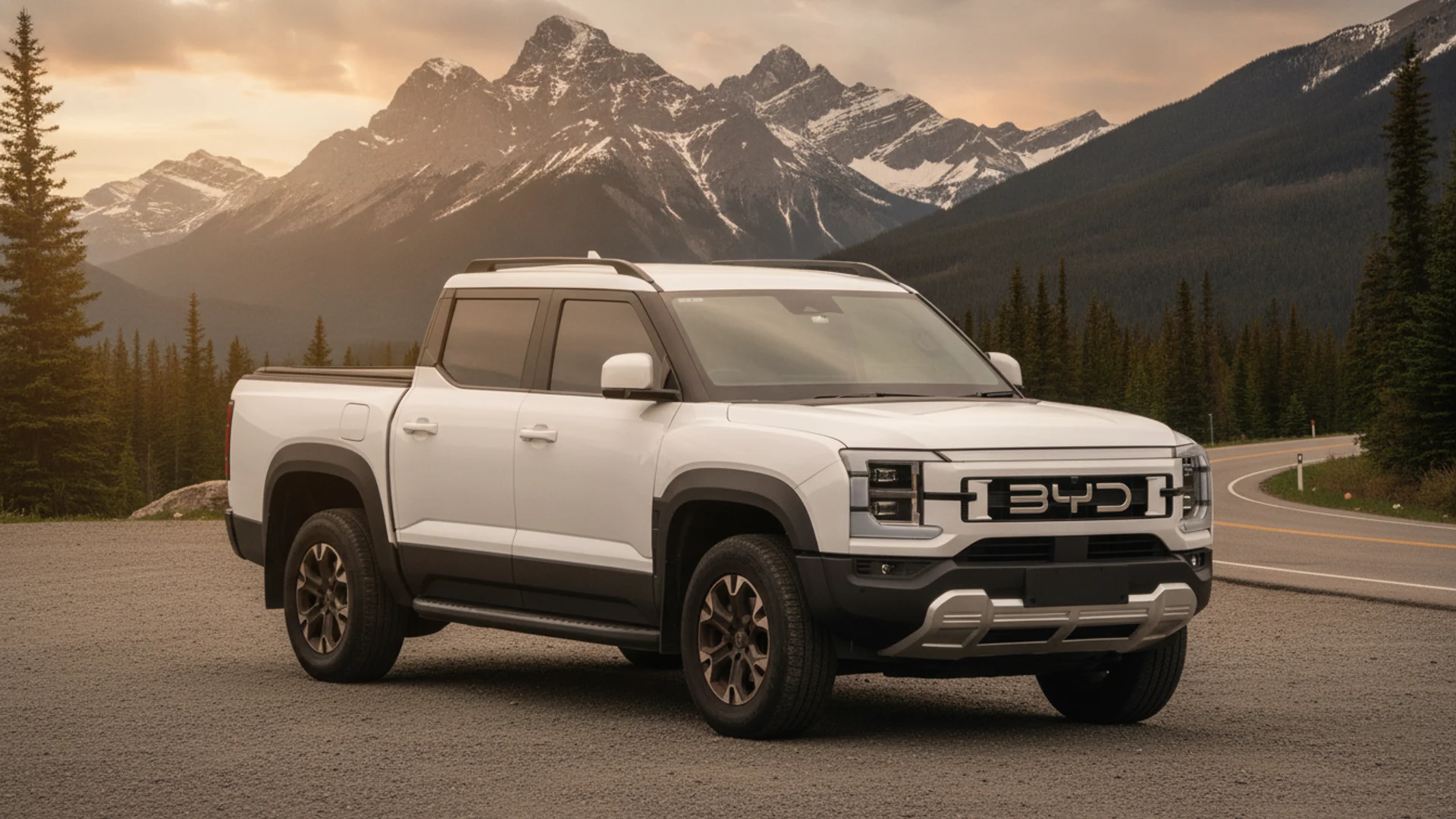
BYD Shark 6 Canada: Specs, Price Band & 2026 Lineup Guide
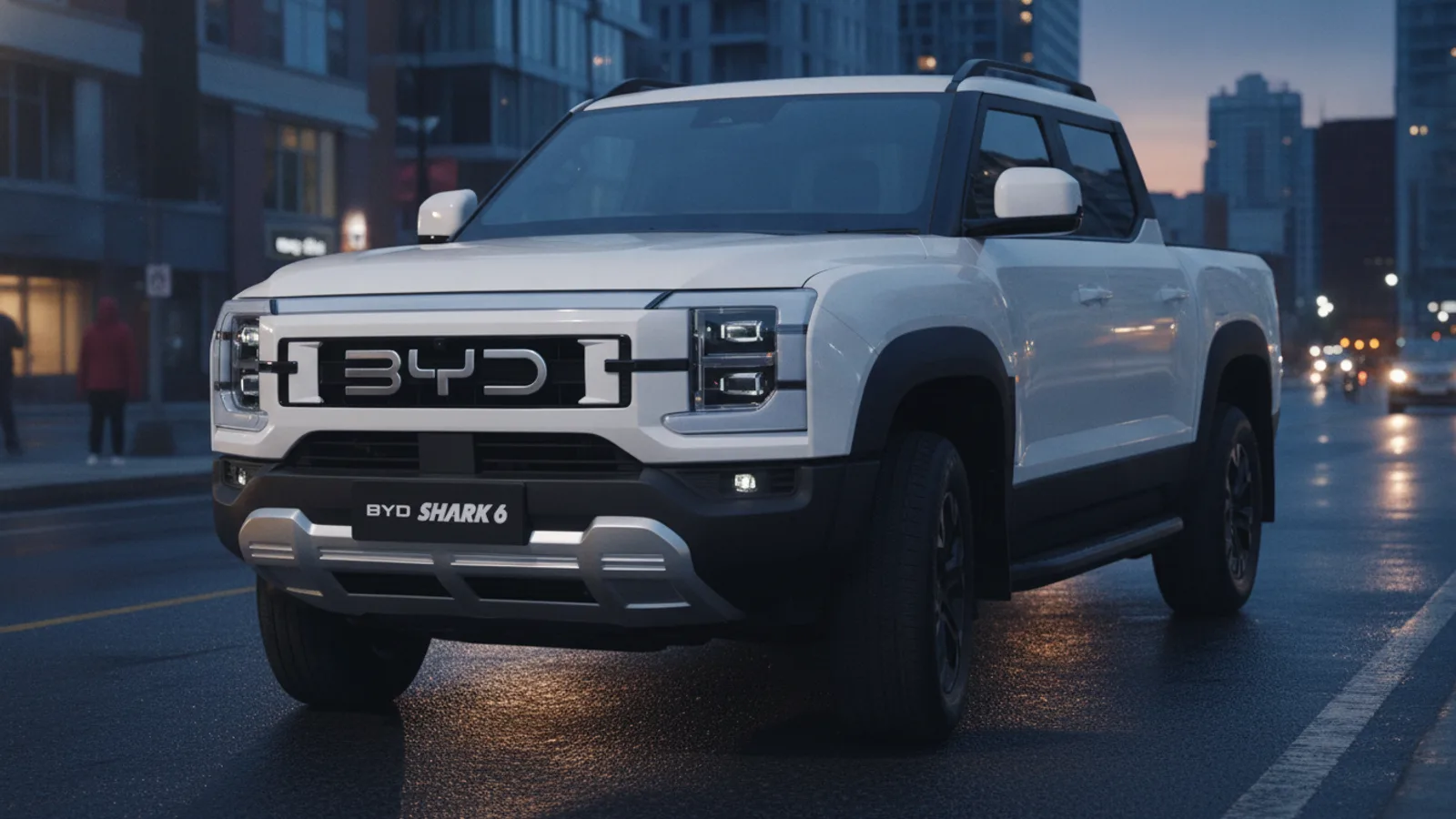
BYD Shark 6 Canada, The Direct Answer
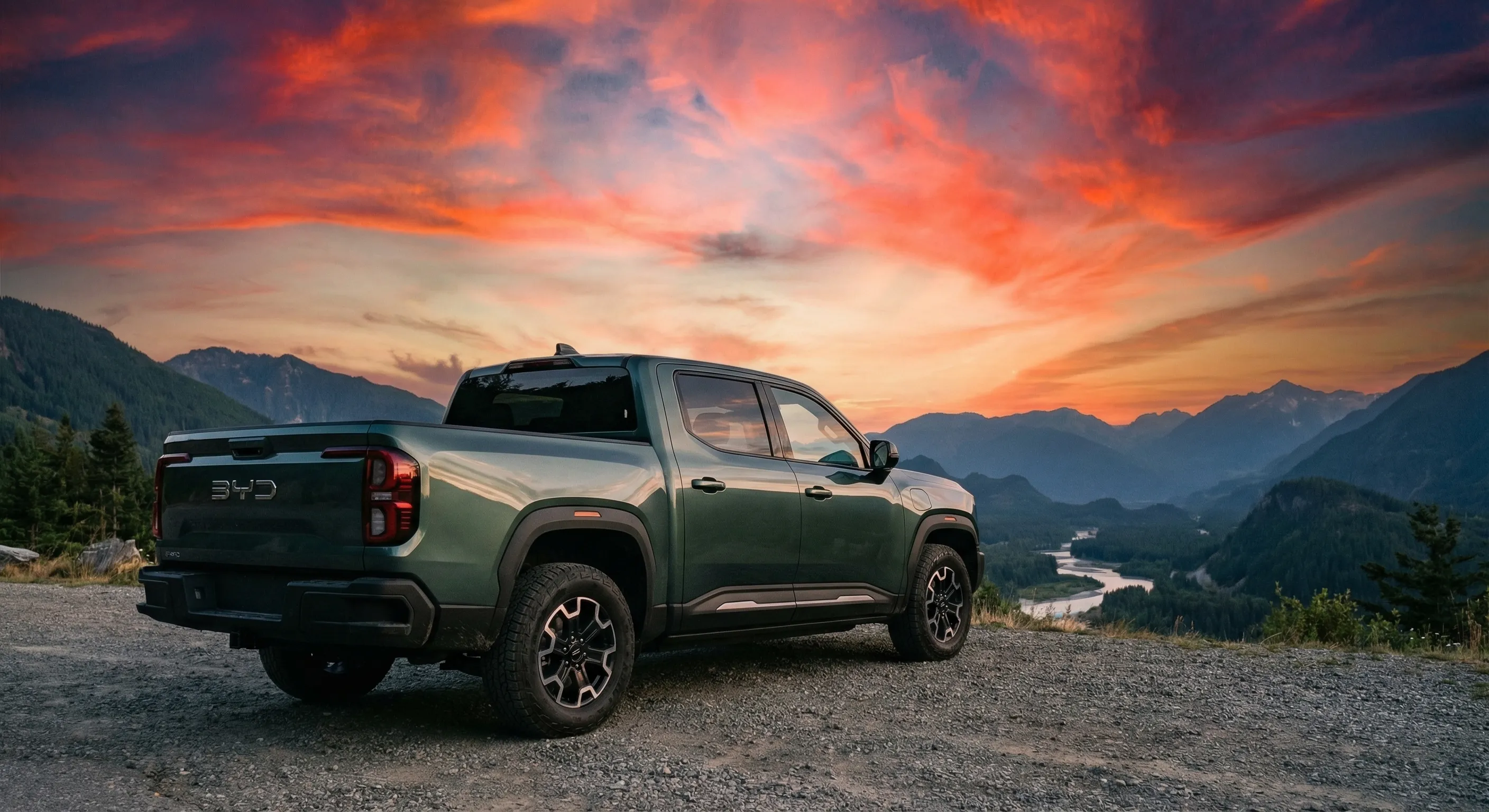
BYD Shark 6 Price in Canada: $55K–$62K Estimate, Explained
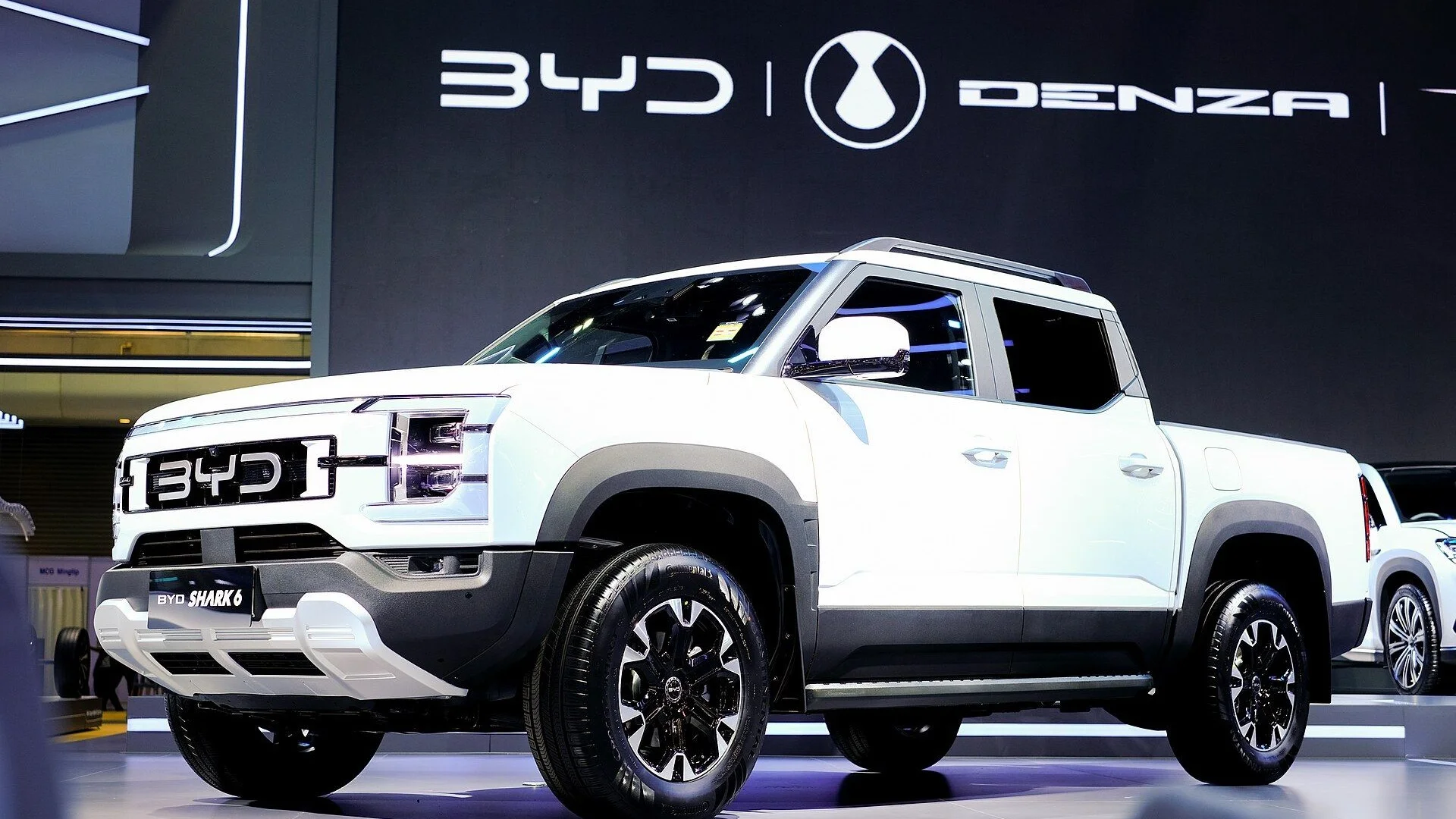
BYD Truck Canada 2026: Shark 6 Specs, Price & What to Know
Are Canada's Repair Shops Ready for Chinese EVs?