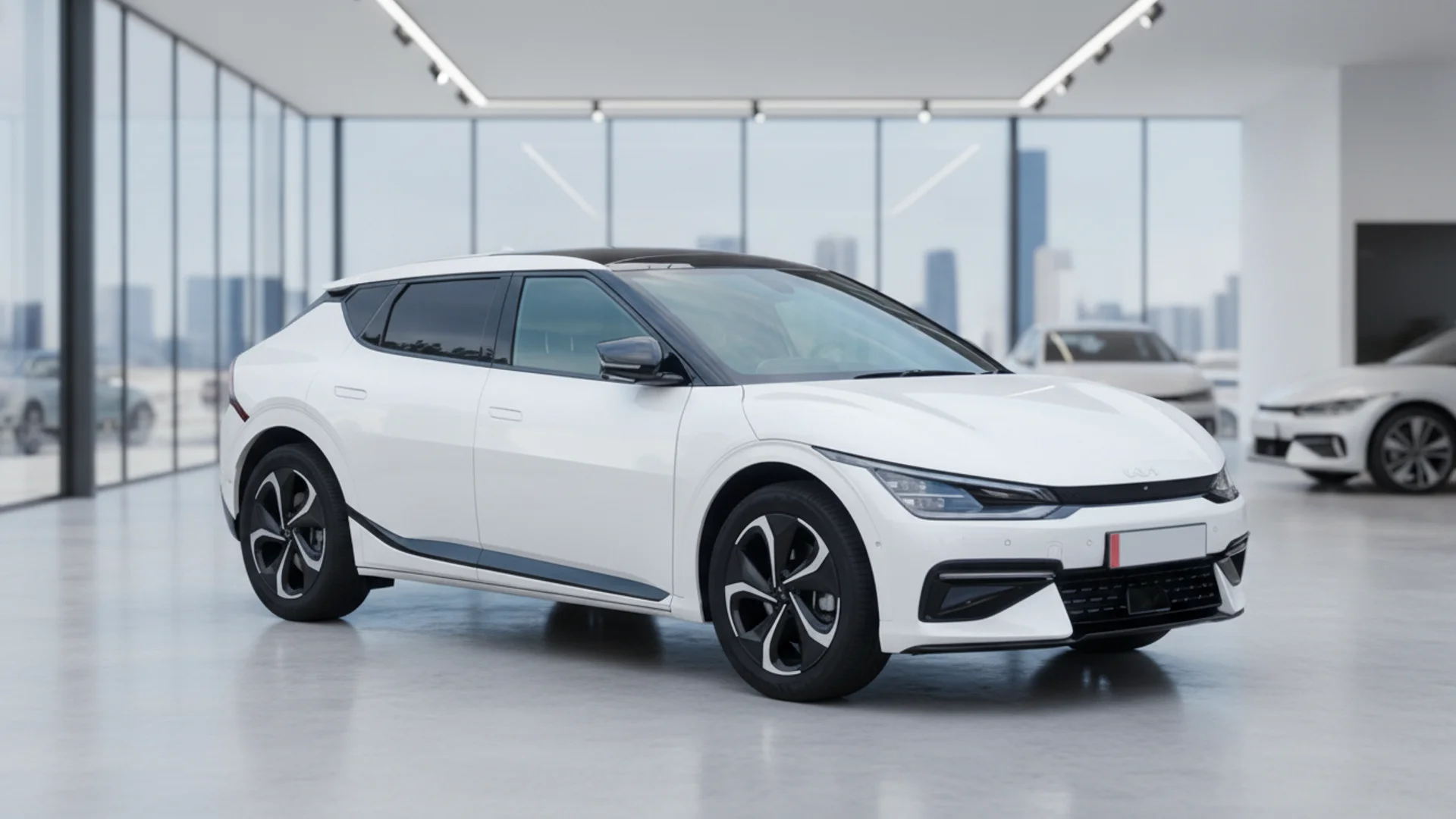
The number circulating in Canadian EV forums is $55,000. That figure is probably right, and what surrounds it matters more than the number itself.
I'll put the band at $52,000 to $58,000 CAD for the BYD Shark 6 in Canada, with the midpoint settling near $55,000 once the dealer markup, federal exclusion, and provincial sales tax shake out. That's an estimate, not an MSRP, BYD has not published a Canadian price, and I'd flip the band lower the moment the first official sheet drops. Until then, every number you see is a triangulation, and triangulations have error bars.
Here is what's underneath that band, and why the truck's commercial fate in Canada does not actually turn on the sticker.
Key takeaways
- BYD Shark 6 will likely land at $52,000–$58,000 CAD, anchored to its AUD $57,990 Australian retail price.
- Canada's January 2026 tariff reset from 100% to 6.1% is the only reason a $55,000 Shark 6 is commercially viable.
- The 49,000-unit annual quota means BYD's realistic Canadian allocation is closer to 15,000–20,000 units, not a market flood.
- The Shark 6 is excluded from Canada's $5,000 federal EV rebate, adding a real out-of-pocket gap versus domestic competitors.
Why the Price Rumour Keeps Landing Near $55,000
The $55K figure is not a guess pulled from the air. It's an Australian dollar conversion that has been doing the rounds in EV communities and trade publications since the start of the year.
BYD launched the Shark 6 in Australia at roughly AUD $57,990. At current exchange, that converts to somewhere between $52,000 and $54,000 CAD before any Canadian-specific cost is layered on. Add a modest landed-cost premium, dealer margin, and the small tariff cushion that the new quota regime imposes, and you get a sticker that lands within a few thousand dollars of $55,000.
Motor Illustrated has been triangulating BYD's full Canadian lineup at the lower end, with the smallest BYD city car opening near $25,000 and the larger vehicles scaling up from there. The Shark 6 sits at the top of the projected Canadian range. Reddit's BYD community has reached the same triangulation independently, the community-compiled spec and pricing breakdowns keep landing the Shark 6 in the $55,000 band, with most discussion centred on whether the final figure comes in above or below the AUD anchor.
The Australian price is the most credible reference point Canada has right now for a simple reason: it's the only major right-hand-drive-or-left-hand-drive market outside China where BYD has actually launched this truck at retail. European pricing won't exist for the Shark 6 in the near term. American pricing won't exist at all. Australia is the comparator, and it's a reasonable one, comparable market scale, comparable consumer protections, comparable dealer expectations.
The case against the AUD anchor is that Australia and Canada price vehicles differently across almost every other segment. A Toyota RAV4 in Sydney does not convert cleanly to a Toyota RAV4 in Toronto, and there's no obvious reason a BYD should. The rebuttal is that BYD is a single global pricing organisation operating without a legacy Canadian dealer network to protect, and the Shark 6's Australian launch is its only live retail reference point on the continent that matters. Triangulating off the closest live market beats triangulating off nothing.
What changes the number between Sydney and Toronto is not the truck. It's the cost of getting the truck across the Pacific, through Canadian compliance, into a dealer's hands, and out the door with a Transport Canada-compliant warranty and service plan. That delta is where my band's spread comes from. The low end ($52,000) assumes BYD prices aggressively to seed early Canadian demand. The high end ($58,000) assumes the dealer network charges a coverage premium because there are so few of them. Neither extreme would shock me.
What would shock me is a number outside that band in either direction. Below $50,000 and BYD is leaving margin on the table for no reason, the quota means they cannot scale into Canadian volume even if they wanted to. Above $60,000 and the truck loses the price advantage that justifies its presence in this market at all.
The Tariff Reset Is Why This Conversation Is Happening at All
A year ago, this post would not exist. At Canada's previous 100% tariff on Chinese EVs, the Shark 6 would have needed a roughly $103,000 sticker to absorb the duty and still leave anyone with margin. That is not a competitive truck. That is a press release.
January 2026 changed the math. Canada negotiated a tariff reset with Beijing, the rate dropped from 100% to 6.1%, but only for a 49,000-unit annual quota covering all Chinese-made vehicles entering Canada, not BYD alone. The Globe and Mail's reporting on BYD's dealership expansion confirms the manufacturer is now moving with intent, an Ontario-based automotive retail consultancy has been hired to help establish up to 20 branded dealerships across the country, the rollout treated as a real commercial plan rather than a feasibility study.
At 6.1% on a $55,000 truck, the tariff adds somewhere between $3,000 and $3,400 to landed cost. That's not free, but it's absorbable. It's the difference between "this product cannot exist in this market" and "this product exists with a modest margin compression." BYD will eat some of it; the dealer will mark up some of it; the consumer will absorb the rest. None of those numbers individually break the business case.
The quota is the harder constraint. Forty-nine thousand vehicles per year is not a number that allows any single Chinese manufacturer to flood the Canadian market. Spread across BYD, Geely-owned brands, MG, and whatever else moves through the lane, BYD's slice is meaningfully smaller than 49,000. If they're aggressive and well-positioned, maybe they take 15,000 to 20,000 units of that pool in year one. That's a respectable launch volume, comparable to a mid-tier brand's annual Canadian sales, but it's not a market-disrupting flood.
The quota also means BYD's pricing strategy is fundamentally different from what it would be in a quota-free market. They are not trying to undercut the F-150 by 40% to grab share. They are trying to land at a price where the limited supply they're allowed to sell moves quickly and profitably. $55,000 is exactly the kind of number that achieves that, well below the gas F-150's typical transaction price, comfortably below the Ford F-150 Lightning's Canadian starting point, and high enough that the margin works on a small allocation.
There's a counter-read worth airing: that BYD will price the Shark 6 noticeably below the Australian anchor to manufacture a discount headline and seed brand awareness in a market where nobody has heard of them outside EV forums. I don't buy it. A discount headline is worth less than the margin BYD gives up to produce it, and the quota means the allocation will sell at the higher number regardless. Brand-building happens through the next product, not the first one, which is why I'd bet on the band holding rather than collapsing.
The next negotiation is what to watch. If the quota expands in 2027 or 2028, BYD's pricing leverage changes. If it contracts, the price floor lifts. Pricing follows policy here, not the other way around.
Gear worth having
As an Amazon Associate, ThinkEV earns a small commission from qualifying purchases — at no extra cost to you.

ChargePoint Home Flex Level 2 Charger (50A)
Premium 50A / 12 kW charger with the best app ecosystem. Hardwired or NEMA 14-50, with real-time energy tracking and smart scheduling.
As an Amazon Associate, ThinkEV earns from qualifying purchases — at no extra cost to you.
What the Rebate Exclusion Actually Costs a Buyer
The single most important number that's not on the sticker is $5,000. That's the federal iZEV incentive on eligible plug-in hybrid trucks, and China-built BYD imports are explicitly excluded from it.
This is not an oversight. It is a deliberate policy choice that Canada inherited from the previous tariff regime and chose not to revise when the tariff itself was cut. The logic was always that federal EV incentives should support vehicles built in jurisdictions Canada has trade-and-labour reciprocity with. China is not on that list. BYD's Canadian vehicles, being made in China, are not on that list.
For a buyer comparing the Shark 6 at $55,000 against a Honda Ridgeline at a similar price or a Ford Maverick PHEV closer to $40,000, that $5,000 federal gap is real money. It's roughly 9% of the truck's price. It is not a rounding error.
Provincial programs complicate the comparison further. Quebec's Roulez vert program has its own eligibility rules; British Columbia's CleanBC has separate criteria; Atlantic provinces have varying offerings. Some of these programs may extend rebates to vehicles that the federal program excludes; others mirror the federal exclusion exactly. The net-of-rebate price for a Shark 6 in Vancouver, Montreal, Halifax, and Calgary will be four meaningfully different numbers, and only one of them (Calgary, with no provincial EV rebate to lose) leaves the Shark 6 on level ground with subsidy-eligible competitors.
A buyer needs to run that math locally. The comparison is not "$55,000 BYD versus $55,000 Ridgeline." It is "$55,000 BYD with zero federal rebate versus $50,000 effective price on a comparable iZEV-eligible PHEV after rebate." On that comparison, the Shark 6 is no longer cheaper. It might still be the better truck on spec, that's a separate conversation, but it is not the discount story the $55K headline implies.
There is also a warranty wrinkle that doesn't show up in the rebate column but matters at resale and during a dispute. Most major brands selling in Canada participate in the Canadian Motor Vehicle Arbitration Plan, which gives owners a structured, no-cost path to escalate warranty disputes. BYD does not. As our breakdown of Canadian EV warranty rights notes, the non-participating brands include Tesla, BMW, Mercedes-Benz, Stellantis, Mitsubishi, Rivian, BYD, NIO, and XPeng, so a Shark 6 owner with a contested powertrain claim is escalating through small claims court or provincial consumer protection, not an industry arbitrator. That's not a deal-breaker, but it's another line item that doesn't appear on the sticker and that a comparison ought to price in.
I think the EVAP exclusion is the most editorially interesting variable in the entire Shark 6 Canadian story. It is the one number that could shift overnight if Ottawa decided the quota-tariff framework was sufficient compliance to qualify Chinese imports for federal support. There is no engineering reason this could not happen. It is purely a political decision. If it flips, and I'd put the odds of it flipping inside three years at roughly even, the Shark 6's effective price drops $5,000 and the competitive picture changes materially.
Until then, the buyer pays the full $55,000, eats the rebate exclusion, and decides whether the 120-kilometre EV-only range and the BYD blade battery technology are worth the premium over a subsidised competitor. For some buyers, they will be. For most, they won't. That's the read.
The Dealership Network Problem That Pricing Alone Doesn't Solve
Twenty dealerships across Canada is not a national rollout. It is a launch posture.
Gear worth having
As an Amazon Associate, ThinkEV earns a small commission from qualifying purchases — at no extra cost to you.

WeatherTech FloorLiner for Tesla Model 3
Deep-channel liners that trap every drop of slush and salt. The difference between a ruined interior and a showroom-fresh cabin after a Canadian winter.
As an Amazon Associate, ThinkEV earns from qualifying purchases — at no extra cost to you.
BYD's stated target, according to the Globe and Mail reporting, is up to twenty Canadian storefronts. The early geographic focus is Ontario, with secondary expansion expected through southern British Columbia and Quebec's urban corridor. That's a respectable concentration for a brand testing the market, it puts dealers near roughly 60% of the Canadian population.
It is also a structural problem for any buyer in Alberta, Saskatchewan, Manitoba, the Atlantic provinces, or the territories. Parts availability, warranty service, and software updates all depend on physical service-network access. A PHEV is more, not less, dependent on dealer infrastructure than a pure ICE truck, there's a high-voltage battery system, an inverter, an electric motor, and a combustion powertrain to service, and most independent shops will not touch the EV side under warranty.
The home-charging side of the equation is at least less constrained. Level 2 hardware is widely available from domestic and import brands, and the Grizzl-E Classic is manufactured in Kitchener, Ontario, a buyer in a province with no BYD dealer can still get a Canadian-built, Canadian-warranted home charger installed without touching the BYD service network. The hard dependency is the truck itself, not the wall it plugs into.
I'd put the practical buying decision this way: in Toronto, Montreal, Vancouver, and a handful of other dense markets, the Shark 6 at $55,000 is a credible purchase in 2026. Outside those markets, it is not. A buyer in Halifax or Saskatoon is making a five-year bet on a brand that does not yet have local service capacity, on a vehicle whose proprietary battery technology requires manufacturer-trained technicians. The bet might pay off, BYD is large enough and committed enough that the network will probably expand, but it is a real bet, not a routine purchase.
This is the gap that $55,000 does not close. It is also the gap that no Chinese EV brand entering Canada has yet figured out how to close on a meaningful timeline. Tesla took roughly a decade to build out comparable national coverage; BYD is starting from zero in 2026 and will be lucky to match Tesla's 2018 footprint by 2030.
For most of the country, the Shark 6's pricing is academic until 2028 at the earliest. That is not a reason to dismiss the truck, it is a reason to be specific about who it's for.
Gear worth having
As an Amazon Associate, ThinkEV earns a small commission from qualifying purchases — at no extra cost to you.

Grizzl-E Classic Level 2 EV Charger (40A)
Canadian-made and rated for minus 40C winters. 40A / 9.6 kW, NEMA 14-50, indoor/outdoor, 24-ft cable. The charger built for Canadian weather.
As an Amazon Associate, ThinkEV earns from qualifying purchases — at no extra cost to you.
How the Shark 6 Sits in the Canadian Pickup Landscape
The Shark 6 is a mid-size PHEV pickup. That sentence does a lot of work, because it means the Shark 6 is not competing with the F-150 Lightning. It is competing with the Honda Ridgeline, the Ford Maverick (gas and hybrid), and the incoming Ford Ranger PHEV.
That comparison set changes the price conversation entirely. The Maverick hybrid starts well below $40,000 in Canada and is the volume seller in this segment. The Ridgeline lands in the high $40s to low $50s depending on trim. The Ranger PHEV, when it arrives, will probably anchor around $55,000 to $60,000, and unlike the Shark 6, it will qualify for federal iZEV.
What the Shark 6 brings to that comparison set is a spec the others cannot match: 120 kilometres of EV-only range at highway speed. Most PHEV pickups in this segment offer 40 to 60 kilometres of EV range under best-case conditions. The Shark 6 effectively doubles that, and does it at highway pace rather than under city-driving lab conditions. For a commuter who can charge at home and only burns gasoline on weekend trips, the practical experience is much closer to a pure EV than to a hybrid. The technical breakdown of how BYD engineers this range advantage is worth reading in full for buyers weighing the spec against the segment.
Worth remembering how new this category actually is. Hybrid electric vehicles are dominated by passenger cars, but hybrid electric trucks, pickups, tow trucks, tractors, buses, motorboats, and aircraft also exist, and almost all of that diversification happened in the last fifteen years. The first wave of pickup electrification in North America was a curiosity, the Ranger EV pickup truck, the GM S10 EV pickup, and the Toyota RAV4 EV were small fleet experiments that died on the vine. A mass-market PHEV pickup with 120 km of EV range at highway speed didn't exist on either side of the Pacific until very recently. Canadian buyers are not choosing between mature alternatives; they are choosing between three or four first-generation products, and the Shark 6 is the most ambitious of them on EV-only range.
The towing and payload picture is less clear. Australian-spec Shark 6 figures show 2,500 kg braked towing capacity and roughly 790 kg payload, competitive for the segment, not class-leading. Whether the Canadian-spec sheet matches those numbers is unconfirmed. Battery thermal management, regulatory rating differences, and the possibility of a Canadian-tuned drivetrain all leave room for the published numbers to shift. A buyer who plans to tow regularly should verify the Canadian rating against their actual use case, not the Australian press kit.
The competitive positioning at $55,000 is real. The Shark 6 lands above the Maverick (cheaper, smaller, less EV range), below the F-150 Lightning (more expensive, full-size, pure EV), and roughly even with the Ridgeline and incoming Ranger PHEV on price, with a meaningful EV-range advantage and a meaningful rebate disadvantage. The full landed-price analysis with tariff math shows how those tradeoffs balance once provincial taxes and rebates are layered on.
That's a real lane. Not a market-disrupting lane, but a real one.
What Would Change the Number, and When to Lock In a View
Four variables would move my $52,000–$58,000 band, and they're worth naming explicitly so the reader knows what to watch.
Official BYD Canadian MSRP. This is the obvious one. The moment BYD publishes a Canadian price sheet, every estimate including mine becomes historical. I'd expect that announcement within the first half of 2026 as the Ontario dealerships near opening. If the official number lands inside my band, the analysis above holds. If it lands meaningfully outside it, something I don't currently know is shaping the launch, and I'll revise the read.
Quota fill rate. If the 49,000-unit quota fills quickly in the first half of 2026, BYD's pricing leverage in Canada is strong and they have no reason to discount aggressively. If it fills slowly, BYD will face pressure to either move price down or back off the Canadian commitment. Watch the quarterly import data from Statistics Canada and Transport Canada, that's the leading indicator.
A second tariff negotiation. The 6.1% rate inside the 49K quota is the current floor, not a permanent regime. A future Canadian government, or a future trade dispute, could reset the framework in either direction. A quota expansion would soften the price floor. A quota contraction or tariff increase would lift it sharply, possibly to the point where the Shark 6 becomes uneconomic again.
iZEV eligibility revision. As covered above, Ottawa could decide that the new tariff framework constitutes sufficient policy alignment to extend iZEV eligibility to quota-tariff Chinese vehicles. This would drop the effective Shark 6 price by $5,000 overnight and reset the competitive comparison entirely. I'd put the odds inside three years at roughly even. I'd put the odds inside twelve months at well under 25%.
Of those four, the one I'd watch most closely is the iZEV rebate question. The price band is going to firm up on its own as BYD publishes official numbers. The quota fill rate will be visible in trade data. The tariff framework is stable through the next election cycle. But the rebate eligibility decision is a policy lever sitting on someone's desk in Ottawa, and it could move at any time. The truck doesn't change; the math around it does.
If I had to put a bet on the table: I'd take the under on $55,000 holding as the steady-state Canadian transaction price two years after launch. Not because BYD will discount, but because the iZEV question gets revisited every federal budget cycle and the political incentive to extend the rebate grows the longer Canadian buyers see a competitive Chinese product blocked from a subsidy that Korean, Japanese, and European competitors get. I'd watch the 2027 federal budget closely. That's the document where this number actually gets decided.
Gear worth having
As an Amazon Associate, ThinkEV earns a small commission from qualifying purchases — at no extra cost to you.

PULIDIKI Car Cleaning Gel (Detailing Putty)
Press it into vents, buttons, and seams and it lifts out dust you did not know was there. Weirdly satisfying, genuinely useful.
As an Amazon Associate, ThinkEV earns from qualifying purchases — at no extra cost to you.
The Editorial Position: $55K Is Competitive If the Network Follows
The price is not the risk. Canada has bought mid-size pickups at $55,000 for years and continues to. Buyers will accept that number for a credible truck with a credible spec. The Shark 6's spec, particularly the 120-kilometre EV-only range, is more than credible. It is genuinely class-leading in its segment.
The risk is everything else. Dealer coverage at launch is thin and concentrated in three provinces. Parts and warranty service depend on a network that does not yet exist outside Ontario. The federal rebate exclusion is a structural disadvantage that may or may not be revised. The quota means BYD cannot grow into a service backbone the way a quota-free entrant could.
My position is straightforward: at the projected band, the Shark 6 is a competitive Canadian pickup for the narrow set of buyers who live near a BYD dealership, can charge at home, and don't need the federal rebate to make the math work. For everyone else, most of the country, in other words, the truck is a 2028 story, not a 2026 one. The dealership rollout is the variable that decides which of those two timelines applies, and it's the variable I'll be watching most closely through the back half of this year.
The $55,000 number will get its headlines. The twenty dealerships will determine whether the headlines matter.
The price is right and the spec is real. The network is the question. Lock in a view when BYD publishes the sheet, not before.
Gear worth having
As an Amazon Associate, ThinkEV earns a small commission from qualifying purchases — at no extra cost to you.

WixGear Magnetic Air Vent Phone Mount (2-Pack)
A magnet strong enough that your phone never flinches over potholes or rail crossings. Two in the box, one for each car.
As an Amazon Associate, ThinkEV earns from qualifying purchases — at no extra cost to you.

Founder & Chief Editor
Vlad Pereira is the founder and chief editor of ThinkEV.ca, the Canadian electric-vehicle publication he writes and edits from Courtenay, British Columbia. He covers EV pricing, federal and provincial rebates, charging costs, and the Chinese manufacturers now entering Canada, from the buyer's side rather than the press-fleet side. ThinkEV is a venture of Vlad Pereira Online; his writing on health, income and the long game lives at vladpereira.com.
Frequently asked questions
Does the 49,000-unit quota mean I might not get one?
Why doesn't the Shark 6 qualify for the federal EV rebate?
Could the price drop significantly if the quota expands?
How reliable is the Australian price as a Canadian benchmark?
Which provinces make the Shark 6 more or less competitive financially?
More EV & road-trip finds
Affordable upgrades worth a look — tap any to check the price on Amazon.
 ★ 1,340
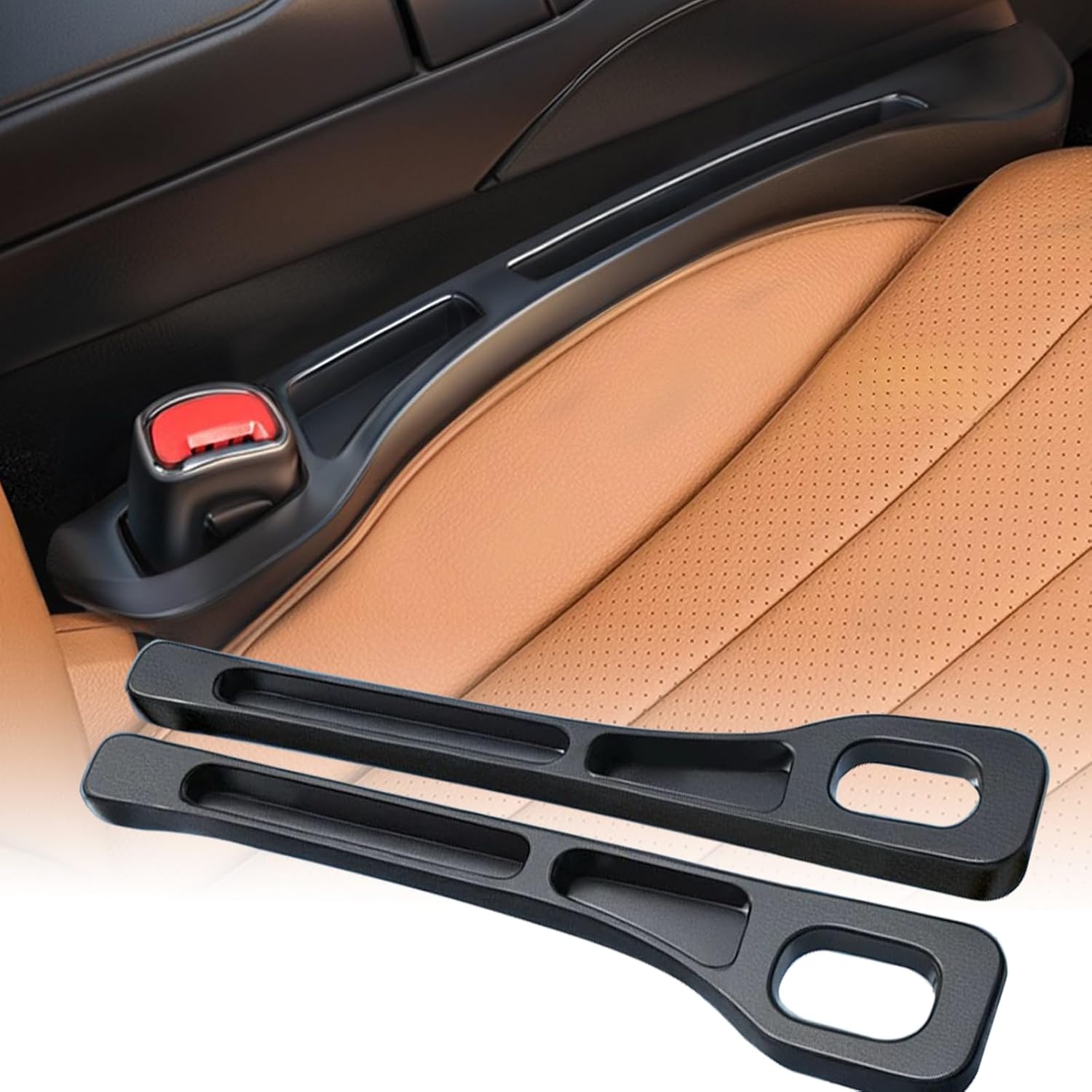
Car Seat Gap Filler (Universal)
View on Amazon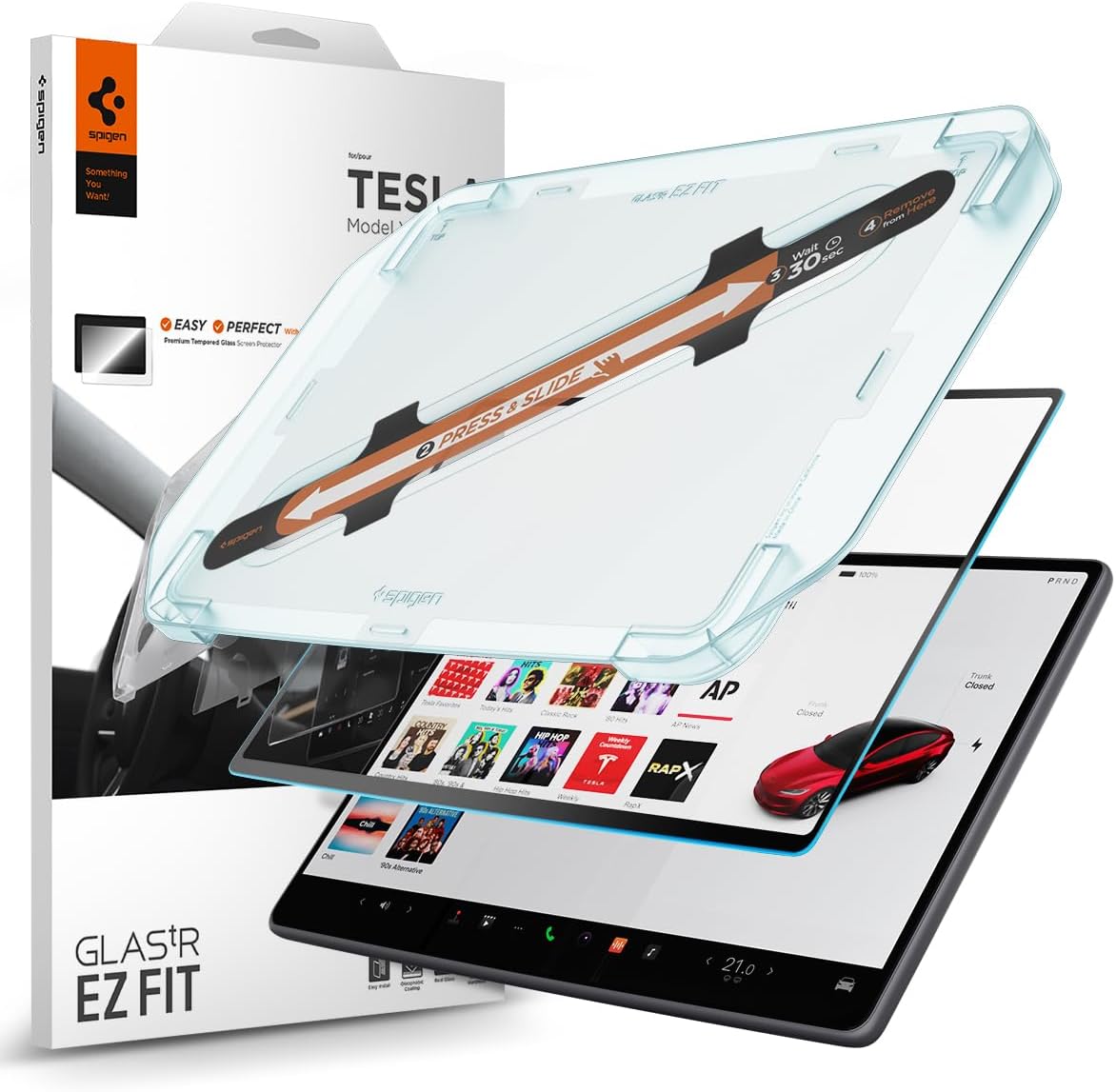 ★ 15,014
Spigen Tempered Glass for Tesla Model 3/Y
View on Amazon ★ 119
★ 119Foldable Waterproof Trunk Organizer
View on Amazon ★ 17,839
Qifutan Vent Phone Mount (Military-Grade Clip)
View on Amazon ★ 47,507
HOMEXCEL Microfiber Cloths (12-Pack)
View on Amazon ★ 419
★ 419RGB Car Interior LED Strip Light
View on Amazon ★ 1,083
Crystal Push-Start Button Ring (2-Pack)
View on Amazon ★ 4,424
Sun Visor Card and Document Organizer
View on AmazonRead, Plan, Then Stay Current
Explore our expert articles to understand incentives and ownership costs, use the map to pressure-test charging reality, then subscribe so new EV coverage comes straight to you.
Continue Reading
Which EVs Should Be Charged to 100%? The LFP Exception
First-Time EV Buyer Mistakes Worth Avoiding in Canada

Rivian Canada 2026: R1T, R1S Prices and R2 Release Date
Why Cold Weather Cuts EV Range, the Real Reasons
Are Canada's Repair Shops Ready for Chinese EVs?