Key takeaways
- Eight years, 160,000 km on the battery, bumper-to-bumper for the first few years -- it sounds comprehensive.
- Since its launch, CAMVAP has conducted 10,770 hearings and approved 2,082 vehicle buybacks.
- Together these brands account for over 85% of annual new vehicle sales in Canada.
- The law applies to all new vehicles -- gas, hybrid, and electric -- during the first 3 years or 60,000 km of ownership, whichever comes first.
Most EV buyers in Canada assume the warranty has them covered. Eight years, 160,000 km on the battery, bumper-to-bumper for the first few years -- it sounds comprehensive. And for straightforward problems, it usually is. A faulty charging port gets fixed. A software glitch gets patched. The system works the way it should.
The trouble starts when the claim gets denied. When the dealer says the damage is not covered, or that something you did voided the coverage, or that the manufacturer does not consider the issue a defect. At that point, the warranty document that felt like a safety net starts to feel more like a wall. And most EV owners in that position have no idea what tools are available to them, because Canadian consumer protection law is genuinely powerful but almost nobody reads it until they need it.
What follows covers every mechanism available to Canadian EV owners when warranty claims go sideways: national arbitration, provincial lemon laws, implied warranty protections that cannot be waived, the rules around third-party parts and charging equipment, and the specific steps to fight a denied claim. The law is more on your side than you probably realize. The catch is knowing where to look.
CAMVAP: Free Arbitration With a Big Gap
The Canadian Motor Vehicle Arbitration Plan has been running since 1994 and it remains one of the most underused consumer protection tools in the country. CAMVAP provides free, binding arbitration for warranty disputes between vehicle owners and participating manufacturers. No lawyers required. No filing fees. The manufacturer pays for the entire process, including an independent technical inspection of your vehicle if one is needed.
Since its launch, CAMVAP has conducted 10,770 hearings and approved 2,082 vehicle buybacks. The typical timeline from application to decision is under 70 days. Hearings happen in your home community, not at some distant corporate office. The process includes sworn testimony, evidence presentation, cross-examination, and a vehicle inspection or test drive by the arbitrator. If an independent technical inspection is warranted, CAMVAP pays for it. The arbitrator delivers a binding award within 14 calendar days of the hearing. Remedies range from a full vehicle buyback calculated on a depreciation formula to repair cost reimbursement to consent awards for negotiated settlements between the parties.
Fourteen manufacturers currently participate: Ford, General Motors, Honda, Hyundai, Jaguar Land Rover, Kia, Lucid Motors, Mazda, Nissan, Porsche, Subaru, Toyota, Volkswagen Group, and Volvo. Together these brands account for over 85% of annual new vehicle sales in Canada. For the majority of car buyers, CAMVAP is a legitimate, structured pathway to resolution when the dealer relationship breaks down.
The gap is significant. Tesla, Canada's top-selling EV manufacturer, does not participate. Neither does BMW. Neither does Mercedes-Benz. Neither does Stellantis, which covers Chrysler, Dodge, Jeep, Ram, and Fiat. Mitsubishi is out. Rivian is out. Every Chinese manufacturer entering or approaching the Canadian market -- BYD, NIO, XPeng, and the rest -- is out.
Lucid is the only EV-focused brand in CAMVAP, and no EV-specific arbitration cases or precedents from Lucid have been publicly reported. So while the infrastructure exists, there is essentially no body of EV warranty arbitration law being built through CAMVAP. That will change as EV volumes grow among participating brands like Hyundai, Kia, and Ford, but for now the program's EV track record is thin.
For Tesla, BMW, or Mercedes owners facing a warranty dispute, CAMVAP is not an option. You are directed instead to your provincial consumer protection process or small claims court. That is not an insurmountable barrier -- provinces have their own mechanisms -- but it is a slower, less specialized path. CAMVAP arbitrators understand vehicles. A small claims court judge may or may not.
The practical takeaway: before buying an EV, check whether the manufacturer participates in CAMVAP. It should be part of your purchase decision, right alongside range and price. If your brand is in the program and you hit a warranty wall, apply at camvap.ca. It costs you nothing and can result in a buyback if the facts support it.
Quebec's Lemon Law: The Strongest Protection in Canada
Quebec's Bill 29 took effect in October 2023 and it gave the province the strongest lemon law framework in the country. Nothing else comes close. The law applies to all new vehicles -- gas, hybrid, and electric -- during the first 3 years or 60,000 km of ownership, whichever comes first.
A vehicle is considered seriously defective if any one of three thresholds is met. Three unsuccessful repair attempts for the same problem. Twelve total repair attempts for any combination of defects. Or the vehicle spends 30 or more cumulative days at the dealership for repairs. Once any threshold is crossed, the buyer can demand a full buyback, a price reduction, or cancellation of the sale. The choice belongs to the consumer, not the manufacturer.
Manufacturers who do not comply face penalties designed to hurt. Individual fines reach $62,500. Corporate penalties go up to $125,000 or 5% of worldwide turnover, whichever is greater. For a large automaker, 5% of global revenue is a staggering number. The law was written to ensure that ignoring a valid lemon claim is more expensive than honouring it. That math alone changes manufacturer behaviour.
Beyond Bill 29, Quebec's Civil Code includes a legal warranty of quality that applies to all goods, not just vehicles. Products must be fit for their intended purpose for a reasonable period considering their price and typical use. This warranty applies to used vehicles as well, which gives Quebec buyers a layer of protection that most other provinces do not offer on pre-owned purchases.
The right-to-repair provisions embedded in Bill 29 are still rolling out. Manufacturers are required to provide free access to diagnostic data, meaning independent mechanics and owners can troubleshoot without being locked out of proprietary systems. Parts and repair services availability requirements take effect October 5, 2025. A new Good Working Order Warranty kicks in October 5, 2026. By the time these provisions are all active, Quebec will have the most complete consumer vehicle protection regime in North America.
Quebec also banned planned obsolescence. Manufacturers cannot intentionally design products to fail or become unusable after a set period. While enforcement of this provision in the automotive context is still developing, the prohibition exists on the books and it signals where the legal trend is heading.
For EV owners specifically, Quebec's framework is meaningful because battery degradation complaints, software-related failures, and charging system issues all fall within the scope of Bill 29 if they meet the repair attempt or downtime thresholds. A battery pack that requires three unsuccessful repair attempts within the warranty period triggers the lemon law just as readily as a failed transmission would.
If you live in Quebec and your EV keeps going back to the dealer for the same problem, count the visits. Count the days. The thresholds are not ambiguous.
Provincial Implied Warranties: The Safety Net Nobody Knows About
Every common-law province in Canada has a Sale of Goods Act that includes implied warranties of merchantable quality and fitness for purpose. These warranties exist whether the dealer mentions them or not. They cannot be waived by contract. A dealer who tells you a vehicle is sold "as-is" with no warranty is either misinformed or hoping you are. The implied warranties still apply.
Ontario's OMVIC, the Ontario Motor Vehicle Industry Council, has stated explicitly that dealers cannot use disclaimers to remove statutory protections. The Consumer Protection Act extends Sale of Goods Act rules to leased and traded vehicles. Any contract clause that attempts to negate implied warranties is void. Not voidable. Void. It has no legal effect from the moment it is written.
British Columbia adds its own twist. The Vehicle Sales Authority requires that vehicles can only be sold without implied warranty if they are explicitly labelled "Not Suitable for Transportation." The buyer must tow the vehicle off the lot. If you drove the car away, implied warranties apply. There is no middle ground.
Saskatchewan mandates that licensed dealers provide a minimum powertrain warranty of 30 days or 1,000 km, whichever comes first, on all used vehicles under 200,000 km. This is a statutory floor, not a suggestion. It exists in addition to, not instead of, the Sale of Goods Act implied warranties.
New Brunswick has the strongest statutory warranty framework outside Quebec, thanks to the Consumer Product Warranty and Liability Act of 1978. Protections under that act cannot be signed away by any waiver, disclaimer, or contract term. The act was written nearly 50 years ago and it remains one of the most consumer-friendly warranty statutes in the country.
Alberta relies on the Consumer Protection Act and Fair Trading Act for implied warranty enforcement. AMVIC, the Alberta Motor Vehicle Industry Council, handles complaints and supports arbitration. The protections are real but the enforcement mechanism is less direct than in provinces with dedicated lemon law or warranty legislation.
The common thread across every province is this: a vehicle must be of merchantable quality. It must be fit for its intended purpose. It must match any description given by the seller. These are not optional extras that the dealer activates through goodwill. They are legal requirements baked into every sale, and they apply to EVs exactly the same way they apply to gasoline vehicles.
Gear worth having
As an Amazon Associate, ThinkEV earns a small commission from qualifying purchases — at no extra cost to you.

Grizzl-E Classic Level 2 EV Charger (40A)
Canadian-made and rated for minus 40C winters. 40A / 9.6 kW, NEMA 14-50, indoor/outdoor, 24-ft cable. The charger built for Canadian weather.
As an Amazon Associate, ThinkEV earns from qualifying purchases — at no extra cost to you.
For EV owners, this means a battery that fails prematurely, a motor that malfunctions, or a charging system that does not work as described may constitute a breach of implied warranty regardless of what the manufacturer's written warranty says about coverage limits. The manufacturer's warranty is a floor, not a ceiling. Provincial law can and often does provide additional protection above it.
Knowing these rights exist is the first step. Citing them specifically when a dealer or manufacturer pushes back on a claim is the second. A reference to the Sale of Goods Act or the provincial Consumer Protection Act in a written dispute carries legal weight that a verbal complaint does not.
What Does and Doesn't Void Your EV Warranty
Misinformation about warranty voiding circulates constantly in EV forums and dealership conversations. A lot of what people believe will void their warranty actually cannot, by law.
Third-party chargers are the most common concern and the simplest to address. Using a charger that is properly certified -- UL listed, CSA approved, using SAE J1772 or NACS connectors -- does not void your warranty. Canadian consumer protection law prohibits manufacturers from requiring OEM parts or equipment as a condition of warranty coverage. The manufacturer can only deny a specific claim if they can demonstrate that the specific third-party equipment caused the specific damage being claimed. The burden of proof is on them, not you.
Non-OEM replacement parts follow the same principle. Aftermarket brake pads, cabin air filters, wiper blades, tires -- none of these void your warranty automatically. If the manufacturer wants to deny a warranty claim on the basis that a non-OEM part caused the failure, they must prove the causal connection between that specific part and that specific failure. Putting aftermarket floor mats in your Ioniq 5 does not void the battery warranty. It sounds obvious stated plainly, but dealers have tried.
Software is where things get more nuanced. Tampering with the battery management system or modifying safety-critical software can create legitimate warranty friction, because the manufacturer can argue the modification caused or contributed to the failure. However, the legal picture shifted on November 7, 2024, when Bill C-244 received Royal Assent. This federal law amended the Copyright Act to legalize circumventing technological protection measures for the purposes of diagnosis, maintenance, and repair. You can legally bypass software locks on your EV to diagnose problems or perform repairs. The law does not extend to manufacturing, importing, or distributing circumvention tools, but the act of circumvention itself for repair purposes is now legal in Canada.
OTA software updates occupy a growing grey area. GM requires updates to be installed within 45 days. Ford specifies 30 days. Missing an update deadline does not automatically void your warranty, but it creates a potential argument for the manufacturer. Consumer protection law requires the manufacturer to prove that the missed update directly caused the defect being claimed. Missing a map update or an infotainment patch will not undermine a battery or powertrain claim. Missing a safety-critical BMS update might, if the manufacturer can draw a causal line from the missed update to the failure.
Ontario's Bill 91, the Right to Repair Act, 2025, would prohibit manufacturers from voiding warranties for use of independent repair services or non-OEM parts if passed into law. As of March 2026, it is still awaiting second reading, but its existence signals legislative momentum toward stronger right-to-repair protections for vehicle owners.
Grey market and parallel import vehicles are a genuine risk area. Many manufacturers -- Chrysler, Hyundai, Honda, Kia, Mercedes-Benz, and Mitsubishi among them -- void warranties on vehicles exported outside their intended market. Nissan is a notable exception, maintaining North America-wide coverage regardless of original purchase location. If you purchased a grey market EV imported from the United States or another country, verify warranty status with the Canadian arm of the manufacturer before assuming you are covered. Grey market vehicles may also lack proper Canadian safety certification and miss recall campaigns.
How to Fight a Denied Warranty Claim
When a warranty claim is denied, the natural response is frustration. Channel that energy into process instead. Denied claims can be overturned, but it requires documentation, persistence, and a working knowledge of the available channels.
Start by building your paper trail before you need it. From the first service visit, keep copies of every diagnostic report, repair order, invoice, and written communication with the dealer and manufacturer. Get explanations in writing. If the service advisor tells you verbally that the issue is not covered, ask them to put that in writing with the specific warranty clause they are citing. Written documentation is evidence. Verbal assurances are not.
Save everything related to your charging setup. Keep receipts for your home EVSE, records of which public chargers you use, and any battery health reports your vehicle generates. If the manufacturer later claims that your charging practices caused the damage, you want data to counter that argument. Most modern EVs log charging history in the vehicle's telematics system, but having your own records gives you an independent source.
The first escalation step is within the manufacturer itself. Contact the manufacturer's Canadian customer service directly, not the dealership. Dealers are intermediaries. The manufacturer writes the warranty terms and authorizes the coverage decisions. Reference your provincial consumer protection rights explicitly in your communication. Mention the Sale of Goods Act. Mention the Consumer Protection Act. These are not magic words, but they signal that you understand your legal position, which changes the tone of the conversation.
If the manufacturer participates in CAMVAP, file an arbitration request. The list of participating manufacturers is at camvap.ca. The process is free and binding. You do not need a lawyer. The arbitrator's decision is final and enforceable. With 10,770 hearings completed and 2,082 buybacks approved, the system has a real track record.
For manufacturers outside CAMVAP -- Tesla, BMW, Mercedes-Benz, Stellantis, and any Chinese brand -- your path runs through provincial consumer protection agencies. In Ontario, file with the Ministry of Public and Business Service Delivery. In Quebec, contact the Office de la protection du consommateur. In BC, reach out to Consumer Protection BC. Each province has its own process, but all of them can investigate, mediate, and in some cases compel resolution.
Small claims court is available in every province and is designed for exactly these disputes. Ontario's limit is $35,000. Quebec allows claims up to $15,000 at the small claims level. Nova Scotia has awarded damages in vehicle deficiency cases -- one recent decision came in at $6,498.45 under the Consumer Protection Act. You do not need a lawyer for small claims court, and filing fees are modest. The strength of a small claims case depends entirely on documentation, which is why the paper trail matters from day one.
For Quebec residents, count your repair visits and downtime days against the Bill 29 thresholds. Three failed repairs for the same issue, twelve total attempts, or 30 cumulative days at the dealer. If any threshold is met, invoke the lemon law provisions in writing to both the dealer and the manufacturer. Do not ask. Demand. The law entitles you to a buyback, price reduction, or sale cancellation. The choice is yours.
A word on grey market vehicles: if your EV was imported from outside Canada as a parallel import, your warranty position is precarious. Chrysler, Hyundai, Honda, Kia, Mercedes-Benz, and Mitsubishi void warranties on exported vehicles. Nissan maintains North America-wide coverage regardless of original purchase location. Grey market EVs may also lack Canadian safety certification and fall outside recall coverage. If you own one, confirm your warranty status in writing with the manufacturer's Canadian office before you need it.
The single most important piece of advice for any EV warranty dispute is this: do not accept a verbal denial as final. Ask for the denial in writing with the specific warranty clause being cited. Then evaluate your options. Between CAMVAP, provincial consumer protection law, implied warranties that cannot be waived, and small claims court, Canadian EV owners have more leverage than most of them realize. The system favours prepared consumers who document their claims and understand their rights. Be one of them.
Gear worth having
As an Amazon Associate, ThinkEV earns a small commission from qualifying purchases — at no extra cost to you.
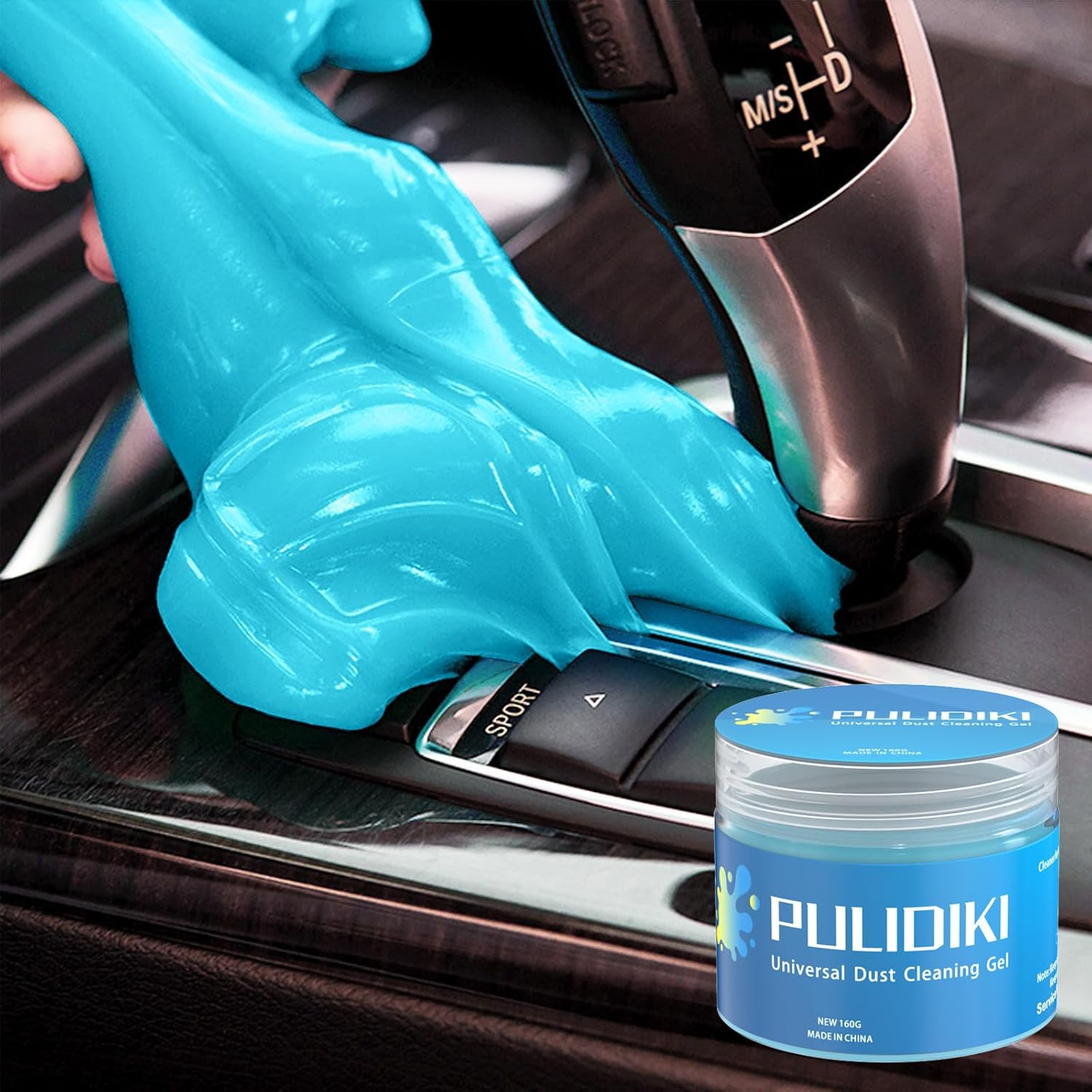
PULIDIKI Car Cleaning Gel (Detailing Putty)
Press it into vents, buttons, and seams and it lifts out dust you did not know was there. Weirdly satisfying, genuinely useful.
As an Amazon Associate, ThinkEV earns from qualifying purchases — at no extra cost to you.
Related Reading
Gear worth having
As an Amazon Associate, ThinkEV earns a small commission from qualifying purchases — at no extra cost to you.

WixGear Magnetic Air Vent Phone Mount (2-Pack)
A magnet strong enough that your phone never flinches over potholes or rail crossings. Two in the box, one for each car.
As an Amazon Associate, ThinkEV earns from qualifying purchases — at no extra cost to you.

Founder & Chief Editor
Vlad Pereira is the founder and chief editor of ThinkEV.ca, the Canadian electric-vehicle publication he writes and edits from Courtenay, British Columbia. He covers EV pricing, federal and provincial rebates, charging costs, and the Chinese manufacturers now entering Canada, from the buyer's side rather than the press-fleet side. ThinkEV is a venture of Vlad Pereira Online; his writing on health, income and the long game lives at vladpereira.com.
Frequently asked questions
Can a dealer void the EV warranty for using a non-Tesla charger?
What is CAMVAP and does it cover Tesla?
Does Quebec's lemon law apply to electric vehicles?
More EV & road-trip finds
Affordable upgrades worth a look — tap any to check the price on Amazon.
 ★ 392
★ 392Large Cup Holder Adapter (32-40oz)
View on Amazon ★ 8,681
Chemical Guys Complete Car Wash Kit
View on Amazon ★ 314
★ 314Mini USB LED Ambient Lamps (4-Pack)
View on Amazon ★ 1,083
Crystal Push-Start Button Ring (2-Pack)
View on Amazon ★ 865
★ 865Collapsible Trunk Organizer
View on Amazon ★ 721
★ 72145W USB-C Fast Car Charger
View on Amazon ★ 119
★ 119Foldable Waterproof Trunk Organizer
View on Amazon ★ 17,839
Qifutan Vent Phone Mount (Military-Grade Clip)
View on AmazonRead, Plan, Then Stay Current
Explore our expert articles to understand incentives and ownership costs, use the map to pressure-test charging reality, then subscribe so new EV coverage comes straight to you.
Continue Reading
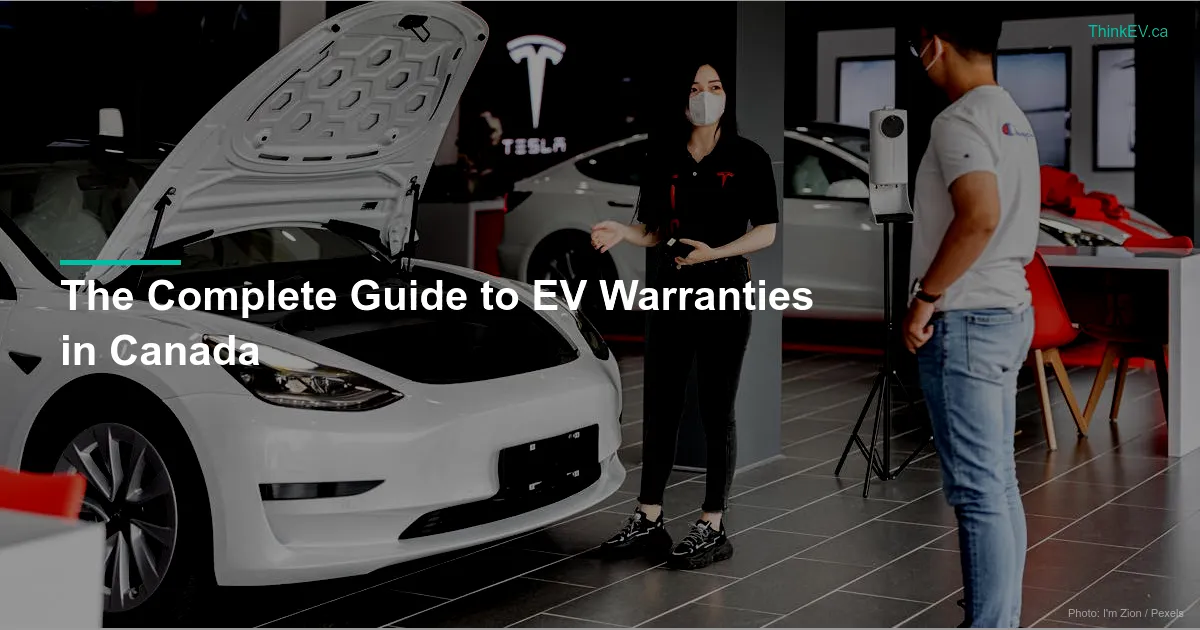
EV Battery Warranty Canada: 8 Years, 160,000 km
The Best Electric SUVs in Canada (2026): Ranked by Value

EV Charging on Road Trips Across Canada, Is It Viable Yet?

Should I Wait for BYD to Come to Canada?
How to Choose an EV Under $50K in Canada