A Chinese court ordered an EV blogger to pay roughly $294,000 USD for questioning BYD's battery safety on camera. The second-instance ruling closed the appeal door. EV blogger "Long Ge Talks EVs" was ordered to apologise and pay 2 million yuan (293,000 USD), according to Ifeng.
I'll put the position up front and defend it through the rest of this piece: a verdict of this size against an individual critic is only defensible if the criticism was demonstrably false AND caused measurable financial harm to a company that could not respond through normal channels. Neither half of that test holds up under the available evidence. BYD's own livestreamed battery event from earlier this month recorded temperatures that vindicate the substance of what the blogger said, even if the specific framing crossed into actionable territory under Chinese law.
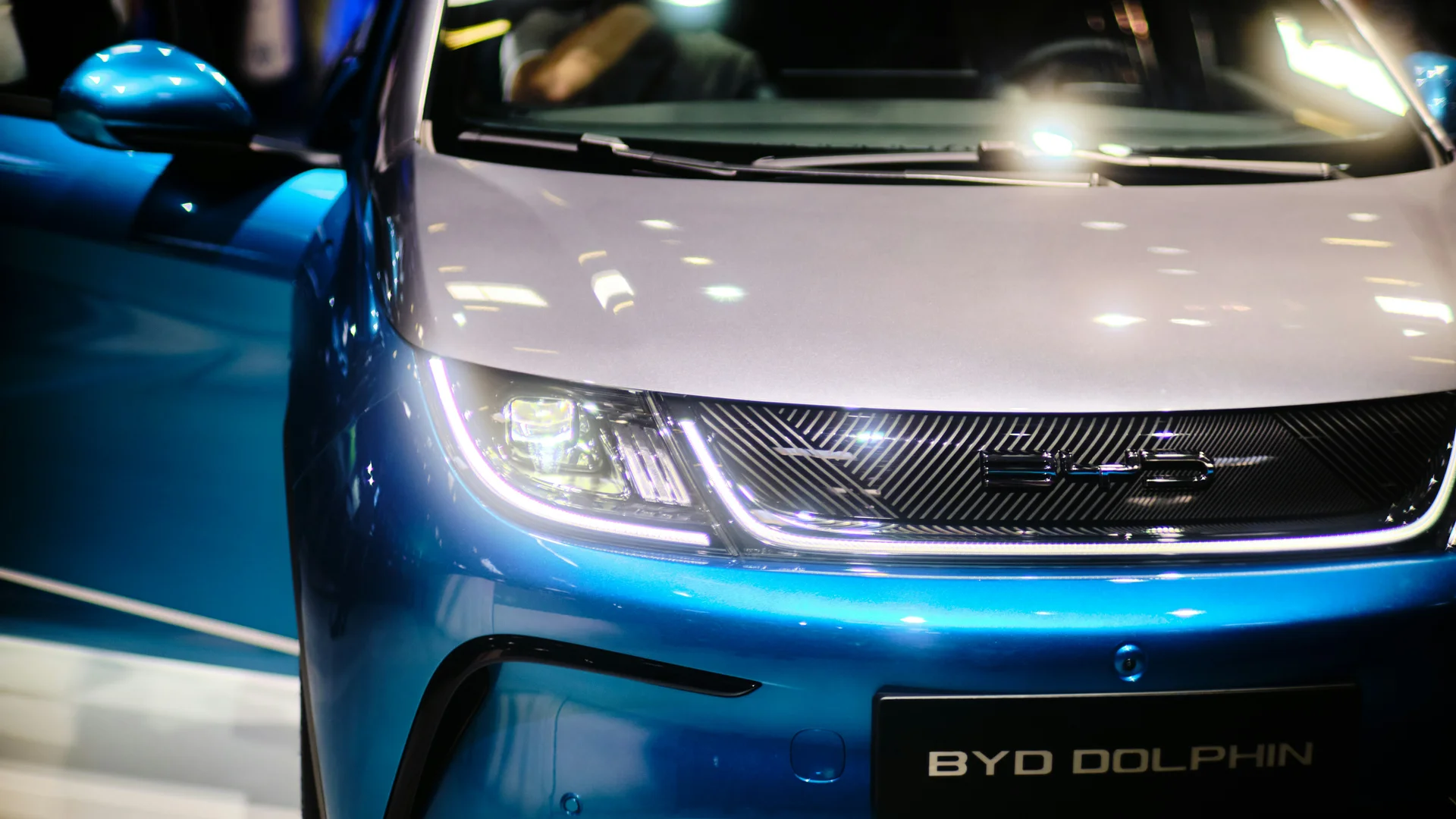
This matters to Canadian readers because BYD is entering this market now, not in some abstract future. The Dolphin and Seal are priced for genuine competition. The brand's global context, including how it handles criticism, is part of what Canadian buyers are buying.
Key takeaways
- A Chinese court ordered EV blogger Long Ge to pay 2 million yuan ($294,000 USD) after he questioned BYD battery safety.
- BYD pursued 37 influencers through Chinese courts and offered $690,000 USD in bounties for leads on additional critics.
- Weeks before the appeal ruling, BYD's own promotional livestream recorded battery cells hitting 76°C during fast charging.
- Formal complaints about OTA battery locking on China's 12315 platform surged 273% year-over-year to 12,000 in March 2026.
- Tesla, GM, and Hyundai responded to battery criticism with technical rebuttals and recalls, not defamation suits worth $294,000.
What the Court Actually Ordered, and Why It Matters
The 2 million yuan verdict against Long Ge is not a one-off. It is the second confirmed ruling of its size in five months. A first-instance court ordered compensation of 2 million yuan (approximately USD 285,000) against multiple online accounts in December 2025, and the May 2026 appeal ruling extended the same framework to the Long Ge case. The pattern is a template, not an exception.
The scale is what makes this a precedent rather than a dispute. Consider the numbers stacked side by side:
- 37 influencers pursued through Chinese courts for online criticism
- $690,000 USD in bounties offered for leads on additional critics
- 2 verdicts at the $285,000–$294,000 level in five months
- 0 published engineering rebuttals addressing the underlying battery claims
That is not a legal department defending the brand from a single bad actor. That is a structured suppression programme with a budget line.
I want to be careful with the language here. BYD is operating inside Chinese law, and the courts have ruled in its favour twice. Under the legal standard that applies in Shenzhen, the verdicts are valid. What I am examining is the editorial significance of those verdicts, what they tell us about how the company responds to safety criticism, and what that response means for buyers in jurisdictions where the same legal architecture does not apply.
The verdicts themselves carry three signals worth reading carefully. First, the size is calibrated to deter, not to recover damages. No individual EV blogger generates $294,000 in measurable harm to a company that sells over four million vehicles a year. The award is a price tag on dissent, not a restitution figure. Second, the appeal process confirmed the framework rather than narrowing it, which means the next blogger pays the same. Third, the parallel 37-defendant campaign tells you this is the operating procedure, not the exception.
The case against this reading is that BYD is simply enforcing rights any company would defend, Tesla has filed defamation actions in China too, and a manufacturer with four million annual sales is going to face a long tail of bad-faith short-sellers and rival-funded smear accounts. I concede the point partially: some of the 37 defendants likely were bad-faith actors, and a company is entitled to defend its reputation. What the concession does not cover is the size. A 2 million yuan award against an individual blogger is roughly forty times the annual disposable income of an urban Chinese household. Tesla's Chinese defamation suits have typically sought damages in the low tens of thousands of dollars. The Long Ge number is not a defence of reputation. It is a deterrent calibrated against the wallet of every other critic watching.
Compare this with how Western OEMs handle public battery criticism. The way Tesla solves this and BYD doesn't is instructive: when Tesla faced battery-fire scrutiny in 2013, Elon Musk wrote a public technical rebuttal and Tesla extended its warranty. When Chevy Bolt batteries had a verified defect, GM issued a recall and reimbursed customers. When Hyundai's Kona EV had thermal events, the company replaced battery modules under warranty. None of those companies sued the bloggers, journalists, or owner forums that surfaced the concerns. The response was technical and financial, not legal.
That contrast is the editorial story. Companies that answer criticism with engineering disclosure are telling you one thing about their confidence. Companies that answer it with a $294,000 verdict are telling you something else.
The Battery Questions That Triggered the Lawsuit
The case becomes uncomfortable at the battery evidence itself. The blogger raised concerns about BYD battery heat and degradation behaviour. Then, two weeks before the appeal ruling came down, BYD ran its own promotional livestream, and the cameras caught the cells hitting numbers that read like an indictment.
A BYD flash-charging livestream hit 76°C and triggered an online debate over battery heat. That is BYD's own marketing event, not a critic's footage. Lithium iron phosphate chemistry is more thermally stable than NCM, but 76°C under demonstrated charging conditions is exactly the kind of data point a reasonable safety analyst would flag for further scrutiny. The blogger's underlying concern, that BYD's fast-charging architecture produces thermal behaviour worth questioning, was validated by BYD's own promotional content within weeks of the verdict against him.
The complaint volume context is worse. According to CCTV News, complaints about OTA battery locking on China's 12315 platform rose past 12,000 in March, up 273 percent from a year earlier. That is a regulator-adjacent consumer-protection platform, not an enthusiast forum. A 273 percent year-over-year increase in formal complaints about battery behaviour is the kind of signal that, in any other major auto market, would trigger a regulatory inquiry before a defamation suit.
The defect-rate context compounds. BYD's approach to driver-assistance systems diverges from the Western default. Most Western automakers have a system that integrates a hardware package with a software stack. Sometimes there are very slight variations between models but the general package is very uniform. BYD didn't go that route. Instead, some models get lidar, while others get a camera-based system. Carscoops documented an incident in March 2026 where a $160,000 BYD attempted to drive into oncoming traffic under its Gods Eye assist suite. The blogger's territory was batteries, not ADAS, but the broader pattern, a company growing faster than its quality-engineering discipline, was already in the public record before the verdict came down.
None of this means the blogger's specific claims were factually airtight under Chinese tort standards. The court found that some statements crossed into defamation under the local definition, which places the burden on the speaker rather than on the company. Under that standard, BYD won. Under a different standard, the U.S. New York Times v. Sullivan test, or the qualified-privilege defences that apply in Canadian and most European jurisdictions, the same blogger might have prevailed.
The editorial point is not that the blogger was right about every detail. The point is that the underlying safety questions he raised were not fabrications. The 76°C number is BYD's own footage. The Gods Eye complaints are documented in Western press. The defect signal is real even if individual statements crossed legal lines.
There is a meaningful difference between spreading false claims and raising safety questions the data supports. The court did not draw that line. The editorial record should.
For Canadian readers thinking about what this means for battery longevity claims they will see from any manufacturer entering this market, the broader question of how batteries actually age is covered in the data on EV battery degradation over five, ten, and fifteen years in Canadian conditions. The recycling-end question, what happens to those packs when they finally die, sits in the Canadian e-waste infrastructure analysis. Both pieces of context matter when evaluating a brand whose battery safety discourse is being legally suppressed in its home market.
Gear worth having
As an Amazon Associate, ThinkEV earns a small commission from qualifying purchases — at no extra cost to you.

WeatherTech FloorLiner for Tesla Model 3
Deep-channel liners that trap every drop of slush and salt. The difference between a ruined interior and a showroom-fresh cabin after a Canadian winter.
As an Amazon Associate, ThinkEV earns from qualifying purchases — at no extra cost to you.
China's Legal Architecture Makes This Asymmetric by Design
Chinese defamation law places the burden of proof on the speaker. That is not a procedural detail, it is the entire reason these verdicts land where they do. In the U.S., a company suing a critic must prove actual malice. In Canada, the defence of fair comment protects opinion grounded in fact. In Germany, Meinungsfreiheit gives critics structural protection that survives even hostile commentary. None of those protections exist in Shenzhen.
That asymmetry compounds with resource imbalance. Between 2008 and the Made in China 2025 campaign, Beijing poured an estimated $230 billion into grants, zero-interest loans, free land, tax holidays, and rules that rewarded only vehicles using Chinese-made batteries. BYD was a prime beneficiary. From 2015 to 2020, independent analysts calculated an effective subsidy of $2,000 to $4,000 per vehicle when purchase incentives, tax exemptions, and operating aid were added up. A blogger with a phone camera is not litigating against a company. He is litigating against industrial policy made corporate.
The 2 million yuan verdict is not designed to make BYD whole. It is designed to make the next blogger reconsider posting. That is the function of an asymmetric legal regime, it does not need to prove damages, because the threat alone clears the field.
The counter-argument from sympathetic observers runs roughly as follows: China's legal system has modernised significantly since the 2010s, the courts found specific false statements rather than punishing opinion, and Western media routinely overstates the chilling effect of Chinese commercial litigation. There is some truth to this. The Long Ge ruling did cite specific allegedly false claims rather than blanket opinion, and Chinese courts have ruled against state-backed plaintiffs in commercial cases. What the counter-argument cannot explain is the absence of the engineering rebuttal. A modernised legal system that genuinely produced factual adjudication would be accompanied by a published technical refutation that satisfied the underlying safety question. Two verdicts in five months, zero published engineering disclosure on the thermal data, is not the signature of a system adjudicating truth. It is the signature of a system adjudicating speech.
This is also the context Western coverage tends to miss. BYD is not behaving badly by Chinese commercial standards. It is using legal tools that are available to any well-capitalised Chinese company. The problem is not that BYD broke the rules. The problem is that the rules themselves do not produce the kind of accountability that buyers in jurisdictions with stronger speech protections take for granted. The safety discourse that would surface in California courtrooms, German auto magazines, or Canadian consumer-protection complaints simply does not develop the same way in Shenzhen.
That has a downstream consequence for export markets. If safety-critical information about a model is being legally suppressed in the home market, the data that should inform a Canadian buyer's decision never makes it into the global conversation. The verdict against Long Ge is not just a Chinese legal story. It is a global information-flow story.
I am not arguing that Chinese EVs are uniquely dangerous, that Canadian buyers should avoid BYD, or that this lawsuit is evidence of any specific defect. Competition from Chinese brands entering this market benefits buyers, and the data on Chinese EV safety in independent testing is broadly positive. What I am arguing is narrower: the legal suppression of safety discourse in the home market should adjust how buyers in export markets weight the marketing claims they hear.
What BYD's Lawsuit Strategy Signals About Confidence
Selective enforcement reveals where a company believes the evidence is most damaging. BYD has not sued the Carscoops journalists who documented the Gods Eye ADAS failures. It has not pursued China Labour Watch, which received a complaint last fall from one of the thousands of migrant workers brought to Hungary from China to help build BYD's first European plant in the city of Szeged, a $6-billion investment intended to supply the European market with around 300,000 vehicles per year.
Gear worth having
As an Amazon Associate, ThinkEV earns a small commission from qualifying purchases — at no extra cost to you.

Emporia Smart Level 2 EV Charger (48A)
Budget-friendly 48A charger with WiFi and per-session energy tracking. Best bang for buck if you want smart features under 500 dollars.
As an Amazon Associate, ThinkEV earns from qualifying purchases — at no extra cost to you.
That selective silence is informative. ADAS criticism and labour-practice allegations went unchallenged in court. Battery criticism drew the maximum response twice. Companies do not allocate legal firepower randomly. They allocate it where the underlying claims are most threatening to commercial reputation.
The asymmetry, laid out plainly:
- ADAS reliability criticism (Carscoops, Western press), no legal response
- Labour-practice allegations (CBC, China Labour Watch), no legal response
- Battery safety questioning (single Chinese blogger), $294,000 verdict, twice, plus 37 parallel cases
That asymmetry is worth reading plainly: BYD considers the battery narrative more commercially dangerous than either ADAS reliability or labour-practice scrutiny. That is a tell, not a smoking gun, but a tell worth keeping in mind when BYD provides its own battery data.
The story isn't that BYD is litigious, every global automaker is litigious. The story is which criticism the company chooses to litigate against and which it lets stand. The financial backdrop reinforces the read: as China's broader economy continues to slow, BYD has been unable to escape the downturn. Mounting inventory and surging debt accompany a flood of quality complaints. A company under genuine commercial pressure, growing faster than its quality-control discipline can scale, will defend its most vulnerable narrative most aggressively. The legal record suggests batteries are where BYD feels least confident in the engineering rebuttal. Otherwise the company would publish the rebuttal.
There is a hypothesis worth taking seriously, though I do not have the evidence to confirm it: BYD's blade-battery LFP architecture is genuinely safer than NCM under most conditions, but its rapid-charging behaviour produces thermal edge cases that the engineering team has not fully resolved. The 76°C livestream is consistent with that hypothesis. So is the legal-suppression response. So is the absence of a published technical rebuttal that would close the question on its own merits.
If that hypothesis is correct, the lawsuit strategy is a delay tactic. BYD is buying time to resolve the engineering before the criticism compounds into a recall narrative. That is a legitimate corporate strategy in a permissive legal environment. It is also a strategy with a shelf life, and the shelf life shortens every time the company expands into a jurisdiction where the same tools do not work.

Gear worth having
As an Amazon Associate, ThinkEV earns a small commission from qualifying purchases — at no extra cost to you.
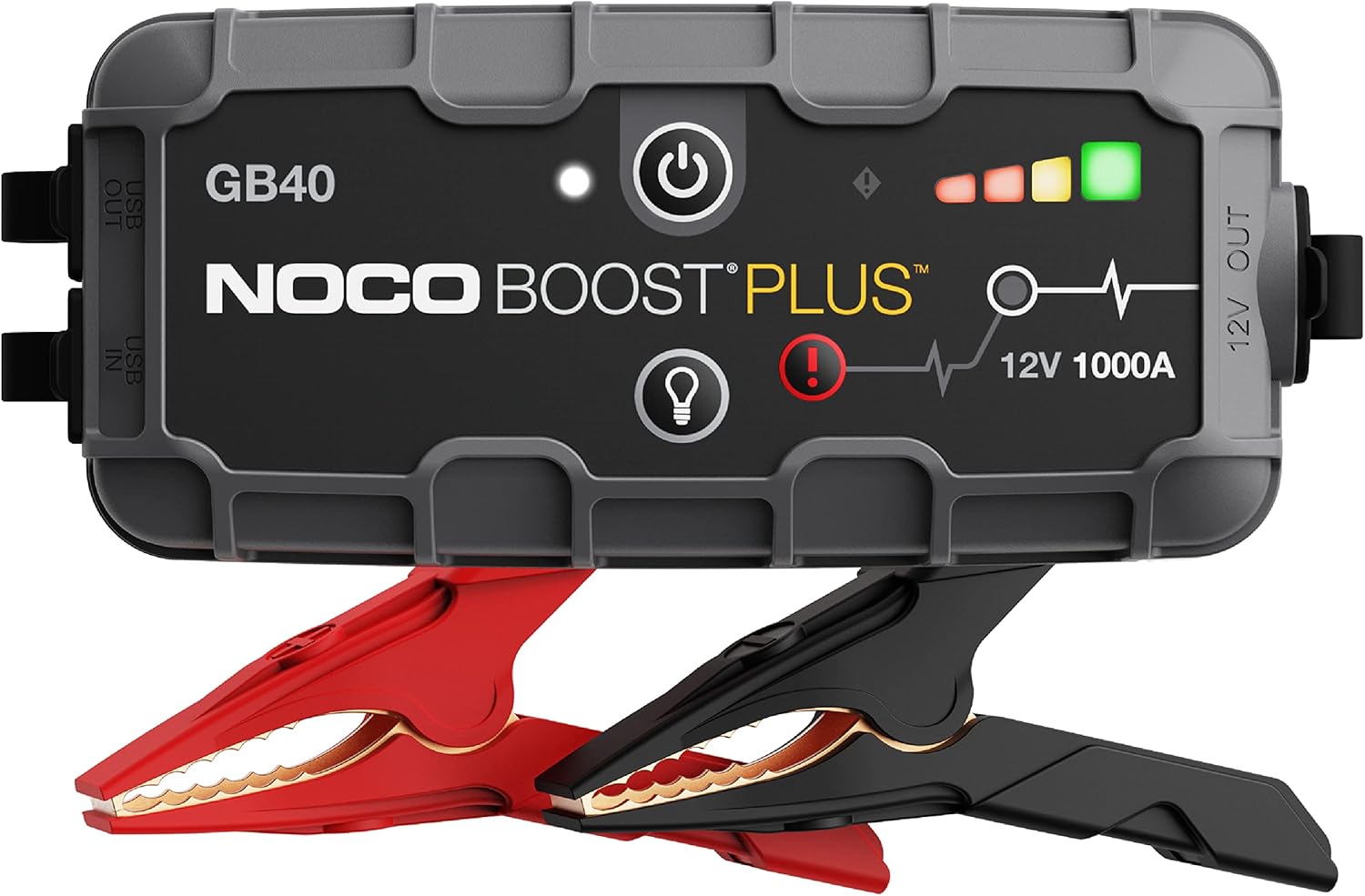
NOCO Boost Plus GB40 Jump Starter
A 1000A lithium jump starter that fits in your glovebox and works on any 12V battery. Your insurance against a dead 12V in a parking lot.
As an Amazon Associate, ThinkEV earns from qualifying purchases — at no extra cost to you.
Why Canadian Buyers Should Read the Precedent, Not Just the Verdict
BYD enters Canada with the Dolphin at roughly $28,000 CAD and the Seal between $38,000 and $45,000 CAD. Those are genuinely competitive numbers, sharper than anything Hyundai, Kia, or the Detroit Three are offering in the same segments. Chinese EV entry is good for Canadian buyers on price, and I stand by that position. The fuller market context sits in the Canadian EV pricing guide for 2026 and 2027. The arrival of the Shanghai-made Tesla Model 3 in Canada at C$39,490 under the 6.1 percent tariff framework is the first stress test of the Carney-Beijing quota; BYD's arrival is the second.
The lawsuit changes none of that pricing math. What it changes is the information environment in which Canadian buyers will evaluate the brand.
Here is a working buy/wait/skip framework for readers weighing a BYD purchase against this verdict:
- Buy the Dolphin or Seal if your priority is sticker price and you accept that home-market safety discourse is a weaker signal than usual for this brand. Lean harder on Euro NCAP results and Canadian warranty terms than on owner forums.
- Wait until the first 12 months of Canadian-market data accumulate, third-party reliability studies, provincial consumer-protection filings, independent thermal testing, if you are not in a hurry. The information vacuum that exists today will be partially filled by the end of 2026.
- Skip if your buying process depends heavily on owner-community feedback loops and long-tail defect reporting. That infrastructure exists for Toyota and Volkswagen. It is structurally weaker for BYD because the upstream Chinese discourse is legally suppressed.
Canadian consumer-protection law does not travel to Shenzhen with your warranty claim. If a battery defect emerges in a Canadian-market BYD, you have access to provincial consumer-protection statutes, the Competition Bureau, class-action remedies under provincial civil procedure, and the kind of investigative journalism that operates without fear of $294,000 verdicts. That protection structure is real and it is the reason Canadian car ownership is reasonably safe across brands.
But there is an upstream problem. The safety discourse that should produce early-warning signals, owner forums, technical bloggers, independent battery testing, operates differently in BYD's home market than in Toyota's or Volkswagen's. If a BYD battery issue emerges in Shanghai or Shenzhen and gets legally suppressed before it crosses an ocean, the Canadian early-warning system never fires. By the time the issue surfaces in Vancouver or Montreal, it is no longer early.
That is the asymmetry Canadian buyers should price into the decision. Not "do not buy a BYD", the value proposition is real, the cars are competent, and the safety record in independent testing is good. The adjustment is: weight the home-market criticism more heavily than usual, because the legal architecture is actively reducing the volume of that criticism. The signal-to-noise ratio is distorted by design.
A fair counter-argument from skeptical readers runs roughly like this, that any major manufacturer accumulates complaints online, and anecdotes don't mean a systemic issue or a "scam". The same logic, the argument goes, applies to translating a Chinese defamation verdict into a Canadian purchase signal. Every major OEM has owner-forum horror stories, and singling out BYD risks confirmation bias dressed up as analysis. The rebuttal is that I am not citing anecdotes. I am citing a 273 percent year-over-year jump in formal complaints to a regulator-adjacent platform, BYD's own promotional footage hitting 76°C, two six-figure verdicts in five months, and 37 active defamation cases. That is a pattern with a paper trail.
The broader Chinese-EV safety context, including how these vehicles perform in independent European testing, sits in the Euro NCAP data for Chinese EVs. Read it alongside this verdict. Independent testing is the counterweight to legally suppressed domestic discourse, it is the part of the safety infrastructure that operates outside any single jurisdiction's tort law. For Canadian buyers, the Euro NCAP record matters more for a Chinese brand than for a European or American one, precisely because it is one of the few data sources that cannot be legally narrowed. The BYD Canadian lineup and dealer rollout details cover the practical side of what is arriving and where.
Gear worth having
As an Amazon Associate, ThinkEV earns a small commission from qualifying purchases — at no extra cost to you.

Amazon Basics Seat Belt Cutter and Window Hammer
The 10-dollar tool you hope to never use: cuts a jammed belt and shatters a window in an emergency. Mount it within reach.
As an Amazon Associate, ThinkEV earns from qualifying purchases — at no extra cost to you.
The Editorial Position: Criticism Is Part of Safety Infrastructure
A $294,000 verdict against a critic is only defensible if the criticism was demonstrably false AND caused measurable harm. The Long Ge case fails the first half of that test on the available evidence. The 76°C livestream came from BYD's own camera crew. The CCTV battery-locking complaint data is reported public information. The Carscoops Gods Eye documentation is unrebutted.
The blogger may have crossed lines under Chinese defamation law. That is what the courts ruled and I am not disputing it as a legal matter. What I am disputing is the editorial proposition that a legal verdict in this regulatory environment functions as an adjudication of factual accuracy. It does not. It functions as a settlement of speech rights under a system designed to protect commercial actors over individual speakers.
Criticism is part of safety infrastructure, not a threat to it. Owner forums, independent bloggers, technical analysts, and investigative journalists are how the auto industry detects defects before they become recalls. Tesla's battery safety record improved because critics surfaced concerns and Tesla answered them with engineering. Hyundai's Kona EV thermal programme advanced because owners reported issues publicly and Hyundai responded with module replacements. The industry gets safer when the conversation gets louder, not when it gets quieter.
A legal regime that uses $294,000 verdicts to make the conversation quieter is not making the cars safer. It is making the safety discourse cheaper to suppress than to address. That is the position, and I would change it only on the following evidence: a transparent third-party audit of the specific battery claims that found them fabricated, published in a venue without commercial relationship to BYD, and accompanied by the engineering rebuttal that explains the 76°C livestream and the 12,000-plus battery-locking complaints in the CCTV consumer-platform data.
I have not seen that audit. Until I do, the verdict is a precedent that should change how buyers read BYD's home-market silence, not a fact worth deferring to. What I will be watching next is whether BYD pursues similar legal action in EU or North American jurisdictions as it expands into those markets. The 49,000-unit Canadian quota under the 6.1 percent tariff makes Canada one of the test cases. If BYD attempts to use Canadian defamation law against a Canadian critic, and the threshold here is much higher than in Shenzhen, that will be the moment the strategy meets a legal architecture it was not built for. The result will tell us a great deal about the company's posture toward export-market criticism.
The bet I would place, with stakes: BYD does not litigate against a Canadian critic in the first 24 months of market entry, because the discovery process in a Canadian defamation suit would force the engineering disclosure the company has spent two verdicts avoiding. I'd hold that prediction at roughly 80 percent confidence. The cheaper path is silence, paired with selective engagement through Canadian PR firms. If that prediction breaks, if BYD does file in a Canadian court, it will be because someone in Shenzhen miscalculated which legal tools cross borders. Either outcome is informative. The first confirms the home-market strategy has a hard limit at the border. The second produces, finally, the discovery record that the Long Ge case never generated.
The shorter-term thing to watch is whether BYD answers the 76°C livestream with a technical disclosure. Two weeks have passed. The footage is its own. The engineering team has the data. A confident company publishes the thermal-management explanation and closes the question. A company managing a narrative buys more time in court.
Gear worth having
As an Amazon Associate, ThinkEV earns a small commission from qualifying purchases — at no extra cost to you.

Roadside Emergency Safety Kit
Jumper cables, a portable air compressor, tow strap, first aid, and more for when something goes wrong between chargers. Canadian winters do not forgive the unprepared.
As an Amazon Associate, ThinkEV earns from qualifying purchases — at no extra cost to you.

Founder & Chief Editor
Vlad Pereira is the founder and chief editor of ThinkEV.ca, the Canadian electric-vehicle publication he writes and edits from Courtenay, British Columbia. He covers EV pricing, federal and provincial rebates, charging costs, and the Chinese manufacturers now entering Canada, from the buyer's side rather than the press-fleet side. ThinkEV is a venture of Vlad Pereira Online; his writing on health, income and the long game lives at vladpereira.com.
Frequently asked questions
Does BYD sell vehicles in Canada yet?
What did BYD's own livestream actually show?
How do those damages compare to what Tesla pursued?
Did consumer complaints about BYD batteries actually rise?
Would this verdict hold up under Canadian defamation law?
More EV & road-trip finds
Affordable upgrades worth a look — tap any to check the price on Amazon.
 ★ 2,941
Microfiber Cleaning Cloths (Multi-Pack)
View on Amazon ★ 55
★ 55LED Car Door Logo Projector Light
View on Amazon ★ 900
★ 900Personalized Photo Car Air Freshener
View on Amazon ★ 27,769
Car Cup Holder Coasters (4-Pack)
View on Amazon ★ 692
★ 692USB-A to USB-C CarPlay Adapter (3-Pack)
View on Amazon ★ 87
★ 87Car Window Sun Shades for Kids (4-Pack)
View on Amazon ★ 268
★ 268Anti-Slip Leather Steering Wheel Cover
View on Amazon ★ 96,686
PULIDIKI Car Cleaning Gel (Detailing Putty)
View on AmazonRead, Plan, Then Stay Current
Explore our expert articles to understand incentives and ownership costs, use the map to pressure-test charging reality, then subscribe so new EV coverage comes straight to you.
Continue Reading
BYD Great Seagull: A Bigger $10,000 EV Hatch Is Coming
BYD Denza Z9 GT Adds $50K Tri-Motor Trim to China's Top GT
Chinese EVs Will Reach the US, Tariffs or Not, Analysts Say
BYD Dolphin G: Inside the 1,000 km PHEV Design
BYD Denza Z: 1,000+ hp Hypercar, Canadian Price