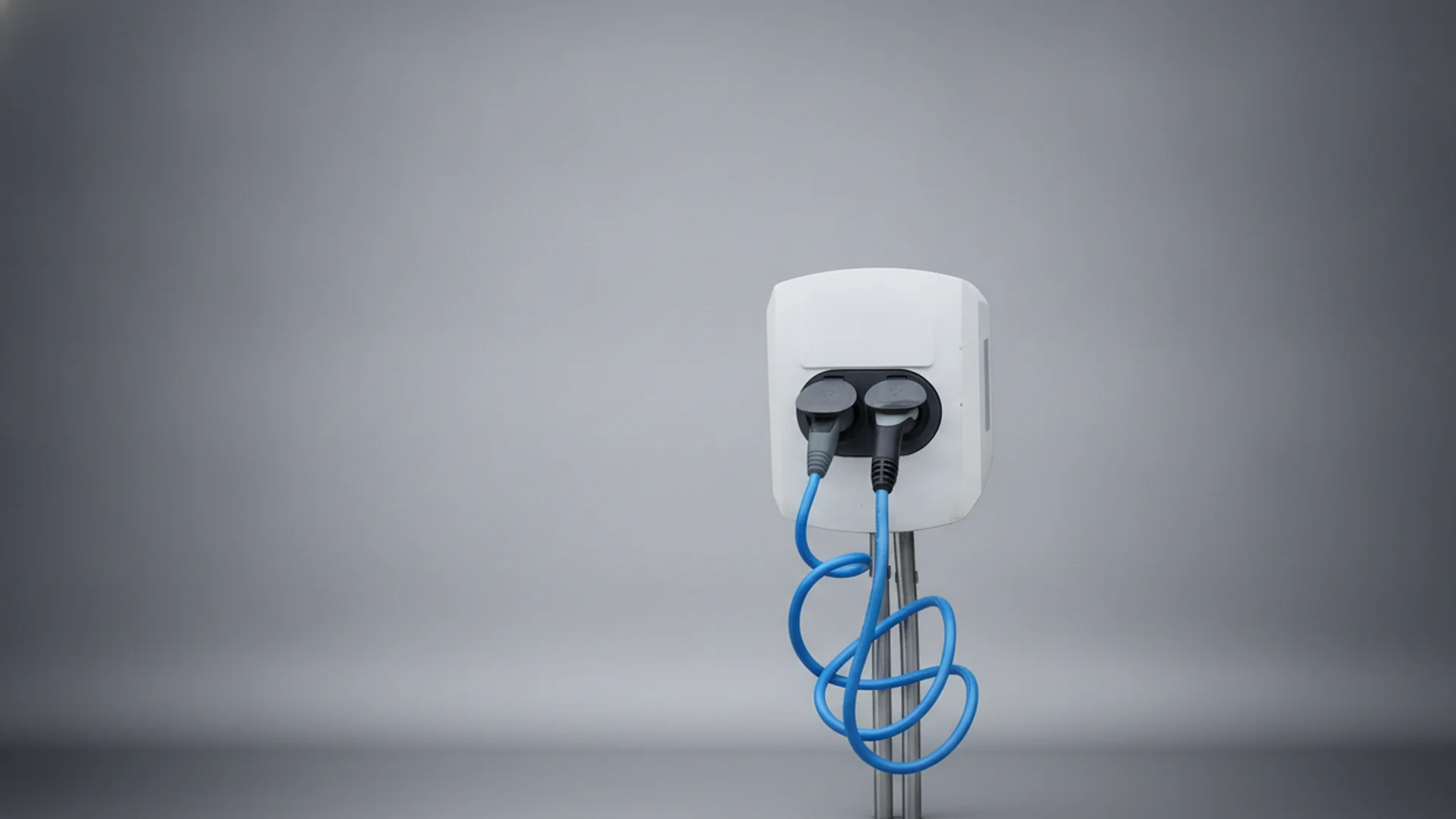
A 77 kWh battery that delivers 260 km of real-world range and a 75 kWh battery that delivers 480 km are both accurately labelled. That gap is the story, and it is where most EV shopping advice quietly falls apart. The capacity number on the spec sheet tells you how much energy the pack holds. It does not tell you how far the car will go, how fast it will charge, or whether the bigger number is the better buy. Three units do that work, kWh, kW, and efficiency, and they answer three different questions.
The short version: kWh is the tank, kW is the pump, and efficiency is the engine that decides what the tank is actually worth. Get those three straight and most of the confusion around EV range, charging time, and rebate eligibility resolves itself.
Key takeaways
- A 77 kWh battery delivering 260 km can lose to a 75 kWh battery delivering 480 km, drag coefficient explains most of that gap.
- Cold weather cuts NRCan-rated range by 20–40 percent, so a 380 km EnerGuide rating becomes roughly 230–270 km on a Calgary February commute.
- Your car's onboard charger ceiling, not the station's kW rating, determines actual charging speed; a 7.2 kW car gets 7.2 kW from an 11 kW wallbox.
- Level 2 home charging loses 10–15 percent to conversion heat and rectification, so your hydro bill will always exceed what the range readout implies.
- To size a battery for Canada, multiply your daily kilometres by 1.3 for winter penalty, then divide by your car's real-world efficiency in km/kWh.
Quick Answer: kWh Is the Tank, kW Is the Pump
A kilowatt-hour (kWh) measures energy stored. A kilowatt (kW) measures the rate at which energy moves. They share a prefix and not much else.
If kWh is the litres in the tank, kW is the litres-per-minute at the pump. The two numbers are independent. A small tank can be filled by a fast pump. A large tank can be drained by a slow one. Confusing them is the most common error in EV coverage, and it is the reason buyers walk into showrooms asking how many kilowatts their battery holds.
Battery sizes for current EVs cluster between roughly 40 kWh at the entry end, a Nissan Leaf, a Chevy Bolt, and 100+ kWh at the long-range truck end, with a 100 kWh pack delivering around 365 miles (587 km) of range in the Tesla Model S Long Range. Charger ratings span a wider band: 7 kW at a typical Canadian home install, 50 kW at older public DC stations, and 150–350 kW at current ultra-rapid sites. The two ranges have no fixed relationship to each other, which is the entire point.
Gear worth having
As an Amazon Associate, ThinkEV earns a small commission from qualifying purchases — at no extra cost to you.

Lectron Level 2 J1772 Charger (40A, WiFi)
Smart WiFi charger with real-time energy monitoring. 40A / 9.6 kW, J1772 with a NEMA 14-50 plug, schedule charging right from your phone.
As an Amazon Associate, ThinkEV earns from qualifying purchases — at no extra cost to you.
How Battery Capacity (kWh) Shapes the Range Calculation
The math is straightforward. Range equals capacity multiplied by efficiency. A 75 kWh pack at 3 miles per kWh yields about 225 miles. The same pack at 4.5 mi/kWh yields about 337 miles. Same battery, same charge, 112 miles of difference, all of it determined by what happens between the battery and the wheels.
Then there is the gap between gross and usable capacity. Automakers reserve a buffer at the top and bottom of the pack to protect cell longevity, typically 5 to 15 percent. The kWh number on the brochure is sometimes the usable figure, sometimes the gross, and the disclosure is rarely consistent across manufacturers. Tesla, for what it is worth, lists the Model 3 with battery options of approximately 50 kWh and 75 kWh, and the gap between those listed figures and what the car actually delivers to the motor is part of why two cars with the same headline kWh can post different ranges on the same drive.
This is where the buyer's instinct to chase the biggest number breaks. A smaller battery in an aerodynamically clean body regularly outranges a larger battery in a brick, the aerodynamic case for why shape beats curb weight is the longer version of this argument, and it has been true since the first production EVs. Drag coefficient does more work at highway speed than ten extra kWh of pack.
Canadian context sharpens the point. Cold weather cuts usable capacity by 20 to 40 percent depending on temperature, cabin heating habits, and the chemistry of the pack. NRCan's published range figures are summer numbers. A 60 kWh car rated for 380 km in the EnerGuide test will routinely show 230 to 270 km on a Calgary February commute, and that is not a defect, it is the gap between a standardised test and a windshield reading minus-twenty.
Charging Speed Decoded: What the kW Rating Actually Controls
Charging happens in two registers. Level 2 AC, the home and workplace standard, runs at 7 kW for most Canadian installs and tops out at 11 to 22 kW for the keenest setups. DC fast charging, the highway register, runs from 50 kW at older public stations to 150 and 350 kW at current ultra-rapid sites.
The trap is that the station's rating is not the car's rating. Every EV has a maximum acceptance rate, the highest kW its onboard hardware will accept, and that ceiling, not the dispenser, governs charging speed. Plug a car that maxes out at 7.2 kW into an 11 kW wallbox and you get 7.2 kW. Plug a 150 kW car into a 350 kW station and you get 150. The dispenser's headline number is the highest speed it can deliver to something else.
The arithmetic of charging time is correspondingly simple. Energy needed, divided by power accepted, equals hours. A 60 kWh pack that needs 48 kWh to reach 80 percent, accepting 50 kW, takes about an hour. The same car accepting 150 kW takes about 20 minutes, ignoring the taper that kicks in past 80 percent on most chemistries. The taper is real and worth budgeting for, which is why DC charging stops are usually called at 80 percent rather than 100.
Gear worth having
As an Amazon Associate, ThinkEV earns a small commission from qualifying purchases — at no extra cost to you.

WeatherTech FloorLiner for Tesla Model 3
Deep-channel liners that trap every drop of slush and salt. The difference between a ruined interior and a showroom-fresh cabin after a Canadian winter.
As an Amazon Associate, ThinkEV earns from qualifying purchases — at no extra cost to you.
For trip planning in Canada, the kW rating on the station is published, BC Hydro EV, FLO, and Petro-Canada Electrify all list site power on their station maps. Match that number to your car's acceptance rate before the drive, not at the dispenser. And before paying an electrician for an 11 kW home install, check the onboard charger spec. Paying for capacity the car cannot use is the most common avoidable cost in the home-charging budget. Whether sustained high-kW DC sessions degrade the pack over time is a separate question; the short answer is the data on fast charging and battery health is more nuanced than the conventional wisdom.
Gear worth having
As an Amazon Associate, ThinkEV earns a small commission from qualifying purchases — at no extra cost to you.

TP-Link Kasa Smart Plug with Energy Monitoring
Track exactly how much electricity your Level 1 charger uses and schedule it for off-peak hours. Know your real cost per kWh.
As an Amazon Associate, ThinkEV earns from qualifying purchases — at no extra cost to you.
Efficiency: The Number That Makes kWh Meaningful
Real-world efficiency for 2024–25 EVs lands between roughly 2 and 4.5 miles per kWh, about 3.2 to 7.2 km per kWh in metric. Where a given car falls inside that range is determined mostly by mass, drag coefficient, frontal area, and how hard the driver leans on the highway. The motor itself is barely a variable: up to 80 percent of the energy in the battery reaches the wheels through the electric drivetrain, which is the high end of what any production powertrain achieves. The longer treatment is in the correction to most EV efficiency coverage.
There is a second loss most buyers never account for. AC Level 2 charging is not 100 percent efficient. Expect 10 to 15 percent wall-to-wheel loss between the wallbox and the pack, conversion heat, AC-to-DC rectification, thermal management drawing from the same circuit. Your hydro bill will reflect more kWh than the car's range readout suggests it stored. Over a year of home charging, that is real money, and it is the gap nobody puts on the spec sheet.
Canada uses Le/100km on EnerGuide labels, litres-equivalent per 100 kilometres, which inverts the kWh-per-km calculation. Lower is better, the way it has always been for fuel economy. The NRCan figure is useful for cross-shopping vehicles in the same test conditions. It is less useful as a prediction of what the car will do on the 401 in January, which is a separate calculation the label is not built to make. The way different markets generate these efficiency numbers in the first place is its own mess, the disparities in efficiency ratings across four markets explains why a car rated 4.1 mi/kWh in one jurisdiction can show 3.4 mi/kWh in another with identical hardware.
A Level 2 charger adds roughly 40 kilometres of range per hour. This is not a speed. It is a philosophy.
Gear worth having
As an Amazon Associate, ThinkEV earns a small commission from qualifying purchases — at no extra cost to you.

P3 Kill A Watt Electricity Usage Monitor
Plug in your charger and see exactly what you spend in kWh, cost, and watts. Settle the is-my-EV-really-cheaper debate with data.
As an Amazon Associate, ThinkEV earns from qualifying purchases — at no extra cost to you.
How to Use kWh When Shopping for an EV in Canada
Four steps, in order.
Estimate the floor. Take your daily kilometre need, multiply by a 30 percent winter penalty, and that is the minimum usable kWh the car needs to hold. A 60 km daily commute becomes 78 km of winter draw, which at 5 km/kWh efficiency means a 16 kWh daily floor, modest, until you stack in heating loss, the rare 200 km day, and the desire not to charge every single night.
Check rebate eligibility separately from capacity. The federal iZEV program has a list-price cap, not a kWh cap. A 40 kWh Nissan Leaf and a 100 kWh Tesla Model Y face the same price-ceiling gate. Bigger battery does not buy you the rebate. Provincial top-ups in Quebec and British Columbia layer their own price ceilings on top, and Transport Canada's published criteria are the document to read before assuming anything.
Compare efficiency, not just headline capacity. Two cars at 75 kWh can be 100 km apart on the same drive. The efficiency number, Le/100km on the EnerGuide label, mi/kWh on a US sheet, is the multiplier that turns the kWh figure into actual range.
Verify the onboard charger ceiling before the home install. This is the most common waste in the home-charging budget. Many current EVs cap onboard AC charging at 7.2 kW; some cap at 11 kW; a few accept 22 kW. Spending three thousand dollars on a 22 kW circuit and panel upgrade for a car that will accept 7.2 is a real and frequent mistake. The spec is in the owner's manual, usually under the AC charging section, and a five-minute check saves the install bill.
The kWh number sells the car. The efficiency number determines whether the car was worth buying. The kW number decides how often you plan your day around a dispenser. Three different questions, three different answers, and the spec sheet gives you all of them if you know which column to read.
Gear worth having
As an Amazon Associate, ThinkEV earns a small commission from qualifying purchases — at no extra cost to you.

Grizzl-E Classic Level 2 EV Charger (40A)
Canadian-made and rated for minus 40C winters. 40A / 9.6 kW, NEMA 14-50, indoor/outdoor, 24-ft cable. The charger built for Canadian weather.
As an Amazon Associate, ThinkEV earns from qualifying purchases — at no extra cost to you.

Founder & Chief Editor
Vlad Pereira is the founder and chief editor of ThinkEV.ca, the Canadian electric-vehicle publication he writes and edits from Courtenay, British Columbia. He covers EV pricing, federal and provincial rebates, charging costs, and the Chinese manufacturers now entering Canada, from the buyer's side rather than the press-fleet side. ThinkEV is a venture of Vlad Pereira Online; his writing on health, income and the long game lives at vladpereira.com.
Frequently asked questions
Why does my EV show less range in winter than the NRCan sticker?
Does plugging into a faster charger than my car supports cause any damage?
Why does my electricity bill seem higher than my range readout suggests?
Is a bigger kWh battery always the right choice for Canadian winters?
What does the gross-versus-usable kWh gap mean for my purchase decision?
More EV & road-trip finds
Affordable upgrades worth a look — tap any to check the price on Amazon.
 ★ 61
★ 61Toddler Car Seat Snack and Cup Tray
View on Amazon ★ 17,839
Qifutan Vent Phone Mount (Military-Grade Clip)
View on Amazon ★ 12,051
Windex Electronics Screen Wipes
View on Amazon ★ 164
★ 164Solar-Powered LED Ambient Light
View on Amazon ★ 401
★ 401Crochet Daisy Rear-View Mirror Charm
View on Amazon ★ 979
★ 979Leather Headrest Purse Hook
View on Amazon ★ 721
★ 72145W USB-C Fast Car Charger
View on Amazon ★ 87
★ 87Car Window Sun Shades for Kids (4-Pack)
View on AmazonRead, Plan, Then Stay Current
Explore our expert articles to understand incentives and ownership costs, use the map to pressure-test charging reality, then subscribe so new EV coverage comes straight to you.
Continue Reading
Aerodynamics Beat Diet, Why EV Size Barely Moves the Needle
Automakers Sold You 'Efficient Small EVs', The Data Disagrees
Why Most EV Efficiency Coverage Gets It Backwards

EV Efficiency Ratings Compared Across Four Markets

Electric Motors vs Gas Engines: How EV Power Really Works