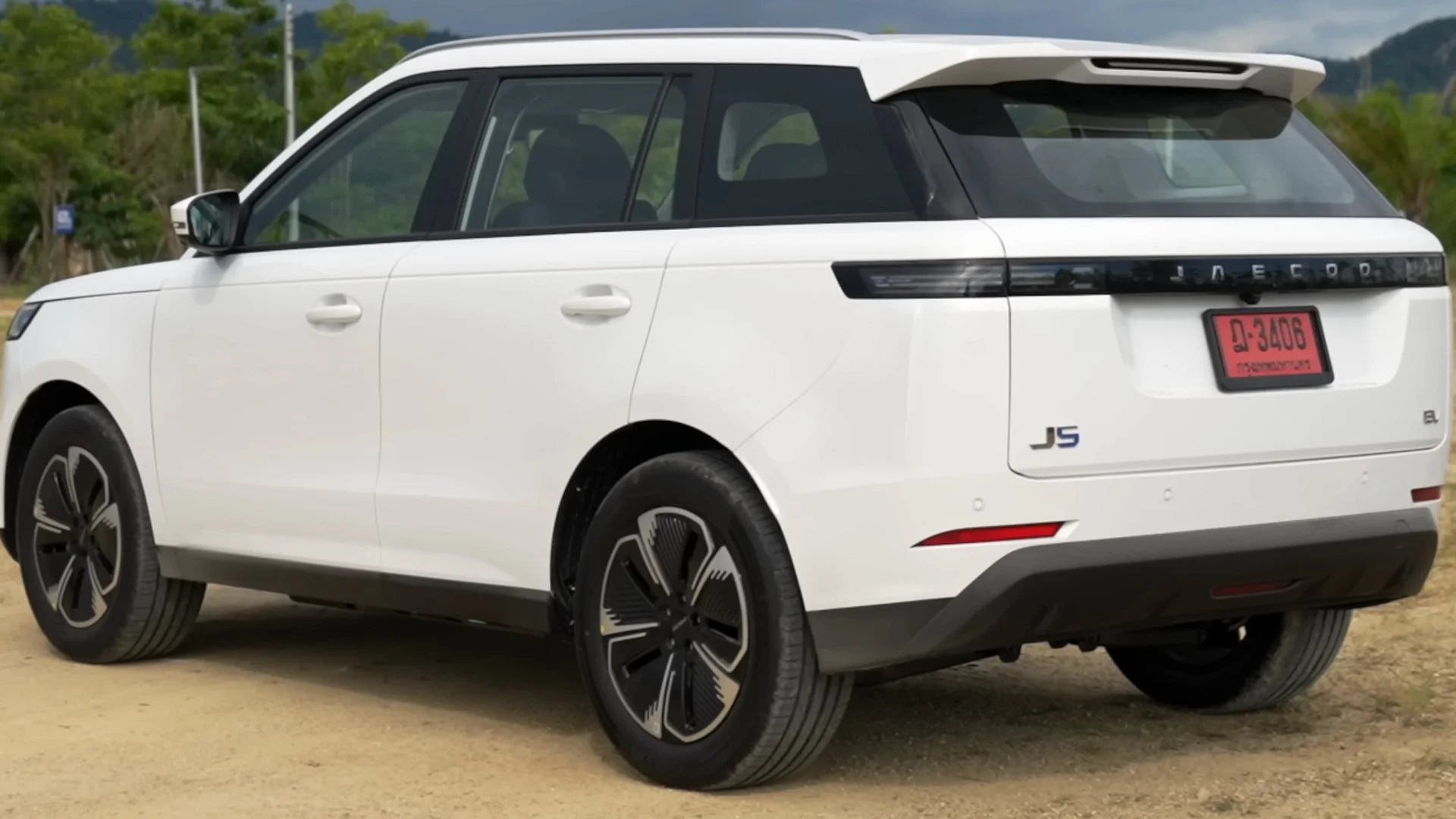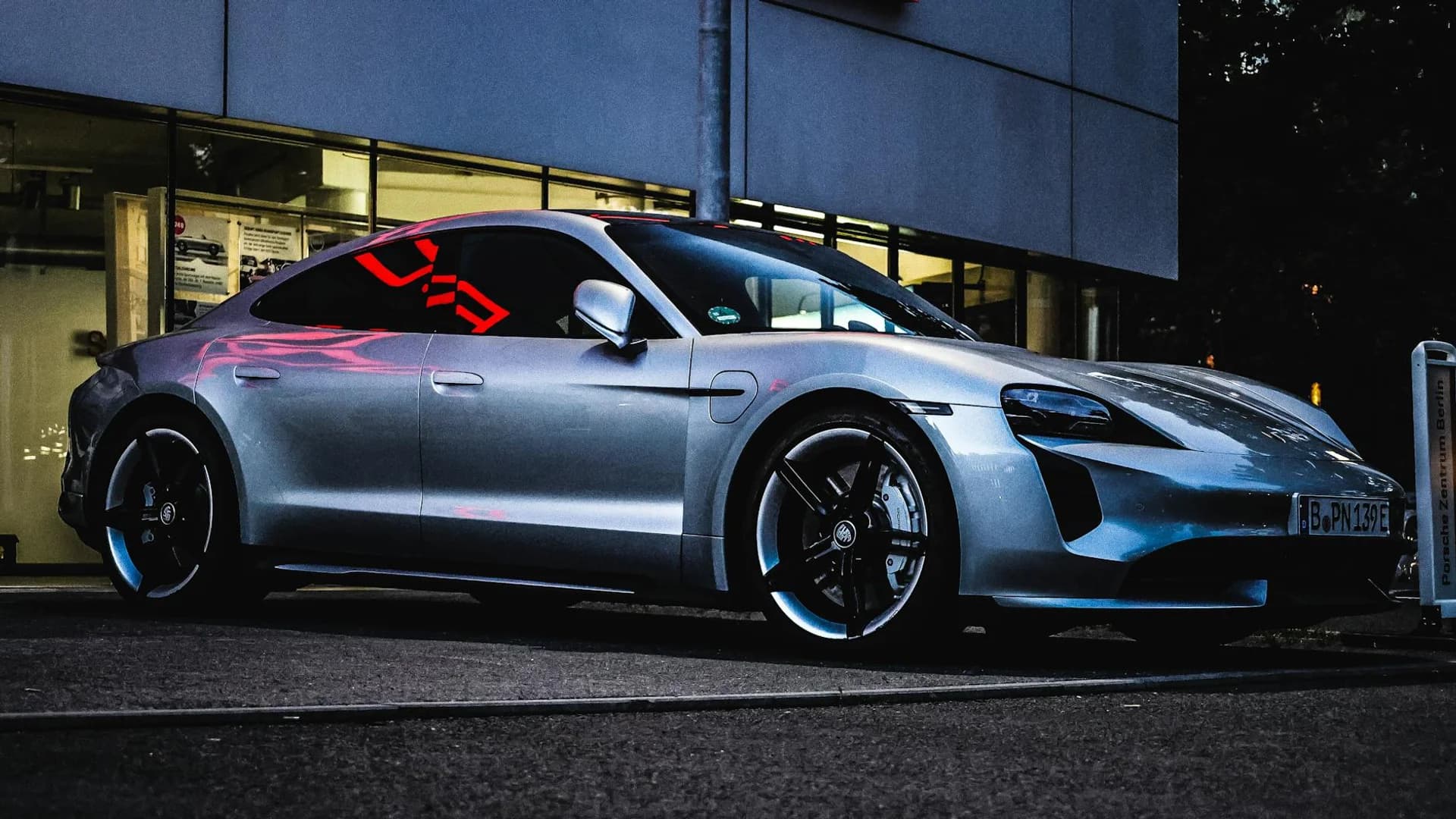
Porsche spent six years making the Taycan the benchmark. Mercedes-AMG spent one reveal making that benchmark feel provisional.
The way AMG solves the performance-EV packaging problem, and Porsche doesn't, is by treating the platform as the argument, not the chassis as the canvas. The new AMG GT 4-Door EV's rear compartment is far more spacious than the one in the somewhat similar Taycan, thanks to a missing section in the battery housing that serves as the rear footwell, though to be fair, the AMG is an inch higher and five inches longer than the Porsche, in both length and wheelbase. That sentence is doing a lot of work. It is the difference between a car that adapted a luxury-EV skateboard and a car that drew the skateboard around the people who would sit on it.
The headline numbers are the easy part. 1,153 hp. Three motors. An 800-volt architecture. A September UK on-sale date and an opening price near £150,000. Numbers like that travel fast in spec sheets and travel slowly in showrooms, and the gap between those two speeds is where this story actually lives. The Taycan Turbo GT exists. It has been driven, instrumented, charged in winter, and lived with by owners across four continents. The AMG GT 4-Door has been revealed. The distinction is not pedantic. It is the entire question.
What follows is not a verdict on which car is better. It is an argument about which company is making the more interesting engineering bet, and what that bet implies about how Mercedes-AMG and Porsche each think a fast EV should feel, weigh, sound, and reward the person paying for it.
Key takeaways
- AMG's axial-flux front motor is only 3.5 inches thick, enabling rear footwell packaging the Taycan's platform simply can't match.
- The AMG GT 4-Door launches on an all-new 800V AMG.EA platform, not a retuned EQS, with September UK sales starting near £150,000.
- AMG's three-motor torque vectoring skips the Taycan's two-speed rear gearbox entirely, distributing power side-to-side without a mechanical differential.
- The 1,153 hp production figure is deliberately lower than the 1,341 bhp AMG GT XX Concept claimed in 2025, engineers won the argument with marketing.
- The Taycan has been on sale since 2019 with three over-the-air charging-curve revisions behind it, while the AMG GT 4-Door had only been revealed, not shipped, at the time of writing, the gap between a refined product and a clean-sheet bet.
The Architecture Argument: Why AMG.EA Is Not a Rebadged EQS
The most consequential decision Mercedes-AMG made about this car happened years before any of us saw it. They could have stretched the EQS platform, recalibrated the dampers, retuned the motors, and called it the AMG version. That is what brand-extension EVs usually look like, and it is exactly the path that produced the kindest descriptions of the EQS itself as "competent but uninvolving."
AMG.EA is a different commitment. It is an 800-volt architecture engineered for a performance EV first, with the luxury and saloon variants downstream of that decision rather than upstream of it. The motors tell you this clearly. The front unit is an axial-flux design only 3.5 inches thick, a packaging choice that opens up suspension geometry, crash structure, and cabin volume in ways a conventional radial motor cannot. Engadget's reveal coverage frames the platform as a deliberate engineering response: three new axial-flux motors that marry high power with reduced weight and size, sitting on top of an 800-volt bus.
Read as philosophy, this is AMG's spec-as-thesis statement. Radial-flux motors, the kind Porsche uses in the Taycan, are mature, well-understood, and acceptably power-dense for almost any production EV. They are also bulky relative to their output, and that bulk lives in the most consequential real estate on the car: the axle centreline. Axial-flux motors invert the geometry. They put the rotor and stator in flat parallel discs rather than concentric cylinders. Power per kilogram goes up. Power per cubic litre goes up further. And the engineer suddenly has room to do other things, like cut a footwell into the battery housing because the rear motor doesn't demand the volume it used to.
Here is the case against the axial-flux thesis, because every engineering elegance carries a tax. Axial-flux units are harder to manufacture at scale, they demand tighter rotor-stator tolerances, and their thermal-dissipation geometry is unforgiving when the load profile gets sustained rather than peaky. Porsche's radial-flux choice is conservative on purpose, it is the motor topology that can be sourced from multiple suppliers, repaired in more service centres, and pushed harder for longer without revealing new failure modes. AMG's bet is that the packaging and density wins are worth the manufacturing complexity. If the warranty data over the first two years says otherwise, the thesis gets revised in public, expensively.
The tri-motor topology compounds the argument. Porsche's most aggressive Taycan variants use two motors with a two-speed gearbox at the rear to extend the top-speed envelope. AMG's three-motor layout, one front, two rear, lets the rear axle vector torque side-to-side without a mechanical differential, while the front motor handles its own arithmetic. This is not new in concept; Rimac, Lucid, and the Audi e-tron GT family have all touched some version of it. But AMG is doing it on a platform designed for the topology rather than retrofitted to accept it.
The lineage matters here too. Porsche's origins date to the 1930s, when German Bohemian automotive engineer Ferdinand Porsche founded Porsche, and the Taycan is the product of a company that learned to make sports cars rear-engined and then learned to electrify them. AMG's lineage is different, it is a tuner house absorbed by a luxury manufacturer, and its proof of seriousness on EVs has had to come from somewhere. The AMG.EA platform is that proof, and it borrows visibly from the Formula 1 program in the way the motors prioritise mass and packaging over the cheapest-acceptable solution.
The reason this matters for the buyer is structural, not academic. Platforms set ceilings. Six years from now, when the second-generation AMG GT 4-Door arrives and the third-generation Taycan arrives, the platform decisions made in 2026 will determine which company has more thermal headroom, more software latitude, and more room to iterate without starting over. AMG bet on a clean sheet. Porsche bet on refinement. Both bets can win, but they are different bets, and pretending the AMG is just "Mercedes' Taycan answer" misses what is actually being argued.
This is a place where the broader convergence story complicates things, the case that EV brands are starting to feel interchangeable cuts in both directions. The platforms diverge; the on-road feel often doesn't, at least not in proportion to the engineering distance between them.
What 1,153 Horsepower Actually Means Structurally
A number like 1,153 hp does interesting damage to the conversation. It is large enough to win the spec war on contact and small enough to feel almost rational compared to the 1,341 bhp the AMG GT XX Concept claimed last year. The production figure is the deliberate, settled version. It is what AMG decided the car should make after the engineers were done arguing with the marketing department.
Power-to-weight ratio is the relevant frame, and Mercedes-AMG has its own institutional vocabulary for it, the Mercedes-AMG ONE hypercar established the modern AMG approach to extracting power from minimum mass. The GT 4-Door is not the ONE; it is heavier, longer, and built to carry four adults rather than two and a roll cage. But the AMG.EA platform inherits the institutional knowledge of the ONE program, particularly the F1-derived motor work that produced the axial-flux design now sitting under the GT 4-Door's bonnet.
The Taycan comparison number is well-established. The 2026 Taycan Turbo GT reaches 60 mph in 2.1 seconds and peaks near the upper edge of what street tyres can transmit to dry pavement. AMG's claim for the tri-motor variant, figures floating in the 2.0-second range pending final certification, is structurally credible given the power-to-weight ratio, but credible is not the same as proven. Track validation will arrive before customer cars do; until then, the headline figure is a vector, not a result.
Power density is where the axial-flux choice earns its keep. A radial-flux motor making 400-plus horsepower needs significant volume around the axle. An axial-flux unit of the same output is roughly half the depth and substantially lighter. Multiply across three motors and the unsprung mass calculus shifts, not just kerb weight, but where the weight sits, how the suspension responds, and how the chassis can be tuned without fighting its own drivetrain. Porsche extracts comparable power from its Taycan motors through clever electronics and a maturing thermal-management stack. AMG is extracting it through a different motor architecture entirely. Both routes work. They are not the same route.
What the engineers chose not to do is as revealing as what they did. There is no hybrid buffer. No range-extending ICE option. No mild-hybrid soft landing for buyers nervous about the EV commitment. The AMG GT 4-Door is fully electric, full stop, and that is a pricing decision as much as an engineering one. AMG has read its audience and concluded that the customer paying £150,000 for a four-door performance saloon in 2027 is not the customer asking for a backup combustion engine. The GT XX Concept telegraphed this stance; the production car ratifies it.
The risk in committing this hard to spec leadership is that spec leadership has a short shelf life. The Taycan Turbo GT itself was a spec response to earlier rivals, Lucid's Sapphire, the Tesla Model S Plaid, and it held the crown for less than two years. AMG should expect the same arc. Whoever ships next from Stuttgart, Zuffenhausen, Newark, or Hefei will eventually push the number higher. The question is whether the AMG.EA platform has the headroom to respond. The axial-flux thesis suggests it does. The eventual mid-cycle refresh will reveal whether that thesis survives contact with real-world thermal load.
The named comparison that sharpens this is the Lucid Air Sapphire, three motors, ~1,234 hp on tap, a high-1-second 0-60 figure, and a curb weight comparable to the AMG. Lucid got there first, with a cleaner-sheet motor design and an in-house inverter stack, and the market response was respectful rather than rapturous. Spec dominance did not translate to volume. It rarely does at this tier. The AMG arrives into a segment where Lucid has already proven that ferocious numbers are necessary but not sufficient; brand, dealer footprint, and the kind of inherited credibility AMG has and Lucid is still building tend to decide who actually sells the car.
Gear worth having
As an Amazon Associate, ThinkEV earns a small commission from qualifying purchases — at no extra cost to you.

Wallbox Pulsar Plus 48A Level 2 Charger
Compact, sleek charger with app control and power sharing for two EVs. 48A / 11.5 kW, NEMA 14-50. Looks as good as your EV.
As an Amazon Associate, ThinkEV earns from qualifying purchases — at no extra cost to you.
Rear Footwell, Cabin Space, and the Philosophy of Compromise
The most underrated paragraph in the AMG reveal coverage is the one about the rear footwell. There is plenty of space, even in the back seat, thanks to the missing section in the battery housing that serves as the rear footwell. Read that sentence again. It describes an engineering decision Porsche consciously did not make when designing the Taycan.
The Taycan's rear compartment is famously tight for a car of its footprint. Porsche, with its sports-car DNA leading every conversation, made the platform decisions that prioritised low seating position, low overall height, and aggressive packaging at the expense of rear-passenger usability. The AMG is an inch higher and five inches longer than the Porsche, in both length and wheelbase, which gives AMG more room to start with, but does not by itself produce a footwell carved out of the battery pack. That cutout is a deliberate concession to passenger space. It cost AMG energy density, cost them packaging discipline, and almost certainly cost them a few kilometres of range. They paid the price anyway.
That decision is the cleanest possible window into how Mercedes-AMG thinks about what this car is for. The Taycan is a sports car shaped like a saloon. The AMG GT 4-Door is a saloon engineered to be quick. The difference is not subtle once you sit in the back of one and then the back of the other.
The cabin volume argument scales beyond the rear seat. The flat axial-flux motors free up engine-bay real estate that Porsche has to spend on its larger motors. The 800-volt bus reduces cable cross-section relative to a 400-volt architecture, which buys back interior packaging in places the driver never notices but the rear passengers absolutely do. None of this makes the AMG a better car than the Taycan. It makes it a different car with a different theory of who is buying it.
There is a specific compromise philosophy at work here. Porsche's compromise is "the rear seat is a vestige; the front two seats are the car." AMG's compromise is "the rear seat is part of the product; the car is the platform that supports four people moving quickly." Both compromises are honest. Both are defensible. Neither is universally correct. The buyer who has hauled three colleagues to a meeting in a Taycan rear seat knows which compromise they prefer; the buyer who has never put anyone back there does not have an opinion to register.
Here is the counter-argument from Porsche loyalists, and it deserves an honest hearing: cutting a structural void into a battery pack is not engineering elegance, it is energy-density surrender dressed up as user-experience. Every cubic centimetre of cell volume the AMG gave back to passenger feet is a cubic centimetre of range it did not bank. In a five-year ownership horizon where battery chemistry will keep improving and rear-seat dimensions will not, Porsche's discipline arguably ages better. The rebuttal is that range past a certain threshold is invisible to the buyer while rear legroom is felt every time someone sits down. Both positions are defensible; the AMG's choice only looks foolish if the range deficit turns out to be larger than the cabin-volume benefit, and the early numbers do not suggest it will.
Porsche's lineage is also visible in what the Taycan asks the driver to accept. A Porsche customer in 2026 is buying into seventy-five years of seating-position dogma, six years of Taycan-specific iteration, and a brand promise that says the car will reward driving more than it accommodates living. AMG's customer is buying into a different promise, one closer to what the AMG GT 63 four-door saloon already represented in the combustion era, scaled up and electrified.
The interesting structural question is whether AMG can hold this packaging discipline through the lifecycle. Cars get heavier as they age through updates. Batteries get bigger as range becomes a competitive battleground. The footwell cutout exists today because the engineers fought for it; the next refresh will test whether they can keep it when the product planners ask for more kilowatt-hours.
AMGFORCE S+: Selling a Sound to a Generation That Never Needed One
Here is where the persona of the car becomes most visible. Mercedes hired talent from the music industry to study and record 1,600 AMG GT R sound files. Those samples, startup growls, gearshift cracks, overrun pops, throttle-blip transients, were dissected, processed, and reassembled into a synthesised sound system called AMGFORCE S+. The car plays its own V8 soundtrack through interior speakers as the driver accelerates, lifts, and brakes. The sound is not connected to a V8. The sound is the V8 that no longer exists.
This is a genuinely interesting cultural artifact. It is also the place where the Taycan and the AMG GT 4-Door diverge most clearly on philosophy. Porsche's approach to Taycan sound design is, by comparison, restrained. The Taycan has a Porsche Electric Sport Sound option that emphasises the inherent electric-motor whine and amplifies it tastefully. It is electronic, but it is electronic-sounding. The car does not pretend to be combusting hydrocarbons.
AMG made the opposite call. AMGFORCE S+ is unapologetic theatre. It is engineered nostalgia, played at concert-hall fidelity, layered over a drivetrain that has no acoustic reason to make those noises. The decision is defensible, the AMG customer base is older, has decades of muscle memory tied to V8 sound, and may genuinely prefer the synthesised continuity to silent acceleration. It is also a decision that reads, depending on the listener, as either generous service to the customer or quiet admission that something has been lost.
The read is that both are true at once. The sound design is good. The samples were chosen carefully, the integration is sophisticated, and the layering responds to driver inputs with enough variation to avoid sounding like a ringtone. AMG did the work. But the existence of the system is also a tell. Porsche, building a Taycan, did not need to convince anyone that the Taycan was a Porsche. AMG, building its first dedicated EV, needed to convince the customer that this was still an AMG. The sound is the convincer.
Porsche's restraint here is the more confident posture. AMG's elaboration is the more anxious one. Anxiety is not necessarily wrong, it is often what produces interesting work, but the sound system deserves to be seen for what it is. AMGFORCE S+ is a brand-preservation engine running in parallel with the propulsion system. It is doing emotional engineering, and it is doing it because the company correctly identified that emotional engineering is part of what its buyers are paying for.
Gear worth having
As an Amazon Associate, ThinkEV earns a small commission from qualifying purchases — at no extra cost to you.

WeatherTech FloorLiner for Tesla Model 3
Deep-channel liners that trap every drop of slush and salt. The difference between a ruined interior and a showroom-fresh cabin after a Canadian winter.
As an Amazon Associate, ThinkEV earns from qualifying purchases — at no extra cost to you.
There is a deeper question lurking underneath. The next generation of performance-car buyers, the ones who came of age after V8s stopped being default, will not have the muscle memory AMGFORCE S+ is designed to soothe. For them, the system will read as either a pleasant theatrical flourish or a vestigial appendage. Porsche is betting on the latter interpretation. AMG is betting on the former. Both bets pay out for some segment of the market. Neither pays out forever.
What I would actually watch for here is whether AMGFORCE S+ becomes an over-the-air product surface. If AMG lets owners download new sound profiles, a fresh AMG GT R sample pack, a hypothetical AMG ONE F1 profile, a curated Black Series tribute, the system stops being nostalgia and starts being a platform. If it stays static, baked-in at delivery, it ages exactly as fast as the muscle memory it was designed to flatter. The over-the-air path is the one that survives generational turnover. The frozen-at-delivery path is the one that quietly gets switched off by the second owner. My bet: AMG ships it static, regrets it by 2029, and retrofits an OTA profile store in the mid-cycle refresh, by which point Porsche will have leapfrogged with something subtler.
Gear worth having
As an Amazon Associate, ThinkEV earns a small commission from qualifying purchases — at no extra cost to you.

PULIDIKI Car Cleaning Gel (Detailing Putty)
Press it into vents, buttons, and seams and it lifts out dust you did not know was there. Weirdly satisfying, genuinely useful.
As an Amazon Associate, ThinkEV earns from qualifying purchases — at no extra cost to you.
Price, Positioning, and the Precision of a £150,000 Opening Bid
Pricing is where strategy becomes legible. AMG opening UK sales near £150,000 in September places the GT 4-Door explicitly in Taycan Turbo and Turbo S territory, not Taycan base territory. The current gas-powered AMG GT 53 four-door starts around $113,000 USD; the GT 63 S E-Performance hybrid sits just above $200,000. The new electric GT 55 entry variant will likely land above $125,000, with the tri-motor GT 63 reaching into Taycan Turbo GT pricing.
For the reader who wants the positioning at a glance, here is where the AMG GT 4-Door sits in its own segment:
- AMG GT 55 (entry electric), projected $125,000+ USD, Taycan 4S territory
- AMG GT 63 (tri-motor), ~£150,000 / projected ~$200,000+ USD, Taycan Turbo GT territory
- Porsche Taycan Turbo GT (current benchmark), ~$230,000 USD, 1,019 hp peak overboost
- Lucid Air Sapphire (spec-sheet rival), ~$249,000 USD, 1,234 hp, three motors
- Tesla Model S Plaid (legacy challenger), ~$95,000 USD, 1,020 hp, different buyer entirely
That ladder tells you something. AMG is not pricing for Tesla Model S Plaid conquest. They are pricing for Porsche Taycan conquest. The Plaid customer is shopping a different proposition, tech-forward, software-led, Tesla-branded, and no amount of axial-flux engineering will convert that buyer. The Taycan customer, by contrast, is choosing between two German performance houses, both with long lineages, both selling a story about engineering credibility. That is the customer AMG is hunting.
The Canadian context complicates the numbers slightly. UK pricing converts roughly to CAD $260,000+ before luxury tax, which puts the tri-motor variant comfortably above the federal iZEV cutoff and into provincial luxury-tax territory in British Columbia and Quebec. Neither the Taycan Turbo GT nor the AMG GT 63 was ever going to be an incentive-supported purchase. The buyer at this price tier is choosing brand allegiance, not subsidy access, and at this end of the market, even warranty-program participation gets selective, with both Porsche and Mercedes-Benz sitting outside CAMVAP and running their own dispute frameworks. The £150,000 buyer is not comparison-shopping arbitration coverage; they are buying into a brand that handles disputes inside its own dealer network or not at all.
The Chinese performance EV landscape deserves a mention, the SAIC Z7, the Xiaomi SU7 Ultra, the various BYD Yangwang variants, which sits at a fraction of this price with comparable spec sheets. The price gap is not engineering; it is brand, distribution, warranty, and the depth of European-luxury inheritance that AMG and Porsche both charge for. The wider visual and engineering convergence between European and Chinese performance EVs is the structural backdrop against which this pricing has to make sense. AMG is not competing on cost. They are competing on the parts of the product that resist commoditisation: chassis tuning, brand inheritance, dealer network, and the specific cultural weight of three letters on a boot lid.
There is a forecast embedded in this price ladder. AMG is signalling that the EV transition will not collapse the European luxury-performance pricing premium. They are betting that the Porsche-AMG-BMW M triangle survives electrification with its margins largely intact, because the buyers paying for these cars are not paying for kilowatt-hours per dollar. They are paying for an artifact, and the artifact is still made in Affalterbach.
That bet may or may not hold for a full product cycle. Chinese OEMs entering Europe in volume, the BYD Han, the NIO ET9, the Xpeng P7+, will apply pricing pressure to every segment they touch. The performance-saloon segment is partially insulated, but not infinitely. AMG's £150,000 floor will read very differently in 2030 than it does in 2026.
What would change my mind on the pricing thesis: a clear signal from either AMG or Porsche that the next-generation halo car is being priced down rather than up. If the second-generation Taycan Turbo GT lands at €200,000 instead of €230,000, or if the AMG GT 4-Door's mid-cycle refresh introduces a sub-£130,000 variant with serious performance credentials, the read will be that Chinese pricing pressure is reaching even the insulated luxury tiers. If both companies keep ratcheting upward, the bet that brand inheritance still carries a premium has another full cycle to prove itself. I would bet on the ratchet, but I would not bet on it past 2030.
What Porsche Has That AMG Still Has to Prove
Every reveal-day comparison overstates the new car. This is structurally true and worth saying plainly. The Taycan has been on sale since 2019. Porsche has shipped tens of thousands of them, watched them age, gathered telemetry on thermal management under repeated track use, refined the charging curve through three over-the-air iterations, and rebuilt the rear motor architecture between generations. The AMG GT 4-Door has been revealed. There is a difference between a product and a thesis, and at the moment, AMG has shown a thesis.
Thermal management is the first proving ground. Performance EVs live or die on their ability to dump heat from the battery and motors during repeated high-load events. The Taycan's first model year had real issues here, track sessions ended early, charging curves degraded, and Porsche spent the subsequent three years fixing them. The AMG GT 4-Door will face the same physics problem and the same learning curve. Axial-flux motors are thermally complex in their own ways; the flat disc geometry that gives them their power density also gives them less surface area for cooling per unit of output. AMG will solve it. The question is how many revisions it takes.
Charging behaviour is the second. Porsche's relationship with the 800-volt charging ecosystem is mature. The Taycan's charge curve under repeated DC fast-charge sessions is well-characterised; owners know what to expect at an IONITY station, at a Petro-Canada Electric Highway stall, at an Electrify Canada site. The AMG will need its own validation period. Owners will discover its quirks, the curve drop at 60% state-of-charge, the behaviour at -15°C, the recovery time after a hot lap, and those discoveries will play out in forum threads and YouTube videos before they reach the press fleet.
Software maturity is the third and least visible. Porsche's PCM software, the navigation, the charging-planner integration, the route-planning around fast-chargers, all of these have iterated through several Taycan model years. Mercedes' MBUX is sophisticated but has historically lagged Porsche on EV-specific use cases. AMG inherits MBUX rather than developing its own stack from scratch, which is a sensible decision economically and a constraint editorially. The AMG GT 4-Door's software experience will be very good. It will probably not be best-in-class on day one.
Range consistency is the fourth, and it is where AMG's challenger position is hardest to assess pre-launch. Official WLTP and EPA range figures are produced under specific conditions; real-world range varies by driver, terrain, climate, and state of charge target. Taycan owners know what a real range estimate looks like for their car in winter. AMG buyers will spend the first year of ownership building that knowledge.
Here is the counter-argument, and it has teeth: AMG is not starting from zero. They are starting from everything Mercedes-Benz has learned across the EQS, EQE, and EQE SUV programs, which collectively represent more cumulative EV mileage than Porsche has ever shipped. The MBUX charging-planner, the heat-pump strategy, the route-prediction algorithms, none of these are new code being written for the GT 4-Door. They are inherited subsystems that have been in customer hands long enough to expose their failure modes. The fair critique is not that AMG is naive about EVs; it is that AMG-specific tuning of those subsystems, how aggressive the regen feels, how the charge curve behaves when you are mid-track-day, how the cabin pre-conditions while plugged into a 350 kW charger, has not been field-tested under the loads this car will see.
None of this is a criticism of the AMG. It is the cost of being new. The Taycan paid the same cost in 2019, and the AMG of 2019, had it existed, would have looked rougher than the AMG of 2026 does. But the Porsche has paid its dues. The AMG has not yet. Until it does, the spec-sheet victory is real but provisional.
Solid-state battery progress will eventually scramble all of these proving-ground variables, thermal load, charging curve, range consistency, for whoever ships the technology first at this performance tier. Neither AMG nor Porsche is there yet. When they are, the conversation resets.
Gear worth having
As an Amazon Associate, ThinkEV earns a small commission from qualifying purchases — at no extra cost to you.

WixGear Magnetic Air Vent Phone Mount (2-Pack)
A magnet strong enough that your phone never flinches over potholes or rail crossings. Two in the box, one for each car.
As an Amazon Associate, ThinkEV earns from qualifying purchases — at no extra cost to you.
Does Better on Paper Become Better in Practice, and Does It Matter?
Sometimes, and not as much as the spec sheet suggests.
Spec supremacy is a finite asset. The Taycan Turbo GT held its spec crown for under two years. The AMG GT 63 tri-motor will hold it for as long as no one ships a higher number, which, given what is brewing at Lucid, Rimac, Xpeng, and the Tesla Roadster program, will not be forever. The Taycan was once the spec-sheet headline; it is now the refined production reality. The AMG will travel the same arc, and arrive at the same place, on a different schedule.
The buyer choosing between the AMG GT 4-Door and the Porsche Taycan Turbo GT is not optimising for 0.1 seconds in the 0-60 column. They are choosing a brand relationship that will outlast the car. They are choosing whether the dealer experience, the residual-value curve, the parts availability, the owner-community vibe, and the boot-lid badge feel right to them. Spec sheets do not capture those variables. They cannot. The variables are emotional, social, and biographical, and they get decided in the test drive, the financing conversation, and the moment the buyer pictures themselves arriving somewhere in the car.
AMG's EV identity is still forming. Porsche's is settled. That asymmetry shapes the buyer decision more than horsepower does. A Porsche buyer in 2026 knows what they are buying, a refined version of the same Porsche EV proposition that was sketched in 2015 and shipped in 2019. An AMG buyer in 2027 will be buying the first dedicated EV from a tuner brand whose electric chapter is one paragraph in. Some buyers want the settled story. Some want the opening chapter. Both are legitimate preferences.
So here is the buy/wait/skip verdict, since the reader paying £150,000 deserves one:
- Buy the AMG GT 63 EV if you already drive an AMG, you sit four people in the car more than once a month, and you want the platform with more long-term iteration headroom. The packaging argument is real. So is the bet on AMG.EA outlasting the current Taycan platform.
- Wait one model year if you are cross-shopping at this tier without an existing brand allegiance. Twelve months of owner data on thermal behaviour, charging consistency, and MBUX-on-AMG quirks will be worth more than the early-adopter badge. The Taycan paid this tax in 2019; the AMG will pay it in 2027.
- Buy the Taycan Turbo GT instead if you are a driver-first buyer, you rarely fill the rear seat, and you value the proven production reality over the more interesting engineering thesis. Porsche's discipline is not a weakness here. It is the asset.
- Skip both and look at the Lucid Air Sapphire if your decision is genuinely spec-led and you do not need German-luxury inheritance baked into the badge. You will save money, get comparable numbers, and accept a thinner dealer network as the trade.
The verdict on the headline question is this. AMG built a credible challenger, not yet a proven successor. The platform argument is real. The packaging discipline is real. The performance ceiling is real. The sound design is interesting and the price positioning is precise. None of that adds up to "better than the Taycan" until the car ships, the owners weigh in, the cold-weather data accumulates, and the second-generation refresh shows whether AMG can iterate on the AMG.EA platform with the same discipline Porsche has iterated on Taycan.
What I would watch next: the AMG GT 4-Door's first independent track-day data, the thermal behaviour after three back-to-back charge cycles, and the moment Porsche reveals its second-generation Taycan response, which will arrive faster than Stuttgart usually moves, because Stuttgart now has a reason to move fast. The benchmark Porsche set in 2019 has been challenged. The benchmark Porsche sets in 2028 will tell us whether the challenge mattered.
The story isn't whether AMG built a better Taycan. The story is that AMG built the most serious argument anyone has made that a better one is possible, and the argument runs through a platform Porsche didn't pick. The next two years decide whether the argument becomes a product. My bet, for what it is worth: it does, but not before Porsche has already absorbed the lesson and shipped a third-generation Taycan that quietly closes most of the gap. The benchmark moves. The benchmark always moves.
Gear worth having
As an Amazon Associate, ThinkEV earns a small commission from qualifying purchases — at no extra cost to you.
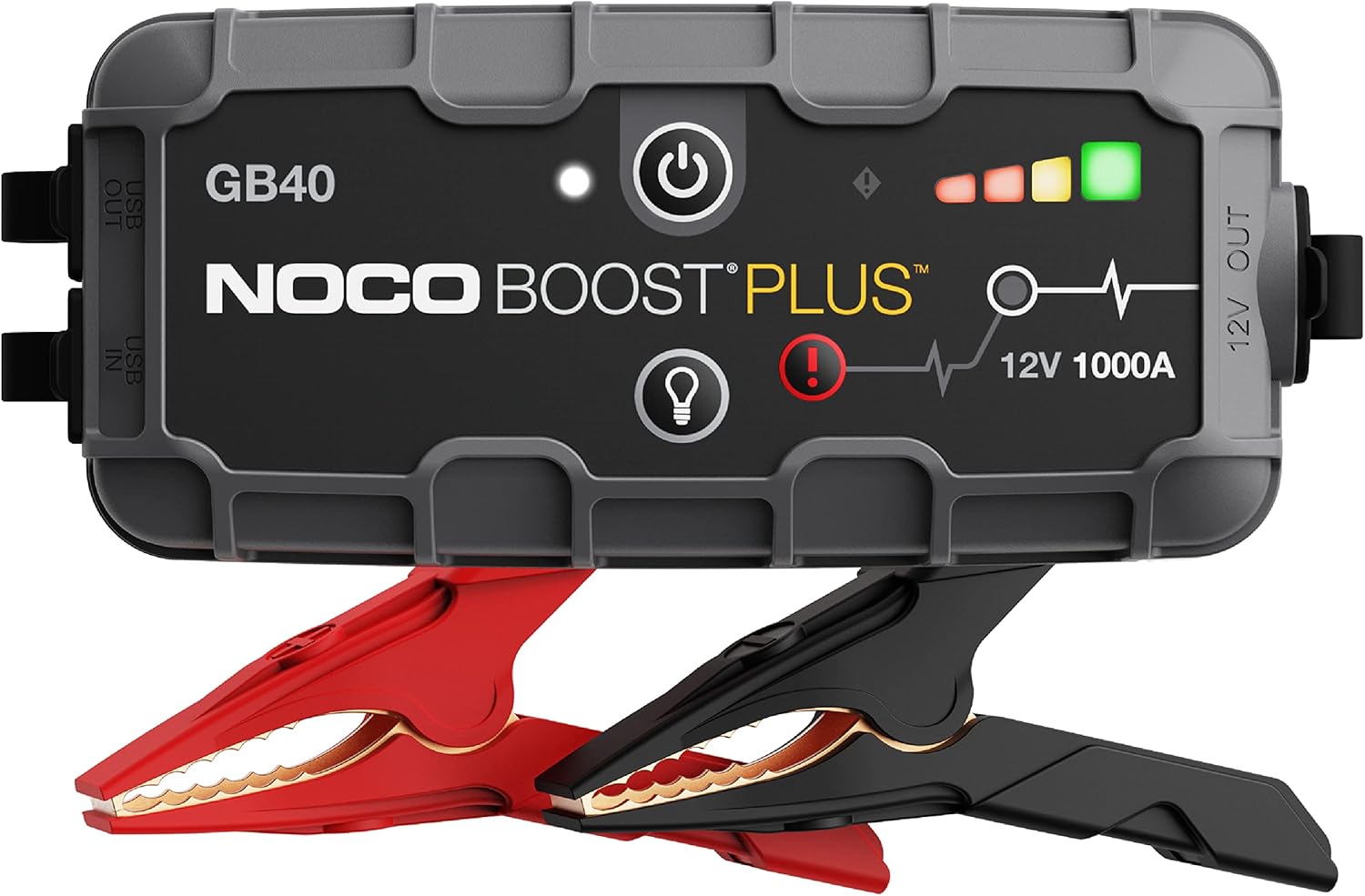
NOCO Boost Plus GB40 Jump Starter
A 1000A lithium jump starter that fits in your glovebox and works on any 12V battery. Your insurance against a dead 12V in a parking lot.
As an Amazon Associate, ThinkEV earns from qualifying purchases — at no extra cost to you.

Founder & Chief Editor
Vlad Pereira is the founder and chief editor of ThinkEV.ca, the Canadian electric-vehicle publication he writes and edits from Courtenay, British Columbia. He covers EV pricing, federal and provincial rebates, charging costs, and the Chinese manufacturers now entering Canada, from the buyer's side rather than the press-fleet side. ThinkEV is a venture of Vlad Pereira Online; his writing on health, income and the long game lives at vladpereira.com.
Frequently asked questions
Can Canadians actually buy the AMG GT 4-Door EV now?
How does rear passenger space compare to the Taycan?
Are axial-flux motors actually reliable enough for a daily driver?
Does the AMG have a two-speed gearbox like the Taycan Turbo GT?
What's the realistic 0–60 time versus the Taycan?
More EV & road-trip finds
Affordable upgrades worth a look — tap any to check the price on Amazon.
 ★ 314
★ 314Mini USB LED Ambient Lamps (4-Pack)
View on Amazon ★ 568
★ 568Personalized Photo and Text Keychain
View on Amazon ★ 21,304
Car Headrest Hooks (4-Pack)
View on Amazon ★ 21,310
Magnetic Car Phone Mount
View on Amazon ★ 121
★ 121Foldable Windshield Sun Umbrella
View on Amazon ★ 17,839
Qifutan Vent Phone Mount (Military-Grade Clip)
View on Amazon ★ 12,051
Windex Electronics Screen Wipes
View on Amazon ★ 55
★ 55LED Car Door Logo Projector Light
View on AmazonRead, Plan, Then Stay Current
Explore our expert articles to understand incentives and ownership costs, use the map to pressure-test charging reality, then subscribe so new EV coverage comes straight to you.
Continue Reading
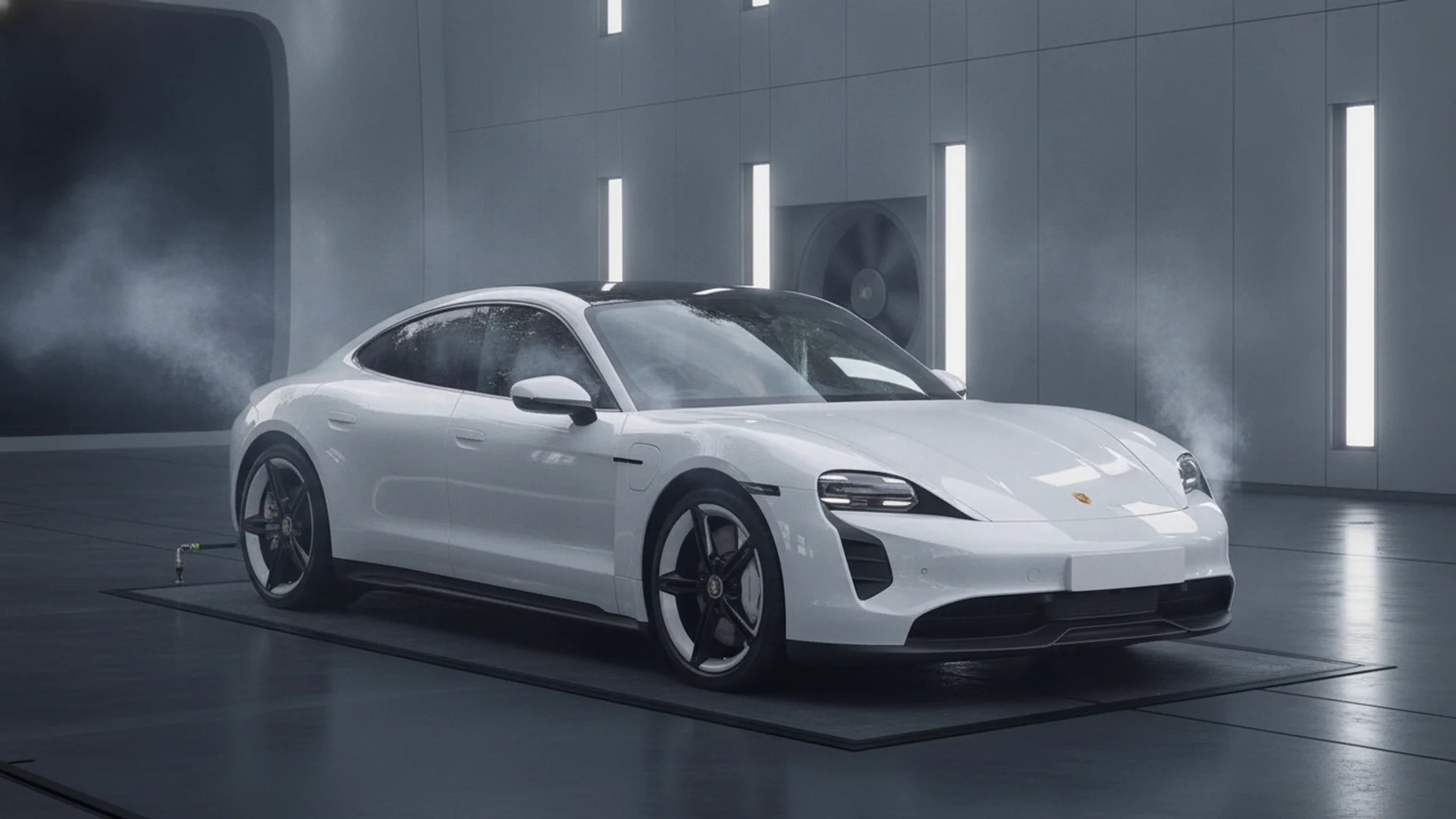
The MG07, the Taycan, and Why Fast EVs Share a Silhouette
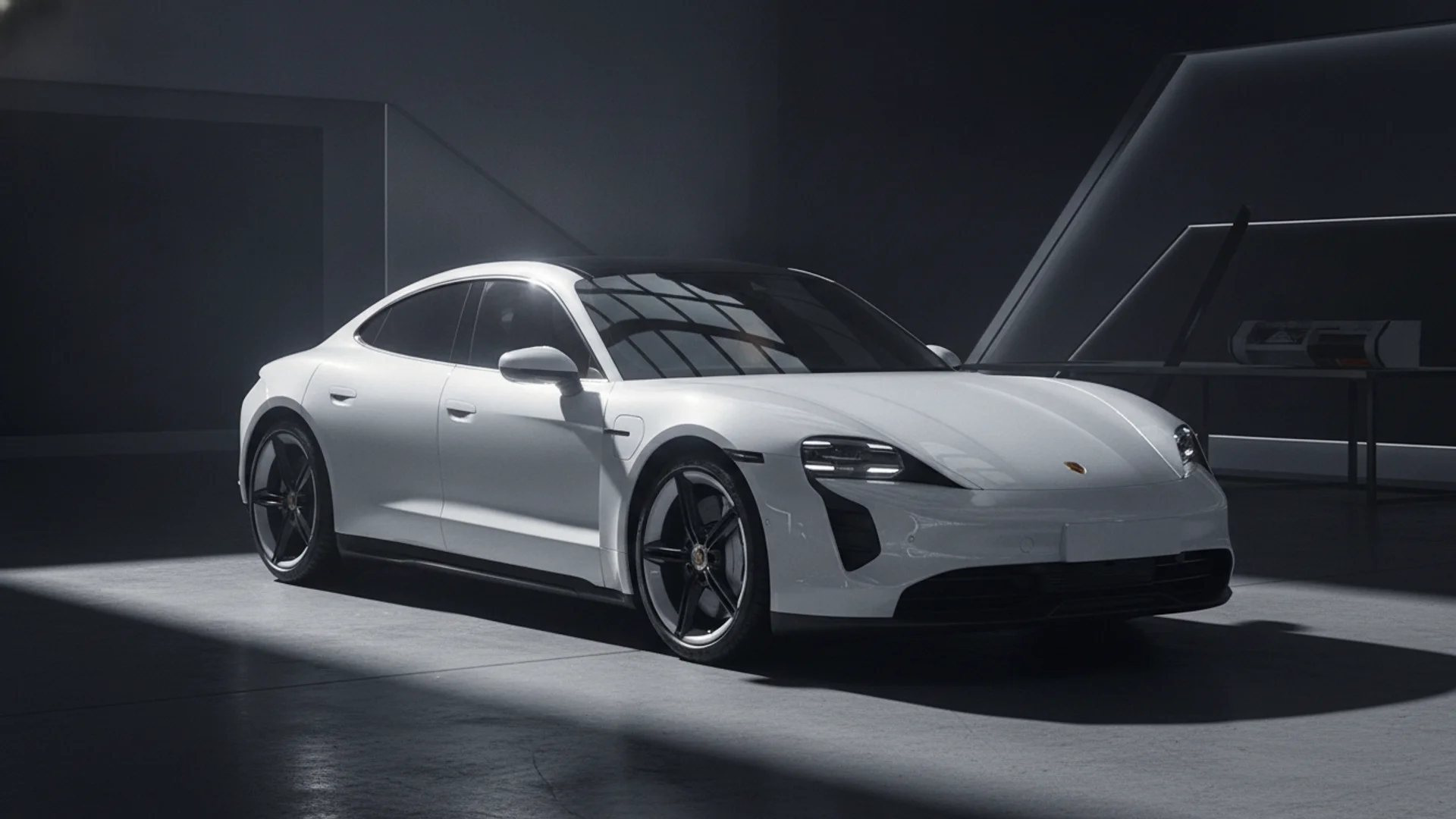
Why Chinese EVs Resemble Porsches: Aerodynamics
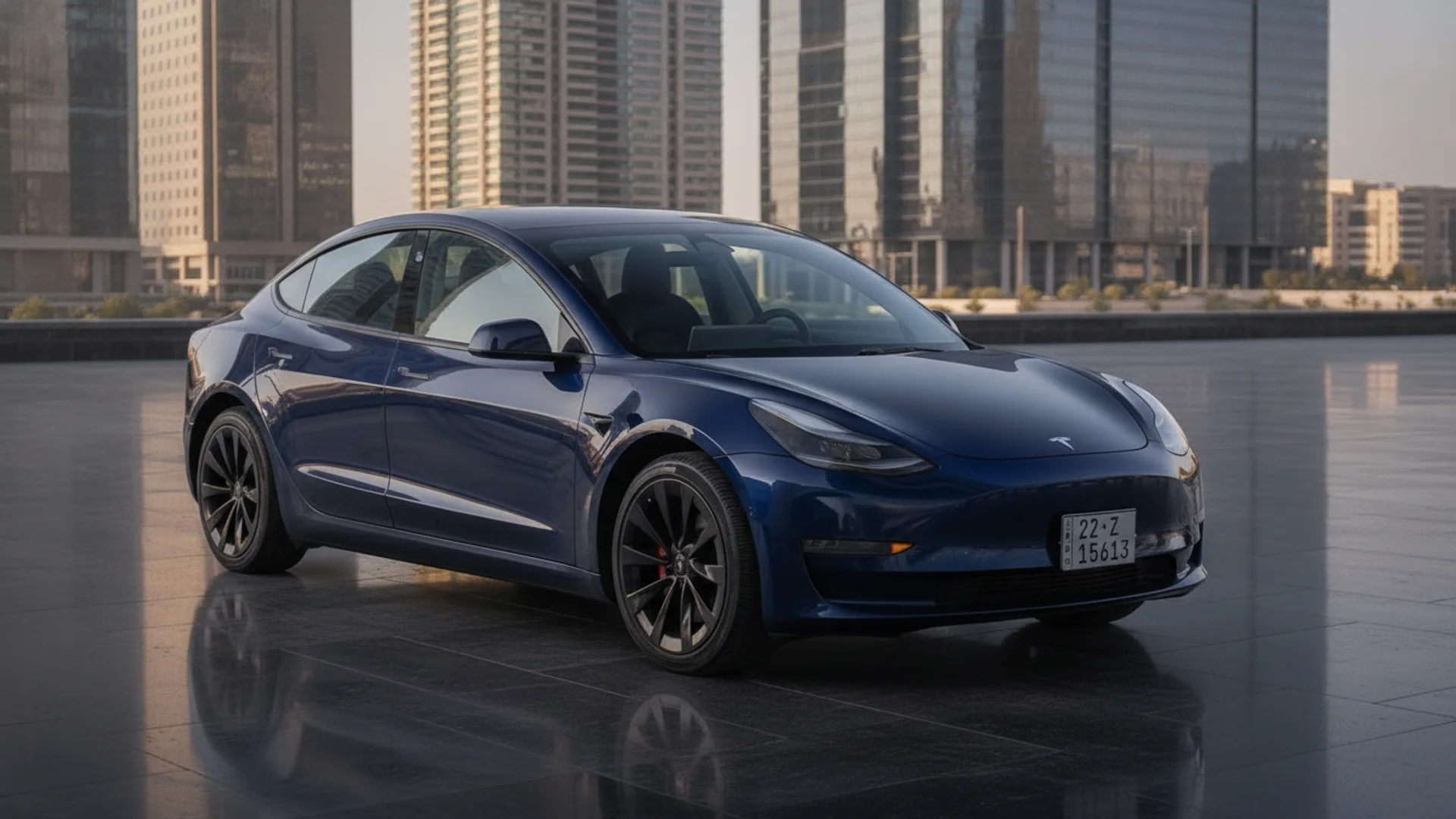
Tesla Q3 2026 Earnings: Flat Revenue, Falling Profits
BYD Denza B8 Suspension Trick Defeats Traffic Boot in Viral Clip

Zenos E10 Returns at £115,000, A Different Car Entirely