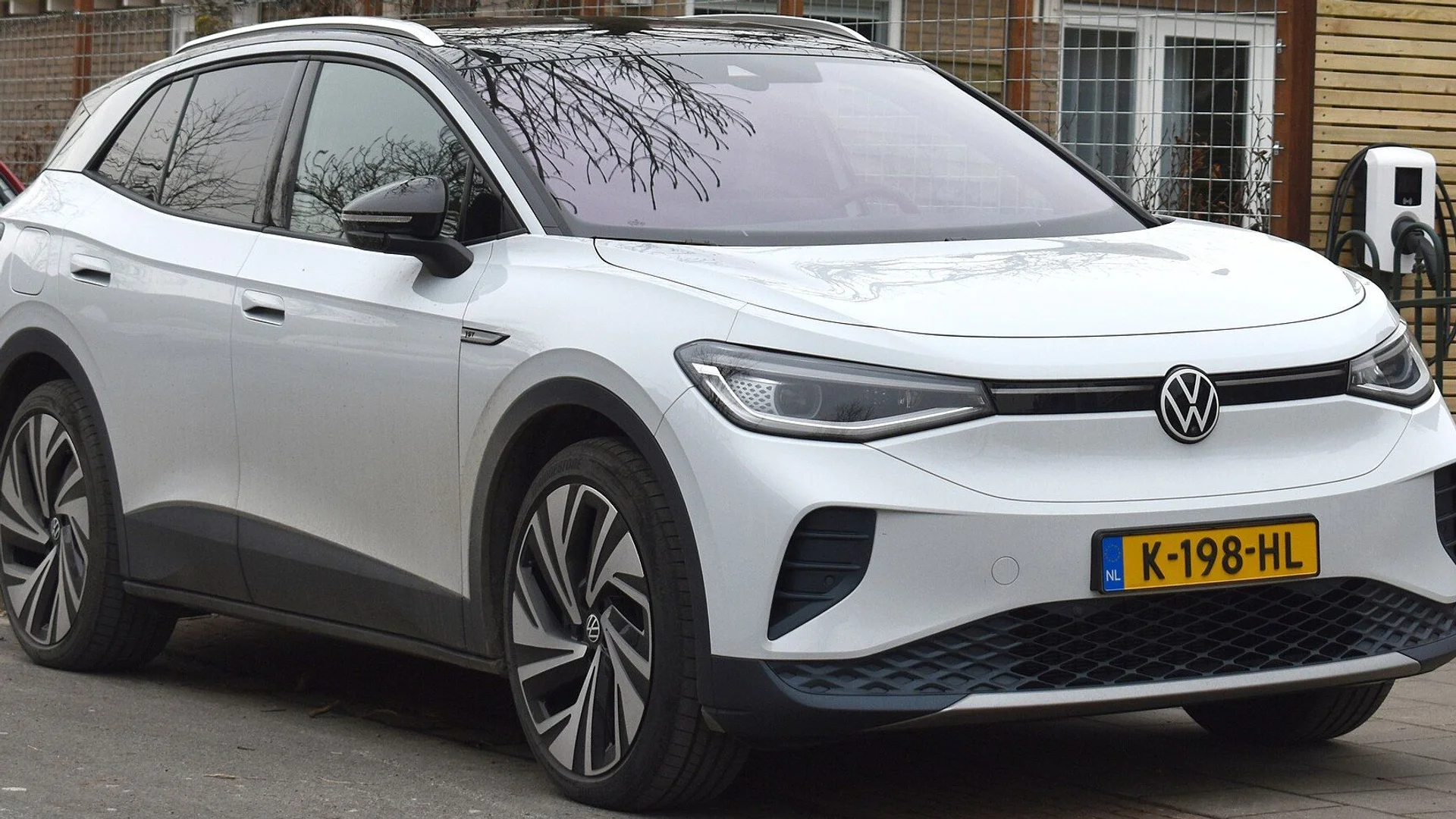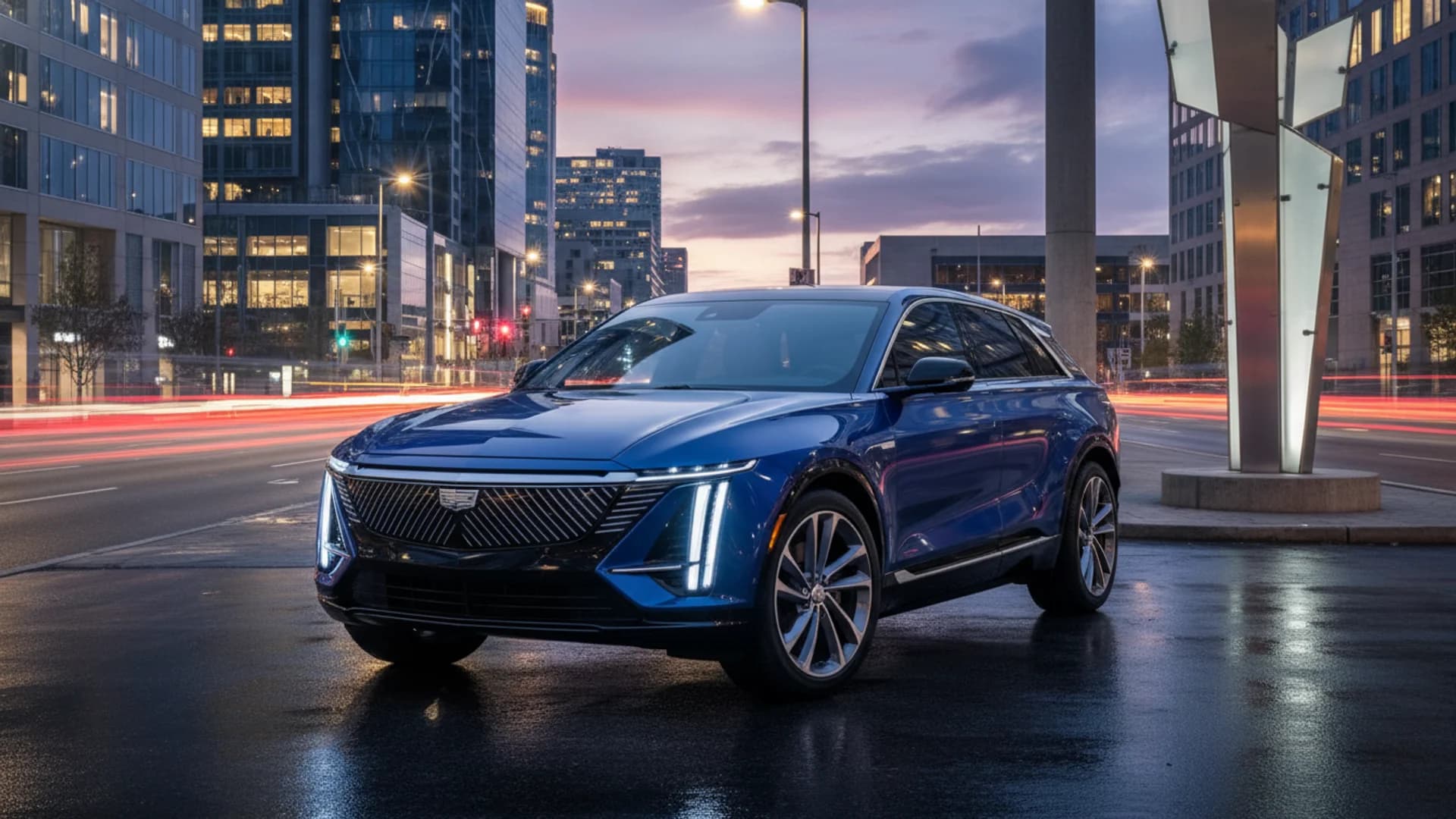
Every other GM EV launching in 2027 ships without Apple CarPlay. The Lyriq keeps it. That's not an oversight, it's a policy, and it tells you more about GM's real EV strategy than any executive interview has this year.
The 2027 Cadillac Lyriq trades the CCS connector found on current models for a built-in NACS port, unlocking access to over 25,000 Tesla Superchargers, a $200 price bump, and continued Apple CarPlay and Android Auto support, the feature GM is pulling from every other EV in the 2027 lineup. One model in the lineup gets the opt-out. The Equinox EV, Blazer EV, and Silverado EV don't. That's the editorial story, and it's not about infotainment preferences.
I'd put the framing this way: GM is running two EV strategies, and the Lyriq just proved it.
Key takeaways
- GM is keeping Apple CarPlay on the 2027 Lyriq while removing it from the Equinox EV, Blazer EV, Silverado EV, and Bolt.
- The Lyriq switches from CCS to a built-in NACS port, unlocking 25,000+ Tesla Superchargers for a $200 price increase.
- GM's segmentation is deliberate: luxury buyers who cross-shop BMW and Mercedes get CarPlay; mass-market buyers don't.
- Google Built-In is a monetization play, GM owns the screen session, the data, and subscription upsell hooks when Apple is cut out.
- The Lyriq V starts around C$95,000 with 615 horsepower and hits 96 km/h in 3.3 seconds, undercutting the BMW iX M70 on price.
What Changed for 2027, and What Deliberately Didn't
The mechanical updates are straightforward. The 2027 Lyriq trades the CCS connector found on current models for a built-in NACS port that unlocks access to over 25,000 Tesla Superchargers, which is the correct call and an overdue one. The base price ticked up modestly, Cadillac's Lyriq remains under $60,000 to start for 2027, even as pricing rises across much of the electric SUV lineup. The performance variant tells a different pricing story: the Lyriq V starts at around $95,000 with 615 horsepower and 650 lb-ft of torque from dual electric motors, capable of accelerating to 96 kilometres an hour in 3.3 seconds. Three appearance packages were cut. Three new exterior colours were added. A hearse variant exists. Different post.
The infotainment line is what matters. While GM is phasing out support for wireless Apple CarPlay and Android Auto, sources told GMAuthority that the 2027 Cadillac Lyriq will be the company's last EV in North America with wireless and wired Apple CarPlay and Android Auto compatibility. Read that sentence twice. GM's official direction is Google Built-In across the EV lineup. The Lyriq is the exemption, singular, named, and confirmed.
Canadian MSRP for the base 2027 trim hasn't been published yet. That's a gap worth watching, not a gap worth filling with a guess. The Lyriq V's roughly C$95,000 floor gives us the upper bound; the base is the unanswered question.
The Carve-Out Is the Story, Not the Feature Itself
Whether you prefer CarPlay to Google Built-In is a personal preference question. Whether GM grants that preference to some buyers and not others is a strategy question, and that's the only one that interests me.
The pattern is clean across the 2027 GM EV portfolio:
- Equinox EV, GM's mainstream electric crossover. Loses CarPlay.
- Blazer EV, Loses CarPlay.
- Silverado EV, Loses CarPlay.
- 2027 Bolt, The affordability anchor of the entire lineup. Loses CarPlay.
- 2027 Lyriq, Keeps CarPlay. Sits alone in Cadillac's price bracket.
The segmentation logic is impossible to miss once you line up the model sheet.
Luxury buyers have leverage. They cross-shop the BMW iX, the Mercedes EQS, the Genesis Electrified GV70, the Lucid Gravity. Pulling CarPlay from a $60,000–$95,000 vehicle in that competitive set is a defection risk GM apparently isn't willing to take. The mass-market buyer cross-shopping a Bolt against a Kona Electric or a base Model 3 has less leverage and less time at the dealership to argue.
The case against my reading is that GM's segmentation is technical, not strategic, that the Lyriq's older electrical architecture made continuing CarPlay support the cheaper engineering choice, while the newer Ultium-based Equinox, Blazer, and Silverado were re-architected around Google Built-In from the silicon up. That's a real argument, and it's the one GM's PR would make if pushed. It also doesn't survive the timing. The Lyriq is getting a fresh 2027 update with a new charge port, a price reset, repackaged trims, and refreshed colours. If GM wanted to migrate it onto the unified stack, this was the model year to do it. They didn't. That's a choice, not an inheritance.
The carve-out is an admission. GM is telling its luxury buyers that Google Built-In, in its current form, isn't yet good enough to compete head-to-head with CarPlay in a segment where the customer notices and complains. That's a meaningful confession, dressed up as a feature announcement.
Gear worth having
As an Amazon Associate, ThinkEV earns a small commission from qualifying purchases — at no extra cost to you.

Lectron Level 2 J1772 Charger (40A, WiFi)
Smart WiFi charger with real-time energy monitoring. 40A / 9.6 kW, J1772 with a NEMA 14-50 plug, schedule charging right from your phone.
As an Amazon Associate, ThinkEV earns from qualifying purchases — at no extra cost to you.
Google Built-In Is a Revenue Play, Not Just a Tech Choice
The clean way to describe GM's strategy is "platform unification." The accurate way to describe it is monetization. Google pays automakers to embed Google Built-In natively. The OEM, in turn, owns the screen session, the analytics, the engagement data, the upsell surface, the subscription hooks for charging, navigation, voice assistant, and eventually advertising. CarPlay hands that screen session to Apple. Once Apple controls the interface, GM is back to selling a vehicle once, not a relationship over the ownership cycle.
This is not a moral failing. It's competent product economics, and Tesla has been running the same playbook since the Model S launched. The interesting question is whether GM's mass-market buyers know they're paying the price of the strategy with the removal of a feature their car had last model year. The answer, mostly, is no. They will find out at the dealership and they will not have a Lyriq-sized alternative inside the GM lineup to defect to.
Luxury buyers, meanwhile, get the opt-out, and they don't pay the data-strategy tax in feature terms, they pay it in MSRP. That's the trade GM made. The infotainment trade-offs driving GM's affordable EV decisions are visible in the infotainment trade-off shaping the 2027 Bolt's positioning, where the same Google Built-In requirement lands without the CarPlay safety net. Autoblog's read on the carve-out lands in the same place: Lyriq retains both standards while the broader EV lineup is being herded toward GM's in-house stack.
Gear worth having
As an Amazon Associate, ThinkEV earns a small commission from qualifying purchases — at no extra cost to you.

WeatherTech FloorLiner for Tesla Model 3
Deep-channel liners that trap every drop of slush and salt. The difference between a ruined interior and a showroom-fresh cabin after a Canadian winter.
As an Amazon Associate, ThinkEV earns from qualifying purchases — at no extra cost to you.
Stripped of the marketing language, here is what GM has actually decided: in the segment where the buyer can leave, keep the feature. In the segment where the buyer is more captive, remove it and call it progress. That's not a unified platform. That's a tiered one.
NACS Is the Correct Call, and It's Overdue
The other 2027 change deserves its own sentence rather than a footnote. Tesla Superchargers account for about three out of every four fast chargers in North America. A CCS-only luxury EV in 2027 would be an embarrassment, and Cadillac avoided it.
The native NACS port matters more than the adapter strategy GM ran in the interim. An adapter in the frunk is a tolerable workaround for a Bolt buyer trying to road-trip on a budget. It is not a luxury experience at a $60,000–$95,000 price point, and it would have undercut every other premium-experience claim Cadillac makes about the vehicle. GM's NACS adoption across the affordable lineup moved first on price-sensitive models, the Lyriq was the laggard, not the leader, and the 2027 update closes the gap.
The named comparison worth making here is the Lyriq V against the segment it actually competes in. At roughly C$95,000 with 615 horsepower and a 3.3-second sprint to 96 km/h, it sits below the BMW iX M70 and the Porsche Macan Turbo Electric on price while matching or beating both on straight-line numbers. The Globe and Mail's review framed it as "lower than its rivals", which is the polite version of the point: Cadillac is buying segment share with price, and a CCS-only port at that price would have made the comparison spreadsheet unwinnable before the test drive started.
For Canadian buyers, the Supercharger access question is harder than it is south of the border. Coverage along the Trans-Canada and through Ontario and Quebec is dense; coverage in the Prairies, the North, and rural BC is still patchy. Native NACS doesn't fix geography, it removes friction on the routes where Tesla's network is already the dominant infrastructure. That's a real benefit, not a marketing one, and it's the change in the 2027 model year that I'd argue matters most to the daily driving experience. The cost calculus for switching to an EV in Canada shifts measurably once Supercharger access stops being an asterisk on the spec sheet.
Gear worth having
As an Amazon Associate, ThinkEV earns a small commission from qualifying purchases — at no extra cost to you.
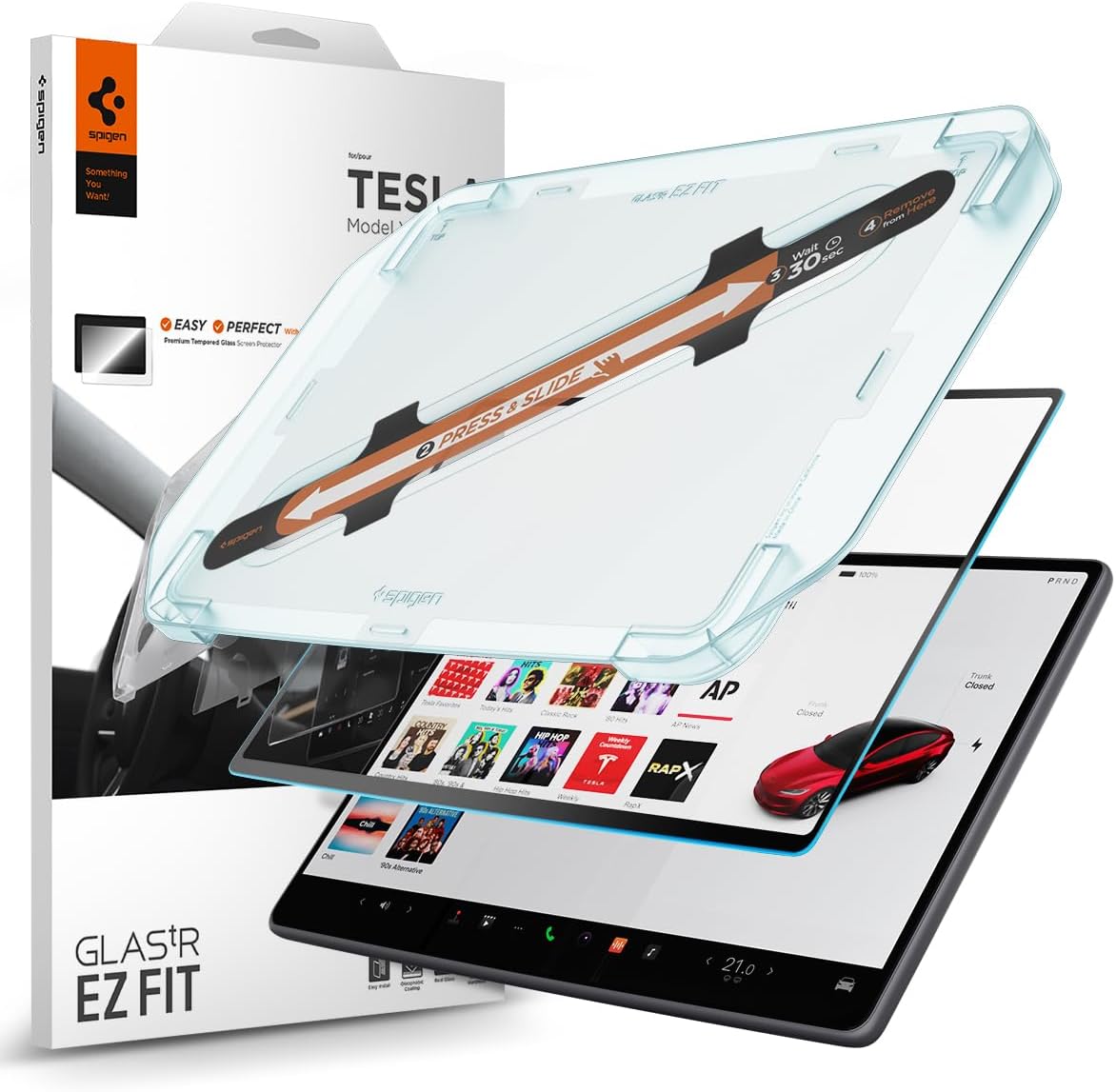
Spigen Tempered Glass for Tesla Model 3/Y
Tempered-glass protection for the touchscreen that kills fingerprints and scratches. Two minutes to install, lasts the life of the car.
As an Amazon Associate, ThinkEV earns from qualifying purchases — at no extra cost to you.
The Editorial Position: This Is What Tiered EV Strategy Looks Like
Every automaker talks about a unified electric future. The Lyriq exception proves the reality is segmented and will stay segmented. Feature parity across price tiers is not a guarantee, it has to be demanded by buyers with leverage or competed for by rivals willing to undercut. Mass-market EV buyers, especially in Canada, do not currently have either condition working in their favour.
If GM retains CarPlay on the Lyriq because the alternative is a buyer walking to a BMW iX or a Mercedes EQS, that is a market signal, not a courtesy. The signal points at the rest of the lineup. The Equinox EV buyer does not have a comparably specced, comparably-priced GM alternative to defect to inside the brand. So GM removes the feature. The same logic that protects the Lyriq exposes the Equinox.
Watch what happens when Cadillac V buyers in the $95,000 bracket eventually encounter a Google-only future on a future refresh. I'd bet against that move happening in this product cycle, the luxury segment is too competitive and the defection risk is too obvious. But the longer-term direction across the GM portfolio is toward owning the screen. The Lyriq's CarPlay window is a stay of execution, not a permanent carve-out.
Canadian buyers should also be reading the broader competitive picture, not just the GM lineup. Compared with the slate of new EV brands arriving in Canada in 2026 and 2027, the infotainment debate looks different. New entrants are not constrained by legacy platform decisions, and several are arriving with hardware specs and screen experiences that will pressure GM's mass-market positioning more than its luxury one.
Gear worth having
As an Amazon Associate, ThinkEV earns a small commission from qualifying purchases — at no extra cost to you.

Grizzl-E Classic Level 2 EV Charger (40A)
Canadian-made and rated for minus 40C winters. 40A / 9.6 kW, NEMA 14-50, indoor/outdoor, 24-ft cable. The charger built for Canadian weather.
As an Amazon Associate, ThinkEV earns from qualifying purchases — at no extra cost to you.
What I'll Be Watching Before the 2027 Model Year Closes
Three signals decide whether this Lyriq carve-out is a one-off or the start of a pattern.
First, Canadian MSRP confirmation on the base 2027 trim. The Lyriq V's roughly C$95,000 floor sets the ceiling; the unanswered question is the entry pricing, and the gap to U.S. MSRP is the headline number for Canadian shoppers. Second, whether Google Built-In quality closes enough in the next twelve months that GM feels confident extending the CarPlay phase-out upward into Cadillac, or whether mass-market buyer complaints push it the other way and force a partial reversal on the Equinox or Blazer. Third, competitive pressure from new market entrants. Chinese EVs reaching Canada under the 49,000-unit quota will land with infotainment hardware that is, in many cases, more capable than GM's Google Built-In in its current form. That's the pressure point that could force GM's hand fastest, and it's the one I'd watch hardest.
What would change my mind on the tiered-strategy read: a credible leak that the next Equinox-class GM EV refresh restores CarPlay, or a GM executive on the record committing to a CarPlay return on any sub-$60,000 EV in the lineup. Neither has happened. Until one does, the 2027 Lyriq stays on the page as Exhibit A, a single carve-out, in a single luxury nameplate, while the rest of the portfolio walks the opposite direction.
The 2027 Lyriq is a good vehicle getting a sensible update. The infotainment carve-out is the more revealing story, and it's a story about who has leverage and who doesn't.
Gear worth having
As an Amazon Associate, ThinkEV earns a small commission from qualifying purchases — at no extra cost to you.
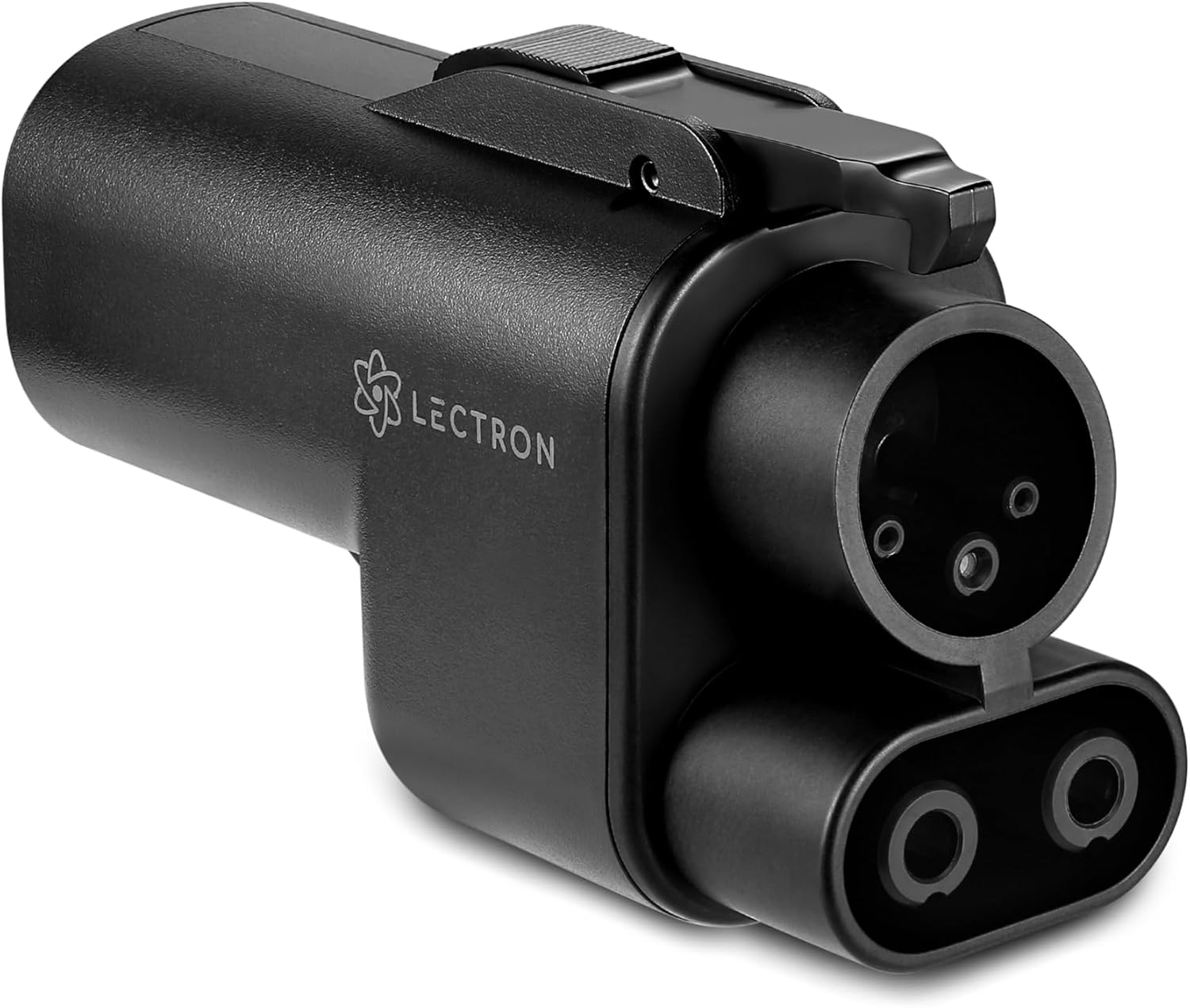
Lectron NACS to CCS Fast-Charge Adapter
Unlock every CCS fast charger for your Tesla, up to 500A DC. Never get stranded at a non-Tesla DC station again.
As an Amazon Associate, ThinkEV earns from qualifying purchases — at no extra cost to you.

Founder & Chief Editor
Vlad Pereira is the founder and chief editor of ThinkEV.ca, the Canadian electric-vehicle publication he writes and edits from Courtenay, British Columbia. He covers EV pricing, federal and provincial rebates, charging costs, and the Chinese manufacturers now entering Canada, from the buyer's side rather than the press-fleet side. ThinkEV is a venture of Vlad Pereira Online; his writing on health, income and the long game lives at vladpereira.com.
Frequently asked questions
Why does the Lyriq keep CarPlay when every other 2027 GM EV loses it?
Can I still use an adapter for NACS on a 2026 Lyriq?
What is Google Built-In and why is GM switching to it?
Has Cadillac published Canadian pricing for the 2027 Lyriq base trim?
Does the 2027 Lyriq qualify for any Canadian EV incentives?
More EV & road-trip finds
Affordable upgrades worth a look — tap any to check the price on Amazon.
 ★ 392
★ 392Large Cup Holder Adapter (32-40oz)
View on Amazon ★ 8,681
Chemical Guys Complete Car Wash Kit
View on Amazon ★ 164
★ 164Solar-Powered LED Ambient Light
View on Amazon ★ 4,626
HoogaLife Hanging Car Diffuser (2-Pack)
View on Amazon ★ 865
★ 865Collapsible Trunk Organizer
View on Amazon ★ 21,310
Magnetic Car Phone Mount
View on Amazon ★ 87
★ 87Car Window Sun Shades for Kids (4-Pack)
View on Amazon ★ 17,839
Qifutan Vent Phone Mount (Military-Grade Clip)
View on AmazonRead, Plan, Then Stay Current
Explore our expert articles to understand incentives and ownership costs, use the map to pressure-test charging reality, then subscribe so new EV coverage comes straight to you.
Continue Reading
Turns Out You Can Polish The Luce EV, Just Not Into A Ferrari
Tesla Q3 2026 Earnings: Flat Revenue, Falling Profits
BYD Denza B8 Suspension Trick Defeats Traffic Boot in Viral Clip

Zenos E10 Returns at £115,000, A Different Car Entirely
Jaecoo J5 EV Uber Discount: $31,500 Fleet Math Changes