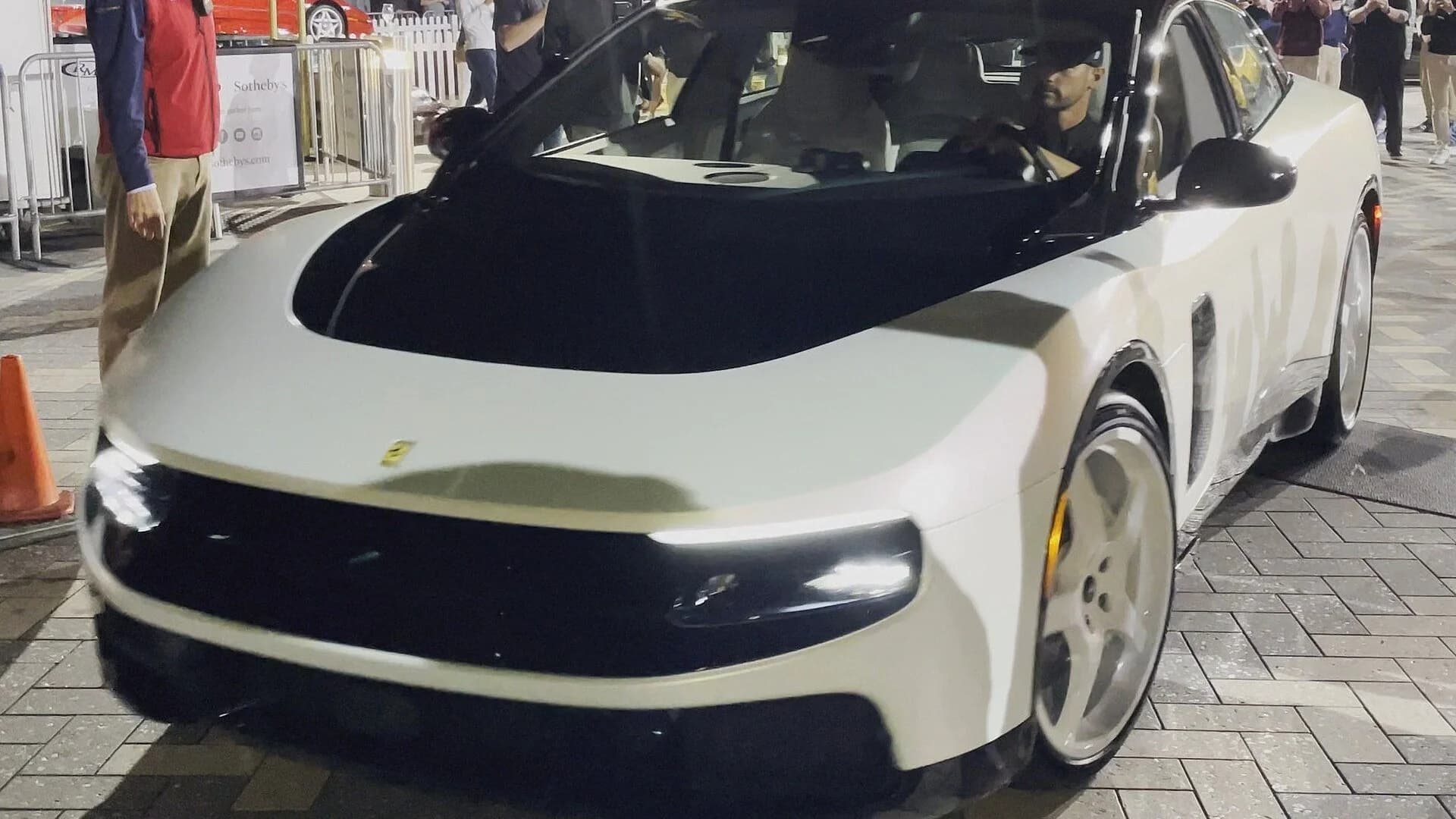
Someone took Ferrari's most controversial car and made it worse. That takes talent.
The aftermarket carbon body kit for the Luce showed up faster than most people expected, a five-seat electric Ferrari designed by Jony Ive's LoveFrom studio, now getting the bolt-on aero treatment from a tuner trying to make it look angrier. It doesn't work. You can polish the Luce. You can't polish it into a Ferrari.
Everything that follows is the proof.
Key takeaways
- A carbon body kit arrived for the Ferrari Luce before most buyers memorized the configurator's 35 paint codes.
- Rebadge renderings showed the Luce wearing BMW, Lexus, and BYD logos more convincingly than its own Prancing Horse.
- An ex-Ferrari boss publicly called for removing the Prancing Horse, not a forum opinion, an industry figure.
- Ferrari's five-seat luxury EV strategy is defensible; Chinese premium brands are already crowding that exact segment.
- The Taycan survived early 'is this a Porsche?' questions through driving dynamics, the Luce has no equivalent escape hatch.
The Luce Already Had A Problem Before The Kit Arrived
Ferrari's first EV launched into a styling backlash that, by every honest read, was bigger than the powertrain controversy. The first-ever all-electric Ferrari debuted as the Luce, and its design is somehow even more controversial than the electric powertrain. That's not a small thing to write about a brand whose entire identity is built on shape.
The configurator landed a few days later. Thirty-five colours, multiple carbon fiber options, and a variety of interior schemes. A buffet of choices, none of which fix the underlying object. You can pick stitching. You cannot pick a different car.
Flavio Manzoni, Ferrari's design chief, has been on the defence ever since. Ferrari's first EV was always going to upset purists, but Manzoni says the Luce is exactly where Ferrari is heading. Fine. Heading somewhere isn't the same as arriving well-dressed.
The case for patience is real: every Ferrari design that ever drew tomato-throwing, the 1996 550 Maranello, the 2009 California, the 2022 Purosangue, eventually settled into the canon. Restraint is a defensible bet when you own the badge. The Luce isn't getting that benefit. The internet, for once, agreed with itself. Manzoni called it the future. The comment sections called it a Hyundai.
Carbon Fiber Is Not A Personality
The new body kit adds aero aggression, splitters, vents, the standard tuner vocabulary, to a car the designers explicitly styled for restraint. That's the wrong medicine for the wrong illness. The Luce's problem isn't that it's too soft. The problem is that the silhouette doesn't read as Ferrari from any angle the badge isn't visible in.
Stripped of the marketing language: a carbon kit makes a controversial design louder. It does not make it more correct. You can't bolt your way out of a shape argument.
This is where the aftermarket usually wins, when a base car has good bones and the tuner sharpens them. The Luce has the opposite setup. Good intentions, contested bones. Adding carbon to a contested silhouette is like underlining a sentence nobody agrees with.
The counter-case from the kit-maker's side is straightforward: aero hardware sells regardless of base-car consensus, and first-mover tuners win mindshare in a model's opening months. That logic holds for a 488 or an SF90. It collapses on the Luce because the kit doesn't translate the car into a more aggressive version of itself, it translates it into a more aggressive version of something that already wasn't reading as Ferrari. Louder wrong is still wrong.
And that's before you get to the wider category problem. The performance-EV segment now has serious entrants who got the shape question right on the first try, Mercedes-AMG's axial-flux GT 4-Door being the obvious recent example. The Luce isn't being judged in a vacuum. It's being judged against EVs that look like what they are.
Gear worth having
As an Amazon Associate, ThinkEV earns a small commission from qualifying purchases — at no extra cost to you.

EV Charging Cable Organizer
A wall-mounted holster that turns a tangled garage cable into a clean setup. Five minutes to install, looks good forever.
As an Amazon Associate, ThinkEV earns from qualifying purchases — at no extra cost to you.
The Community Already Had A Verdict
The rebadge renderings went viral within days. Designers swapped the Prancing Horse for BMW, Lexus, BYD and a few others, and the consensus was uncomfortable: the Luce wore other manufacturers' badges more convincingly than its own. Whatever you think of internet renderings as criticism, that's a brutal data point about brand fit.
Then the louder shoe dropped. An ex-Ferrari boss told AOL to "remove the Prancing Horse," which is the kind of sentence former executives don't say casually about their old employer. That's not a niche opinion from a forum account. That's a public industry figure saying the car shouldn't wear the badge.
Reddit and X were not split on this one. They were unusually unified. When the enthusiast forums and the casual car-Twitter crowd land on the same verdict, the press release isn't going to outrun it.
Ferrari Said This Is The Future. They Weren't Wrong About That Part.
The dunking misses: Ferrari's strategic read on the market is correct. A five-seat luxury EV is a real category, and it's a category that's about to get crowded fast.
Gear worth having
As an Amazon Associate, ThinkEV earns a small commission from qualifying purchases — at no extra cost to you.
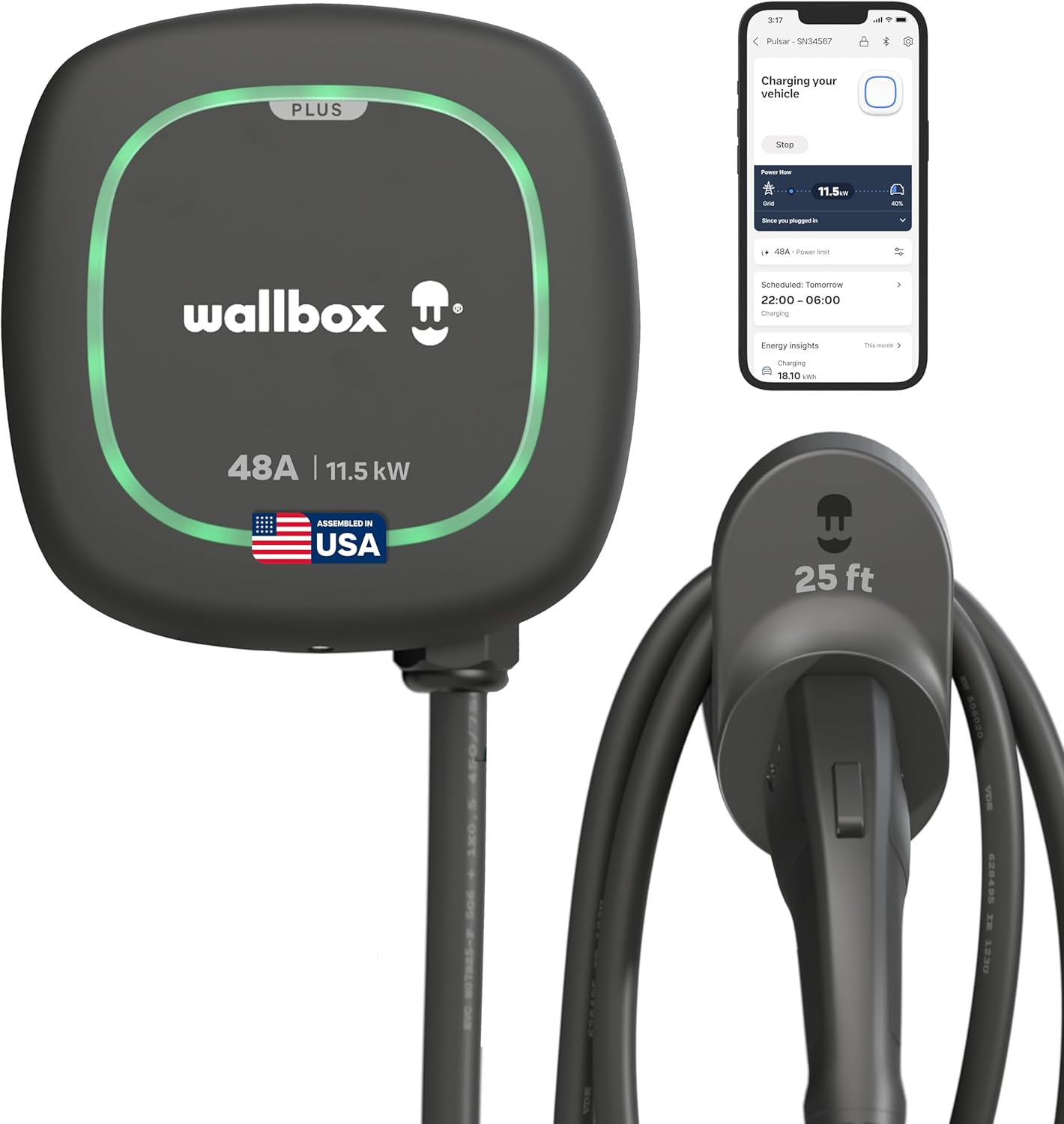
Wallbox Pulsar Plus 48A Level 2 Charger
Compact, sleek charger with app control and power sharing for two EVs. 48A / 11.5 kW, NEMA 14-50. Looks as good as your EV.
As an Amazon Associate, ThinkEV earns from qualifying purchases — at no extra cost to you.
Chinese premium EV makers are already there. Brands that started in mass-market SUVs and sedans are now aiming directly at the segment Porsche and Tesla have been printing money in, and they're bringing technology, like BYD's cold-weather charging performance and emerging solid-state cells from CALB, that the Italian and German incumbents don't yet have an answer for.
So Ferrari betting on a five-seat luxury EV isn't wrong. The category is real. The strategy is defensible. Maybe Ferrari is right to try something different, building an EV version of a sports coupe would just have traditionalists longing for a V8, while the Luce gives the brand the opportunity to talk to a new generation of customers who want a more usable car.
The problem isn't the category Ferrari chose. It's that the execution handed every critic free ammunition on launch day. The Taycan absorbed its early "is this really a Porsche?" round by leaning hard on driving dynamics until the shape stopped being the conversation. The Luce doesn't have that escape hatch yet, its differentiator is the design, and the design is what's losing.
Gear worth having
As an Amazon Associate, ThinkEV earns a small commission from qualifying purchases — at no extra cost to you.
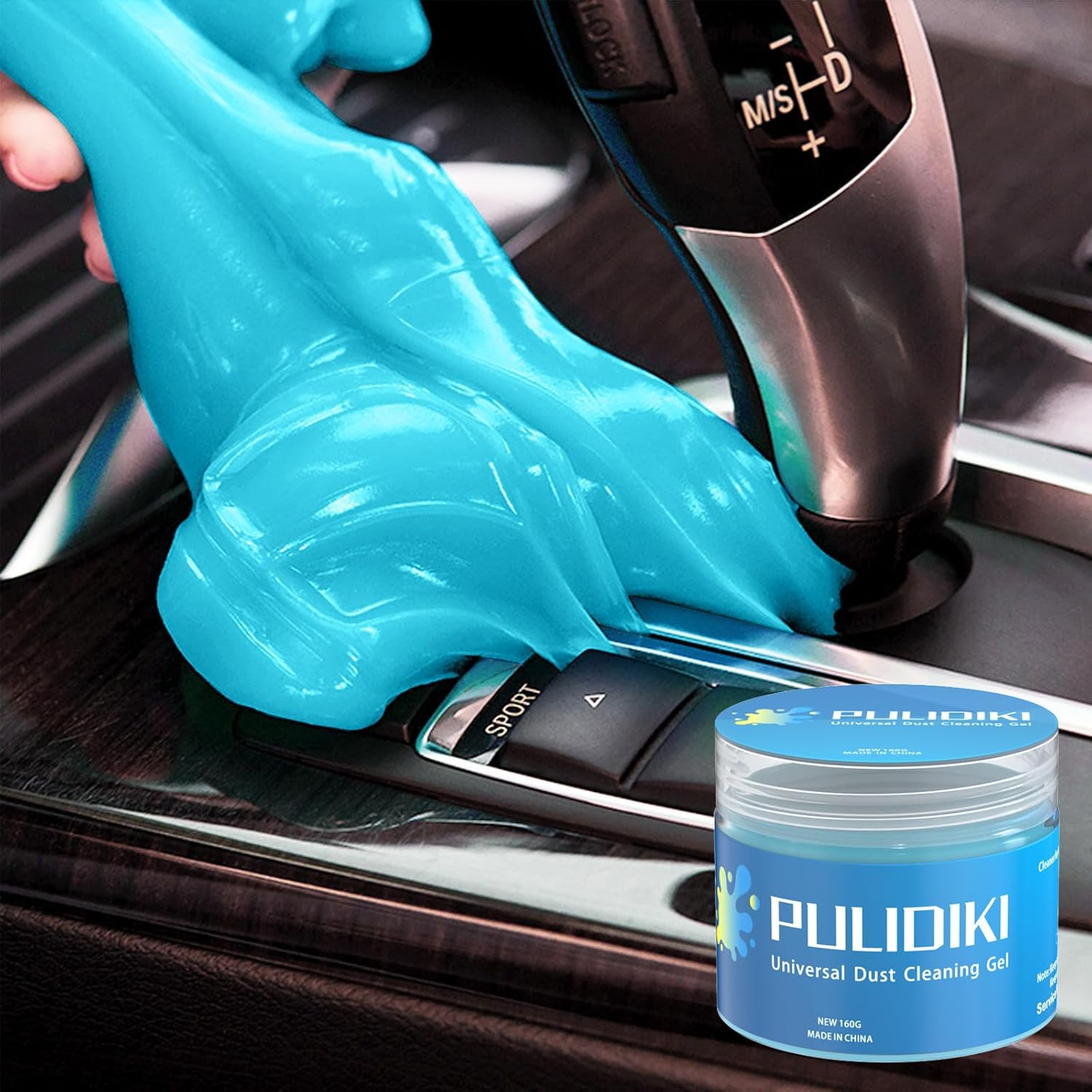
PULIDIKI Car Cleaning Gel (Detailing Putty)
Press it into vents, buttons, and seams and it lifts out dust you did not know was there. Weirdly satisfying, genuinely useful.
As an Amazon Associate, ThinkEV earns from qualifying purchases — at no extra cost to you.
What The Kit Actually Tells Us About Where This Goes
A carbon body kit arriving this fast is, perversely, a real signal. Tuners don't build kits for cars that aren't going to sell. Somebody is betting on an owner base.
Those owners are going to try to personalise their way out of the design controversy. Some will succeed. Most will end up like this first kit, making the car shoutier without making it more coherent. The aftermarket will get better. The base shape won't change.
What Ferrari has actually built is a car polarising enough that people want to fix it. That's not nothing. Boring cars don't get body kits in week one. The Luce got one before the configurator's paint codes were memorised.
The restoration shops are circling the same opportunity from the other side. Everrati's CEO told Forbes the Luce "highlights a bigger shift in luxury automotive", which, translated, means the EV-conversion specialists see a future market in owners who'll want their classic Ferraris electrified rather than swallowing whatever Maranello ships next. When the people who electrify old 308s are publicly framing your new car as evidence of a category shift, you've lost control of the narrative around what an electric Ferrari is supposed to be.
Gear worth having
As an Amazon Associate, ThinkEV earns a small commission from qualifying purchases — at no extra cost to you.

WixGear Magnetic Air Vent Phone Mount (2-Pack)
A magnet strong enough that your phone never flinches over potholes or rail crossings. Two in the box, one for each car.
As an Amazon Associate, ThinkEV earns from qualifying purchases — at no extra cost to you.
Ferrari Bet On A Design Studio And Lost The Room
The body kit is a symptom of something deeper. Ferrari, for the first time, handed real creative control of a car to an outside studio, Jony Ive and Marc Newson's LoveFrom. Not co-design. Not consulting. Lead.
You can see it in how the company is defending the car. When asked the first question about the unique path chosen for the Luce, Manzoni immediately referred to Ive for an answer, who explained that Ferrari, as an organization, is used to constantly pushing boundaries and exploring concepts other brands don't or can't afford to. Ferrari's own design chief, the person who signed off on the F8, the SF90, the Purosangue, passed the design question to the guy from California. That tells you everything about who owns the result.
Ive also confirmed that the element of surprise was, from the get-go, one of the concepts behind the Luce's controversial look. They didn't want the EV to reflect just one aspect of the renewed Ferrari identity, which is a tasteful way of saying the goal was deliberate disorientation. Surprise was the brief. Surprise is what they delivered. Surprise is also what's tanking the public reception.
The body kit can't fix this. No body kit can. The problem isn't aero. The problem is that Ferrari publicly committed to a design philosophy authored by a third party, and the moment they walk it back, they're admitting the bet failed. So they won't. They'll defend the Luce, ship the configurator, smile at the tuners, and quietly recalibrate behind the scenes for whatever comes next.
Watch the second EV. That's the tell. If Ferrari's next electric car comes from Maranello's in-house studio with Ive credited as "consulting partner" instead of lead, you'll know exactly how this story ended. If LoveFrom is still on the pen, Manzoni meant it, Ferrari really is heading here, body kits and all.
I'd bet on the first one. Brands don't usually surrender the pen twice. What would change my mind: a Luce facelift inside 24 months that softens the most-mocked surfaces while keeping the LoveFrom credit, or a second LoveFrom-led Ferrari announced before the Luce hits its first full sales year. Either move would mean Maranello is doubling down rather than retreating. Neither is what I expect to see.
Bottom line: the Luce body kit isn't the story. The story is what Ferrari chose to outsource, and whether the next car gets the pen back.
Gear worth having
As an Amazon Associate, ThinkEV earns a small commission from qualifying purchases — at no extra cost to you.
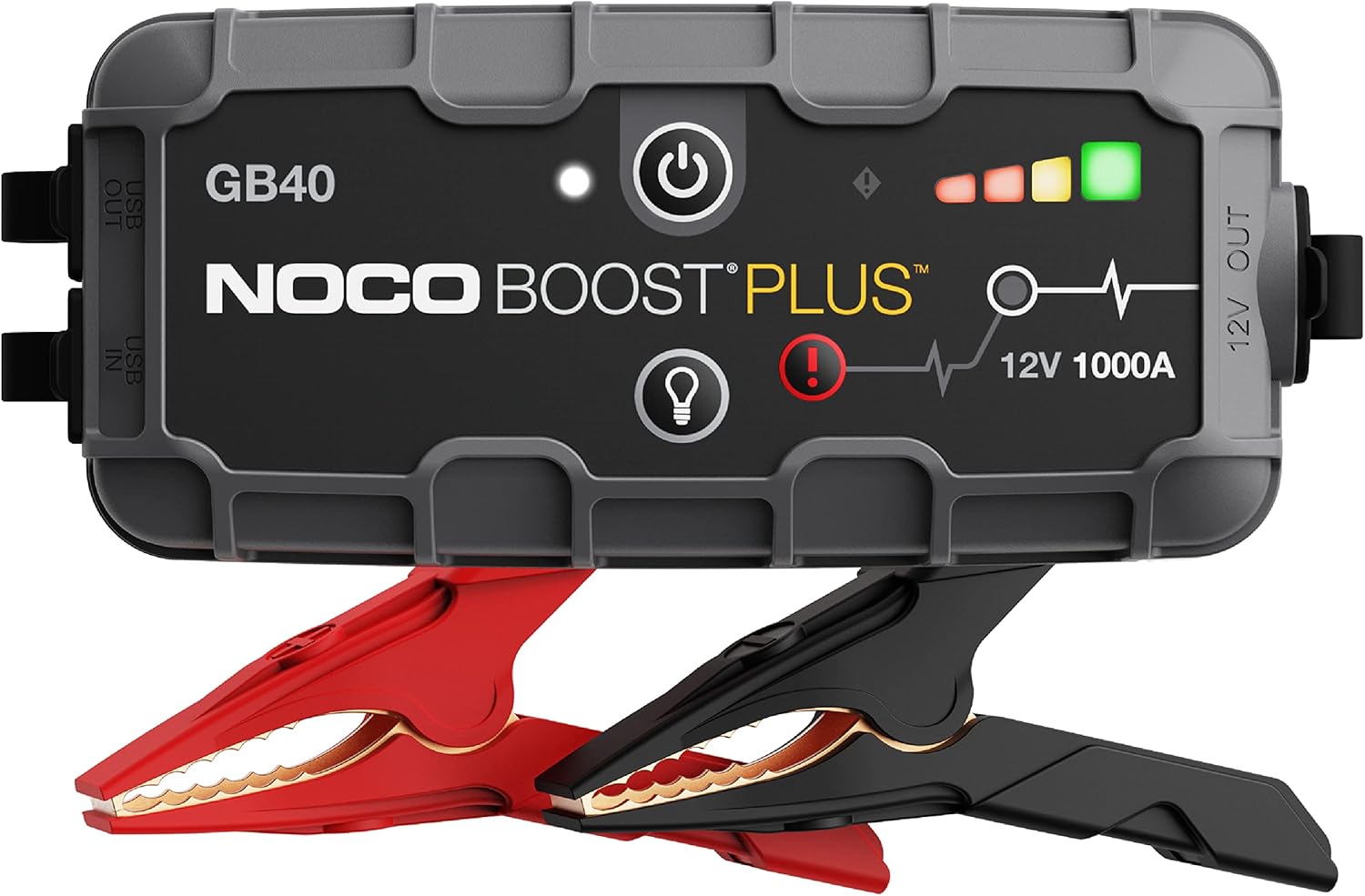
NOCO Boost Plus GB40 Jump Starter
A 1000A lithium jump starter that fits in your glovebox and works on any 12V battery. Your insurance against a dead 12V in a parking lot.
As an Amazon Associate, ThinkEV earns from qualifying purchases — at no extra cost to you.

Founder & Chief Editor
Vlad Pereira is the founder and chief editor of ThinkEV.ca, the Canadian electric-vehicle publication he writes and edits from Courtenay, British Columbia. He covers EV pricing, federal and provincial rebates, charging costs, and the Chinese manufacturers now entering Canada, from the buyer's side rather than the press-fleet side. ThinkEV is a venture of Vlad Pereira Online; his writing on health, income and the long game lives at vladpereira.com.
Frequently asked questions
Does the carbon kit actually improve how the Luce looks?
What did the rebadge renderings actually prove?
Is Ferrari's move into five-seat luxury EVs strategically sound?
Why did a body kit arrive so quickly after launch?
Will Ferrari's design reputation recover the way past controversial models did?
More EV & road-trip finds
Affordable upgrades worth a look — tap any to check the price on Amazon.
 ★ 119
★ 119Foldable Waterproof Trunk Organizer
View on Amazon ★ 392
★ 392Large Cup Holder Adapter (32-40oz)
View on Amazon ★ 8,681
Chemical Guys Complete Car Wash Kit
View on Amazon ★ 164
★ 164Solar-Powered LED Ambient Light
View on Amazon ★ 1,083
Crystal Push-Start Button Ring (2-Pack)
View on Amazon ★ 979
★ 979Leather Headrest Purse Hook
View on Amazon ★ 721
★ 72145W USB-C Fast Car Charger
View on Amazon ★ 61
★ 61Toddler Car Seat Snack and Cup Tray
View on AmazonRead, Plan, Then Stay Current
Explore our expert articles to understand incentives and ownership costs, use the map to pressure-test charging reality, then subscribe so new EV coverage comes straight to you.
Continue Reading
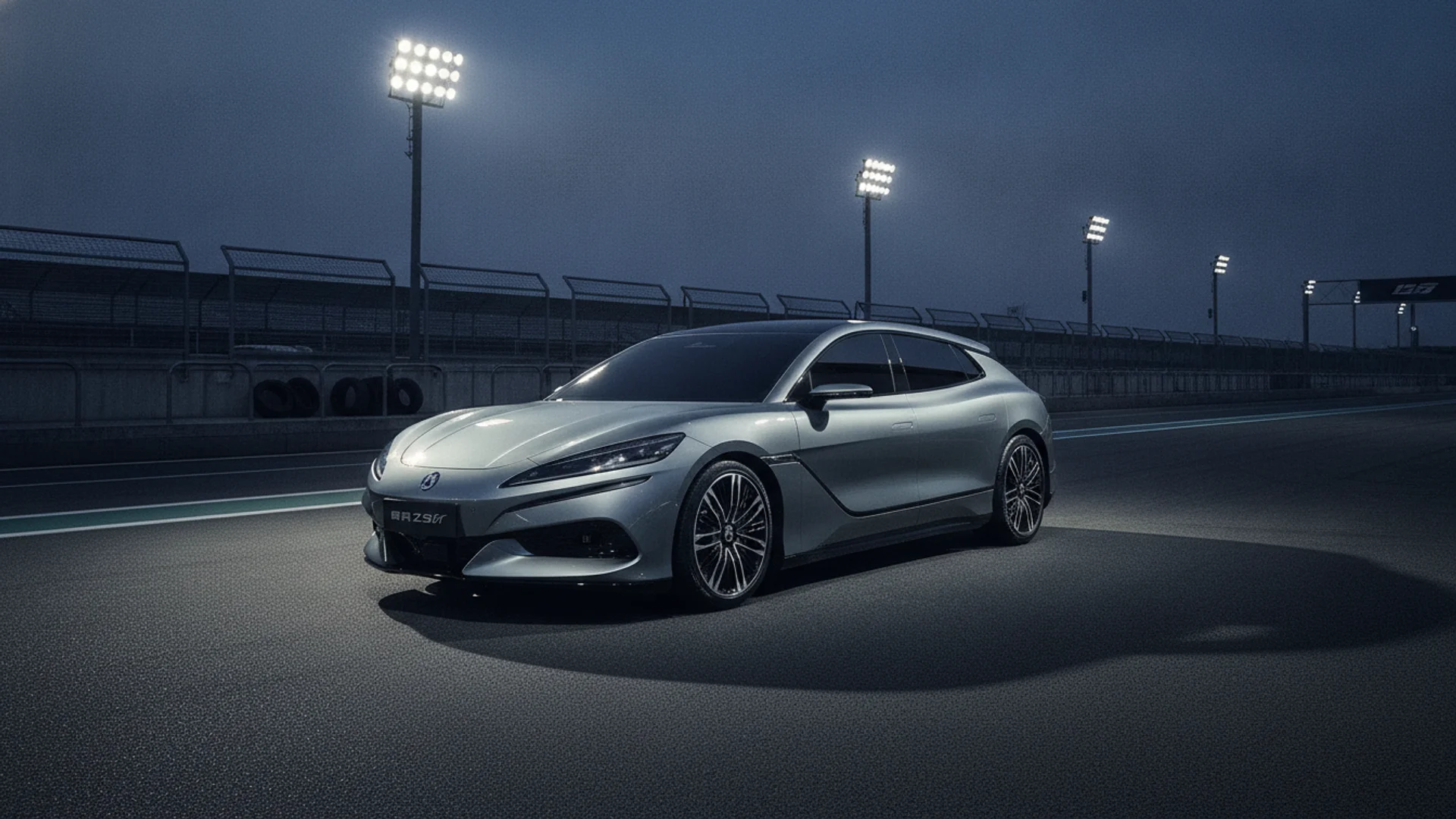
Is BYD Making a Better Ferrari? Denza Z Hits 1,582 HP at $70K
2027 Cadillac Lyriq Keeps the Feature Other GM EVs Lost
Tesla Q3 2026 Earnings: Flat Revenue, Falling Profits
BYD Denza B8 Suspension Trick Defeats Traffic Boot in Viral Clip

Zenos E10 Returns at £115,000, A Different Car Entirely