Five stations. Roughly 6,500 globally. The compliance ratio of Tesla's new virtual queue pilot to the network it nominally serves is approximately 0.08 percent, and that is the most number in the entire launch announcement. Four Bay Area Superchargers and one Bronx station: that is the entire footprint of Tesla's answer to a congestion crisis regulators have declined to define. The pilot footprint is precise. The policy framework around it is not, and the more interesting reframe is this: the pilot is not a product launch, it is a controlled regulatory experiment that the regulator forgot to design.
Key takeaways
- Tesla's Supercharger virtual-queue pilot launched in May 2026 at just five stations, four in the Bay Area and one in the Bronx, out of roughly 6,500 worldwide, about 0.08% of the network.
- ChargePoint deployed a virtual waitlist before Tesla, ruling out technical readiness as the reason for Tesla's 14-month-plus delay.
- No jurisdiction, not the US, EU, Canada, UK, or China, requires charging operators to manage congestion, so queue design is entirely at the operator's discretion.
- Canada's ZEVIP program excludes proprietary networks from eligibility under the EV Availability Standard, leaving Supercharger queue governance in a jurisdictional grey zone.
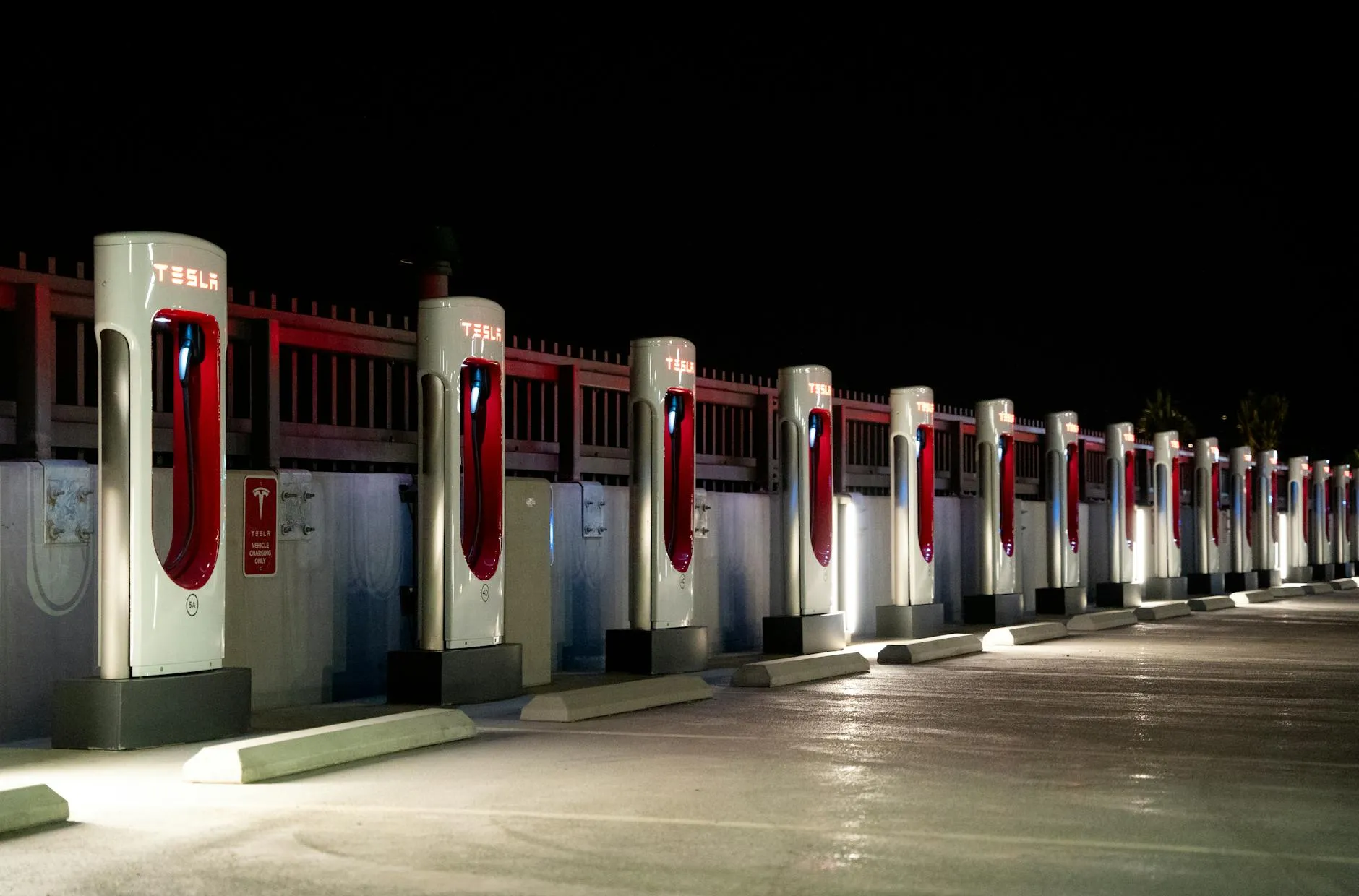
The virtual queue test is currently limited to five Superchargers, four in the San Francisco Bay Area (including San Francisco, San Jose, Los Gatos, and Mountain View) as well as one in New York City's Bronx borough. Drivers in those five service areas can now reserve a place in line through the Tesla mobile application instead of physically circling a full station. Every other Supercharger user on the network, and every non-Tesla driver using a Magic Dock or CCS adapter, operates under the old first-come, first-served regime that produced the viral 2025 altercation video in the first place. That is not a marginal exclusion. That is roughly ninety-nine-point-nine percent of the network running on the same rules that produced the fight.
The interesting part is not the feature. The interesting part is what the feature reveals: no jurisdiction governing public EV charging, not the United States, not the European Union, not Canada, not the United Kingdom, not China, has written a rule that obligates an operator to manage congestion at all. Tesla is acting voluntarily, on a private network, with a privately defined queue protocol, on infrastructure that in some cases drew federal subsidy. My judgment, stated plainly: this pilot is the strongest evidence yet that charging-network governance in 2026 is roughly where airline-passenger rights stood in 1975, recognised as a category, unregulated in the specifics, and waiting for an incident severe enough to force statutory definition. The bet I would put money on is that no regulator moves on it until the second viral incident lands.
From Viral Altercation to Pilot Program: The 14-Month Gap
The timeline matters because it establishes how long an unregulated externality can persist before the operator addresses it. The pilot comes over a year after Tesla promised the feature following a viral video of a fight between Tesla owners at a full Supercharger station. Between the public commitment and the May 2026 activation, the feature appeared and disappeared in mobile-app code at least twice, surfaced to journalists tracking version strings, and then sat dormant until the operator decided utilization data justified a public test.
After more than a year of hidden code discoveries in the mobile app hinting at the feature's development, Tesla has now activated the system at five pilot Supercharger locations in California and New York, with plans for a wider rollout if the test is successful. The conditional framing, "if the test is successful", is the language of an unregulated operator, not a regulated one. No statutory trigger forces publication of pilot metrics. No required reporting cadence exists. No defined success criterion sits on the table against which a public agency could measure the rollout decision.
That asymmetry is the policy artifact worth examining. A retail bank piloting a new account-access protocol would face Consumer Financial Protection Bureau supervisory expectations from day one. An airline piloting a new gate-assignment algorithm would file with the Federal Aviation Administration and the Department of Transportation. A pilot affecting hundreds of thousands of vehicles' access to a partially federally funded charging network proceeds with no comparable oversight structure. The story isn't that Tesla launched a queue, it's that no regulator was waiting to read the spec.
The five-location selection itself tells a structural story. Four of the five sites cluster within the San Francisco Bay Area, San Francisco proper, San Jose, Los Gatos, and Mountain View, corridors with both the highest Tesla density in North America and the longest documented congestion-incident histories. The fifth, in the Bronx, represents the operator's selected stand-in for high-density urban Northeastern conditions. The pattern is not random. Tesla is testing where the externality is most expensive to ignore.
Tesla has launched a new solution to Supercharger waits with a new Virtual Waitlist, a remedy that will solve sequencing confusion when there is a line to charge at one of the company's locations. "Sequencing confusion" is the operator's framing. The regulatory framing, congestion-driven access discrimination at publicly subsidised infrastructure, is the one no agency has formally adopted yet, and the substitution between those two phrasings is exactly the rhetorical move regulators ought to be auditing.
For readers tracking how charging-network reliability and access interact with safety and policy, the actual safety data on EVs versus internal combustion vehicles provides a useful adjacent reference: the regulatory environment for EV operations remains thin across multiple risk categories, not just congestion.
How the Virtual Waitlist Works, and What It Does Not Govern
The functional design is straightforward. Tesla will begin public pilots of its virtual Supercharger queueing as early as this week, allowing drivers to save their place in line before they arrive. A driver approaching one of the five pilot sites opens the Tesla application, joins the queue for that specific location, and receives a notification when a stall becomes available. The driver then proceeds to the station and plugs in within a defined response window.
Beyond that core flow, almost nothing is documented publicly. The questions the operator has not answered at launch are not exotic:
- What is the response window after a stall becomes available? Two minutes? Ten?
- What happens to a driver who joins the queue but then does not arrive?
- How is queue-jumping enforced? Operator-side block, or only social pressure?
- Does the queue clear nightly, or persist across multi-day patterns?
- Are queue-position data and wait-time estimates published, or only visible to the queued driver?
- What is the appeal mechanism if a driver believes the queue logic discriminated against their vehicle, account, or location?
Each has a direct analogue in airline gate management, hospital triage software, or public-utility load-shedding protocols. In each of those domains, transparency requirements exist. At a Supercharger, they do not.
Tesla's new virtual queue system promises to civilize Supercharger stations by letting you join a digital line instead of camping next to your car. If you've ever circled a crowded charging station like it's Black Friday at Target, this software solution might restore your sanity. The colour of the coverage is consumer-relief. The substance underneath is a privately governed access-allocation system operating on infrastructure that, increasingly, the public has co-financed. The honest version: the queue is a private firm's discretionary policy applied to an asset class regulators have started treating as public-interest infrastructure without legislating the corresponding access rules.
Stripped of the marketing language, what Tesla has built is a non-public allocation algorithm. It may be perfectly designed. It may also be opaque in ways that would not survive a regulated-utility tariff filing. Both can be true. Neither is currently testable from outside the company, and the comparative judgment I would put on the record is this: between Tesla's closed-network discretion and ChargePoint's published waitlist behaviour, the more regulator-ready model is the one the smaller operator deployed first.
Supercharger Utilization Data: Why Congestion Is Structural, Not Anecdotal
The five-location pilot is sometimes framed as a response to rare incidents. The data does not support that framing. Tesla is launching its solution to end Supercharger fights once and for all, eliminating any confusion on who is to charge next at a congested location. Last year, a notable incident at a Tesla Supercharger led to a fight, and it all stemmed from a disagreement over who arrived at the location first. One viral incident may have triggered the public commitment. The operator's decision to dedicate engineering resources to the build, then re-surface it across multiple app versions, indicates utilization data that justified the investment internally.
The structural pressure has three documented components.
First, fleet growth has outpaced stall growth. United States plug-in vehicle registrations grew at roughly forty percent year-over-year through 2024, while Tesla's Supercharger team underwent a documented contraction in April 2024 that materially slowed stall additions in the following twelve months. The arithmetic outcome is predictable: more vehicles, proportionally fewer stalls, longer queues at high-utilization nodes.
Second, congestion is concentrated, not distributed. The pilot's geography confirms this. Bay Area urban corridors and dense Northeastern boroughs see utilization patterns that exurban or rural Superchargers do not approach. A network-wide stall count obscures the local reality at the twenty or thirty sites that produce the majority of complaint volume.
Third, the third-party precedent already exists. ChargePoint's virtual waitlist allows drivers to join a queue at busy stations and receive a notification when a stall becomes available, a system deployed at public DC fast-charging sites well before Tesla's pilot. The relevant context lives in the public-charging etiquette and queue norms emerging across Canadian DCFC sites. That ChargePoint had a working version of this feature in market while Tesla's sat in app code for fourteen months is a fact worth sitting with. It rules out "the technology was not ready" as the explanation for the gap. The way ChargePoint solves this and the way Tesla has approached it diverge on one variable: regulatory exposure. ChargePoint operates a multi-vendor, multi-network platform. Tesla operates a closed system. The closed system gave Tesla the luxury of waiting.
Increasing Supercharger congestion called for a solution. The TechRadar framing is correct on the demand side and silent on the supply side. The supply side is where regulators have authority and have not used it. The bet I would put money on: by the time NEVI rulemaking next opens, congestion management will be in the public-comment docket. The lobbying fight over what gets mandated will be the policy story of the second half of this decade for charging infrastructure.
Readers tracking the broader competitive context, which networks scale and which do not, will find the analysis of how BYD's global volume reshaped the OEM landscape in 2025 useful, because charging-network investment cycles correlate directly with fleet-share assumptions. An operator that expects flat share invests differently from one that expects share growth.
The Regulatory Vacuum: No Jurisdiction Mandates Queue Management at EV Chargers
This is the section the operator press releases do not write. Across the five jurisdictions that matter for charging-policy precedent, the legal record on congestion management is uniformly empty.
Gear worth having
As an Amazon Associate, ThinkEV earns a small commission from qualifying purchases — at no extra cost to you.
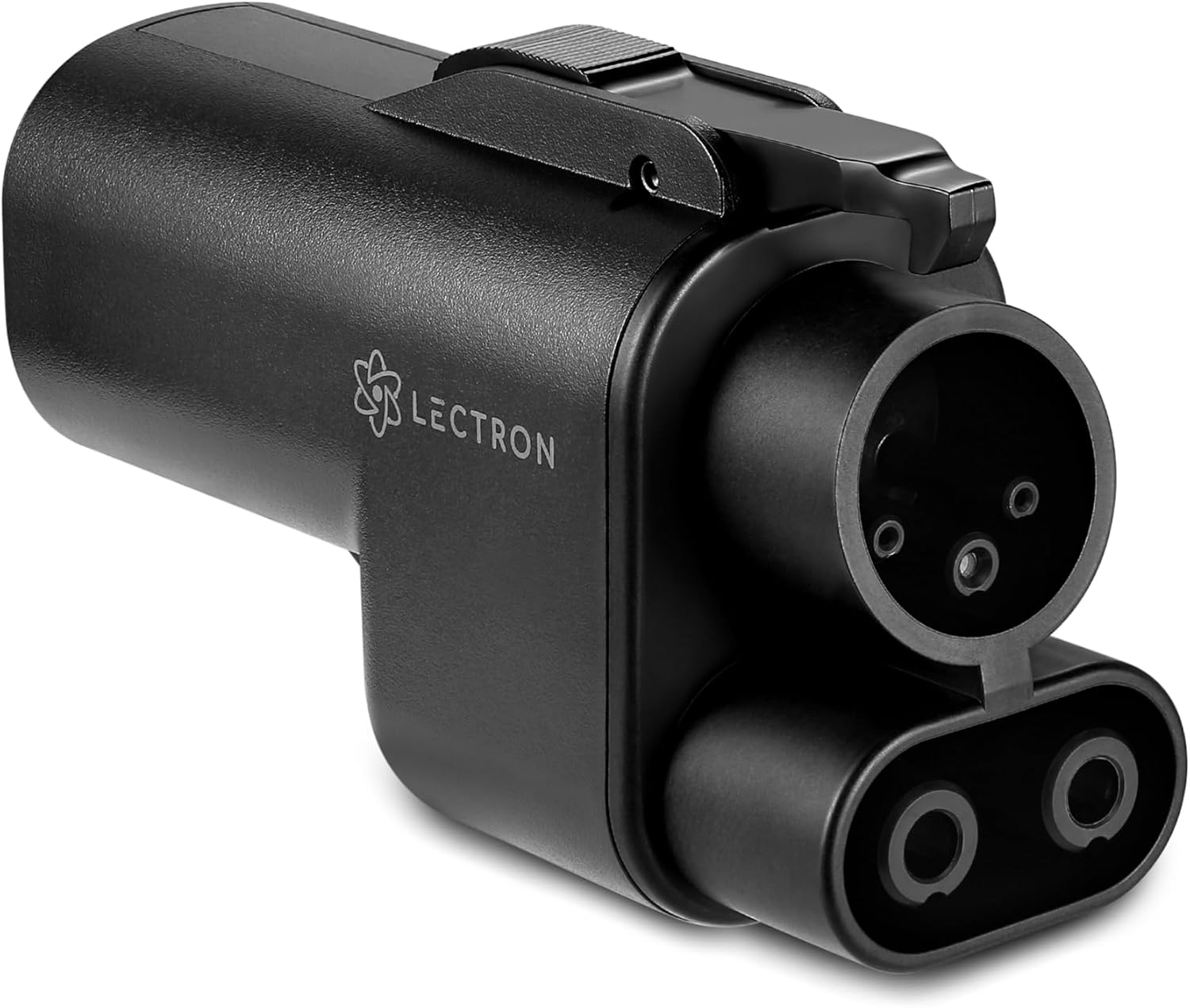
Lectron NACS to CCS Fast-Charge Adapter
Unlock every CCS fast charger for your Tesla, up to 500A DC. Never get stranded at a non-Tesla DC station again.
As an Amazon Associate, ThinkEV earns from qualifying purchases — at no extra cost to you.
The United States National Electric Vehicle Infrastructure (NEVI) program sets uptime requirements, the well-known ninety-seven percent availability threshold, and specifies connector types, payment-method interoperability, and pricing-transparency rules. It is silent on what an operator must do when stalls are functional but occupied. Congestion is not a compliance category under current NEVI rules. A site can be ninety-seven percent up, fully NEVI-compliant, and chronically full at peak hours without triggering any regulatory consequence. That is not a loophole. That is the rule as written.
The European Union's Alternative Fuels Infrastructure Regulation (AFIR), in force since 2024, sets minimum power thresholds (150 kW for highway corridors), payment-method standards (contactless card acceptance), and ad-hoc-access requirements (no mandatory subscription). It does not define a queue protocol, does not require operators to disclose wait times, and does not specify what "reasonable access" means when the limiting factor is stall availability rather than connector compatibility.
Canada's Zero Emission Vehicle Infrastructure Program (ZEVIP), administered by Natural Resources Canada, conditions federal funding on availability, interoperability, and public-access requirements. Sequencing rules at funded sites are not part of the funding-agreement template. The Electric Vehicle Availability Standard (EVAP) excludes proprietary networks from eligibility entirely, which puts the regulatory question for Supercharger sites in an awkward jurisdictional space: a proprietary network operating semi-public infrastructure with no clear governing standard for the queue layer.
The United Kingdom's PAS 1899 standard, issued in 2022, covers accessible design for public charge points, wheelchair clearance, payment-terminal reach, cable weight. It does not address sequencing or congestion. The ZEV mandate, which governs vehicle-side compliance, has no infrastructure-operations counterpart with queue authority.
China's GB/T 20234 family of standards governs connector compatibility and communication protocols. The 2025 revision cycle, which integrated megawatt-charging specifications, did not introduce congestion-management provisions. State Grid and CNNP-operated networks may apply internal queue logic at high-utilization corridors, but no published national standard mandates disclosure or process.
Five jurisdictions, five regulatory frameworks, zero queue-management mandates. The implication is not that any of these regulators are negligent, congestion management at variable-utilization infrastructure is a genuinely hard rulemaking problem. The implication is that operators have inherited a regulatory space they did not necessarily ask for, and the inheritance keeps getting more valuable the longer no one shows up to claim it.
Multi-Jurisdiction Comparison: Who Bears Responsibility for Charging Equity?
The responsibility question separates cleanly across the five jurisdictions, and the cleaner way to read it is by funder, by standards-setter, and by the effective rule that results. NEVI in the United States funds; the FHWA writes the technical bulletins; the effective rule on queue access is operator discretion. AFIR in the European Union funds via member-state co-financing; CEN-CENELEC writes the standards; the effective rule is operator discretion. ZEVIP funds in Canada; the Standards Council and CSA write the technical specs; the effective rule is operator discretion. The United Kingdom's OZEV funds; BSI publishes PAS 1899; operator discretion again. China's MIIT and NDRC fund and steer; SAC publishes GB/T; the effective rule is, once more, operator discretion.
Five different regulatory cultures, five different funding regimes, one shared abdication on the queue layer. That uniformity is itself the finding.
For the Tesla pilot specifically, three jurisdictional questions are unresolved as of May 2026. In the United States, the Supercharger network has accepted limited NEVI funding for sites that meet the CCS-adapter and ad-hoc-payment requirements. Whether a Tesla-app-only queue at a NEVI-funded site complies with the program's non-proprietary access principle is a question FHWA has not formally addressed. In the European Union, the AFIR scheduled review in 2026 provides a faster insertion point than US rulemaking, but AFIR's queue provisions are not on the published amendment list. In Canada, ZEVIP's exclusion of proprietary networks has not stopped Tesla from operating in the market; it has stopped Tesla from receiving the program's grants for Supercharger expansion. Whether the post-tariff-realignment renewal cycle changes that calculus is the file to watch.
The structural observation: regulators have written rules for the parts of charging infrastructure that resemble fuel retail (uptime, pricing, payment) and have not written rules for the parts that resemble utility allocation (sequencing, congestion, demand response). The Tesla pilot is a stress test of that omission. Five stations are the test rig. The next eighteen months are the run time.
Policy Risk: What Happens When the Queue System Fails or Discriminates?
Four risk categories deserve flagging. Each maps to a specific regulator's authority. None has triggered an active investigation as of the pilot launch.
Accessibility risk. The queue is mobile-application dependent. A driver without a smartphone, without the Tesla account associated with their vehicle, or with a screen-reader incompatibility cannot join the queue and is therefore disadvantaged relative to app-enabled users at the same station. In the United States, the Americans with Disabilities Act applies to public accommodations. Whether a Supercharger qualifies, and whether app-only access is a covered barrier, are legal questions with no active enforcement record. The bet I would put money on: the first ADA-class complaint against an app-only queue at a federally funded charging site lands before the FHWA writes a single line of queue guidance.
Non-Tesla vehicle risk. Tesla has activated the system at five pilot Supercharger locations in California and New York, with plans for a wider rollout if the test is successful. The launch coverage does not specify whether Magic Dock and CCS-adapter users, non-Tesla vehicles authorised to use Supercharger stalls, can join the same queue, a parallel queue, or no queue at all. If the answer is "no queue," the practical effect is that non-Tesla drivers are systematically de-prioritised at the pilot sites. That outcome may be defensible operationally. It would not be defensible under a non-proprietary-access compliance audit at a federally funded site.
NEVI compliance tension. NEVI rules require that non-proprietary credentials and non-app payment methods be available at funded sites. A queue that operates only through the Tesla application creates an access bottleneck the rule did not anticipate. The conservative reading: queue access is distinct from payment access, and the rules apply only to payment. The aggressive reading: anything that affects which drivers receive service in what order is an access mechanism subject to the rule. FHWA has not adjudicated this distinction, and the agency's eventual choice will define the next three years of policy development.
Data and audit risk. If queue logs eventually show systematic patterns, disadvantage by vehicle model, by membership status, by geography, by time of day, no regulator currently has the audit authority to compel disclosure. The data exists. The legal mechanism to inspect it does not. That is the precise definition of a policy gap.
Gear worth having
As an Amazon Associate, ThinkEV earns a small commission from qualifying purchases — at no extra cost to you.

Tesla Key Card Holder with AirTag Slot
Stop fishing the keycard out of your wallet, and slot an AirTag in case the car wanders off in a lot.
As an Amazon Associate, ThinkEV earns from qualifying purchases — at no extra cost to you.
What a Binding Standard Would Need to Contain
If a regulator does eventually move on charging-network queue governance, the minimum-content list is predictable from analogous infrastructure regimes.
A transparent queue logic disclosure. Operators publish, in a non-proprietary format, the priority rules used to allocate stalls when demand exceeds supply. This is the equivalent of an airline's published gate-assignment policy or a utility's published load-shedding tariff.
A non-application fallback. Any queue mechanism must provide an in-person or telephone alternative, at minimum at federally funded sites. The principle is identical to ad-hoc payment requirements in NEVI and AFIR.
A wait-time disclosure obligation. Drivers entering a queue must receive a published estimate and a defined response window. This is consumer-protection territory and falls within existing FTC and provincial consumer-affairs authority.
A penalty and appeal mechanism. Operators must publish the consequences of queue violations and a documented appeal process. This is administrative-law table stakes. It exists in every regulated infrastructure regime except this one.
A non-discrimination requirement. Vehicle make, account tier, and adapter type cannot be the basis for systematic queue disadvantage at publicly funded sites. The principle is the non-proprietary access rule applied one layer deeper.
The realistic timing: the earliest US NEVI rulemaking window that could accommodate congestion-management provisions opens in the 2027 cycle. The European Union's AFIR review in 2026 is a faster vehicle but currently lacks the queue-management line item on its published amendment list. Canada's ZEVIP renewal terms, negotiated bilaterally with operators, offer the nearest-term lever, and the post-2026 tariff-realignment cycle is the natural moment to insert sequencing conditions into funding-agreement templates.
What I would watch next: the FHWA response when the first NEVI-funded Supercharger site activates the queue. The agency's choice to either treat queue access as a Title 23 compliance question or to treat it as outside its authority will define the next three years of policy development. The bet I would put money on is the second response, followed by congressional pressure inside eighteen months. The bet I would not put money on is voluntary operator publication of the queue logic before that pressure materialises.
The five-station pilot will likely succeed on its own terms, Tesla's engineering tends to. The policy question survives the success. A private firm has just deployed an allocation algorithm on infrastructure that is partly publicly financed, partly subject to public-interest regulation, and entirely unregulated in the specific dimension the algorithm operates on. That is the gap. Whether any of the five jurisdictions in this analysis chooses to close it is the file worth opening.
The wider regulatory and infrastructure context for Canadian readers is in our complete guide to EV charging in Canada, and the per-province cost picture that frames these queue decisions is laid out in EV charging costs by province.
Gear worth having
As an Amazon Associate, ThinkEV earns a small commission from qualifying purchases — at no extra cost to you.

Spigen Tempered Glass for Tesla Model 3/Y
Tempered-glass protection for the touchscreen that kills fingerprints and scratches. Two minutes to install, lasts the life of the car.
As an Amazon Associate, ThinkEV earns from qualifying purchases — at no extra cost to you.
Founder & Chief Editor
Vlad Pereira is the founder and chief editor of ThinkEV.ca, the Canadian electric-vehicle publication he writes and edits from Courtenay, British Columbia. He covers EV pricing, federal and provincial rebates, charging costs, and the Chinese manufacturers now entering Canada, from the buyer's side rather than the press-fleet side. ThinkEV is a venture of Vlad Pereira Online; his writing on health, income and the long game lives at vladpereira.com.
Frequently asked questions
Where can you use Tesla's virtual queue right now, and is any Canadian site included?
Can non-Tesla drivers using a Magic Dock or CCS adapter join the queue?
Does Canada's ZEVIP program fund Tesla Supercharger expansion?
Did anyone offer a virtual queue before Tesla?
More EV & road-trip finds
Affordable upgrades worth a look — tap any to check the price on Amazon.
 ★ 268
★ 268Anti-Slip Leather Steering Wheel Cover
View on Amazon ★ 8,681
Chemical Guys Complete Car Wash Kit
View on Amazon ★ 314
★ 314Mini USB LED Ambient Lamps (4-Pack)
View on Amazon ★ 1,349
Cool Swinging Duck Dashboard Ornament
View on Amazon ★ 865
★ 865Collapsible Trunk Organizer
View on Amazon ★ 721
★ 72145W USB-C Fast Car Charger
View on Amazon ★ 121
★ 121Foldable Windshield Sun Umbrella
View on Amazon ★ 392
★ 392Large Cup Holder Adapter (32-40oz)
View on AmazonRead, Plan, Then Stay Current
Explore our expert articles to understand incentives and ownership costs, use the map to pressure-test charging reality, then subscribe so new EV coverage comes straight to you.
Continue Reading
Europe's Gas Stations Are Becoming Charging Stations, By Law

BYD's 1,500 kW Flash Charger Lands in Germany

GM Energy Pass: One Universal Interface For Public Charging
How Long Does It Take to Charge an Electric Car? (2026 Guide)
How Charging Networks Decide Stall Count Per Site