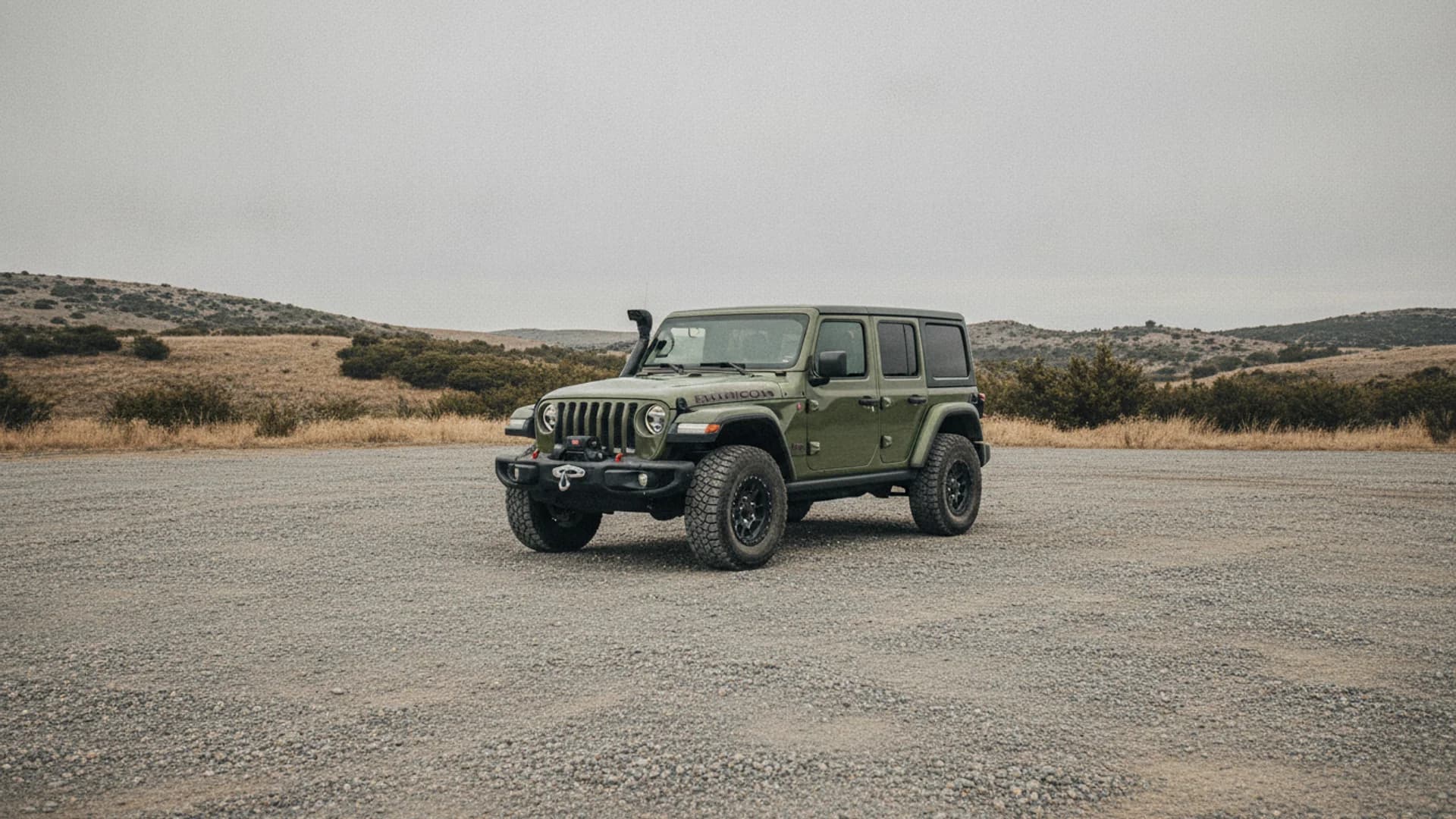
A 21-month gap between the opening of a federal defect investigation and a formal recall, on a fire risk affecting more than a million vehicles, capable of igniting while parked and switched off, is the part of this story that should outlast the news cycle. The recall itself is the event. The investigation-to-recall clock is the regulatory question.
Stellantis filed the recall on June 9, 2026, covering 1.08 million U.S. Jeep Wranglers and Gladiators, 106,000 vehicles in Canada, 23,000 in Mexico, and roughly 125,000 across other markets, 1.3 million units worldwide. The defect is an electrical connection failure in the electric hydraulic power steering pump (EHPS) wiring harness. NHTSA's complaint language is unusually direct: combustible materials near the wiring can ignite "even when the vehicle is parked with the ignition switched off." Owners have been told to park outdoors, away from structures and other vehicles, until a remedy is available.
A remedy date has not been confirmed. Stellantis says the fix is under development. That is the second-most important sentence in the filing.
Key takeaways
- NHTSA opened its investigation in September 2024-21 months before Stellantis filed the June 9, 2026 recall.
- The defect is a wiring harness failure in the EHPS pump, not a battery issue, and the 4xe plug-in hybrids are excluded.
- Canada holds 106,000 of the 1.3 million affected units, entering the recall via Motor Vehicle Safety Act mirroring, not independent Transport Canada investigation.
- The recall population grew 35% during NHTSA's inquiry, from roughly 800,000 to over 1.08 million U.S. vehicles alone.
- NHTSA's park-outside directive, also used in the 2021 GM Bolt recall, signals the agency judged the fire risk too severe to wait for an engineered fix.
The Defect Defined: EHPS Wiring, Not a Battery
The root cause is mechanical-electrical, not chemical. An electrical connection in the EHPS wiring harness can degrade in a way that allows current to reach materials it should not, and those materials can ignite without the ignition cycle being active. This is not a battery thermal-runaway event. It is closer in mechanism to a wiring-harness fire of the kind NHTSA has historically tracked across ICE-platform recalls.
The affected population is certain 2021-2025 model year Jeep Wrangler and Jeep Gladiator vehicles, ICE and mild-hybrid configurations. The Wrangler 4xe and Grand Cherokee 4xe plug-in hybrids are not part of this recall. That distinction matters because it has already been muddled in the first 24 hours of coverage, and because the safety profile of plug-in hybrids and battery-electric vehicles is structurally different from the wiring fault described here, the underlying failure modes do not transfer across powertrain architecture.
Key distinctions, defect by defect:
- June 9, 2026 recall (this filing): 1.3 million Wrangler and Gladiator ICE and mild-hybrid units. Root cause: EHPS wiring harness connection failure. Remedy: harness replacement or connector revision.
- November 2025 recall: 320,065 Wrangler 4xe and Grand Cherokee 4xe plug-in hybrids. Root cause: high-voltage battery cell internal failure. Remedy: battery module swap or software-throttled state-of-charge limits.
- Shared characteristic: fires can ignite while parked, prompting identical park-outside directives.
- Diverging characteristic: parts bins, supplier chains, and remedy timelines do not overlap.
The case against treating this as distinct from the 4xe battery recalls runs as follows: same brand, same fire outcome, same park-outside directive, therefore the public reads it as a single Jeep fire problem and the engineering distinctions are noise. Concede the perception. Reject the engineering conflation. The repair networks, parts supply chains, and remedy timelines are not interchangeable. Treating them as one problem makes the policy response incoherent.
The third-recall-in-six-years framing on the 4xe platform alone, defective battery cells flagged across 2020–2025 Wrangler 4xe and 2022–2026 Grand Cherokee 4xe model years, is the relevant priors context for how NHTSA reads the June 9 EHPS filing. A wiring-harness defect on a different powertrain, on the same brand, inside a 12-month window of a battery-cell defect on the PHEV variants, is the cross-platform pattern the agency's Recall Audit Query process is designed to flag.
The "even when the ignition is off" phrasing is the regulatory signal. NHTSA reserves that language for defects where the standard mitigation, "don't drive it", is insufficient. The agency's interim advisory to park outside derives from the same threat model: a fire that does not require the vehicle to be operating to start.
Scale and Geography: 1.3 Million Units Across Five Markets
The geographic distribution sets the scale: 1.08 million U.S. units, 106,000 in Canada, 23,000 in Mexico, and approximately 125,000 in other markets. Canada represents roughly 9.8% of the global recall population, proportional to its share of North American Jeep registrations, which is the expected pattern for a defect rooted in a shared production line.
Stellantis filed the recall on June 9, 2026. NHTSA opened an investigation in September 2024 into nearly 800,000 Jeep vehicles at the time. The scope expanded as the investigation widened, from roughly 800,000 to over 1,080,000 U.S. units, a 35% population growth during the inquiry.
The 21-month gap between investigation and recall is not, by itself, evidence of regulatory failure. NHTSA's defect investigations average 12 to 18 months from preliminary evaluation to manufacturer recall. This one ran longer than the upper end of that range, on a fire risk, with a population that grew by 280,000 vehicles during the inquiry.
Transport Canada has not disclosed a parallel independent investigation. The 106,000 Canadian units enter the recall through the mirroring mechanism in the Motor Vehicle Safety Act, not through a separate Canadian probe. The European Union has not opened a public type-approval inquiry of its own, though the rest-of-world figure suggests at least some EU-market vehicles are in scope.
State the historical scale comparison plainly. The Willys MB, the wartime ancestor of the modern Wrangler, was produced at roughly 170,000 units across the entire wartime contract run before standardization caught up to demand. The current recall covers nearly eight times that figure on a single defect, in a single filing, across five markets. The point is not nostalgic. The Wrangler nameplate now operates at a production scale where a single wiring-harness fault is a multi-market regulatory event by default, and the recall apparatus has to be calibrated to that scale rather than to the historical artisanal-volume baseline most of the legal framework was originally drafted against.
Gear worth having
As an Amazon Associate, ThinkEV earns a small commission from qualifying purchases — at no extra cost to you.

Portable Level 2 EV Charger (40A, NEMA 14-50)
Throw it in the trunk and charge anywhere with a 240V outlet. 40A portable with NEMA 14-50 plug. Your road-trip insurance policy.
As an Amazon Associate, ThinkEV earns from qualifying purchases — at no extra cost to you.
Regulatory Timeline: From NHTSA Probe to Formal Recall
NHTSA's preliminary evaluation opened in September 2024. Twenty-one months later, Stellantis filed the recall. The agency's "park away from structures" advisory in the interim period is a pre-remedy safety measure, not a standard step in the recall pipeline. It signals that the agency considered the risk severe enough to act publicly before the remedy was ready.
There is precedent. NHTSA issued similar park-outside directives during the General Motors Bolt high-voltage battery recall in 2021 and the Hyundai Ioniq 5 charging-related advisory in 2023. In both cases, the interim guidance preceded the remedy by months. The pattern, interim mitigation before engineered fix, is becoming more common, not less, as the agency confronts fire-risk defects in larger and more complex electrical architectures.
The 21-month timeline is the part that strains the TREAD Act's "reasonable time" standard. The Transportation Recall Enhancement, Accountability, and Documentation Act requires manufacturers to notify NHTSA of safety defects within five working days of determining a defect exists. The five-day clock starts on the manufacturer's internal determination. The 21 months covers everything before that determination, the period during which NHTSA was investigating, manufacturers were testing, and field incidents were accumulating.
That is the regulatory gap that policy reform conversations consistently identify, and consistently fail to close. The U.S. has no mandatory hard cap on pre-determination investigation duration for fire-risk defects. The EU's General Safety Regulation 2019/2144 imposes faster manufacturer self-reporting obligations on type-approval holders, with shorter windows for safety-critical defects. Stellantis filed the recall in the U.S. first; the rest of the world followed through mirroring frameworks.
Twenty-one months is, on this filing, the gap a buyer's vehicle sat in the field while the determination crystallized. The recall is the end of the timeline. The investigation is the timeline.
Canada's 106,000 Affected Vehicles: Transport Canada's Role
Canada's involvement is structural, not investigative. Transport Canada's recall database mirrors NHTSA filings under the Motor Vehicle Safety Act, and the 106,000 Canadian Wranglers and Gladiators enter the recall through that mechanism. Transport Canada has not confirmed an independent investigation of the EHPS wiring defect.
The Motor Vehicle Safety Act was amended in 2018 under Bill S-2 to give the Minister of Transport the authority to order recalls and require manufacturers to repair defects at no cost to owners. The amendment closed a real gap, before 2018, Canada could not compel a recall if the manufacturer declined to act voluntarily. It did not, however, introduce investigation-timeline caps. Transport Canada operates on a parallel cadence to NHTSA, and shared North American production lines mean shared defect populations and largely shared recall timing.
Canadian owners check VIN status through the Transport Canada recall database; U.S. owners use safercar.gov. The 106,000 units are ICE and mild-hybrid Wranglers and Gladiators, they do not affect iZEV or provincial EV-rebate eligibility, because they were never eligible. The Zero Emission Vehicle program and EVAP framework apply to battery-electric and qualifying plug-in hybrid vehicles, not to the ICE and mild-hybrid trims in scope here.
The policy-adjacent point is narrower: a recall this large on shared North American production lines produces no Canadian investigation, no Canadian timeline, and no Canadian regulatory record independent of NHTSA's. That is by design. The question is whether the design serves Canadian owners as well as it serves administrative efficiency.
The case for the current mirroring arrangement is that it works. Canada is a 9.8% market; standing up parallel investigative capacity for North American platforms would duplicate engineering effort already underway in the U.S., delay Canadian remedies rather than accelerate them, and produce findings that almost always agree with NHTSA's. Conceded. The counter-argument is narrower: mirroring works for technical findings, but it produces no Canadian record of when Transport Canada first received field-incident data, no Canadian determination of how long the manufacturer had the information, and no independent Canadian timeline against which the 21-month gap can be measured. The technical work is fine to share. The accountability record should not be.
Gear worth having
As an Amazon Associate, ThinkEV earns a small commission from qualifying purchases — at no extra cost to you.

70mai A810 4K Dual Dash Cam
4K front and 2K rear with STARVIS 2 HDR night vision and 24/7 parking surveillance, recording while parked without draining the 12V. A budget alternative to Tesla Sentry.
As an Amazon Associate, ThinkEV earns from qualifying purchases — at no extra cost to you.
Stellantis's Recall History: Pattern or Isolated Incident?
This is the third Jeep fire-related recall since 2020 across different platforms. The 2021 Wrangler PHEV recall, the 2023 and 2025 Grand Cherokee 4xe battery recalls, and now the 2026 EHPS wiring recall on the Wrangler and Gladiator are four distinct defects, four distinct root causes, four distinct part numbers. They are not a single recurring problem.
Gear worth having
As an Amazon Associate, ThinkEV earns a small commission from qualifying purchases — at no extra cost to you.

First Alert Auto Fire Extinguisher
A compact extinguisher sized for vehicles and bracket-mounted under the seat. Peace of mind for the price of lunch.
As an Amazon Associate, ThinkEV earns from qualifying purchases — at no extra cost to you.
But they are a pattern in aggregate. NHTSA's cumulative Stellantis recall count from 2020 through 2026 places the company among the highest by volume across the Detroit Three. The defects span powertrain architectures, model lines, and supplier sources. That is the regulatory signal NHTSA tracks under its Recall Audit Query process, not the individual defect, but the cross-platform frequency.
The historical comparison is unflattering in a specific way. Jeep is a brand with a documented critical reception problem at the model level, the New York Daily News's August 2018 list of "the 10 absolute worst Jeeps of all time" ran across decades of nameplates. A fire-risk recall on the Wrangler and Gladiator, Jeep's two highest-volume, highest-margin, brand-defining vehicles, is the kind of filing that compounds the historical critical record rather than displaces it. Stellantis's product communications strategy has, since the 2021 merger, leaned on Wrangler and Gladiator volume to offset weakness elsewhere in the portfolio. That strategy is fragile in exactly the way this recall exposes.
Stellantis did not disclose a field fire incident count in the June 9 filing. That omission is permissible under current NHTSA filing requirements, but it is one of the documented gaps in the agency's defect-notification framework. A regulator and an owner reading the same filing learn the population, the defect, and the interim guidance, they do not learn how many fires have occurred. The completeness review for filings of this scale should, on a straight reading of the public interest, require that disclosure.
This is not a Stellantis-specific argument. The same gap applies to every manufacturer filing under the same framework. The argument is that a 1.3-million-unit fire-risk recall with no public incident count is the kind of filing that exposes where the framework's transparency provisions need to be tightened.
The counter-argument from the manufacturer side is that pre-remedy incident counts are misleading in isolation, a low number underweights the population-scale risk, a high number front-runs litigation discovery, and either figure absent a denominator and an exposure-hours baseline produces public-policy heat without engineering light. Concede the methodological point. The rebuttal is that owners do not get the denominator either, and the asymmetry is the problem. A filing that withholds the numerator while leaving the denominator implicit produces a worse information environment than one that publishes both with appropriate caveats. The framework can require the disclosure and require the context. It currently requires neither.
What a Remedy Looks Like, and When Owners Can Expect It
The remedy is under development. Stellantis has not committed to a date. Under the TREAD Act, manufacturers must provide a free repair within a "reasonable time" of the recall filing, a standard NHTSA interprets case by case, with no fixed deadline written into the statute.
Until the remedy is available, the interim guidance applies: park away from structures, other vehicles, and combustible materials. The directive is, in practical effect, a parking-location instruction with safety consequences. It is not always easy to follow. Owners in dense urban areas, condo buildings, underground garages, attached townhouse garages, face the same problem other recall populations have faced before: the safety advisory assumes a parking environment many drivers do not have.
What owners need to do, in order of priority:
- Check VIN status through NHTSA's lookup tool at safercar.gov (U.S.) or Transport Canada's recall database (Canada).
- Park outdoors immediately, at least 10 metres from buildings, other vehicles, and combustible materials.
- Do not rely on the ignition being switched off as a safety measure, the defect ignites independent of ignition state.
- Monitor manufacturer correspondence; remedy notification is mailed to the registered owner of record.
- Document any field-incident observations and report them through NHTSA's complaint portal or Transport Canada's road safety contact.
Both VIN databases update on the manufacturer's filing cadence, which means the data reflects what Stellantis has reported, not necessarily the full operational status of the remedy program. For a comparative view of how recall-driven downtime affects different powertrain owners, the reliability data across battery, plug-in hybrid, and ICE configurations frames the broader pattern.
Gear worth having
As an Amazon Associate, ThinkEV earns a small commission from qualifying purchases — at no extra cost to you.
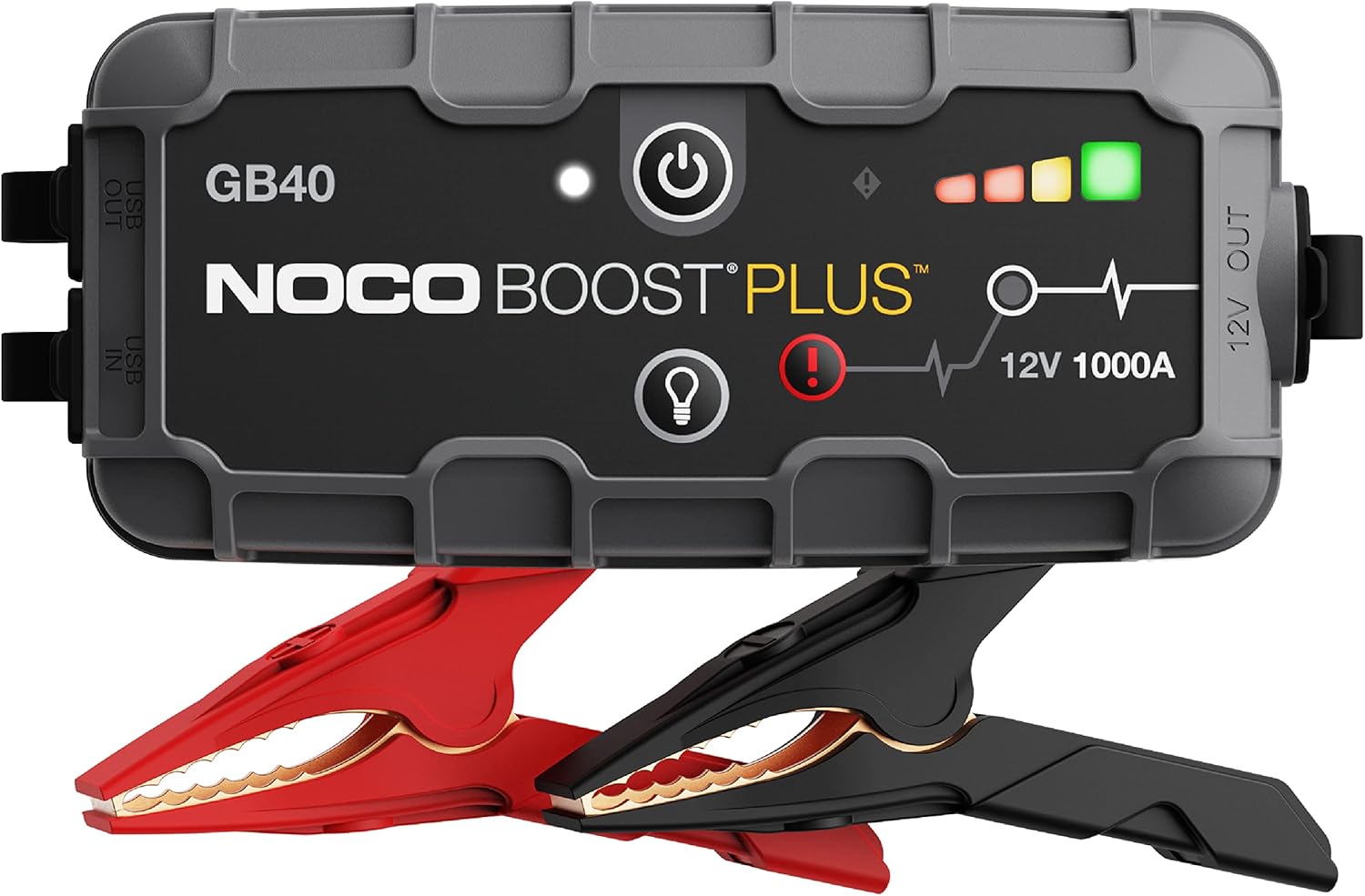
NOCO Boost Plus GB40 Jump Starter
A 1000A lithium jump starter that fits in your glovebox and works on any 12V battery. Your insurance against a dead 12V in a parking lot.
As an Amazon Associate, ThinkEV earns from qualifying purchases — at no extra cost to you.
Policy Implication: Pre-Recall Investigation Timelines Need a Hard Cap
The substantive policy argument from this recall is narrow and concrete. NHTSA's "reasonable time" standard for fire-risk defects is procedurally elastic. A 21-month gap between preliminary evaluation and recall, on a defect that ignites parked vehicles, is the upper end of what the current framework tolerates. Whether it should is a policy question, not a regulatory one.
The EU model is instructive without being a template. General Safety Regulation 2019/2144 imposes shorter mandatory manufacturer self-reporting windows for safety-critical defects under type approval. It does not solve the underlying problem, manufacturer determination is still the trigger, but it shortens the runway between identification and disclosure. The U.S. equivalent does not exist in statute. The TREAD Act's five-day window starts from determination; the determination has no statutory deadline.
A 12-month hard cap on preliminary-evaluation duration for fire-risk defects, modelled on the EU's expedited-reporting categories, would have produced this recall in late 2025 rather than mid-2026. Whether the engineered remedy would have been ready earlier is a separate question. The interim park-outside directive could have been issued sooner, which is the meaningful safety variable for the population in the field during the investigation window. For context on how cross-border regulatory frameworks shape Canadian buyer outcomes, the policy environment around Chinese EVs entering Canada in 2026 shows the same mirroring-versus-independent-determination tension playing out in trade policy rather than safety policy.
The case against a hard cap deserves a fair hearing. A statutory 12-month ceiling could pressure NHTSA into premature recalls, filings issued before engineering analysis is complete, with overbroad VIN ranges that then get narrowed in supplemental amendments, eroding owner confidence in the recall system. Manufacturers would respond by front-loading conservative recalls and back-loading the precision work, which trades one timeline problem for another. The rebuttal: the current framework already produces overbroad and amended recalls without any time pressure, and the population the cap would protect, owners driving fire-risk vehicles during an open investigation, is the population whose interests the elastic standard demonstrably underweights.
This is a structural argument, not a Stellantis-specific one. The same framework would apply to every manufacturer filing a fire-risk recall under TREAD. Stellantis happens to be the company whose 21-month timeline made the case visible this quarter. The next 1.3-million-unit fire-risk recall will run on the same clock unless the clock is changed.
Is my Jeep Wrangler 4xe included in this 1.3 million recall? No. The June 9, 2026 recall covers 2021–2025 Wrangler and Gladiator vehicles with ICE and mild-hybrid powertrains. The Wrangler 4xe and Grand Cherokee 4xe plug-in hybrids are covered by a separate November 2025 battery recall of 320,065 units, addressing a different defect mechanism.
What does "park away from structures" mean in practice for Canadian owners? It means parking outdoors, at least 10 metres from buildings, other vehicles, and combustible materials, until Stellantis issues the engineered remedy. For condo and townhouse owners without dedicated outdoor parking, the practical answer is uncomfortable, the directive assumes a parking environment many Canadian urban owners do not have. Transport Canada has not issued supplemental guidance.
How long will Stellantis take to issue a free repair under NHTSA rules? The TREAD Act requires repair within a "reasonable time" of the recall filing, with no fixed statutory deadline. Stellantis has not committed to a date in the June 9 filing. Historical precedent on wiring-harness recalls suggests several months from filing to remedy availability, but NHTSA monitors completion rates rather than enforcing a calendar deadline.
Does Transport Canada have an independent investigation or only mirror the U.S. recall? Transport Canada mirrors the NHTSA filing under the Motor Vehicle Safety Act. No independent Canadian investigation has been disclosed. The 106,000 Canadian units enter the recall through the same defect determination Stellantis filed with NHTSA, not through a parallel Canadian probe.
How does this EHPS wiring recall differ from the 2025 Jeep 4xe battery recall? The 2025 recall covered 320,065 Wrangler 4xe and Grand Cherokee 4xe plug-in hybrids and addressed a high-voltage battery cell defect that could cause internal failure and fire. The 2026 recall covers 1.3 million Wrangler and Gladiator ICE and mild-hybrid units and addresses an electric hydraulic power steering pump wiring harness defect. Different powertrains, different parts, different root causes, same outcome.
Bottom line: 1.3 million units, 21 months from investigation to recall, no confirmed remedy date, and an interim safety directive that assumes outdoor parking many owners cannot provide. The recall is the news; the investigation timeline is the policy question. Three indicators to watch over the next six months: whether NHTSA's completeness review on the June 9 filing produces a field incident count, whether Stellantis commits to a remedy date before Q4 2026, and whether any U.S. legislative draft picks up the EU's expedited-reporting model for fire-risk defects. The base-rate forecast: none of the three move. The recall will close, the timeline will not be litigated, and the next 1.3-million-unit fire-risk filing, somewhere in the industry, within 24 months, will run on the same 21-month clock. The single piece of counter-evidence that would shift that forecast is an NHTSA rulemaking notice proposing a statutory cap on preliminary-evaluation duration for fire-risk defects. That notice has not been filed. The clock keeps running.
Gear worth having
As an Amazon Associate, ThinkEV earns a small commission from qualifying purchases — at no extra cost to you.

Amazon Basics Seat Belt Cutter and Window Hammer
The 10-dollar tool you hope to never use: cuts a jammed belt and shatters a window in an emergency. Mount it within reach.
As an Amazon Associate, ThinkEV earns from qualifying purchases — at no extra cost to you.

Founder & Chief Editor
Vlad Pereira is the founder and chief editor of ThinkEV.ca, the Canadian electric-vehicle publication he writes and edits from Courtenay, British Columbia. He covers EV pricing, federal and provincial rebates, charging costs, and the Chinese manufacturers now entering Canada, from the buyer's side rather than the press-fleet side. ThinkEV is a venture of Vlad Pereira Online; his writing on health, income and the long game lives at vladpereira.com.
Frequently asked questions
Can Canadians keep using their Wrangler or Gladiator for now?
Why did the investigation take 21 months on a fire risk?
Is this the same fire issue as the 2025 Jeep 4xe recall?
Does Transport Canada run its own investigation independently?
When will the actual fix be available?
More EV & road-trip finds
Affordable upgrades worth a look — tap any to check the price on Amazon.
 ★ 121
★ 121Foldable Windshield Sun Umbrella
View on Amazon ★ 268
★ 268Anti-Slip Leather Steering Wheel Cover
View on Amazon ★ 12,051
Windex Electronics Screen Wipes
View on Amazon ★ 419
★ 419RGB Car Interior LED Strip Light
View on Amazon ★ 568
★ 568Personalized Photo and Text Keychain
View on Amazon ★ 979
★ 979Leather Headrest Purse Hook
View on Amazon ★ 692
★ 692USB-A to USB-C CarPlay Adapter (3-Pack)
View on Amazon ★ 119
★ 119Foldable Waterproof Trunk Organizer
View on AmazonRead, Plan, Then Stay Current
Explore our expert articles to understand incentives and ownership costs, use the map to pressure-test charging reality, then subscribe so new EV coverage comes straight to you.
Continue Reading
Ford Re-Recalls 387,000 Vehicles Over Bad Repairs
VW ID.4 80% Charge Cap Rolls Out This Week, With Opt-Out
Hyundai Genesis Recall: Park Outside Warning Hits 94,622
Peugeot RCZ Returns With a 1,000-Volt Solid-State Battery

Citroën 2CV Returns: €15,000 EV, Egg Compartment Intact