Canada's charging network hit 30,000 chargers in 2026. Tesla Superchargers opened to every make and model. FLO converted 65% of its fleet to NACS connectors. The federal government is pouring $1.5 billion through the Canada Infrastructure Bank into charging expansion, and the ZEVIP program alone is funding 8,000-plus new chargers with $84.4 million in direct investment.
So the infrastructure is growing fast. But is it actually enough to drive across Canada without major headaches?
That is the real question, and it deserves a real answer, not a marketing pitch.
Key takeaways
- Canada has 30,000+ EV chargers nationally with DC fast-charging ports growing 28% year-over-year to 8,804 ports in 2025.
- Major corridors are largely covered: Trans-Canada (with notable gaps), Highway 401, Highway 1 BC, and the Quebec-Ontario corridor are all road-trip viable right now.
- Critical gaps remain: Northern Ontario between Sault Ste. Marie and Thunder Bay, Northern BC, the Maritimes interior, and Prairie secondary highways still present real range challenges.
- Winter road trips demand 30-40% more charging stops due to cold-weather range loss. Plan for this explicitly, not as an afterthought.
- A DC fast charge from 20-80% takes 20-30 minutes and costs $15-25. Budget for 3-5 charging stops on a full-day drive and you will arrive relaxed.
- The right apps, PlugShare, ChargePoint, FLO, Electrify Canada, combined with solid route planning make most Canadian road trips fully achievable today.
The Direct Answer: Yes, With Specific Caveats
EV road trips across Canada are viable in 2026. That is not a hedge, that is a fact backed by the network coverage that exists today. You can drive Toronto to Montreal, Calgary to Vancouver, and Halifax to Montreal right now in a modern long-range EV with proper planning and zero anxiety.
But "viable" does not mean "frictionless." There are real gaps in the network that will affect specific routes. There are seasonal considerations that demand a different kind of trip planning than you would do with a gas car. And there is a learning curve to charging on the road that first-timers often underestimate.
The picture in 2026: Canada's southern corridors are road-trip ready. The northern routes and interior secondary highways are still catching up. If your route stays within 200 kilometres of the US border across most of the country, you are likely fine. If you are heading deep into Northern Ontario, Northern BC, or the Maritime interior, you need to research your specific route before you go.
This also depends heavily on which EV you are driving. A Tesla Model Y Long Range or a Hyundai IONIQ 6 AWD with 500-plus kilometres of rated range has a very different road trip experience than a Chevrolet Equinox EV at 400 km or a Nissan LEAF at 250 km. Long-range capability is not just a luxury for road tripping, on certain Canadian corridors, it is the difference between a comfortable trip and a stressful one.
The other variable that first-timers underestimate: the difference between rated range and real-world highway range. Manufacturer range figures are typically measured under controlled conditions, moderate temperature, moderate speed, no climate control load. Driving at 110-120 km/h on a Canadian highway in October with the heat on reduces real-world range by 20-35% compared to the sticker. Know your vehicle's actual highway range before you plan a single stop.
The sections below break down each major corridor route by route.
The 2026 Reality: What the Infrastructure Numbers Actually Mean
Raw charger counts only tell part of the story. What matters for road tripping is fast-charger density along specific corridors, and that is where 2026 looks genuinely different from just two years ago.
Canada's 8,804 DC fast-charging ports represent a 28% year-over-year increase. That pace of growth has filled in critical gaps along the Trans-Canada and major interprovincial corridors. The ZEVIP program's $84.4 million investment targeting 8,000-plus new chargers has accelerated deployment specifically in underserved areas, which means some of the gaps that existed in 2024 are actively being closed.
The connector situation has also improved dramatically. FLO, Canada's largest domestic charging network, has converted 65% of its network to NACS connectors (the standard originally developed by Tesla, now adopted industry-wide). The remaining legacy J1772 and CCS connectors are still functional, but the push toward standardisation means fewer adapter headaches for drivers of newer vehicles.
The biggest structural shift in 2026 is the full opening of Tesla's Supercharger network to non-Tesla vehicles across Canada. Tesla's network has always been the gold standard for reliability, density, and predictability on Canadian highways. With adapters or NACS-native vehicles, any EV driver can now use those stations, and that changes the risk calculation significantly for cross-country travel.
What the numbers still do not capture: charger reliability and uptime. An 8,804-port network where 20% of units are out of service at any given time is functionally much smaller than one where 95% are operational. Reliability varies considerably by network and location, which is why PlugShare's real-time check-in system remains indispensable before you commit to a stop.
The Canada Infrastructure Bank's $1.5 billion total commitment signals that government sees filling the remaining gaps as a national infrastructure priority, but that capital deploys over years, not months. In 2026, you are driving a network that is excellent in urban corridors and good (with gaps) everywhere else.
Major Corridor Coverage: Where You Can Drive Confidently
Toronto to Montreal (Highway 401 / Highway 20)
The Quebec-Ontario corridor has the densest EV road trip infrastructure in Canada. Electrify Canada, FLO, and Tesla Supercharger stations spaced roughly every 80-120 kilometres along Highway 401 through Kingston and beyond mean a modern long-range EV (350-plus kilometre range) can make the Toronto-Montreal run comfortably with two to three planned stops.
The corridor through Kingston, Brockville, Gananoque, and into the Montreal suburbs has seen particularly strong investment. Drive through this stretch in a Hyundai IONIQ 6 or a Tesla Model 3 and the charging anxiety that plagued this route three years ago is largely gone. ChargePoint and Petro-Canada RESS stations add redundancy at key points.
Planning tip: the stretch between Lancaster and Dorval entering Montreal is well-covered, but always check PlugShare the morning of your trip, construction and seasonal maintenance do take stations offline periodically.
Calgary to Vancouver (Trans-Canada Highway 1 / Trans-Canada BC)
Highway 1 through BC is, in terms of scenery and EV charging drama, one of the most interesting road trips in North America. It is also increasingly viable for non-Tesla drivers in 2026.
The Revelstoke corridor, which was genuinely concerning even three years ago, now has multiple fast-charging options including Tesla Superchargers, FLO, and BC Hydro EV stations. The stretch through the Fraser Canyon between Kamloops and Hope has solid coverage. Banff to Calgary is well-served.
The trickier segment: the mountainous terrain between Golden and Revelstoke. The elevation changes are real range killers, you can lose 20-30% of your rated range climbing mountain passes in cold weather. Plan your charge state going into this segment with a buffer. Do not arrive at the Revelstoke charger with 15% battery as a habit.
Overall verdict for this corridor: road-trip viable in 2026 with attentive planning around the mountain passes.
Halifax to Montreal (Trans-Canada Maritime route)
This corridor has improved significantly from its historically poor coverage, but it still requires more careful planning than the 401 or BC Highway 1.
The Halifax to Moncton stretch is reasonably covered. The Moncton to Quebec City segment, crossing into New Brunswick's interior and the southern Quebec approach, has better coverage than in previous years thanks to ZEVIP deployments, but the gaps between fast chargers can stretch to 150-plus kilometres in some segments.
For this corridor specifically: know your vehicle's real-world range (not the EPA/WLTP estimate), charge to 90% at each stop rather than 80%, and add two to three extra stops into your day compared to what a pure range calculation might suggest. The charging stations exist to complete this route, but the margin for error is thinner than on the 401.
Winnipeg to Thunder Bay (Trans-Canada Highway 1, Northern Ontario)
Be honest here: this is the most difficult major corridor in Canada for EV road trips in 2026. The stretch from Winnipeg to Thunder Bay, and particularly the segment running through Northern Ontario between Sault Ste. Marie and Thunder Bay, has the worst fast-charger density of any major corridor.
There are stations, and they are being built out, but this is not a route where you want a first-time EV road trip experience. The distances between reliable fast chargers can exceed 200 kilometres in segments, which puts real pressure on long-range vehicles and makes shorter-range EVs a poor choice for this route.
If your travel plans require this corridor in 2026, the recommendation is specific: drive a vehicle with 400-plus kilometres of rated range, carry a portable Level 2 charger as backup, always verify charger status on PlugShare before each segment, and consider charging to 95-100% at each stop rather than the typical 80%.
Gear worth having
As an Amazon Associate, ThinkEV earns a small commission from qualifying purchases — at no extra cost to you.

Portable Level 2 EV Charger (40A, NEMA 14-50)
Throw it in the trunk and charge anywhere with a 240V outlet. 40A portable with NEMA 14-50 plug. Your road-trip insurance policy.
As an Amazon Associate, ThinkEV earns from qualifying purchases — at no extra cost to you.
The Gaps That Still Exist: Know Before You Go
Canada's charging infrastructure is uneven in ways that have a direct bearing on trip planning decisions. Knowing where the gaps are is not pessimism, it is the information you need to plan a trip that goes smoothly rather than one that ends in a frustrating roadside phone call.
Northern Ontario (Sault Ste. Marie to Thunder Bay): The most significant gap on the Trans-Canada Highway. Chargers exist but density is low, and the segment is long. This is the single route in Canada where range anxiety is still a legitimate concern for most EVs. The gap spans roughly 700 kilometres with charging infrastructure that is patchy rather than systematic. New stations have been added in the past two years, but the corridor still does not have the redundancy that a relaxed road trip requires. If you must drive this route, a 400-plus km rated range vehicle and a portable Level 2 EVSE are not optional, they are required equipment.
Northern BC: The stretch north of Prince George toward Dawson Creek and the Alaska Highway has improving but still thin coverage. If your trip takes you into the Peace River region or further north, offline planning using PlugShare's pre-downloaded maps is essential. Cellular service can also drop in stretches of this corridor, which means you cannot rely on real-time app data while driving. Download your route data before you leave any city with reliable service.
Maritimes interior: The Cape Breton interior, Prince Edward Island (where coverage has improved but is concentrated in Charlottetown and Summerside), and the New Brunswick highlands have lower charger density than coastal routes. PEI is actually a fascinating case, it is small enough that you can cross the island without needing a fast charger at all if you start with a full charge, but if you want to explore the island extensively over a full day, destination charging at accommodations becomes important.
Prairie secondary highways: Driving between smaller Saskatchewan and Manitoba cities off Highway 1 often means relying on the few destination chargers at hotels and RV parks, Level 2 only, which means overnight charging rather than a 30-minute top-up. Swift Current, Moose Jaw, and Brandon have decent coverage on the main Trans-Canada, but venture north or south of that corridor and the charger density drops off sharply.
The Yukon and territories: Not viable for standard EV road tripping in 2026. Whitehorse has charging infrastructure and the Alaska Highway has a few stations, but this is expedition territory, the kind of route that requires advance planning, potential vehicle modifications for extreme cold, and local knowledge that goes well beyond what any app can provide.
Why these gaps persist: Rural and remote fast charger installation is expensive (up to $100,000 per DC fast-charging station including grid upgrades), and low utilisation in sparsely populated areas makes the business case hard without direct government subsidy. ZEVIP and provincial programs are working to close these gaps, but it takes years, not months.
The good news for 2026: federal investment is specifically targeting these underserved corridors. In two to three years, the Northern Ontario gap is likely to close significantly. New ZEVIP-funded stations have been announced along the Sault Ste. Marie to Thunder Bay corridor specifically. But for now, plan accordingly.
How to Plan an EV Road Trip in Canada
The planning process for an EV road trip is genuinely different from planning a gas car road trip, and once you understand the logic, it actually becomes straightforward.
Step 1: Start with PlugShare
PlugShare is the single most important tool for EV road trip planning in Canada. Not just for finding chargers, but for reading real-time check-ins from other drivers. A charger that shows up on a static map as available may have user check-ins from yesterday reporting it as broken. Those check-ins are the ground truth.
Pull up the route, filter for DC fast chargers (50 kW minimum, 100 kW preferred), and identify your planned stops with a 20-30% buffer at each arrival.
Step 2: Plan stops around activities, not just range
The best EV road trippers do not think about charging as a pure logistics problem, they think about it as built-in trip structure. A 25-minute charge at a fast charger in Banff, Revelstoke, or Kingston is a meal break, a coffee stop, a short walk. Build stops around restaurants, parks, and scenic points and the charging time disappears from your mental calculus entirely.
Practically, this means choosing charging stops that are located near something worth doing rather than the ones closest to a pure range threshold. Add 15 km to your range buffer and stop in a town with a good breakfast spot rather than at the industrial charger at the edge of a truck stop. The trip quality difference is significant, and the total travel time difference is negligible.
Step 3: Account for weather and terrain
Cold weather (below 5°C) reduces range by 20-30% in most modern EVs. Sustained highway speeds above 120 km/h push range down another 10-15%. Mountain passes add another hit. Stack all three together and a vehicle rated at 400 km may deliver 260-280 km of real-world highway range in a cold mountain corridor.
Do the math with real-world range estimates, not manufacturer ratings. Resources like EV-specific owner forums and the PlugShare community are invaluable for finding real-world range reports from other drivers who have completed the same route in the same vehicle. A Model Y owner who drove Calgary to Vancouver in November with their actual range data is far more useful than any spec sheet.
Step 4: Build in a backup charger for every segment
This is the step most first-time EV road trippers skip, and it is the one that causes the most stress when something goes wrong. For every fast charger stop you have planned, identify a second option within 20-30 km in case your primary stop is unavailable. PlugShare makes this trivial, zoom out from your planned stop and you will usually see alternative options.
The backup stop does not need to be fast charging. If your planned DC fast charger is down and there is a Level 2 charger at a nearby coffee shop, that is 45 minutes of charging while you have lunch. Not the end of the world.
Step 5: Know your networks and apps
- PlugShare: real-time charger status, user check-ins, route planning, use this first, use it daily
- ChargePoint app: broad network coverage, RFID card for hands-free charging
- FLO app: strong Quebec and Ontario coverage, 65% of network now NACS
- Electrify Canada app: highest-power charging options at 150-350 kW, growing national presence
Accounts on all four take 10 minutes to set up and give you redundancy across networks. Do this before your first road trip. Have the apps open and accounts ready before you leave, trying to create a charging network account at a cold charger with numb fingers is an experience worth avoiding.
Step 6: Use the ThinkEV Charging Map
The ThinkEV Charging Map aggregates Canadian charging data with route-specific filtering built for Canadian drivers. It is particularly useful for pre-planning longer corridors where you want to cross-reference multiple networks in one view.
Gear worth having
As an Amazon Associate, ThinkEV earns a small commission from qualifying purchases — at no extra cost to you.
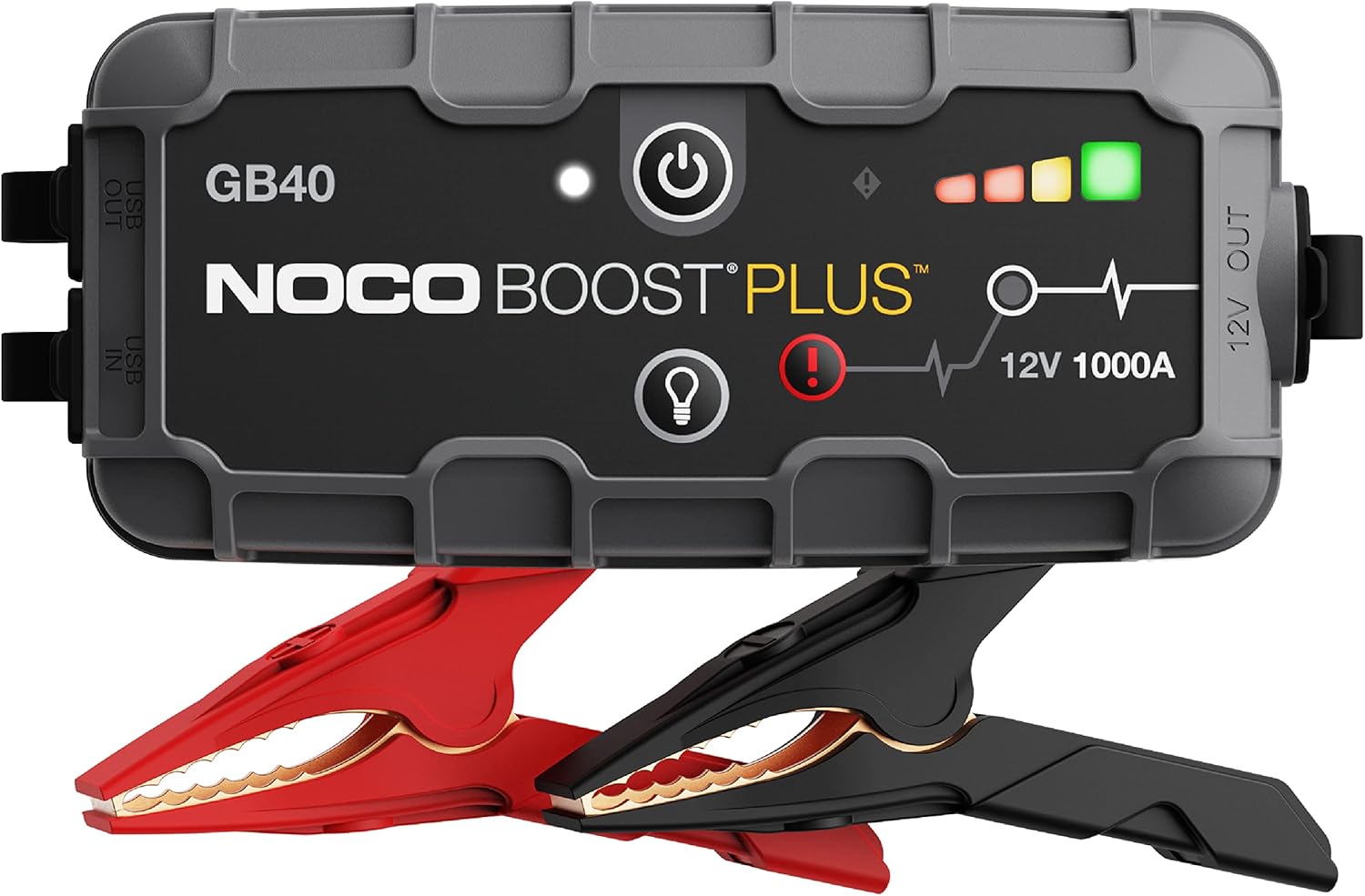
NOCO Boost Plus GB40 Jump Starter
A 1000A lithium jump starter that fits in your glovebox and works on any 12V battery. Your insurance against a dead 12V in a parking lot.
As an Amazon Associate, ThinkEV earns from qualifying purchases — at no extra cost to you.
If you are new to EV ownership, start with the First EV Canada Complete Buying Guide before planning your first road trip, understanding your specific vehicle's charging curve and real-world range will make everything in this guide land more concretely. You can also compare EVs by range and charging speed to find the right vehicle for the routes you plan to drive.
The Cost Breakdown: What EV Road Tripping Actually Costs
Gas car drivers want to know one thing: is EV charging actually cheaper on a road trip?
The answer is: sometimes yes, sometimes slightly less yes, and almost never no, depending on the network and your home charging habits.
DC fast charging costs in Canada (2026):
A typical DC fast charge from 20-80% costs $15-25 depending on the network, the charging speed, and whether you are paying per kWh or per minute. Most modern networks have shifted to per-kWh pricing, which is more transparent and consistent.
On a full cross-country drive (say, Toronto to Vancouver, roughly 4,400 km), expect 8-12 fast charging stops at $15-25 each. Total charging cost: $150-300. A comparable gas car getting 9L/100km at $1.60/litre costs $630-700 in fuel for the same route. The EV is still cheaper, often significantly so.
Where fast charging costs spike: some rural stations, particularly those on networks with limited competition or high installation costs, charge a premium per-minute rate that can push a fill-up to $30-35. Knowing the pricing structure of each network in your planning stage avoids surprises.
Where EV road trips have hidden costs gas cars do not: the time cost. A 25-minute fast charging stop four times per day adds 100 minutes to your driving day. Across a 5-day road trip, that is 500 minutes, just over 8 hours. That is real, and it is part of the honest calculation.
For drivers who find flow and enjoyment in the journey rather than just the destination, that time is not lost, it is coffee, scenery, and conversation. For drivers on a tight schedule, it requires honest trip planning.
Understanding per-kWh vs per-minute pricing: This distinction matters more than most new EV drivers realise. Per-kWh pricing means you pay for the energy you actually receive, it is predictable and fair. Per-minute pricing favours vehicles with higher charge acceptance rates and penalises those that charge more slowly, particularly at higher states of charge. A vehicle charging at 50 kW on a 150 kW charger pays the same per-minute rate as a vehicle pulling 150 kW. If you drive a vehicle with a lower peak charging rate, per-minute pricing at high-power stations can be surprisingly expensive. Check the pricing structure on PlugShare or each network's app before committing to a stop.
The idle fee issue: Most public charging networks now charge idle fees when a vehicle sits plugged in at a full-power charger after charging is complete, typically $1-2 per minute after a 5-minute grace period. This is legitimate incentive to move promptly, and it is part of the social contract of public fast charging. Set a timer when you walk away from the car and come back with a minute or two to spare.
Membership discounts: ChargePoint, FLO, and Electrify Canada all offer subscription plans that reduce per-session costs for frequent users. If you road trip multiple times per year, the monthly fee pays for itself quickly. FLO's member pricing is particularly strong in Quebec and Ontario where the network density is highest.
Winter Road Trip Tips: The Rules Are Different
Winter road tripping in an EV is not for the unplanned. It is, however, very doable, Canadians do it routinely, including in Manitoba at -30°C.
The core challenge: lithium-ion batteries lose efficiency in cold temperatures. The chemistry slows down. A battery that delivers 400 km in September may deliver 280-300 km in January, all else being equal. That 25-30% range reduction is not degradation, it is physics, and it reverses when the battery warms up.
Pre-condition the battery: Every modern EV allows you to pre-condition the battery while still plugged in at home or at a charger. Set a departure time and let the car warm the battery to optimal temperature before you leave. This alone recovers 30-50 km of real-world winter range.
Keep the cabin comfortable without draining range: The heating system is the biggest range consumer in winter. Heated seats and heated steering wheel use far less energy than blasting the climate control. Use them. Set the cabin temperature to a moderate level rather than tropical, especially on longer segments between chargers.
Charge more frequently, not less: In winter, the strategy that kills range anxiety is charging to higher state of charge at each stop and taking more stops. Charging to 90% instead of 80% in winter conditions is smart risk management, not range anxiety.
Plan for slower charging speeds in cold: Cold batteries accept charge more slowly. A station rated at 150 kW may deliver 60-80 kW to a cold battery in January. Your charging stop will be longer. Account for this in your timing.
Specific winter corridor advice:
- Calgary to Vancouver in January: the Kicking Horse Pass and Rogers Pass segments are beautiful and manageable, but arrive at charging stops with 25-30% minimum rather than the 15-20% minimum you might use in summer.
- Toronto to Montreal in February: the 401 corridor is well-heated (figuratively) by charger density, but wind chill on the flat prairie-like sections west of Kingston genuinely affects range.
- Halifax to Moncton in winter: doable, but add one extra stop compared to your summer plan.
Wind matters too. A headwind at highway speed in winter compounds range reduction, if the forecast shows sustained headwinds, build extra buffer into your charge planning for that day.
Regenerative braking is your friend in winter: In cold conditions, regenerative braking is more effective at recovering energy than it would be in summer, partly because you are using it more in traffic and hilly terrain. Some vehicles allow you to increase regenerative braking strength, do it in winter. One-pedal driving in cold weather gives back a small but meaningful amount of energy over the course of a long drive.
Be realistic about range on day one of a winter trip: The first morning of a winter road trip, your battery is cold even after pre-conditioning if it was sitting in a cold garage overnight. The battery management system will typically limit charging rate and discharge rate slightly until the battery reaches optimal operating temperature, usually within the first 20-30 km of driving. Your effective range for the first segment of day one will be slightly lower than subsequent segments after the battery has warmed. Factor this in when planning your first stop of each day.
Battery preheating when approaching a fast charger: Modern EVs, particularly newer models from Hyundai, Kia, Tesla, and Volkswagen, will automatically preheat the battery when you handle to a fast charging location. Make sure to use your vehicle's built-in navigation to route to your charging stops rather than a third-party app, so the car knows to start preheating. Arriving at a charger with a pre-warmed battery can cut your charging stop time by 10-15 minutes in cold conditions. That adds up over a multi-day trip.
Portable Charging as Your Road Trip Backup
A portable Level 2 EVSE is not glamorous road trip equipment. It is insurance.
The scenario: you arrive at a fast charger that is down, the next nearest fast charger is 80 km away, and you have 40% battery. A portable Level 2 charger and a campground, RV park, or hotel with a NEMA 14-50 outlet can solve this problem overnight.
RV parks and campgrounds across Canada almost universally have NEMA 14-50 outlets, they exist for RV hookups, and they deliver approximately 30-50 km of range per hour of charging for most EVs. Pull into a campground at 30% in the evening and leave at 80-90% in the morning. Problem solved.
Gear worth having
As an Amazon Associate, ThinkEV earns a small commission from qualifying purchases — at no extra cost to you.

Roadside Emergency Safety Kit
Jumper cables, a portable air compressor, tow strap, first aid, and more for when something goes wrong between chargers. Canadian winters do not forgive the unprepared.
As an Amazon Associate, ThinkEV earns from qualifying purchases — at no extra cost to you.
The practical reality for road tripping: bring the portable EVSE, not because you plan to use it, but because its presence converts a potential trip-ending situation into a minor overnight inconvenience. The 5 kilometres of cargo space it takes up is worth it.
Hotels with EV charging have expanded significantly in 2026, but do not rely on hotel charging for fast top-ups, most hotel chargers are Level 2 at 7-10 kW, which means a useful overnight charge but not a fast turnaround.
NEMA 14-50 vs NEMA 5-15: NEMA 14-50 (the dryer outlet standard) delivers approximately 30-50 km per hour and is what you want at an RV park. NEMA 5-15 (standard household outlet) delivers a painful 6-8 km per hour and is genuinely emergency-only on a road trip. Know the difference before you plug in.
How to find NEMA 14-50 outlets on your route: PlugShare has a filter specifically for campground and RV park charging, including NEMA 14-50 outlets. KOA campgrounds across Canada have expanded their EV charging hookups significantly in the past two years, they are a reliable fallback option and easy to find on the KOA app. Many provincial and national park campgrounds have also added or upgraded electrical hookups, though power delivery at older campgrounds may be limited to 30-amp service (NEMA TT-30 at 24A, roughly 20-25 km/hour for most EVs).
The campground charging strategy also opens up a different kind of road trip experience. Rather than optimising for pure speed, you park for the night, wake up to a full charge, and leave at whatever pace suits you. For anyone who enjoys camping or glamping, an EV road trip combined with campground stays is genuinely one of the better arguments for EV ownership, cheaper accommodation than hotels, full charge every morning, and no gas station anxiety whatsoever.
Apps that list NEMA 14-50 access: PlugShare (filter by outlet type), Open Charge Map, ChargeHub, and the KOA app for campground-specific access. The ThinkEV Charging Map at map.thinkev.ca also surfaces campground charging locations relevant to Canadian routes.
The Verdict by Route
Toronto to Montreal
Verdict: Highly viable. Excellent charging infrastructure.
This is the easiest major EV road trip corridor in Canada. Charger density along Highway 401 is strong. Multiple competing networks (Tesla Supercharger, Electrify Canada, ChargePoint, FLO, Petro-Canada RESS) mean redundancy at almost every stop. A long-range EV can make this trip in a single day with two to three 20-25 minute stops.
Winter consideration: manageable with standard cold-weather planning. The corridor is flat and well-served enough that winter range reduction does not create meaningful anxiety.
Recommended apps: PlugShare for real-time status, ChargePoint for broad network access.
Route highlight: Kingston is a good midpoint stop, charge up, grab food from one of the restaurants near the charger, and you land in Montreal refreshed rather than stressed.
Calgary to Vancouver
Verdict: Viable with attentive planning around mountain segments.
The southern BC corridor via Highway 1 is road-trip ready in 2026, but it demands more respect than the 401. The mountain passes are scenically spectacular and practically challenging for range. Charge to 80-90% before entering each major pass segment.
Tesla Superchargers along this corridor changed the game for non-Tesla drivers who now have access to the highest-reliability network on this route. Combined with BC Hydro EV fast chargers and Electrify Canada, the Golden-Revelstoke-Kamloops-Hope stretch has real redundancy.
Winter consideration: this corridor in January or February requires genuine winter EV road trip preparation. Not for first-timers without solid planning.
Recommended apps: PlugShare (essential for pass segments), Tesla app even for non-Tesla vehicles for Supercharger access.
Halifax to Montreal
Verdict: Viable with a slightly thinner margin than the 401 corridor.
The Halifax to Montreal route through Moncton and Quebec City is completable in 2026, but it asks more of your planning than the 401 does. Some segments in New Brunswick and the approach to Quebec have longer inter-charger gaps.
The infrastructure here is growing faster than any other Maritime corridor, ZEVIP has specifically targeted this route. In 2026 you are looking at a route that is viable but demands that you know your vehicle's real-world range rather than assuming manufacturer estimates.
Plan for 20-25% battery arrival at each stop, not the 10-15% that experienced EV road trippers use on denser corridors.
Winter consideration: New Brunswick in winter adds range reduction on top of already longer inter-charger gaps. Charge to higher state of charge at every stop.
Winnipeg to Thunder Bay
Verdict: Requires specific preparation, not recommended for first-time EV road trips.
This is the honest outlier. The Winnipeg to Thunder Bay corridor, particularly the Northern Ontario segment, has the thinnest fast-charger coverage of any major Canadian route. It is completable in a long-range EV with careful planning and a portable Level 2 charger as backup, but the margin for error is small.
Vehicle requirement: 400-plus km of rated range minimum. In winter, that real-world range may drop to 260-300 km in cold conditions, which puts genuine pressure on some inter-charger segments.
The situation is improving, this corridor is a priority for federal and provincial investment, but it is not there yet in 2026. If this route is necessary for you, research every charging station on PlugShare the night before each day of driving, verify check-ins, and have a backup plan.
Recommended apps: PlugShare with downloaded offline maps (cellular coverage in stretches of Northern Ontario is also limited).
Gear worth having
As an Amazon Associate, ThinkEV earns a small commission from qualifying purchases — at no extra cost to you.

Grizzl-E Classic Level 2 EV Charger (40A)
Canadian-made and rated for minus 40C winters. 40A / 9.6 kW, NEMA 14-50, indoor/outdoor, 24-ft cable. The charger built for Canadian weather.
As an Amazon Associate, ThinkEV earns from qualifying purchases — at no extra cost to you.
FAQ
Related Reading
-
BYD 1.5MW Flash Charging, What It Actually Means for Canadian Road Trips in 2026
-
How to Plan an EV Road Trip Across Canada Without Range Anxiety
-
Workplace EV Charging in Canada: The Complete Employer Guide for 2026 If you found this guide useful, these will help you go deeper on specific aspects of Canadian EV ownership:
-
First EV Canada Complete Buying Guide 2026, Everything you need to know before buying your first EV in Canada, including range, charging, and incentives
-
ThinkEV Charging Map, Plan your route with real-time Canadian charging data
-
Compare EVs by Range and Charging Speed, Find the right vehicle for the routes you actually drive
The bottom line for 2026: Canada's EV charging network has crossed the threshold from "possible for early adopters" to "viable for anyone willing to plan." The major southern corridors are ready. The gaps are real but known. And the infrastructure investment currently underway means the hard parts of today's network will look very different by 2028.
Plan the trip. Check PlugShare. Bring the portable charger. Drive it.
Gear worth having
As an Amazon Associate, ThinkEV earns a small commission from qualifying purchases — at no extra cost to you.

Foldable Waterproof Trunk Organizer
Three waterproof compartments that keep groceries and gear upright, then collapse flat when you need the space.
As an Amazon Associate, ThinkEV earns from qualifying purchases — at no extra cost to you.

Founder & Chief Editor
Vlad Pereira is the founder and chief editor of ThinkEV.ca, the Canadian electric-vehicle publication he writes and edits from Courtenay, British Columbia. He covers EV pricing, federal and provincial rebates, charging costs, and the Chinese manufacturers now entering Canada, from the buyer's side rather than the press-fleet side. ThinkEV is a venture of Vlad Pereira Online; his writing on health, income and the long game lives at vladpereira.com.
Frequently asked questions
Can I road trip across Canada in an EV in 2026?
How long does it take to charge on a road trip?
What apps do I need for EV road tripping in Canada?
Does cold weather really affect EV road trips that much?
How much does EV road tripping cost compared to a gas car?
More EV & road-trip finds
Affordable upgrades worth a look — tap any to check the price on Amazon.
 ★ 4,055
6-Speed Manual Shift Knob Display
View on Amazon ★ 12,396
K KNODEL Car Trash Can with Lid
View on Amazon ★ 1,944
VIOFO A229 Pro 4K Dash Cam
View on Amazon ★ 87
★ 87Car Window Sun Shades for Kids (4-Pack)
View on Amazon ★ 17,839
Qifutan Vent Phone Mount (Military-Grade Clip)
View on Amazon ★ 47,507
HOMEXCEL Microfiber Cloths (12-Pack)
View on Amazon ★ 164
★ 164Solar-Powered LED Ambient Light
View on Amazon ★ 4,626
HoogaLife Hanging Car Diffuser (2-Pack)
View on AmazonRead, Plan, Then Stay Current
Explore our expert articles to understand incentives and ownership costs, use the map to pressure-test charging reality, then subscribe so new EV coverage comes straight to you.
Continue Reading
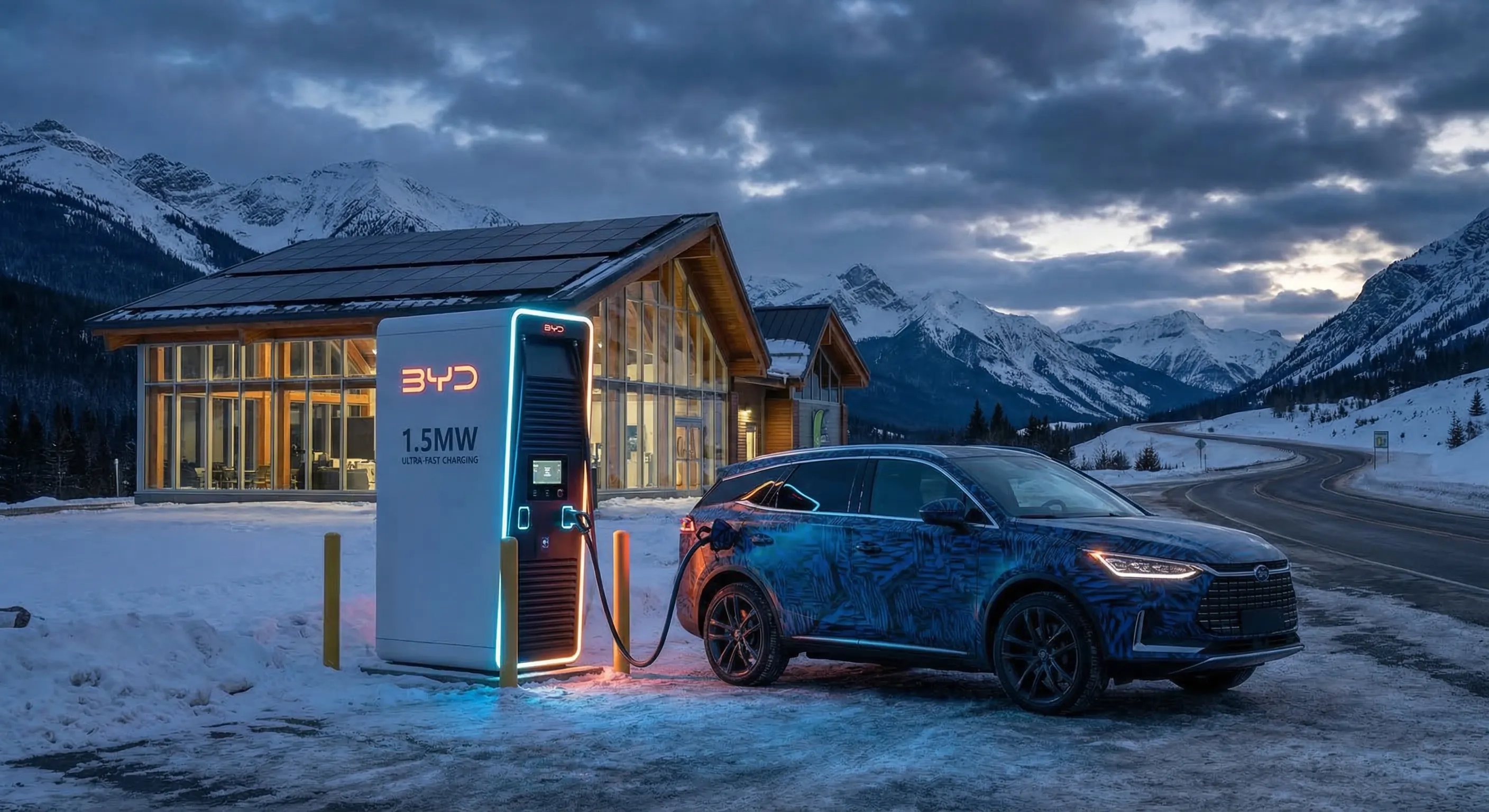
BYD 1.5MW Charging Canada: 400 km in Five Minutes
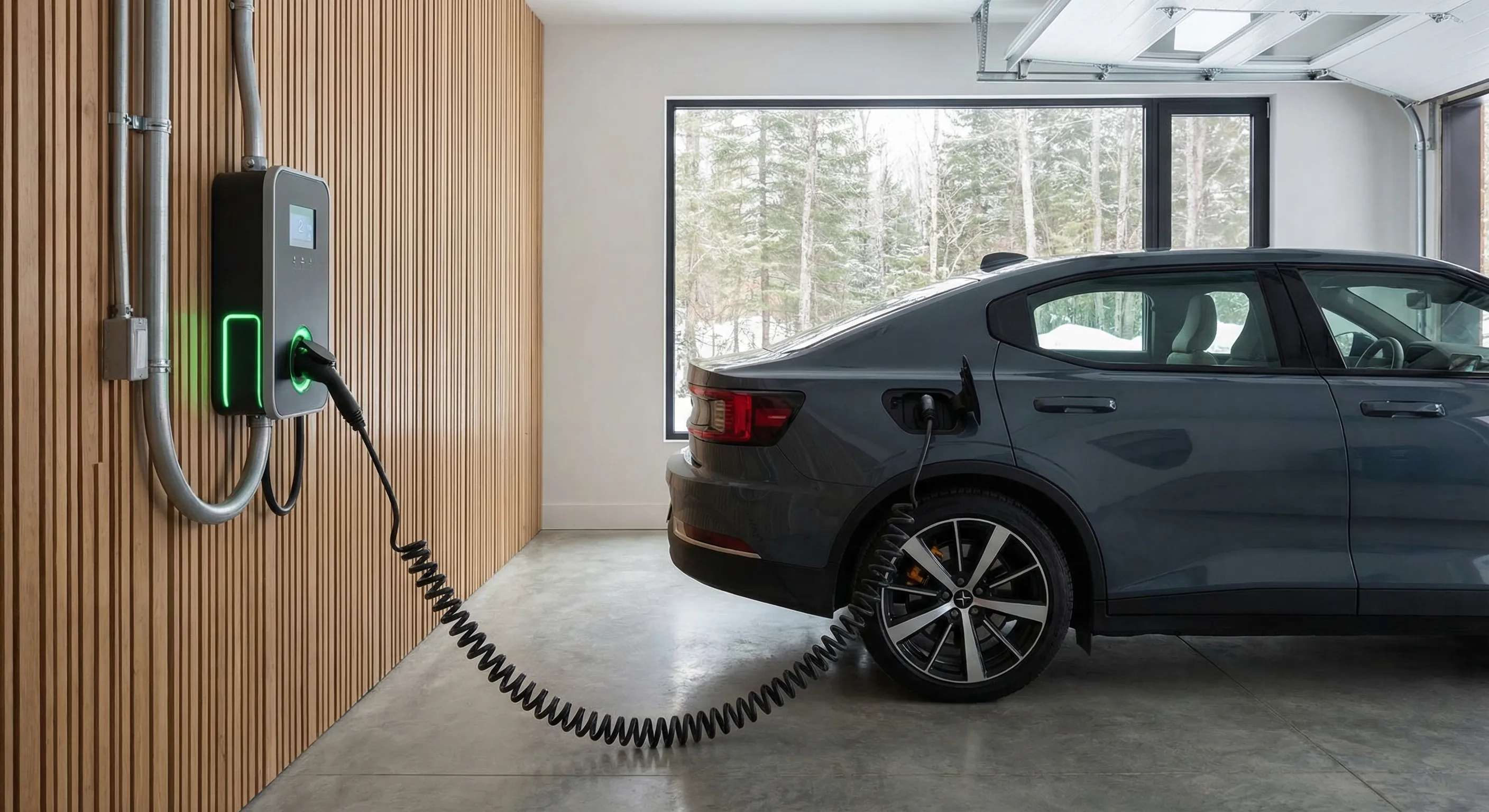
Best Level 2 EV Charger Canada 2026: Tested, Ranked
The Best Electric SUVs in Canada (2026): Ranked by Value

Should I Wait for BYD to Come to Canada?
EV Battery Warranty Canada: 8 Years, 160,000 km