Ford's five-model European product plan through 2029 is a regulatory pivot, not a product renaissance, and the distinction matters because regulatory pivots are reversible in ways product strategies are not. The trigger event is the one the press release buries: BYD sold 4.6 million vehicles globally over the same period that Ford sold roughly 2.2 million, climbing to sixth in the rankings of global car manufacturers. That is the first time a Chinese OEM has outsold Ford on a global basis, and it landed in the same calendar window that the European Commission's countervailing duties on Chinese EVs went into force.
Read in that sequence, the Fiesta revival and the Europe-only Bronco derivative are not signs that Ford rediscovered its European soul. They are the rational response of a US carmaker that watched a tariff window open in the segment it had just vacated, and that now has to commit capex against a compliance clock, UK ZEV mandate volumes, EU CO2 fleet averages, and a tariff regime whose duration is set by a WTO dispute panel rather than by Ford's product cadence.
Key takeaways
- BYD sold 4.6 million vehicles globally vs. Ford's 2.2 million, the first time a Chinese OEM outsold Ford worldwide.
- Ford exited Europe's high-volume A/B small-car segment, then watched BYD, MG, and Chery occupy that exact vacuum.
- EU countervailing duties stack BYD at ~27% and SAIC at ~45.3% on top of the existing 10% MFN tariff, that gap is Ford's opening.
- BYD's Szeged, Hungary plant began production in 2025; once it meets EU local-content thresholds those cars are tariff-free, closing Ford's window before 2029.
- Ford is sourcing its sub-€25,000 European EVs from Renault's AmpR Small platform, the same architecture under the Renault 5 E-Tech, cutting time-to-market by roughly 30 months.
How BYD Outsold Ford and What the Numbers Actually Show
The 4.6 million versus 2.2 million headline is accurate but compressed. The geographic distribution is the part that explains Ford's European response. Although Ford's sales rose 6% to over 2.2 million vehicles in the US last year, it struggled in other key global markets, including Europe and China. The US growth masked a structural deterioration on two continents simultaneously, and the deterioration on the European side is what made the announced product plan unavoidable.
The mechanism by which Ford lost European share is documented in the same trade press that is now covering the comeback. Ford pared back its offering in the region due to slowing demand to focus on more profitable areas of the fiercely competitive market. This included pulling out of the small car segment once dominated by the Fiesta. It lost market share to BYD, SAIC-owned MG and other Chinese brands that have rapidly increased sales with affordable EV and hybrid offerings. The sequence, exit, vacuum, Chinese-entrant occupation, is the precondition for understanding why Ford is now committing to re-entry rather than further consolidation.
The case against reading this as structural collapse is worth airing. A 2.2-million-unit US base is still the most profitable single-market position any volume OEM holds outside China; F-150 and Super Duty margins subsidise the entire Ford balance sheet, and the European loss is, in absolute capital terms, a rounding error against North American truck profitability. The rebuttal is that mandate exposure does not respect cross-subsidy. A US truck profit pool cannot be wired into a UK ZEV mandate scorecard or an EU CO2 fleet average, those are jurisdiction-bound compliance instruments, and a manufacturer that cannot register enough European EVs to satisfy them pays the penalty regardless of how much it earned in Dearborn. The European loss is small in dollars and unforgiving in compliance arithmetic.
The segment Ford abandoned is also the segment with the lowest EV penetration in Europe and the highest unit volume. The A/B segment, small hatchbacks and superminis, is where European fleet-average CO2 compliance math gets decided, because every gram of CO2 above the target is a fine multiplied by total registered units, and the small-car segment registers more units than any other. Walking away from A/B segment volumes meant Ford could neither offset its larger-vehicle CO2 emissions nor capture the entry-level customer pipeline that feeds future trade-ups.
The Chinese OEMs that filled the vacuum did not arrive with a single product. BYD entered with the Dolphin and Atto 3; SAIC's MG arrived with the MG4. Chery, Great Wall, and Leapmotor (now distributed by Stellantis) followed. By the time Ford registered the scale of the share loss, the European A/B EV segment had a half-dozen credible Chinese entrants with three-year head starts. BYD's broader European expansion play, including takeover talks for legacy plants is the strategic context the Ford announcement sits inside.
The 2025 ranking shift matters editorially, not just commercially. When a Chinese OEM passes a Detroit OEM on global volume for the first time, every European trade ministry recalibrates its tariff calculus, every CFO at a legacy automaker recalibrates its capex priorities, and every regulatory department recalibrates its mandate-compliance assumptions. Ford's five-model plan reads as the output of that recalibration, not as the input.
The EU Tariff Regime That Changed Ford's Calculus
The European Commission's countervailing duty (CVD) investigation into Chinese battery-electric vehicles ran from October 2023 through October 2024, and the final duties took effect on top of the existing 10% most-favoured-nation (MFN) tariff that applies to all passenger cars imported into the EU from outside its preferential-trade network. The duties were calibrated per manufacturer based on cooperation with the investigation and assessed levels of state subsidy. BYD received the lowest rate at 17.0% (the figure was adjusted from the provisional 17.4% in the final determination); SAIC received the highest at 35.3% as a non-cooperating party in the Commission's terms. Stacked with the 10% MFN tariff, BYD's effective landed tariff sits around 27%, and SAIC's around 45.3%.
That is the gap Ford is targeting. A Chinese-built EV that lands in Rotterdam with a 27–45% effective tariff overhead has either to absorb the duty in margin, pass it through in price, or relocate production inside the EU customs union. All three responses take time. The window between "tariff goes live" and "Chinese OEM produces tariff-free inside Europe" is the period in which European OEMs can re-enter abandoned segments without facing the price competition that drove them out.
Ford's five-model plan is dated to that window. The Financial Times' coverage frames the announcement explicitly in this register: US carmaker to launch five new vehicles in the region as part of efforts to reclaim sales lost to Chinese rivals. "Reclaim sales lost to Chinese rivals" is not a marketing line, it is the regulatory thesis, restated.
The structural problem is that the tariff window has a known expiry-date function, even though the specific date is not yet set. China filed a WTO challenge to the EU duties in late 2024. WTO dispute panels typically deliver initial rulings in 12–18 months, with appellate processes extending another 12 months. If the panel rules in favour of China on key methodological grounds, particularly around the Commission's subsidy-quantification methodology, the duties either get reduced or removed on appeal. Ford's capex commitments arrive 2027–2029. The duties could be partially unwound before the five models reach full European distribution.
The second mechanism that closes the window is investment-led: Chinese OEMs that build inside the EU pay no tariff. BYD's Szeged, Hungary plant began production in 2025, vehicles assembled in Hungary are EU-origin under rules-of-origin tests once local content thresholds are met, and tariff-free. Every BYD vehicle that rolls off Szeged is a unit Ford's new models will compete against on a level tariff playing field, not a sheltered one.
The CEO-level framing matches the regulatory reading. After it was outsold by China's BYD globally for the first time last year, CEO Jim Farley said Ford "isn't backing away from EVs." It's betting on more affordable models that will start at around $30,000. Translating "$30,000 starting price" into the European A/B segment context means landing models below the €30,000 mark, which is where the Chinese entrants sit and where the volume actually exists.
The named comparison that clarifies the price ceiling is Stellantis's Leapmotor T03, which entered European retail at approximately €18,900 in early 2025, produced through a Stellantis-Leapmotor joint venture that uses Stellantis European plants to sidestep the CVD entirely. The T03 sets a floor: any Ford A-segment city car priced above roughly €22,000 will be benchmarked against a Chinese-engineered, European-assembled rival that already cleared homologation and dealer-network distribution two years before the Fiesta successor arrives. The Renault 5 E-Tech, launched at €25,000, sits at the upper end of the same band. Ford's pricing window for the Renault-platform B-segment hatch is the corridor between those two anchors, and it is narrower than the marketing language suggests.
Gear worth having
As an Amazon Associate, ThinkEV earns a small commission from qualifying purchases — at no extra cost to you.

Magnetic Windshield Snow Cover
Skip the scraping. Magnets hold it on, peel it off with the snow, and your defroster stops draining range on cold mornings.
As an Amazon Associate, ThinkEV earns from qualifying purchases — at no extra cost to you.
Multi-Jurisdiction Table: How Ford's Exposure Differs by Market
The same Ford product lineup translates into different exposure profiles across the four major markets the company sells into. The table below summarises the tariff and mandate regime per jurisdiction and the implication for Ford's strategy.
| Market | Chinese-EV tariff regime (2026) | EV mandate / compliance clock | Ford strategic response |
|---|---|---|---|
| EU (excl. UK) | 10% MFN + CVD (BYD 17.0%, SAIC 35.3%); WTO challenge pending | CO2 fleet average tightening 2025–2030; phase-out ICE new sales 2035 | Five new models by 2029; Fiesta successor, Bronco-derived crossover, Renault-platform EVs |
| United Kingdom | Aligned with EU post-Brexit on tariff treatment; separate ZEV mandate | ZEV mandate: 28% EV share 2025, scaling to 80% by 2030 | Same five models; hybrid variants as compliance bridge |
| Canada | 100% surtax reduced to 6.1% Jan 16 2026 under 49,000-vehicle quota; Chinese EVs excluded from EVAP | Federal ZEV mandate 20% 2026, 60% 2030, 100% 2035 (under review) | No re-entry of small-car segment signalled; F-150 Lightning and Mustang Mach-E remain core |
| United States | Section 301 + IRA-related tariff stack; effective rate >100% on most Chinese EVs | CAFE standards; state-level ZEV mandates (CARB states) | No European-segment models planned; Bronco family may be curtailed by tariff impact on imported components |
| China | N/A (domestic market) | NEV credit system; aggressive domestic competition | Minimal passenger-car footprint; no re-entry signalled |
Two cells in the table are worth unpacking. The Canadian row reflects a fundamentally different tariff regime from the EU one. Ottawa imposed a 100% surtax on Chinese-made EVs in October 2024 and reduced it to 6.1% on January 16, 2026, structured around a 49,000-vehicle annual quota. Chinese EVs remain excluded from the federal iZEV / EVAP rebate programme. That combination, modest tariff, hard quota, no rebate eligibility, produces a different competitive landscape from the EU's, and Ford's response in Canada (no announced small-car re-entry) reflects it.
The US row points at a different problem entirely. Aside from North America, Ford is rebuilding its passenger car lineup in Europe, with this upcoming member of the Bronco family representing a portion of the affordable car revival on the continent. Renault is also slated to build several fully electric cars for Ford, which should arrive by 2028. The same Bronco platform that anchors the European affordable revival faces a separate North American tariff calculus that may curtail derivative variants. Same vehicle architecture, two regulatory regimes, opposite strategic outcomes.
The UK row is the one with the tightest compliance clock. The UK ZEV mandate set a 28% EV share of new passenger-car sales as the 2025 target, scaling to 80% by 2030. Ford's hybrid-heavy interim lineup carries direct compliance risk, sales of non-EV variants count against the mandate denominator, and shortfalls are payable in cash penalties or tradeable credits purchased from BEV-pure competitors like Tesla and BYD. The five-model plan is not optional brand investment; it is the minimum capex required to keep mandate exposure inside a manageable band.
The counter-case from a UK industry trade body would run as follows: the ZEV mandate's flexibility mechanisms, credit borrowing from future years, CO2-to-ZEV conversion credits, multi-year averaging, substantially soften the headline percentages, and the Department for Transport has signalled willingness to revisit the trajectory if charging infrastructure or supply-chain pressures justify it. The rebuttal is that "willingness to revisit" is itself a planning risk Ford cannot underwrite. A capex commitment dated to 2027–2029 assumes a mandate trajectory; if the trajectory loosens, Ford has over-invested in EV capacity, and if it tightens, Ford has under-invested. The five-model plan is sized to the announced trajectory because no other reference point is available, not because the trajectory is certain.
The Renault Platform Deal: What Ford Is Actually Buying
Platform sourcing from Renault is the most consequential capex decision in the Ford European plan, and it is the part of the announcement that has received the least attention. There are two other new Fords in the pipeline, one being a long-awaited mid-size crossover – inspired by the Bronco Sport – to be built in Ford's Spanish factory. The second is another EV on the Renault electric platform, with the smart money on a small SUV. A Ford spin-off could provide the opportunity to revive the Ka name and attack the city car segment with Europe's favourite bodystyle.
The platform in question is Renault's AmpR Small, the architecture that underpins the Renault 5 E-Tech and the Renault 4 E-Tech. AmpR Small is designed to hit sub-€25,000 entry pricing in the European A/B segment, exactly the segment Ford abandoned and exactly the price point Chinese competitors hit with the BYD Dolphin and the MG4. Sourcing the platform rather than developing one from scratch compresses Ford's time-to-market by roughly 30 months and removes several billion euros of platform-development capex.
The strategic logic is unsentimental: Ford does not need to own a sub-€25K EV platform to sell sub-€25K EVs. It needs Renault to keep producing the platform, keep meeting safety and homologation standards, and keep the per-unit cost competitive. The risk transfer is from Ford's balance sheet to its supply chain contract, and the contract is denominated in a currency Ford has more experience managing than it has experience producing low-margin European small cars.
Gear worth having
As an Amazon Associate, ThinkEV earns a small commission from qualifying purchases — at no extra cost to you.

Lectron Level 2 J1772 Charger (40A, WiFi)
Smart WiFi charger with real-time energy monitoring. 40A / 9.6 kW, J1772 with a NEMA 14-50 plug, schedule charging right from your phone.
As an Amazon Associate, ThinkEV earns from qualifying purchases — at no extra cost to you.
The named precedent that should worry Ford's procurement office is the Stellantis-Mitsubishi ASX arrangement, in which Mitsubishi re-badged a Renault-built Captur and sold it across Europe with limited differentiation rights and almost no engineering autonomy. The arrangement worked commercially for Mitsubishi as a stopgap, but it left Mitsubishi without an independent A/B-segment competency when the contract terms shifted. Ford is now entering a structurally similar dependency relationship with the same supplier, on the same platform family, in the same segment. Differentiation will live almost entirely in the body, the tune, and the trim, not the underlying engineering. That is a viable position for one product cycle; whether it remains viable across two or three depends on Renault's willingness to keep extending platform access on commercial terms that work for both parties.
The second platform thread, a VW relationship for an additional EV, confirms the broader pattern. Ford is using its European product plan to convert capex risk into procurement risk. Five models, multiple platforms, multiple platform partners, single brand. The capital efficiency is real; the brand-coherence risk is a question for the marketing team that arrives in 2028.
The Top Gear coverage frames the product cadence in the register the trade press will pick up: Ford has been taking a long, hard look at itself in the mirror, and it has clearly decided that perhaps killing off the little Fiesta – which became the UK's best-selling car ever way back in 2014 – wasn't such a good idea. Ford has released its new product plan for the next few years in Europe, and that plan includes a B-segment hatchback that will "combine distinct design with Ford's signature driving dynamics". And it'll be electric. The "distinct design" and "signature driving dynamics" language is the brand-coherence promise that needs to survive the multi-platform sourcing reality.
Gear worth having
As an Amazon Associate, ThinkEV earns a small commission from qualifying purchases — at no extra cost to you.

PULIDIKI Car Cleaning Gel (Detailing Putty)
Press it into vents, buttons, and seams and it lifts out dust you did not know was there. Weirdly satisfying, genuinely useful.
As an Amazon Associate, ThinkEV earns from qualifying purchases — at no extra cost to you.
Fiesta and Bronco Europe: Segment Economics and Mandate Compliance Math
The Almussafes plant in Spain is Ford's announced production site for the Bronco-Sport-derived mid-size crossover. Almussafes is a strategic choice, the plant has spare capacity, an EU-origin manufacturing footprint that avoids the entire tariff conversation, and a labour cost structure that supports A/B-segment unit economics in a way Cologne or Dagenham would not.
Key structural facts shaping the Bronco-Europe and Fiesta bets:
- A/B-segment unit volumes drive EU fleet-average CO2 compliance more than any other segment.
- The Bronco nameplate carries no UK or EU brand equity, competition is on rational specification grounds only.
- The Fiesta nameplate carries the highest brand-recall score Ford retains in Europe.
- Hybrid registrations function as the mandate bridge between current EV mix and 2030 targets.
- UK ZEV mandate steps roughly 6–10 percentage points per year between 2025 and 2030.
The Bronco-Europe vehicle is not the Bronco. It is a smaller, Europe-tuned crossover that borrows the Bronco's design language and family identity for marketing equity. Ford's bet is that the Bronco brand carries enough recognition in European media coverage of US off-road culture to function as a differentiation lever in a crowded mid-size crossover segment dominated by the VW Tiguan, Hyundai Tucson, and a growing list of Chinese entrants. Whether brand-borrowing from a US nameplate works in European retail is an open question, the European mid-size crossover buyer has shown limited interest in importing US automotive culture wholesale.
The Autocar framing of the British market sharpens the brand problem. On these islands, the Blue Oval is associated not with big pick-ups or muscle cars but, depending on your vintage, Cortinas and Escorts, Fiestas and Focuses. Distinctly British-flavoured cars (and Transit vans) that were designed, engineered and often built here. The Bronco nameplate has none of that resonance. A European Bronco competes against the Dacia Bigster, the Skoda Karoq, and the upcoming BYD Atto 2 on rational specification grounds with no brand equity tailwind, the Bronco mythology is a North American property, and the trade press in the UK and France will price it accordingly. The marketing line carries less weight than Ford's product planners appear to assume.
The Fiesta successor is the higher-confidence product in the lineup. The Fiesta nameplate carries one of the strongest brand-recall scores in European volume markets, particularly the UK. The company is best-known for top-selling cars such as the Ford Fiesta and the Ford Focus, which remain among the most-driven vehicles on Britain's roads. Reviving the nameplate on an EV platform is the lowest-risk brand decision in the plan. The risk is execution, not positioning.
The Auto Express coverage spells out the broader product scope: the five-model plan covers most of the major European market segments with a mix of hybrid and electric models that complement the existing Explorer and Capri mid-sized electric SUVs, both of which are already based on Volkswagen's MEB platform. The hybrid inclusion is the compliance bridge. UK ZEV mandate share targets and EU CO2 fleet averages both penalise pure-ICE volumes, and hybrid registrations split the difference in a way that keeps Ford's fleet-average exposure manageable while pure-EV volumes ramp.
The mandate math is unforgiving. A UK ZEV mandate target of 28% EV share in 2025, rising by roughly 6–10 percentage points per year through 2030, means Ford has to grow its UK EV mix from low single digits to 80% in five years. Five new models is not "ambition" in that context. It is the minimum addressable product surface area required to register the mandated number of EV units. Depreciation patterns across the segment will matter for the residual values that underpin lease pricing, and the Canadian resale-value picture for Chinese EVs shows how rapidly market expectations adjust once Chinese brands establish a credible presence.
A second-order implication runs through the dealer network. Ford's UK dealer footprint was sized for Fiesta and Focus volumes that have since collapsed. Dealers carry floor-plan financing costs against the units they hold, and a multi-year stretch in which the Fiesta successor and the Bronco-derived crossover ramp slowly while hybrid Pumas carry the volume will compress dealer margins below the threshold at which a dealer can justify single-brand exclusivity. The risk is that Ford arrives at 2029 with the right five-model lineup and a thinned dealer network that no longer covers the postcodes where the volume lives. Stellantis confronted exactly this problem during its 2023–2024 UK network consolidation, and the resolution involved closing roughly 15% of franchised sites, a precedent Ford's UK leadership will be watching closely. The competitive segment context across the broader Chinese-brand wave in Canada carries the same dealer-economics signal in a different jurisdiction.
Structural Risk: Why the Tariff Window May Close Before Ford's Models Arrive
The plan's central risk is timing. Ford's models arrive across 2027, 2028, and 2029. Two clocks are running against that timeline.
The first is the WTO dispute. China formally challenged the EU CVDs at the WTO in October 2024. WTO dispute settlement panels typically deliver initial rulings in 12–18 months from panel composition, with appellate proceedings adding another 12 months. A timeline that ends in late 2027 or early 2028 is plausible. If the panel finds methodological flaws in the European Commission's subsidy quantification, and several elements of the methodology are contested even within EU member-state positions, the duties could be reduced or removed mid-Ford-launch.
The second clock is BYD's European manufacturing build-out. The Szeged plant in Hungary began production in 2025. Once Szeged ramps to full capacity, BYD's European-built vehicles face zero tariff and the same EU regulatory compliance burden as any European OEM. Stellantis facility takeover talks add additional EU-origin BYD capacity. By the time Ford's Fiesta successor reaches dealerships in 2027, the BYD vehicles it competes against could be Hungarian-built and tariff-free. The warranty and service framework for Chinese brands entering parallel jurisdictions gives a sense of how quickly the after-sales infrastructure follows the manufacturing footprint.
The capex asymmetry is the part editorial coverage tends to miss. Ford's investment is committed and irreversible, multi-platform tooling, Almussafes plant retooling, Renault supply contracts, dealer-network preparation. Tariff relief for Chinese OEMs costs the EU nothing to grant if a WTO ruling forces it; tariff-free EU production by BYD costs BYD a known capex against a known revenue model. Ford bears the entire downside risk of an adverse ruling or an accelerated Szeged ramp; the upside if the duties survive intact is a return to a market position it held two product cycles ago.
The compliance-clock risk runs parallel. EU CO2 fleet averages tighten further in 2027 and again in 2030. The Commission's 2035 phase-out of new internal-combustion passenger-car sales is under review, with several member states pushing for revisions, but the directional pressure remains. Ford's hybrid-bridge strategy assumes the regulatory glide path stays roughly where it is. A tightening, entirely possible under Commission majorities that have repeatedly favoured stricter standards, pulls the compliance deadline forward by 2–3 years, compressing the hybrid window into a narrow band.
The bull case from a Ford strategy office would push back on the timing pessimism. Even if WTO rulings partially unwind the CVDs, the Commission retains the ability to open fresh anti-dumping investigations on narrower product categories, and the political appetite in Brussels for protecting European automotive employment has, if anything, hardened since 2024. Tariff relief on appeal would likely be partial and slow, leaving Ford a working competitive corridor through at least 2028. The counter-rebuttal is that "partial and slow" is precisely the regime under which Chinese OEMs accelerate EU manufacturing investment, every month of tariff uncertainty makes a Szeged-style plant more rational, not less. The protective effect of the duties decays whether or not the duties themselves are formally reduced.
The BBC coverage captured the executive-level acknowledgement of the competitive reality bluntly. While Ford was attempting to move away from the mass market, Chinese firms such as BYD and Chery were moving in, and have now become a serious threat to established firms, and Ford's product chief insisted the company can still compete. The "still compete" framing is the polite executive translation of "we have one product cycle to prove this works."
Gear worth having
As an Amazon Associate, ThinkEV earns a small commission from qualifying purchases — at no extra cost to you.

WixGear Magnetic Air Vent Phone Mount (2-Pack)
A magnet strong enough that your phone never flinches over potholes or rail crossings. Two in the box, one for each car.
As an Amazon Associate, ThinkEV earns from qualifying purchases — at no extra cost to you.
Where the Plan Actually Stands
Ford's European plan reads as a competent regulatory response to a known set of compliance pressures and a known competitor cost structure. The Fiesta nameplate revival is the lowest-risk piece. The Renault platform sourcing is the most capital-efficient piece. The Bronco-Europe derivative is the riskiest brand bet. The hybrid hedging is the necessary compliance bridge.
What the plan is not is a brand renaissance. The same Ford that exited the European small-car segment because it was unprofitable is now re-entering it because the alternative, surrendering EU and UK mandate compliance to credit purchases from Tesla and BYD, is worse. The strategy is sound on its terms; the terms are set by tariff regimes whose duration Ford does not control.
The data points to watch through 2027: WTO panel composition and intermediate rulings on the China-EU CVD dispute, BYD Szeged production ramp against announced volume targets, UK ZEV mandate compliance scorecard publications (the Department for Transport now publishes by manufacturer), and EU member-state positions on the 2035 phase-out review. Any one of those moves significantly and Ford's Fiesta-and-Bronco arithmetic changes before the first new vehicle leaves Almussafes.
Three scenarios would materially alter the plan's arithmetic: a Renault decision to restrict Ford's AmpR Small allocation in favour of in-house Dacia volume (kills the price-point promise), a WTO interim ruling that signals partial CVD relief before late 2027 (compresses the tariff window past Ford's launch dates), or a UK government decision to soften the ZEV mandate trajectory by more than 5 percentage points in any single year (reduces the compliance penalty that makes the five-model spend rational). Absent those, the plan is internally coherent and externally fragile in roughly equal measure.
The highest-confidence outcome is the Fiesta successor on the Renault platform shipping on schedule and outperforming in the UK. The lowest-confidence outcome is five models intact by 2029, five-model plans rarely deliver five models, and one quiet cancellation before launch is the base-rate expectation as platform partners renegotiate. Three or four would still represent the most coherent European product strategy Ford has had this decade.
Gear worth having
As an Amazon Associate, ThinkEV earns a small commission from qualifying purchases — at no extra cost to you.
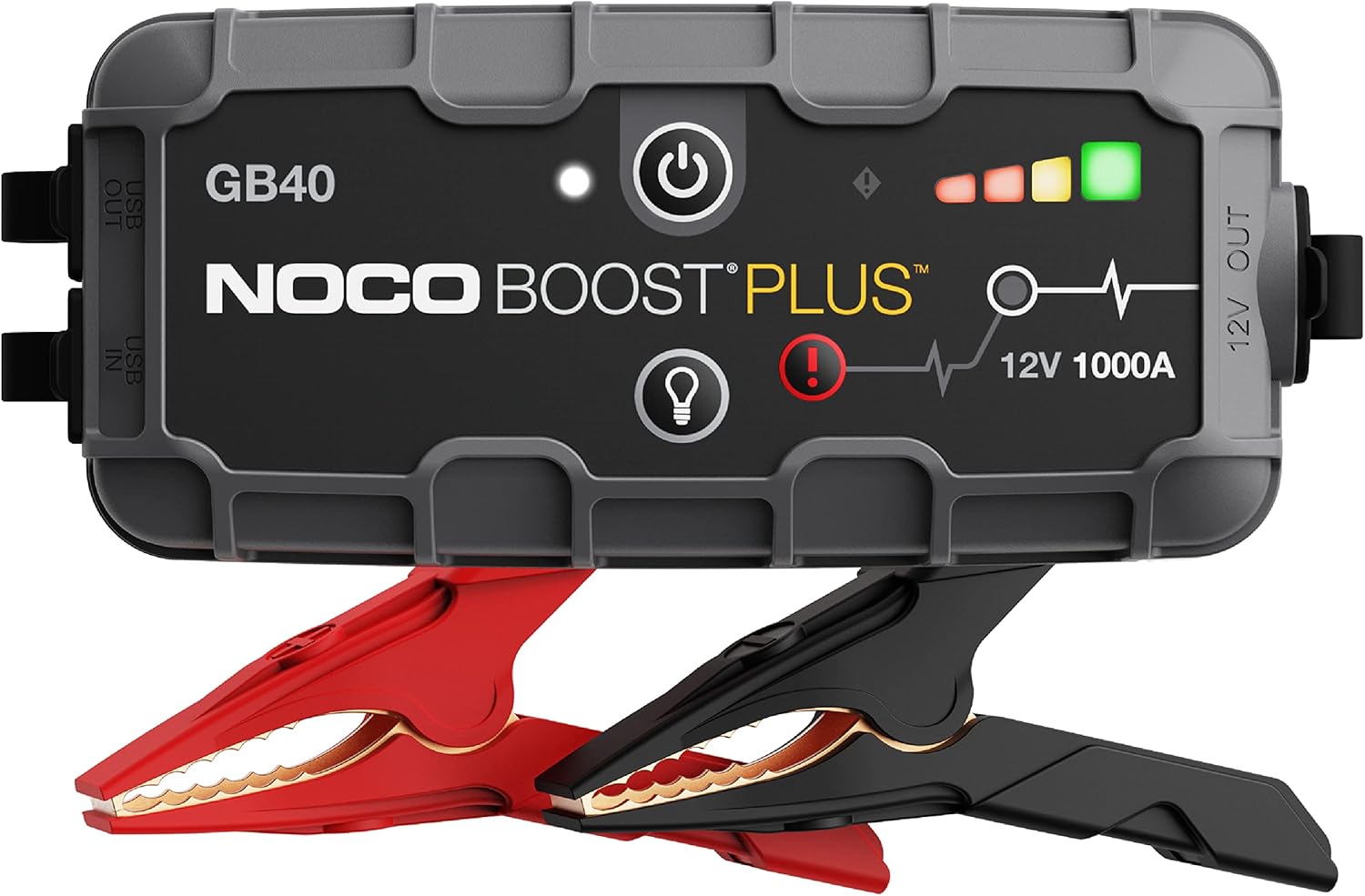
NOCO Boost Plus GB40 Jump Starter
A 1000A lithium jump starter that fits in your glovebox and works on any 12V battery. Your insurance against a dead 12V in a parking lot.
As an Amazon Associate, ThinkEV earns from qualifying purchases — at no extra cost to you.

Founder & Chief Editor
Vlad Pereira is the founder and chief editor of ThinkEV.ca, the Canadian electric-vehicle publication he writes and edits from Courtenay, British Columbia. He covers EV pricing, federal and provincial rebates, charging costs, and the Chinese manufacturers now entering Canada, from the buyer's side rather than the press-fleet side. ThinkEV is a venture of Vlad Pereira Online; his writing on health, income and the long game lives at vladpereira.com.
Frequently asked questions
Will Ford's new European models actually reach Canada?
What happens to these models if WTO strikes down EU tariffs?
Why didn't Ford just build EVs in Europe instead of leaving?
Is BYD's Hungary plant actually tariff-free yet?
What does the $30,000 starting price mean for European buyers?
More EV & road-trip finds
Affordable upgrades worth a look — tap any to check the price on Amazon.
 ★ 546
★ 546Funny Headrest Face Covers (2-Pack)
View on Amazon ★ 12,396
K KNODEL Car Trash Can with Lid
View on Amazon ★ 308
★ 308Coiled Lightning Car Cable for iPhone (2-Pack)
View on Amazon ★ 119
★ 119Foldable Waterproof Trunk Organizer
View on Amazon ★ 392
★ 392Large Cup Holder Adapter (32-40oz)
View on Amazon ★ 4,050
Touchscreen Mist Screen Cleaner Kit
View on Amazon ★ 314
★ 314Mini USB LED Ambient Lamps (4-Pack)
View on Amazon ★ 4,055
6-Speed Manual Shift Knob Display
View on AmazonRead, Plan, Then Stay Current
Explore our expert articles to understand incentives and ownership costs, use the map to pressure-test charging reality, then subscribe so new EV coverage comes straight to you.
Continue Reading
Chinese EVs in Canada: 15,603 In, Still No BYD

GM Recalls 2016–2017 Silverado, Sierra Over Airbag Defect
BYD's $4,000 Sealion 7 Cashback Targets Tesla Model Y

Mercedes Factory Closures: Two German Plants at Risk

Used EVs Just Passed UK Safety Tests Better Than Petrol