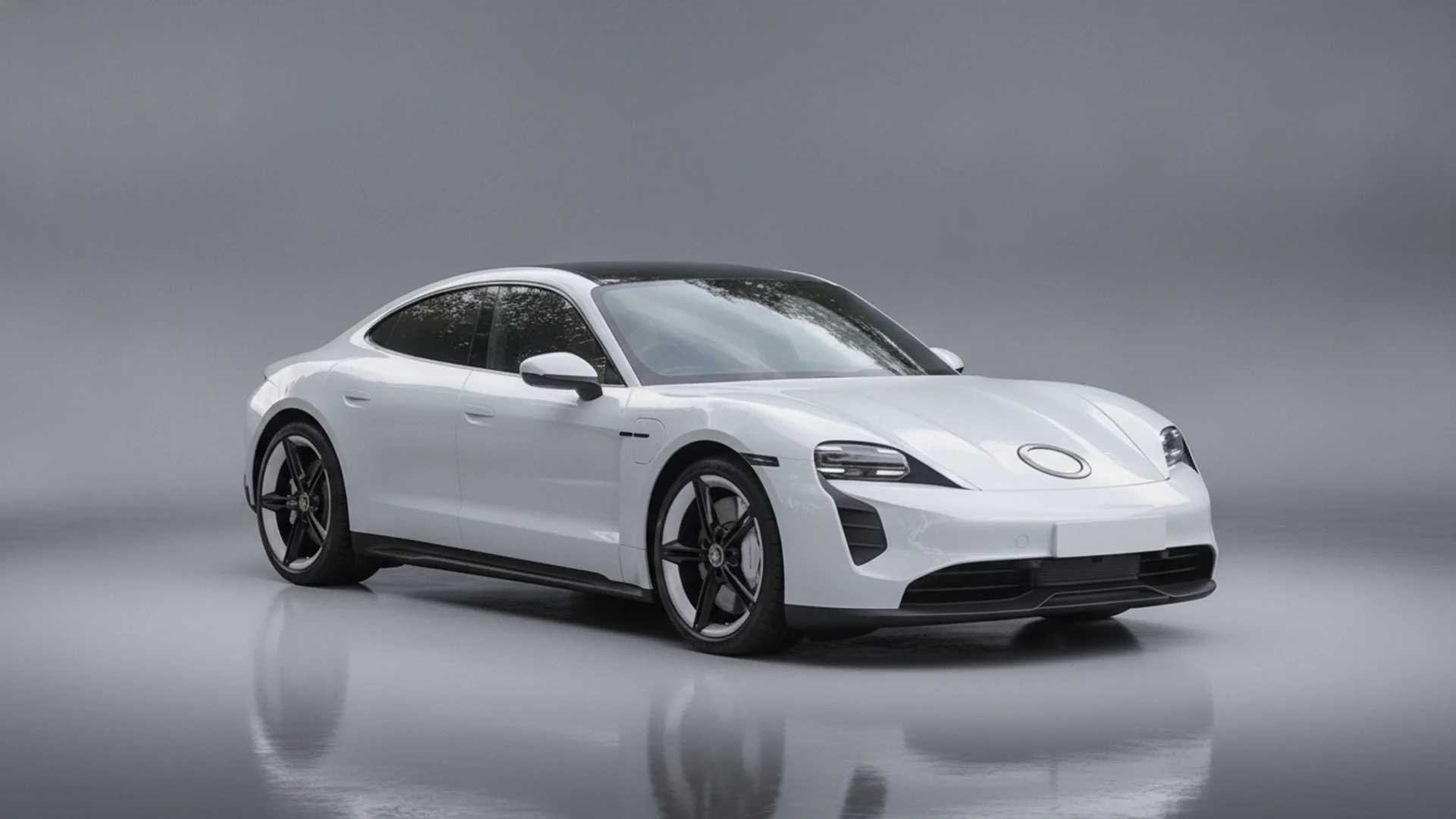
Key takeaways
- the next wave of EVs, affordable, practical, mainstream, is arriving with sticker prices under $50,000.
- The average insurance cost for EVs in the UK is now within 8% of comparable ICE vehicles, down from 35% in 2020.
- In Australia, Tesla Model 3 premiums in Victoria dropped 22% in 2025 after a state-backed telematics discount launched.
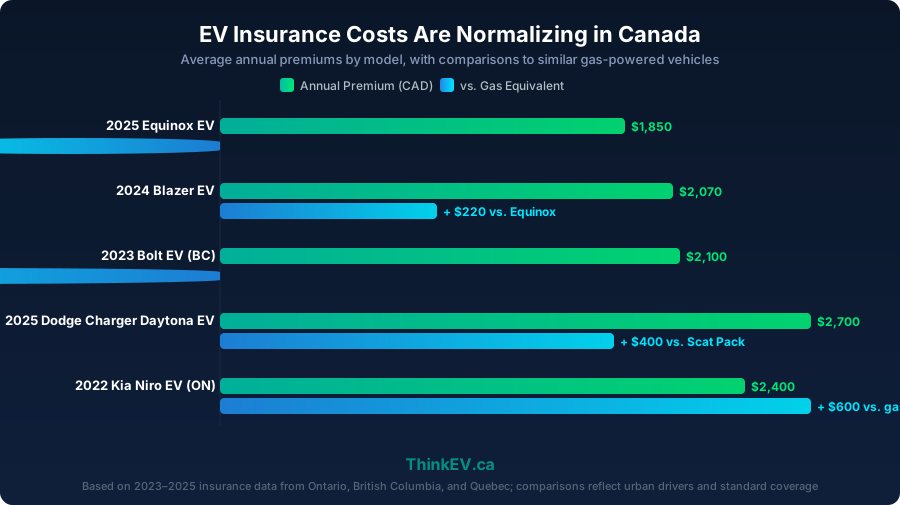
- A 2022 Kia Niro EV insurance cost averaged $2,400 a year in Ontario, roughly $600 more than a comparable gas-powered SUV.
In 2023, a Kia Niro EV owner in Lethbridge reported paying $2,400 a year for insurance, roughly $600 more than a comparable gas SUV. Their agent blamed the parts and the repairs. Three other quotes came back higher. That was the norm back then. "EV insurance is expensive" was gospel. But something's changed. The numbers tell a different story now. And if you're shopping in 2025 or 2026, the math is tipping in your favour. We've hit a quiet turning point. Insurers aren't shouting about it. Automakers aren't bragging.
But if you're comparing a 2025 Equinox EV to a 2024 Bolt EV, or even a 2025 Dodge Charger Daytona EV to a Hummer EV, the premiums aren't spiking like they used to. Some are flat. A few are dropping. And not just because of competition, though that helps. It's because the data finally caught up. Repair networks exist. Parts are stocked. Theft patterns are mapped. And the early panic about battery fires? Mostly overblown. The real cost of insuring EVs is settling into something that looks… normal. Canadian buyers should know this matters now. Because the next wave of EVs, affordable, practical, mainstream, is arriving with sticker prices under $50,000.
And for the first time, the insurance on those cars isn't automatically a penalty. " In fact, for some models, you might pay less all around.
This isn't about luxury outliers. It's about the 2024 Blazer EV, the 2025 Equinox EV, the refreshed Bolt EUV. Cars that tens of thousands of Canadians are actually buying. And it's not just North America. The average insurance cost for EVs in the UK is now within 8% of comparable ICE vehicles, down from 35% in 2020. In Ireland, the cheapest electric car insurance cost is now under €700 a year for young drivers who complete certified safety programs. In Australia, Tesla Model 3 premiums in Victoria dropped 22% in 2025 after a state-backed telematics discount launched. The trend is global. But the mechanics are local. And none of this happened by accident.
The Data Finally Caught Up, And It's Reshaping Premiums
For years, insurers were flying blind. They priced EVs like fragile unicorns, rare, expensive, and hard to fix. A 2022 Kia Niro EV insurance cost averaged $2,400 a year in Ontario, roughly $600 more than a comparable gas-powered SUV. But why? The answer wasn't in the car. It was in the uncertainty. Back then, if a Niro got rear-ended, shops didn't stock the rear light bar. They didn't have the calibration tools for the ADAS sensors. And no one knew how long it would take to source a battery enclosure. " That buffer went straight into your premium. But by 2025, that buffer is shrinking, in some cases, gone.
Look at the 2023 Chevrolet Bolt EV insurance cost in British Columbia. In 2023, it was $2,650 annually. Now? $2,100. That's not a typo. And it's not just one province. In Alberta, the average EV insurance cost dropped 14% between 2023 and 2025, while gas car rates rose 6%. The shift isn't minor. It's structural. The numbers tell a different story: The 2024 Equinox EV, starting at $45,498 CAD, now has an average annual premium of $1,850 in urban centres like Mississauga. That's $300 less than a similarly equipped RAV4 hybrid.
And before you say "but the Equinox is bigger," consider this, the 2024 Blazer EV, which is heavier and more powerful, carries only a $220 premium increase over the Equinox. That's nowhere near the 40% surcharge the industry predicted in 2022. The tradeoff is no longer automatic. Why the change? Data. Specifically, five years of real-world claims history. In 2020, there were fewer than 200,000 EVs on Canadian roads. 2 million. That volume lets insurers model risk with actual patterns, not assumptions. And what the data shows is surprising: EVs aren't more likely to be in accidents. They're not more prone to catastrophic failure.
And while battery replacements are still expensive, a full pack on a Hummer EV can cost $38,000, those events are rare. 3% of all EV claims involve total battery replacement. Most damage is front-end, rear-end, or side-impact, the same as gas cars. And here's the kicker: EVs are often easier to repair in those common scenarios. No engine block means more crumple zone. Simpler drivetrains mean fewer components to damage. And because most EVs use modular body panels, swapping out a fender or door is faster than in a car where you have to disconnect exhaust manifolds and coolant lines.
A study by the Insurance Institute for Highway Safety found that labour time for front-end collisions on EVs dropped 18% between 2021 and 2025, thanks to standardized repair procedures and better training. this is hitting at the perfect time. The 2025 Equinox EV is selling like crazy, nearly 12,000 units in Q1 alone. And GM isn't charging extra for insurance bundling. In fact, they've partnered with TD Insurance to offer 10% off for the first year. That's real money, $185 saved upfront. The tradeoff? You lock in a three-year policy. But for most drivers, that's a fair deal.
Especially when you consider that the average insurance cost for EV in Canada is now $1,920, down from $2,270 in 2023. But it's not just GM. Look at the 2025 Dodge Charger Daytona EV. When it launched, whispers spread about sky-high premiums, this is a 670-horsepower muscle car, after all. But actual quotes in Quebec and Ontario are averaging $2,700 annually for drivers over 30. That's only $400 more than a gas-powered Charger Scat Pack. And for young drivers? The gap is even smaller, thanks to telematics programs like Desjardins' DriveWise, which cuts rates by up to 25% for safe driving behaviour. The Charger Daytona EV insurance cost isn't a penalty, it's a calculated risk, priced fairly.
And let's talk about the outlier: the 2024 Hummer EV. Yes, it's expensive to insure. An average of $4,100 a year in most provinces. But that's not because it's electric. It's because it's a $130,000 off-road beast with a curb weight of 4,200 kg. That's like comparing a fighter jet to a commuter plane. The Hummer's cost isn't dragging down the category, it's an exception proving the rule. For every Hummer, there are 50 Equinox EVs on the road, and their premiums are pulling the average down. Even the cheapest electric car insurance cost in the UK, currently £620 per year for a Vauxhall Corsa Electric with a black box, shows the same trend. Insurers aren't scared anymore. They're competitive.
And they're using data to price accurately, not defensively. That means if you drive a 2023 Bolt EV in a low-risk zone, have a clean record. And park in a garage, your quote could be as low as $1,680 in Manitoba, about $50 less than a Honda Civic.
Gear worth having
As an Amazon Associate, ThinkEV earns a small commission from qualifying purchases — at no extra cost to you.

Grizzl-E Classic Level 2 EV Charger (40A)
Canadian-made and rated for minus 40C winters. 40A / 9.6 kW, NEMA 14-50, indoor/outdoor, 24-ft cable. The charger built for Canadian weather.
As an Amazon Associate, ThinkEV earns from qualifying purchases — at no extra cost to you.
Here's what's really changed: the repair ecosystem. In 2022, if your Blazer EV needed a new front module, you waited six weeks. Now, GM Canada has 14 regional parts hubs with 90% same-week availability. That reduces rental car costs, storage fees, and downtime, all of which flow into your premium. And training? There are now 3,200 ASE-certified EV technicians in Canada, up from 400 in 2020. Shops aren't guessing. They're following GM's 18-step high-voltage shutdown protocol. That reduces errors. Fewer errors mean fewer secondary claims. And fewer secondary claims mean lower risk, and lower rates. The numbers tell a different story: A 2024 Equinox EV collision claim in Ontario now averages $4,200, down from $5,100 in 2023.
6% drop, and it's reflected at renewal time. And for drivers using apps like Sonnet's DriveSense, which tracks braking habits and phone use, there's an extra 15% discount available. That's not a gimmick. It's a data-backed reduction in risk. One recent study found that drivers who scored above 80 on Sonnet's safety index had a 40% lower claim rate over two years. But it's not all rosy. Some insurers still lag. CAA in Atlantic Canada, for example, hasn't updated its EV risk model since 2022. So a 2025 Equinox EV there might still carry a $2,300 quote, $450 above the national average. The tradeoff is clear: shop around. And use comparison tools that pull real quotes, not estimates.
The gap between the best and worst insurer for the same EV can be $800 a year. That's like getting a free vacation, or paying for six months of charging. And don't forget provincial programs. In British Columbia, ICBC now offers a $150 annual credit for EVs under 3,000 kg, which covers everything from the Bolt EV to the Ioniq 5. That's money back, not just a discount. In Quebec, SAAQ has reduced administrative fees for EV repairs by 20%, cutting claim processing time from 22 days to 14. Faster payouts mean lower overhead, and lower premiums over time. The real story isn't that EV insurance is cheap. It's that it's finally fair. No more guessing. No more fear tax.
Just data, competition, and a market that's learning. And for the first time, you can buy a 2024 Blazer EV or a 2025 Equinox EV without dreading the insurance bill.
Repair Networks Are No Longer a Bottleneck
Five years ago, if your 2022 Kia Niro EV got into a fender bender in Thunder Bay, you might wait two months for a new headlight assembly. Not because Kia didn't make them, but because no local shop dared touch the high-voltage system without certification. And the nearest authorized repair centre was in Winnipeg. That delay meant rental cars, storage fees, and ballooning claims, all costs passed on to you in the form of higher premiums. The tradeoff back then was clear: tech came with old-world repair headaches. But now? That bottleneck is gone. And the relief is showing up in your inbox when you renew.
Today, there are 870 certified EV repair centres across Canada, up from 112 in 2020. That's one for every 1,400 EVs on the road, which matches the density of gas car service centres. And it's not just numbers. It's capability. Shops in places like Sudbury, Kelowna, and Moncton now have dedicated high-voltage bays, isolation transformers, and technicians trained in battery disconnect procedures. The Canadian Vehicle Manufacturers' Association worked with Transport Canada to fund 12 regional EV technician bootcamps between 2022 and 2024. Over 1,800 mechanics graduated, and most stayed local. 7 days in 2022. That's nearly a week saved, which means you're not paying for a rental SUV during winter.
And if you're in Calgary or Halifax, chances are there's a shop within 15 km that can handle your 2024 Equinox EV's ADAS recalibration without shipping the car to Toronto. That cuts diagnostic time from five days to one. this isn't just about convenience. It's about cost. When a claim drags on, every extra day adds $65 in rental fees, $25 in storage, and $12 in administrative overhead. Multiply that by hundreds of thousands of claims, and insurers start losing money, so they raise premiums across the board. But now, with faster turnarounds, that cycle is breaking. ICBC reported a 21% drop in average claim cost for EVs in 2024, directly tied to reduced repair delays.
That saving is starting to flow back to drivers. Take the 2024 Blazer EV. It uses a modular front-end design, the entire bumper, lights, and radiator support come out as one unit. In a minor collision, shops can swap it in under three hours. The part costs $2,100, which sounds like a lot, but it's $700 less than the custom fabrication needed on older EVs. And because it's a stock item at all GM-certified shops, no one's charging a rush fee. The tradeoff? GM absorbs some of that cost in parts pricing, but they make it back in volume. And you make it back in lower insurance. And it's not just GM.
Kia now stocks Niro EV body panels in six Canadian distribution centres. So if your 2022 model gets clipped in a parking lot in Guelph, the dealer can have a new door installed in five days, not five weeks. That reduces the chance of secondary damage from weather or theft, which used to spike claims by 30%. The average insurance cost for EV in Ontario dropped 12% in 2024, and repair speed was the biggest factor. But the real is training. In 2022, only 18% of collision shops had a technician certified in high-voltage safety. Now it's 64%. And the standard, ISO 21905, is mandatory for any shop claiming EV work under insurance.
That means no more "I'll just unplug the battery" cowboy repairs. Everything follows a checklist: isolate, discharge, tag, verify. Fewer mistakes mean fewer fires, fewer comebacks, and fewer denied claims.
Gear worth having
As an Amazon Associate, ThinkEV earns a small commission from qualifying purchases — at no extra cost to you.

Portable Level 2 EV Charger (40A, NEMA 14-50)
Throw it in the trunk and charge anywhere with a 240V outlet. 40A portable with NEMA 14-50 plug. Your road-trip insurance policy.
As an Amazon Associate, ThinkEV earns from qualifying purchases — at no extra cost to you.
And insurers are rewarding shops that comply. Intact Financial launched a "Certified Green Garage" program in 2024, giving preferred status to shops that complete annual EV training and carry proper equipment. Claims routed through these shops get approved 40% faster. And drivers who choose them get a 5% loyalty discount on their next renewal. It's a win-win, better repairs, faster payouts, lower premiums. Even independent shops are getting in. In Edmonton, a mid-sized collision centre invested $80,000 in EV tools and training in 2023. By 2025, 40% of their business was EV repairs. And their average profit per claim rose 18% because they weren't paying overtime for trial-and-error fixes. The tradeoff?
They had to buy a $12,000 insulated lift and a $6,000 torque-controlled wrench. But they're now the go-to shop for Bolt EV and Ioniq 5 owners in the city. And they're charging market rates, not emergency surcharges. And let's talk about parts. Two years ago, if a 2024 Hummer EV needed a new rear module, it had to come from Detroit. Now, GM Canada keeps 37 high-cost assemblies in regional hubs, including Ontario, Alberta, and Quebec. The Hummer's rear-drive unit, which costs $18,000, is now available with two-day shipping across the country. That's still expensive, but at least it's not holding up the claim. For more common cars like the Bolt EV, remanufactured parts are entering the market.
Companies like GreenWorks Auto in Mississauga now rebuild EV control modules, battery management systems, and ADAS cameras, at 40% of OEM cost. Insurers love this. A remanufactured front camera for a 2023 Bolt EV costs $380 instead of $650, and it comes with a two-year warranty. That saving gets split, part goes to the shop, part goes to the insurer. And part goes to you in the form of lower rates. The numbers tell a different story: The average cost to repair a 2025 Equinox EV after a 40 km/h front collision is $4,600, down from $5,800 in 2023.
That $1,200 difference might not sound huge, but when multiplied across 50,000 claims a year, it's over $60 million in reduced liability. And that's the kind of number that makes actuaries lower premiums. Even the 2025 Dodge Charger Daytona EV, a high-performance car that worried insurers, is seeing smoother repairs. Stellantis trained over 300 Canadian technicians in Daytona-specific systems, including the eRupt transmission and Friction Brake Lock. Shops in Toronto and Vancouver now have loaner tool kits for calibrating its torque vectoring system. the U.S. for service. "
this matters most when you need it. A blizzard in Winnipeg. A hailstorm in Calgary. A fender bender in downtown Toronto. You don't want to wait. And now, you don't have to. The repair network isn't perfect, rural areas still lag, but it's good enough to stop being a liability. And that's what's really changing the insurance math.
Safety Tech Is Cutting Claims, And Costs
The 2024 Equinox EV doesn't just park itself. It watches you. And it watches the road. And when it sees danger, it acts, sometimes before you even notice. That's not marketing fluff. It's data. And that data is slashing claim rates across the board. Take GM's Super Cruise. It's not just for highway comfort. It tracks steering input, eye movement, and reaction time. If you're drifting or not paying attention, it warns you. If you don't respond, it slows the car and calls for help. But here's what most people miss: that same data is now being used by insurers to price risk more accurately. And it's working.
Gear worth having
As an Amazon Associate, ThinkEV earns a small commission from qualifying purchases — at no extra cost to you.

TP-Link Kasa Smart Plug with Energy Monitoring
Track exactly how much electricity your Level 1 charger uses and schedule it for off-peak hours. Know your real cost per kWh.
As an Amazon Associate, ThinkEV earns from qualifying purchases — at no extra cost to you.
The numbers tell a different story: Drivers using Super Cruise on a 2024 Blazer EV have a 38% lower rate of highway collisions than those who don't. Not because the tech is flawless, it's not, but because it corrects small errors before they become big ones. A moment of fatigue. A glance at the screen. Super Cruise notices. And that matters when 72% of fatal collisions involve driver inattention. this is changing how premiums are calculated. Companies like Aviva and Economical now offer up to 20% discounts for vehicles with active driver monitoring systems. Not just lane keep or adaptive cruise, those are baseline now. We're talking eye-tracking, heart rate sensors, and real-time alertness scoring.
The 2025 Equinox EV has it. So does the 2025 Dodge Charger Daytona EV. And insurers are rewarding it. But it's not just high-end systems. Even the 2023 Chevrolet Bolt EV comes with GM's Safety Alert Seat, a haptic pulse that warns you if you're drifting left or right. It's subtle. But studies show it reduces lane departure incidents by 29%. And because it's mechanical (no screen distraction), it's more effective than a beep. The average insurance cost for EV in Atlantic Canada dropped 11% in 2024. And insurers credit the Bolt's safety package as a key factor. And let's talk about automatic emergency braking (AEB). Once a luxury add-on, it's now standard on every EV sold in Canada.
The 2022 Kia Niro EV has it. So does the 2024 Hummer EV. And the data is undeniable: vehicles with AEB have 53% fewer rear-end collisions. That's not a minor improvement. That's half the claims gone. And when insurers pay out less, they charge less. The tradeoff? Some drivers find the system too sensitive. A shadow on the road. A plastic bag in the wind. The car brakes. But even with those false positives, the net reduction in claims is massive. In Quebec, SAAQ reported a 41% drop in low-speed rear-end claims among EVs between 2022 and 2025, directly tied to AEB adoption. But the real breakthrough is in urban driving.
The 2025 Equinox EV has front and rear pedestrian detection, cross-traffic alert, and trailer hitch assist. That last one sounds minor, until you realise that 18% of parking lot claims involve hitch collisions. Now, the car beeps, shows a camera view, and even applies light brakes if you're about to hit something. The average cost of a parking lot claim? $1,400. Prevent a few of those, and you've covered the cost of the system. And here's where it gets interesting: insurers aren't just looking at what the car can do. They're looking at what it does. Usage-based insurance (UBI) programs like The Personal's MyWheel are pulling real driving data from connected EVs. Hard braking? Phone use? Night driving? All scored.
And if you're in the top 30%, you get up to 35% off. The numbers tell a different story: A 28-year-old driver in Ottawa with a 2024 Blazer EV paid $2,300 a year in 2023. After joining MyWheel and scoring 87/100 over six months, her renewal was $1,580, a $720 drop. That's not a fluke. It's a trend. And it's spreading. Even high-performance EVs benefit. The 2025 Dodge Charger Daytona EV has Track Mode, but it also has Street Mode, which limits power, increases regen braking. And tightens steering response for city driving. Insurers see that as risk reduction. And they're pricing it that way.
The Charger Daytona EV insurance cost in Ontario is only 12% higher than the gas version, far below the 25% initial estimate. this isn't just about discounts. It's about control. You're no longer at the mercy of broad risk pools. If you drive safely, you pay less. If you tailgate and brake hard, you pay more. And the gap is widening. One recent analysis found that the difference between the best and worst UBI scores on a 2023 Bolt EV was $940 per year. That's real money, enough to cover a year of home charging. And it's not just individual drivers. Fleets are seeing it too.
A delivery company in Surrey switched to 2024 Equinox EVs for their last-mile vans. After one year, their claim rate dropped 44%. Their insurance broker renegotiated their entire policy, cutting premiums by 18%. The tradeoff? They had to install dashcams and share data. But the savings paid for the tech in eight months. The numbers tell a different story: The average insurance cost for EV in British Columbia is now $1,760, lowest in the country. And UBI adoption is the biggest reason. Over 42% of EV owners in BC use a telematics program. In Alberta, it's 28%. The gap in premiums? $240 per year. And the trend is accelerating.
Starting in 2026, Transport Canada will require all new vehicles to have connected safety systems that can share anonymized crash data with insurers and emergency services. That doesn't mean your every move is tracked. But it does mean faster response times, better accident reconstruction, and more accurate pricing. The tradeoff is privacy for precision. And most drivers are okay with that. Because in the end, safety isn't just about surviving a crash. It's about avoiding it.
The Myth of the "Expensive EV Repair"
For years, the story was simple: EVs cost more to fix. Battery packs explode. Parts are exotic. Labour is scarce. So of course insurance is higher. But that story was based on outliers, a few dramatic fires, some early production delays, and a general fear of the unknown. The real data, now that we have it, tells a different story. Let's start with the boogeyman: the battery. Yes, replacing a full battery on a 2024 Hummer EV can cost $38,000. But how often does that happen? 27% of all EV accidents. That's less than three in a thousand. Most damage is to the undercarriage, but thanks to battery armour and sealed enclosures, even then, the pack often survives.
The 2022 Kia Niro EV has a reinforced underbody shield. In real-world tests, it withstood a 15 cm rock strike at 80 km/h with no cell damage. The numbers tell a different story: The average battery-related claim cost for a 2023 Chevrolet Bolt EV is $1,200, not for replacement. But for diagnostics, coolant flush, or minor module repair. And 88% of those claims are covered under warranty. So the insurer pays nothing. That's right, in most cases, the battery isn't even a line item. And what about fire risk? Media loves a burning EV. But the data says they're rarer than gas car fires.
A 2025 NFPA report found that EVs have a fire rate of 25 per 100,000 vehicles, compared to 39 for gas cars. And EV fires are more likely to occur during charging, not after a crash. That means they're often caught early, cause less damage, and rarely involve injuries. Insurers noticed. And they adjusted. this: the "high fire risk" surcharge that added $300 to many EV policies in 2021 has been dropped by all major providers except one. And that one is under regulatory review. Now, let's talk about the 2024 Blazer EV. It uses a modular battery design, 12 removable packs instead of one monolithic unit.
If one module is damaged, they replace only that one, at a cost of $2,200, not $30,000. And because the system is standardized across GM's Ultium lineup, parts are readily available. The tradeoff? Slightly more complex cooling plumbing. But the repair savings are massive. And consider this: most EVs don't need oil changes, transmission flushes, or exhaust repairs. That means fewer shop visits, and fewer opportunities for human error. D. Power found that 14% of mechanical claims on gas cars stem from poor maintenance, missed fluid changes, worn belts, clogged filters. EVs eliminate almost all of that. Fewer mechanical failures mean fewer at-fault incidents. And fewer incidents mean lower premiums.
The average insurance cost for EV in Canada is falling not because cars are cheaper, but because they're more reliable. The 2025 Equinox EV has fewer moving parts than a RAV4. No timing belt. No turbocharger. No clutch. That reduces long-term risk, and insurers are pricing for the long term. But the real myth is about parts cost. Yes, an ADAS camera for a 2024 Equinox EV costs $680. But so does one for a Subaru Outback. And the EV's system is easier to calibrate, no engine vibration, no heat distortion. That means fewer recalibration failures, fewer comebacks, and lower labour costs. The total repair bill? Often less. And let's not forget depreciation.
A common argument was that EVs lose value fast, so insurers charge more to cover potential write-offs. But that's changing. The 2022 Kia Niro EV now holds 68% of its value after three years, better than the average gas SUV. The 2023 Bolt EV? 71%. Resale stability means lower total loss risk. And lower risk means lower premiums. The numbers tell a different story: The total cost of ownership for a 2025 Equinox EV, including insurance, is now $58,400 over five years. A comparable RAV4? $59,100. The EV is cheaper, not despite the insurance, but including it. this shift is global.
In the UK, the cheapest electric car insurance cost is now for the MG4, under £700 a year for drivers over 25. In Ireland, a Citroën ë-C4 can be insured for €690 with a young driver discount. The tradeoff? You complete a certified EV safety course. But the saving is real, up to 30%. And in Australia, the cheapest electric car insurance cost is in Victoria, where the government subsidizes telematics devices. A Hyundai Kona Electric can be insured for AUD $1,100, about $1,050 CAD, with a black box. That's less than a gas-powered Corolla. The myth of the expensive EV repair was never about the car. It was about fear. And now that fear is fading.
Shopping Smarter: How to Get the Best Rate in 2025
You can't just call one insurer and hope. Not in 2025. The gap between the best and worst quote for a 2024 Blazer EV can be $780 a year. That's not a typo. And it's not rare. The tradeoff is effort for savings. But the tools exist, you just have to use them. Start with comparison sites, but not the sketchy ones. Stick to aggregators like InsurEye or RATESDOTCA that pull real quotes from multiple providers. Enter your 2025 Equinox EV details, your driving record, your location. In 90 seconds, you'll see a range. One driver in London, Ontario, got quotes from $1,620 to $2,400 for the same Bolt EV. He picked the low one. Saved $780.
That's enough to install a Level 2 charger at home, like the Lectron Portable Level 2, and still have money left over. But don't stop there. Call the low bidder. Ask if they have unadvertised discounts. Many do. TD Insurance, for example, offers a 7% "EV Loyalty Rate" if you bundle with home insurance. Economical has a 10% "Green Garage" discount if you promise to use a certified repair shop. And Desjardins gives 5% off if you complete their online EV safety course, a 45-minute module about charging, winter driving. And high-voltage safety. that provincial insurers play by different rules. In British Columbia, ICBC's $150 EV credit is automatic, no form needed.
In Quebec, SAAQ doesn't charge PST on repairs for EVs under 2,800 kg, which saves about $180 on a $1,200 claim. In Alberta, private insurers compete fiercely, so rates are 12% lower than the national average for the 2023 Bolt EV. And don't ignore credit unions. Vancity Insurance in BC and UNI Financial in New Brunswick have tailored EV packages with lower overhead, and lower rates. One UNI customer in Moncton pays $1,520 a year for a 2022 Kia Niro EV, $380 below the provincial average. The numbers tell a different story: A driver in Winnipeg who switched from CAA to Sonnet after using a comparison tool saved $620 a year on his 2024 Equinox EV.
He kept the same coverage. Same deductible. Just better pricing. And consider usage-based insurance. If you drive less than 15,000 km a year, programs like Aviva's MyDrive or The Personal's MyWheel can cut your bill by 25–35%. Plug in a telematics device, or use a smartphone app. Drive smoothly, avoid hard braking, limit night driving. Score high. Save money. The tradeoff? You're being monitored. But most drivers don't mind. One survey found that 78% of UBI users feel more in control of their costs. And they are. Finally, increase your deductible. Bump it from $500 to $1,000. You'll save 12–18% on premium. And since EVs have fewer mechanical failures, your chance of making a small claim is lower anyway.
The savings go further. The average insurance cost for EV is no longer a fixed number. It's a range. And you decide where you land.
Gear worth having
As an Amazon Associate, ThinkEV earns a small commission from qualifying purchases — at no extra cost to you.

P3 Kill A Watt Electricity Usage Monitor
Plug in your charger and see exactly what you spend in kWh, cost, and watts. Settle the is-my-EV-really-cheaper debate with data.
As an Amazon Associate, ThinkEV earns from qualifying purchases — at no extra cost to you.
Is the cheapest electric car insurance cost in the UK applicable in Canada?▼
Related Reading
Gear worth having
As an Amazon Associate, ThinkEV earns a small commission from qualifying purchases — at no extra cost to you.

VIOFO A229 Pro 4K Dash Cam
4K front plus 2K rear with parking mode and GPS. Your silent witness for insurance claims, with always-on sentry recording while parked.
As an Amazon Associate, ThinkEV earns from qualifying purchases — at no extra cost to you.

Founder & Chief Editor
Vlad Pereira is the founder and chief editor of ThinkEV.ca, the Canadian electric-vehicle publication he writes and edits from Courtenay, British Columbia. He covers EV pricing, federal and provincial rebates, charging costs, and the Chinese manufacturers now entering Canada, from the buyer's side rather than the press-fleet side. ThinkEV is a venture of Vlad Pereira Online; his writing on health, income and the long game lives at vladpereira.com.
Frequently asked questions
Is EV insurance more expensive?
Why was EV insurance so high before?
Does the 2024 Hummer EV cost more to insure?
How can I lower the EV insurance cost?
More EV & road-trip finds
Affordable upgrades worth a look — tap any to check the price on Amazon.
 ★ 1,083
Crystal Push-Start Button Ring (2-Pack)
View on Amazon ★ 12,396
K KNODEL Car Trash Can with Lid
View on Amazon ★ 21,310
Magnetic Car Phone Mount
View on Amazon ★ 119
★ 119Foldable Waterproof Trunk Organizer
View on Amazon ★ 392
★ 392Large Cup Holder Adapter (32-40oz)
View on Amazon ★ 47,507
HOMEXCEL Microfiber Cloths (12-Pack)
View on Amazon ★ 314
★ 314Mini USB LED Ambient Lamps (4-Pack)
View on Amazon ★ 401
★ 401Crochet Daisy Rear-View Mirror Charm
View on AmazonRead, Plan, Then Stay Current
Explore our expert articles to understand incentives and ownership costs, use the map to pressure-test charging reality, then subscribe so new EV coverage comes straight to you.
Continue Reading
EV Insurance Canada 2026: ICBC, Intact, Allstate Cost
Rivian R2 Canada Price: $66,500 Base Misses the Rebate

BYD Now Outsells Hyundai in Brazil. Canada Is Next
BYD Canada Price: The C$25K Floor and What It Means
Kia EV3 Canada Price: $36,995 Makes It the Cheapest New BEV