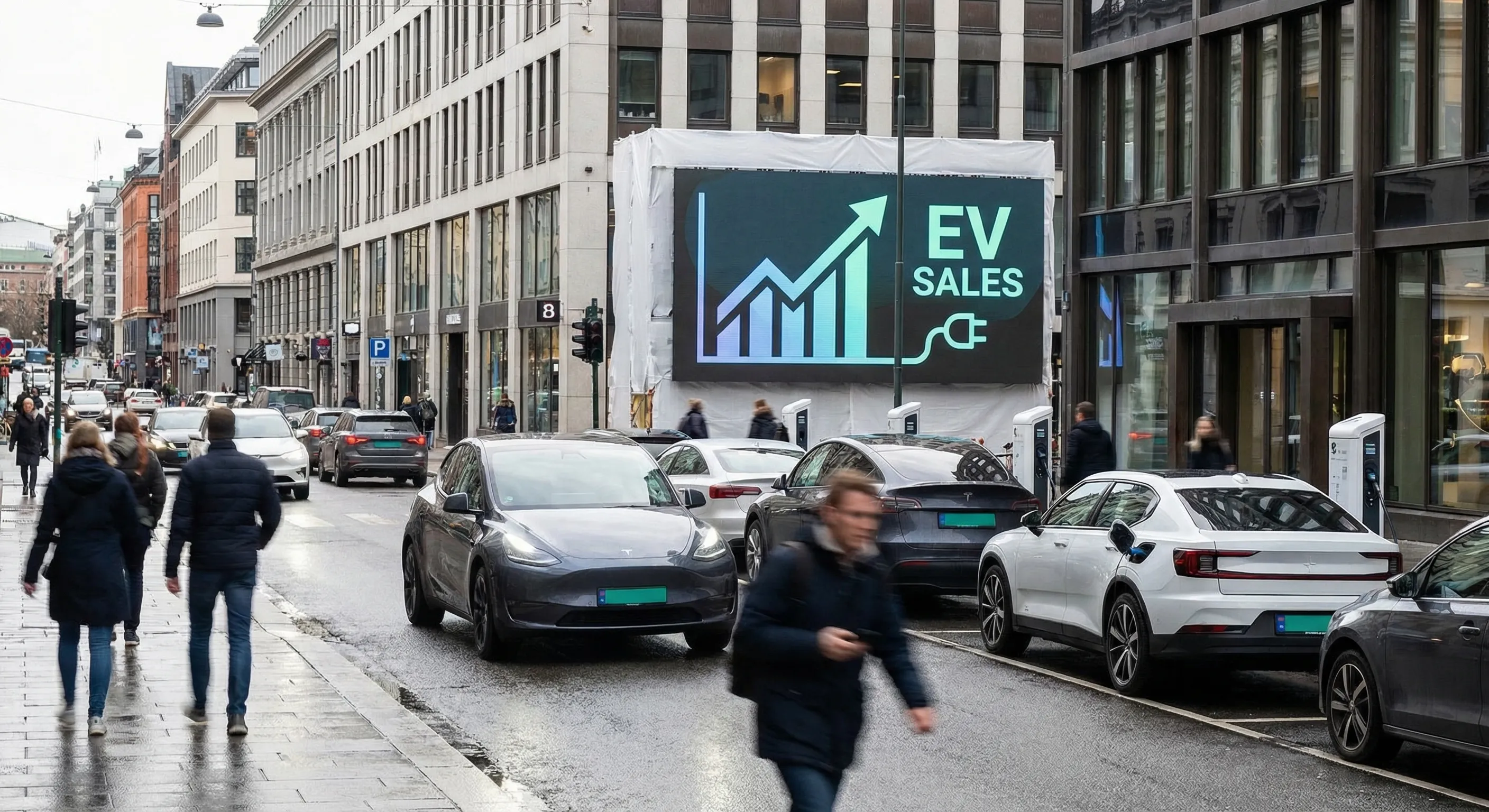
Canadian EV sales dropped roughly 32% in 2025. In 2026, LFP batteries that handle cold 30-40% better, DC fast-chargers every 100 km on the Trans-Canada, electric pickups at nearly 25% of new truck sales, and V2G payouts of $500 to $1,200 a year are making that dip look like a pause rather than a retreat. Five trends are driving the rebound.
Key takeaways
- Next-gen LFP and solid-state batteries deliver 30-40% better cold-weather performance, winter range anxiety is fading fast
- Canada now has over 35,000 public charging stations with DC fast-charging every 100 km on the Trans-Canada Highway
- Electric pickup trucks represent nearly 25% of new truck sales, the F-150 Lightning and Silverado EV are mainstream in Alberta and Saskatchewan
- Vehicle-to-grid technology lets EV owners earn $500-$1,200 annually by selling power back during peak demand
- Provincial incentives vary widely, Quebec offers up to $7,000 in combined federal-provincial rebates, while several provinces offer nothing at all
1. Cold-Weather Battery Breakthroughs Are Changing Everything
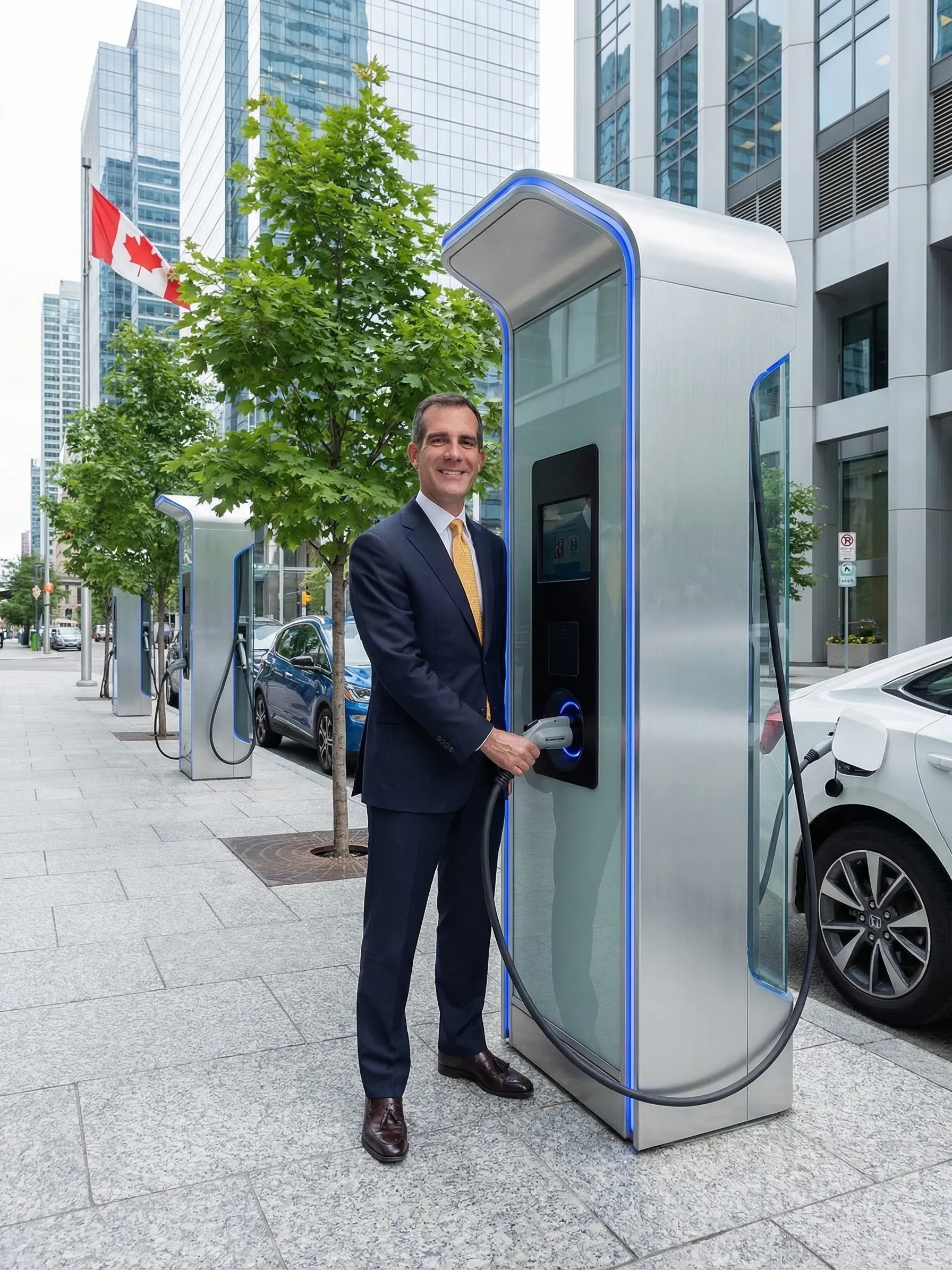
This is the big one for Canadians. For years, the number-one hesitation about EVs in this country has been winter range loss. Fair enough, when your battery loses 30-40% of its capacity at -20°C, that's a real problem for anyone north of the 49th parallel. But 2026 is the year that objection starts to crumble.
Next-generation lithium iron phosphate (LFP) batteries and emerging solid-state chemistry are delivering 30-40% better performance in sub-zero temperatures compared to the packs from just two years ago. BYD's second-generation Blade Battery, now shipping in their 2026 models, uses an improved cell chemistry that maintains over 80% of rated capacity at -25°C. That's a massive leap from the 60-65% retention we saw in first-gen LFP packs. Combine that with standard heat pumps and aggressive battery preconditioning, and you've got EVs that genuinely handle Winnipeg in January.
Solid-state batteries are the next frontier, and Canadian companies are in the thick of it. Toronto-based Blue Solutions and Quebec's Hydro-Quebec have both been developing solid-state prototypes that eliminate the liquid electrolyte entirely. The result is a battery that doesn't care about cold the way lithium-ion does, solid electrolytes don't freeze, they don't lose conductivity at low temperatures, and they charge faster in the cold. Toyota and Samsung SDI have announced solid-state production timelines for late 2026 and 2027, with several automakers planning "Arctic Edition" EV variants engineered specifically for markets like Canada, Norway, and northern Europe.
The practical impact is already visible. CAA's 2025 winter range test of 14 EVs showed that the best performers, Polestar 2, Chevrolet Silverado EV, retained 86% of their rated range at temperatures between -7°C and -15°C. The 2026 models with updated battery management systems are expected to push that even further. For the average Canadian commuting 40-60 km per day, even a modest 350 km EV now delivers more than a week of winter driving on a single charge.
2. Charging Infrastructure Hits Critical Mass
Range anxiety is fading fast, and the charging numbers explain why.
Canada now has over 35,000 public charging stations operational coast to coast, more than double the count from 2023. The federal government's $1.2 billion investment through the Zero Emission Vehicle Infrastructure Program (ZEVIP) has been the backbone of this expansion, but private companies are the ones filling in the gaps. FLO, a Quebec-based network, operates over 5,500 stations and is adding roughly 100 new locations per month. Petro-Canada's Electric Highway now provides DC fast-charging every 100 km along the entire Trans-Canada Highway, from Victoria to St. John's, a 7,800 km corridor that was full of dead zones as recently as 2024.
The quality of chargers matters as much as the quantity. CCS (Combined Charging System) has emerged as Canada's universal standard, and most new installations are 150 kW or faster. ChargePoint, Electrify Canada, and Tesla's now-open Supercharger network are all pushing 350 kW stations in major corridors, meaning a 10-15 minute stop can add 200+ km of range. For context, that's barely longer than filling a gas tank and grabbing a coffee.
Rural and northern communities remain the last frontier. Natural Resources Canada has allocated specific funding for charging in communities with fewer than 5,000 residents, and partnerships with Indigenous communities are bringing chargers to remote highways in BC, Ontario, and the territories. The Yellowknife-to-Whitehorse corridor got its first complete fast-charging coverage in late 2025. It's not perfect yet, some stretches still have 150+ km gaps, but the trajectory is clear. By the end of 2026, it will be functionally possible to drive an EV anywhere in southern Canada without serious route planning, and most major northern corridors will be covered too.
The home charging picture is equally strong. Over 85% of Canadian EV owners charge primarily at home using a Level 2 charger, and the cost of a home installation has dropped to $1,200-$2,000 including the unit. With electricity costing $0.08-$0.13/kWh across most provinces, a full charge on a 60 kWh battery costs $5-$8. Compare that to $80-$100 at the gas pump. The math hasn't changed, it's just gotten more obvious.
Gear worth having
As an Amazon Associate, ThinkEV earns a small commission from qualifying purchases — at no extra cost to you.

Grizzl-E Classic Level 2 EV Charger (40A)
Canadian-made and rated for minus 40C winters. 40A / 9.6 kW, NEMA 14-50, indoor/outdoor, 24-ft cable. The charger built for Canadian weather.
As an Amazon Associate, ThinkEV earns from qualifying purchases — at no extra cost to you.
3. Electric Pickup Trucks Dominate the Prairies
If you told someone in 2020 that electric trucks would capture a quarter of the new truck market in Alberta and Saskatchewan, they'd have laughed you out of the Tim Hortons parking lot. That prediction turned out to be wrong.
The Ford F-150 Lightning, Chevrolet Silverado EV, and Ram 1500 REV are no longer curiosities, they're mainstream. Electric pickups now represent nearly 25% of new truck sales across Canada, with the strongest adoption in the provinces you'd least expect. Alberta, where the F-150 has been the best-selling vehicle for decades, saw Lightning sales triple in 2025. Saskatchewan farmers are discovering that an electric truck with a built-in 9.6 kW power outlet eliminates the need for a generator on remote job sites. The Silverado EV's 724 km rated range means ranchers can cover serious distances between charges, even with winter range loss factored in.
The F-150 Lightning has been the catalyst. Ford understood something that mattered deeply to Canadian truck buyers: don't make them feel like they're compromising. The Lightning tows 10,000 lbs, has a massive front trunk where the engine used to be, and can power a house during an outage through Ford Intelligent Backup Power. When the 2025 ice storms knocked out power across parts of Ontario and Quebec, F-150 Lightning owners kept their homes running for 2-3 days on the truck's battery alone. That story spread fast in truck country.
The Silverado EV brought GM's Ultium platform to the full-size truck segment with results that silenced skeptics. Its 724 km range (on the RST trim) is the longest-range electric truck currently available, and it retained 86% of that in CAA's winter testing, over 600 km in sub-zero conditions. For anyone who needs a truck that works in Canadian conditions year-round, the numbers are compelling. The Ram 1500 REV, arriving at dealerships in volume throughout 2026, adds Stellantis' 229 kWh battery option that promises over 800 km of range. The truck wars have never been more interesting.
Gear worth having
As an Amazon Associate, ThinkEV earns a small commission from qualifying purchases — at no extra cost to you.
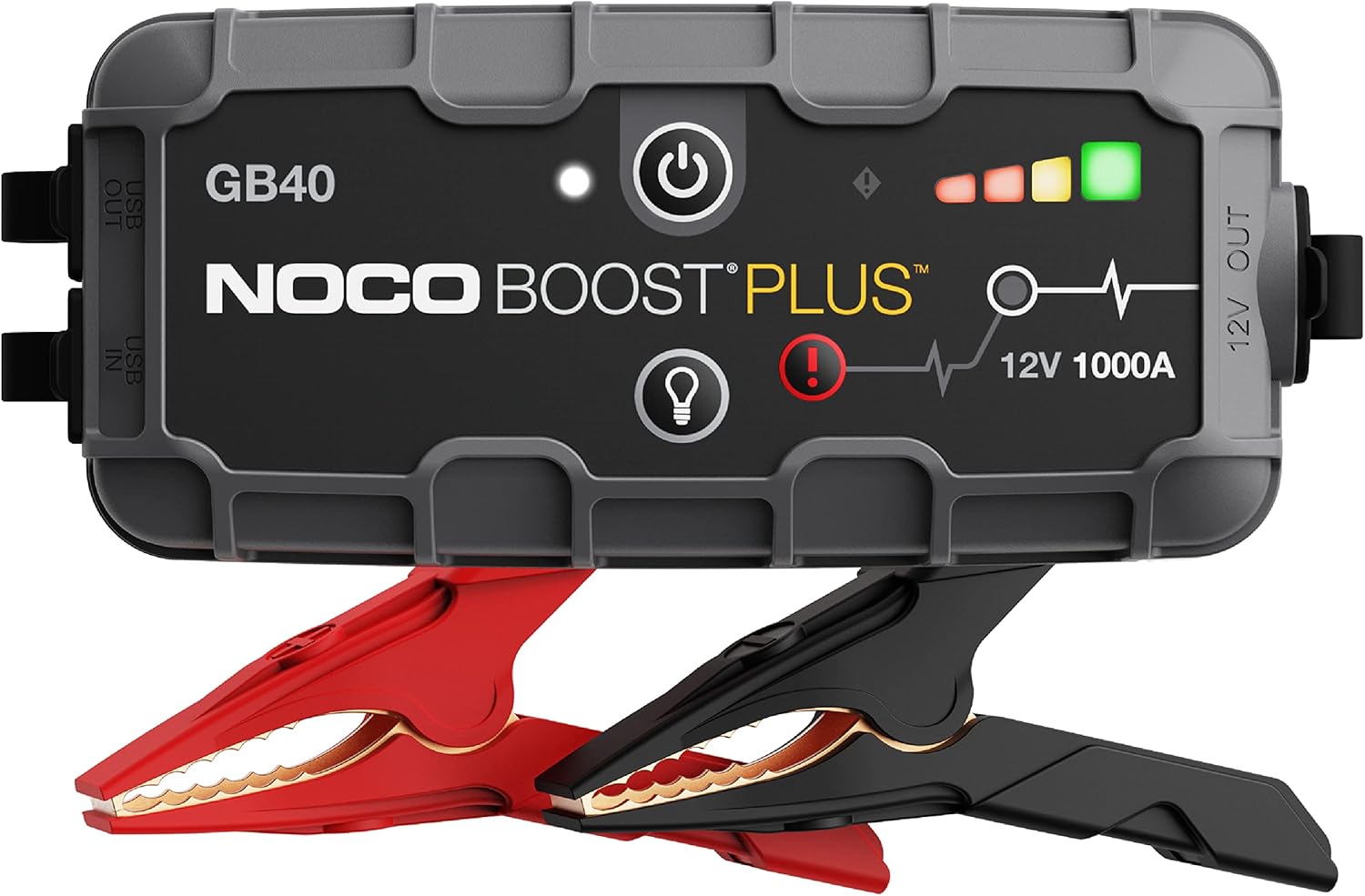
NOCO Boost Plus GB40 Jump Starter
A 1000A lithium jump starter that fits in your glovebox and works on any 12V battery. Your insurance against a dead 12V in a parking lot.
As an Amazon Associate, ThinkEV earns from qualifying purchases — at no extra cost to you.
What's driving adoption isn't environmentalism, it's economics and capability. An electric truck saves $3,000-$5,000 annually in fuel costs for someone driving 25,000 km per year. The instant torque makes towing feel effortless. And the onboard power generation eliminates equipment costs for contractors, farmers, and tradespeople. When the pitch is "save money, tow more, and never buy a generator again," the prairies listen.
4. Vehicle-to-Grid Technology Turns Your EV Into a Revenue Stream
Vehicle-to-grid (V2G) is the sleeper trend of 2026, and it's about to change how Canadians think about their EVs entirely. The concept is simple: your EV's battery isn't just storage for driving, it's a distributed energy asset that can sell electricity back to the grid when demand peaks.
Through bidirectional charging, EV owners connected to V2G-compatible chargers can export power during peak demand periods, typically weekday evenings between 4-9 PM when electricity prices spike. Provincial utilities pay owners for this exported energy, and the numbers are starting to get attention. Early adopters in Ontario's pilot programs report earning $500-$1,200 annually in energy credits, depending on their utility rate structure and how aggressively they participate.
Ontario's Independent Electricity System Operator (IESO) launched its residential V2G pilot in late 2025 with 5,000 participants, and results have exceeded projections. The average participant exports 8-12 kWh per evening session, earning $0.25-$0.35/kWh during peak rates versus paying $0.08-$0.13/kWh to recharge overnight during off-peak hours. The spread is pure profit. BC Hydro and Hydro-Quebec have announced similar programs launching mid-2026, with Hydro-Quebec's program particularly attractive because Quebec's low off-peak rates ($0.06/kWh) maximize the arbitrage opportunity.
The technology requires a bidirectional charger, currently $2,500-$4,000 installed, and a compatible vehicle. The Ford F-150 Lightning, Hyundai Ioniq 5 (2024+), Kia EV9, and Nissan Ariya all support bidirectional charging natively. Tesla has been slower to adopt, though the Cybertruck and refreshed Model 3 now support it in certain markets. The charger cost pays for itself within 2-4 years through energy credits, after which it's essentially passive income from a car that's sitting in your driveway anyway.
The grid-level implications are significant for Canada. If even 10% of the projected 2 million EVs on Canadian roads by 2028 participate in V2G, that represents roughly 1.2 GW of distributed storage capacity, equivalent to a mid-sized natural gas peaker plant. Provincial utilities see V2G as a critical tool for managing the intermittency of wind and solar generation without building expensive new infrastructure. For EV owners, it's a financial incentive that makes the already-strong economics of EV ownership even more compelling.
5. Provincial Incentives: A Mixed Bag
The incentive picture in Canada varies dramatically by province. Some jurisdictions offer generous stacked savings, while others provide nothing at all, or are actively adding costs for EV owners.
Quebec continues to lead with the most generous combined incentives in Canada. The provincial Roulez vert program offers up to $2,000 on new EVs (MSRP cap of $60,000), which stacks with the federal $5,000 EVAP rebate for a combined $7,000 off the purchase price. Quebec's target of increasing EV adoption remains ambitious, and with incentives stacking, adoption rates are tracking ahead of most other provinces.
Manitoba offers a $4,000 provincial rebate with a $70,000 MSRP cap, though the program ends March 31, 2026. Combined with the federal EVAP rebate, Manitoba buyers can access up to $9,000 in total savings. This makes Manitoba one of the better provinces for EV incentives while the program lasts.
PEI offers a $4,000 provincial rebate (Tesla excluded), which combined with the federal $5,000 EVAP rebate gives buyers up to $9,000 in total savings. Yukon offers $5,000 through its Good Energy Program (Tesla excluded), stacking with EVAP for up to $10,000. Northwest Territories also offers $5,000 in territorial incentives.
Ontario and Alberta currently offer no provincial EV purchase rebates. Saskatchewan also has no provincial rebate and charges a $150 annual EV registration fee. British Columbia's CleanBC passenger vehicle rebate program is currently paused as of 2026. New Brunswick's rebate ended in July 2025. Nova Scotia has no rebate and is introducing a $500 EV surcharge starting October 2026. Newfoundland and Labrador offers $2,500 but the program ends March 15, 2026.
The incentive picture is uneven, with some provinces offering generous stacked savings and others providing nothing, or actively adding costs. The federal government's 2035 zero-emission vehicle mandate creates the baseline, but provincial support varies dramatically depending on where you live.
Gear worth having
As an Amazon Associate, ThinkEV earns a small commission from qualifying purchases — at no extra cost to you.

PULIDIKI Car Cleaning Gel (Detailing Putty)
Press it into vents, buttons, and seams and it lifts out dust you did not know was there. Weirdly satisfying, genuinely useful.
As an Amazon Associate, ThinkEV earns from qualifying purchases — at no extra cost to you.
The Road Ahead

Canada's EV adoption is projected to hit 40% of new vehicle sales in 2026, a dramatic rebound from the 2025 dip and a number that puts the country firmly on track for its 2035 zero-emission vehicle mandate. For context, that means roughly 680,000 new EVs registered in a single year, more than the total number of EVs on all Canadian roads just three years ago.
Better batteries reduce range anxiety, which makes the expanding charging network more practical, which convinces truck buyers to go electric, which increases the V2G potential on the grid, which justifies more aggressive provincial incentives. The flywheel is spinning faster in 2026 than it has at any point in the transition.
The remaining challenges are real, affordability for lower-income Canadians, rural charging gaps in the territories, and the ongoing trade tensions around Chinese EV tariffs all need attention. But the direction is unmistakable. The internal combustion engine had a good run in Canada. Its replacement is already here, and it's getting better every quarter.
Gear worth having
As an Amazon Associate, ThinkEV earns a small commission from qualifying purchases — at no extra cost to you.

WixGear Magnetic Air Vent Phone Mount (2-Pack)
A magnet strong enough that your phone never flinches over potholes or rail crossings. Two in the box, one for each car.
As an Amazon Associate, ThinkEV earns from qualifying purchases — at no extra cost to you.
Related Reading
- Why Canada's EV Market Crashed in 2025, And Why 2026 Could Be Different, The data behind the dip and what's fuelling recovery
- We Tested 14 EVs in a Canadian Winter, Here's How They Really Perform, CAA's definitive cold-weather range test
- Every Dollar You Can Save on an EV in Canada (2026 Guide), Complete breakdown of federal and provincial rebates
- How to Charge Your EV in Canada (The Actually Useful Guide), Home setup, road trip planning, and which apps to download
- The 10 Most Affordable EVs You Can Buy in Canada in 2026, Every budget option ranked
Gear worth having
As an Amazon Associate, ThinkEV earns a small commission from qualifying purchases — at no extra cost to you.

Car Cup Holder Coasters (4-Pack)
Drop-in coasters that catch spills and crumbs so your cup holders stay clean. Rinse and reuse forever.
As an Amazon Associate, ThinkEV earns from qualifying purchases — at no extra cost to you.

Founder & Chief Editor
Vlad Pereira is the founder and chief editor of ThinkEV.ca, the Canadian electric-vehicle publication he writes and edits from Courtenay, British Columbia. He covers EV pricing, federal and provincial rebates, charging costs, and the Chinese manufacturers now entering Canada, from the buyer's side rather than the press-fleet side. ThinkEV is a venture of Vlad Pereira Online; his writing on health, income and the long game lives at vladpereira.com.
Frequently asked questions
What percentage of new car sales in Canada are EVs in 2026?
How do EVs perform in Canadian winters in 2026?
How much can I save with EV incentives in Canada?
What is vehicle-to-grid (V2G) and how much can I earn?
Can I drive across Canada in an EV in 2026?
Are electric pickup trucks practical for Canadian work and farming?
More EV & road-trip finds
Affordable upgrades worth a look — tap any to check the price on Amazon.
 ★ 314
★ 314Mini USB LED Ambient Lamps (4-Pack)
View on Amazon ★ 546
★ 546Funny Headrest Face Covers (2-Pack)
View on Amazon ★ 865
★ 865Collapsible Trunk Organizer
View on Amazon ★ 721
★ 72145W USB-C Fast Car Charger
View on Amazon ★ 119
★ 119Foldable Waterproof Trunk Organizer
View on Amazon ★ 392
★ 392Large Cup Holder Adapter (32-40oz)
View on Amazon ★ 8,681
Chemical Guys Complete Car Wash Kit
View on Amazon ★ 55
★ 55LED Car Door Logo Projector Light
View on AmazonRead, Plan, Then Stay Current
Explore our expert articles to understand incentives and ownership costs, use the map to pressure-test charging reality, then subscribe so new EV coverage comes straight to you.
Continue Reading

Electric School Buses Are Changing Canadian Streets

Norway's -27C Winter EV Test: Chinese Cars Beat Tesla
BYD 1.5MW Charging Canada: 400 km in Five Minutes
BYD Seagull Canada Price: The $15K-$20K EV in 2026
Canada EV Sales February 2026: The Growth Streak