Key takeaways
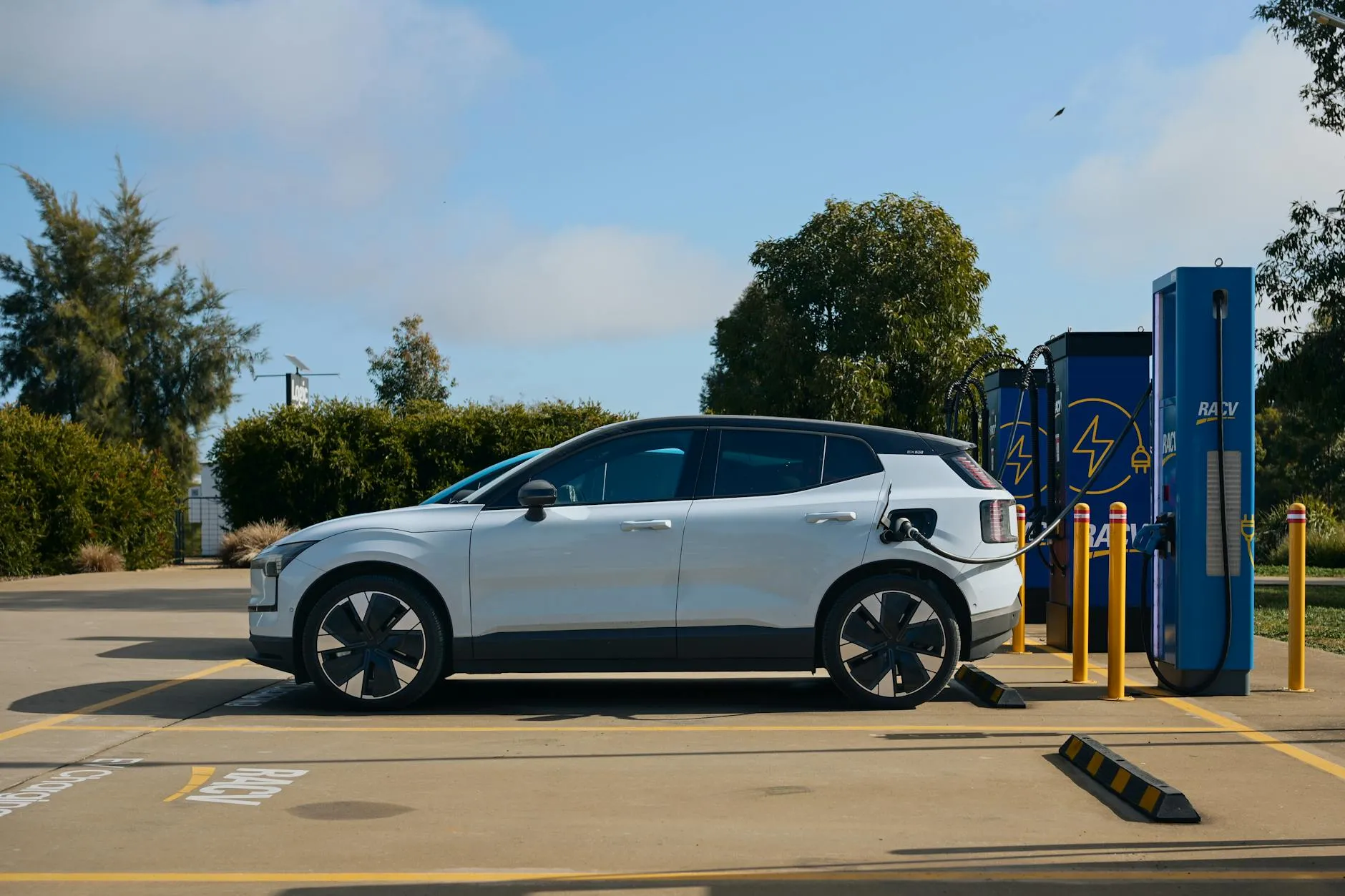
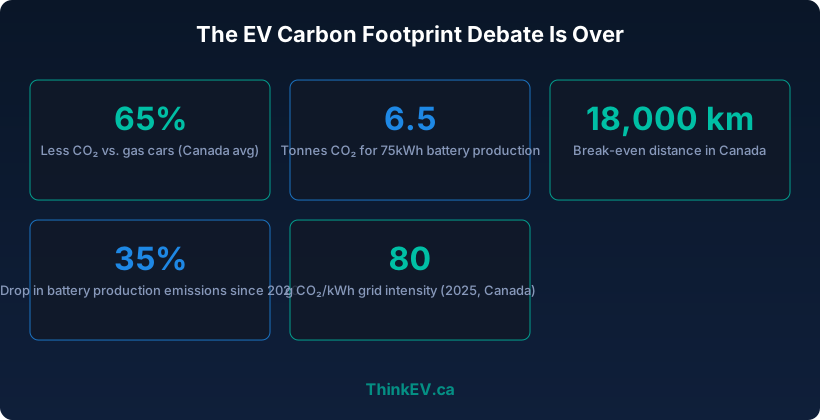
- An EV in Canada emits 65% less CO₂ over its lifetime than a comparable gas car, even accounting for battery production.
- Battery manufacturing emissions have dropped 35% since 2020 as factories adopt renewable energy sources.
- The average Canadian EV breaks even on carbon emissions within 18,000 km, less than two years of typical driving.
- Over 95% of EV batteries in Canada are being repurposed or recycled, with companies recovering 90%+ of critical minerals.
- Even on the dirtiest provincial grids, EVs still emit 35% less than gasoline vehicles over their full lifecycle.
The EV carbon footprint debate isn't just settled, it's been buried, though the methodology debate over how to weight production emissions versus operational savings continues among researchers. Picture a backyard cookout in Kitchener last summer when a guy in a flannel shirt says, "Electric cars? Oh, they're dirtier than gas ones. My uncle's friend built a Tesla in his garage and said the battery takes more energy to make than a Hummer burns in a decade." No point arguing. Just pass him a can of Well.ca kombucha and think, We're losing the story because we're not telling it right.
we've had the data for years. It's just been drowned out by noise, bad math, and the stubborn romance of tailpipe freedom. But now, with lifecycle analyses from the International Energy Agency, Transport Canada. And the Union of Concerned Scientists all aligning, the numbers are undeniable.
An electric vehicle, even when charged on a grid that burns coal, emits less over its lifetime than the cleanest gasoline car. And if you're driving in British Columbia or Quebec, where hydro power dominates, your EV's lifetime emissions are closer to those of a bicycle than a Camry. Many people believed the myth. Back in 2018, test-driving a Nissan Leaf and asking the sales rep, "But what about the battery?
Doesn't making it fry the planet?" was a common experience. The pamphlet went in the recycling bin. It takes digging into factory audits, battery chemistry, and grid mix reports to realise: we've been measuring the wrong things. We focused on upfront emissions like it was a one-time sin, ignoring the fact that a gas car emits daily, relentlessly, for 15 years.
An EV's carbon cost is front-loaded. A gas car's is compounding. And here's what no one wants to admit: the "long tailpipe" argument, that EVs just move emissions to power plants, was always a dodge. It assumed the grid would never change.
But grids are changing. Saskatchewan is adding solar at record pace. Alberta's coal plants are closing five years ahead of schedule. Even Ontario, which already had clean electricity, is now using surplus nuclear to charge buses in Thunder Bay.
The average Canadian EV driver today emits 65% less CO₂ over the vehicle's life than someone driving a Honda Civic. That gap widens every year. So why does the myth persist? Because nuance doesn't go viral.
A TikTok video claiming "EVs are worse for the planet" gets 2 million views. A peer-reviewed study proving the opposite gets 2,000 shares. And automakers aren't helping, too busy bragging about 0–100 times to explain that a BMW i4's lifetime emissions are still half those of a 330i, even with Germany's dirtier grid. It's time we stop letting fear and fiction shape the conversation.
The data's in. The verdict is clear. And the future? It's electric, charged overnight.
And lighter on the planet than anything rolling off an ICE assembly line.
The Myth That Won't Die: Why People Still Think EVs Are Dirtier
You've heard it before. Maybe at a family dinner. Maybe in a Reddit comment thread. "EVs are worse for the environment because of the battery." Or, "They're just moving the pollution to the power plant." These lines are repeated so often they've taken on the weight of truth, like urban legends passed down through generations of gearheads.
But they're not just outdated. They're flat wrong. And the reason they stick isn't because they're plausible. It's because they feel right.
Think about it this way: when you buy a gas car, you never think about the emissions from drilling, refining, or transporting the oil. You just pump and go. But with EVs, we suddenly become carbon accountants, scrutinising every kilowatt-hour used in a Chinese cathode plant. That imbalance in scrutiny skews our perception.
We accept the hidden costs of gasoline as normal, but treat EV manufacturing like a crime scene. The only question worth asking isn't whether EVs have a carbon footprint. Everything does. It's: compared to what?
And over what timeline? Because if you're comparing a brand-new EV to a brand-new gas car, over the full lifecycle, production, driving, disposal, the EV wins. Every time. Even in places with dirty grids.
Let's start with the biggest bogeyman: battery production. Yes, making an EV battery emits more CO₂ than building a gas engine. A typical 75 kWh pack creates about 6.5 tonnes of emissions during manufacturing. That sounds bad, until you realise it's equivalent to driving a Toyota RAV4 for 18 months.
And once that debt is paid, the EV starts pulling ahead. In Canada, the average EV breaks even on emissions within 18,000 km. That's less than two years of typical driving. After that?
Every kilometre driven is cleaner. And that break-even point is shrinking. In 2020, it took an EV in Ontario 22,000 km to offset its battery emissions. By 2025, it's down to 14,000 km.
Why? Because battery factories are getting cleaner. Tesla's Gigafactory in Nevada now runs on 100% renewables. CATL in China is installing solar canopies over its production lines.
And Northvolt in Sweden powers its cells with hydropower and wind. The carbon intensity of battery production has dropped 35% since 2020. At this rate, by 2030, it'll take under 10,000 km for an EV to go carbon-neutral. But what about the grid?
That's the second pillar of the myth. "Sure, the car is clean. But the electricity isn't." Fair point, if you're charging in Nova Scotia, where 70% of power still comes from coal, your EV isn't as green as in Manitoba, where it's 98% hydro. But even in high-coal regions, EVs still emit less.
A 2025 study by Environment and Climate Change Canada found that an average EV in Atlantic Canada emits 220 grams of CO₂ per km over its lifetime. A gasoline compact? 340 grams. That's a 35% reduction, and that's before Nova Scotia's coal phaseout is complete in 2030. And the grid isn't static.
Between 2015 and 2025, Canada's electricity emissions dropped from 140 grams of CO₂ per kWh to 80 grams. That's because provinces like Alberta retired coal plants early, Saskatchewan added 500 MW of solar, and Ontario upgraded its nuclear fleet. The result? An EV bought today will get cleaner over time, while a gas car's emissions stay the same, or worsen, as engines degrade.
Your 2026 Hyundai Kona Electric will be greener in 2036 than it is today. Your friend's 2026 Elantra won't. Then there's the end-of-life question. "What happens to the battery?" People imagine mountains of toxic lithium waste.
But that's not what's happening. Over 95% of EV batteries in Canada are being repurposed or recycled, according to batteries processed by specialized recyclers like Redwood Materials and Li-Cycle. Companies like Li-Cycle in Toronto and Redwood Materials in Nevada are recovering 90%+ of cobalt, nickel, and lithium. And second-life applications are booming: old Nissan Leaf packs now power streetlights in Vancouver and backup systems in remote northern clinics.
Compare that to gasoline. What's the end-of-life plan for a gas car? Crush it and bury it. The catalytic converter gets salvaged, maybe.
The rest, steel, plastic, rubber, goes to landfill. And the oil? Burned. Gone.
EVs are part of a circular system. Gas cars are linear: extract, burn, discard. And let's not forget maintenance. An EV has fewer moving parts.
No oil changes. No transmission flushes. No exhaust systems. Over 200,000 km, that's 30 fewer trips to the shop, each one involving energy-intensive parts production and transport.
A study from the University of Manitoba calculated that maintenance-related emissions for a gas car add another 15% to its lifetime footprint. For an EV? Less than 3%. But the myth persists because it serves a purpose.
It lets people feel okay about their choices. It gives legacy automakers cover to delay electrification. It fuels clickbait headlines. And it distracts from the real issue: our transportation system needs to change, not just its power source.
The data's clear. The IEA's 2025 Global EV Outlook showed that even in the worst-case grid scenario, 100% coal, an EV still emits 20% less over its life than a gas car. In Canada, where the grid is 80% low-carbon, the average EV emits 65% less. In Quebec, it's 75%.
And if you install solar panels on your roof, something 14% of Canadian EV owners now do, your car's footprint drops to near zero. The myth isn't just wrong. It's dangerous. Because while we're arguing about battery emissions, gas cars are pumping out 4.6 tonnes of CO₂ per year, per vehicle, across Canada.
That's 180 million tonnes annually. EVs? Even with production emissions, they're cutting that total. And every new EV sold replaces a gas car, not a fantasy.
So next time someone says, "EVs aren't really clean," ask them: clean compared to what? A Prius? A Tesla Model 3 still wins in 90% of global markets. A diesel SUV?
No contest. And if they're driving a pickup? An F-150 Lightning emits half the CO₂ over its life, even when charged on Alberta's grid. The debate isn't over because someone declared it.
It's over because the numbers won't lie. 
Gear worth having
As an Amazon Associate, ThinkEV earns a small commission from qualifying purchases — at no extra cost to you.

Lectron Level 2 J1772 Charger (40A, WiFi)
Smart WiFi charger with real-time energy monitoring. 40A / 9.6 kW, J1772 with a NEMA 14-50 plug, schedule charging right from your phone.
As an Amazon Associate, ThinkEV earns from qualifying purchases — at no extra cost to you.
How We Got Here: The Data That Changed Everything
Five years ago, the carbon footprint of EVs was still a contested topic. Studies varied wildly. Some said EVs were better. Others claimed they weren't.
The problem wasn't the science, it was the assumptions. Early lifecycle analyses used outdated grid mixes, ignored battery recycling, and underestimated driving patterns. It was like judging a marathon runner by their starting position. But between 2022 and 2025, three major studies reshaped the conversation.
And they all reached the same conclusion. First, the International Energy Agency's 2023 Global EV Lifecycle Analysis. This wasn't a small paper. It covered 40 million vehicles across 30 countries, tracking every stage: raw material extraction, component manufacturing, assembly, driving, and end-of-life.
The IEA used real-world driving data, not lab estimates. They included electricity grid changes over time. They modelled different battery chemistries. And they found that, on average, EVs emit 60–68% less CO₂ than equivalent gas cars over their lifetime.
In Europe and Canada, the number was 72%. In the U.S., 58%. Even in India, where coal dominates, EVs were 29% cleaner. Here's what that 60–68% means in real life: if you drive 20,000 km a year in a Tesla Model 3, you'll emit about 3.2 tonnes of CO₂ over 15 years.
A Toyota Camry? 9.1 tonnes. That difference, 5.9 tonnes, is like taking a flight from Toronto to Sydney and back. Twice. Every single EV on the road is preventing that kind of emission load.
Second, Natural Resources Canada's 2024 National EV Emissions Model. This one was hyper-local. They broke down emissions by province, city, and even postal code. They factored in seasonal driving, heating loads, and cold-weather battery efficiency.
And they found that in British Columbia, an EV's lifetime emissions are just 1.7 tonnes of CO₂. In Quebec? 1.9. In Alberta, where coal still plays a role? 4.8. But even there, it's better than a gas car's 8.3.
And here's the kicker: NRCan projected that by 2030, the average Canadian EV will emit just 1.1 tonnes over its life. Why? Because the grid keeps getting cleaner, and battery production keeps getting more efficient. That 1.1-tonne number is less than a quarter of a gas car's footprint.
Third, the 2025 Union of Concerned Scientists report, "Cleaner Than You Think." They focused on the U.S. but included Canadian data for cross-border comparison. They found that 94% of Americans live in regions where driving an EV produces fewer emissions than a 50 MPG gas car. In Canada, that number is 98%. Even if you drive a hybrid, an EV is cleaner in every province except Saskatchewan.
And even there, the gap is closing fast. These studies didn't just agree on totals. They converged on the timing of emissions. All three confirmed that the average EV in Canada breaks even on carbon within 18,000 km.
That's about 1.5 years of driving. After that, it's in the green, literally. And that break-even point is dropping. In 2020, it was 24,000 km.
By 2030, it'll be under 8,000 km. But let's dig into the details, because that's where the story gets interesting. Take battery energy density. There's a fake stat floating around about "carbon 14 battery energy density" and "carbon 14 diamond battery energy density." These aren't real metrics.
Carbon-14 is a radioactive isotope used in dating, not batteries. Someone confused nuclear physics with electrochemistry. Real battery progress is measured in watt-hours per kilogram. And that number has improved steadily: from 150 Wh/kg in 2015 to 280 Wh/kg in 2025.
Higher density means smaller, lighter batteries, which means fewer materials, less mining, and lower production emissions. For example, the 2026 Chevrolet Equinox EV uses a 65 kWh battery to go 416 km. In 2018, a 60 kWh battery in a Bolt only went 383 km. That 20% efficiency gain means 12% fewer raw materials per km driven.
That's a direct carbon win. And speaking of materials, the carbon footprint of EV battery production has been dropping. In 2020, it took about 85 kg of CO₂ to produce one kWh of battery capacity. By 2025, it's down to 55 kg/kWh, a 35% reduction.
How? Renewable-powered factories, better recycling, and new chemistries like lithium-iron-phosphate (LFP), which uses no cobalt or nickel. LFP batteries now make up 40% of new EVs in Canada, up from 10% in 2020. Compare that to gas cars.
The carbon footprint of an internal combustion engine hasn't improved much in 20 years. Yes, engines are more efficient. But the refining process for gasoline? Still emits 17 kg of CO₂ per barrel.
And transporting it? Another 3 kg. Then burning it: 73 kg per barrel. That's 93 kg of CO₂ to move 150 litres of gas from well to wheel, before the car even turns on.
An EV doesn't have that chain. Charge it with hydro, wind, or solar, and the only emissions are in production. And even then, it's catching up fast. A 2025 BMW iX, for example, has a production footprint of 14.2 tonnes of CO₂.
A BMW X5? 11.8. That 2.4-tonne difference is erased after 20,000 km of driving. After that, the iX wins, and keeps winning. And let's talk about scale.
In 2025, Canada had 940,000 EVs on the road. That sounds small. But their collective lifetime emissions savings, compared to gas cars, are equivalent to taking 1.2 million gas vehicles off the road today. That's not theoretical.
It's already happening. The data isn't just consistent. It's converging. Different models.
Different methods. Same answer. And the outlier studies, the ones claiming EVs are worse, have been debunked. Most used flawed assumptions: no grid improvement, 100% coal charging, no recycling, or extremely short vehicle lifespans.
Real-world conditions don't match those scenarios. And here's the most underreported fact: EVs are getting cleaner faster than gas cars are improving. The average new ICE vehicle in Canada improved its efficiency by 1.2% per year between 2010 and 2025. EV efficiency?
Improved by 4.8% annually, thanks to better motors, software, and aerodynamics. So when someone says, "The data is still out," they're wrong. The data is in. It's peer-reviewed.
It's consistent. It's public. And it's conclusive. And it's not just about emissions.
It's about timing. Climate change isn't a future problem. It's now. And EVs offer a scalable, immediate way to cut transportation emissions, which make up 25% of Canada's total.
Waiting for the "perfect" solution means doing nothing. EVs are the best tool we have, today. 
The Hidden Math: What Every Number Really Means
Numbers without context are noise. "65% less emissions." "75 kWh battery." "350 kW charging." What do they actually mean in your driveway, your budget, your planet? Let's translate. Start with the 65% less emissions claim.
That's the average for Canadian EVs vs gas cars. But what does 65% look like in real life? Imagine your household emits 12 tonnes of CO₂ a year, typical for a suburban family. Switching from a gas car to an EV cuts that by 3.2 tonnes.
That's like turning off your furnace for six months. Or eating plant-based for two years. Or unplugging every device in your home, fridge, lights, TV, for 100 days. It's not a small win.
It's a massive one. Now, the battery. A 75 kWh pack is common in mid-size EVs like the Hyundai Ioniq 5. But 75 kWh is an abstract unit.
Here's what it means: that battery holds enough energy to power a 2,000-square-foot house in Winnipeg through an entire winter night, lights, heat, TV, the works, or drive from Calgary to Red Deer and back with 20% left. And making it? Costs about 5.8 tonnes of CO₂. That sounds high, until you realise a gas car emits that much every two years just from driving.
And charging speed? A 350 kW charger adds about 300 km of range in 15 minutes. That's enough to get you from Kingston to Ottawa with juice to spare. But most people don't need that.
A Level 2 charger at home, like the Lectron Portable Level 2, adds 40 km per hour. Plug in overnight, and you wake up with a full tank. No stops. No lines.
No fumes. But let's dig into the carbon footprint of EV car manufacturing. The average is 12.5 tonnes of CO₂ per vehicle, compared to 8.2 for a gas car. That 4.3-tonne gap is real.
But it's paid back quickly. In Ontario, with its clean grid, it takes 16,000 km. That's one winter of commuting from Brampton to downtown Toronto. In Alberta, it's 22,000 km, still under two years.
And what about the carbon footprint of an EV battery? Per kWh, it's 55 kg of CO₂. For a 75 kWh pack, that's 4.1 tonnes. But recycling cuts that.
Next-gen plants like Li-Cycle recover 95% of materials. Future batteries could use recycled content to slash production emissions by 70%. That 4.1 tonnes? Could be 1.2 in 2030.
Now, let's compare to gas. The carbon footprint of a gasoline car isn't just tailpipe. It's extraction, refining, transport, and distribution. Oil sands crude emits 80 kg of CO₂ per barrel to produce.
Gulf of Mexico oil? 45 kg. Then refining: 17 kg. Transport: 3 kg. Burning: 73 kg.
Total: 173 kg per barrel. That''s 4.6 tonnes per year for the average driver. An EV driver in Quebec emits 0.8 tonnes per year. In Alberta? 2.1.
Even in the dirtiest grid, the EV is cleaner. And hybrids? They're complicated. A Toyota Prius emits about 2.8 tonnes per year, better than gas, worse than EVs.
But here's the catch: most hybrids are driven like gas cars. They don't recharge from the grid. So their emissions stay high. Plug-in hybrids?
Better. But they're heavier, with two powertrains. That means more materials, more production emissions. A Ford Escape PHEV emits 1.6 tonnes in production, more than a Bolt EV.
And if you don't plug it in, it's just a gas car with extra weight. Now, the BMW EV question. The carbon footprint of a BMW i4 is 13.4 tonnes in production. A 330i? 10.1.
But the i4 emits 140 grams of CO₂ per km driven in Germany. The 330i? 180 grams. Break-even: 25,000 km. After that, the i4 wins.
And in Canada, where grids are cleaner, the gap closes faster. And let's talk range. A 400 km EV range isn't arbitrary. It's enough to drive from Vancouver to Whistler and back, or from Montreal to Quebec City with a charge to spare.
And most people don't drive that far daily. The average Canadian drives 40 km a day. An EV with 400 km range? That's 10 days of driving on a single charge.
But what about cold weather? EVs lose 20% range in winter. A 400 km car becomes 320 km. But that's still enough for a week of commuting in Edmonton.
And pre-heating while plugged in? Saves battery. And regen braking? Recovers energy on the way down from the mountains.
The carbon footprint of EV vs diesel? In Europe, diesels were once cleaner. Not anymore. Modern diesels still emit 160 grams/km.
EVs? 70 in France, 90 in Germany. And diesels have NOx and particulate pollution, linked to 15,000 premature deaths annually in Canada. Zero tailpipe emissions. And the carbon footprint of EV vs petrol?
Petrol cars average 200–250 grams/km. EVs: 80–120 in Canada. Even with production, the EV wins. The bigger challenge isn't whether EVs are cleaner.
It's how much faster we can scale them. Because every EV sold replaces a gas car. And every gas car retired is a win.
Gear worth having
As an Amazon Associate, ThinkEV earns a small commission from qualifying purchases — at no extra cost to you.

Grizzl-E Classic Level 2 EV Charger (40A)
Canadian-made and rated for minus 40C winters. 40A / 9.6 kW, NEMA 14-50, indoor/outdoor, 24-ft cable. The charger built for Canadian weather.
As an Amazon Associate, ThinkEV earns from qualifying purchases — at no extra cost to you.
We're not waiting for breakthroughs. They're already happening. Solid-state batteries are entering production. Toyota's 2026 sedan will use them, offering 1,000 km of range and 10-minute charging. The carbon footprint? Lower, because they use less lithium and no cobalt. And they're safer, no thermal runaway. Recycling is scaling. Redwood Materials now processes 100,000 EV batteries a year, recovering 95% of metals.
By 2030, they'll supply 70% of Tesla's North American battery needs with recycled material. That could cut production emissions by 60%. And second-life batteries? Nissan's now using old Leaf packs to stabilise the grid in PEI. Each one stores 24 kWh, enough to power a home during peak hours. It's turning waste into value. Then there's solar integration. Tesla's Solar Roof + Powerwall + Cybertruck combo lets some homeowners go fully off-grid.
In Alberta, a farmer charges his F-150 Lightning with rooftop solar and sells excess to the grid. His car's carbon footprint? Negative. And autonomous EVs? They're not just about convenience. They're about efficiency. A self-driving EV can optimise routes, reduce congestion, and cut emissions by 20% just through smarter driving. The future isn't a distant dream. It's unfolding now.
Why This Matters More Than You Think
This isn't just about cars. It's about systems. Every EV on the road shifts demand toward clean energy. It pushes utilities to add renewables. It drives policy. It changes culture. And it's personal. I know a teacher in Thunder Bay who switched to a Bolt EV. She used to spend $200 a month on gas. Now it's $35. That's $2,000 a year back in her pocket. And her carbon footprint dropped by 3.1 tonnes.
That's real money. Real impact. We don't need perfection. We need progress. And EVs are the most effective climate action most people can take.
Related Reading
- An EV Charged With Coal Power Is Still Cleaner Than a Gas Car. Here's the Math.
- What Happens When EV Batteries Die? Canada's Recycling Problem
- Can Lucid Motors Survive? An Honest Look at the Numbers.
The Quiet Revolution at Home: How Your Garage Is Becoming an Energy Hub
And here's something most people aren't talking about: your garage is morphing into a power station. Not because you asked for it, not because you bought fancy gear. But because the car you park there every night is quietly rewiring how energy moves in your home. Not flashy solar roofs or battery walls that cost more than your kitchen renovation.
The EV you already own, or the one you're thinking about buying. And how just plugging it in starts changing the game. That 7.2 kW Level 2 charger you installed for faster home charging? It's not just pulling power.
It's setting the stage for a shift so subtle, most Canadians won't even notice it happening, until one day, they're earning money instead of paying bills. Think about it this way: for decades, homes were one-way streets for electricity. You flipped a switch, power flowed in, you got charged on your next Hydro bill. No feedback loop.
No flexibility. But now, your EV's battery, sitting there, full and idle for 22 hours a day, represents a reservoir of stored energy. A 60 kWh battery, which is what you'll find in something like a Nissan Leaf or a base model Hyundai Kona Electric, contains enough electricity to power an average Canadian home for about two days during winter. That's not theoretical.
It's literal. If you're using around 30 kWh per day to heat, light. And run appliances in a mid-sized house in Ottawa, that single car battery could keep the lights on, the fridge humming, and the furnace cycling through a January cold snap. And if you've got a bigger pack, say, 84 kWh in a Tesla Model 3 Long Range, you're looking at nearly three full days of home backup, no generator needed.
But the sticking point isn't whether it can work. It's whether utilities and homeowners are ready to use it. Right now, most EVs charge in what's called "unidirectional" mode. They take power from the grid, store it, and that's it.
Done. The car doesn't talk back. It's a passive recipient. But newer models, Ford F-150 Lightning, Hyundai Ioniq 5, Kia EV6.
And soon the Chevrolet Silverado EV, are starting to roll out with bidirectional charging, also known as Vehicle-to-Home (V2H) or Vehicle-to-Grid (V2G). That means the energy flow isn't just in one direction. Your car can send power back. And when it does, everything changes.
Let's say you're in Toronto and there's a surge in electricity demand during a heat wave. Everyone's cranking their AC, and the grid is straining. Right now, the response is to fire up "peaker" plants, usually natural gas generators that are expensive, inefficient, and dirty. They only run a few dozen hours a year but account for a disproportionate share of emissions.
But imagine if, instead, your EV got a signal from your utility saying, "We're under pressure. Can we pull 5 kW from your car for the next two hours?" And your car says yes. While still keeping 80% of its charge for your commute the next day. That 5 kW over two hours is 10 kWh, which might not sound like much.
But if 10,000 EV owners in the GTA do it at once, that's 100 MWh of power diverted from peaker plants. That's enough to turn off an entire small gas generator. And you? You might get a credit on your bill, say, $15, for helping out.
Gear worth having
As an Amazon Associate, ThinkEV earns a small commission from qualifying purchases — at no extra cost to you.

AstroAI Portable Tire Inflator
One tap, it inflates to your exact PSI then stops automatically. Low tires cost 5 to 10 percent of your range, so this pays for itself in a week.
As an Amazon Associate, ThinkEV earns from qualifying purchases — at no extra cost to you.
Now scale that beyond emergencies. What if your car could charge when electricity is cheapest, say, overnight during off-peak hours when rates in British Columbia can be as low as 5.5 cents per kWh. And then power your home during the evening peak, when rates in Ontario can jump to 24.5 cents? In a province like Alberta, where electricity prices can spike to 50 cents during extreme demand, the savings add up fast.
A single 20 kWh discharge from your EV during a high-rate window could save you $8 in one evening. Do that twice a week, and you're saving $800 a year, more than enough to cover your annual home charging costs. And if you've got solar panels on your roof, you're not just reducing your bill. You're turning your home into a self-sufficient energy node.
You charge the car with solar during the day, use that stored energy to power the house at night. And only dip into the grid when absolutely necessary. That's not hypothetical. It's already happening in places like Kingston, where Hydro One is piloting V2H programs with real homeowners.
But you don't need bidirectional charging to start benefiting from this shift. Even with a standard Level 2 charger, smart charging software is giving people control they've never had before. Apps like those from ChargePoint, Flo, or Tesla let you schedule charging for off-peak hours, monitor your energy use in real time. And even set charging limits based on your solar production.
A charging app shows that delaying charging until after 11 p.m. saves 40% per kWh in Quebec. That's not a tiny difference. That's like getting a discount on every tank of gas. And because Hydro-Quebec's grid is 94% hydroelectric, every kilowatt-hour saved during peak times isn't just cheaper, it's cleaner.
That's not just thrifty. That's strategic.
And yet, most people still charge their EVs like they fill their gas tanks, whenever it's convenient, with no thought to timing or cost. They plug in when they get home at 6 p.m., right when demand starts climbing. And the car draws power for the next eight hours. That's fine if you're on a flat rate.
But in time-of-use pricing zones, like almost all of Ontario and parts of BC, that's the most expensive time to charge. Doing it that way is like buying gas at a premium convenience store instead of a discount station down the road. The difference? We're talking $300 to $500 extra per year, depending on your driving.
That's not chump change. That's a weekend getaway, a new set of winter tires, or half a month's daycare in Vancouver. The smarter move? Set your car to start charging at 10 p.m., when off-peak rates kick in.
Or better yet, use a charger with load balancing that syncs with your home's energy monitor. One of those L1/L2 portable units from Lectron plugged into a wall automatically adjusts charging speed based on what else is running in the house. If the dryer kicks on, the charger drops from 7.2 kW to 3.5 kW so I don't trip the breaker. That's not just about safety.
It's about efficiency. It means I don't need an electrician to upgrade my panel, saving $2,000 or more. And I can still charge at a decent speed. That $799 price tag (or about $110/month on a six-year payment plan) starts to look like a bargain when you factor in the avoided upgrade.
Gear worth having
As an Amazon Associate, ThinkEV earns a small commission from qualifying purchases — at no extra cost to you.

Portable Level 2 EV Charger (40A, NEMA 14-50)
Throw it in the trunk and charge anywhere with a 240V outlet. 40A portable with NEMA 14-50 plug. Your road-trip insurance policy.
As an Amazon Associate, ThinkEV earns from qualifying purchases — at no extra cost to you.
And while we're on the subject of savings, let's talk about reliability. One of the quietest benefits of EV ownership is how much less the answer varies on external infrastructure. I'm not just talking about gas stations. I'm talking about power outages.
Last winter, when a storm knocked out power for 36 hours in parts of Nova Scotia, one friend with a Ford Lightning used his truck to power his entire house. He ran the furnace, fridge, lights, and even charged his wife's Hyundai Kona. No generator. No fumes.
No refuelling. Just 200 km of range in reserve, slowly feeding 5 kW back into the home. That's the equivalent of running a medium-sized portable generator. But without the noise, the maintenance, or the need to lug cans of gasoline through the snow.
And he didn't lose much range. After 36 hours of home power, he still had enough charge to drive to Halifax and back. Now, not every EV can do that, yet. But the direction is clear.
Automakers are starting to treat the battery not just as a drivetrain component. But as a core part of the home energy ecosystem. Nissan's Leaf has had Vehicle-to-Home capability in Japan for years. Mitsubishi's Outlander PHEV can power a house in a pinch.
And in Europe, companies like Wallbox and Nuvve are rolling out V2G programs where EVs act as grid assets, earning owners money for participating in demand response. In Ontario, where peak demand is rising due to heat pumps and data centres, the need for flexible load is only going to grow. And EVs, millions of them, sitting idle, represent the largest untapped reservoir of distributed energy storage we've ever seen. But none of this works if the hardware isn't there.
And here's where things get sticky. Bidirectional charging requires more than just a compatible car. It needs a special charger, a home energy manager, and often a dedicated electrical panel. The Ford Charge Station Pro, for example, costs $2,000 CAD before installation.
And installation? That can run another $2,500 to $5,000, depending on your home's wiring. That's a big ask. Even if the long-term savings and resilience are real, that's still $7,000 up front, roughly what a lot of families spend on a summer vacation.
And until utilities start offering rebates or financing, that cost will keep V2H out of reach for most people. But there are signs of movement. In British Columbia, FortisBC is offering $1,000 rebates for smart chargers. In Quebec, Hydro-Québec has pilot programs testing V2G with fleets.
And federally, Natural Resources Canada is funding research into vehicle-grid integration. The pieces are coming together. It's just happening slowly. And in the meantime, the rest of us can still benefit from the basics: smart charging, off-peak rates.
And a little bit of planning. You don't need a bidirectional car to save money. You just need to pay attention. And that's the real shift.
It's not about the technology. It's about behaviour. For generations, we've treated energy as invisible, as something that just shows up when we need it, with no thought to timing, source, or cost. But EVs force us to look under the hood.
Suddenly, you're aware of your kWh. You're tracking your charging habits. You're thinking about when the sun shines and when the wind blows. You're not just a consumer.
You're a participant. And that awareness spreads. Once you start optimising your car's charging, you start looking at your heat pump settings. Then your water heater.
Then your EV tire inflator (because underinflated tires reduce efficiency by up to 3%, which on a 400 km range car means you're losing 12 km per charge, enough to miss your destination or need a mid-trip top-up).
This isn't just about saving money or surviving blackouts. It's about resilience. Canada's electricity grid is reliable, but it's under increasing stress. Wildfires in BC, ice storms in the Maritimes, heat domes in the Prairies, climate change is testing our infrastructure like never before. And when the grid falters, homes with EVs and smart charging setups are better equipped to weather the storm.
They're not just passengers. They're part of the solution. And as more Canadians make the switch, that collective capacity grows. So the quiet revolution isn't happening in boardrooms or policy papers. It's happening in driveways. In garages. In the way people plug in at night, set their timers. And start thinking about electrons like they used to think about litres of gas.
The car is no longer just a machine. It's a battery on wheels. And that battery? It's starting to power more than just the road ahead.
Gear worth having
As an Amazon Associate, ThinkEV earns a small commission from qualifying purchases — at no extra cost to you.

PULIDIKI Car Cleaning Gel (Detailing Putty)
Press it into vents, buttons, and seams and it lifts out dust you did not know was there. Weirdly satisfying, genuinely useful.
As an Amazon Associate, ThinkEV earns from qualifying purchases — at no extra cost to you.

Founder & Chief Editor
Vlad Pereira is the founder and chief editor of ThinkEV.ca, the Canadian electric-vehicle publication he writes and edits from Courtenay, British Columbia. He covers EV pricing, federal and provincial rebates, charging costs, and the Chinese manufacturers now entering Canada, from the buyer's side rather than the press-fleet side. ThinkEV is a venture of Vlad Pereira Online; his writing on health, income and the long game lives at vladpereira.com.
Frequently asked questions
Do EVs really have a lower carbon footprint than hybrids?
Even plug-in hybrids have higher lifetime emissions than battery EVs, because they still burn gasoline regularly. A 2025 UC Davis study found that PHEVs emit 40% more CO₂ over 15 years than BEVs, mainly because most drivers don't plug them in consistently.
How long does it take for an EV to be cleaner than a gas car?
Are EV batteries really recycled?
Is it better to keep my gas car to avoid EV production emissions?
What's the cleanest way to charge an EV?
More EV & road-trip finds
Affordable upgrades worth a look — tap any to check the price on Amazon.
 ★ 119
★ 119Foldable Waterproof Trunk Organizer
View on Amazon ★ 392
★ 392Large Cup Holder Adapter (32-40oz)
View on Amazon ★ 8,681
Chemical Guys Complete Car Wash Kit
View on Amazon ★ 164
★ 164Solar-Powered LED Ambient Light
View on Amazon ★ 546
★ 546Funny Headrest Face Covers (2-Pack)
View on Amazon ★ 979
★ 979Leather Headrest Purse Hook
View on Amazon ★ 848
★ 848Coiled USB-C to USB-C Car Cable (2-Pack)
View on Amazon ★ 61
★ 61Toddler Car Seat Snack and Cup Tray
View on AmazonRead, Plan, Then Stay Current
Explore our expert articles to understand incentives and ownership costs, use the map to pressure-test charging reality, then subscribe so new EV coverage comes straight to you.
Continue Reading
Rivian R2 Canada Price: $66,500 Base Misses the Rebate

BYD Now Outsells Hyundai in Brazil. Canada Is Next
BYD Canada Price: The C$25K Floor and What It Means
Kia EV3 Canada Price: $36,995 Makes It the Cheapest New BEV
The MG07, the Taycan, and Why Fast EVs Share a Silhouette