MX$200 million. June 7 reveal. 2027 production. A sitting president's name on the program. Those four data points are the entire story, and Washington should be paying attention.
The car is called Olinia. It's small, it's cheap, it's nowhere near production, and that almost doesn't matter. The president of Mexico has introduced a small electric vehicle as part of that country's Mexico Plan, seeking to build a national brand of affordable EVs adapted to the unique transportation needs of people in Mexico. The framing the press release wants you to read is "affordable urban mobility." The framing it doesn't say out loud is "we'll make our own, thanks."
That's the story. Not the kilowatt-hours. Not the wheelbase. A country wedged into a tariff fight with its largest trading partner just stood up a national EV brand and put the president's name behind it.
This is industrial sovereignty cosplaying as a city car.
Key takeaways
- Mexican President Claudia Sheinbaum personally backed Olinia, making it a policy artifact, not just a startup.
- Olinia's entire capital ask is US$11.25 million, a rounding error by auto industry standards.
- The production plant lands in Puebla, home to Audi and Volkswagen, giving Olinia an existing supplier network on day one.
- Mexico recorded 96,636 electrified vehicle sales in 2025, with EVs hitting 9.5% of new vehicle market share.
- Olinia's bet mirrors Wuling's Hongguang Mini EV playbook: skip highway-range orthodoxy, win on urban price point.
Mexico didn't ask permission, it built a car
The Olinia announcement is not a startup pitch deck. It is a head-of-state initiative. Roberto Capuano serves as Olinia's coordinator, and Mexican President Claudia Sheinbaum has personally backed the program. When a president puts her name on a vehicle program, the vehicle stops being just a vehicle. It becomes a policy artifact.
The Mexico Plan is the umbrella. Olinia is the visible piece you can photograph. June 7 is the public unveil for the first two prototypes, with production targeted for 2027. That's the opening move, not the finale.
Here is what makes the timing interesting. The US is leaning on USMCA. Trump's trade rhetoric has sharpened on Mexican manufacturing. Washington has been openly nervous about Chinese EV investment using Mexico as a side-door into the North American market. Into that exact moment, Sheinbaum announces: actually, we'll just build our own.
The press release calls it affordable urban mobility. True. Also incomplete.
The whole sentence is this: Mexico is publicly diversifying its automotive future away from being purely a contract manufacturer for Detroit. Whether Olinia ships 100 units or 100,000, the announcement itself does work. It tells the domestic audience the government has a plan. It tells Washington that pressure has consequences. It tells BYD and the rest of the foreign EV industry that Mexico would prefer to host them, not be defined by them.
That's a lot of weight on a mini-EV nobody has driven yet. But that's the point. Symbols don't need horsepower.
Skeptics will say the obvious thing, state-sponsored car programs have a long history of producing exactly nothing memorable. They are not wrong. The case against Olinia writes itself from the 1980s playbook: Malaysia's Proton, Indonesia's Timor, every national-champion auto project that consumed billions and produced badge-engineered foreign cars with worse warranties. The pattern is so well-documented it is almost a genre.
The rebuttal isn't that Olinia is immune to that history. It's that Olinia isn't asking to be the next Proton. It isn't trying to license a Mitsubishi platform and rebadge it as national pride. The capital ask is small, the form factor is specific, the customer is named. That's a different shape than the failed projects, and the shape is what matters. Olinia doesn't need to outsell the Tesla Model Y in Guadalajara. It needs to exist, ship, and prove the country can do the work. Everything beyond that is upside.
The numbers are small. The statement is enormous.
Money first. Olinia is seeking MX$200 million, about US$11.25 million, in private capital to move from engineering to manufacturing. By auto industry standards, that's a rounding error. A single Tesla gigafactory line costs orders of magnitude more. The Camaçari plant BYD just stood up in Brazil dwarfs Olinia's stated capital ask.
That gap is either a problem or a proof point, depending on how you read it.
The problem reading: US$11.25 million doesn't buy a real factory. It buys prototypes, tooling for low-volume runs, and a marketing budget. If that's all Olinia ever becomes, it'll be remembered as a press cycle, not a car company.
The proof-point reading: small ask equals serious project. Nobody trying to scam the Mexican government would lowball the number this hard. The conservative capital figure suggests Olinia's team is being realistic about what stage they are at. Prototype first. Pilot production second. Real volume only if the prototype lands.
Production is targeted for 2027. The production plant was estimated to be between Puebla, State of Mexico, and Sonora as the most likely for construction, although Puebla was finally decided, with the possibility of being located in San José Chiapa, the same location where the Audi plant is located. That's not a random pin on a map. Puebla is one of Mexico's established auto manufacturing corridors. Audi runs an assembly line there. Volkswagen has deep history in the region. The supplier network, the labour pool, the logistics, all of it already exists.
Putting Olinia in Puebla is the team saying: we don't need to build the ecosystem from scratch. We need to plug into one that already works.
Three things to watch on the brief itself, in order of importance:
- Form factor discipline. Olinia is a mini-EV, not a half-hearted Model Y competitor. Small, urban, designed for Mexican cities where parking is brutal and the daily run is short. That is a smart product brief.
- Industrial corridor leverage. Puebla gives Olinia an existing supplier ecosystem on day one. Skip this and the timeline collapses.
- Price-point honesty. US$11.25 million plus state backing is enough to ship a real product if the team is competent. Not a flood of cars. A real product.
Compare the brief to the closest live analogue: GM's Wuling Hongguang Mini EV in China, which moved millions of units at sub-US$5,000 sticker prices by ignoring highway-range orthodoxy entirely. Wuling proved a thesis Olinia is implicitly betting on, that a credible urban mini-EV doesn't need 400 km of range, it needs a price point ordinary commuters can rationalize. Olinia almost certainly cannot replicate Wuling's volume, but it doesn't need to. It needs to validate the same thesis on a smaller scale, in a market with adjacent driving patterns and similar urban congestion.
The story isn't whether Olinia can out-engineer BYD. The story is whether a US$11.25 million capital ask plus state backing plus an established industrial corridor can ship a serious product before the competitive window closes. That's a different bet, and it's a more interesting one.

Gear worth having
As an Amazon Associate, ThinkEV earns a small commission from qualifying purchases — at no extra cost to you.

WeatherTech FloorLiner for Tesla Model 3
Deep-channel liners that trap every drop of slush and salt. The difference between a ruined interior and a showroom-fresh cabin after a Canadian winter.
As an Amazon Associate, ThinkEV earns from qualifying purchases — at no extra cost to you.
Mexico's EV market is already moving, Olinia is catching a wave
Olinia is not launching into a vacuum. The Mexican EV market has been quietly accelerating for years.
In 2025, Mexico recorded 96,636 electrified vehicle sales. Not Norway numbers, but not nothing, EVs accounted for 9.5% of new vehicle sales nationally. Charging infrastructure grew alongside it: 56,726 charging points nationwide as of last year. Those figures won't impress a Tesla shareholder, but they show a market past the curiosity phase.
The foreign brands noticed. BYD has been selling electric passenger cars in Mexico since 2023. The first models introduced were the Han EV sedan, Tang EV and Yuan Plus EV. The Chinese giant did not enter Mexico because it expected slow growth. It entered because it expected the opposite.
That's the competitive reality Olinia is walking into. The premium and mid-market EV segments are already being contested by foreign players with deep pockets and proven product. BYD has a head start. European brands are eyeing the same shelf. Tesla, despite years of factory-in-Mexico rumours, sells imports there.
So what's Olinia's lane? Not the segments BYD already owns. The lane is the one nobody is serving, affordable, small, built for Mexican urban use cases, with a domestic brand identity that international competitors physically cannot replicate.
That positioning is smart. The interesting part is whether the execution can match it.
The argument for Olinia making it isn't that it will out-engineer BYD. It won't. The argument is that there is a slice of the market, first-time EV buyers, urban commuters, smaller cities, where "made in Mexico, for Mexico" is the exact pitch that lands. Domestic pride is a real product feature in markets where it is earned. Olinia's job is to earn it.
The counter-argument deserves a fair hearing. Domestic pride evaporates the moment the buyer compares warranty terms, service network, and resale value to a BYD Dolphin sitting on the same lot. A Mexican family choosing their first EV is not making a geopolitical statement, they are making a 60-month financing decision. If BYD's Yuan Plus is US$4,000 cheaper, ships sooner, and has dealer coverage in every state capital, the flag on the hood loses. That's the gravity Olinia has to fight, and patriotic marketing alone won't fight it.
What can fight it is price discipline plus state procurement. Government fleet purchases, federal agencies, state police, municipal services, could anchor Olinia's first 10,000 units without the brand ever winning a single private-buyer comparison. That is the realistic floor. From there, Olinia does not need to beat BYD on the highway. It needs to beat the used-car alternative in the city. That's a different fight entirely.
This is what industrial policy actually looks like
People throw around the phrase "industrial policy" like it means subsidies. It doesn't. Industrial policy is the state deciding which industries it wants to exist domestically and then assembling the financing, education, and procurement levers to make that happen. Olinia is a textbook case.
The Sheinbaum government's framing has been explicit. The Olinia program has been described as a strategic project designed by the president, compared to past national initiatives that leveraged technical education to advance industrial capacity. That's not corporate-speak, that's the government saying out loud that this is a deliberate use of state capacity to create something that wouldn't exist otherwise.
The Puebla siting reinforces it. Putting Olinia next to existing global auto manufacturing creates spillover, engineering talent, supplier relationships, even just the casual knowledge transfer of working in the same industrial corridor as Audi and VW. That is how industrial policy is supposed to work. You don't invent an ecosystem; you graft new programs onto one that's mature.
State support doesn't mean state monopoly here either. The US$11.25 million private capital ask is the tell. Olinia is structured to bring private investors in alongside government backing, commercial discipline alongside political will. That's healthier than the pure-state-owned model that produced the underwhelming national car projects of the 1980s. It is closer to the SAIC-MG structure than to Proton, a partially state-aligned vehicle company with commercial discipline imposed by outside capital, the same template that quietly built one of China's most successful global EV brands.
The regional context is the part that should make Detroit pay attention. GreenPower builds all-electric, purpose-built medium- and heavy-duty vehicles for delivery, shuttle, transit, and school bus markets. The company says the New Mexico facility will support both domestic manufacturing and deployment as states and fleets accelerate the shift to zero-emission transportation. Different country, different scale, same trend: governments at every level are pulling EV manufacturing closer to home.
What's playing out across the Americas isn't free-market drift. It's a coordinated, country-by-country bet that owning the EV transition matters more than letting it happen wherever the cheapest labour lives. Mexico's bet just got a name and a launch date.
The case against reading too much into the regional pattern is fair. GreenPower's New Mexico bet is a commercial fleet play subsidized by state economic-development cash, not an industrial-sovereignty manoeuvre. Olinia is the latter. Conflating the two flatters Mexico's ambition and underweights the politics. Both data points point at the same gravitational pull, manufacturing localization, but for very different reasons. One is a state chasing factory jobs. The other is a country reshaping its position in a continental trade fight. Same direction, different stakes.
Gear worth having
As an Amazon Associate, ThinkEV earns a small commission from qualifying purchases — at no extra cost to you.

Lectron Level 2 J1772 Charger (40A, WiFi)
Smart WiFi charger with real-time energy monitoring. 40A / 9.6 kW, J1772 with a NEMA 14-50 plug, schedule charging right from your phone.
As an Amazon Associate, ThinkEV earns from qualifying purchases — at no extra cost to you.
The model to watch isn't the US one. It's the BYD-Brazil playbook, sovereign-adjacent investment, state coordination, regional supply chains. The Camaçari plant is a sovereign EV ambition with foreign branding. Olinia is the same ambition with domestic branding. Either way, the era of letting Detroit and Wolfsburg decide what Latin America drives is ending.
The relevant question for Canadian readers, how does this map back to our own EV manufacturing strategy, connects to the broader playbook of how Chinese EV brands are reshaping the North American market. Mexico is choosing a different path: not just hosting the Chinese, but building alongside them.
Gear worth having
As an Amazon Associate, ThinkEV earns a small commission from qualifying purchases — at no extra cost to you.
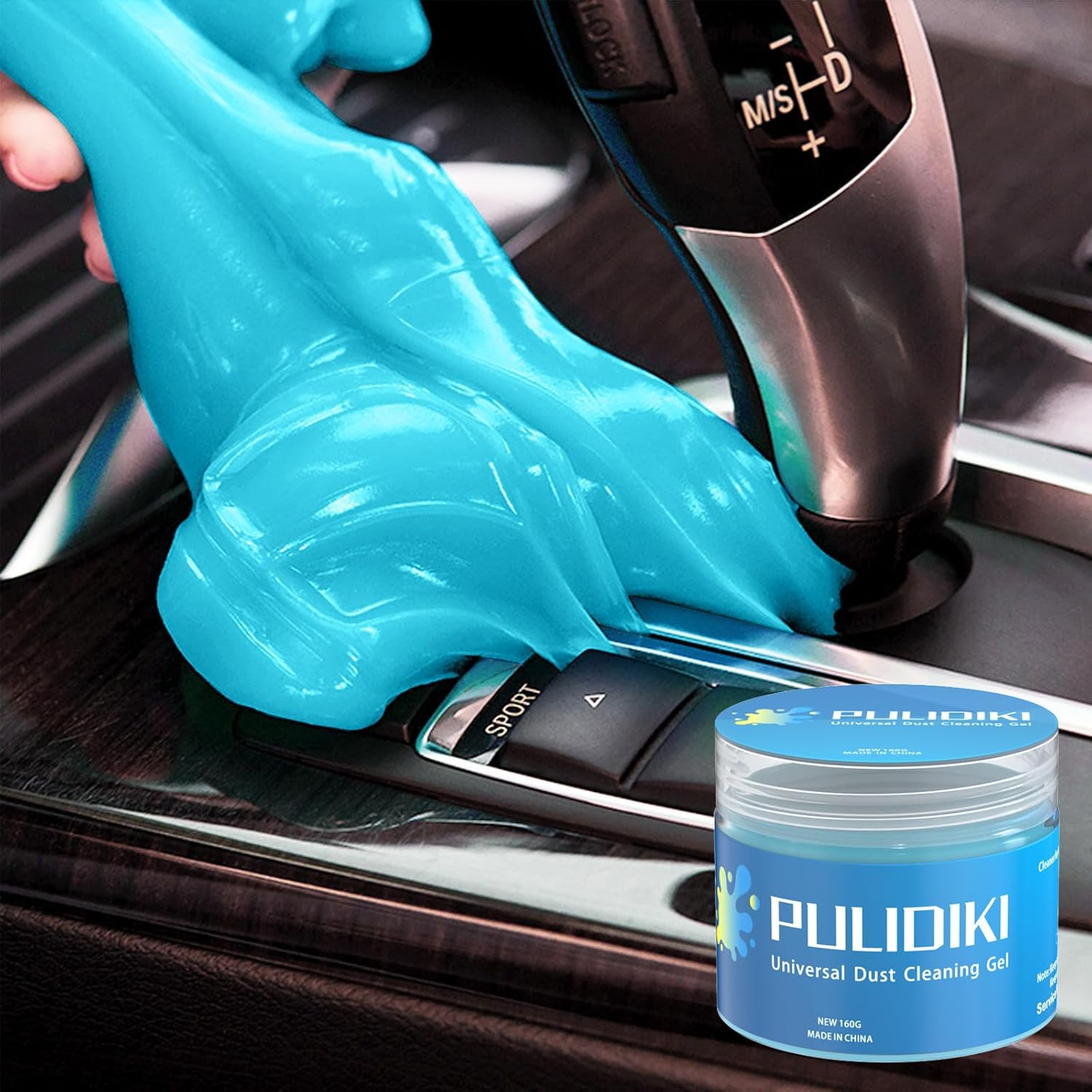
PULIDIKI Car Cleaning Gel (Detailing Putty)
Press it into vents, buttons, and seams and it lifts out dust you did not know was there. Weirdly satisfying, genuinely useful.
As an Amazon Associate, ThinkEV earns from qualifying purchases — at no extra cost to you.
The Trump angle nobody's saying out loud
Say the quiet part. The Olinia announcement timing is not random. It happens in the middle of an active US tariff pressure campaign and a USMCA renegotiation cycle that has Mexico City genuinely uncertain about how friendly the next decade looks.
A domestically produced EV, even a small one, even one that doesn't ship until 2027, does specific things to that negotiation. It signals optionality. It tells Washington that Mexico isn't passively waiting to see what tariff rate gets imposed; it's actively building alternatives. The political utility shows up immediately, even if the manufacturing utility is years away.
Serving as what could be viewed as a casual thumb-in-the-eye to Trump and the trade policies of his United States government, the president of Mexico has introduced a small electric vehicle, and that framing, coming from a mainstream Canadian auto outlet, is unusually candid. It's also accurate. Sheinbaum didn't have to time the reveal cycle this way. She did anyway. The press release is not where the message lives; the calendar is.
The Chinese angle compounds the message. BYD has been moving aggressively in Mexico since 2023, and the Atlantic Council and others have been publishing nervous analysis about what that means for North American supply chains. Washington has already signalled that Mexican-built Chinese EVs would face the same tariff wall as direct imports, the legal vehicle is the existing Section 232 framework Detroit has been lobbying to expand. That is not a fringe concern; it is the Commerce Department's stated working position.
Now layer Olinia on top. A state-supported domestic EV, in the same industrial corridor where foreign brands manufacture, in a country actively courting Chinese investment. The signal Sheinbaum is sending isn't just "we have options", it's "we have the option of building this entirely without you."
That's why the announcement matters more than the spec sheet.
The other GM-shaped data point worth knowing is what's happening at the same time on the US side. The Chevy Silverado EV and GMC Sierra EV is now slated for the end of 2025. The company says the delay is due to a need to align its investment strategy. Translation: legacy US OEMs are slowing down EV production while Mexico is starting one up. The optics are not great for the side doing the lecturing.
This is the moment where the boring tech reading and the geopolitical reading converge. Olinia probably won't change Mexico's transportation overnight. It will change what's politically available to Mexico in every trade negotiation it walks into for the next five years. That is worth US$11.25 million by itself.
The read: Sheinbaum is using a car to make a point that no diplomatic communiqué could make as effectively. The auto industry's broader story over the last two years has been complicated, in June 2024, VW stated that it will continue to heavily develop its internal combustion engine vehicles amid dwindling sales of its EV product line. Into a market where some incumbents are slowing the EV transition, Mexico is accelerating it. With a state-backed brand. In an election-adjacent political moment.
That's not a coincidence. That's a strategy.
Gear worth having
As an Amazon Associate, ThinkEV earns a small commission from qualifying purchases — at no extra cost to you.

WixGear Magnetic Air Vent Phone Mount (2-Pack)
A magnet strong enough that your phone never flinches over potholes or rail crossings. Two in the box, one for each car.
As an Amazon Associate, ThinkEV earns from qualifying purchases — at no extra cost to you.
What kills Olinia before it ships, and what doesn't
Time to be honest about the failure modes. Plenty of state-sponsored car programs in plenty of countries have produced press conferences and prototypes and very little else. Olinia could absolutely become one of those. Here is the realistic risk map, ranked by how much I'd worry about each one:
- Political-cycle risk, Sheinbaum's term doesn't run forever. State-backed industrial projects are notoriously fragile across administration changes. If Olinia hasn't shipped product and built a constituency of suppliers, workers, and dealers by the next election cycle, a successor could quietly defund it. The countdown clock isn't 2027; it's whenever the next federal administration takes office with different priorities.
- Underfunding, US$11.25 million is a meaningful private capital ask, but it's a fraction of what serious EV manufacturing requires. If subsequent rounds don't land, the prototype unveils on June 7 and then nothing visible happens for years.
- Timeline slip, Going from "two prototypes in mid-2026" to "consumer-available product in 2027" is the kind of timeline that always slips. Bet on it slipping by a year. Plan accordingly.
- Competitive density, BYD is selling EVs in Mexico now. By the time Olinia reaches volume in 2028 or 2029, the competitive set will be denser, not thinner. The window to establish brand identity is narrower than the team probably thinks.
- Mixed public sentiment, Skepticism in the Mexican commentariat has been loud. National pride plays well, but pride doesn't pay for tooling. The team needs early credibility wins: a clean prototype reveal, transparent investor disclosures, named industrial partners.
What won't kill it is political will, for now. Sheinbaum has personally staked her reputation on this. That is the single most important factor in a state-backed industrial project. The Mexican federal government will not let Olinia quietly die without a fight, because the political cost of letting it die is now larger than the political cost of keeping it alive.
That asymmetry matters. It means Olinia probably gets to fail forward several times before anyone in government will admit it isn't working. For a startup, that runway is enormous.
The bet: Olinia ships prototypes on time in June. The 2027 production date slips to late 2027 or 2028. First retail units appear in limited markets, in low volumes, at a price point that undercuts every comparable foreign EV in Mexico. The first year is rough. The second year either proves the product or buries it.
Verdict for readers tracking this from outside Mexico: watch, don't bet. Olinia is a credible industrial-policy move and a meaningful trade-negotiation signal. It is not yet a buyable product, a stock to chase, or evidence that Mexico has solved manufacturing scale-up. The signal-to-substance ratio gets recalibrated on June 7. Until then, treat every Olinia headline as politics first, automotive second. The order matters.
What would change my mind: if the June reveal looks like a concept car nobody can imagine being mass-produced, the timeline math falls apart immediately. The specific tells to watch, door seams, interior fit, whether the prototype has working HVAC or just a styled dashboard, whether the team brings a named tier-one supplier on stage with them. Concept cars hide their parts bin; production-intent prototypes name it.
The other forecast worth making explicit: if BYD's Mexico manufacturing plans accelerate over the next 18 months, meaning a confirmed plant site and a named local production model, Olinia's competitive window narrows from "wide open" to "knife fight" almost overnight. A locally built BYD at a Mexican-affordable price point eats Olinia's entire thesis. The Sheinbaum team has to ship before BYD localizes, not after. That is the real deadline. 2027 isn't ambitious, it's necessary.
The bear case on that forecast: BYD has been telegraphing a Mexico plant for two years and still hasn't broken ground on one, while Washington's tariff posture keeps the strategic calculation messy. The Atlantic Council read is that BYD's Mexico moves are about embedding influence in the regional energy transition, not racing to localize a specific model. If that's right, Olinia gets a wider window than the alarmist version suggests, maybe three years, not eighteen months. But "wider window" still isn't "open-ended." Either timeline ends with a locally built Chinese EV competing for the same urban-affordable buyer Olinia needs to win. The only variable is when the knife fight starts.
For Canadian readers tracking how the cross-border EV picture is evolving, Olinia matters because it changes the menu. If Mexico can stand up a domestic EV brand at low cost, the question of why Canada hasn't done the same with our own industrial base gets harder to dodge. We have the manufacturing footprint, the lithium, the engineering talent, and a federal government that talks about EV strategy constantly. What we don't have is anything resembling Olinia. The contrast with how Chinese-built EVs are already navigating Canadian data-privacy and cybersecurity scrutiny makes the gap even starker, we're regulating foreign EVs we don't yet build a domestic answer to.
The other question worth asking sits one layer down: the battery. A small, affordable urban EV is exactly the use case where LFP chemistry shines, cheap, durable, fine for short-range city duty. Olinia's chemistry choice will tell you a lot about how serious the engineering team is, and the practical differences between LFP and the alternatives will determine whether Olinia can hit a Mexican-affordable price point without subsidies eating the margin. The same chemistry question shapes how Chinese EVs are entering Canadian dealerships at price points domestic OEMs cannot match, Olinia is betting it can play the same hand from the manufacturing side.
Watch June 7. The prototype is the product brief made physical. If it looks credible, boring, well-engineered, obviously cheap to build, Olinia has a real shot. If it looks like a design exercise that pretends to be a car, the obituary writes itself.
Either way, the announcement has already done its job. Mexico put a marker down. Detroit and Washington have to react to it. That's a win whether the car ever ships or not.
Gear worth having
As an Amazon Associate, ThinkEV earns a small commission from qualifying purchases — at no extra cost to you.
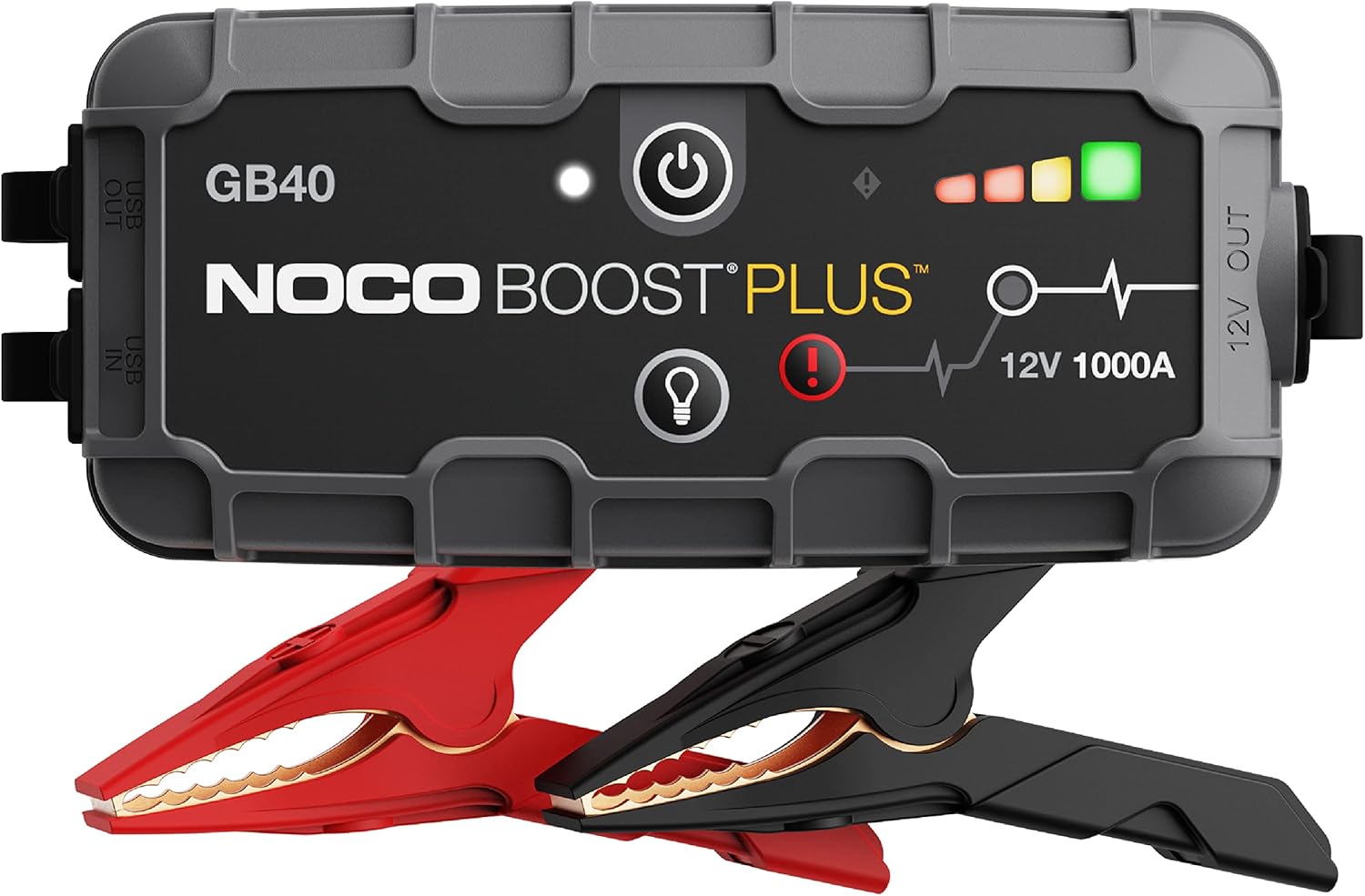
NOCO Boost Plus GB40 Jump Starter
A 1000A lithium jump starter that fits in your glovebox and works on any 12V battery. Your insurance against a dead 12V in a parking lot.
As an Amazon Associate, ThinkEV earns from qualifying purchases — at no extra cost to you.

Founder & Chief Editor
Vlad Pereira is the founder and chief editor of ThinkEV.ca, the Canadian electric-vehicle publication he writes and edits from Courtenay, British Columbia. He covers EV pricing, federal and provincial rebates, charging costs, and the Chinese manufacturers now entering Canada, from the buyer's side rather than the press-fleet side. ThinkEV is a venture of Vlad Pereira Online; his writing on health, income and the long game lives at vladpereira.com.
Frequently asked questions
Will Olinia actually reach production, or stall like past national car projects?
Can US$11.25 million actually build a real car?
Could Olinia end up on Canadian roads someday?
How does Olinia fit into the current US-Mexico trade tension?
Is BYD's presence in Mexico a threat to Olinia or an advantage?
More EV & road-trip finds
Affordable upgrades worth a look — tap any to check the price on Amazon.
 ★ 119
★ 119Foldable Waterproof Trunk Organizer
View on Amazon ★ 268
★ 268Anti-Slip Leather Steering Wheel Cover
View on Amazon ★ 8,681
Chemical Guys Complete Car Wash Kit
View on Amazon ★ 419
★ 419RGB Car Interior LED Strip Light
View on Amazon ★ 546
★ 546Funny Headrest Face Covers (2-Pack)
View on Amazon ★ 979
★ 979Leather Headrest Purse Hook
View on Amazon ★ 721
★ 72145W USB-C Fast Car Charger
View on Amazon ★ 61
★ 61Toddler Car Seat Snack and Cup Tray
View on AmazonRead, Plan, Then Stay Current
Explore our expert articles to understand incentives and ownership costs, use the map to pressure-test charging reality, then subscribe so new EV coverage comes straight to you.
Continue Reading
Chinese EVs in Canada: 15,603 In, Still No BYD

GM Recalls 2016–2017 Silverado, Sierra Over Airbag Defect
BYD's $4,000 Sealion 7 Cashback Targets Tesla Model Y
Mercedes Factory Closures: Two German Plants at Risk
Used EVs Just Passed UK Safety Tests Better Than Petrol