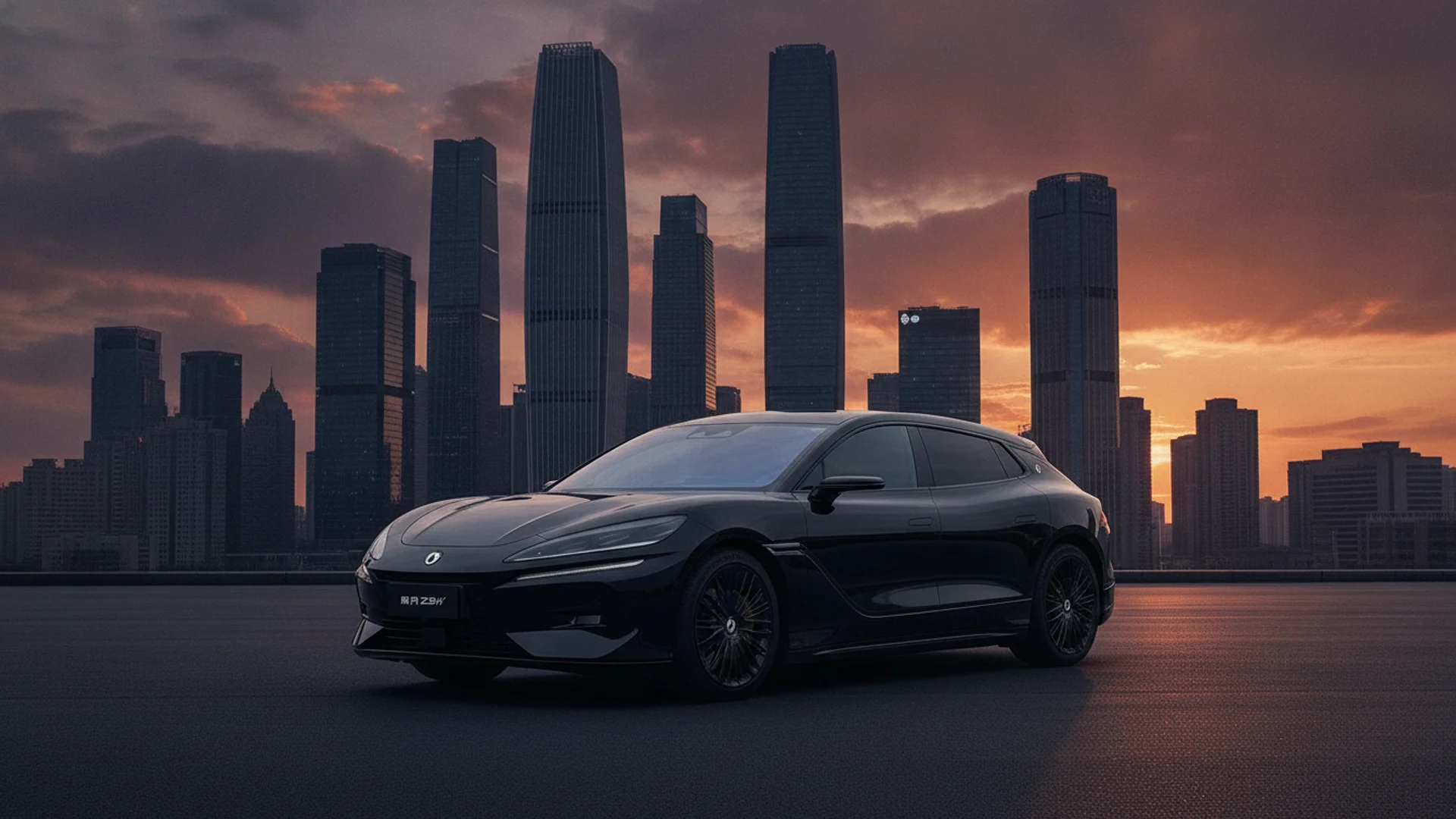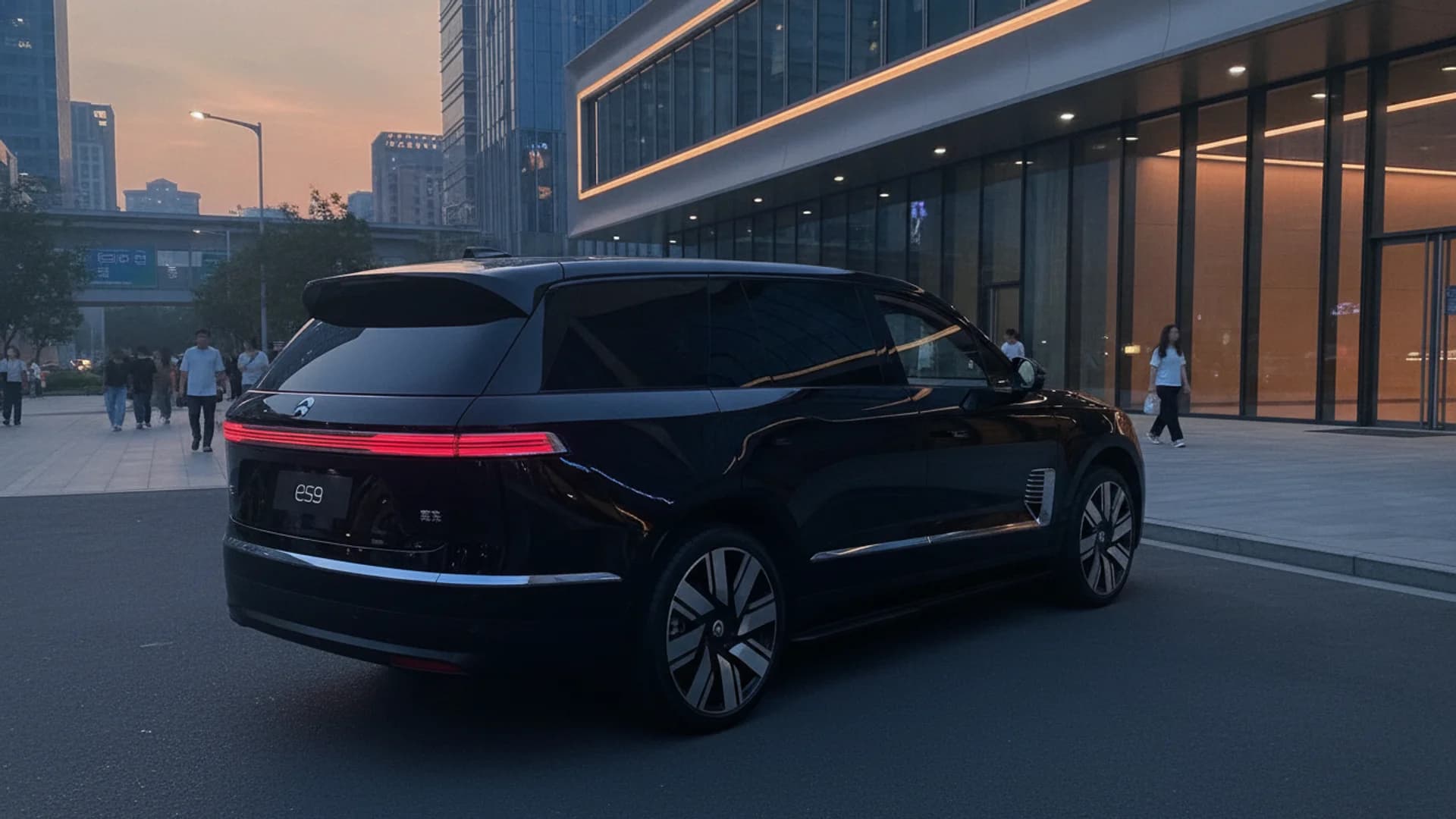
NIO dropped the ES9 at RMB 498,000, nearly 6% below its own pre-sale price. That's not a discount. That's a declaration.
Flagship EVs don't undercut their own pre-sale pricing. Not at this tier. Not from a company that has spent eleven years building a brand around premium positioning and battery swap as a moat. When a manufacturer cuts the ribbon on what it calls a category-defining product and prices it below what early reservations were willing to pay, the move is strategic, and the strategy rewards a close reading.
I'd put the editorial frame on this launch like this: NIO isn't waiting for the executive-SUV market to come to it. It's engineering one, on terms that put pressure on every Chinese flagship priced above RMB 500,000, and on the German incumbents that have spent the last decade assuming China's domestic luxury buyer would default to a roundel.
Key takeaways
- NIO launched the ES9 at RMB 498,000, roughly 6% below its own pre-sale price, signalling a deliberate category-share play.
- With BaaS, the entry price drops to RMB 390,000, making the swap-subscription path the obvious choice over full purchase.
- The ES9 matches ET9 flagship hardware, 520 kW, 620 km range, 900V charging, in the body style Chinese executives actually buy.
- Dual 16-inch rear screens and a 3,000-watt 47-speaker cabin point squarely at chauffeured-executive buyers, not owner-drivers.
- NIO's real bet is subscription revenue: every BaaS customer locks into the swap network for the vehicle's life, a moat rivals can't easily copy.
Why the price cut matters more than the launch
The ES9's headline number does two things at once. The Executive Premium Edition starts at RMB 498,000, or RMB 390,000 with the Battery-as-a-Service (BaaS) subscription plan, while the Executive Signature Edition starts at RMB 558,000, or RMB 450,000 with BaaS. Read together, that pricing anchors the executive-SUV category below the half-million-yuan threshold most analysts had assumed NIO would defend, and it makes the BaaS path the obvious entry point rather than a niche option for swap-network loyalists.
The roughly 6% gap below pre-sale is the part I'd flag. Pre-sale pricing usually sets a floor. Manufacturers anchor reservations at a number they expect to hold or beat by a small margin in optional packages. Cutting the floor itself on launch day signals one of two things: either the order book underperformed expectations, or NIO is willingly trading near-term margin for delivery velocity and category share. The latter reading is the more interesting one, and the spec sheet supports it, this isn't a stripped-down trim being repositioned. CnEVPost framed the same move as NIO trying to replicate a familiar playbook, and that's the right read: pricing the full-size SUV significantly below the ET9 sedan is a deliberate segmentation choice, not a margin accident.
The case against my reading is straightforward: maybe the cut is just NIO matching the market clearing price the order book revealed, and there's no strategy beyond that. Concede part of it. But a tactical cut would be 1–2%, not 6%, and it wouldn't be paired with a top-trim Signature Edition that holds price discipline. The shape of the cut, aggressive at the floor, intact at the ceiling, is the shape of a category-share play, not a clearance move.
Where the band lands matters for the competitive picture. At RMB 390,000 with BaaS, the ES9 sits in direct conversation with the Aito M9, the Huawei-backed flagship that had been pricing the category. EV.com noted the launch puts the ES9 directly into competition with the recently updated, Huawei-backed Aito M9, which confirms the competitive frame rather than complicating it. That's the editorial read I'd commit to: NIO has decided the executive-SUV segment is winnable on price-plus-network, not on brand prestige alone, and the launch pricing is the first move in that strategy. If I'm wrong, the signal will come in Q3, a quiet trim refresh or a "limited edition" pricing band would suggest the margin pressure was tighter than the launch suggested.
Three numbers worth holding in mind as the rest of this plays out:
- RMB 498,000, the full-purchase floor on the Executive Premium Edition
- RMB 390,000, the BaaS entry point, roughly 22% below the full-purchase floor
- ~6%, the gap between pre-sale and launch pricing, the signal that started this analysis
The ET9 playbook, now in SUV form
The ES9 serves as Nio's flagship SUV and serves as the SUV counterpart to the ET9 flagship sedan. That framing, explicit, on the record, from NIO's own communications, tells you exactly how to read the product. The ET9 established the technology stack and the customer expectation. The ES9 carries that stack into the body style that Chinese executive buyers actually want.
The hardware tells the same story. NIO officially launched the ES9 flagship SUV with 520 kW, 620 km range, and 900V charging. Those are German-flagship numbers delivered at a price band that German flagships can't reach in China without local production and aggressive incentive stacking. The 900V architecture is the technical anchor, it's what makes the BaaS proposition workable at this tier, because swap stations have to be engineered around the voltage of the cars they serve, and 900V infrastructure is non-trivial.
The interior spec extends the parity argument. CnEVPost's delivery rundown notes the ES9 carries rear-seat configurations matching the ET9, including dual 16-inch 3.3K executive screens and a 47-speaker audio system rated at over 3,000 watts. That's not a spec sheet aimed at the owner-driver. It's a rear-cabin proposition, and it's the clearest tell that the ES9 is being built for the chauffeured-executive use case rather than the enthusiast buyer.
The structural claim under William Li's launch-event framing, that the ES9 represents eleven years of NIO innovation culminating in a single product, is that swap-network density plus full ET9 spec parity at SUV body geometry is the moat. CEO statements at launch events are marketing, not analysis. But the claim underneath the marketing is defensible: NIO has been building toward a flagship SUV with full ET9 spec parity since the swap network was first conceived, and the ES9 is the product where the pieces line up.
The harder question is whether NIO can sustain this spec tier at delivery scale. Flagship-spec vehicles at flagship pricing tolerate slow ramps because the volume expectations are modest. The ES9, priced to move, doesn't have that luxury. If NIO can hold the spec while hitting the delivery cadence, the playbook works. If it can't, the price cut becomes a margin trap.
Gear worth having
As an Amazon Associate, ThinkEV earns a small commission from qualifying purchases — at no extra cost to you.

WeatherTech FloorLiner for Tesla Model 3
Deep-channel liners that trap every drop of slush and salt. The difference between a ruined interior and a showroom-fresh cabin after a Canadian winter.
As an Amazon Associate, ThinkEV earns from qualifying purchases — at no extra cost to you.
Battery-as-a-Service at the flagship tier: the real bet
BaaS at RMB 390,000 isn't a discount mechanism, it's a subscription infrastructure play disguised as a financing option. The customer who chooses the BaaS path is not just buying a cheaper ES9; they're committing to NIO's swap network as their primary refueling experience for the life of the vehicle. That's a multi-year subscription revenue stream, and it's the part of NIO's business that's hardest for competitors to replicate.
The swap network is the moat. Anyone can build a 900V battery; very few companies have spent the better part of a decade building physical infrastructure that swaps that battery in minutes. At flagship spec, the proposition gets sharper, an executive buyer who values their time has a real reason to prefer a three-minute swap over a twenty-minute fast charge, even at 900V speeds. That's the wedge NIO is leaning into.
The risk is geometric. BaaS economics only work if swap-station density keeps pace with deliveries. A flagship customer who can't swap within a reasonable radius of where they actually drive is a flagship customer who churns out of the subscription. NIO has been building swap stations aggressively, but the ES9's launch volume will be the real stress test of whether station rollout has matched fleet growth. For the global context on how NIO's charging strategy reads outside China, the broader picture of NIO's premium positioning against Tesla in Canada covers the comparative ground.
Gear worth having
As an Amazon Associate, ThinkEV earns a small commission from qualifying purchases — at no extra cost to you.
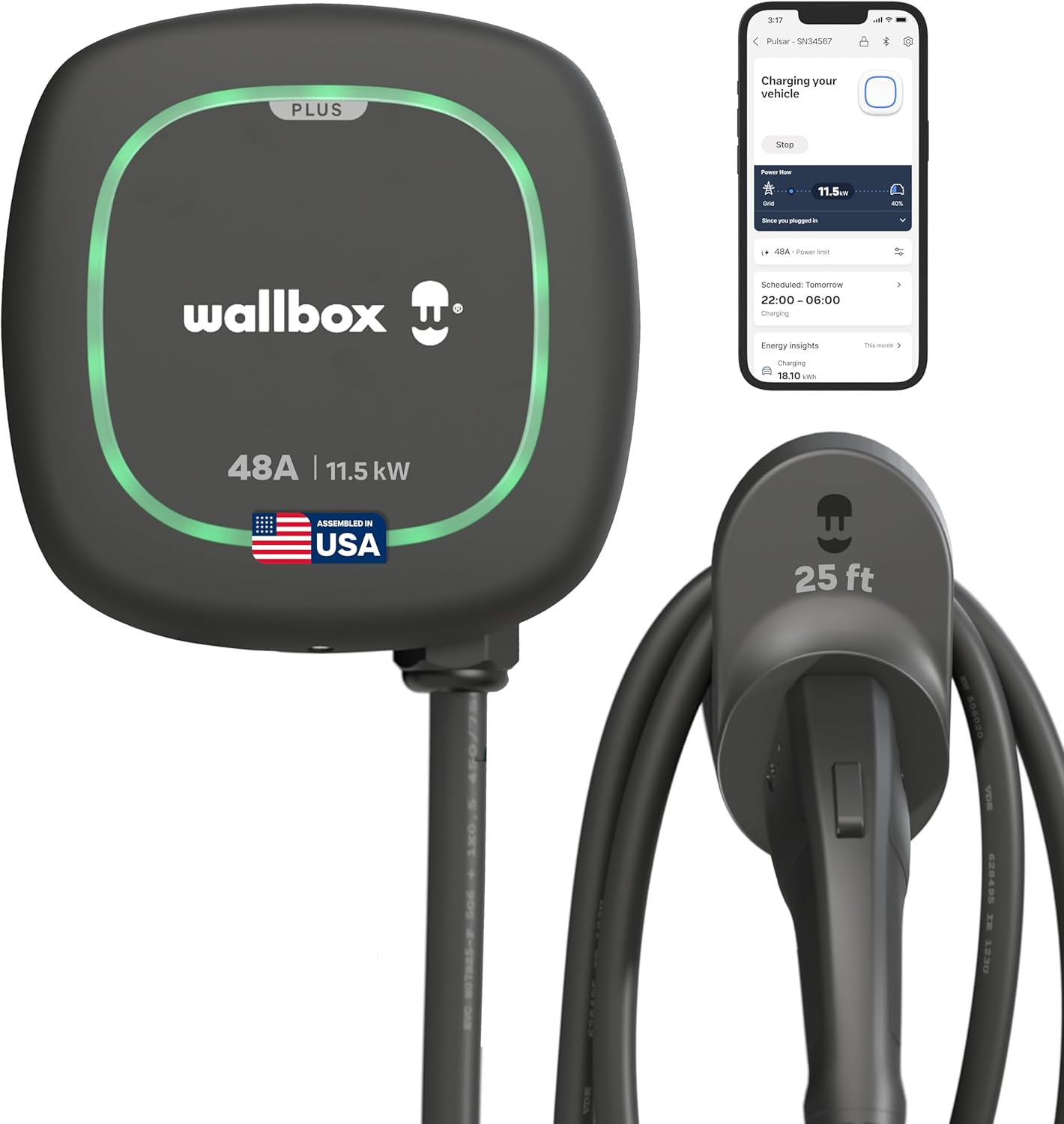
Wallbox Pulsar Plus 48A Level 2 Charger
Compact, sleek charger with app control and power sharing for two EVs. 48A / 11.5 kW, NEMA 14-50. Looks as good as your EV.
As an Amazon Associate, ThinkEV earns from qualifying purchases — at no extra cost to you.
The counter-case here deserves a hard look: BaaS at the flagship tier might be the wrong product for the wrong buyer. Executive-SUV customers are the demographic least price-sensitive to battery purchase costs and most concerned with residual value and resale clarity. A car you don't own the battery in is a car with a more complicated resale story. The earlier NIO models with BaaS, the ES6 and ES8, already showed wider used-market price spreads between BaaS and full-purchase units, because used-buyers have to underwrite the ongoing subscription liability before agreeing on a number. Carry that pattern into the ES9 tier, where a single unit represents two or three times the capital outlay, and the resale spread becomes a structural drag on the BaaS proposition rather than a footnote. If BaaS take-rate at the ES9 tier comes in below 50%, the subscription thesis breaks and the RMB 498,000 number becomes the real price the market is paying, which would reframe the launch as a high-spec product with a clever financing footnote, not a category reinvention.
Who NIO is actually targeting, and why it's not who you think
The "executive SUV" framing is deliberate vocabulary. NIO is not selling this car to private luxury shoppers chasing a status object, that's the Aito M9's lane, and Huawei's brand pull dominates that buyer profile. The ES9 is being positioned for government and corporate fleet purchases, where rear-seat configuration, screen real estate, and quiet-cabin acoustics carry more weight than the badge.
The launch-event details support that reading. Yao Ming's presence at the event wasn't an accident; it's aspirational positioning for the domestic buyer who associates executive ride-quality with the way actual executives travel. The Horizon Edition at the top of the trim ladder, pushing past RMB 600,000, signals that NIO believes there's headroom above the Aito M9's ceiling for buyers who want the most-equipped expression of the platform.
The competitive frame I'd commit to: the ES9's real rivals aren't the Tesla Model X or the domestic-Chinese SUVs in its nominal price band. They're the BMW X7 and the Mercedes EQS SUV on Chinese soil, where the German flagships have been losing ground to domestic alternatives for two product cycles. NIO is betting a 900V Chinese flagship with executive-grade interior and a swap network beats a German flagship with a roundel and a slower charge curve. That's the position. The market will price it.
Gear worth having
As an Amazon Associate, ThinkEV earns a small commission from qualifying purchases — at no extra cost to you.

PULIDIKI Car Cleaning Gel (Detailing Putty)
Press it into vents, buttons, and seams and it lifts out dust you did not know was there. Weirdly satisfying, genuinely useful.
As an Amazon Associate, ThinkEV earns from qualifying purchases — at no extra cost to you.
What I'll be watching before calling this a win
Three signals will tell us whether the ES9 is the category-defining product NIO is positioning it as, or whether the launch-day pricing was a defensive move dressed in ambitious marketing.
First: delivery pace in Q3 2026. Nio CEO William Li said on 6 January 2026 that the ES9 will launch in the second quarter of 2026 and had completed the tooling trial phase and is entering the pre-production phase. That timeline held, the launch hit Q2 as promised. The harder test is the production ramp. NIO has a pattern of ambitious launches followed by ramp constraints, and a flagship priced for volume can't afford a slow first quarter of deliveries. Electrive notes the European pricing framing, roughly €49,500 without a battery, around €63,000 including it, which sets up the second test: whether NIO can hold spec discipline across multiple regional pricing structures simultaneously.
Second: the BaaS subscriber growth curve. If the BaaS path is the entry point NIO is positioning it as, the subscriber base should grow proportionally with ES9 sales. Any divergence, a meaningful share of buyers choosing full-purchase over BaaS, would suggest the swap-network thesis isn't resonating at the flagship tier the way it has at lower price points.
Third: the Aito M9's response. Huawei's backing gives the M9 marketing reach and software-update cadence that NIO can't easily match, even with the ES9's hardware edge. A coordinated Aito price adjustment in Q3 would tell us the M9 team read the ES9 launch the same way I am, as a deliberate move into M9 territory rather than a parallel product positioning.
What would change my mind: a single quarter where ES9 deliveries clear 8,000 units with a BaaS take-rate above 60% and no Aito response. That combination would validate every part of the thesis, the volume, the subscription wedge, and the category-share move, in one data point. I don't expect it. The base case is a 4,000–6,000 unit Q3, a BaaS take-rate in the 40–50% range, and an Aito M9 trim refresh by October. That's a solid launch but not a category redefinition.
The European angle is worth tracking too. Li said that the ES9 will share all of the Nio ET9's technologies, and will differentiate itself from the smaller ES8 by aiming for business users. NIO already operates in Norway. If the ES9 follows the ET9 into European markets, the price points will need to be rewritten for VAT, homologation, and the absence of the BaaS swap-network density that makes the Chinese pricing work.
Gear worth having
As an Amazon Associate, ThinkEV earns a small commission from qualifying purchases — at no extra cost to you.

WixGear Magnetic Air Vent Phone Mount (2-Pack)
A magnet strong enough that your phone never flinches over potholes or rail crossings. Two in the box, one for each car.
As an Amazon Associate, ThinkEV earns from qualifying purchases — at no extra cost to you.
The Canadian relevance, further away than it looks
For Canadian readers, the ES9 is a benchmark rather than a buying option. The current tariff regime on Chinese EVs, reduced from 100% to 6.1% in January 2026 on a 49,000-unit quota, doesn't currently include NIO vehicles in any announced import plan, and the regulatory and dealer-network groundwork for a Canadian NIO launch hasn't been signalled. The infrastructure barrier isn't the blocker; NIO uses CCS in markets outside China and would be compatible with Canada's existing fast-charging networks. Policy and distribution are the blockers.
The pricing math doesn't make the case stronger. At RMB 498,000, roughly USD 73,400 at current rates, before any tariff, duty, or dealer margin is layered on, the ES9 sits above EVAP eligibility thresholds and above the price band where Canadian luxury-SUV buyers actually transact. Even if NIO landed the car in Canada tomorrow, it wouldn't be competing against the Kia EV9 or the Hyundai Ioniq 5 N; it would be competing against the BMW iX and the Mercedes EQS SUV, in a segment where badge equity still does real work.
The named comparison that matters most for Canadian context: the Kia EV9 Wind AWD lands at $74,995 CAD, which is roughly where a hypothetical landed ES9 would also sit, before adding BaaS-network economics that don't exist in Canada and before factoring in dealer service infrastructure that doesn't exist either. The ES9 isn't a Kia EV9 competitor in Canada because there is no Canada distribution case for it. The EV9 is a Canadian product. The ES9 is, for now, a signal.
The reason Canadian readers should care is the read-across. What the ES9 establishes, 900V, 620 km range, executive-grade interior at sub-RMB 500,000, is the spec floor that every flagship electric SUV will need to clear within the next product cycle. The German incumbents Canadian buyers are choosing between today are being benchmarked against this car in their largest single market. The pressure flows downhill into product roadmaps, and product roadmaps are what Canadian dealers will be selling in 2028 and 2029.
Bottom line: the ES9 launch is the most aggressive flagship Chinese EV pricing move of the year, and the cars it's competing against today will be the cars Canadian buyers compare to tomorrow. Watch the delivery ramp. Watch the BaaS subscriber growth. Watch Huawei's response. The strategy is committed; the execution is where this gets decided.
Gear worth having
As an Amazon Associate, ThinkEV earns a small commission from qualifying purchases — at no extra cost to you.
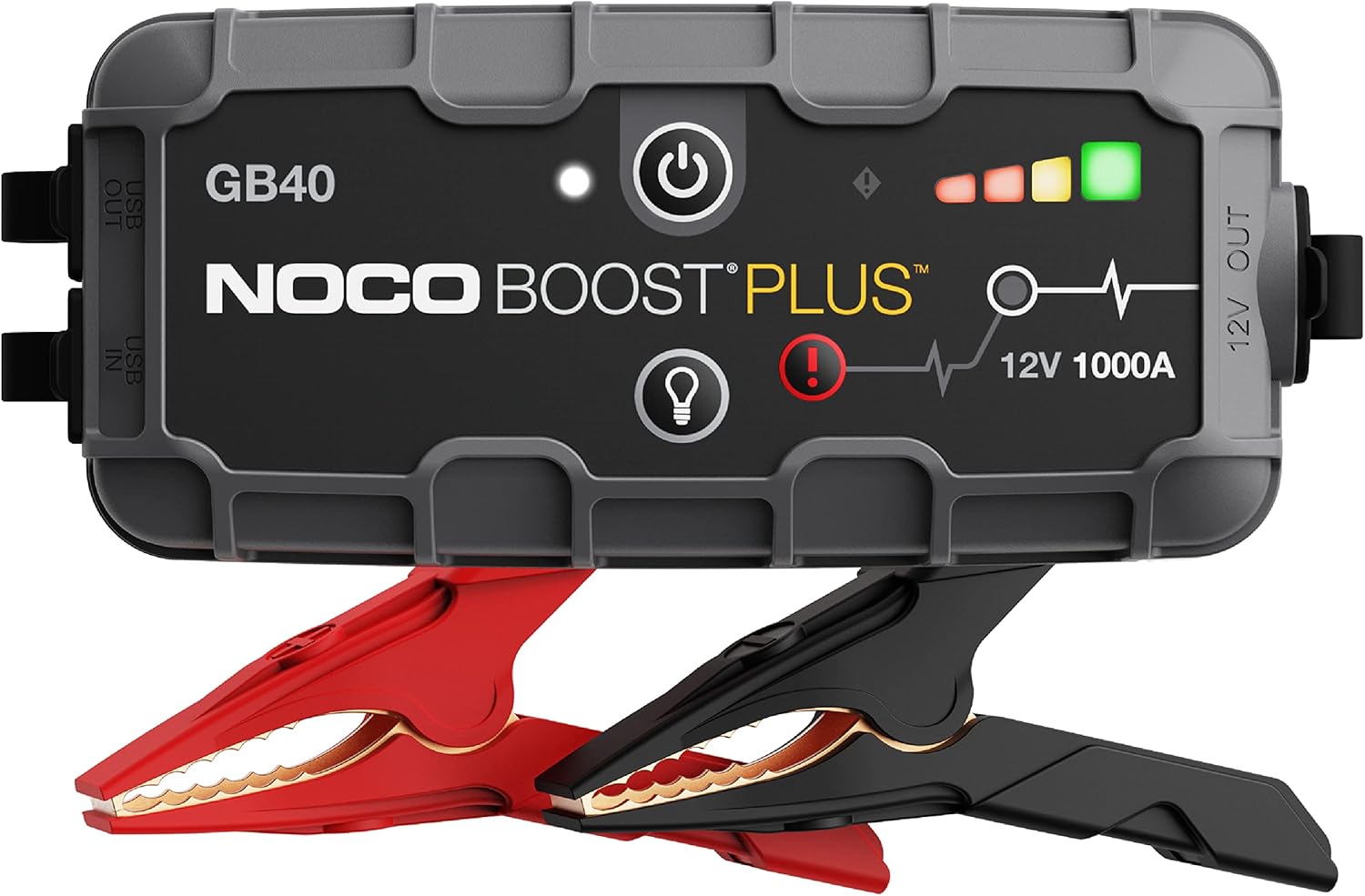
NOCO Boost Plus GB40 Jump Starter
A 1000A lithium jump starter that fits in your glovebox and works on any 12V battery. Your insurance against a dead 12V in a parking lot.
As an Amazon Associate, ThinkEV earns from qualifying purchases — at no extra cost to you.

Founder & Chief Editor
Vlad Pereira is the founder and chief editor of ThinkEV.ca, the Canadian electric-vehicle publication he writes and edits from Courtenay, British Columbia. He covers EV pricing, federal and provincial rebates, charging costs, and the Chinese manufacturers now entering Canada, from the buyer's side rather than the press-fleet side. ThinkEV is a venture of Vlad Pereira Online; his writing on health, income and the long game lives at vladpereira.com.
Frequently asked questions
Will the ES9 ever come to Canada?
What does BaaS actually cost per month?
How does the ES9 price compare to a BMW X7 in China?
Is the 620 km range rated under CLTC or WLTP?
What happens to BaaS customers if NIO's swap network shrinks?
More EV & road-trip finds
Affordable upgrades worth a look — tap any to check the price on Amazon.
 ★ 568
★ 568Personalized Photo and Text Keychain
View on Amazon ★ 12,396
K KNODEL Car Trash Can with Lid
View on Amazon ★ 21,310
Magnetic Car Phone Mount
View on Amazon ★ 121
★ 121Foldable Windshield Sun Umbrella
View on Amazon ★ 17,839
Qifutan Vent Phone Mount (Military-Grade Clip)
View on Amazon ★ 12,051
Windex Electronics Screen Wipes
View on Amazon ★ 419
★ 419RGB Car Interior LED Strip Light
View on Amazon ★ 546
★ 546Funny Headrest Face Covers (2-Pack)
View on AmazonRead, Plan, Then Stay Current
Explore our expert articles to understand incentives and ownership costs, use the map to pressure-test charging reality, then subscribe so new EV coverage comes straight to you.
Continue Reading
Jaecoo J5 EV Uber Discount: $31,500 Fleet Math Changes
Tesla Pauses Model 3 Premium Orders in Canada, Blames the Quota. The Numbers Tell a Different Story
Chinese EVs in Canada: 15,603 In, Still No BYD
BYD Great Seagull: A Bigger $10,000 EV Hatch Is Coming

10–97% in 9 Min: Sunwoda Joins the Flash Charging Race