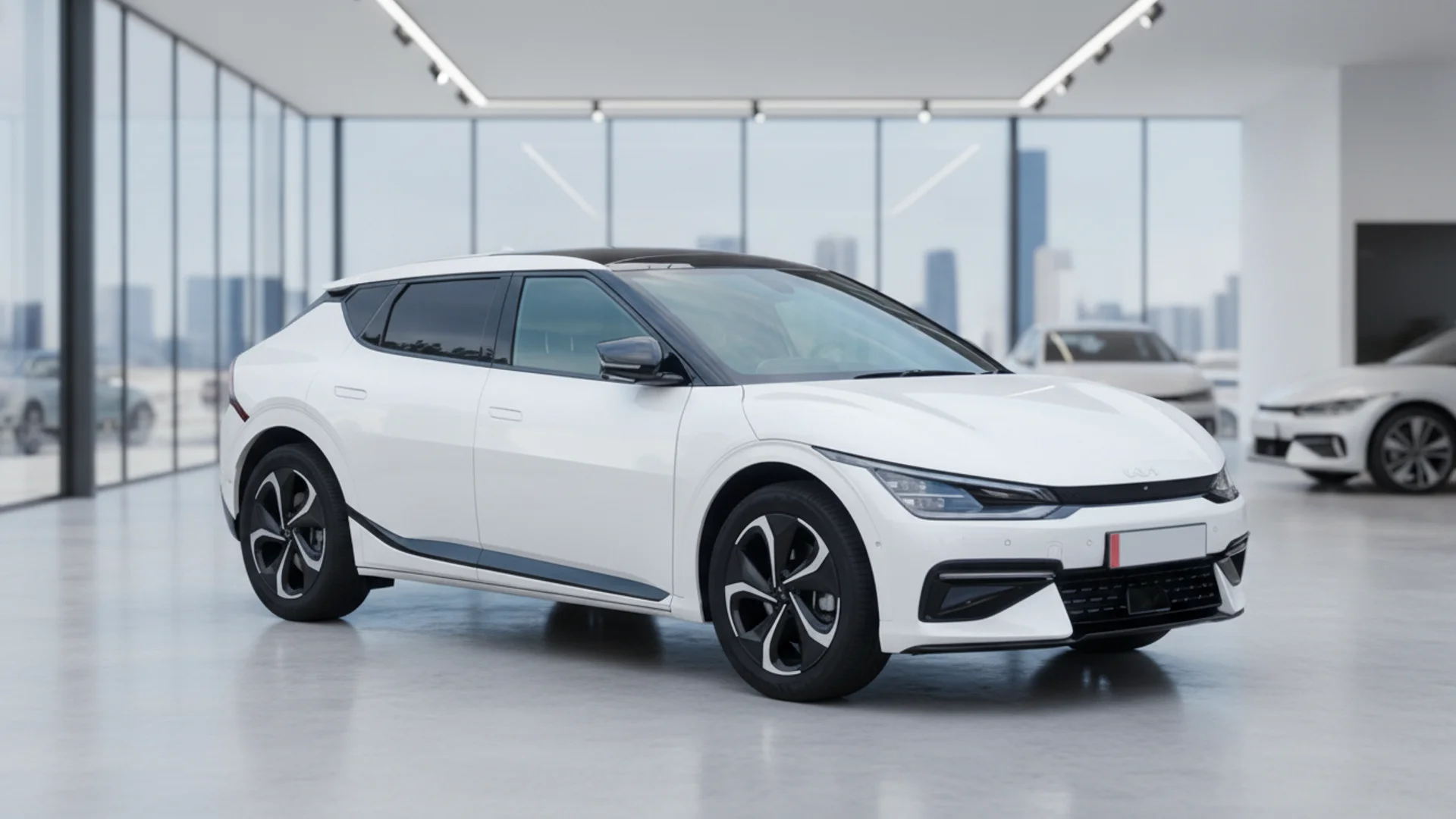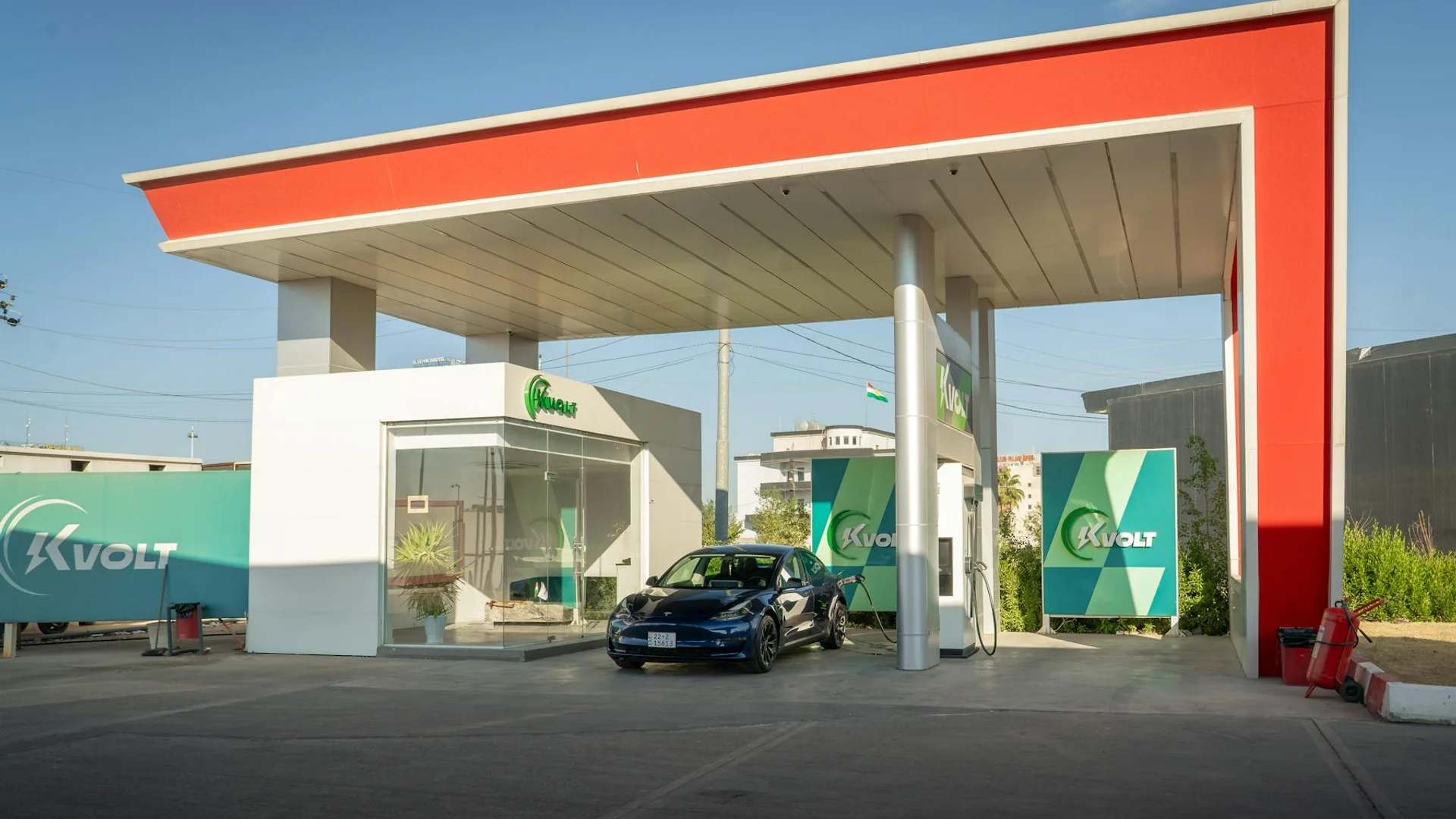
The Alfa Romeo Junior Elettrica wasn't supposed to steal the car. It was supposed to be practical, a shared runabout, a sensible compromise between two people and one driveway. Then someone took a corner. The rear-biased torque split shoved the back end into the apex with the kind of conversational chassis behaviour you don't expect from a 1,570-kilogram electric crossover. It's the kind of corner that turns a shared car into a contested one. The runabout is now the prize, and the second driver is shopping for one of their own.
A question has been quietly reorganising the electric vehicle conversation for the last eighteen months. Not "is the range enough?" Not "where will I charge?" Those questions have answers now. The harder question, the one enthusiasts have been waiting to ask out loud, is whether an electric car can feel like a car. Whether it can talk back. Whether the steering wheel transmits the road or just points the front wheels at it.
For a growing list of models, yes. But the answer is not "EVs are fun now." It's more interesting than that. Fun, in this generation of electric cars, is a philosophy choice. Some manufacturers have decided to build for it. Others have decided to build around it, using software, simulated shifts, and synthetic engine notes to paper over physics they didn't engineer for in the first place. The gap between those two approaches is where the actual story lives.
Key takeaways
- The Alfa Romeo Junior Elettrica's rear-biased torque split creates the chassis conversation missing from a decade of compliance EVs.
- The Alpine A290 weighs 1,504 kg and sits 30 mm lower than the Renault 5 it shares, with a stiffened subframe on the same battery and motor, proof that a floor-mounted pack drops the centre of gravity below what any combustion car reaches without a mid-engine layout.
- The Alpine A290 lowers the Renault 5 platform 30 millimetres and stiffens the subframe, same battery, completely different car.
- At roughly €33,000, the Renault 5 E-Tech undercuts the Alpine A290 by €5,000 while sharing 80% of its architecture.
- Edmunds and Car and Driver now treat fun-to-drive as a primary evaluation criterion, not an editorial afterthought.
Why 'Fun' Got Lost in the First Generation of EVs
Range anxiety was the headline brief for the first wave of electric cars. Compliance was the secondary brief. Character was, at best, a nice-to-have that nobody on the program had time to fight for. So the first wave of EVs was engineered to solve a public-relations problem, not a driver's problem, and you can feel it in every car that shipped between 2010 and roughly 2019.
You can feel it in the early cars. The Nissan Leaf was a numb appliance, competent, sensible, joyless. The first-generation Chevy Bolt rode like a kitchen chair on a skateboard. Even Tesla, which got more credit for performance than anybody, was solving a specific narrow problem: straight-line acceleration impressive enough to override every other criticism. Instant torque became the marketing crutch, and an entire generation of car reviews confused "this is fast" with "this is fun."
They are not the same thing. Speed is a number. Fun is a conversation between the driver's hands and the road, mediated through suspension geometry, steering rack ratios, weight distribution, and the dozens of small engineering decisions that don't show up in a spec sheet. The Tesla Model S Plaid will demolish a Porsche 911 in a straight line. The Porsche 911 will demolish the Tesla on any road with corners. That difference is the difference.
One case against this framing is that early EVs were doing the only thing they could do, proving the technology worked at all. Fair. The Leaf shipped in 2010 with a battery chemistry, a thermal management approach, and a cost structure that left almost no engineering budget for chassis tuning. Asking why those cars weren't fun is a little like asking why the first iPhone didn't have copy-paste. The answer is that priorities are sequential, and character was correctly deferred. The argument now isn't that those early teams were lazy. It's that the deferred priority is finally due, and the manufacturers who keep deferring it past 2026 are running out of excuses.
Designers eventually stopped asking what an EV merely permits and started asking what its physics actively enables. Floor-mounted batteries create a centre of gravity lower than almost any combustion car can manage. Electric motors deliver torque without a transmission's interpretation layer. Regenerative braking, properly tuned, becomes a third pedal that engages the driver instead of insulating them from the road. The interesting part is that the ingredients for a great driver's car were sitting on the floor of every EV factory the whole time. The question was whether engineers would build with them, or build past them.
Sorting has begun in the rankings themselves. Edmunds now treats fun-to-drive as a primary category criterion alongside its real-world range test that measures the distance an electric vehicle can travel on a full charge. That's not editorialising; that's a consumer research firm responding to what buyers actually ask about. The cars that engineered for fun are pulling away from the cars that engineered for compliance, and the rankings are starting to reflect it. Car and Driver has moved in the same direction, its 2026 rankings evaluate vehicles across more than 200 data points, and the editorial language has shifted from "best electric car for the money" to a vocabulary that increasingly resembles how the magazine writes about combustion sports sedans. The publications that drive enthusiast purchase decisions don't change their evaluative vocabulary for marketing reasons. They change it when the cars start rewarding the change.
The Physics Advantage Nobody Marketed Properly
Electric cars have a structural physics advantage over combustion cars when it comes to handling. Not despite the battery weight, because of where the battery weight sits. That sentence should have been the marketing headline for the entire 2015–2025 product cycle, and instead the industry spent ten years selling 0-60 times.
A flat battery pack mounted in the floor pan lowers the centre of gravity below anything a combustion car can match without resorting to a mid-engine layout. The Hyundai Ioniq 6's 0.21 drag coefficient and roughly 56/44 weight distribution aren't accidents, they're what happens when an engineering team treats aerodynamics and mass placement as primary design constraints rather than late-stage tuning. The Alpine A290 lowers the Renault 5 platform by 30 millimetres, stiffens the subframe, and arrives at a 1,504-kilogram kerb weight. Same battery, same motor architecture, completely different car.
E-axle architecture is doing something that mechanical drivetrains physically can't. A dual-motor EV can split torque front-to-rear in milliseconds, vector it side-to-side in milliseconds, and modulate it during a single corner with the kind of granularity that mechanical limited-slip differentials approximated by accident on a good day. This isn't a drag-strip trick. It's a handling tool, one that lets a 2,000-kilogram crossover rotate through a corner the way a 1,400-kilogram hot hatch used to. The principle isn't new, CarExpert's review team noted that the most entertaining performance EVs typically combine a low centre of gravity with a rear-biased torque split and wider rear tyres, which is essentially a description of the chassis recipe most character-first EVs are now converging on.
The Renault 5 E-Tech illustrates the principle without the marketing dust. It uses the same motor architecture as the Megane E-Tech, but it sits in a body roughly 300 kilograms lighter and on a wheelbase shorter than most subcompact sedans. The result is the cheapest genuinely entertaining EV money can currently buy, light enough to change direction without arguing about it, short enough to feel agile on a back road, and tuned with the kind of intent that hot-hatch buyers have been missing for half a decade. At roughly €33,000 in European markets for the higher-output trim, it undercuts the Alpine A290 by close to €5,000 while sharing 80% of the architecture.
Weight is the unlocking factor. It always has been. The Lotus principle, "simplify, then add lightness", was never about the engine type. It was about the relationship between mass and chassis. Electric drivetrains add mass. Smart electric chassis design subtracts it where it can: aluminum subframes, lightweight inverters, structural battery packs that double as floor pans. The cars that get this right feel different from the moment you turn the wheel. The cars that don't get it right feel like furniture.
There is a counter to all of this, and it's the curb-weight reality. A Tesla Model Y Long Range is around 1,995 kilograms. A Mustang Mach-E GT is over 2,200. A Rivian R1S clears 3,100. No amount of low-centre-of-gravity rhetoric makes those cars feel like a Miata, and pretending otherwise is the kind of EV-evangelism that makes enthusiasts roll their eyes. The framing is that EVs have a physics advantage at the floor and a physics penalty at the scales. The cars that feel great are the ones where the advantage outweighs the penalty, which is overwhelmingly a function of how much mass the engineering team was willing to fight to remove, not a function of the powertrain choice itself. The Alpine A290's 1,504 kilograms isn't impressive because it's an EV. It's impressive because someone went through the bill of materials and refused to round up.
Physics is there. Whether the engineering team chooses to honour it is the question that separates the Alpine A290 from a generic crossover wearing the same motor underneath.
Gear worth having
As an Amazon Associate, ThinkEV earns a small commission from qualifying purchases — at no extra cost to you.

Lectron Level 2 J1772 Charger (40A, WiFi)
Smart WiFi charger with real-time energy monitoring. 40A / 9.6 kW, J1772 with a NEMA 14-50 plug, schedule charging right from your phone.
As an Amazon Associate, ThinkEV earns from qualifying purchases — at no extra cost to you.
Two Philosophies: Character-First vs. Performance-First
Two engineering philosophies split the fun-to-drive EVs currently on sale, and the gap between them is the most interesting argument in the segment.
Driver feedback is what the character-first camp builds for. Alpine A290, Alfa Romeo Junior Elettrica, Mini Cooper E. These cars don't lead with horsepower figures, the Junior Elettrica's 240 hp isn't going to win a stoplight war against a Tesla Model 3 Performance's 510 hp. What they lead with is the analog-feeling response: weighted steering, a chassis that telegraphs grip, a throttle map that rewards smoothness rather than punishing it. Drive one for an afternoon and the car talks. It tells you when the front end is loading up, when the rear is settling, when you can lean on it harder.
Numbers are what the performance-first camp builds for. Porsche Taycan, Hyundai Ioniq 5 N, the various M-badged BMW EVs. These cars lead with power outputs, 650 hp on the Ioniq 5 N, north of 750 in the Taycan Turbo S configurations, and they lead with software-defined driving modes that simulate experiences the underlying powertrain wouldn't produce on its own. The Ioniq 5 N's "N Pedal" mode, its simulated gear shifts, its synthetic engine sounds: these are software compensating for what the physics of an EV powertrain removed. Not in a bad way, necessarily. Just in a philosophical way. Top Gear's reviewers, who are not generally sentimental about combustion nostalgia, described the Ioniq 5 N's approach as a car that "brazenly impersonates a petrol drivetrain" and then conceded that the impersonation is convincing enough to qualify as its own kind of fun. The question isn't whether the simulation is good. It's whether the simulation is what you wanted to buy.
Stripped of the marketing language, the Ioniq 5 N is doing something fascinating and slightly unsettling. It's a 2,200-kilogram electric SUV that has been programmed to feel like a 1,500-kilogram combustion hot hatch. The software is good enough that it mostly works. But there's an awareness, somewhere in the back of your head, that you're driving a simulation of the car you actually want. The car is performing fun rather than possessing it.
Porsche sits in this camp too, and Porsche made a mechanical commitment the others refused. The Taycan's rear axle has a two-speed gearbox, the only production EV drivetrain with an actual second gear. It costs more. It adds weight. It complicates the drivetrain. And it gives the car a mechanical character, a real shift, a real change in delivery, that no software simulation can fully replicate. That's a philosophy choice. Porsche could have used a single-speed reduction gear like every other manufacturer and saved a fortune. They didn't, because they understood what their customers were buying.
Compare that to the Tesla Model Y, which sits in neither camp and is happy about it. The Model Y L, a six-seat variant, went on sale in Australia in March 2026, which tells you exactly where Tesla's engineering attention has gone: packaging, range, family utility. Nothing wrong with that. The Model Y outsells every car on this list combined and probably will for years. But it is, deliberately, not a driver's car. It's the appliance benchmark that the character-first and performance-first camps are both trying to differentiate themselves from. When buyers ask "is the Model Y fun to drive?" the answer is that fun was not on the spec sheet, and the car is more useful for not pretending it was.
Which philosophy is correct? Both. Neither. The character-first cars feel more authentic to drivers who came from analog sports cars, and the performance-first cars feel more thrilling to drivers who measure cars in lap times and 0-60 numbers. Watching manufacturers commit one direction or the other is the interesting part, because the half-measure cars, the ones that try to do both with software alone, feel like neither.
The Alfa Junior and the Renault 5: Fun Without the Supercar Budget
Genuinely fun electric cars now exist at hot-hatch prices. Not "fun for an EV." Just fun. That is the most under-reported story in this segment, and it's been true for less than two model years.
The Alfa Romeo Junior Elettrica is the cleanest example. 240 hp in the Veloce trim, a rear-biased torque split, 1,570 kilograms, lighter than a Tesla Model 3, shorter than a Volkswagen Golf, priced from around €40,000 in Italy. The engineering brief was clearly "make this feel like an Alfa," not "make this hit a horsepower number," and it shows in the way the car loads up through a corner. There's a reason it keeps coming up in driver forums alongside cars three times its price.
The Renault 5 E-Tech makes a different argument from the other direction. 150 hp in the standard trim, 218 hp coming in the RS-badged variant, 1,449 kilograms, base pricing around €28,000 in France. The hot-hatch physics formula, light body, eager motor, short wheelbase, communicative steering, translated to electric drivetrain without losing what made hot hatches good in the first place. It's not just quick, it's playful. There's a difference, and the difference is the entire argument.
The Polestar 2 Performance fits here too, even though it's larger and more powerful. 476 hp, Öhlins dampers, a chassis that prioritises feel over numb stability. It's a car that has been tuned by people who clearly drove sports sedans in their previous lives and refused to forget what made those cars work.
Combustion-era platform DNA is what unites these three. The Junior shares architecture with the Stellantis e-CMP platform that started life under the Peugeot 208. The Renault 5 uses the AmpR Small platform that was designed with both EV and combustion compatibility in mind. The Polestar 2 borrowed the Volvo CMA platform that was engineered for ICE first. None of these are pure ground-up EV platforms, and that constraint, the need to package the drivetrain around legacy hardpoints, forced the engineering teams to fight for handling rather than design from a clean sheet that prioritised packaging over character.
Gear worth having
As an Amazon Associate, ThinkEV earns a small commission from qualifying purchases — at no extra cost to you.

WeatherTech FloorLiner for Tesla Model 3
Deep-channel liners that trap every drop of slush and salt. The difference between a ruined interior and a showroom-fresh cabin after a Canadian winter.
As an Amazon Associate, ThinkEV earns from qualifying purchases — at no extra cost to you.
There is an obvious objection: surely a clean-sheet electric platform should outperform a compromised hand-me-down? In theory, yes. In practice, what clean-sheet platforms have optimised for so far is interior volume, flat floors, and short overhangs, none of which are handling virtues. The Volkswagen ID.3 sits on a dedicated MEB platform and feels less alive than a Renault 5 sitting on a shared one. The Tesla Model 3 sits on a dedicated platform and steers like a video game. Until a manufacturer ships a clean-sheet EV platform where the brief includes "this must feel like a car," the compromised platforms are going to keep winning the driver's seat. The next-generation Alpine and the rumoured electric Mazda Miata successor are the two programs to watch.
Pure EV platforms have advantages, flatter floors, more interior space, better aerodynamics, but they also remove the constraint that produces character. The mixed-architecture cars feel more like cars because they were designed by people who still had to make them feel like cars.
Gear worth having
As an Amazon Associate, ThinkEV earns a small commission from qualifying purchases — at no extra cost to you.

WixGear Magnetic Air Vent Phone Mount (2-Pack)
A magnet strong enough that your phone never flinches over potholes or rail crossings. Two in the box, one for each car.
As an Amazon Associate, ThinkEV earns from qualifying purchases — at no extra cost to you.
What Software Is Doing to the Fun Equation, For Better and Worse
Software is the most interesting variable in this whole conversation, and it cuts both ways.
Torque vectoring software has democratised handling tricks that were previously available only on cars with mechanical limited-slip differentials and active rear-steer systems. The Ioniq 6 dual-motor in Sport mode rotates through corners in a way that a mechanical AWD car at the same price point simply cannot, the software is doing work that hardware used to require, and doing it cheaper. The BMW i4 M50 uses similar techniques to make 544 horsepower feel manageable rather than terrifying. This is genuine progress. Software-enabled handling is one of the few categories where electric cars have a structural cost advantage over combustion equivalents.
Software is also being used to fake experiences the underlying car doesn't actually have. Simulated gear shifts. Synthetic engine notes piped through the audio system. "Dynamic" sport modes that mostly just turn up the steering weight and the throttle aggression by 20% or so. The question is whether this is fun or whether it's a karaoke version of fun.
The answer probably depends on the driver. Some people love the Ioniq 5 N's fake shifts, they bring back a tactile rhythm the car would otherwise lack. Others find them gimmicky, an admission that the engineering team didn't trust the car to be entertaining on its own merits. Both readings are defensible. What's harder to defend is the risk on the horizon: software sameness. If every manufacturer ships a sport mode, a comfort mode, and a track mode that mostly do the same things via firmware updates, character becomes a marketing claim rather than an engineering achievement.
There's also a longevity problem nobody is pricing in. A mechanical chassis ages predictably, bushings wear, dampers degrade, but the character of the car at year ten is recognisably the character it had at year one. A software-defined driving experience ages on the manufacturer's schedule, not the owner's. The "N" mode you bought in 2026 is one over-the-air update away from being subtly different in 2028, and one discontinued-platform decision away from being frozen in 2032. The Porsche Taycan's gearbox will still shift in 2040. The Ioniq 5 N's simulated shifts will work exactly as long as Hyundai keeps maintaining the firmware that produces them. Enthusiasts who think about residual values in ten-year horizons should factor that in. InsideEVs, in its monthly rankings, separates evaluation into how comfortable, easy-to-use and enjoyable a car is day-to-day on one side, and on the other its range, performance, software and efficiency as an electric car. That split is useful precisely because it forces reviewers to disclose which axis a car is winning on. A car that scores high on day-to-day enjoyability because the seats are comfortable and the touchscreen responds quickly is not the same car as one that scores high because the chassis is communicative. Buyers who don't read the separation carefully end up disappointed.
Tesla's one-pedal regenerative braking deserves a separate note here. It changed how a generation of drivers actually drive, the technique of modulating speed through throttle position rather than brake pedal, the way the car decelerates predictably when you lift, the engagement that comes from a single input controlling two functions. That's a software-mediated experience that became a driving technique, and it's one of the few cases where EV-specific software made driving more engaging rather than less.
Where this lands matters for buyers. A great chassis with mediocre software can be upgraded. Mediocre chassis with great software is what it is. When you're evaluating these cars, look at what's hardware and what's firmware, because only one of those can be fixed at the factory.
The Chassis Conversation: What Separates Memorable from Merely Fast
Dialogue between the steering wheel and the front contact patches is what separates the memorable EVs from the merely fast ones. That conversation tells the driver what the car is doing, and no horsepower figure substitutes for it.
The BMW i4 M50 is the cleanest illustration. 544 horsepower, all-wheel drive, a curb weight of around 2,290 kilograms that should make it feel like a small bank vault. And yet the steering has an opinion. There's weighting that builds progressively, feedback through the rim when the front tires load up, a sense that the chassis is communicating with you rather than insulating you from the road. That's the part you can't fake with software. Steering feel is a function of column rigidity, rack ratio, hydraulic-to-electric assist calibration, and a dozen other mechanical decisions that have to be right from the design stage.
The Ioniq 6 dual-motor in Sport mode does something different but related. With 320 hp from the AWD configuration, it's not the fastest car in the segment. But the 0.21 drag coefficient combined with a 56/44 weight distribution creates a planted, confident feel at speed that more powerful cars don't always achieve. Stability is also a form of fun, when it's the kind of stability that lets you trust the car at the limit instead of the kind that just numbs everything below it.
The BMW iX3 case argues against the "EVs are too heavy to handle" reflex. It's rear-wheel-drive, built on the well-developed X3 platform, and sits lower than its SUV class would suggest. Heavy doesn't automatically equal ungainly when weight distribution is engineered rather than merely managed. The cars that feel bad to drive aren't the heavy cars, they're the cars where nobody fought for chassis tuning during the program.
Suspension tuning is where budget EVs consistently fail. Most of them are compliance-tuned for NVH scores, noise, vibration, harshness, rather than body control. The result is a soft, isolating ride that feels luxurious at parking-lot speeds and disconnected at any speed that matters. The fix isn't expensive in absolute terms, it's a question of damping rates, bushing stiffness, and the willingness to accept a slightly firmer ride for a much more capable car. But it requires an engineering team that believes the trade-off is worth making. Many teams don't, and the cars show it.
Market signals here are mixed in interesting ways. The Chevrolet Bolt is an affordable electric hatchback that returns with more range, quicker charging and improved technology features, but the engineering brief for that car is still affordability and practicality, not chassis character. That's a defensible product decision; not every EV needs to be a driver's car, and the segment needs a competent cheap hatchback under $30,000. The risk is that if every affordable EV in the next five years follows the Bolt's playbook, the character-first cars get stranded at the premium end of the market and "fun to drive" becomes a luxury feature rather than a hot-hatch birthright. The Renault 5 is the rebuttal to that scenario, and the question is how many manufacturers follow Renault's lead versus how many follow Chevy's.
This is also where battery weight distribution becomes a chassis question rather than a range question. A denser battery means a smaller, lower pack, which means a lower centre of gravity, which means a more eager car. The energy-density race isn't just about how far you can drive. It's about how the car feels when you drive it. Make the pack denser and the car can be lighter, lower, and better-balanced. That's the chassis argument hidden inside the battery argument, and it's one of the reasons the next generation of EVs is going to feel measurably different from this one.
Buyers comparing small premium EVs on these terms quickly run into specific trade-offs, the Volvo EX30 and Kia EV3 comparison is a good case study in how two cars at similar price points make completely different chassis and feature priorities. The Kia EV6 is the larger sibling worth weighing on the same axis, particularly for buyers who want feedback without giving up cargo space. And before any of these conversations, the road infrastructure question matters too, even the most communicative chassis doesn't matter if the Saskatchewan-style 250-kilometre charging gaps make the car painful to actually drive on the routes you'd want it for.
Gear worth having
As an Amazon Associate, ThinkEV earns a small commission from qualifying purchases — at no extra cost to you.

Cool Swinging Duck Dashboard Ornament
The internet-famous duck that bobs and swings as you drive. Pure joy on the dash, conversation starter at every light.
As an Amazon Associate, ThinkEV earns from qualifying purchases — at no extra cost to you.
The Verdict, and What to Watch
So which EVs are genuinely fun to drive in 2026? The list is shorter than the marketing departments would like, and longer than the EV skeptics will admit. The Alpine A290 and the Renault 5 E-Tech are the price-accessible answers, small, light, deliberately tuned, both under €40,000. The Alfa Romeo Junior Elettrica earns its place through a chassis philosophy the spec sheet doesn't capture. The Hyundai Ioniq 5 N is the maximalist software-and-power answer at around $66,000, and it's better than its premise suggests. The Polestar 2 Performance is the grown-up sports sedan answer. The BMW i4 M50 and the Porsche Taycan are the premium answers, and the Taycan's two-speed gearbox is the closest thing in the segment to a hand-built statement of intent.
Watch the platform question next. The pure-EV skateboard platforms are getting better at handling than the first generation suggested, the next Alpine, the next Polestar, the next-generation small-car platforms from Stellantis and Renault Group are going to test whether character can survive the move to clean-sheet electric architecture. If it can, the segment opens up. If it can't, the most rewarding EVs of this decade may end up being the ones that compromised on packaging to preserve feel.
What would change the framing entirely: a clean-sheet electric platform that ships with steering feel competitive with the i4 M50, a curb weight under 1,600 kilograms, and a price under $50,000. If a manufacturer hits all three, the compromised-platform argument collapses and the future of fun EVs is dedicated-architecture cars after all. The closest current candidate is whatever Renault Group does next on the AmpR Small platform, if the RS-badged Renault 5 lands at 1,500 kilograms with the steering rack the Alpine got, that's the proof point. That car's reviews are worth watching more closely than any flagship launch in 2027.
Here's the bet I'd place: by 2028, at least one mainstream manufacturer ships a sub-$45,000 EV with the chassis competence of a Renault 5 and the software polish of an Ioniq 5 N, and the rest of the segment spends the following two years explaining why their cars don't. The bet I wouldn't place is that Tesla is that manufacturer. The Model Y L launch confirms that Tesla's engineering bandwidth is being spent on packaging variants of an existing platform rather than on a new one tuned for feel. That's a rational commercial decision for the company that already owns the volume crown. It's also why the next great driver's EV is almost certainly going to come from somebody else.
Manufacturers that treat chassis dynamics as a primary engineering brief, not a tuning afterthought, will own this segment for the next five years. The ones that lean on software to fake what their hardware can't deliver will keep selling cars, but they won't keep enthusiasts. The conversation driving this whole question isn't about who builds the fastest EV. It's about who builds the one that feels alive. That's a different question, and the answer is mechanical before it is electronic.
The Alfa Junior didn't steal the car because it was the fastest thing in the showroom. It stole the car because someone took a corner, and the car had something to say about it. That's the bar. The cars that clear it are worth the money. The cars that don't will be the appliances of the next decade, and the buyers who paid attention will be glad they didn't settle.
Gear worth having
As an Amazon Associate, ThinkEV earns a small commission from qualifying purchases — at no extra cost to you.

LISEN Mini USB-C Car Charger (54W)
A near-invisible all-metal adapter that fast-charges two devices and all but disappears into the socket. EVs give you USB, rarely fast USB.
As an Amazon Associate, ThinkEV earns from qualifying purchases — at no extra cost to you.

Founder & Chief Editor
Vlad Pereira is the founder and chief editor of ThinkEV.ca, the Canadian electric-vehicle publication he writes and edits from Courtenay, British Columbia. He covers EV pricing, federal and provincial rebates, charging costs, and the Chinese manufacturers now entering Canada, from the buyer's side rather than the press-fleet side. ThinkEV is a venture of Vlad Pereira Online; his writing on health, income and the long game lives at vladpereira.com.
Frequently asked questions
Does torque vectoring actually change how a heavy EV feels to drive?
Why did early EVs feel so disconnected from the road?
Is a cheaper EV like the Renault 5 actually fun, or just acceptable?
Does the low battery floor make EVs handle better than combustion cars?
Are simulated engine sounds a fair substitute for engineered driving feel?
More EV & road-trip finds
Affordable upgrades worth a look — tap any to check the price on Amazon.
 ★ 900
★ 900Personalized Photo Car Air Freshener
View on Amazon ★ 12,396
K KNODEL Car Trash Can with Lid
View on Amazon ★ 692
★ 692USB-A to USB-C CarPlay Adapter (3-Pack)
View on Amazon ★ 121
★ 121Foldable Windshield Sun Umbrella
View on Amazon ★ 17,839
Qifutan Vent Phone Mount (Military-Grade Clip)
View on Amazon ★ 47,507
HOMEXCEL Microfiber Cloths (12-Pack)
View on Amazon ★ 164
★ 164Solar-Powered LED Ambient Light
View on Amazon ★ 568
★ 568Personalized Photo and Text Keychain
View on AmazonRead, Plan, Then Stay Current
Explore our expert articles to understand incentives and ownership costs, use the map to pressure-test charging reality, then subscribe so new EV coverage comes straight to you.
Continue Reading
Which EVs Should Be Charged to 100%? The LFP Exception

First-Time EV Buyer Mistakes Worth Avoiding in Canada

Rivian Canada 2026: R1T, R1S Prices and R2 Release Date
Why Cold Weather Cuts EV Range, the Real Reasons
Are Canada's Repair Shops Ready for Chinese EVs?