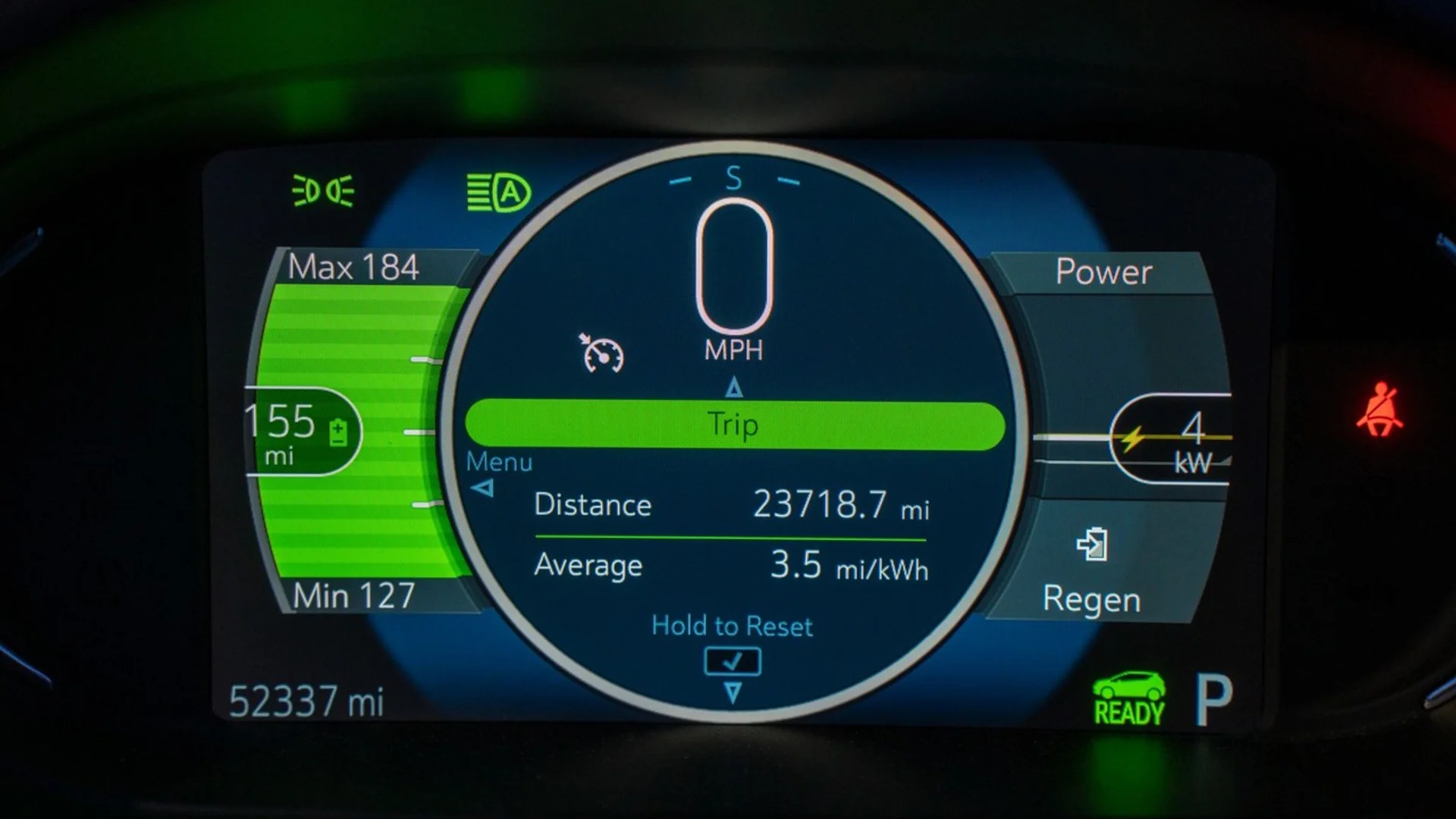
You charged to 100% last night. This morning the dashboard says 165 km. The window sticker promised 340. Nothing is broken. The car is doing exactly what it was designed to do, and the number you're staring at is honest, just not in the way you expected.
That gap between sticker range and dashboard range is the single most common source of new-EV anxiety in Canada. It's worst in the first month of ownership, worst in winter, and worst on highway drives. The good news: once you understand what the estimate is actually measuring, you stop reading it as a betrayal and start reading it as data. The better news: there's a more reliable number sitting right next to it, and almost nobody uses it.
Let's walk through what your EV is really telling you, why the first few weeks feel so brutal, and how Canadian owners learn to plan trips they can actually finish.
Here's my opening bet: the buyers who hate their range estimate are the ones reading the wrong number. The km figure is the rear-view mirror. The percentage is the speedometer. Anyone using the km figure to plan a trip is using the wrong instrument for the job, and the moment that flips in someone's head is the moment they stop feeling betrayed by the car.
Stake-attached opinion before we start: the manufacturers who put the kilometre estimate on the primary dashboard cluster are doing their customers a disservice. The kilometre figure is the wrong primary metric. Every owner I've talked to who hated their EV in month one was reading the wrong number. Every owner I've talked to who loves their EV in year three has either learned to ignore that number or found a way to suppress it. The car is honest. The instrumentation makes it look like it isn't.
Key takeaways
- Your EV's km estimate averages the last 10–50 km driven, it describes the past, not your route ahead.
- Expect 20–30% range loss at -10°C; at -20°C that climbs to 30–40% on a 400 km-rated vehicle.
- The sticker range is a lab baseline for comparing models, no headwind, no heater, no -15°C morning.
- Preconditioning the battery while still plugged in recovers 10–15% of usable winter range before you leave the driveway, and a routing app like A Better Routeplanner beats the dashboard's rolling average for trip planning.
- The first two to four weeks are the worst, the car has no data on your commute, climate, or driving style yet.
Why Your EV Shows Way Less Range Than the Sticker Says
The number on the window sticker, whether it's the EPA estimate in North America or the WLTP figure quoted by European manufacturers, comes from a standardized lab test. Cars are run on a dynamometer at controlled speeds, with no headwind, no heater, no roof rack, and no slush. EV range estimates show a combined total range that's based on now-outdated standards set by the Environmental Protection Agency, along with "MPGe" units that make it hard to relate to your own driving patterns.
That figure was never a promise about your driveway. It's a comparison baseline, a way to line up a Bolt against a Model 3 against an Ioniq 6 on the same yardstick. Real Canadian driving introduces variables the lab cycle doesn't capture: a cold-soaked battery on a -15°C morning, sustained 110 km/h cruising on the 401, a heated steering wheel and seat working hard, and short trips that never let the powertrain reach efficient operating temperature.
Strip the lab assumptions away and most EVs lose 20–35% of their rated range immediately under normal Canadian conditions. That's before you account for winter, payload, or how you drive. The sticker isn't lying, it's measuring something different from what your dashboard is measuring.
Here's the part that doesn't get said enough: for most Canadians, this still doesn't matter for daily driving. Consumer Reports drives every car until the battery is fully exhausted, and even with that aggressive methodology, real range usually clears the daily-commute threshold by a wide margin. Natural Resources Canada's household travel data shows the majority of households drive well under 60 km on a typical day. A 400 km-rated EV delivering 280 km in February still covers a week of normal life between charges.
The dashboard reads the gap between sticker and reality and converts it into a number. That number looks alarming. The math underneath it usually isn't. For a province-by-province look at what charging that gap back up actually costs, the breakdown of EV charging costs across every Canadian province puts the daily numbers in perspective.
The way Tesla solves the cold-weather UX problem and the way Hyundai-Kia solve it are completely different bets. Tesla precondicions aggressively from the app, eats the energy cost up front, and presents you with a shorter but accurate range when you climb in. Hyundai conditions less aggressively and hopes the heated steering wheel does the rest. Both work; one is more honest about what it costs. The buyers who run trip planners on top of either system end up at the same destination at the same battery percentage. The dashboard estimates land in different emotional places along the way, but the math underneath is identical.
How the Range Estimate Actually Works (It's Watching You)
The km figure on your dashboard isn't a prediction, it's a rear-view mirror. Most EVs calculate remaining range by averaging your recent energy consumption (typically the last 10–50 km of driving), then dividing the remaining battery energy by that average. The car isn't guessing what's ahead. It's assuming the next kilometre will look like the last ten.
That's why owners on forums consistently describe the estimate as twitchy. One driver on a long-running EV-prediction thread captured the mechanism cleanly: they left with the car 100% charged and a predicted range of 300 miles, drove 120 miles to a ski area, and arrived showing only 44 miles remaining, significantly lower than expected. Nothing failed. The car had recalculated based on climb, cold, and highway speed.
A few practical consequences fall out of this:
- The first week of ownership is the worst week. The car has no data on your driving, your commute, your climate, or your right foot. It starts from a conservative factory baseline and recalibrates as it learns.
- Short urban trips wreck the estimate. Each cold start spends energy heating the battery and cabin before you've moved. If your last ten kilometres were three short hops, the math projects that punishing consumption across the whole pack.
- One efficient highway run can swing the number wildly upward. A long, steady drive at 100 km/h on a warm afternoon will make tomorrow morning's estimate look optimistic, until your first short, cold trip pulls it back down.
After two to four weeks of consistent driving, the rolling average smooths out and the estimate becomes something you can plan around, provided your conditions don't change dramatically. Move from October into January and the recalibration starts over.
The mechanism explains a frustration that turns up across owner communities. The r/electricvehicles thread asking how much drivers trust the estimated miles remaining reading drew 40 votes and 126 comments, because the answer isn't simple. The estimate isn't dishonest. It's just describing a very recent past, not the future you're trying to plan.
Reframe the whole thing: the dashboard estimate isn't broken, your relationship to it is. The buyers who tell me their car is "lying" are using a tool the engineers designed for a different question. The km figure answers "based on the last ten kilometres, what could you do?" not "how far can you actually go on this charge?" Different question, different number. The owners who reach the verdict that the car is honest are the ones who learned to ask it the right question.
Cold Weather Is the Biggest Culprit, Especially in Canada
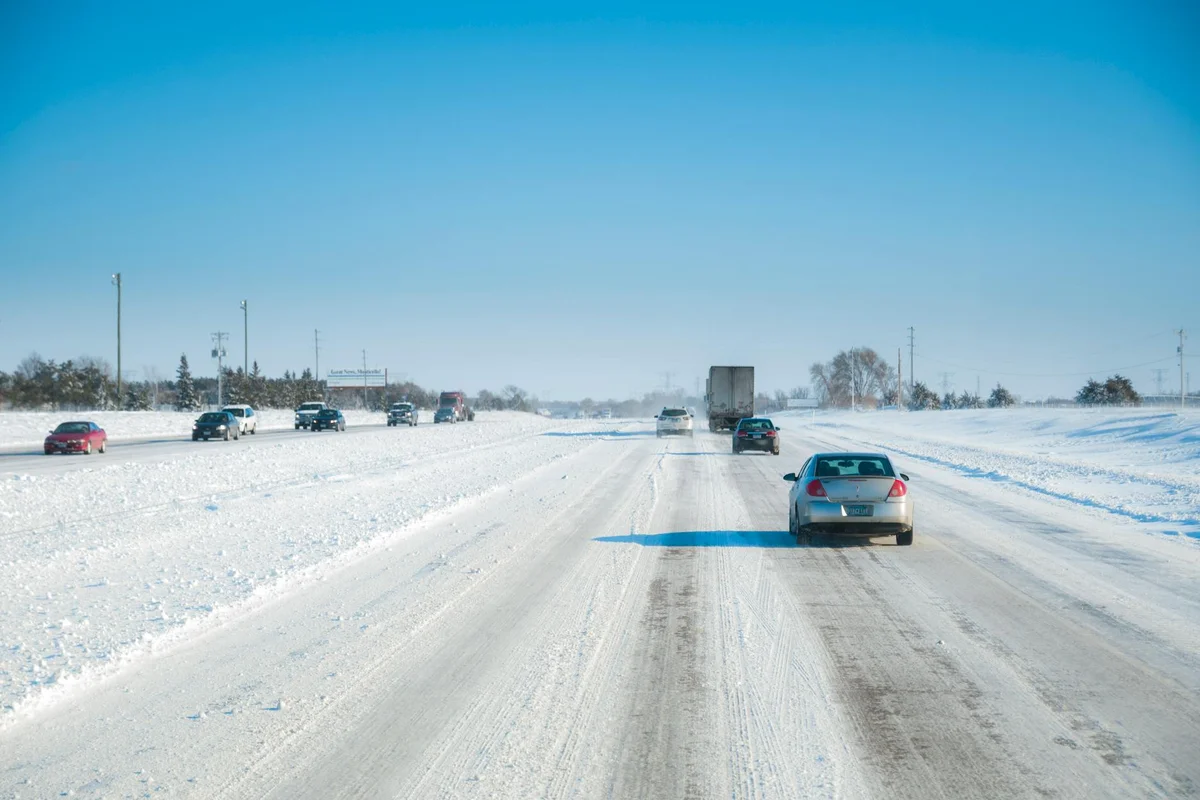
Canadian winter does three things to an EV at once: it slows the chemical reactions inside the battery, it draws power to keep the pack warm enough to deliver current safely, and it asks the cabin heater to run for the whole drive. None of these are defects. All of them eat range.
The rule of thumb most Canadian EV owners learn through experience:
- At -10°C, expect roughly 20–30% range loss compared to a mild-weather drive on the same route.
- At -20°C or colder, range loss can climb to 30–40%, with a vehicle rated at 400 km realistically delivering 250–280 km in deep Prairie or Northern conditions.
- Battery heating draws power before you've moved a metre. On a cold-soaked morning, the first few kilometres look catastrophically inefficient because the car is paying a fixed energy cost just to warm the pack.
Real-world owner data backs this up across vehicle classes. Volkswagen's ID.Buzz, popular with Canadian families considering an electric three-row, sees roughly 320–360 km of real-world range in Canadian summer dropping to 250–280 km in a hard Prairie winter, a 25–30% seasonal swing that's typical, not exceptional.
The story gets sharper at the extremes. A Chevy Equinox EV owner who spent three months driving in 10–25°F (roughly -12 to -4°C) weather reported only 102 miles of range, about a third of what GM advertised. That's an outlier in magnitude, but the direction is universal. Hard cold, short trips, and a heated cabin compound, and the dashboard estimate reflects the compounding faithfully.
The fix isn't to drive less. It's to use the tools the car already gives you:
- Precondition while plugged in. Schedule departure so the battery and cabin warm using grid power, not your pack. This alone recovers 10–15% of usable winter range.
- Charge to a target, not overnight. Setting the car to finish charging at departure time keeps the battery warmer than letting it sit at 100% for eight hours in a cold garage.
- Accept the seasonal pattern. Winter range will return in April. Your car isn't degrading; it's responding to physics.
For a deeper look at whether all that fast charging through winter actually damages the pack you're depending on, the data on whether DC fast charging really kills your battery is worth a read before you change your habits based on conventional wisdom.
Gear worth having
As an Amazon Associate, ThinkEV earns a small commission from qualifying purchases — at no extra cost to you.
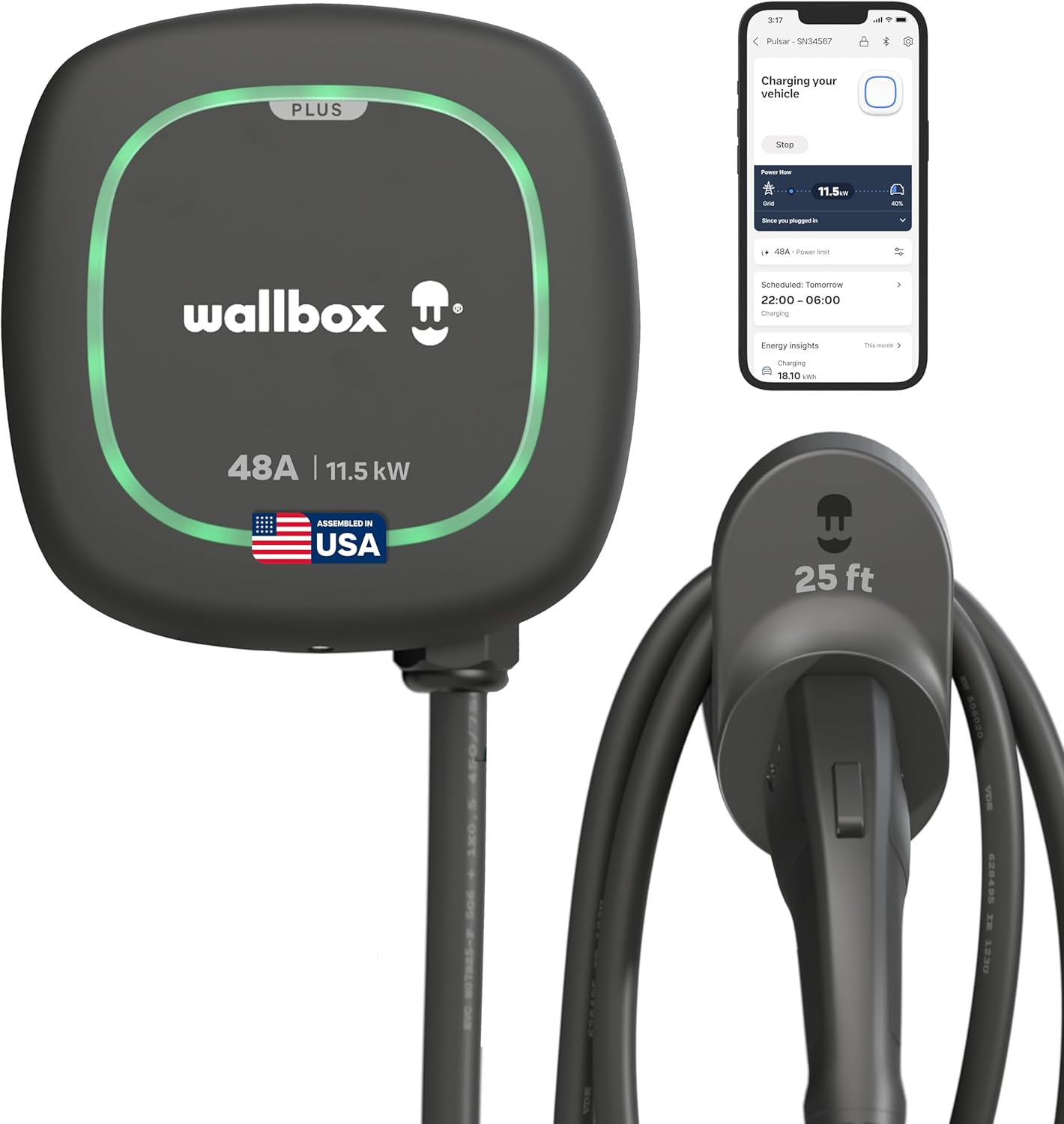
Wallbox Pulsar Plus 48A Level 2 Charger
Compact, sleek charger with app control and power sharing for two EVs. 48A / 11.5 kW, NEMA 14-50. Looks as good as your EV.
As an Amazon Associate, ThinkEV earns from qualifying purchases — at no extra cost to you.
Highway vs. City: Why Your Commute Changes Everything
This is the part that catches gas-car switchers off guard: EVs are most efficient in stop-and-go city traffic, not on the highway. The opposite of what an internal combustion engine prefers.
Two reasons. First, regenerative braking recovers a meaningful share of the energy that would otherwise become heat in your brake pads. Every red light, every slowdown, every off-ramp puts kilowatt-hours back in the battery. Second, aerodynamic drag rises with the square of speed, so the energy cost of pushing the car through the air at 120 km/h is dramatically higher than at 60 km/h.
The practical numbers:
- Sustained 110 km/h highway driving widens the gap to the EPA rating by another 15–20% on top of the lab-vs-reality gap already baked in.
- A vehicle rated at 4.2 mi/kWh on the window sticker often delivers closer to 3.0–3.4 mi/kWh on a Trans-Canada cruise.
- Mixed driving, highway out to the ski hill, then city loops back home, produces the most confusing dashboard swings, because the estimate keeps recalculating from very different recent conditions.
This is why long-time EV owners stop trusting the km number on road trips and start trusting battery percentage. Twenty percent is twenty percent. It doesn't lie to you about whether the next charger is reachable; it just tells you how much energy is left, and you do the math from there.
Battery percentage is also the metric experienced owners use to flag a problem versus a quirk. As one Chevy Equinox EV owner put it: the miles-remaining estimate is wildly optimistic, while the battery percentage provides a much more reliable planning tool. The km figure reacts to your last ten kilometres. The percentage just tells you what's in the pack.
Should You Trust Google Maps Range Predictions Over Your Dashboard?
Increasingly, yes, at least for road trips.
Dashboard range estimates have one job: project recent consumption forward. Routing apps like Google Maps and A Better Routeplanner (ABRP) do something fundamentally different. They look at your actual route, weather forecast along that route, elevation changes, your specific vehicle's efficiency profile, and known charger locations, then estimate what arrival state-of-charge will actually be.
The result is often a more answer for trip planning. Google Maps range predictions appeared more accurate than the vehicle's own range estimate, likely because navigation accounts for weather and driving conditions. That's been consistent feedback from Equinox EV owners and is broadly true across newer EVs with integrated navigation.
Gear worth having
As an Amazon Associate, ThinkEV earns a small commission from qualifying purchases — at no extra cost to you.

WeatherTech FloorLiner for Tesla Model 3
Deep-channel liners that trap every drop of slush and salt. The difference between a ruined interior and a showroom-fresh cabin after a Canadian winter.
As an Amazon Associate, ThinkEV earns from qualifying purchases — at no extra cost to you.
The split that works for most Canadian owners:
- Dashboard estimate for daily life. Commute, errands, school runs, the usual loop. Over a few weeks the rolling average reflects your reality and the number becomes useful.
- Navigation app for road trips. Anything multi-stop, multi-terrain, or weather-variable benefits from a route-aware tool. ABRP in particular handles charging-stop math better than most factory infotainment systems.
- Battery percentage for the moment of truth. When you're 30 km from the next fast charger and the dashboard says 35 km of range, look at the percentage and the elevation ahead, not the km number.
This isn't the dashboard failing. It's the dashboard doing one calculation while the navigation tool does another. They're both right; they're answering different questions.
How Long Until the Estimate Settles Down, and What 'Normal' Looks Like
Most owners report a believable, plannable estimate after two to six weeks of regular driving in stable conditions. The variables that reset the clock:
- A new vehicle. Factory baseline, no driving history, conservative number.
- A seasonal change. Summer-to-winter or winter-to-summer transitions force a recalibration that takes weeks to settle.
- A change in routine. Picking up a long commute, starting to tow, moving from city driving to highway commuting, each of these tells the car "your last ten kilometres no longer represent normal."
This explains a pattern that surprises a lot of buyers: a summer EV purchase that felt perfectly accurate in September can show wildly pessimistic numbers in January, and the owner assumes the battery is degrading. It almost certainly isn't. Modern EV battery packs are designed for hundreds of thousands of miles of charge cycles. What changed is the rolling average, not the pack health.
The rule of thumb that holds up across most vehicles and most owners: if the battery percentage matches your mental math (a 70 km drive should use roughly 20% of a 350 km-real-range pack), the km estimate is just noise. If the battery percentage itself is dropping faster than expected, that's when to investigate.
For owners about to weather their first Canadian winter in an EV, the practical realities of cold-weather range loss and Ontario charging infrastructure is worth pairing with this piece. The physics is the same nationally; the rebate math isn't.
Gear worth having
As an Amazon Associate, ThinkEV earns a small commission from qualifying purchases — at no extra cost to you.

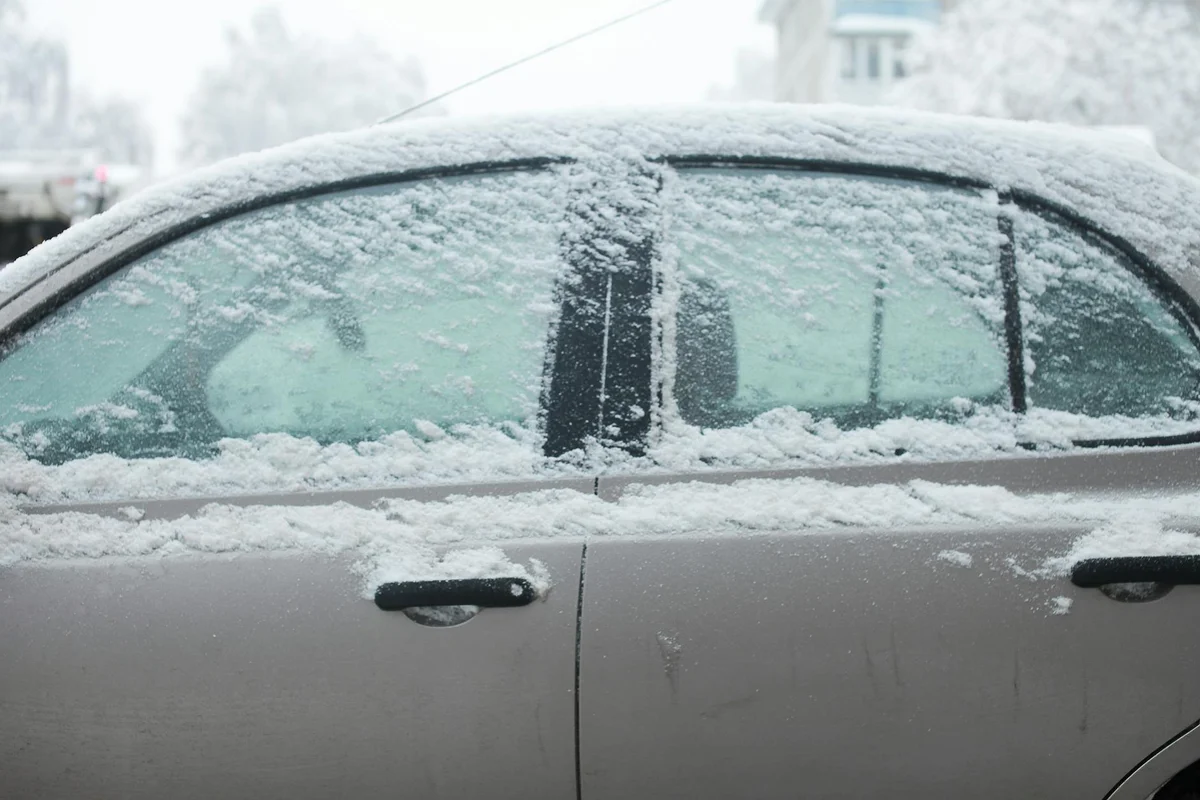
EcoNour 27-inch Snow Brush and Ice Scraper
An aluminum brush and scraper combo that clears a windshield fast without scratching. Non-negotiable for Canadian mornings.
As an Amazon Associate, ThinkEV earns from qualifying purchases — at no extra cost to you.
Practical Tips to Get an Estimate You Can Actually Plan Around
The best EV owners aren't the ones with perfect cars, they're the ones who've learned to read the data the car gives them. A few habits separate them:
- Precondition on grid power before every winter drive. Schedule departure in the app. Let the battery and cabin warm using the wall, not the pack. This is the single highest-leverage change you can make.
- Charge to a target, not to 100% by default. Setting the car to finish at 80% by your departure time keeps the pack healthier and avoids long sits at full charge, checking how often a car was fast-charged, where it lived, and whether it spent long stretches parked at 100% charge is exactly what experienced used-EV buyers look at, because a highway commuter in a mild climate is safer than a fast-charge-only car from a very hot region.
- Plan road trips on ABRP or PlugShare, not the dashboard. Pull up the route the night before. Confirm the chargers are operational. Bring a backup plan for the longest gap.
- Read battery percentage, not km, at every charging stop. "Arrived at 18%" is a fact. "Arrived with 42 km remaining" is a story the car is telling you based on the last ten kilometres.
- Keep software updated. Critical software updates and recall work matter, on some models, updates improve thermal management, charging curves, and even range predictions. The estimate algorithm itself often improves over the car's life.
My stronger opinion, with a small stake on it: the manufacturers who solve this user-experience problem first will gain a measurable retention advantage over the manufacturers who don't. The retention gap will not show up in JD Power surveys for three or four years, and by then the laggards will be wondering why their second-purchase rate cratered. The dashboard is the most-used touchpoint in the car. Getting it wrong has a tail.
What I'd watch from here: the next generation of dashboard estimates will almost certainly start blending route-aware data, weather, elevation, your scheduled trip in the nav, into the headline km figure. Some manufacturers are already partway there. When that lands broadly, the gap between "what the car says" and "what you should plan for" will narrow considerably. Until then, the percentage is the number, and the km figure is a rolling average with a lot of opinions.
The bet worth making on a buyer-frustration scale: Canadians who come into EV ownership expecting the sticker number to match the dashboard will be unhappy for six months, then quietly become the people telling their friends "you just learn to read it." The ones who walk in already knowing the dashboard is rear-facing skip the unhappy part entirely.
Stake-attached prediction: within two model years, the major OEMs will hide the km figure behind a toggle and put the percentage and the route-aware kWh consumption number on the primary instrument cluster. The km display is the EV industry's vestigial appendix. It exists because internal combustion drivers expected it. Once the curve of new EV buyers tips past 60% of first-time car buyers, which it will in Canada around 2028, that emotional anchor weakens, and manufacturers will redesign the cluster around what's actually useful. I would bet money on Hyundai going first.
What the Range Standards Actually Measure, and How to Translate Them
The two range numbers a Canadian buyer will encounter most often are EPA and WLTP, and they measure different things on different cycles. The translation matters because the gap between them is where most expectation-management goes wrong.
The U.S. Environmental Protection Agency's Five-Cycle Range Test is the basis for the range figure on the window sticker of any EV sold in the United States or Canada. It combines a city cycle, a highway cycle, a high-speed cycle, an air-conditioning cycle, and a cold-weather cycle, then weights them into a single combined figure. The cold-weather cycle is run at -7°C, meaningfully warmer than a typical January morning in Winnipeg or Saskatoon, which means the EPA combined figure still under-models real Canadian winter conditions even though it includes a cold component.
The European WLTP procedure (Worldwide Harmonised Light Vehicles Test Procedure) tends to produce numbers 15–25% higher than EPA for the same vehicle. WLTP runs at higher average speeds but lower top speeds, with a shorter cold soak, and without the air-conditioning penalty applied at full weight. A Canadian buyer reading European-market range figures should mentally discount them toward the EPA equivalent before comparing against real-world expectations.
Natural Resources Canada's fuel-consumption ratings database republishes EPA-derived range figures for the Canadian market and adds an estimated kilowatt-hours-per-100-kilometres consumption rating. The kWh/100 km number is more useful than the range figure for trip planning because it translates directly: 18 kWh/100 km means a 75 kWh pack delivers about 417 km under ideal conditions, but at the buyer's actual highway-cruise consumption (often 22–25 kWh/100 km in winter), the same pack delivers 300–340 km. Reading kWh/100 km teaches owners to think in energy per distance rather than total range, which is exactly the mental model the dashboard estimate is already using.
The honest translation for Canadian conditions: EPA combined × 0.75 = realistic winter highway range. WLTP × 0.65 = same. Any owner who plans around those discount factors will be pleasantly surprised once or twice a year and accurate the rest of the time.
Gear worth having
As an Amazon Associate, ThinkEV earns a small commission from qualifying purchases — at no extra cost to you.

Magnetic Windshield Snow Cover
Skip the scraping. Magnets hold it on, peel it off with the snow, and your defroster stops draining range on cold mornings.
As an Amazon Associate, ThinkEV earns from qualifying purchases — at no extra cost to you.
The Honest Version
Your EV's range estimate is not broken, not lying, and not a sign that the battery is failing. It's a rolling average of your last few drives, useful for routine, unreliable for novelty. The number to trust is the percentage. The tool to trust for road trips is the routing app. And the timeline to trust the dashboard is two to four weeks of consistent driving, longer if you're crossing a season.
Final stake-attached prediction: the EV owners who unsubscribe from range anxiety entirely are the ones who learned that the kilometre figure is an opinion and the percentage is a fact. Everyone else stays anxious. The car cannot fix that gap, only the owner can. The buyers who figure it out in week three of ownership are also the buyers who tell their friends about the experience three years later, and that's the engine the OEMs actually need to nurture if they want the conversion curve to keep steepening.
The story isn't that EVs have a range problem. The story is that EVs have an instrumentation problem the industry hasn't bothered to fix because the current instrumentation flatters the spec sheet, and the spec sheet is what gets reviewed. The day a manufacturer ships a dashboard that hides the km figure by default and shows percentage plus route-aware kWh consumption first, that's the day the user-experience narrative on EVs flips for good. Bet you anything Hyundai gets there before Tesla. They have less to lose from telling the truth.
The buyers who do best with EVs in Canada aren't the ones who memorize the spec sheet. They're the ones who learn to read what the car is actually saying. The dashboard is honest. It just speaks in recent history, not future promises.
The way Tesla solves the range-estimate problem and the way Hyundai-Kia solve it are two different bets, Tesla leans on energy-per-distance with a percentage-first UI, while the E-GMP cars surface a more conservative km figure that erodes trust faster. Neither approach is wrong; they're answering different user-research questions. The owner who learns to ignore the alarmist version and read the underlying energy math is the one who stops being surprised. For the broader picture on what a Canadian winter actually costs an EV battery, the EV winter range test for 2026 walks through the real numbers from a -25°C morning, and the complete EV charging guide for Canada maps where to refill that gap province by province.
Gear worth having
As an Amazon Associate, ThinkEV earns a small commission from qualifying purchases — at no extra cost to you.

Extendable 3-in-1 Snow Brush and Scraper
Telescopes to 46 inches so you can sweep a whole roof and windshield without climbing on the car.
As an Amazon Associate, ThinkEV earns from qualifying purchases — at no extra cost to you.

Founder & Chief Editor
Vlad Pereira is the founder and chief editor of ThinkEV.ca, the Canadian electric-vehicle publication he writes and edits from Courtenay, British Columbia. He covers EV pricing, federal and provincial rebates, charging costs, and the Chinese manufacturers now entering Canada, from the buyer's side rather than the press-fleet side. ThinkEV is a venture of Vlad Pereira Online; his writing on health, income and the long game lives at vladpereira.com.
Frequently asked questions
How long until the range estimate actually stabilizes?
Should I ever use the km figure to plan a road trip?
Does the car eventually learn my specific driving habits?
Is winter range loss permanent damage to the battery?
Why does preconditioning help so much in Canadian winters?
More EV & road-trip finds
Affordable upgrades worth a look — tap any to check the price on Amazon.
 ★ 1,340
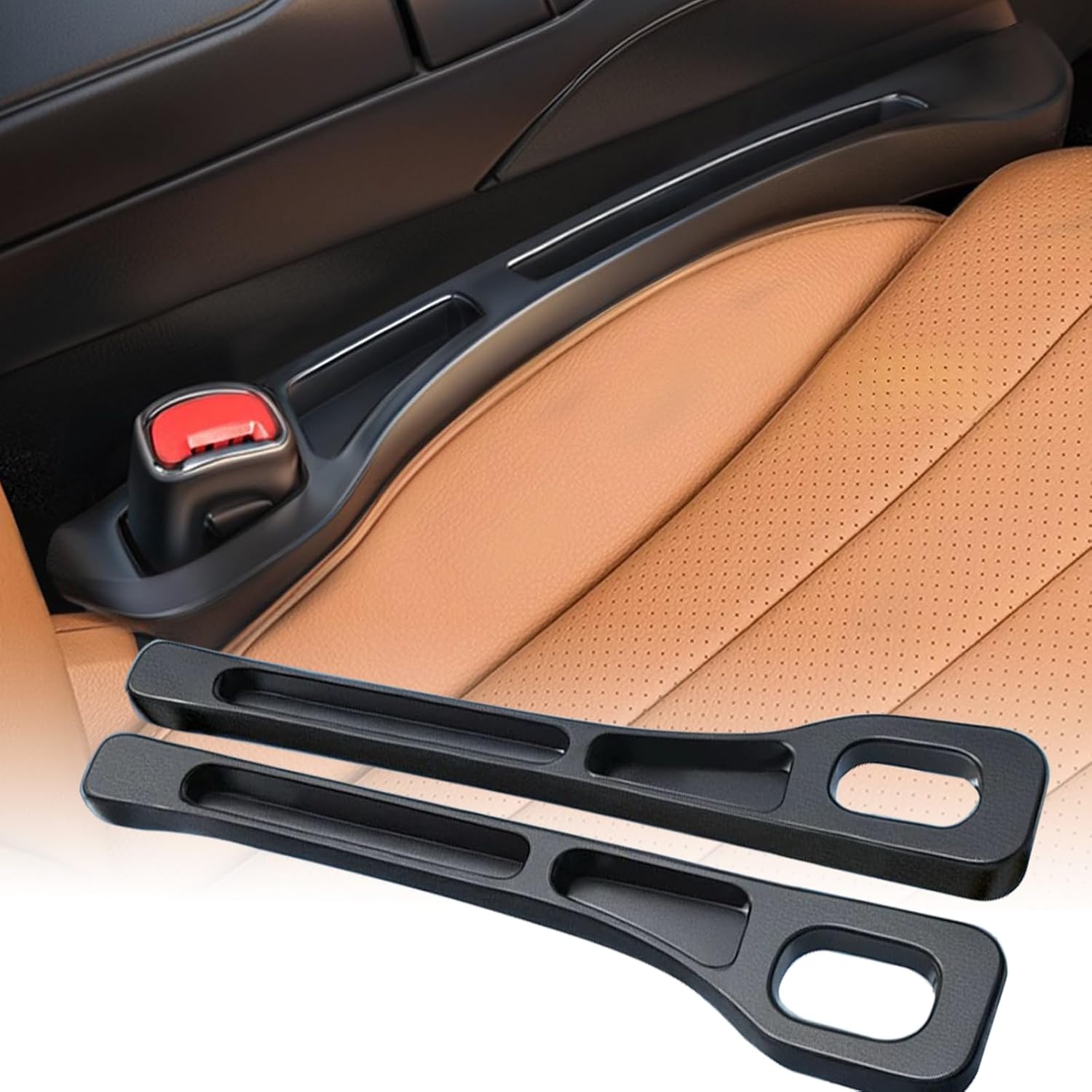
Car Seat Gap Filler (Universal)
View on Amazon ★ 1,944
VIOFO A229 Pro 4K Dash Cam
View on Amazon ★ 87
★ 87Car Window Sun Shades for Kids (4-Pack)
View on Amazon ★ 17,839
Qifutan Vent Phone Mount (Military-Grade Clip)
View on Amazon ★ 9,349
Auto Detailing Brush Set (10-Piece)
View on Amazon ★ 55
★ 55LED Car Door Logo Projector Light
View on Amazon ★ 4,626
HoogaLife Hanging Car Diffuser (2-Pack)
View on Amazon ★ 4,424
Sun Visor Card and Document Organizer
View on AmazonRead, Plan, Then Stay Current
Explore our expert articles to understand incentives and ownership costs, use the map to pressure-test charging reality, then subscribe so new EV coverage comes straight to you.
Continue Reading
Buying Small to Save on Charging? Read This First
Which EVs Should Be Charged to 100%? The LFP Exception
First-Time EV Buyer Mistakes Worth Avoiding in Canada

Rivian Canada 2026: R1T, R1S Prices and R2 Release Date
Why Cold Weather Cuts EV Range, the Real Reasons