NEC 210.19(A) and 210.20(A) exist for exactly this configuration: a welder's leftover 240V circuit pressed into EV duty without re-inspection. The receptacle says 50 amps. The breaker says 50 amps. The cable says 8 AWG. The Tesla Mobile Connector says 32 amps with the NEMA 6-50 adapter. Four numbers, and only three of them line up with the National Electrical Code.
Previous owner installed a NEMA 6-50R for a welder, fed it with 8/3 Romex on a 50-amp breaker, and the new Tesla owner wants to know whether swapping the breaker to 40 amps and setting the car to charge at 32 amps makes the circuit safe. The short answer is yes, with caveats that matter. The longer answer involves the 125% continuous-load rule, the difference between motor/welder exceptions and EVSE rules, the Romex derating problem that catches almost every DIY installer, and the Canadian Electrical Code's near-identical conclusion under different rule numbers.
This is the kind of installation where the rules don't bend. Welders draw current in short, high-amperage bursts under NEC Article 630's duty-cycle math. EV charging draws current at a steady ceiling for six to ten hours at a stretch. The thermal physics of the conductor doesn't care which load is on the other end of the wire, but the code does, and so does the insurance carrier when something melts. The path forward is one of two compliant configurations. Anything else is improvisation.
Key takeaways
- A 40-amp breaker with the car set to 32 amps is the exact configuration NEC 210.19(A) and 210.20(A) anticipate for this circuit.
- EV charging qualifies as a continuous load under NEC 100 because every session exceeding 30 kilometres runs at maximum current for three-plus hours.
- 8/3 Romex is capped at 40 amps, not 50, because the NM-B cable jacket forces the 60°C column in NEC Table 310.15(B)(16).
- The welder exception under NEC Article 630 permits duty-cycle derating that EVSE installations explicitly do not qualify for.
- Swapping the existing 50-amp breaker to a 40-amp unit costs roughly $40 and brings the whole circuit into code compliance.
What NEC Says: Continuous Loads and the 125% Breaker Rule
NEC 100 defines a continuous load as one expected to operate at maximum current for three hours or more. Residential EV charging clears that threshold on every session that adds more than 30 kilometres of range. There is no exception, no carve-out, no "but it's only at night" clause. Once the load qualifies as continuous, NEC 210.20(A) imposes the 125% rule: the overcurrent device, the breaker, must be rated at no less than 125% of the continuous load.
The arithmetic is simple. A continuous draw of 40 amps requires a 50-amp circuit breaker, and a 32-amp draw requires a 40-amp circuit breaker. Read the other direction, a 40-amp breaker permits a 32-amp continuous load and not one ampere more. A 50-amp breaker permits 40 amps continuous. The Tesla Mobile Connector with the NEMA 6-50 adapter caps at 32 amps regardless of which breaker is upstream, so on this specific circuit, a 40-amp breaker plus a 32-amp commissioning setting on the car is the exact configuration the code anticipates.
The mistake worth naming: a 50-amp breaker on 8/3 Romex is not code-compliant for EVSE use, even though the prior welder installation may have used precisely that combination. Welders qualify under NEC Article 630, which permits duty-cycle derating, a welder running a 60% duty cycle doesn't draw nameplate current continuously, and the code allows the conductor to be sized for the time-weighted average rather than the peak. EVSE has no such allowance. The electrician typically sets this configuration during commissioning to ensure the charger never exceeds the circuit's safe capacity. That commissioning step, telling the Tesla onboard charger its maximum amperage, is what makes a 32-amp continuous load on a 40-amp breaker compliant in the first place.
Why the welder exception doesn't transfer
The relevant code citation is precise: 8/3 Romex on a 50-amp breaker is not a valid combination, except for motors and welders under NEC 430.52 and Article 630. Motor circuits and welder circuits are exempted from the standard conductor ampacity match because the load profile is intermittent. EV charging is the opposite, it is the textbook continuous-load case the 125% rule was written to govern.
This is the trap. The wiring was legal under one section of the code for one application. The legality does not migrate when the application changes. The wire didn't get smaller, but the load got steadier, and the code's response to a steadier load is a bigger margin between draw and breaker trip point. A 40A breaker is likely to nuisance trip on a continuous 40A load, which is why the code requires 50A protection for a 40A continuous draw in the first place. The breaker isn't sized to match the load; it's sized to give the load thermal headroom.
The receptacle rating, importantly, is not what determines compliance. NEMA 6-50R is rated 50 amps at 250 volts because the contacts can handle that current, not because the circuit feeding it must deliver that current. Receptacle rating is a ceiling, not a guarantee. A 50-amp-rated outlet on an undersized circuit is still an undersized circuit. The receptacle stamp tells the inspector what the outlet can survive, not what the upstream installation provides.
Wire Gauge and the Romex Derating Problem
The conductor is where most of these installations go wrong, and it goes wrong silently. 8 AWG copper THHN in conduit is rated 50 amps at the 75°C column of NEC Table 310.15(B)(16), which is the column most modern breakers and panels are rated to. 8 AWG copper NM-B cable, which is the formal name for the Romex product family, is forced down to the 60°C column. The same conductor, in the same gauge, with the same insulation chemistry, is restricted by the cable assembly's outer jacket to a lower ampacity. The result: 8/3 Romex tops out at 40 amps.
Eight-gauge copper THHN in conduit carries 50 amps under the 75°C column, the cable jacket is the entire limiter, not the conductor. The depressed amp rating that Romex NM/UF receives compared to MC and every other kind of wire also applies to #8; #8 non-Romex is good for 50A. The copper inside an 8/3 Romex run is identical to what's in a 50-amp-rated THHN-in-conduit run. The code is treating the NM-B assembly as a thermal envelope that traps heat the bare conductor wouldn't.
This is why a 50-amp breaker on 8/3 Romex is a code violation regardless of who installed it. The breaker is sized to protect the conductor, and the conductor's protected ampacity is 40 amps. A 50-amp breaker permits the conductor to operate at 50 amps continuously before tripping, by which point the cable insulation is well past its design temperature.
The same logic applies in the opposite direction. For a hardwired EV charger delivering 48 amps, 6 AWG Romex does not meet the code or manufacturer requirements for a 48-amp continuous-load hardwired charger such as a Tesla Wall Connector, Emporia, or ChargePoint Home Flex, even though 6 AWG Romex can be used for a NEMA 14-50 outlet. The continuous-load math compounds, 48 amps continuous needs a 60-amp breaker, which needs conductor rated for 60 amps, which knocks 6 AWG NM-B out of qualification because its 55-amp ceiling at 75°C is moot when the cable jacket forces the 60°C column.
For this NEMA 6-50R installation, the relevant question is the opposite of the 48-amp case. The breaker isn't being upsized; it's being downsized. The 8/3 Romex is being matched to a 40-amp breaker, and the load is being capped at 32 amps. Wire, breaker, and load now align with NEC 210.20(A), NEC 310.15(B)(16), and NEC 100's continuous-load definition simultaneously. That is what compliance looks like.
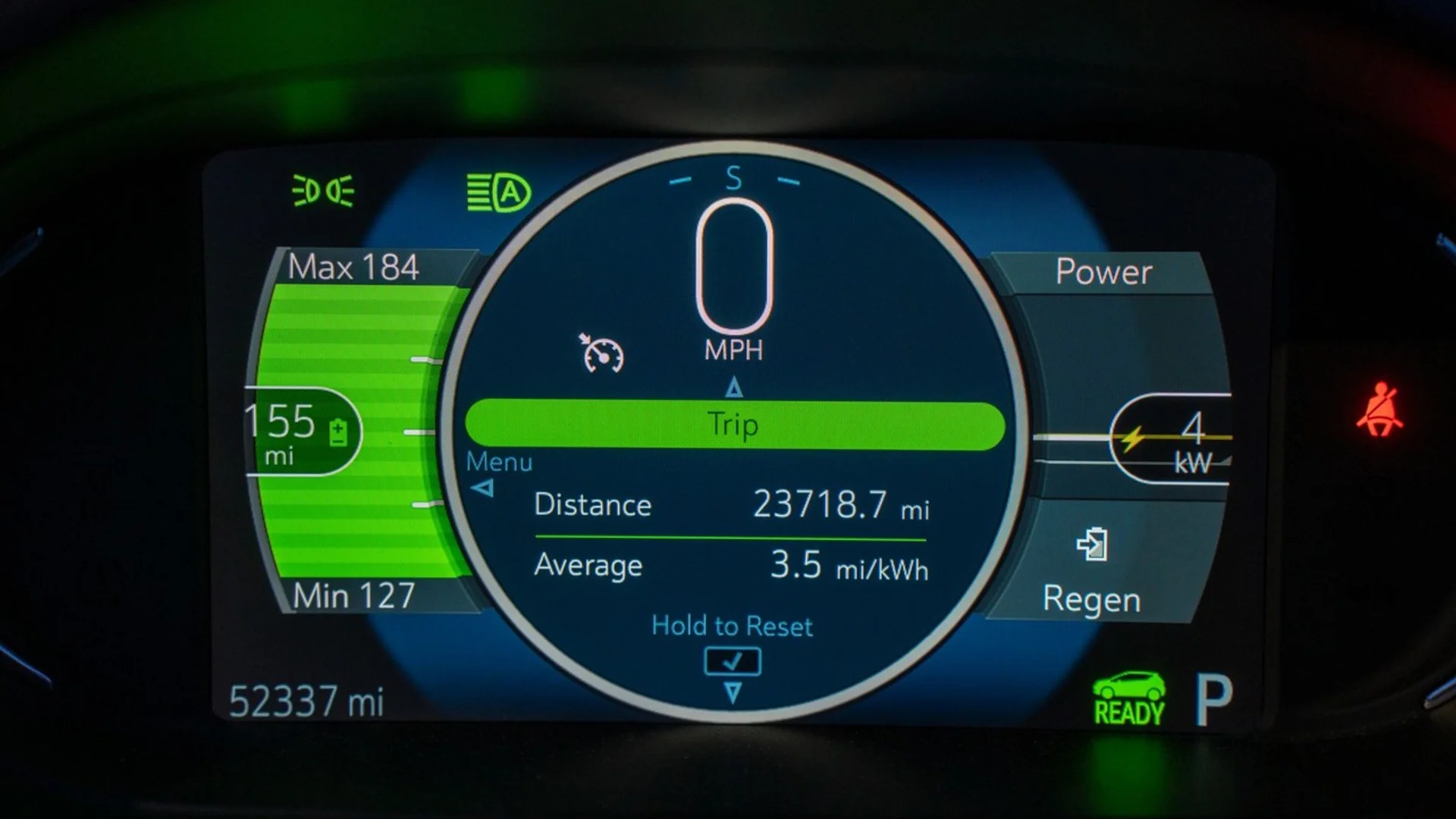
The Tesla side of the equation is straightforward. The Model 3 Mobile Connector with the NEMA 6-50 adapter draws 32 amps at 240 volts, 7.68 kW. The car's onboard charger accepts that input without ceremony, and the commissioning setting in the Tesla app or vehicle touchscreen caps the draw at the configured value. For a Tesla on this circuit, the details of home Level 2 charger installation in Canada get simpler: the receptacle exists, the breaker can be swapped for around $40 in parts, and the wire is already in the wall.
Gear worth having
As an Amazon Associate, ThinkEV earns a small commission from qualifying purchases — at no extra cost to you.

Portable Level 2 EV Charger (40A, NEMA 14-50)
Throw it in the trunk and charge anywhere with a 240V outlet. 40A portable with NEMA 14-50 plug. Your road-trip insurance policy.
As an Amazon Associate, ThinkEV earns from qualifying purchases — at no extra cost to you.
NEMA 6-50R: What the Receptacle Does and Does Not Guarantee
The NEMA 6-50R is a 250-volt, 50-amp two-pole-plus-ground receptacle with no neutral conductor. It was designed for industrial single-phase equipment, welders, kilns, plasma cutters, that need 240 volts and a ground but not a 120-volt return path. The Tesla Mobile Connector provides a portable charging solution that plugs into a NEMA-style outlet, with the NEMA 14-50 being the most common choice; this setup is constrained by the maximum rating of the NEMA outlet, and both the NEMA 14-50 and the NEMA 6-50 receptacles are rated for a 50-amp circuit.
That last sentence is the source of confusion. The outlet is rated for a 50-amp circuit, which means the outlet can handle 50 amps. It does not mean the circuit behind the outlet provides 50 amps. The outlet's rating is what it can survive, not what it delivers. An identical 6-50R could be installed on a 30-amp circuit, a 40-amp circuit, a 50-amp circuit, or, under the welder exception, an oversized 50-amp circuit with undersized conductors. The outlet doesn't know and doesn't care. The inspector cares. The conductor cares.
For the Tesla Mobile Connector specifically, the NEMA 6-50 adapter signals the vehicle that the maximum permissible draw is 32 amps. The car will not exceed that even if the upstream breaker permits more current and the wire could carry it. This is a meaningful protection, it caps the load at exactly the level a 40-amp breaker tolerates as continuous, but it depends on using the manufacturer's adapter and a correctly programmed commissioning state. Aftermarket adapters or pin-shifted plugs that defeat this signalling are not protected by the code analysis above.
The receptacle's condition is the variable most installers underweight. The nuisance-tripping margin that protects against marginal 40-amp continuous draw disappears when receptacle contacts are degraded. Welder receptacles accumulate arcing damage from the plug-in / plug-out cycle that welding implies; the contacts that were factory-tight when the previous owner installed the outlet may not be tight anymore. Generic outlets carrying an "EV" label but built to knockoff specifications are common in the supply chain and should be avoided. Industrial-grade specification-grade 6-50 receptacles, the Hubbell HBL9450A is a common reference, use riveted contact construction that holds tension better under thermal cycling than the spring-blade construction in builder-grade outlets.
A receptacle that ran a welder for fifteen years on a 60% duty cycle has seen vastly less heat-soak than a receptacle that runs a Tesla for eight hours every night. The duty-cycle inversion is the part of this analysis that doesn't appear in the code text. The previous installation may have been perfect for its prior use and entirely wrong for sustained EV charging, same outlet, same wire, same breaker, different thermal profile downstream of the plug.
For owners coming at this question from the wrong-outlet direction, a car that came with a 14-50 plug meeting a wall that has a 6-50, the receptacle swap path documented in the upgrade-to-NEMA-14-50 analysis is usually the cheapest fix. The plug shape is a $15 problem, not a $600 problem.
The Compliant Scenario: Matching Breaker, Wire, and Charge Rate
Two paths bring this installation into compliance. Both are valid. The choice is economic and depends on whether the owner wants the maximum throughput the conductor can support or the maximum throughput the Mobile Connector can deliver through a NEMA 6-50 adapter.
Path A, Use the existing circuit as-is. Steps in order:
- Swap the 50-amp breaker for a 40-amp breaker matched to the panel manufacturer.
- Verify the 8/3 Romex is intact end-to-end and not bundled with other current-carrying conductors in a way that would force additional derating.
- Inspect the 6-50R receptacle for contact damage and replace it with a spec-grade industrial unit if there is any sign of arcing, discolouration, or contact looseness.
- Set the Tesla onboard charger's commissioning maximum to 32 amps using the vehicle's charging menu.
- Pull the permit and book the inspection in jurisdictions that require it.
Total parts cost is typically under $100. The result is a NEC 210.20(A)-compliant 32-amp continuous charging circuit delivering 7.68 kW to the vehicle.
Path B, Upgrade to the full 50-amp circuit. Pull new 6 AWG copper conductors, either 6/3 Romex where local code permits (some Canadian jurisdictions restrict NM-B to specific raceway configurations or building types, so the AHJ governs), or 6 AWG THHN in conduit for the cleaner ampacity story, install the 50-amp breaker, and either keep the 6-50R receptacle or hardwire a Tesla Wall Connector. 6/3 copper is the right choice for landing on a 50-amp breaker and charging at 40 amps. The continuous draw rises to 40 amps, which means 9.6 kW at 240 volts, roughly 50 km of range per hour for a Model 3 Long Range. Where a Wall Connector is hardwired, the neutral conductor is unnecessary, 6/2 NM-B suffices if local code accepts it, with both ends rephased to match. Wall Connector hardwire installations skip the receptacle entirely and avoid the contact-degradation failure mode the receptacle path introduces. An alternative is to run conduit and pull #8 copper with a better insulation rating such as THHN where local code accepts it, using the conduit-derating advantage to keep 8 AWG copper on a 50-amp breaker.
Gear worth having
As an Amazon Associate, ThinkEV earns a small commission from qualifying purchases — at no extra cost to you.

WeatherTech FloorLiner for Tesla Model 3
Deep-channel liners that trap every drop of slush and salt. The difference between a ruined interior and a showroom-fresh cabin after a Canadian winter.
As an Amazon Associate, ThinkEV earns from qualifying purchases — at no extra cost to you.
Path A is the right answer for most owners in this specific situation. The wire is already in the wall. The receptacle is already installed. The Tesla onboard charger can be commissioned to 32 amps in software with no hardware change. The throughput delta between 32 amps and 40 amps is 1.92 kW, meaningful over a long charging session, but immaterial for owners whose nightly demand is 40 to 60 kilometres of replenishment.
Path B is the right answer for owners doing higher daily mileage, owners installing a Tesla Wall Connector for the maximum 48-amp throughput the vehicle supports, or owners building a circuit they expect to outlive multiple vehicles. The Tesla Model 3 onboard charger caps at 11.5 kW (48 amps continuous on a 60-amp circuit), so neither Path A nor Path B reaches the vehicle's hardware ceiling, that requires a 60-amp circuit with 6 AWG copper at minimum, which is a different installation conversation.
The throughput economics: at $0.13 per kWh, an overnight 32-amp session adds approximately $1.00 in electricity for every 7.7 kWh delivered, about 40 km of range. Path B's additional 8 amps trims charging time but does not change overnight feasibility for typical Canadian driving distances.
Gear worth having
As an Amazon Associate, ThinkEV earns a small commission from qualifying purchases — at no extra cost to you.
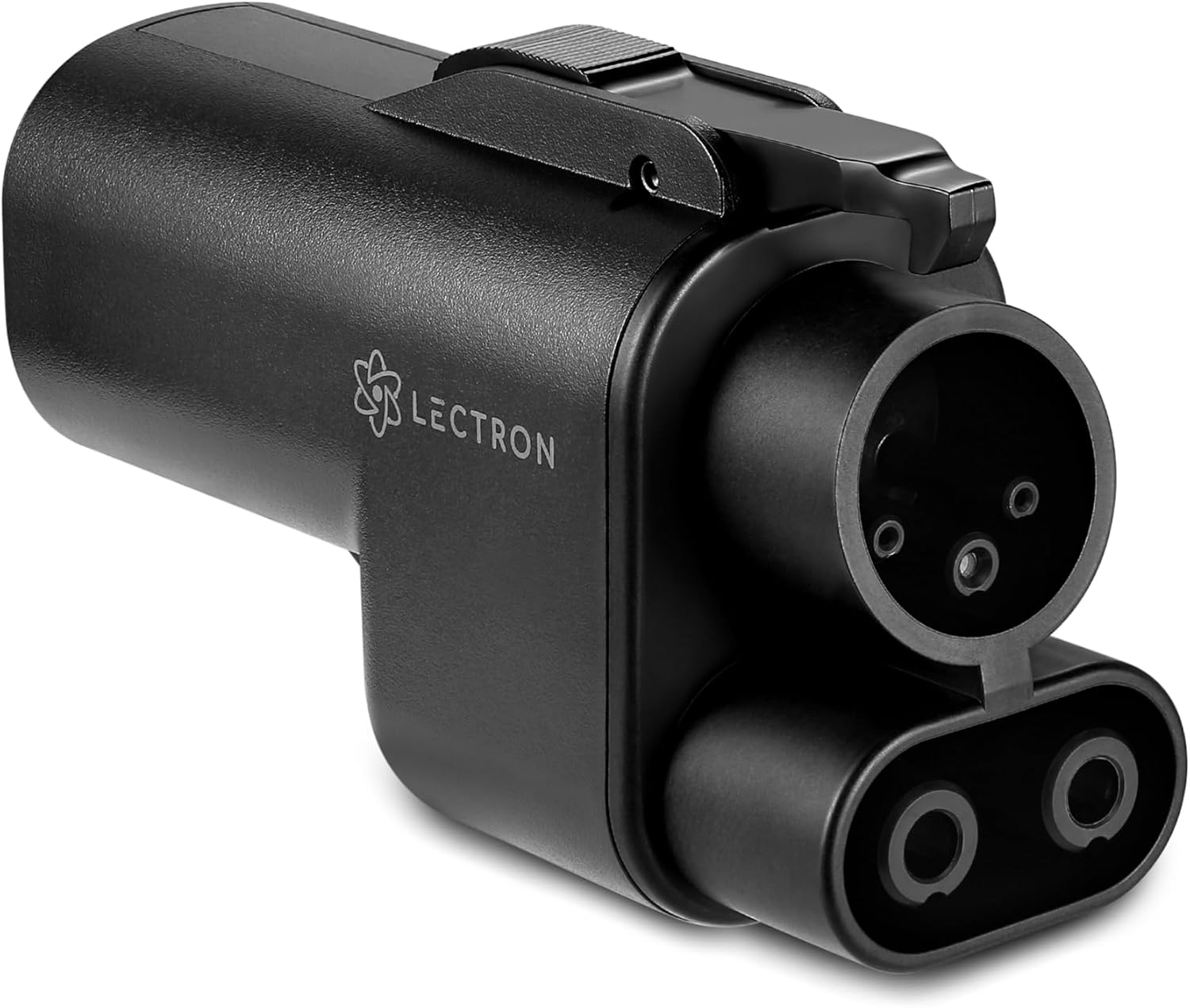
Lectron NACS to CCS Fast-Charge Adapter
Unlock every CCS fast charger for your Tesla, up to 500A DC. Never get stranded at a non-Tesla DC station again.
As an Amazon Associate, ThinkEV earns from qualifying purchases — at no extra cost to you.
Real-World Failure Modes: Outlets That Melt and Breakers That Won't Trip
The Maryland field case that circulated in EV-charging forums illustrates exactly the thermal regime where the code's conservatism earns its keep. Field-report reconstruction from the post-mortem: the breaker was almost certainly 50A because a 40A breaker is likely to nuisance trip on a continuous 40A load; the NM/UF depressed-ampacity treatment also applies at #8, while #8 non-Romex is good for 50A, and the black-sheath cable visible in the post-mortem photographs was inconsistent with SER's grey jacket, pointing to improper Romex rather than a code-rated SER feeder. The receptacle melted. The wire didn't catch fire. The breaker didn't trip. Everything operated within its individual rating, and the assembly still failed.
The mechanism is duty cycle plus contact resistance. A receptacle's contact resistance rises as the contacts oxidise, as the spring tension fatigues, and as repeated thermal cycling micro-deforms the conductive surfaces. At 40 amps continuous for six to ten hours, even a small resistance, milliohms, dissipates enough power as heat at the contact interface to soften the surrounding plastic. Once the plastic deforms, the contacts loosen, resistance rises further, and the failure runs away from the breaker's protection envelope. The breaker is watching the wire; the breaker isn't watching the plug face.
The more durable fix eliminates the receptacle entirely. Hardwiring a Tesla Wall Connector removes the contact-interface failure mode from the assembly. The conductors land on terminal blocks designed for sustained continuous load, not on plug blades sized for occasional welder duty.
For owners who want to keep the receptacle, the field-evidence answer is: use a spec-grade industrial unit, inspect annually, and pay attention to the plug face temperature during charging. A receptacle that runs warm to the touch, above ambient by more than 10 degrees, is in early-stage failure. A receptacle that runs hot enough to be uncomfortable to touch is in mid-stage failure. Plastic discolouration around the blades is late-stage.
The insurance implication is the part owners almost never think about until it matters. Unpermitted modifications to electrical circuits can give a homeowner's insurance carrier grounds to deny a claim in the event of an electrical fire. The standard is jurisdiction-dependent and policy-dependent, but the consistent pattern is that work performed without permit and inspection, even technically correct work, sits in a legal grey zone the carrier will exploit. In Ontario, the Electrical Safety Authority (ESA) operates the permit and inspection system; in British Columbia, the BC Safety Authority does the equivalent. Both will permit the breaker swap described in Path A, it qualifies as a same-circuit modification, and both will inspect the existing wire to confirm it remains rated for the planned load.
The right way to think about this: a $130 permit and a $200 inspection on a $0 wire-change job is expensive on a per-hour basis, and trivially cheap relative to the loss-adjuster conversation that follows an uninspected garage fire.
Canadian Code Context: CEC vs. NEC Differences That Matter
The Canadian Electrical Code reaches the same conclusion as the NEC through different rule numbers, with one practical difference that matters for the 8 AWG NMD90 cable found in most Canadian residential installations.
CEC Rule 8-104 imposes the continuous-load derating rule that mirrors NEC 210.20(A): the overcurrent device must be rated at no less than 125% of the continuous load. A 32-amp continuous draw requires a 40-amp breaker; a 40-amp continuous draw requires a 50-amp breaker. The math is identical. The section number is different.
CEC Rule 12-100 governs NM-equivalent cable ampacity in Canada, the NMD90 product family, which is the Canadian counterpart to NM-B Romex. 8 AWG copper NMD90 is rated 45 amps at its 90°C conductor temperature, which is the rating most often cited in cable datasheets. The catch, and this is where Canadian installations diverge from the spec-sheet expectation, is that the conductor's rating must be derated to the lowest-rated component in the circuit. Most residential panels and breakers in Canada are rated to 60°C or 75°C terminal temperature, not 90°C. The terminal rating wins. Net result: 8 AWG NMD90 in a residential application caps at 40 amps regardless of what the cable jacket can theoretically sustain.
This produces the same answer as the NEC analysis. 8/3 NMD90 on a 50-amp breaker is a CEC violation. 8/3 NMD90 on a 40-amp breaker is compliant. The Tesla Mobile Connector with NEMA 6-50 adapter on a 40-amp breaker is the same compliant configuration in Toronto, Vancouver, and Halifax as it is in Buffalo, Seattle, and Boston.
The permit and inspection requirements are stricter in most Canadian provinces than the comparable US requirements. The Electrical Safety Authority in Ontario requires a notification of work for any new or modified EVSE branch circuit, with inspection. BC Safety Authority operates the parallel system in British Columbia. Quebec's RBQ has its own framework, and Alberta's safety codes officers handle the function under municipal contracts. None of these jurisdictions grandfather a previous welder installation for EV charging use, the load class changed, the inspection regime applies fresh.
The federal incentive layer matters less than owners often assume. EVAP, Canada's federal EV incentive program, covers vehicle purchases, not infrastructure. Charging infrastructure rebates are provincial. BC Hydro's EV Ready program funds Level 2 charger and circuit installations for eligible residents; Hydro-Québec's program covers a portion of the installation cost for residential EVSE. Both require permitted, inspected installations. Reusing an unpermitted welder circuit, even if the breaker swap brings it into code compliance, does not produce a rebate-eligible installation unless a permit is pulled for the modification and the work is inspected. The paperwork is the rebate, not the wire.
For owners deciding between Path A and Path B in a province with a rebate program, the calculation shifts. Path B's higher upfront cost, typically $1,200 to $1,800 for new conductors plus a Wall Connector, can be partially offset by provincial rebate dollars. Path A's parts-only cost of $60 to $100 sits below most rebate program thresholds and won't trigger the paperwork path that releases the rebate. This is one of the rare cases where doing more work produces a lower net cost, because the rebate eligibility is the inflection point.
For owners thinking through where this circuit fits in a broader home-charging strategy, Canada's Level 2 charger landscape for 2026 sets the broader context, and the Grizzl-E Classic, manufactured in Kitchener, Ontario, is a 40-amp-rated unit that maps cleanly onto a Path B upgrade if hardwiring is preferred over the receptacle path. Owners benchmarking realistic at-home throughput against the vehicles they're considering can cross-reference Rivian R1T charging behaviour on a 40-amp circuit and Volvo EX30 full-cycle times on the same hardware to size daily charging windows.
Gear worth having
As an Amazon Associate, ThinkEV earns a small commission from qualifying purchases — at no extra cost to you.

Tesla Key Card Holder with AirTag Slot
Stop fishing the keycard out of your wallet, and slot an AirTag in case the car wanders off in a lot.
As an Amazon Associate, ThinkEV earns from qualifying purchases — at no extra cost to you.
This Configuration Is Not Safe To Charge On As-Is
Bottom line: the configuration the question describes, NEMA 6-50R, 8/3 Romex, 50-amp breaker, is not safe to charge a Tesla on as-is. The wire is undersized for the breaker under continuous-load rules, and EV charging cannot inherit the welder exception that may have made the original installation legal.
The fix is one of the cheapest in residential EVSE: swap the 50-amp breaker for a 40-amp breaker, set the Tesla onboard charger's commissioning maximum to 32 amps, and the circuit becomes NEC 210.20(A) and CEC Rule 8-104 compliant simultaneously. Parts cost under $100. Inspection cost depends on jurisdiction. Throughput is 7.68 kW, or roughly 40 km of range per charging hour for a Model 3, adequate for the overwhelming majority of Canadian residential driving patterns.
The upgrade path, 6 AWG copper, 50-amp breaker, 40-amp continuous draw, is the right answer for owners doing higher mileage or planning a multi-vehicle, multi-decade installation. It is not required for the configuration the question asks about, and it is not what the existing wire supports without replacement.
Watch the receptacle. Welder outlets that have lived through years of plug-in / plug-out cycles are not the same hardware as outlets that have been sitting in a wall untouched. The contact-resistance failure mode that melted the Maryland 14-50 is not a Tesla problem and not a code problem, it's a hardware-condition problem, and it doesn't show up on the breaker's instrument panel. A spec-grade replacement receptacle costs $40 and removes the failure mode from the equation entirely.
The permit is the part most owners skip and most insurers care about. In Ontario, BC, and Quebec, the breaker swap qualifies as a notifiable modification. The cost is small. The downside of not doing it is asymmetric, it doesn't matter until it matters, and when it matters, it matters in five-figure increments. Pull the permit, take the inspection, and the rebate paperwork in provinces that offer one becomes available as a bonus.
Gear worth having
As an Amazon Associate, ThinkEV earns a small commission from qualifying purchases — at no extra cost to you.

Spigen Tempered Glass for Tesla Model 3/Y
Tempered-glass protection for the touchscreen that kills fingerprints and scratches. Two minutes to install, lasts the life of the car.
As an Amazon Associate, ThinkEV earns from qualifying purchases — at no extra cost to you.

Founder & Chief Editor
Vlad Pereira is the founder and chief editor of ThinkEV.ca, the Canadian electric-vehicle publication he writes and edits from Courtenay, British Columbia. He covers EV pricing, federal and provincial rebates, charging costs, and the Chinese manufacturers now entering Canada, from the buyer's side rather than the press-fleet side. ThinkEV is a venture of Vlad Pereira Online; his writing on health, income and the long game lives at vladpereira.com.
Frequently asked questions
Does the 40-amp breaker swap require a permit in Canada?
Can I use 8/3 Romex if I upgrade to a hardwired Wall Connector?
What if the previous owner's 50-amp breaker is already there, just leave it?
Will the Tesla actually draw the full 32 amps or throttle based on temperature?
Is a NEMA 6-50 outlet safe for other EVs besides Tesla?
More EV & road-trip finds
Affordable upgrades worth a look — tap any to check the price on Amazon.
 ★ 1,340
Car Seat Gap Filler (Universal)
View on Amazon ★ 297
★ 297360-Degree One-Hand Dashboard Phone Mount
View on Amazon ★ 61
★ 61Toddler Car Seat Snack and Cup Tray
View on Amazon ★ 17,839
Qifutan Vent Phone Mount (Military-Grade Clip)
View on Amazon ★ 9,349
Auto Detailing Brush Set (10-Piece)
View on Amazon ★ 55
★ 55LED Car Door Logo Projector Light
View on Amazon ★ 4,055
6-Speed Manual Shift Knob Display
View on Amazon ★ 4,424
Sun Visor Card and Document Organizer
View on AmazonRead, Plan, Then Stay Current
Explore our expert articles to understand incentives and ownership costs, use the map to pressure-test charging reality, then subscribe so new EV coverage comes straight to you.
Continue Reading

Two EV Chargers on a 60A Circuit: What Gauge to Use
NEMA 14-50 or a New Charger? The $15 Fix First
Which EVs Should Be Charged to 100%? The LFP Exception

First-Time EV Buyer Mistakes Worth Avoiding in Canada

Rivian Canada 2026: R1T, R1S Prices and R2 Release Date