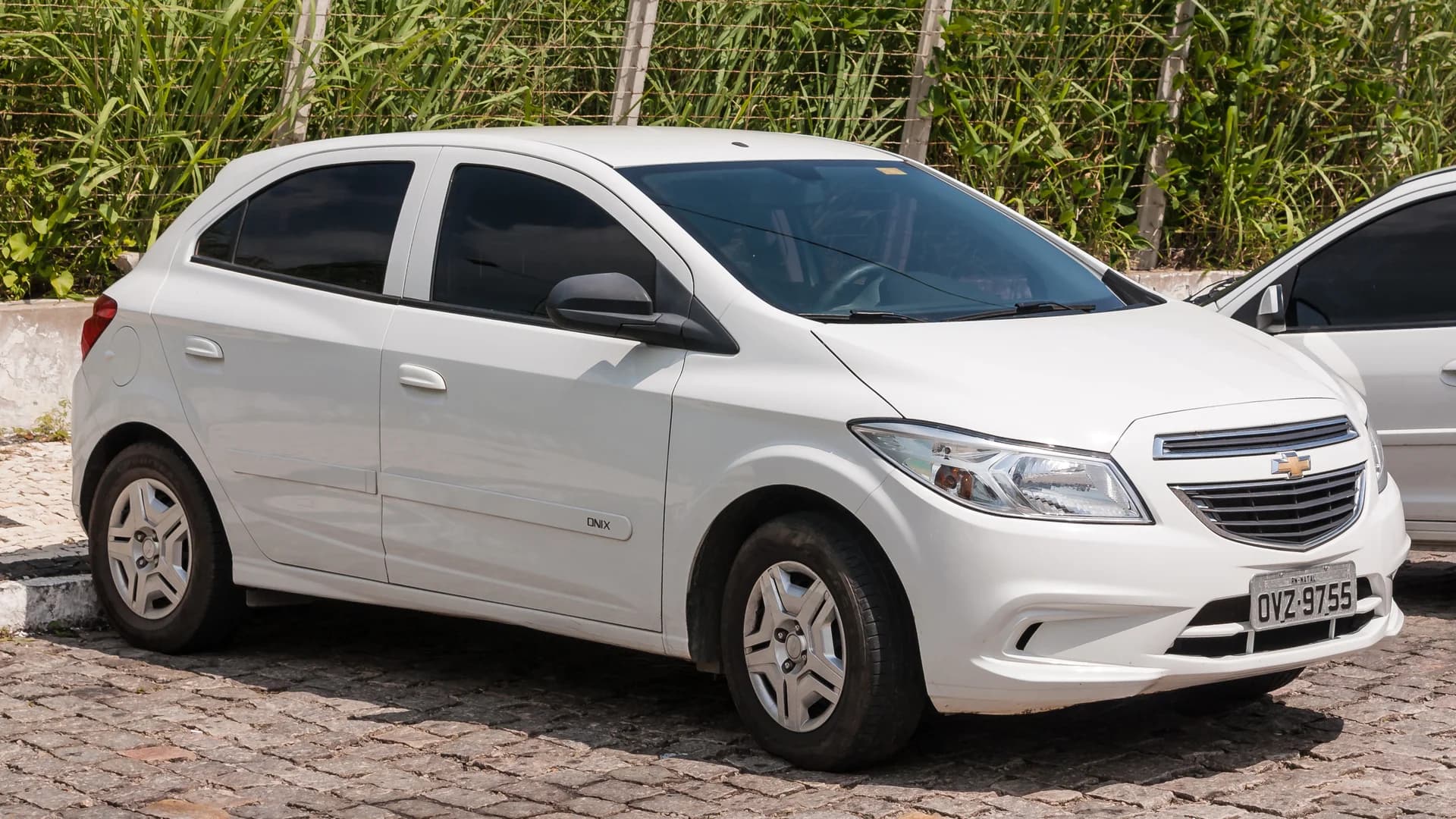
A Brazilian subcompact with 201 mm of ground clearance now sits higher off the pavement than a North American three-row SUV, and the explanation is regulatory architecture, not an engineering breakthrough. The 2027 Chevrolet Onix Activ, built in São Caetano do Sul for Latin American markets, has been remapped to a stance that matches or even beats some popular SUVs like the Ford Explorer (7.6 inches on standard trims). The vehicle beneath that number is a hatchback Chevrolet does not, will not, and cannot sell in Canada.
The inch of clearance is not the story. The policy frame that makes the inch profitable in one hemisphere and impossible in the other is. The Onix Activ exists because Brazil's tariff walls, fuel-efficiency mandate, and road-infrastructure deficit converge on a vehicle North American regulation actively pushes off the product roadmap. GM's engineering team in Brazil spent over a year developing the Onix Activ, implementing "functional changes that go far beyond aesthetics", a sentence that reads like marketing copy until you read it against the regulatory environment that funded the work.
Regulatory divergence, not consumer preference, determines which vehicles get investment and where.
Key takeaways
- Brazil's Rota 2030 tariff wall, 35% on imports, is the load-bearing reason GM funded the Onix Activ's suspension rework.
- The 2027 Onix Activ's 201 mm ground clearance beats the Ford Explorer's 7.6-inch standard trim by a third of an inch.
- Brazil's Confederação Nacional do Transporte rates more than half of federal highway kilometres as regular, bad, or terrible, clearance is survival math.
- Canada's ZEV mandate targeting 60% zero-emission sales by 2030 reroutes every marginal OEM dollar away from new ICE subcompact platforms.
- Ford Fiesta, Toyota Yaris, Honda Fit, and Chevrolet Sonic all died by 2020 in North America; Brazil's regulatory frame never pressured that segment out.
Brazil's Vehicle Market: The Regulatory Frame That Explains the Onix
Brazil's Rota 2030 programme, the successor to Inovar-Auto, conditions tax benefits on local content, fuel efficiency, and safety thresholds, but it does not impose a zero-emission timeline. Manufacturers that hit the efficiency curve keep their IPI tax reductions; manufacturers that import finished vehicles face a 35% duty wall. The structural incentive points one direction: localize, or lose the margin entirely.
Subcompacts still dominate the Brazilian sales mix in a way North American analysts no longer model. Roughly half of new-vehicle units in Brazil land in the A and B segments where the Onix sits, a share that has not meaningfully moved in a decade. In Canada, the same segments make up closer to twelve percent of sales and falling. The Brazilian volume is what funds the engineering hours. GM's São Caetano do Sul plant produces the Onix exclusively for Latin American distribution under those tariff walls, which means every dollar spent reworking the suspension geometry is amortised across a market where the segment is genuinely the centre of the chart, not a margin-compressed afterthought.
The North American subcompact retreat is a documented phenomenon, with the Ford Fiesta, Toyota Yaris, Honda Fit, and Chevrolet Sonic all discontinued by 2020 as manufacturers redirected capital toward higher-margin crossovers. The Onix did not follow because Brazil's regulatory regime did not pressure the segment out. That is the entire thesis.
The 35% import duty is the load-bearing number. It is high enough to make CKD assembly the only rational entry path for foreign OEMs and high enough to make GM's local R&D investment defensible against a board that would otherwise redirect capital to Ultium platforms in Detroit. Pull the tariff wall down, and the Onix Activ programme stops penciling out within a year.
Ground Clearance as a Policy Artifact: What 201 mm Actually Means
The Ford Explorer's ground clearance, 7.6 inches on standard trims, is North American-market tuned. It assumes paved arterials, occasional gravel driveways, and the kind of light-trail use that justifies a "rugged" trim badge without rewriting the suspension. It is a marketing number as much as an engineering one.
The Onix Activ's 201 mm is functional. The engineering team in Brazil spent over a year developing the Onix Activ, implementing "functional changes that go far beyond aesthetics," with the real story being the unique suspension setup that lifts ground clearance to 201 mm (7.9 inches). The investment was suspension geometry, not bodywork, the kind of remap that survives a regulator's homologation review and a Brazilian highway in the same week.
Why bother? Brazil's federal highway network is the answer. The Confederação Nacional do Transporte's annual road survey has, for years, rated more than half of federal highway kilometres as "regular," "bad," or "terrible." Ground clearance is not a styling choice on those roads. It is the difference between a service interval and a write-off. A subcompact that lifts itself into the geometry of an off-roader is responding to infrastructure data, not consumer aspiration.
There is also a tax dimension. Brazil's IPI rates differentiate between passenger and utility classifications, and clearance is one of the variables that affects where a vehicle falls on the curve. A hatchback that crosses the utility threshold can pick up tax treatment that improves both sticker price and fleet purchasing math, the kind of arbitrage that does not exist in Canadian or American vehicle classification, where seating, GVWR, and configuration drive the categories.
For North American context, the Onix Activ's number now sits in the same neighbourhood as GM's own body-on-frame off-road trims. The 2026 Chevrolet Traverse Z71, by comparison, lands lower than the Explorer Tremor, the Ford has an inch more ground clearance than the Traverse Z71 (at 8.7 inches). A Brazilian B-segment hatchback is now within striking distance of a North American three-row Z71 on the one specification the trim badge is supposed to own. That inversion is not engineering whimsy. It is what Rota 2030 funds and what CAFE does not.
Gear worth having
As an Amazon Associate, ThinkEV earns a small commission from qualifying purchases — at no extra cost to you.
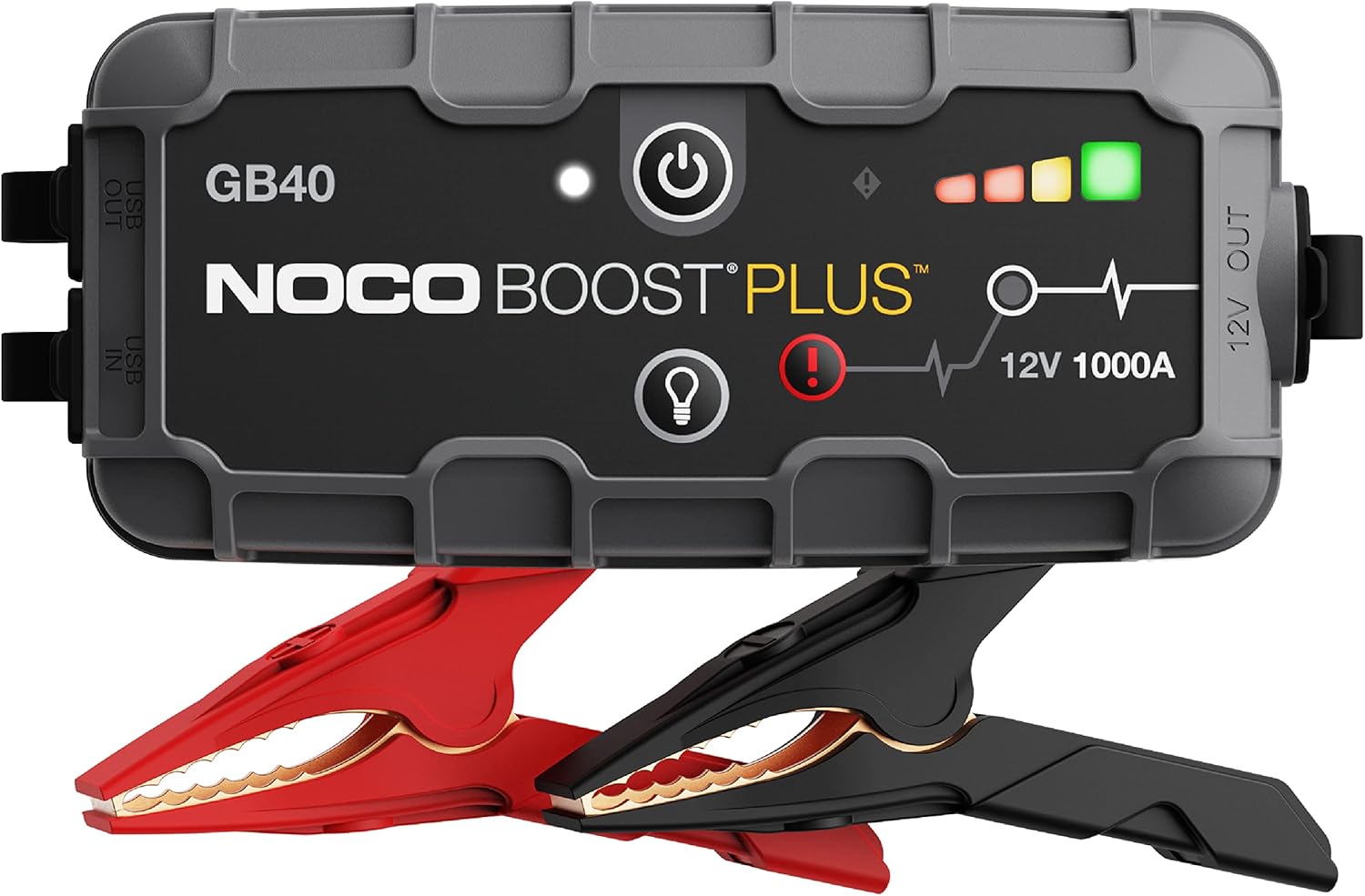
NOCO Boost Plus GB40 Jump Starter
A 1000A lithium jump starter that fits in your glovebox and works on any 12V battery. Your insurance against a dead 12V in a parking lot.
As an Amazon Associate, ThinkEV earns from qualifying purchases — at no extra cost to you.
Multi-Jurisdiction Subcompact Policy: Why This Vehicle Cannot Exist in Canada or the US
The American Corporate Average Fuel Economy framework, on its current trajectory toward a fleet average near 49 mpg by 2026, theoretically rewards small efficient vehicles. In practice, the compliance math runs through crossovers and EVs, not B-segment hatchbacks. Crossovers carry higher footprint allowances under CAFE's size-adjusted curve, higher transaction prices, and higher margins. A subcompact car earns less compliance credit per unit and less gross profit per unit. The segment died on the spreadsheet before it died on the lot.
For internal cross-context on what Detroit chose to fund instead, the GM Equinox EV product strategy reads as the inverse of the Brazilian decision: capital flowed into the Ultium-platform crossover, not into renewing the ICE subcompact line that gave us the Sonic. The contrast, same OEM, same decade, opposite jurisdictions, is the cleanest case study of regulatory divergence in the current product cycle.
Canada layers a federal ZEV sales mandate on top of CAFE-equivalent fuel-efficiency expectations: 20% zero-emission passenger sales by 2026, 60% by 2030, 100% by 2035. The mandate does not ban ICE subcompacts. It reroutes every marginal dollar of OEM capital toward zero-emission platforms that satisfy the curve. Investing in a new ICE subcompact variant for Canadian distribution would consume engineering hours that the mandate punishes at the corporate level. The Onix Activ programme is precisely the work no Canadian-bound product roadmap can rationalise.
The European Union closes the door from the other side. The 2035 ICE phase-out for new passenger cars, combined with the UK's ZEV mandate ramp, means investment in any new ICE subcompact platform derivative for European distribution has a runway measured in years, not decade-long product cycles. Ford's own European response is documented in the tariff-shaped pivot to a five-model EV-leaning lineup, a strategic admission that the regulatory clock has already started.
Brazil sits alone. No ZEV mandate. No 2035 ICE end-date. Rota 2030 rewards hybridisation and efficiency improvements, not exclusive electrification. The regulatory environment is the only one of the four where a new ICE subcompact variant, with serious suspension R&D behind it, clears every internal capital-allocation hurdle. The Onix Activ is what happens when an OEM is allowed to keep iterating on the segment.
Commercial Reclassification: The Hatchback That Becomes a Delivery Vehicle
The second half of GM's 2027 Onix announcement covers a hatchback variant converted for urban deliveries, and it deserves attention as a policy artifact in its own right. Brazil's e-commerce sector has been growing at double-digit rates for the better part of a decade, and last-mile capacity has tightened correspondingly. Fleet buyers want vehicles classified as light commercial, because the IPI and depreciation rules treat them differently from passenger units.
Removing rear seating is the lever. A passenger hatchback reclassified as a light commercial vehicle changes its tax treatment, its insurance treatment, and the depreciation schedule a fleet accountant can claim. The vehicle does not need a new platform. It needs a regulatory category change that the bodywork conversion enables.
Gear worth having
As an Amazon Associate, ThinkEV earns a small commission from qualifying purchases — at no extra cost to you.

ChargePoint Home Flex Level 2 Charger (50A)
Premium 50A / 12 kW charger with the best app ecosystem. Hardwired or NEMA 14-50, with real-time energy tracking and smart scheduling.
As an Amazon Associate, ThinkEV earns from qualifying purchases — at no extra cost to you.
This is the kind of arbitrage Canadian classification does not permit. The Canada Revenue Agency's commercial-vehicle definitions lean heavily on Gross Vehicle Weight Rating thresholds, not seating configuration. A Canadian fleet buyer cannot reclassify a passenger hatchback into a commercial category by pulling out the back bench. The tax savings that justify the conversion in São Paulo do not exist in Mississauga. The product, even if landed, would never find the buyer profile that makes it work in Brazil.
For Canadian readers tracking what did get product investment in this affordability band, the 2027 Chevy Bolt's Canadian product page is the relevant comparison, GM's affordable-segment answer for this market is electric and crossover-shaped, not a delivery hatchback. The two strategies are running in parallel because the two regulatory environments demand different products.
Gear worth having
As an Amazon Associate, ThinkEV earns a small commission from qualifying purchases — at no extra cost to you.

Grizzl-E Classic Level 2 EV Charger (40A)
Canadian-made and rated for minus 40C winters. 40A / 9.6 kW, NEMA 14-50, indoor/outdoor, 24-ft cable. The charger built for Canadian weather.
As an Amazon Associate, ThinkEV earns from qualifying purchases — at no extra cost to you.
Gear worth having
As an Amazon Associate, ThinkEV earns a small commission from qualifying purchases — at no extra cost to you.

PULIDIKI Car Cleaning Gel (Detailing Putty)
Press it into vents, buttons, and seams and it lifts out dust you did not know was there. Weirdly satisfying, genuinely useful.
As an Amazon Associate, ThinkEV earns from qualifying purchases — at no extra cost to you.
GM's Regional Portfolio: What Latin America Funds vs. What North America Cancels
GM cancelled the Chevy Sonic in North America in 2020 as part of the broader subcompact retreat documented earlier. The same corporate parent then signed off on more than twelve months of Brazilian engineering work on the Onix Activ. Both decisions are correct given the inputs. They look contradictory only if you assume a unified global portfolio. GM is not running one.
The Onix is GM's volume leader in Latin America and has been for years. The Brazilian R&D investment is not exported to other regions, it is amortised against Latin American sales alone, under tariff protection from foreign competitors who would have to clear the 35% duty wall to challenge it. The vehicle is regionally locked by design.
The capital that could have gone to a new North American subcompact ICE platform instead funded Ultium. The cleanest sibling comparison is the Chevy Silverado EV's Canadian product positioning, full-size, electric, margin-rich, and built on a platform whose engineering hours would otherwise have been the Sonic's. The trade-off is explicit on the spreadsheet even if it is implicit in the press releases.
The implication for analysts: GM is running parallel product strategies by jurisdiction, not a unified global portfolio. The next decade of GM's product map will reward readers who treat regional regulation as the primary variable and global synergy as a marketing layer over the top.
Tariff Architecture and the Onix's Regional Lock-In
Canada's 100% tariff surcharge on Chinese-built EVs, imposed in October 2024 and now scheduled to relax to 6.1% in January 2026 under a 49,000-unit quota, has no analog for Brazilian-built ICE vehicles. An Onix landed in Canada would face the standard 6.1% Most Favoured Nation auto tariff, a low number. On paper, the Onix Activ at Brazilian sticker plus 6.1% duty undercuts the Chevy Trax. The arithmetic looks inviting until the homologation costs land.
CUSMA's content rules tighten the screw further. The agreement requires 75% North American content for tariff-free passage between Canada, the US, and Mexico. A Brazilian-built Onix does not qualify and never will under the current rule set. Any GM attempt to integrate the Onix into the North American distribution network would face the same content-origin problem that every non-CUSMA-compliant import faces, and at the volumes the subcompact segment now supports in Canada, the homologation, certification, and dealer-network investment do not amortise.
The trade-policy lever that could change this, a Canada-Mercosur free-trade agreement, has been stalled at the negotiating-mandate stage since 2019. No bilateral framework exists today that would shift the Brazilian Onix's economics for a Canadian importer. The vehicle is regionally locked not by GM's preference, but by the absence of the trade architecture that would have made it commercially portable.
On the comparison side, the practical landscape of affordable EVs already sold in Canada is the relevant frame for Canadian buyers wondering what they are missing. The answer is not the Onix Activ. The answer is the regulatory framework that selects for crossovers and EVs at this price point. The Onix is a counterfactual, not a missed opportunity.
For multi-jurisdiction comparison, the four-market regulatory map sorts cleanly:
- ICE subcompact signal: Rota 2030, neutral on powertrain
- Import duty on finished autos: 35% MFN
- Onix Activ implication: funded, sold, growing
- ICE subcompact signal: ZEV mandate, 20% by 2026 → 100% by 2035
- Import duty on finished autos: 6.1% MFN, plus CUSMA 75% content rule
- Onix Activ implication: structurally non-viable
- ICE subcompact signal: CAFE ~49 mpg fleet average 2026
- Import duty on finished autos: 2.5% MFN, plus USMCA content rule
- Onix Activ implication: margin math punishes the segment
- ICE subcompact signal: 2035 ICE phase-out for new passenger cars
- Import duty on finished autos: 10% MFN
- Onix Activ implication: investment window closed
The Policy Verdict
The Onix Activ's 201 mm of ground clearance is the surface story. The substantive story is that four jurisdictions wrote four different rule sets, and GM is now running four different product strategies in response. Brazil's tariff wall, infrastructure deficit, and powertrain-neutral efficiency mandate combine into the only regulatory environment in GM's footprint where a new ICE subcompact variant with serious suspension R&D behind it clears every capital-allocation hurdle.
Canada will not see this vehicle. Not because GM does not know how to ship it, but because the ZEV mandate, CUSMA content rules, and the absence of a Canada-Mercosur agreement combine to make the cost-recovery model impossible at any plausible volume. The Chevy Trax, and increasingly the Equinox EV, are the products the Canadian rule set selects for. Asking why Canada doesn't get the Onix is asking why Canadian regulators wrote the rules they wrote.
What to watch next: the Canada-Mercosur file at the trade-negotiating level is the single variable that would change the Onix's regional lock-in. Resumption would require a federal negotiating mandate that has not moved since 2019, and the file currently sits behind the CUSMA renegotiation slated for the 2026 review window, a process that is going to absorb most of Ottawa's trade-bandwidth for the year and leaves little political appetite for opening a second front in the Southern Hemisphere. The more interesting template pressure comes from the EU-Mercosur agreement, which has been moving toward ratification after two decades of stalling; if Brussels closes that file in 2026, Canada will face a structural disadvantage in Latin American agricultural and manufactured-goods access that could finally tip the cost-benefit on its own bilateral file. The likelier near-term signal, though, is the inverse, Brazil tightening its own efficiency curve under a future Rota 2030 successor, at which point even the Brazilian Onix Activ programme starts to feel pressure. The vehicle that beats the Explorer on clearance today is a product of one specific regulatory moment. The moment will not last forever, but while it does, it is the cleanest illustration available of how policy, not engineering, determines which vehicles get built and where.
The Onix Activ is not a global product. It is a Brazilian regulatory artifact with an interesting suspension. Read it that way and the next decade of GM's product map gets easier to forecast.
Gear worth having
As an Amazon Associate, ThinkEV earns a small commission from qualifying purchases — at no extra cost to you.

WixGear Magnetic Air Vent Phone Mount (2-Pack)
A magnet strong enough that your phone never flinches over potholes or rail crossings. Two in the box, one for each car.
As an Amazon Associate, ThinkEV earns from qualifying purchases — at no extra cost to you.

Founder & Chief Editor
Vlad Pereira is the founder and chief editor of ThinkEV.ca, the Canadian electric-vehicle publication he writes and edits from Courtenay, British Columbia. He covers EV pricing, federal and provincial rebates, charging costs, and the Chinese manufacturers now entering Canada, from the buyer's side rather than the press-fleet side. ThinkEV is a venture of Vlad Pereira Online; his writing on health, income and the long game lives at vladpereira.com.
Frequently asked questions
Could GM ever bring the Onix Activ to Canada with modifications?
Does Brazil's IPI tax classification actually change the Onix's purchase price?
How bad are Brazilian roads that 201 mm of clearance is necessary?
Which North American vehicles does the Onix Activ actually outmeasure?
Why did CAFE rules push subcompacts out if they're fuel-efficient?
More EV & road-trip finds
Affordable upgrades worth a look — tap any to check the price on Amazon.
 ★ 419
★ 419RGB Car Interior LED Strip Light
View on Amazon ★ 900
★ 900Personalized Photo Car Air Freshener
View on Amazon ★ 21,304
Car Headrest Hooks (4-Pack)
View on Amazon ★ 1,944
VIOFO A229 Pro 4K Dash Cam
View on Amazon ★ 87
★ 87Car Window Sun Shades for Kids (4-Pack)
View on Amazon ★ 68
★ 68WeatherTech FloorLiner for Tesla Model 3
View on Amazon ★ 8,681
Chemical Guys Complete Car Wash Kit
View on Amazon ★ 537
★ 537USB Star Projector Roof Light
View on AmazonRead, Plan, Then Stay Current
Explore our expert articles to understand incentives and ownership costs, use the map to pressure-test charging reality, then subscribe so new EV coverage comes straight to you.
Continue Reading
Tesla Q3 2026 Earnings: Flat Revenue, Falling Profits
BYD Denza B8 Suspension Trick Defeats Traffic Boot in Viral Clip

Zenos E10 Returns at £115,000, A Different Car Entirely
Jaecoo J5 EV Uber Discount: $31,500 Fleet Math Changes
VW ID.4 80% Charge Cap Rolls Out This Week, With Opt-Out