Martin Sander didn't say internal combustion would be banned. He said it would become embarrassing, the way arriving on horseback became embarrassing once the Model T existed. That distinction is the entire story.
Sander argued that horses were never banned, but people still chose gas cars for transportation because they were simply better, and the same dynamic will play out with EVs replacing internal combustion. Read as a sound bite, it's anodyne. Read as corporate positioning from Volkswagen's board member for sales, marketing, and after-sales, it's a deliberate strategic posture, one that tells you more about VW's product roadmap, manufacturing bet, and view of Chinese competition than the company's last three investor days combined.
The horse analogy is VW's thesis statement. It is also, in places, wrong. Both of those things matter.
Key takeaways
- VW board member Martin Sander argues EVs will displace ICE cars the way Model Ts displaced horses, through superiority, not legislation.
- Volkswagen's SSP platform promises 800-volt architecture and unified manufacturing across Audi, Porsche, Skoda, and Cupra, targeting ICE cost parity by decade's end.
- VW's software subsidiary Cariad has been restructured twice, and infotainment reliability remains the single biggest threat to the 'plain better' claim.
- VW CEO Oliver Blume has publicly committed to closing the EV-ICE production cost gap at flagship sites including Wolfsburg and Martorell.
- VW is borrowing software development philosophy from its China joint ventures, including the ID.Era 9X, after a decade of Chinese EV OTA refinement.
The Analogy VW Is Actually Making, And Why It's Deliberate
Sander's framing is not a philosophical aside. It is a deliberate decoupling of Volkswagen from the ban-versus-no-ban argument consuming European politics. Brussels has spent two years relitigating its 2035 combustion phase-out. The German auto lobby has spent the same two years pushing back. VW, the largest single employer of any auto company in Europe, has every reason to want out of that argument, and every reason to want a different reason to sell EVs than "the government said so."
The horse-to-car transition is the perfect rhetorical vehicle for that exit. It was pull, not push. No legislature outlawed equine commuting in 1912. The Model T just made the alternative absurd within a decade. Sander is asking Europeans to believe that EVs are at the same inflection point, that the case has already been made, and the remaining work is marketing, not lobbying.
The case against this framing is real and deserves a hearing. Critics inside the German industry argue that ditching the regulatory backstop is a luxury only a company with VW's scale can afford, and that smaller European OEMs need the 2035 deadline as forcing function for capital they cannot otherwise justify. Concede the point: without the deadline, the slowest movers slow further. Then rebut it: a transition that only happens because regulators mandated it is one the consumer never bought into, and consumer-led transitions are the only ones that survive a change of government. VW has decided it would rather sell to the buyer than to the legislator. The Australian read of the same speech is blunter, a Volkswagen board member has told European media that electric cars will eventually take the place of internal combustion, full stop, regardless of which capital legislates what.
That posture has a cost. It commits VW to producing a genuinely better product, and to defending the claim in showrooms rather than parliaments. It also has a benefit: it positions VW as the company selling desire, not compliance. Compliance is what you sell when the product can't carry the argument on its own.
The way Tesla solves the framing problem, and traditional German OEMs historically don't, is by treating the product itself as the argument. Sander is borrowing that posture. Whether VW's engineering can back it up is the actual question.
What "Better" Means in VW's Engineering Language
Strip away the rhetoric and "better" has to land as a spec sheet. VW's near-term answer is the SSP platform, the architecture meant to underpin everything from the ninth-generation Golf to the next Touareg and a clutch of Audi and Porsche models. SSP is the company's structural argument: a lower centre of gravity than any MQB-derived chassis can deliver, 800-volt electrical architecture, software-defined vehicle stack, and a manufacturing footprint designed around a single platform instead of three overlapping ones.
The current-generation MEB+ is the placeholder for that future. It carries 77 kWh of usable capacity in most trims, peaks around 175 kW on a DC charger, and, in the ID.7, runs a 0.23 drag coefficient that makes the cabin quieter at highway speed than a Golf GTI. Aerodynamic discipline of that order is the kind of engineering decision that reveals what a company actually thinks the product is for. The ID.7 is shaped to be lived in at 130 km/h on the autobahn, not to look fast standing still. That is a worldview, expressed as a shape.
The software story is messier, and VW knows it. VW.OS, the stack meant to make Volkswagens behave like Teslas in the ways that matter to owners, has been the company's most public failure of the last three years. Cariad, the subsidiary tasked with building it, has been restructured twice. The gap between the engineering intent and the delivered experience is the single biggest threat to Sander's thesis. You cannot sell "plain better" if the infotainment crashes on the way home from the dealership.
That gap also explains why VW is borrowing software philosophy from its China joint ventures. The ID.Era 9X, a joint-venture model in China that could reveal a few secrets about VW's ambitious future flagships, is being built on software developed locally with partners who already operate at the cadence VW wants. There is no embarrassment in that, there is recognition. The Chinese EV industry has spent a decade refining over-the-air update discipline and in-car experience design, and VW is studying the homework. For deeper context on what that engineering posture looks like in the cars themselves, the technical case for why energy density is the single most important EV spec is the right frame.
Gear worth having
As an Amazon Associate, ThinkEV earns a small commission from qualifying purchases — at no extra cost to you.

WeatherTech FloorLiner for Tesla Model 3
Deep-channel liners that trap every drop of slush and salt. The difference between a ruined interior and a showroom-fresh cabin after a Canadian winter.
As an Amazon Associate, ThinkEV earns from qualifying purchases — at no extra cost to you.
The Manufacturing Philosophy Behind the Confidence
Sander's confidence does not exist in a vacuum. It sits on top of a manufacturing bet that VW Group CEO Oliver Blume has made publicly: SSP will close the cost gap between EV and ICE production by roughly the end of this decade, at flagship sites including Wolfsburg and Martorell. If that holds, the economics of "better" stop depending on subsidies. The EV is cheaper to build, comparably priced to buy, and cheaper to operate. The horse analogy starts to fit.
The bet is plausible because VW Group has scale that almost no one else in the industry can match. Audi, Skoda, SEAT and Cupra, Porsche, Bentley, Lamborghini, every euro spent on SSP gets amortised across more than ten nameplates and a production base that runs in the millions. A platform investment that would bankrupt a single-brand carmaker becomes a per-unit rounding error at VW Group volume. This is the structural reason VW can credibly say "we'll sell better cars" rather than "we'll lobby for protection."
The contrast with Toyota is the cleanest in the industry. Toyota is hedging, investing in hybrids, plug-in hybrids, hydrogen, and battery EVs in parallel, on the explicit thesis that the global transition will be messier and slower than the EV-only camp believes. VW is the opposite bet: pick the lane, run hard, amortise the cost across the group, win the decade. Both bets are intellectually defensible. Only one of them can be right about Europe. The motor-press shorthand is even more pointed: with or without an ICE ban, VW argues that people will discover EVs are better, which is the closest thing to a strategic line in the sand a legacy OEM has drawn this year.
Europe is the test case. The continent hit roughly 20% EV share of new-car sales in early 2026, and Volkswagen reads that number as an early-majority inflection. The skeptical reading is that the easy buyers have already bought, and the next 30% are structurally harder, apartment dwellers, rural drivers, fleet operators on tight margins. The horse analogy implicitly takes VW's side: once a product becomes "plain better," adoption follows a curve, not a wall. The next two years of European registrations will tell us which read was right. The specific number to watch is non-incentivised private retail share in Germany and Italy, the two markets where rebate cliffs have most distorted the demand signal. If private buyers in those two markets cross 25% on a four-quarter trailing basis without new subsidies, Sander is right. If they stall below 18%, the next-30% problem is real and VW will need a different sentence.
What the Horse Analogy Gets Wrong, and What That Reveals
The analogy, however, is partly broken. Horses were replaced by a technology with no range anxiety, no charging infrastructure gap, no software recalls, and no insurance premium penalty. The Model T didn't need a network of oat dispensaries to be built before it could outsell horses on usability. EVs do need that infrastructure, and the build-out is uneven across the markets VW serves.
The ownership-cost story complicates the picture further. EV insurance still runs materially higher than comparable ICE coverage, though that gap is starting to close. Repair networks for high-voltage drivetrains are thinner outside major urban centres. Resale value on three-year-old EVs has been brutally volatile as next-generation batteries reset the market's sense of what an older pack is worth. Three frictions the horse-to-car transition never had to manage:
- Charging dependency, a Model T worked the moment you bought it; an EV depends on a network the driver doesn't own.
- Software lifecycle, a 1912 car never received an over-the-air update that bricked the dashboard; a 2026 EV can, and several have.
- Battery depreciation cliffs, chemistry generations now move faster than ownership cycles, with three-year residuals on early MEB cars running 15 to 25 percentage points below comparable ICE Golfs in the UK market.
Pretending those frictions don't exist is wishful framing. Naming them is the first step toward engineering past them.
Gear worth having
As an Amazon Associate, ThinkEV earns a small commission from qualifying purchases — at no extra cost to you.

Lectron Level 2 J1772 Charger (40A, WiFi)
Smart WiFi charger with real-time energy monitoring. 40A / 9.6 kW, J1772 with a NEMA 14-50 plug, schedule charging right from your phone.
As an Amazon Associate, ThinkEV earns from qualifying purchases — at no extra cost to you.
There is a darker historical wrinkle the analogy elides. VW's last attempt to argue that one drivetrain was "plainly better" than another was the diesel campaign of the 2000s, which ended in the EPA's 2016 consent decree and a roughly $25 billion US settlement bill. Dieselgate is the unspoken context for every "trust us, this powertrain is better" sentence VW utters in 2026, and the company still appears on the canonical list of automakers notable for negative reception over diesel-era marketing claims that didn't survive lab testing. The horse analogy works only if the company has internalised the lesson that confident marketing requires confident engineering underneath it. If the EV story turns out to be hand-waved over a software stack that cannot keep its promises, the parallel writes itself.
What that reveals about VW is more interesting than the gap itself. The company is not describing the present, it is narrating a future to accelerate its arrival. This is the difference between a forecast and a confidence play. Sander is telling consumers, dealers, regulators, and his own engineers that the destination is settled, that the timing is the only open question, and that the company has chosen its side. Narrative is a form of capital expenditure in this industry. VW is spending it deliberately.
The risk in the play is that confidence-as-strategy ages badly if the product can't catch up. The reward is that committed narrative shapes capital allocation, dealer training, and engineering priorities in ways a hedged position never can. Toyota's hedge gives it optionality. VW's confidence gives it focus. The market will reward exactly one of those over the next five years.
Gear worth having
As an Amazon Associate, ThinkEV earns a small commission from qualifying purchases — at no extra cost to you.
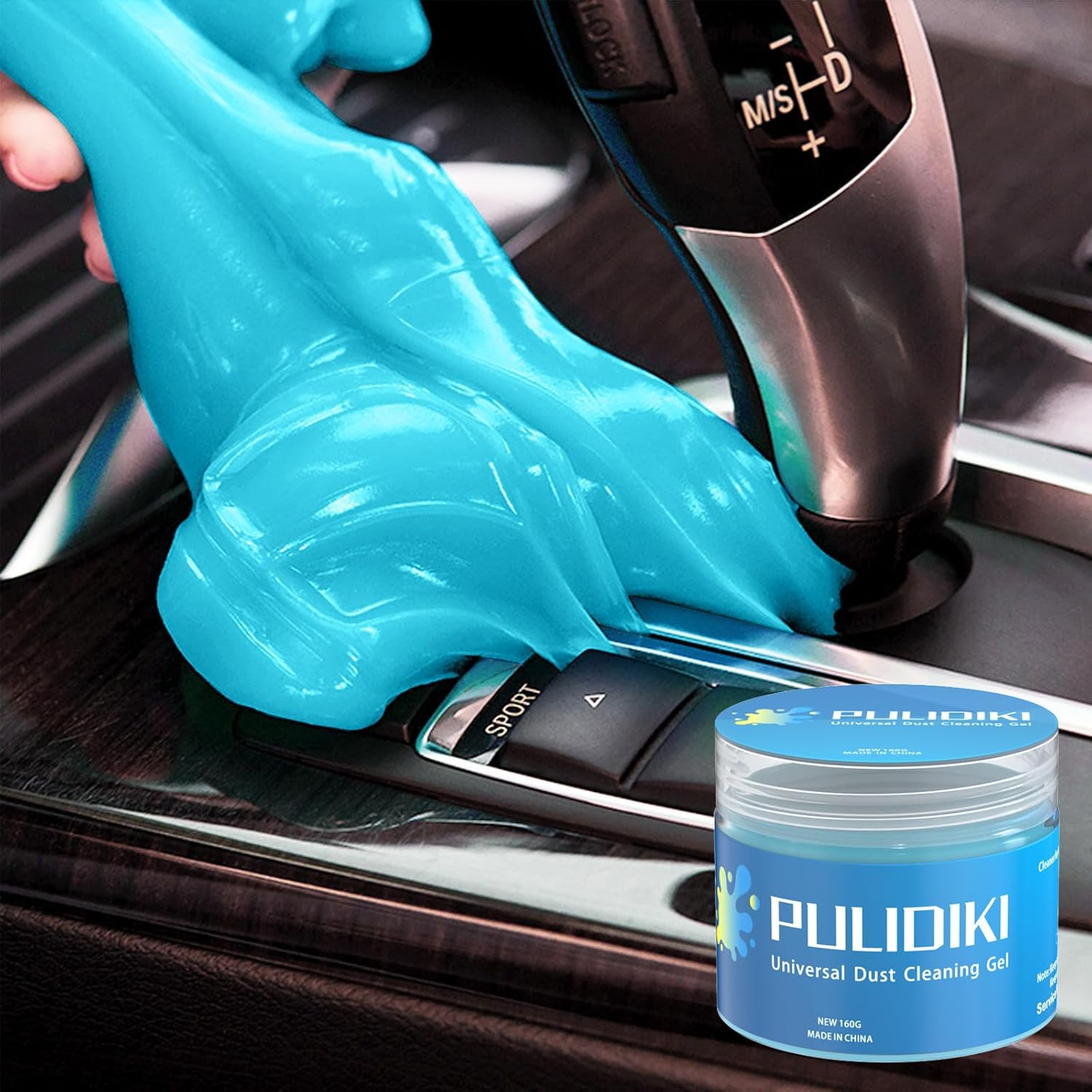
PULIDIKI Car Cleaning Gel (Detailing Putty)
Press it into vents, buttons, and seams and it lifts out dust you did not know was there. Weirdly satisfying, genuinely useful.
As an Amazon Associate, ThinkEV earns from qualifying purchases — at no extra cost to you.
How This Framing Shapes What VW Actually Builds Next
If you believe bans are unnecessary, you design cars for the unconvinced majority, not the early adopter who already lives in a house with a Level 2 charger and a second income. That is a fundamentally different brief.
The ID.2all is the concrete product test. Targeted at sub-€25,000 pricing for launch this year, it is the cheapest serious EV VW has ever attempted in Europe, and it has to land without the rebate scaffolding that propped up the early ID.3. If the ID.2all arrives at the promised price with the promised range, Sander's analogy gains a physical proof point. If it slips to €28,000 or €30,000, the analogy becomes a slogan the company can't fulfil. The relevant comparison is Stellantis's Citroën ë-C3, which arrived at €23,300 and immediately reset the segment floor; VW now has to clear that bar with a car that carries Wolfsburg's cost structure rather than a Slovak one. That is the engineering brief Sander's sentence implicitly accepts.
The counter-case from the value end of the market is sharper still. Slate's sub-$30,000 American pickup and Stellantis's ë-C3 both prove that a credible EV can be priced for the median household when the OEM accepts a thinner gross margin and a leaner spec sheet. VW's cost base does not naturally produce that car. Sander's analogy assumes VW can engineer down to the price point without engineering out the brand premium that justifies the badge. The opposite risk is that a stripped ID.2all reads as a Polo with a battery, competent, unloved, and outsold by a Chinese rival at the same money. That is the failure mode the analogy has to outrun.
The ID.Era 9X signals something the official narrative does not advertise: VW is willing to learn from Chinese EV engineering rather than dismiss it. That is a meaningful posture shift from a German OEM. The competitive pressure from BYD, NIO, XPeng, Geely's Zeekr, and the rest of the cohort entering Europe, and, after this January's tariff cut, increasingly entering Canada under the new 49,000-unit quota, is forcing every legacy OEM to decide whether to compete on Chinese terms or insist the market will reward European terms. VW is signalling that it will adapt.
The software-defined-vehicle roadmap is the back-end of all of this. If VW.OS delivers, if updates ship cleanly, if features actually improve over ownership, if the car gets better the longer you keep it, then the "better" argument becomes self-reinforcing. Owners tell other buyers. Trade-in cycles shorten. Brand equity migrates from "the company that built the Golf" to "the company that builds the operating system you live in." That is the prize VW is reaching for. It is also the prize Tesla has spent fifteen years building moat around.
The Philosophical Bet and Who Else Is Making It
Tesla has been making Sander's argument since 2008. The company never seriously lobbied for ICE bans. It built cars that made the alternative look slow, dumb, and expensive to maintain, and let the product do the persuading. Whatever else one thinks of Tesla's current trajectory, and the gap between its autonomy promises and the delivered Robotaxi fleet is worth scrutinising honestly, the original strategic posture was the one VW is now adopting.
BYD is making a different bet. Volume and cost compression force the market rather than wait for revelation. Build the cheapest credible EV at industrial scale, ship it everywhere a tariff allows, and let price do what persuasion takes longer to do. That posture works in markets where buyers are price-led. It is also why BYD's entry into Canada under the new quota is going to test whether Canadian buyers behave like German buyers or like Brazilian ones. The Canadian wrinkle is that EV warranty enforcement here runs through CAMVAP, and BYD, like Tesla and several other newer entrants, does not currently participate in CAMVAP, which means the persuasion-by-price strategy lands on buyers who may not have the dispute-resolution backstop they assume. VW, by contrast, has a half-century of Canadian dealer relationships and is selling trust as part of the package. That is the durable advantage Sander is implicitly drawing on.
Mercedes-Benz sits in the third corner of the argument and is worth naming because it is the only German rival operating at VW's scale. Mercedes is betting on the premium ladder, that buyers will pay a brand premium for vehicles like the new VLE, a luxury van engineered as a passenger-shuttle upgrade rather than a stripped commercial chassis, and that the EV transition is won at the top of the market and trickles down. VW's bet is the inverse: win the middle, let scale economics do the rest, and let Audi handle the premium argument inside the group. Both can be right about their own brands. Only one can be right about which end of the market sets the pace of European adoption.
VW's bet is distinctly European. Trust the consumer, earn the transition, protect the brand equity built on a century of internal combustion engineering, and use that equity as the ladder into the EV future. It is slower than BYD's approach and less ideologically pure than Tesla's. It might also be the most durable, because it asks the existing customer to come along rather than asking a new customer to switch tribes. The buyers who shopped a Golf or a Tiguan a decade ago are the same buyers VW needs to convert today, and Sander's framing is built to make that conversion feel like progress rather than rupture.
For the Canadian buyer specifically, the question of how a legacy German EV stacks up against the new Chinese entrants on actual ownership economics is going to dominate the next two model years, and Sander's posture is essentially a wager that trust will outlast price.
Gear worth having
As an Amazon Associate, ThinkEV earns a small commission from qualifying purchases — at no extra cost to you.

WixGear Magnetic Air Vent Phone Mount (2-Pack)
A magnet strong enough that your phone never flinches over potholes or rail crossings. Two in the box, one for each car.
As an Amazon Associate, ThinkEV earns from qualifying purchases — at no extra cost to you.
The Horse Analogy Is A Real Strategic Bet
The horse analogy is not the throwaway line it reads as. It is VW's public commitment to a strategy that depends on building genuinely better cars at a price the unconvinced majority can pay, on a manufacturing platform that closes the cost gap with ICE by decade's end, and on a software stack that has so far been the company's biggest weakness. If the ID.2all lands at €25,000 and SSP delivers on Blume's cost claims, Sander's analogy becomes the sentence the company is remembered for. If either slips, it becomes the sentence used against them.
What would change my mind on the bullish read: a second Cariad restructuring inside twelve months, or an ID.2all launch price north of €27,000. What would harden it: a clean VW.OS rollout on the next ID.7 refresh, and SSP pilot-line cost numbers that leak inside Blume's stated band. What matters is not what VW says, but what shows up in showrooms in the next eighteen months, and whether Wolfsburg's confidence proves to be foresight or theatre.
Gear worth having
As an Amazon Associate, ThinkEV earns a small commission from qualifying purchases — at no extra cost to you.
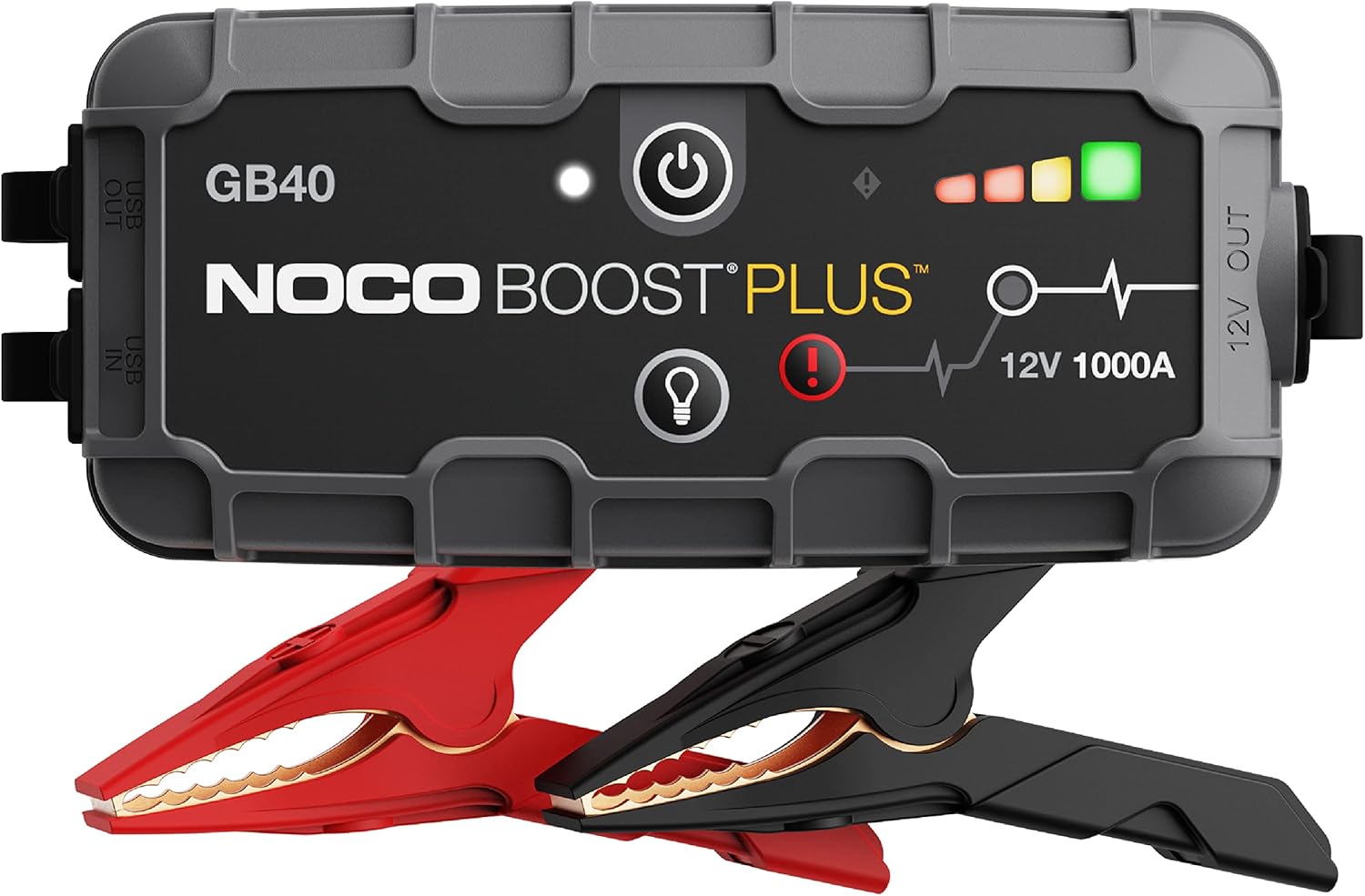
NOCO Boost Plus GB40 Jump Starter
A 1000A lithium jump starter that fits in your glovebox and works on any 12V battery. Your insurance against a dead 12V in a parking lot.
As an Amazon Associate, ThinkEV earns from qualifying purchases — at no extra cost to you.

Founder & Chief Editor
Vlad Pereira is the founder and chief editor of ThinkEV.ca, the Canadian electric-vehicle publication he writes and edits from Courtenay, British Columbia. He covers EV pricing, federal and provincial rebates, charging costs, and the Chinese manufacturers now entering Canada, from the buyer's side rather than the press-fleet side. ThinkEV is a venture of Vlad Pereira Online; his writing on health, income and the long game lives at vladpereira.com.
Frequently asked questions
Will VW still sell gas cars in Canada after 2030?
What is the SSP platform and when does it arrive?
Is VW's software actually fixed yet?
How does this horse analogy hold up against Canadian EV adoption rates?
What's VW actually learning from Chinese EV makers?
More EV & road-trip finds
Affordable upgrades worth a look — tap any to check the price on Amazon.
 ★ 1,083
Crystal Push-Start Button Ring (2-Pack)
View on Amazon ★ 12,396
K KNODEL Car Trash Can with Lid
View on Amazon ★ 15,014
Spigen Tempered Glass for Tesla Model 3/Y
View on Amazon ★ 119
★ 119Foldable Waterproof Trunk Organizer
View on Amazon ★ 17,839
Qifutan Vent Phone Mount (Military-Grade Clip)
View on Amazon ★ 47,507
HOMEXCEL Microfiber Cloths (12-Pack)
View on Amazon ★ 164
★ 164Solar-Powered LED Ambient Light
View on Amazon ★ 401
★ 401Crochet Daisy Rear-View Mirror Charm
View on AmazonRead, Plan, Then Stay Current
Explore our expert articles to understand incentives and ownership costs, use the map to pressure-test charging reality, then subscribe so new EV coverage comes straight to you.
Continue Reading
VW ID.4 80% Charge Cap Rolls Out This Week, With Opt-Out
Mercedes Factory Closures: Two German Plants at Risk
Tesla Semi Moves Into Europe, Gets Largest Order to Date
BYD Dolphin G: Inside the 1,000 km PHEV Design
Tesla Q3 2026 Earnings: Flat Revenue, Falling Profits