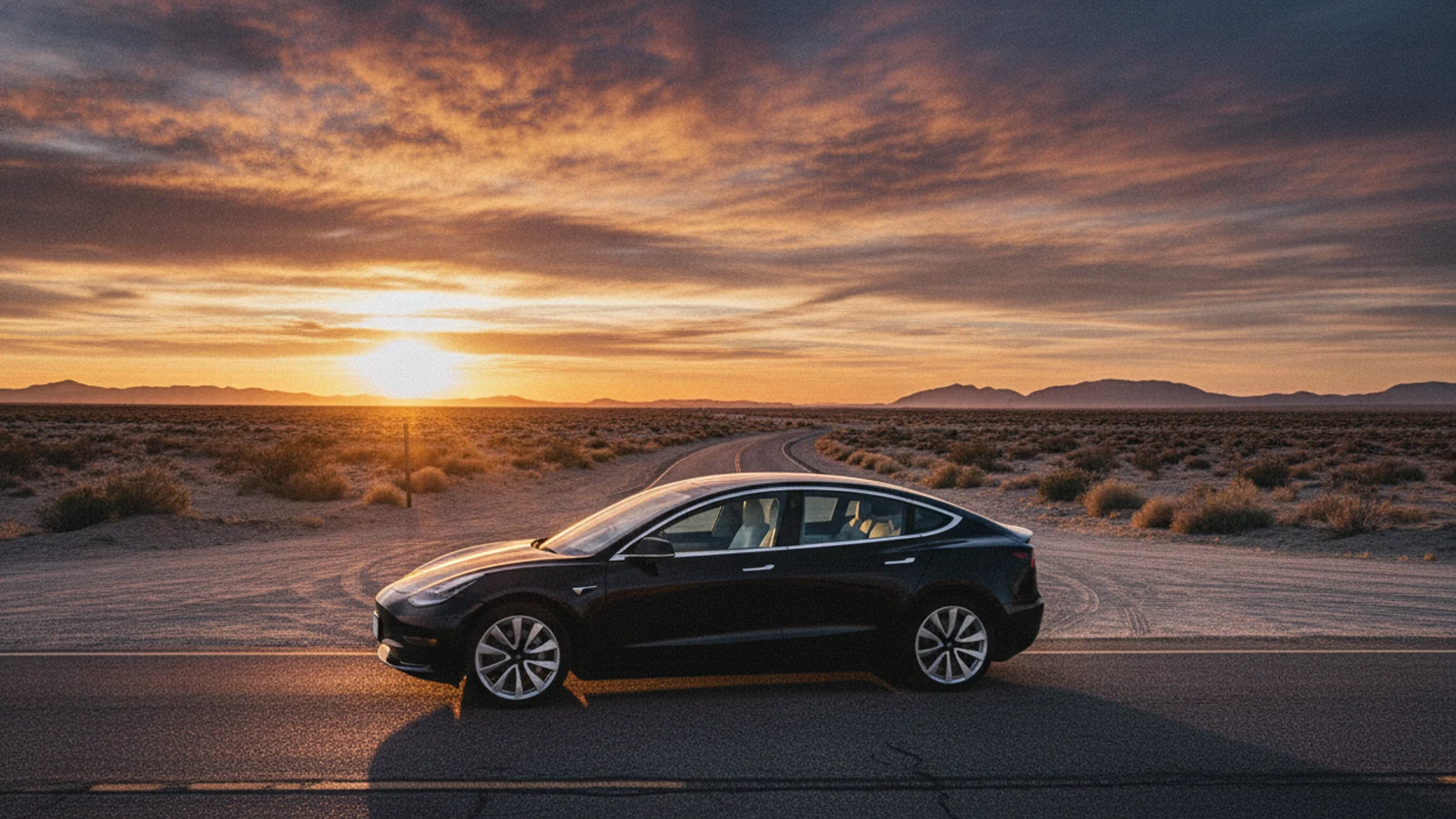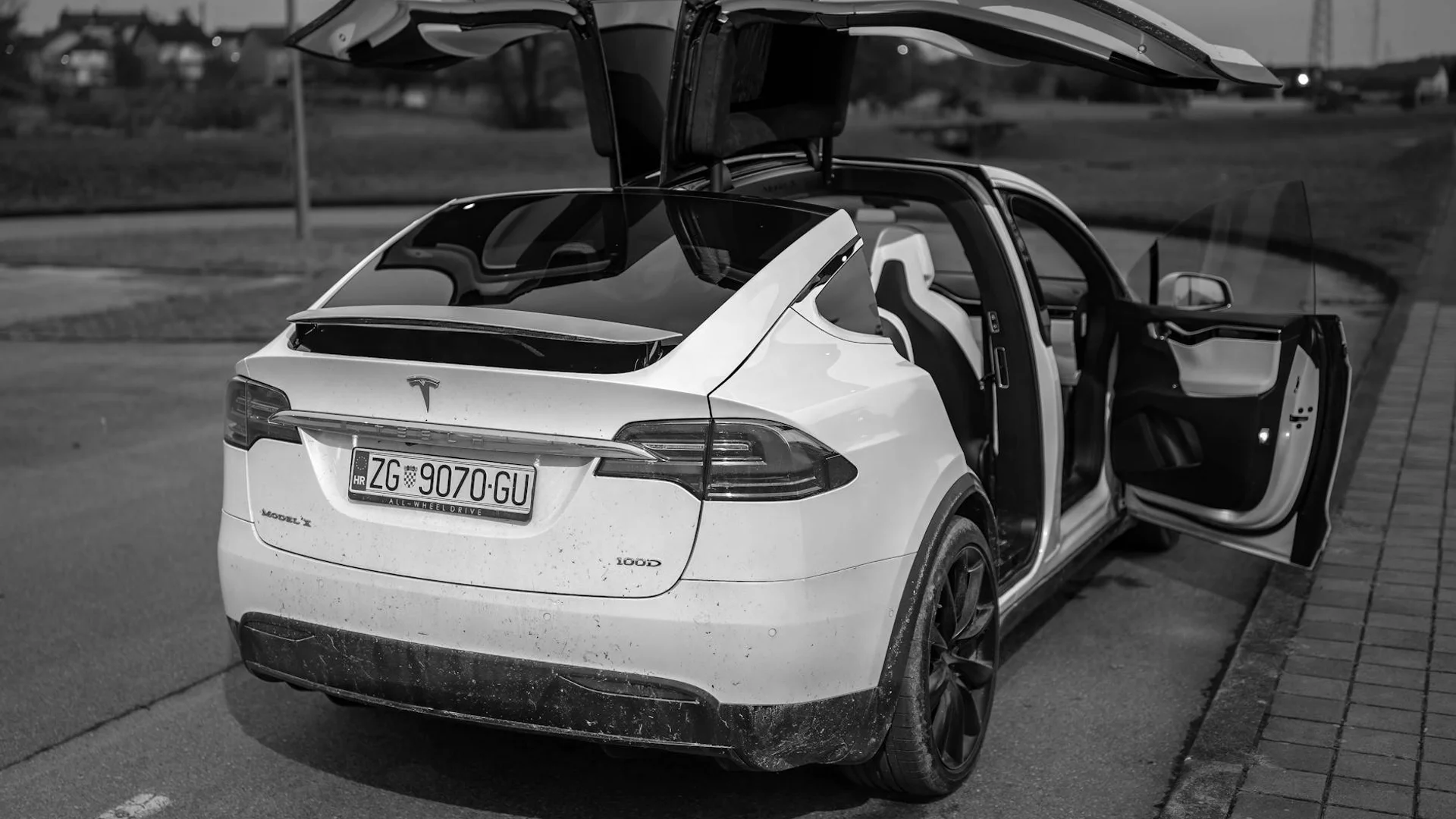
Tesla's robotaxi still doesn't have a launch date. Xpeng's already shipping units from Guangzhou.
That's the news. Xpeng's first mass-produced robotaxi has rolled off the production line at its Guangzhou facility, making it China's first automaker to achieve such a feat. The Cybercab reveal was October 2024. We are now in May 2026 and Tesla's autonomous vehicle is still doing supervised laps in Austin while Xpeng's GX is being built on a real line, in real volume, with a real bill of materials.
This is the part that should sting Tesla loyalists: it's the same bet. Cameras only. No LiDAR. No HD maps. The whole "vision is enough" gospel Elon has been preaching since 2019, Xpeng just took it, executed faster, and got to mass production first. Same religion, different church, and the Chinese congregation showed up on time.
Three years of Cybercab promises. One year of Xpeng GX engineering. Guess which one rolled off a line this month.
Key takeaways
- Xpeng's GX began mass production in Guangzhou in May 2026, beating Tesla's Cybercab, revealed October 2024, still untested without supervision.
- Both companies run camera-only, no-LiDAR architectures; Xpeng's VLA 2.0 model runs on proprietary Turing chips, cutting any Nvidia dependency.
- Waymo's sensor-heavy fleet already carries paying passengers in Phoenix and San Francisco, meaning Tesla isn't even second in commercial robotaxi service.
- Xpeng's 11-year-old company achieved full vertical integration, consumer EVs, humanoid robots, eVTOL, and now proprietary AV silicon, matching Tesla's own moat story.
- Canadian readers won't see the GX robotaxi soon, but Xpeng's consumer lineup using the same VLA driver-assist stack is already on the 2026 Canada entry list.
Xpeng Beat Tesla to Mass Production.
Forget the choreographed unveils. Forget the projected dates. The only milestone that matters in autonomous vehicles is hardware leaving a factory, and Xpeng just crossed it. Production volume is the scoreboard. Everything else is slide-deck choreography that investors have learned to discount.
Chinese electric vehicle maker Xpeng has begun mass production of autonomous cabs powered by its own chips, likely to mount yet another challenge on Tesla as both companies pursue a leading position in self-driving. That's not a concept. That's not a prototype. That's units coming off a line in Guangzhou with VINs attached, ready for a fleet operator to put them on the road.
Tesla's Cybercab? Still in supervised testing. The Austin pilot uses safety monitors. There's no consumer-available robotaxi service Tesla operates without a human in the loop. The timeline has slipped, been re-promised, and slipped again. Investors have stopped asking when, because they stopped trusting the answer.
This isn't a small gap. It's a category gap. Mass production means the supply chain is locked, the tooling is paid for, the assembly workers know what they're doing, and the cost curve has started its descent. Xpeng is on that curve. Tesla is still drawing it on a whiteboard.
And here's the brutal part: Tesla had the head start. Xpeng is eleven years old. Tesla has been talking about robotaxis since 2016. The company that invented the genre got beaten to mass production by a company that didn't exist when the genre was being invented. That's not a footnote, that's the whole story.
The case against this framing is that "first off the line" is a marketing milestone, not a commercial one, Waymo has been carrying paying passengers in Phoenix and San Francisco for years without a single Cybercab existing, and by that measure Tesla isn't even second, it's nowhere. Fair. But Waymo's stack is the opposite philosophical bet, sensor-heavy, geofenced, expensive per unit, and the question on the table is whose vision-only architecture gets to a production line first. The answer is Xpeng. The fact that a different architecture has been carrying passengers for years doesn't change which camera-only company shipped hardware.
The press coverage tried to soften it. "Xpeng has started building its own robotaxi, but it doesn't look like any other," one headline ran. The translation: nobody knows what to do with the fact that a Chinese startup just out-executed Tesla on Tesla's own thesis. So they hedge. They emphasise the design quirks. They sidestep the production-versus-promise scoreboard.
Don't sidestep it. Look at it. The vision-only camp now has a production winner. It isn't Tesla. The conversation has changed, even if the X mentions haven't caught up yet. For context on how this fits into the broader autonomy race, the global picture is worth understanding, robotaxis are already operating in places most Western readers don't see, and Xpeng's Guangzhou rollout extends a pattern that's been building in China for two years.
This is what mass production does. It rearranges the conversation.
Same Vision-Only Bet, Different Scoreboard
The technical bet is identical. That's what makes the scoreboard so awkward for Tesla. Two companies, one architectural thesis, and only one of them has hardware coming off a line this month.
Xpeng relies on a vision-only system like Tesla, rather than using LiDAR. Same hardware philosophy. Same rejection of the sensor-fusion orthodoxy that Waymo, Cruise, and most of the AV industry have spent a decade defending. Xpeng looked at Tesla's playbook, agreed with the thesis, and then proceeded to ship it.
The hardware specifics matter. According to Interesting Engineering's reporting on the launch, XPENG's Robotaxi operates entirely without LiDAR or high-definition maps, and utilises a pure vision solution powered by the VLA 2.0 end-to-end large model. No spinning sensors on the roof. No pre-mapped geofence the car can only operate inside. Cameras, an end-to-end neural net, and the kind of compute that fits inside a production vehicle without doubling the bill of materials.
Read that paragraph again with Tesla's marketing in your head. It's the same sentence. The same architectural choice. The same bet that the cheapest, most scalable path to autonomy is pixels-in, driving-out.
The difference is the chip. Tesla uses HW4, its own silicon, sure, but built around a relatively conventional inference stack. Xpeng's autonomous cabs are powered by its own chips, and the Turing silicon was designed specifically for the VLA 2.0 model that runs on top of it. No Nvidia dependency. No third-party compute provider that can choke supply or raise prices. Full stack, top to bottom, Xpeng-owned.
That's the moat Tesla spent fifteen years building. Xpeng built the equivalent moat in eleven years total, while also launching a consumer EV lineup, a humanoid robot programme, and an eVTOL business on the side. The vertical integration story isn't unique to Tesla anymore, and that's a marketing problem Tesla hasn't figured out how to solve yet.
The counter is that VLA 2.0 has been demoed but not stress-tested at fleet scale, and the gap between "model works in controlled conditions" and "model handles every edge case a Guangzhou intersection throws at it" is where most AV programmes go to die. Cruise died in that gap. Argo died in that gap. Even Waymo, which has more real-world miles than anyone, still has incidents that make the local news. Xpeng could roll a thousand GX units out and discover that the long tail of edge cases eats their margins alive. That's a real risk and worth saying out loud. The counter to the counter: this is also exactly the risk Tesla faces with Cybercab, and Tesla has the additional disadvantage of facing it later, with less runway, in a regulatory environment slower than China's.
For Canadians watching this from across the Pacific, the immediate question is whether any of this hardware ever reaches our market. The short answer: not the robotaxi, not soon. But Xpeng's broader passenger lineup is in the list of new EV brands entering Canada in 2026, and the same VLA family, minus the L4 service stack, is what underpins their consumer driver-assist features.
Same bet, different scoreboard. Vision-only has a production champion now. Tesla doesn't get to claim that title until a Cybercab is on a Texas street picking up an actual paying passenger without a human in the front-left seat. Today, that's still a slide deck. Xpeng's is a factory output.
Gear worth having
As an Amazon Associate, ThinkEV earns a small commission from qualifying purchases — at no extra cost to you.

70mai A810 4K Dual Dash Cam
4K front and 2K rear with STARVIS 2 HDR night vision and 24/7 parking surveillance, recording while parked without draining the 12V. A budget alternative to Tesla Sentry.
As an Amazon Associate, ThinkEV earns from qualifying purchases — at no extra cost to you.
The Full-Stack Play Nobody Saw Coming From Xpeng
Three years ago, if you'd said Xpeng would beat Tesla on full-stack vertical integration, the response would have been polite laughter. The company was an also-ran in the Chinese EV race, getting clobbered by BYD on volume and NIO on premium positioning. The stock had been a disaster. Then they shipped this, and the laughter stopped mid-sentence across every analyst desk that had been writing the obituary.
Electrek's coverage of the production milestone lays out the architecture explicitly: XPeng developed the Turing chips, the VLA 2.0 AI model, the GX vehicle platform, and the manufacturing process all in-house, which puts them in a category most automakers can't even pretend to compete in. The list of companies doing the full stack, silicon, model, vehicle, factory, is Tesla, and now Xpeng. That's the entire list. Everyone else is renting at least one layer.
The piece nobody saw coming was the chip. Building a competitive AI model is hard but doable; building a vehicle platform is well-trodden territory; building a factory is a known unknown. Designing your own automotive-grade inference silicon and getting it into a shipping vehicle is the move that separates "ambitious startup" from "actual threat." Xpeng made that move.
And they formalised the robotaxi business. The Chinese company plans to launch three Robotaxi models by 2026, running on its own Vision Language Action 2.0 model, an AI system so advanced it can drive without depending on cloud data. Three models. Not one hero car with a moonshot demo. A product line. With internal segmentation, presumably, and roadmap discipline.
Permits are in hand. The tech firm has permits to test Level 4 autonomous systems in China. That's the regulatory floor. China's AV permitting regime is faster than the patchwork in the US, no state-by-state DMV negotiation, no NHTSA defect investigations dragging on for quarters. Beijing decides, and the cities follow. Xpeng has the permits. The fleet operators are queueing up.
The Tesla-faithful response will be: "But Tesla has more data." Maybe. Tesla's fleet has been collecting miles since 2016 and Xpeng's hasn't. That's a real advantage on the training side. But the production-side scoreboard is what counts now, and the gap is widening every month Tesla doesn't commercialise. Data only matters if it ships into a vehicle a customer can pay for. And data advantage decays, every month Xpeng's GX fleet drives, the gap narrows. Tesla's miles were collected in 2018-2024 hardware; Xpeng's miles will be collected in 2026 hardware running the model the company actually plans to commercialise. Recency of fleet data matters more than total volume when the model architecture changes.
The other Tesla-faithful response will be: "Xpeng can't export this." Maybe. The Canadian and US markets are not going to see GX robotaxis on a Tuesday, there's no tariff regime, no Transport Canada certification, no NHTSA approval, no infrastructure deal in place. But "can't export today" is a different argument than "won't ever matter." Chinese EVs are entering Canada in passenger form in 2026, and the tariff math has already collapsed from 100% to 6.1% with a 49,000-unit quota. If Xpeng ships a million robotaxi-platform vehicles in China by 2028, the export argument changes shape.
What the Press Release Glossed Over
Every press release has a load-bearing fudge. Find it, and you understand what the company is worried about.
Xpeng's fudge is the gap between "mass production" and "commercial passenger service." Production started this month. The fully driverless paid-rides commercial service is later, Xpeng said Monday it started mass production of its first robotaxi in Guangzhou, with plans for fully driverless service by early 2027. That's eight months from now, minimum. Realistically more, because nobody hits AV timelines on the first try.
So what's rolling off the line right now? Vehicles for fleet partner trials, supervised pilots, and probably some demonstration units for the regulatory dance ahead of the 2027 launch. Real hardware doing real laps, but not yet a service you can hail in Shenzhen and ride home in.
That's still ahead of Tesla. Tesla's also doing supervised laps. The difference is Xpeng has a published date for unsupervised commercial operation. Tesla doesn't.
Gear worth having
As an Amazon Associate, ThinkEV earns a small commission from qualifying purchases — at no extra cost to you.

Lectron Level 2 J1772 Charger (40A, WiFi)
Smart WiFi charger with real-time energy monitoring. 40A / 9.6 kW, J1772 with a NEMA 14-50 plug, schedule charging right from your phone.
As an Amazon Associate, ThinkEV earns from qualifying purchases — at no extra cost to you.
The other glossed-over bit: Unlike companies like Tesla, Rimac, and Geely that have designed bespoke robotaxis from the ground up, Xpeng's model is essentially just a specially equipped version of the GX it sells to the public. The GX wasn't built ground-up as a robotaxi. It's a consumer EV with the autonomous sensor package and software stack bolted on. That's actually the smart move, share the platform, amortise the tooling, but it's not the same as Cybercab's purpose-built two-seater design.
Which model wins commercially is open. Tesla's bet is that a purpose-built robotaxi will have lower per-mile economics than a converted consumer vehicle. Xpeng's bet is that platform-sharing gets you to production faster, even if the unit economics aren't theoretically optimal. Right now, "produced" is beating "theoretically optimal." That might not always be true, but it's true today.
Geely is the named comparison worth watching here, because it's the third axis on this triangle, purpose-built robotaxi designed ground-up, but Chinese, with state-adjacent capital and access to the same regulatory tailwinds Xpeng enjoys. If the Geely-style bespoke design wins on unit economics in 2027-2028, Xpeng's platform-sharing approach gets retroactively framed as the cheap shortcut, and Tesla's Cybercab thesis gets validated by a Chinese competitor rather than Tesla itself. That's the irony worth tracking: Tesla might lose the production race and still have its architectural thesis vindicated, just by someone else.
The volume question is the other open one. "Mass production" in China can mean anything from 100 units per quarter to 100,000. Xpeng hasn't published the cadence. Three models by end of 2026 is the stated plan, but margin and volume math are still a black box. The skeptical read: it's a thousand-unit demonstration run dressed up as mass production. The optimistic read: it's the first volume robotaxi line ever built, and the curve goes up from here.
Both can be true. The first is consistent with the timeline; the second is consistent with Xpeng's stated ambitions. Which one materialises will be visible in the Q3 2026 production data, not the press release.
Gear worth having
As an Amazon Associate, ThinkEV earns a small commission from qualifying purchases — at no extra cost to you.
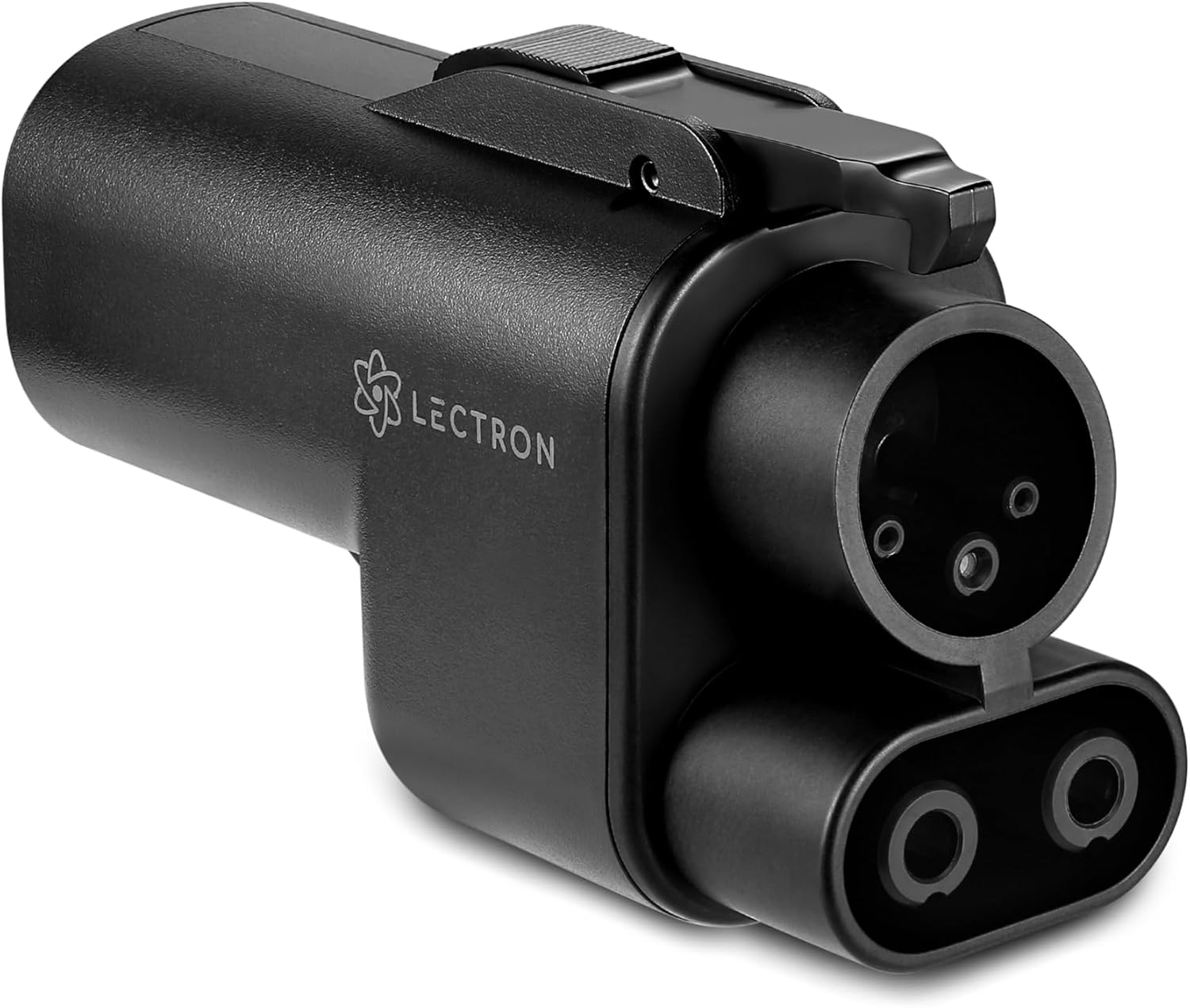
Lectron NACS to CCS Fast-Charge Adapter
Unlock every CCS fast charger for your Tesla, up to 500A DC. Never get stranded at a non-Tesla DC station again.
As an Amazon Associate, ThinkEV earns from qualifying purchases — at no extra cost to you.
Tesla's Real Problem: The Timeline Is Embarrassing Now
For a decade, the Tesla robotaxi narrative had one thing going for it: nobody else was as close. The competition was Waymo, which was sensor-heavy and geofenced; Cruise, which was sensor-heavy and crashed itself out of the market; and a long tail of startups that ran out of money. Tesla could miss every internal deadline and still be the credible camera-only player.
That's over. Xpeng is the credible camera-only player now, by virtue of having actually produced one. The "Tesla copycats" framing on X has flipped, Xpeng is the one setting the production pace, and Tesla is the one explaining why the next demo is the real one.
The investor patience question is real. Cybercab was unveiled with a 2026 production target. Half of 2026 is gone. Recent coverage describes Tesla's stock sliding again as the robotaxi bet faces fresh challenges. That's the market saying it sees what's happening: the moat is leaking, the timeline is slipping, and the competitive pressure is no longer hypothetical.
Tesla's FSD Supervised is impressive technology. The Austin pilot is impressive engineering. None of that is the same as a paying customer riding without a safety operator. Xpeng has the permits to test L4 in China. Tesla has the permits to test FSD in Texas with monitors. Same alphabet, different sentences.
The community discourse shift has been the most interesting part. On the EV-focused corners of X and Reddit, the conversation has moved from "Tesla is years ahead" to "wait, did Xpeng just ship one?" That's not consensus yet, but it's a real change in the median post. The Forbes piece from late April, XPENG was pitching itself as a Physical AI company at the Beijing Auto Show 2026, but this was always the vision, landed with the framing intact: this is a peer-class competitor, not a knockoff.
Tesla's response options are limited and uncomfortable. Option one: accelerate Cybercab and accept lower margins or higher risk to hit a credible commercial date. Option two: lean harder on FSD Supervised as a consumer product and quietly de-emphasise the robotaxi commercial timeline. Option three: do nothing and hope Xpeng stumbles. None of those are great. Option one requires capital and execution. Option two is a strategic retreat. Option three is wishful thinking dressed up as patience.
There's a fourth option worth naming, even though Tesla won't take it: license the stack from somewhere. Mobileye has a vision-plus-radar L4 system in deployment trials. A Tesla-Mobileye partnership would be commercially humiliating but technically expedient. Tesla's culture makes this near-impossible, but a competitor in Tesla's position without Elon's pride would already be in the meeting. The fact that it's not even on the table tells you which constraint is binding, engineering or ego.
The Tesla-versus-China story has been building for two years. The Model Y is still the world's bestselling car, but Tesla's Canadian sales collapsed 60%, and the brand-equity erosion is visible in markets that aren't China yet. Add a robotaxi production gap to that picture and the strategic situation gets harder to spin.
Gear worth having
As an Amazon Associate, ThinkEV earns a small commission from qualifying purchases — at no extra cost to you.

Tesla Key Card Holder with AirTag Slot
Stop fishing the keycard out of your wallet, and slot an AirTag in case the car wanders off in a lot.
As an Amazon Associate, ThinkEV earns from qualifying purchases — at no extra cost to you.
Why This Actually Matters Outside China
The instinct from Western coverage will be to dismiss this as a China-only story. Different regulatory regime, different urban density, different consumer base, different infrastructure. Nothing to worry about, it can't happen here. That instinct is wrong this time, and getting wronger with each production milestone.
The vision-only-versus-LiDAR debate has been the central technical fight in autonomous vehicles for a decade. Waymo's position: cameras alone aren't safe enough; you need sensor fusion. Tesla's position: cameras are enough; LiDAR is a crutch. Until this month, the production evidence was thin on both sides, Waymo had vehicles in San Francisco, Phoenix, and a few other markets, but at limited scale and inside geofences. Tesla had the consumer FSD Supervised data but no commercial robotaxi service.
Xpeng just dropped a weight on the vision-only side of the scale. Not a demo, not a research paper, a production vehicle that's about to start commercial operation. The full-stack approach is genuinely compelling. The fact that XPeng developed the Turing chips, the VLA 2.0 AI model, the GX vehicle platform, and the manufacturing process all in-house puts it in rare company globally.Tesla is the obvious comparison on the vertical integration front. The pure vision approach, no LiDAR, no HD maps, mirrors Tesla's strategy, but XPeng's VLA 2.0 model takes a different architectural path.
If the GX runs commercial L4 in 2027 without significant incidents, the LiDAR debate effectively ends. The price-versus-safety argument collapses, and the industry consolidates around cameras-plus-AI as the dominant stack. Waymo doesn't disappear, but its premium-priced sensor approach starts looking like a niche.
If the GX has problems, incidents, reliability issues, regulatory pushback, the debate stays open, and Tesla's slower-and-more-careful framing gets retroactively validated. Either outcome is industry-shaping.
For Canada specifically, the immediate consumer impact is zero. There's no GX coming to Canadian streets in 2026 or 2027, Transport Canada doesn't have an L4 commercial framework, Canadian cities haven't approved unsupervised robotaxis, and the import pathway for Chinese L4 vehicles doesn't exist. The technology arriving here is more likely to be Waymo-style sensor-heavy deployments by Western operators, on a timeline of years. For a sense of how Chinese passenger EVs themselves are entering the Canadian market in parallel, the NIO-versus-Tesla premium comparison shows where the consumer-side competition lands first.
But the indirect impact is large. Xpeng's progress accelerates the global vision-only timeline, which pressures every other AV company, including the ones that might eventually operate in Canada, to compete on cost. Cheaper sensors, cheaper compute, cheaper per-mile economics. That cascades into consumer EVs too: the same camera-and-AI stack that powers Xpeng's robotaxi shows up in their consumer driver-assist features, and eventually in everyone else's.
The other thing that matters: the Chinese-AV-isn't-exportable argument gets harder to make with each production milestone. The technical capability is real. The export pathway is the open question, not the engineering. Regulatory regimes change. Trade deals change. The Canadian tariff on Chinese EVs went from 100% to 6.1% in one year. Insisting that none of this will ever reach North American roads is a position that depends on a lot of things staying the same.
Bottom line: Xpeng's GX rolling off a line in Guangzhou this month is a marker event for the entire autonomous vehicle industry, not just for China. The vision-only camp has a production answer. Tesla now has to ship one of its own, fast, or quietly. And the rest of the industry has to decide whether to compete with that stack or keep paying the LiDAR premium and hope it pays off.
The Cybercab is still in Austin. The GX is on a truck headed to a fleet operator. That's the scoreboard. It's not going to read better for Tesla next quarter unless something significant changes.
Only one thing changes this picture: a Cybercab commercial launch date, actual driverless service, not supervised pilots, published before the end of Q3 2026, with at least one fleet partner named and at least one regulator on record. Anything short of that is goalpost-shifting. On the Xpeng side, the number that matters is the Q3 production cadence. If it's still measured in hundreds of units per quarter by September, the "mass production" framing was a press-release fiction and the timeline to 2027 commercial service slides with it. If it's in the thousands and climbing, the curve is real and Tesla's window to respond is closing.
The defensible call: by mid-2027, at least one Chinese city has a paid driverless GX service operating without a safety monitor. Tesla doesn't. The hedge: any of this hardware reaching a Canadian street before 2030, trade politics and Transport Canada move on their own clock, and that clock is not synced to Guangzhou.
Three things to watch:
- The Q3 2026 Xpeng production numbers, hundreds per quarter versus thousands tells you whether "mass production" was real or a press-release flourish.
- Whether Tesla announces a real Cybercab commercial launch date before end of Q3 2026, or whether the goalposts move again.
- Whether any Western operator licenses the VLA 2.0 stack, the canary on the export question.
The robotaxi race had a clear pace car for a decade. It doesn't anymore.
Gear worth having
As an Amazon Associate, ThinkEV earns a small commission from qualifying purchases — at no extra cost to you.
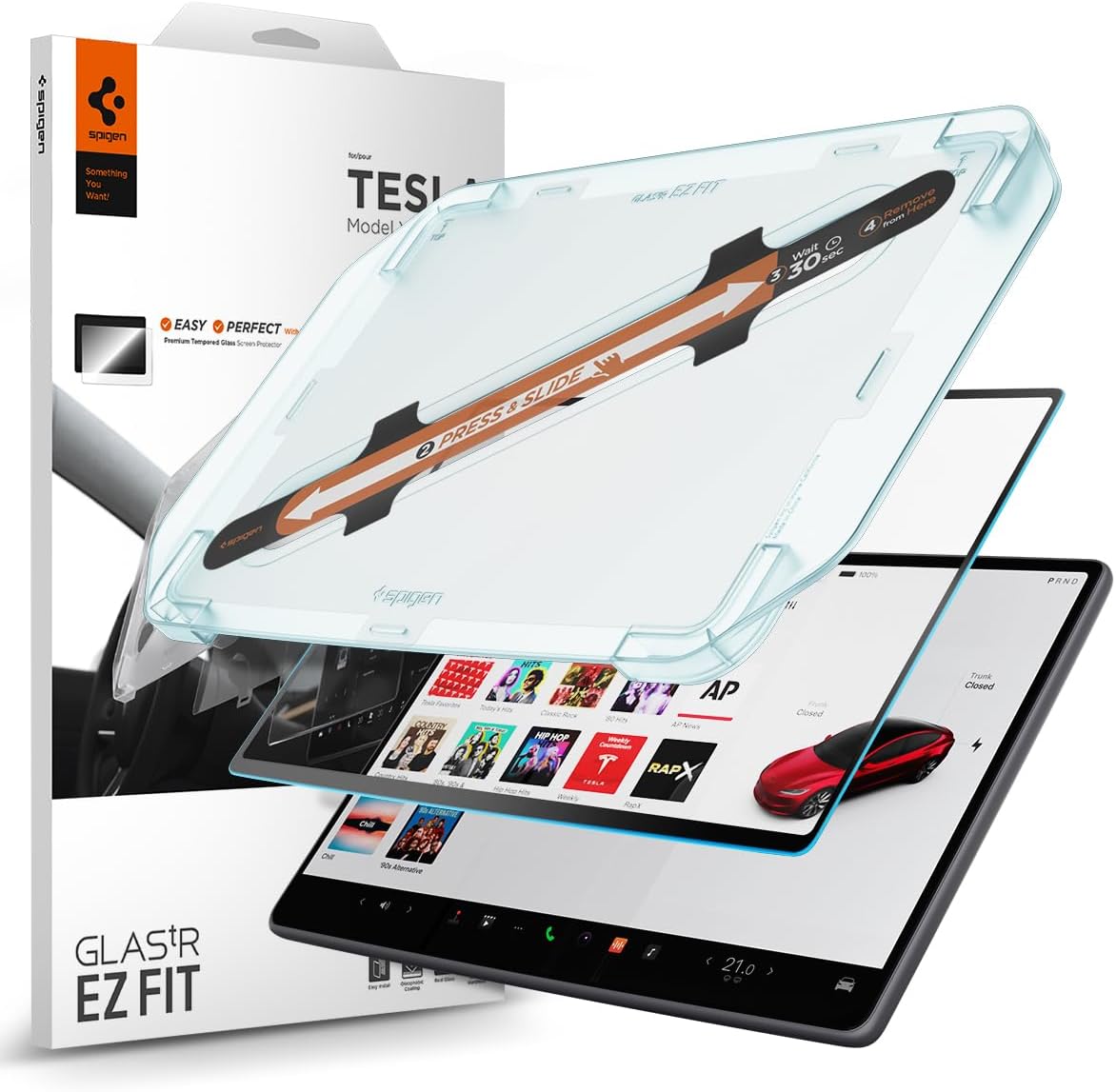
Spigen Tempered Glass for Tesla Model 3/Y
Tempered-glass protection for the touchscreen that kills fingerprints and scratches. Two minutes to install, lasts the life of the car.
As an Amazon Associate, ThinkEV earns from qualifying purchases — at no extra cost to you.

Founder & Chief Editor
Vlad Pereira is the founder and chief editor of ThinkEV.ca, the Canadian electric-vehicle publication he writes and edits from Courtenay, British Columbia. He covers EV pricing, federal and provincial rebates, charging costs, and the Chinese manufacturers now entering Canada, from the buyer's side rather than the press-fleet side. ThinkEV is a venture of Vlad Pereira Online; his writing on health, income and the long game lives at vladpereira.com.
Frequently asked questions
Will Xpeng's robotaxi ever be sold or operated in Canada?
What does 'mass production' actually mean for Xpeng's GX?
Does Xpeng's system work without any pre-mapped roads?
Why does it matter which vision-only system ships hardware first?
Is Cybercab actually dead, or just delayed again?
More EV & road-trip finds
Affordable upgrades worth a look — tap any to check the price on Amazon.
 ★ 900
★ 900Personalized Photo Car Air Freshener
View on Amazon ★ 12,396
K KNODEL Car Trash Can with Lid
View on Amazon ★ 1,944
VIOFO A229 Pro 4K Dash Cam
View on Amazon ★ 87
★ 87Car Window Sun Shades for Kids (4-Pack)
View on Amazon ★ 68
★ 68WeatherTech FloorLiner for Tesla Model 3
View on Amazon ★ 47,507
HOMEXCEL Microfiber Cloths (12-Pack)
View on Amazon ★ 314
★ 314Mini USB LED Ambient Lamps (4-Pack)
View on Amazon ★ 568
★ 568Personalized Photo and Text Keychain
View on AmazonRead, Plan, Then Stay Current
Explore our expert articles to understand incentives and ownership costs, use the map to pressure-test charging reality, then subscribe so new EV coverage comes straight to you.
Continue Reading
Chinese EVs in Canada: 15,603 In, Still No BYD
BYD Great Seagull: A Bigger $10,000 EV Hatch Is Coming
10–97% in 9 Min: Sunwoda Joins the Flash Charging Race
BYD Denza Z9 GT Adds $50K Tri-Motor Trim to China's Top GT
Tesla Cybercab Launch Draws NHTSA Probe, Stock Slide