Key takeaways
- The provincial $2,500 rebate ended March 15, 2026, the federal $5,000 is now the whole story for Newfoundland and Labrador buyers.
- The federal piece is $5,000 through Ottawa's EVAP program, which replaced the older iZEV.
- In a province where the median household income sits around $65,000 and a full tank at the Ultramar on Kenmount Road costs over $80, $5,000 is not nothing.
The key detail: Newfoundland's $2,500 provincial rebate ended on March 15, 2026, so the money on the table now is the federal $5,000, still real, still applied at the dealership, but no longer the $7,500 stack that was available earlier in the year.
That's the short answer. The longer answer involves how the two programs stack, which vehicles actually qualify, how the application process works for each piece, what home charging costs, and whether any of this actually makes sense on a Newfoundland winter budget. I'll walk through all of it, because "there's a rebate" is a headline, not a plan.
Until March 15, 2026, the province layered a $2,500 rebate on top of the federal money; that provincial piece has now ended. The federal piece is $5,000 through Ottawa's EVAP program (which replaced the older iZEV), still applied at the dealership. Because the federal deduction reduces your taxable purchase price, the real savings are somewhat higher than the $5,000 headline once you account for HST.
In a province where the median household income sits around $65,000 and a full tank at the Ultramar on Kenmount Road costs over $80, $5,000 is not nothing. It's a chunk of a down payment. It's well over a year of fuel savings. It's the number that still makes the EV math work.
The March 15 deadline is the provincial piece. The federal side has its own timeline and its own funding envelope, I'll cover current status on that separately. But the $2,500 from the province ends in nine days from when most people reading this are clicking through. That's the clock that matters right now.
The Stacking Math, Why Two Separate Programs Actually Adds Up
Simply put, they don't cancel each other out, they compound. The longer answer requires understanding how each program works structurally.
The federal EVAP $5,000 is applied at the point of sale by participating dealerships. This is not a rebate you wait for, the dealer takes $5,000 off the purchase price on the spot, then recovers it from Transport Canada through the program administration. What this means in practice: you finance the post-rebate amount, not the sticker price. At 15% HST in Newfoundland, that $5,000 deduction saves you $750 in tax on top of the rebate itself. The total financial effect of the federal piece is not $5,000, it's approximately $5,750 once you account for the avoided tax.
While it ran (it ended March 15, 2026), the provincial $2,500 worked differently, it arrived as a separate cheque four to six weeks after you applied to the province's online portal, post-purchase. With that program now closed, NL buyers get only the federal $5,000, deducted at the dealership at the point of sale.
The implication that often trips people up: you cannot use the provincial $2,500 as a down payment. You can't have the dealer deduct it from your transaction price. It is a government reimbursement that arrives weeks after delivery. Budget accordingly. The federal piece reduces what you're financing from day one; the provincial piece reduces your outstanding balance after the fact.
Combined, on a $42,000 vehicle: federal EVAP brings your financed price to $37,000 before tax. HST on $37,000 is $5,550. You sign for approximately $42,550 total. The provincial $2,500 arrives six weeks later. Applied as a lump-sum payment against the principal, you've effectively paid $40,050 for a $42,000 vehicle, and that's before accounting for the $750 in avoided tax on the federal deduction. The actual effective purchase price after all rebates and tax effects: closer to $39,300.
Run that math against a comparable gas crossover at $38,000 and your out-of-pocket gap essentially closes on day one before you've driven a single kilometre.
One more thing worth saying plainly about the "new vehicle" requirement, because questions come up: a used EV, even one with 11 km on the odometer sitting on a franchise dealer lot, even a certified pre-owned with full warranty transfer, does not qualify for either program. The requirement is that the vehicle has not previously been titled or registered to any owner. New means new. This is not ambiguous, and it is not negotiable with the dealer or the government. If your budget points toward used, the financial case still exists, lower electricity costs, minimal maintenance, no oil changes, but upfront rebates are off the table.
The March 15 Deadline Is Not Flexible
I've watched this pattern play out in other provinces. BC's SCRAP-IT program ran out of money ahead of schedule. Nova Scotia's EV rebate burned through its allocation in 2023 before the announced end date. Newfoundland's provincial program has a hard deadline of March 15, 2026, and that deadline does not care about your test-drive schedule or your conversations with your spouse or the fact that you've been "basically decided" for three weeks.
What you need to have completed before March 15 to capture the provincial $2,500:
- Signed purchase agreement
- Financing arranged and approved
- Delivery confirmed
The application itself, the online portal submission with your documentation, can happen after delivery. But the vehicle purchase has to be complete before March 15. Some dealers with in-stock vehicles can turn that around in 48 hours. Others cannot. If the vehicle you want needs to be sourced from another lot, transferred, or ordered, you may have already missed the window for the provincial piece. That is the hard truth, and I am not going to soften it.
The federal EVAP has its own funding situation and its own timeline. As of early March 2026, it's active. The $5,000 incentive is available. The political environment around federal EV incentives has been in flux since the fall 2025 fiscal update, and I'd recommend verifying the program's current status on the Natural Resources Canada website before you're counting on it, not because it's likely to vanish overnight, but because program terms change and you should know the current state before you sign anything.
If you've been on the fence for months, the next 48 hours are the ones that determine whether you get the full $7,500 or just the federal half. Call a dealer. Get paperwork moving. The rebate does not wait for anyone to feel ready.
Which Vehicles Actually Qualify, And Which Trim Levels Don't
The short answer: battery electric vehicles only. Not plug-in hybrids. Not hydrogen. Not mild hybrids. Not "electrified" vehicles in the marketing-speak sense. Pure battery electric, charged entirely from an external power source, no combustion backup.
The longer answer involves trim levels, because this is where buyers most often make expensive mistakes.
The federal EVAP has a $50,000 final transaction value cap. Final transaction value means the price you actually pay, including any dealer-installed options, before taxes, but after any dealer discounts. If the number you're signing for exceeds $50,000, the federal $5,000 disappears entirely. There's one exception worth knowing: vehicles assembled in Canada carry no federal price cap at all. A Canadian-built EV at $65,000 MSRP still qualifies for the full $5,000. For Newfoundland buyers, that exception currently applies to certain GM products built in Ingersoll, Ontario.
The implication for trim selection is critical. On many models, the base trim qualifies comfortably, the mid trim qualifies with careful option management, and the top trim blows past the cap and loses you $5,000 in a stroke. The vehicle line you're shopping is almost irrelevant, what matters is the specific trim, the specific options, and the specific final transaction value. Confirm this number with your dealer in writing before signing.
Hyundai IONIQ 6, The rear-wheel-drive Standard Range starts around $42,000 MSRP and sits well within the federal cap. It has a heat pump standard on most trim levels, which matters enormously for Newfoundland winters (more on this shortly). Cold-weather range on the IONIQ 6 has consistently tested better than its rated figures in Consumer Reports cold-weather testing, the thermal management system is genuinely good. The Long Range AWD version climbs above $55,000 and is not eligible for the federal piece. When a dealer shows you IONIQ 6 brochures, confirm specifically which trim you're looking at and what the final transaction value is before you get attached to a configuration.
Kia EV6, Shares a platform with the IONIQ 6 and performs similarly in cold. The Air and Wind trim levels (starting around $42,000-$46,000) are your rebate-eligible territory. The GT-Line pushes well past $50,000. The EV6 has a slightly different interior character than the IONIQ 6, some buyers strongly prefer it, some find the IONIQ 6 more intuitive. Worth test-driving both if you're in the Hyundai-Kia family.
Chevrolet Equinox EV, The LT trim starts around $38,000 to $42,000 and is built in Ingersoll, Ontario. Canadian-manufactured, so no federal price cap. This is actually significant: you can add options freely without worrying about blowing past $50,000 and losing the federal rebate. The Equinox EV has been one of the strongest value propositions in the Canadian EV market since its arrival, familiar crossover ergonomics, reasonable range, and a price point that genuinely competes with its gas-powered sibling. It's not the most exciting vehicle, but "not exciting" is not a criticism when you're spending $40,000 on something you'll drive for eight years.
Tesla Model 3, Standard Range RWD starts around $44,000 in Canada, under the federal cap. The thermal management on Tesla's battery system is mature and handles cold well. The Supercharger network in Newfoundland is thin, there are stations in St. John's, but corridor coverage is nowhere near Ontario or BC density. If you're buying a Model 3 in Newfoundland, home charging is your primary strategy. The public network is a convenience, not a lifeline. The Model 3's driving dynamics are notably better than most competitors in this price bracket, and the software is polished. That matters for daily quality of life over eight years of ownership.
Volkswagen ID.4, Standard Range starts around $41,000, qualifies for both rebates. VW has made significant price adjustments as they work through inventory, so deals are available. The ID.4 has received consistent positive marks for build quality and cold-weather range retention, and mixed feedback on software interface. The underlying mechanicals are not in question, it's a competent vehicle. The infotainment system is a matter of tolerance. Test drive it specifically and interact with the interface before you commit.
Volvo EX30, Arrives in Canada under $40,000, making it one of the most accessible new EVs on the market. Smaller than the crossovers above, but Volvo's build quality and safety engineering are genuinely differentiated. If you prioritize those attributes over cargo volume, the EX30 is worth a serious look.
One vehicle worth specific mention because of ongoing confusion: the Chevrolet Bolt. The original Bolt EV and Bolt EUV went out of production in early 2024. There are dealer-inventory units from 2023 that remain technically "new", never titled, never sold, sitting on lots in 2026. Whether a remaining 2023 Bolt qualifies as new for rebate purposes depends on specifics you need to verify directly with the dealer and the provincial program office. Don't assume. Ask the question explicitly, get the answer in writing. GM has a next-generation Bolt expected around 2027, which will be a different animal entirely.
All the vehicles above have something in common that matters specifically for Newfoundland: active thermal battery management (essential for cold-climate range), CCS or NACS DC fast-charging compatibility (the two standards you'll encounter on the province's charging network), and dealer representation in the province through authorized service networks. That last point deserves more attention than it usually gets.
Service access is not the same as sales access. A dealer might sell you an EV without having trained technicians to diagnose warranty issues. Ask your dealer directly: how many EV-certified technicians do you have on staff? What's your process if I need high-voltage system work? How is warranty handled if I'm two hours from your shop? Know the answers before you sign.
How the Application Process Actually Works
The two rebates run through two completely separate administrative processes, and conflating them is where buyers create problems for themselves.
Federal EVAP ($5,000): No application required from you. Participating dealers handle the entire process, they deduct $5,000 from your purchase price at the point of sale and recover it from Transport Canada on the back end. Your job is to verify that the dealer participates in the program before you start negotiating. Ask the question directly: "Are you a registered participating dealer in the federal EVAP program?" If the answer is yes, proceed. If the answer is uncertain or vague, clarify before signing. The federal deduction reduces what you're financing from day one, which reduces your monthly payment from day one.
Provincial Rebate ($2,500): This one requires you to do the paperwork. After you take delivery, you gather your documentation, signed purchase agreement, proof of Newfoundland and Labrador residency, and vehicle registration, and submit an application through the province's online rebate portal. The province processes applications and issues payment separately from your vehicle purchase. Processing time has historically run four to six weeks. The money arrives as a cheque or direct deposit, depending on the program's current disbursement options.
The important implication is one I already mentioned but it's worth repeating because of how often it catches buyers off guard: you cannot use the provincial $2,500 as part of your down payment. You pay for the vehicle (minus the federal $5,000 the dealer takes off), and then the province sends you $2,500 several weeks later. The smartest move with that money mathematically is to apply it as a lump-sum principal payment on your loan the day it arrives. Most auto loans allow principal prepayments without penalty. At 7% over 60 months, applying $2,500 in extra principal at month six saves you roughly $500 to $600 in total interest over the remaining term. The $2,500 rebate is actually worth about $3,000 to $3,100 in total financial benefit once you factor in avoided interest.
The application deadline for the provincial piece aligns with the purchase deadline: you need to have bought the vehicle before March 15, 2026. Purchases made before that date can submit their applications afterward, but the clock is on the purchase date, not the application date.
Newfoundland's Electricity Advantage, What Muskrat Falls Actually Means for Your Wallet
Here's what nobody writing about Newfoundland EVs from an office on Bay Street ever mentions: your electricity comes from falling water.
Churchill Falls. Muskrat Falls. Hydroelectric generation, one of the cleanest sources available anywhere, and one that gives Newfoundland residential electricity rates that are structurally lower per kilowatt-hour than provinces relying on natural gas generation. This matters for the EV ownership calculation in ways that are more significant than most buyers realize when they're sitting in a dealership comparing monthly payments.
The numbers: average Canadian residential electricity runs somewhere between $0.13 and $0.22 per kWh depending on province and tier. Newfoundland's residential rate sits at the lower end of that band, around $0.14 per kWh on a typical residential tariff. At 20 kWh per 100 km (a reasonable efficiency number for a mid-size EV in mixed driving, slightly higher in winter), you're paying $2.80 per 100 km.
Compare that against a gas vehicle at 10 litres per 100 km with pump prices at $1.70 per litre: that's $17.00 per 100 km. The ratio is six to one in the EV's favour. The EV doesn't just cost a little less to run, it costs roughly one-sixth as much per kilometre.
Run 20,000 kilometres a year, a reasonable figure for someone commuting in the St. John's metro area with occasional runs to the Avalon Peninsula, and the annual fuel saving is approximately $2,840. Over five years: $14,200 in avoided fuel costs. Stack the $7,500 in combined rebates on top of that and you've got $21,700 in cumulative savings against a comparable gas vehicle, before you count maintenance.
Maintenance is where the savings compound further. An electric vehicle has no oil changes, no transmission fluid, no spark plugs, no timing belt, no exhaust system. Brake pads last significantly longer because regenerative braking, the system that recaptures kinetic energy as the car slows, handles the majority of deceleration before the friction brakes even engage. The components that generate the bulk of ICE vehicle repair bills over seven years of ownership simply do not exist on a battery electric vehicle.
For everyday use, that translates to annual maintenance on a well-managed EV runs somewhere around $300 to $500, tyre rotations, cabin filter, wiper blades, and the 12V auxiliary battery that conventional EVs retain for accessories. The 12V battery is the most common service item on current-generation EVs and costs roughly $200 to $300 to replace. Compare that to the $1,200 to $1,800 annual maintenance average for a gas vehicle once you factor in oil changes, brake service, filter replacements, coolant flushes, and the inevitable "while we were in there" finds. Over seven years of ownership, that maintenance gap is conservatively $5,000 to $8,000 in the EV's favour.
The total cost of ownership picture in Newfoundland, cheap hydroelectric power, provincial and federal rebates, dramatically lower maintenance requirements, is genuinely compelling in a way it was not three or four years ago. I'm not making the case that EVs are free or risk-free. The upfront cost is higher, and if you're financing a vehicle the monthly payment math is not as clean as the ownership math. But the five-year and seven-year economics are not close. They favour the electric vehicle by a margin that has moved from "interesting" to "substantial."
Charging in Newfoundland, the Real Picture, Not the Promotional Version
St. John's has approximately 12 Level 2 public chargers. That number is growing, expansion projects are underway, and PlugShare shows additional units in planning or permit stages across the metro area, but right now, 12 Level 2 chargers is the public infrastructure reality for a city of roughly 115,000 people. For comparison, Vancouver has hundreds. Toronto has thousands. Newfoundland's total population is under 530,000. Scale matters.
Level 2 charging delivers roughly 20 to 30 kilometres of range per hour of charge time, depending on the vehicle's onboard charger. A fully depleted 60 kWh battery takes eight to ten hours to fully restore on Level 2. In practical terms, this is not a "fill up and go" experience, it's an "add enough range for the rest of my evening while I'm at the mall for two hours" experience. Level 2 public charging supplements; it does not replace.
The charging model that makes EV ownership work in Newfoundland right now, and this is the unsexy but honest truth, is home charging. If you have a dedicated parking spot and access to an outlet (ideally a 240V/50-amp circuit with a proper Level 2 unit installed), you charge overnight and leave every morning with a full battery. The public network becomes a secondary convenience. If you live in an apartment or condo without dedicated parking and a charging outlet, the calculation is meaningfully more complicated, and I won't pretend otherwise.
For highway travel, the Trans-Canada Highway has seen real improvement in DC fast charging coverage over the past two years. The corridor connecting St. John's, Gander, Grand Falls-Windsor, and Corner Brook now has DC fast chargers at intervals that make planned travel viable, the 50 kW to 150 kW stations can deliver 200+ kilometres of range in 30 to 45 minutes on most modern vehicles. The situation is not yet smooth. You plan around the chargers, you maintain a buffer, and you use PlugShare's real-time check-in data to verify that your intended charger is actually operational before you need it (not after).
A fast-charging session in Newfoundland, around 80 kWh delivered at commercial network rates, typically costs between $12 and $20 depending on the network operator (FLO, SWTCH, ChargePoint are the main players depending on location). That's still meaningfully cheaper than a tank of gas, but it's not the $3 figure that sometimes gets thrown around in EV promotional materials. Know what you're actually paying on the road before you depend on it.
If you're buying an EV in Newfoundland in 2026, home charging infrastructure is not optional, it's the foundation of the ownership experience. Budget $800 to $1,500 for a quality Level 2 home charger and professional installation. The Grizzl-E is a Canadian-built unit with a strong track record in Atlantic Canada specifically, it handles cold weather better than many of the cheaper imported alternatives, which can behave inconsistently at -15°C in ways you don't want to discover on a January morning. It's worth naming specifically because there are a lot of chargers on the market that look equivalent and aren't.
Gear worth having
As an Amazon Associate, ThinkEV earns a small commission from qualifying purchases — at no extra cost to you.

Grizzl-E Classic Level 2 EV Charger (40A)
Canadian-made and rated for minus 40C winters. 40A / 9.6 kW, NEMA 14-50, indoor/outdoor, 24-ft cable. The charger built for Canadian weather.
As an Amazon Associate, ThinkEV earns from qualifying purchases — at no extra cost to you.
Rural Newfoundland and Labrador, A Genuinely Different Calculation
The St. John's metro experience is not the whole province's experience. Not even close.
Residents of Labrador City, Happy Valley-Goose Bay, Clarenville, Stephenville, and dozens of smaller communities face a different set of constraints, and any guide that talks about Newfoundland EV ownership without acknowledging this is being lazy about geography.
The good news first: modern EVs with 400+ km of rated range handle rural Newfoundland daily driving patterns comfortably for most residents. Even after applying a 30% cold-weather reduction and another 10% for heat use, you're looking at roughly 250 km of real-world winter range on a vehicle rated at 400 km. A 60 km rural round trip, which is actually a fairly long daily commute by Canadian standards, barely touches that. The "but what about the cold?" concern for daily driving is manageable on any current-generation EV with reasonable range figures and active thermal management.
The distinction that matters is between rural and remote. Clarenville, about 150 km east of St. John's on the Trans-Canada, has Level 2 charging at the local Canadian Tire parking lot and additional infrastructure nearby. A Clarenville resident with a home charger and a modern EV is in a workable situation. Corner Brook, the island's second-largest city, has a growing charging footprint. Gander has both Level 2 and some DC fast charging access.
What's genuinely thin is everything off the Trans-Canada corridor, the Bonavista Peninsula, the Burin Peninsula, the Northern Peninsula, and most of Labrador outside Labrador City. If your regular driving takes you routinely into those areas, the infrastructure gap is real and requires planning that goes beyond what a St. John's buyer would need to do.
The Labrador situation specifically deserves honest treatment. If you're routinely driving from the Island to Labrador City or Happy Valley-Goose Bay, the current infrastructure does not support this comfortably. The ferry crossing on the Strait of Belle Isle route, the MV Astron or MV Apollo, has no on-board charging, meaning you arrive at the Labrador side with whatever charge you had when you boarded. The infrastructure in southern coastal Labrador is limited. Planning a trip that includes ferry crossings and remote Labrador driving requires genuine advance research on charger locations, availability, and backup options. This is not a hypothetical constraint, it's a real operational consideration for residents with this specific travel pattern.
For residents of genuinely remote communities where the nearest DC fast charger is 150+ km away and regular driving involves multi-hundred-kilometre days without reliable charging en route, current infrastructure doesn't fully support that use case. This isn't a permanent state; the network will expand. But buying an EV in 2026 for a use pattern that the current infrastructure doesn't yet support is a real decision with real trade-offs, and I'm not going to pretend otherwise.
The service access question is worth raising separately for rural buyers. EV-certified service centres are concentrated in St. John's, with growing capability in Corner Brook and a few other larger centres. If you're in a rural area and your vehicle needs high-voltage system diagnostics or a warranty claim on the battery or motor, the distance to an authorized centre matters. The good news is that EVs need service dramatically less often than gas vehicles, the systems that generate most ICE repair visits simply don't exist on an EV, and software updates happen over the air like a phone update. When you do need a service centre, though, you need one.
Before you buy, ask the selling dealer specifically: How are warranty claims handled if I'm more than 200 km from your service bay? Do you have a mobile service program? Will you transport my vehicle at your cost for warranty work? Some manufacturers do this, Tesla has mobile service capability, and others are developing similar programs. Some don't. Know the answer before you need it.
For the majority of Newfoundland residents, those whose regular driving is within 150 km of home, who can charge overnight at home, and who make occasional planned long-distance trips on the Trans-Canada, the EV case is solid even accounting for the current infrastructure gaps. For a minority with remote driving patterns or limited home charging access, waiting until the network catches up might make more sense than forcing the current reality to fit a use case it doesn't yet support well.
The Financing Math, How the Rebates Change Your Monthly Payment
Most buyers understand that rebates reduce the purchase price. Fewer think through exactly how the mechanics play out in a financed purchase, and the details matter.
The federal $5,000 is deducted at point of sale before your financing is calculated. In Newfoundland with 15% HST, this means your financed amount is MSRP minus $5,000 (minus any negotiated discounts), plus HST on that reduced amount. You're not borrowing the full sticker price, you're borrowing the rebate-reduced price, taxed on the lower number. This matters because: on a $42,000 vehicle, the tax on $37,000 is $5,550. Without the federal rebate, the tax on $42,000 would be $6,300. The federal deduction saves you $750 in tax on top of the $5,000 in rebate, the effective value of the federal piece is approximately $5,750.
Gear worth having
As an Amazon Associate, ThinkEV earns a small commission from qualifying purchases — at no extra cost to you.
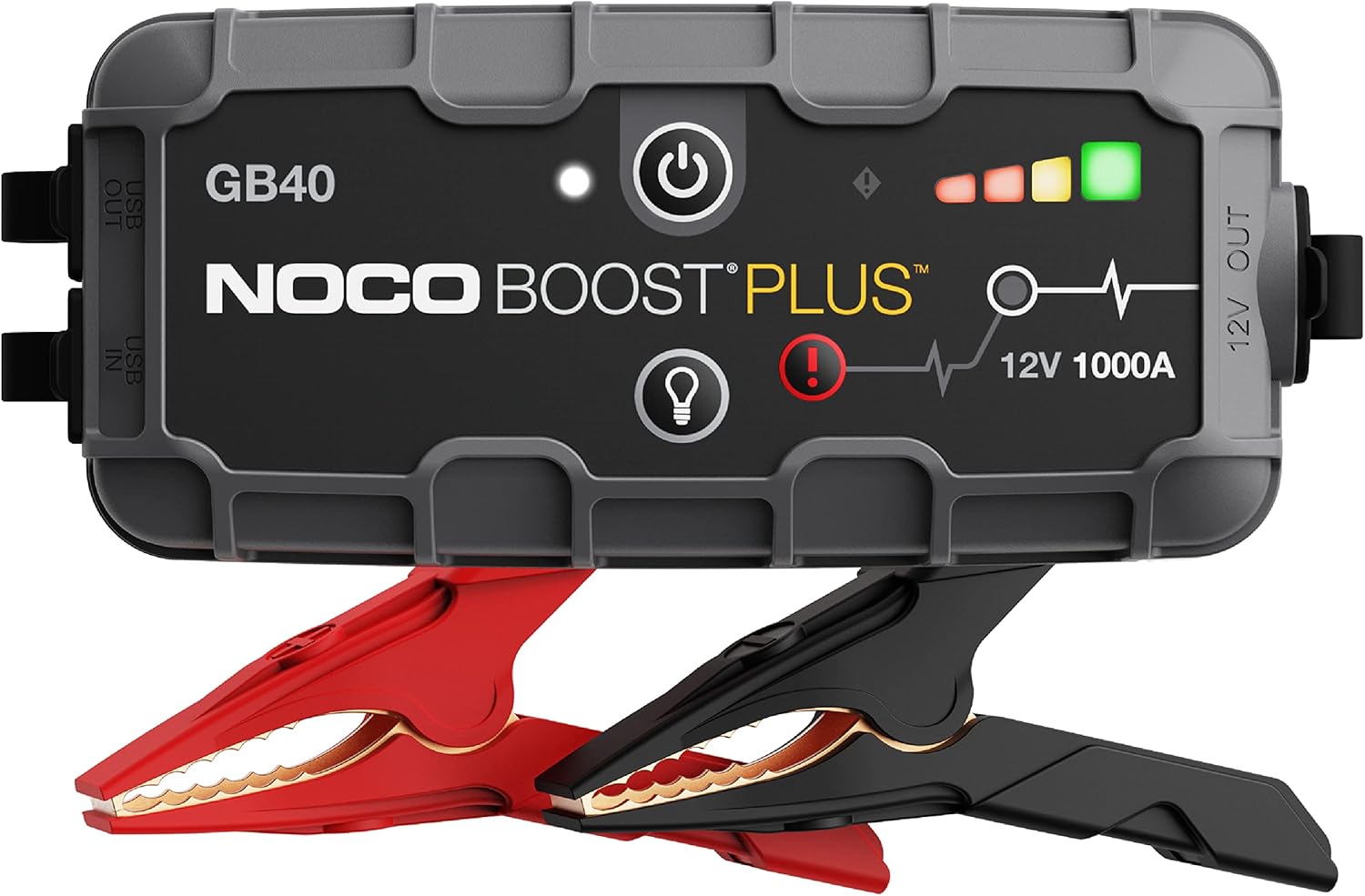
NOCO Boost Plus GB40 Jump Starter
A 1000A lithium jump starter that fits in your glovebox and works on any 12V battery. Your insurance against a dead 12V in a parking lot.
As an Amazon Associate, ThinkEV earns from qualifying purchases — at no extra cost to you.
The provincial $2,500 arrives after purchase and doesn't change your initial financing. But when it arrives, let's say at week five, the smartest move is an immediate lump-sum principal payment. At 7% annual interest on a 60-month loan, paying an extra $2,500 against principal at month five reduces your total interest paid by approximately $500 to $600 over the remaining term. The $2,500 provincial rebate is worth roughly $3,000 to $3,100 in total financial benefit.
Two financing considerations worth raising that most dealerships won't mention:
First, some credit unions and banks offer preferential rates for EV purchases, green auto loans, sustainability-linked financing, or similar programmes. Atlantic Canadian credit unions have been slower to adopt these than Ontario or BC counterparts, but it's worth asking your financial institution: "Do you offer a lower rate for electric vehicle financing?" The differential is typically 0.25% to 0.75%, which translates to a few hundred dollars saved over 60 months on a $40,000 loan. Small, but why not ask.
Second, the lease structure for EVs needs specific attention. Lease agreements can be structured to include the federal EVAP rebate, the dealer captures it and applies it as a reduction in capitalized cost, lowering your monthly payments. The provincial $2,500, however, typically flows to the registered owner, not the lessee. In a lease, that's the dealer or the finance company, not you. Verify specifically with both the dealer and the provincial program office whether a lease qualifies for the provincial rebate and how the money flows before signing a lease. This is not a reason to avoid leasing, many buyers come out ahead on a lease compared to financing. It is a reason to ask the specific question in writing.
Two Real Purchase Scenarios With Actual Numbers
Abstract math is less useful than concrete examples. Here are two scenarios that represent actual current options for Newfoundland buyers.
Scenario One: Hyundai IONIQ 6 Standard Range RWD
MSRP approximately $42,000 in base configuration. Qualifies for both federal and provincial rebates. You negotiate a modest $800 discount, bringing your pre-rebate pre-tax price to $41,200.
Federal EVAP deducted at point of sale: -$5,000. Pre-tax financed amount: $36,200. Plus 15% Newfoundland HST: $5,430. Total financed: $41,630. At 7% interest over 60 months, your monthly payment is approximately $824.
Provincial $2,500 rebate arrives at week five. Applied as lump-sum principal payment: outstanding balance drops to approximately $39,100. Your remaining loan term shortens by roughly three months at the same payment, or your payments drop slightly if you recalculate.
Running costs: 20,000 km annually in Newfoundland. At $0.14/kWh and 20 kWh per 100 km, your electricity cost is $560 per year. The comparable gas crossover, let's use a Toyota RAV4 at 9 L/100 km and gas at $1.70/litre, costs $3,060 per year in fuel. Annual fuel saving: $2,500.
Annual maintenance on the IONIQ 6 over five years averages around $350 (tyre rotations, cabin filter, 12V auxiliary battery at year three or four). The RAV4 averages $1,400 annually covering oil changes, filters, brake service, and coolant flush. Annual maintenance saving: approximately $1,050.
Combined annual operating advantage: $3,550. Over five years: $17,750 in operating savings.
Add the $7,500 in combined rebates: five-year total financial advantage over the comparable gas vehicle is approximately $25,250. That is the honest, non-inflated number for this scenario.
Scenario Two: Chevrolet Equinox EV LT
The Equinox EV LT starts around $38,000 to $42,000 and is built in Ingersoll, Ontario. Canadian-manufactured vehicles carry no federal price cap, this is significant because it means you can add options without worrying about blowing past $50,000 and losing the federal rebate. For this scenario, a lightly equipped LT at $40,000 before rebates.
Federal EVAP deducted: -$5,000. Pre-tax financed amount: $35,000. Plus 15% HST: $5,250. Total financed: $40,250. At 7% over 60 months: approximately $797 per month.
Provincial $2,500 arrives post-delivery. Applied as lump sum: remaining balance approximately $37,750.
Running costs at 20,000 km annually: electricity at $560/year. Comparable gas SUV (Honda CR-V at 8.5 L/100 km): $2,890 in fuel. Annual fuel saving: $2,330.
Equinox EV maintenance approximately $350/year. CR-V annual maintenance around $1,100. Annual maintenance saving: $750.
Combined annual operating advantage: $3,080. Over five years: $15,400 in operating savings.
Add $7,500 in rebates: five-year total advantage over comparable gas vehicle: approximately $22,900.
Both scenarios point in the same direction, with meaningful margins. The only scenario where the math gets genuinely tight is comparing against a very cheap used gas vehicle, a $12,000 used Civic, for instance, where the lower purchase price offsets several years of operating savings. Against any comparable new gas crossover in the $35,000 to $45,000 range, the five-year EV case in Newfoundland is strong.
These numbers are illustrative rather than a guarantee. Your financing rate, your electricity rate, your driving patterns, and your specific vehicle will produce different results. But the directional truth, cheap hydroelectric power plus $7,500 in rebates makes the five-year economics work clearly in the EV's favour, is solid enough that the margin isn't close in any reasonable scenario.
What to Do Right Now, A Concrete Five-Step Plan
I'll make this as specific as possible, because "contact your dealer" is not a plan.
Step one: Decide on your vehicle. If you haven't narrowed it down, the strongest options for Newfoundland conditions at rebate-eligible price points right now are the Hyundai IONIQ 6 Standard Range RWD, the Kia EV6 Air or Wind trim, the Chevrolet Equinox EV LT, the Tesla Model 3 Standard Range RWD, and the Volkswagen ID.4 Standard Range. All have real-world winter range above 280 km in tested conditions, all qualify for both rebates in base or mid-trim configurations, and all have service representation in Newfoundland. If cold weather range is your primary concern, the IONIQ 6 and EV6 rank highest for thermal management.
Step two: Call the dealer today. Not this week. Today. Ask three questions explicitly: Does this vehicle in this trim qualify for both the federal EVAP and the NL provincial rebate? Are you a participating dealer in the federal EVAP program? Can you complete the purchase and confirm delivery before March 15, 2026? If the answers are yes, yes, and yes, proceed. If any answer is uncertain, get clarification before you commit.
Step three: Start the home charging assessment in parallel. Call a licensed electrician and describe your parking situation and your electrical panel. A standard 200-amp panel at a single-family home can typically accommodate a Level 2 charger on a 50-amp dedicated circuit without a panel upgrade. If your panel is older or at capacity, budget for that work, it typically runs $800 to $2,000 for the panel upgrade, separate from the charger itself. Some utility programmes subsidize home charger installation; check NL Power's current offerings specifically.
Step four: Sign the deal before March 15. Get the purchase agreement in writing, confirm your financing, confirm delivery date. At this stage, the provincial clock is the only one you can't control, so don't wait.
Step five: Apply for the provincial rebate after delivery. Gather your purchase agreement, proof of NL residency, and vehicle registration. Submit through the province's online portal. When the cheque arrives four to six weeks later, apply it immediately as a lump-sum principal payment on your loan.
That's the whole process. It is not complicated. The only thing that makes it fail is waiting past March 15 for step four.

Cold Weather, Not the EV Advocacy Version
People ask about cold weather constantly, and they deserve a straight answer rather than a talking point.
Cold temperatures reduce battery capacity. This is physics, not opinion. Lithium-ion chemistry slows down as temperatures drop, and you lose range. A vehicle rated at 400 km in standard NRCan testing conditions will deliver somewhere between 250 km and 320 km on a -15°C day, depending on the vehicle's thermal management system, how hard you're running the heat, whether you're on a highway or in stop-and-go, and how much charge was in the battery when you started. That range reduction is real, and you need to plan your ownership around it rather than being surprised by it in January.
The mitigation strategies are equally real, and they work.
Preconditioning is the most important one. Modern EVs allow you to set a departure time, the car starts warming its battery pack while still plugged in to your home charger, using grid power rather than battery power to do it. You set a departure time of 8:00 AM, the car starts heating the battery at 7:30 AM at the expense of your electricity bill (a few cents), and you leave with a warm battery that holds its capacity better during the drive. Vehicles without this feature, or owners who don't use it, get meaningfully worse winter performance than those who do. Set your departure time. It's free.
Heat pump systems are the second major factor. Older EVs and some current-generation ones use resistive heating, basically an electric element like a toaster. It works, but it draws significant power from the battery pack. Newer EVs, including the Hyundai IONIQ 6, the Kia EV6, the Volkswagen ID.4, and others, use heat pump systems that extract ambient heat from the air rather than generating it electrically. Heat pumps are 30% to 50% more efficient at heating the cabin than resistive systems. This translates directly to better winter range. If you're buying an EV for use in Newfoundland, ask specifically and explicitly whether the vehicle has a heat pump. It's not a universal feature even on current-model-year vehicles, and it matters more here than it does in southern Ontario.
Tyre choice is non-negotiable. EVs are heavier than comparable gas vehicles because of the battery pack, and heavier vehicles take longer to stop on ice. Winter tyres on an EV in a Newfoundland winter are not optional, they're effectively a safety consideration. The stopping distance difference between all-season tyres and dedicated winter compounds at -10°C is substantial enough that it changes the calculus on whether you can stop in time. Budget for a proper winter tyre set with separate wheels, the total cost is $800 to $1,500 for most vehicles, and it's a one-time purchase you'll use for years.
After the first season of ownership, most Newfoundland EV owners report the same thing: you learn the rhythms, you precondition automatically, you know your winter range and plan around it, and it stops being a source of stress. The learning curve is real but not steep. The car just works once you understand how it works in cold.
The Arguments Against EVs in NL, Which Ones Are Real
I'd be doing you a disservice if I glossed over the counterarguments. Some have real merit in the Newfoundland context and some are persistent myths. Let me sort them out.
Range anxiety on long trips, partially valid. The St. John's to Corner Brook round trip (roughly 900 km) requires two DC fast-charging sessions even in a vehicle with 450 km rated range, accounting for cold-weather degradation. Those chargers need to be operational when you need them. Network reliability in Newfoundland is improving but not perfect, PlugShare check-ins from late 2025 showed some Level 2 units offline for weeks, and occasional DC fast charger availability issues. The practical mitigation: know your backup charger before you need your primary one. Plan with one more stop than you think you need. This is not a reason not to buy an EV; it's a reason to plan differently than you would with gas.
Range anxiety for daily driving, mostly myth for modern vehicles. A 60 km daily round trip on a vehicle rated at 400 km, even discounted 35% for cold and heat, leaves you with 260 km of real-world daily capacity. You have four times your daily need in reserve. The anxiety here is psychological, not operational.
Labrador driving patterns, genuinely valid for specific users. If you routinely drive from the Island to Labrador and back, the current infrastructure does not fully support that travel pattern. The ferry introduces a charging gap that requires planning, and Labrador's charging network outside Labrador City is thin. This constraint is real and I'm not going to soften it.
Resale value uncertainty, valid concern, context-dependent. Early-generation EVs (2018-2020 Nissan Leafs, early BMW i3s) depreciated heavily due to battery degradation concerns and rapid technology advancement. Current-generation vehicles with active thermal management are holding value more predictably, but the used EV market in Atlantic Canada is thinner than Ontario or BC, which means fewer comparables and more uncertainty. If you know you'll sell in three years, resale risk is a legitimate consideration. If you're planning to own for seven to ten years, the accumulated operating savings dwarf any reasonable resale value differential.
Battery degradation, real but manageable. Lithium-ion batteries lose capacity over time. Modern battery management systems have slowed this dramatically compared to early EVs. Data from fleet operators and insurance companies shows that well-managed batteries in 2024-2025 vehicles typically retain 85% to 90% of original capacity after eight years of normal use. A 10% capacity reduction on a 400 km vehicle leaves you at 360 km, still adequate for essentially all Newfoundland driving scenarios. Extreme fast-charging habits and extreme heat exposure accelerate degradation; Atlantic Canadian usage patterns (moderate temperatures, mixed Level 2 and occasional DC fast charging) are not among the hard cases.
Grid reliability, mostly myth for Newfoundland specifically. The "you'll be stuck with a dead battery when the grid goes down" argument has some validity in provinces relying on intermittent generation or aging fossil-fuel infrastructure. Newfoundland's hydroelectric grid is structurally more stable than most. The Muskrat Falls project specifically added generation capacity that improved Avalon Peninsula grid stability. This is not a dismissal of the concern, power outages happen everywhere, but it's worth understanding that NL's grid is better positioned than most provinces for this specific objection.
Emissions shifting to power plants, false in Newfoundland. Your electricity comes from falling water. The well-to-wheel emissions of an EV charged on NL Power's grid are close to zero. The "just shifting emissions to a power plant" argument is a reasonable concern in Alberta or Nova Scotia, where significant fossil fuel generation exists. It does not meaningfully apply to Newfoundland. You're charging on hydroelectric power. The per-kilometre carbon footprint of an EV in NL is among the lowest of any vehicle on any grid in Canada.
After March 15, What Changes and What Doesn't
Here's what changes after the provincial program ends, and what doesn't.
The $2,500 provincial rebate disappears. Whether Newfoundland renews or replaces it is an open question, the province's 2026 budget will give the first signal, and conversations with the Department of Natural Resources and Energy Development may reveal intentions, but nothing is guaranteed. Atlantic Canada provincial EV programmes have historically been episodic: they appear, run until funding depletes or the policy cycle turns, and aren't always renewed on a predictable schedule. Nova Scotia, PEI, and NL have all shown this pattern. Don't count on the provincial piece returning quickly.
The federal EVAP is where the more durable money may live. Ottawa's commitment to EV adoption as part of its emissions reduction targets has remained consistent across different fiscal environments, and some form of federal incentive has existed continuously for years. The $5,000 figure may evolve. Programme design details will change. But the political case for federal EV incentives remains strong regardless of which party holds government, and the structure is likely to persist in some form.
The charging network will keep improving. Federal investment through the Zero Emission Vehicle Infrastructure Program (ZEVIP) is still deploying capital toward Atlantic Canada's charging gaps. The Trans-Canada corridor will have meaningfully more coverage in 2027 than it does today. St. John's density will improve. Rural coverage will improve more slowly. The vehicle options available in Canada will broaden and improve: every year, more manufacturers ship more models, ranges improve, cold-weather performance improves, and entry prices come down as battery technology matures.
If your hesitation is specifically about current charging infrastructure, 2027 will look better. If it's about vehicle options, 2028 will have more of them. But you'll likely be operating without the current provincial incentive when those improvements arrive, and possibly without the same federal structure.
The calculation today: $7,500 in combined rebates, cheap hydroelectric electricity, improving infrastructure, a March 15 provincial deadline. The question isn't whether EVs will eventually work for Newfoundland, they will, and for most residents they already do. The question is whether waiting makes you better off financially. Given that the provincial piece alone represents one year's worth of operating savings, the answer to that question is generally no.
The Home Charging Decision, What an Electrician Actually Tells You
The question of home charging comes up in every EV conversation, and most guides give you vague reassurance rather than useful information. Here's what an electrician actually looks at when you call them about an EV charger installation.
The first question is your electrical panel. A standard 200-amp residential service panel can accommodate a Level 2 EV charger on a dedicated 50-amp circuit (40 amps continuous, per code) without upgrading the panel, provided the panel isn't already heavily loaded by other high-draw appliances. The electrician walks to your panel, counts the remaining circuit breaker slots, looks at what's already running (electric range, electric dryer, electric water heater, electric baseboard heaters, these all draw significant amperage), and tells you whether you have capacity.
If your panel is a 100-amp service, common in older Newfoundland homes, you may need an upgrade before adding an EV charger. A panel upgrade from 100A to 200A typically costs $1,500 to $3,000 depending on your house and your municipality. That's real money, but it also increases the value of the home and handles every high-draw appliance you might ever add in the future. Some buyers treat the panel upgrade as a home improvement and the EV charger as the occasion for doing it.
The charger itself, a Grizzl-E Level 2, for instance, which is the Canadian-built unit I'd recommend for NL winters, runs $500 to $650 for the unit. Professional installation adds $400 to $800 depending on your panel location relative to where the charger will go and whether conduit needs to be run. Total installed cost for a quality home Level 2 charger on a panel that can accommodate it: $900 to $1,500. Total if your panel needs work first: $2,500 to $4,500.
The overnight charging math: a 60 kWh battery depleted to 20% (48 kWh remaining capacity) takes approximately six hours to restore to 100% on a 40-amp Level 2 circuit. Most Newfoundland residents charge to 80% daily, that's a target the vehicle's software manages automatically, because keeping lithium batteries at 100% continuously shortens their lifespan. An 8 PM to 6 AM overnight charge window is more than enough for any standard driving pattern.
The per-night charging cost at $0.14/kWh for a 50 kWh top-up: $7.00. Divided over 20,000 km annually: $2.80 per 100 km. This is not a rounding error, it's the actual operating cost that makes the EV financial case work in Newfoundland.
Gear worth having
As an Amazon Associate, ThinkEV earns a small commission from qualifying purchases — at no extra cost to you.

PULIDIKI Car Cleaning Gel (Detailing Putty)
Press it into vents, buttons, and seams and it lifts out dust you did not know was there. Weirdly satisfying, genuinely useful.
As an Amazon Associate, ThinkEV earns from qualifying purchases — at no extra cost to you.
The Federal Program's Current Status, What You Should Verify
The federal EVAP programme has been operating under more uncertainty than usual due to shifting policy priorities in Ottawa. Here is the accurate state as of early March 2026.
The programme is active. The $5,000 incentive is available for qualifying new battery electric vehicles. The $50,000 final transaction value cap applies to most vehicles, with no cap for Canadian-manufactured vehicles. The eligible vehicle list is maintained on the Natural Resources Canada website and changes periodically, models get added and removed based on pricing, Canadian-content requirements, and manufacturer application. You need to verify your specific vehicle and trim level against the current list, not the list from six months ago, before you sign.
Federal programme funding is not infinite, and the political environment around EV incentives has been in flux. I am not predicting the programme disappears soon, these programmes don't typically vanish overnight, and there would be public notice before any wind-down. But if you're planning to buy in fall 2026 and counting on $5,000 from Ottawa, verify that assumption closer to your purchase date rather than treating it as guaranteed. Federal programme terms change, and a few months can matter.
The provincial deadline of March 15, 2026 is the hard clock for the current combined $7,500 opportunity. No ambiguity. No extension announcements as of this writing.
Gear worth having
As an Amazon Associate, ThinkEV earns a small commission from qualifying purchases — at no extra cost to you.

WixGear Magnetic Air Vent Phone Mount (2-Pack)
A magnet strong enough that your phone never flinches over potholes or rail crossings. Two in the box, one for each car.
As an Amazon Associate, ThinkEV earns from qualifying purchases — at no extra cost to you.
Related Reading
- EV vs Gas: Total Cost of Ownership in Canada, The real numbers on fuel, maintenance, and long-term savings.
- Home EV Charger Installation Guide, Costs, permits, and what to expect from start to finish.
- EV Charging Costs by Province, What you will actually pay to charge at home and on the road.
Gear worth having
As an Amazon Associate, ThinkEV earns a small commission from qualifying purchases — at no extra cost to you.

Car Cup Holder Coasters (4-Pack)
Drop-in coasters that catch spills and crumbs so your cup holders stay clean. Rinse and reuse forever.
As an Amazon Associate, ThinkEV earns from qualifying purchases — at no extra cost to you.

Founder & Chief Editor
Vlad Pereira is the founder and chief editor of ThinkEV.ca, the Canadian electric-vehicle publication he writes and edits from Courtenay, British Columbia. He covers EV pricing, federal and provincial rebates, charging costs, and the Chinese manufacturers now entering Canada, from the buyer's side rather than the press-fleet side. ThinkEV is a venture of Vlad Pereira Online; his writing on health, income and the long game lives at vladpereira.com.
Frequently asked questions
Can I get both the provincial and federal rebates?
How long does the provincial rebate take to process?
Can I use the provincial rebate for a used EV?
Where can I charge the EV in Newfoundland and Labrador?
Does Newfoundland's hydroelectric power make EVs cleaner than elsewhere in Canada?
How do EVs handle Newfoundland winters?
More EV & road-trip finds
Affordable upgrades worth a look — tap any to check the price on Amazon.
 ★ 17,242
LISEN Mini USB-C Car Charger (54W)
View on Amazon ★ 61
★ 61Toddler Car Seat Snack and Cup Tray
View on Amazon ★ 17,839
Qifutan Vent Phone Mount (Military-Grade Clip)
View on Amazon ★ 2,941
Microfiber Cleaning Cloths (Multi-Pack)
View on Amazon ★ 55
★ 55LED Car Door Logo Projector Light
View on Amazon ★ 401
★ 401Crochet Daisy Rear-View Mirror Charm
View on Amazon ★ 21,304
Car Headrest Hooks (4-Pack)
View on Amazon ★ 848
★ 848Coiled USB-C to USB-C Car Cable (2-Pack)
View on AmazonRead, Plan, Then Stay Current
Explore our expert articles to understand incentives and ownership costs, use the map to pressure-test charging reality, then subscribe so new EV coverage comes straight to you.
Continue Reading

Alberta EV Rebates 2026: What You Actually Get

BC EV Rebates 2026: What's Left After the Cuts

Manitoba EV Rebates 2026: $4,000 Incentive Ends March 31

PEI EV Rebates 2026: The Island's Surprising $5,000 EV Deal
Quebec EV Rebates 2026: The Roulez Vert Changes