Key takeaways
- The federal EVAP hands you $5,000 off at the dealership.
- Quebec adds another $2,000 through Roulez vert.
- BC had a $4,000 top-up before it got paused.
- Manitoba had a $4,000 rebate until March 2026.
If you commute five days a week to a downtown core where parking runs $15-25 a day, free EV parking is worth $3,000-$6,000 a year, more than the federal $5,000 EVAP rebate, and it repeats every year you own the car. Most buyers research federal and provincial programs, stop there, and go home thinking they've done their homework. They're leaving significant daily value on the table.
Municipal EV programs are the underlooked third tier of Canada's incentive picture. Cities and regional municipalities don't usually hand you cash at the dealership, but they do things that affect your actual daily life far more than a one-time rebate cheque: they make parking free or cheap, they let you bypass traffic on the highway, they rebate the charger installation on your wall, they put free Level 2 charging in the lot where you already park, and, in some cities, they've built infrastructure networks that make public charging feel smooth rather than anxious.
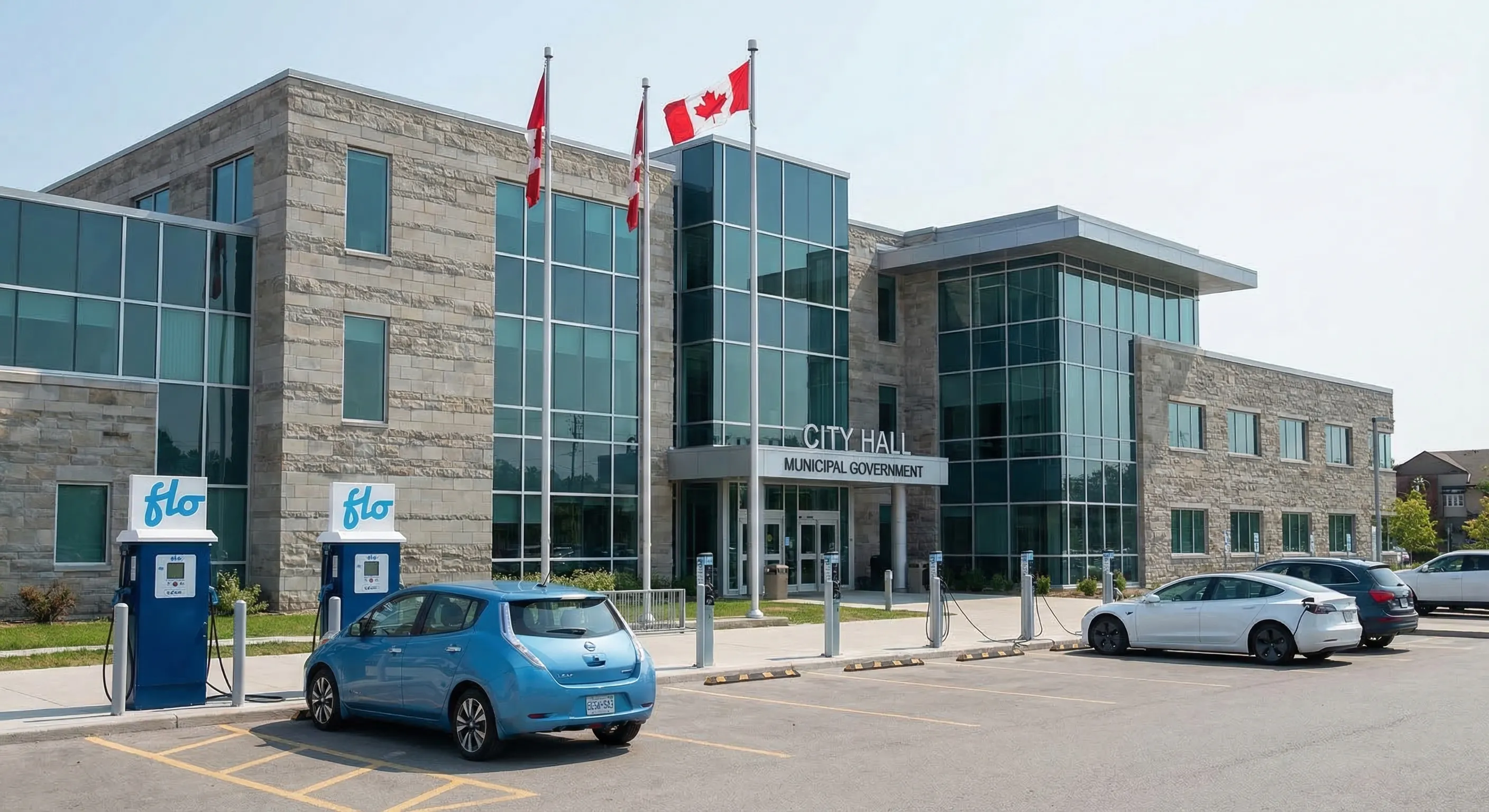
The patchwork here is real. Vancouver and Montréal have built impressive municipal EV ecosystems. Toronto has HOV lane access and Green P discounts. Ottawa benefits from a unique arrangement where the federal government's massive real estate footprint means chargers are everywhere. Calgary has cheap electricity and some parking perks. Edmonton has free EV parking at dozens of downtown lots. Halifax is early-stage but moving. And then there are cities that have done almost nothing, and that matters too, because knowing which municipalities aren't pulling their weight tells you something important about the local political will on EV policy.
This guide covers the real programs, real numbers, and real-world mechanics of what Canada's major cities are actually offering EV owners in 2026. Not what's been announced. Not what's planned. What you can actually use right now.
Coverage below runs through Vancouver, Calgary, Edmonton, Winnipeg, Toronto, Ottawa, Hamilton, Montréal, Quebec City, Halifax, and a handful of smaller cities that have punched above their weight. Each section covers what's available, the catches, how to access the programs, and whether they're worth the effort. Some are genuinely substantial. Some are so minimal they barely warrant the paragraph.
Why Municipal Programs Matter More Than You Think
A one-time $5,000 rebate is excellent. But if you live in a city where you pay $15-25 per day to park downtown, and you commute five days a week, free or discounted EV parking is worth $3,000 to $6,000 per year in actual savings. That's more than the federal rebate, and it repeats every year for as long as you drive that car.
HOV lane access in Toronto is similarly staggering in its real-world value. On the 401 through the GTA during morning rush hour, the difference between the general lanes and the HOV lane can be 20-35 minutes per commute. That's up to 70 minutes per day, 350 minutes per week, and roughly 280 hours per year you get back by simply owning an EV. No separate application. No eligibility check. You get the green plate when you register, and the lane is yours.
Home charger rebates are smaller in dollar terms, typically $350 to $500 from municipal utilities, but they lower the barrier to a proper home charging setup, which changes the entire ownership experience. An EV owner with a Level 2 charger at home sleeps better about range. They charge overnight, wake up full, and never think about charging logistics unless they're doing a long road trip. That quality-of-life shift is not captured in any rebate calculation, but it's real.
The infrastructure programs cities run, free public Level 2 charging at municipal facilities, city-owned DCFC networks, parking lots with integrated charging, are a gift that keeps giving. In Montréal, where the city has over 400 EV charging spaces at municipal lots, an EV owner who works or lives near those lots gets months of free charging per year. In Calgary, ENMAX's charging rewards program turns public charging sessions into redeemable credits. These are not major financial instruments, but they add up, and they make EV ownership feel like the city is on your side.
The final reason to care: municipal programs are often the only game in town for used EV buyers. The federal EVAP is new vehicles only. Most provincial rebates are new vehicles only. But free parking, HOV lane access, and charger rebates? Those apply regardless of whether your EV is three years old and came off a dealer's used lot.
Here is what each major Canadian city actually offers.
Vancouver and Metro Vancouver
Vancouver's municipal EV ecosystem is the most mature outside Montréal, and in terms of charging infrastructure density, it arguably leads the country. The city has been investing in EV-friendly policy since the early 2010s, and by 2026 the results are visible.
Park and Charge Program
The City of Vancouver's Park and Charge program is the flagship. At over 50 municipal parking facilities across the city, parkades, surface lots, on-street charging stations, EV owners get Level 2 charging as a benefit included with the parking fee. You pay to park, the charging is included at no additional cost. At some locations, EV drivers also get a reduced flat parking rate compared to gas vehicle rates.
The program uses ChargePoint hardware at most locations. You need a ChargePoint account to activate the charge, and in some lots you need the RFID card or the app. The initial setup takes five minutes and it's free. Once you're set up, the workflow is park, plug in, walk away.
Locations include the Pacific Centre area parkades, the Robson Street area lots, False Creek facilities, and a number of neighbourhood parkades from Kitsilano to Commercial Drive. The network isn't perfect, not every lot has the same charger density, but for daily drivers who park regularly in the city, it adds up meaningfully.
The practical value: if you park in Vancouver twice a week and charge for two hours each time at 7.2 kW (a typical Level 2 rate), you're getting roughly 28.8 kWh per week for free. At BC Hydro's blended residential rate of $0.12 per kWh, that's $3.46 per week, or roughly $180 per year. Not life-changing, but it offsets a portion of your home charging costs and makes city trips free to fuel.
BC Hydro Level 2 Charger Rebate
This is the provincial utility program, but it applies to all BC residents including Vancouver-area drivers. BC Hydro offers a $350 rebate for installing a qualifying ENERGY STAR certified Level 2 charger at your home. The charger must be installed by a licensed electrician, no self-install, and you submit the receipts to BC Hydro online after installation. The rebate comes back as a credit on your hydro bill within 6-8 weeks.
For FortisBC customers in the BC Interior, Kelowna, Kamloops, Penticton, a similar $350 program exists under FortisBC's rebate structure. The equipment list and application process differ slightly; check FortisBC's website for their specific approved charger list.
The $350 doesn't cover everything. A typical Level 2 installation in the Lower Mainland runs $1,200-$2,500 depending on your panel situation, the distance to the garage, and whether you need an upgrade from 100 to 200 amp service. Panel upgrades alone can cost $1,500-$3,000 for older homes. But $350 against a $1,500 job is not nothing, and ENERGY STAR certified chargers that qualify include the Grizzl-E Classic, ChargePoint Home Flex, and JuiceBox 40, all solid options.
HOV Access, Greater Vancouver
British Columbia's green licence plate program grants EV owners access to HOV lanes throughout the province without the minimum occupancy requirement. In Metro Vancouver, the relevant corridors are Highway 1 (Trans-Canada) through Burnaby and Coquitlam, the Highway 1/99 interchange, Highway 99 through the Massey Tunnel corridor, and Highway 1 through Surrey and Langley.
The time savings on these corridors during rush hour are meaningful, though not as dramatic as Toronto's 401 scenario. Metro Vancouver HOV lanes are generally 2+ occupancy, EV owners with a green plate travel as a single driver. On Highway 1 through Burnaby during the morning commute, the green plate can save 10-20 minutes. On the Highway 1 corridor toward Abbotsford or into downtown Vancouver via the Oak Street bridge and Highway 99, the savings vary based on traffic patterns.
The green plate is obtained when you register your vehicle at an ICBC service location. There's no separate application and no additional fee. The plate is automatically issued when the vehicle type is confirmed as zero-emission. Keep the plate clean and visible, RCMP and Metro Vancouver Transit Police actively enforce HOV lanes.
Right to Charge, Strata Buildings
One of the most practically important pieces of BC EV legislation is the right-to-charge framework passed in 2023. Strata councils in BC cannot unreasonably deny a unit owner's request to install an EV charger. "Unreasonably" is defined in the legislation, and while strata councils can still impose reasonable conditions, using approved contractors, coordinating electrical load, using a load management system, they cannot simply vote no.
This matters enormously in Vancouver, where a large portion of the population lives in strata-titled condos and townhouses. Before the legislation, getting a charger installed in a strata parking spot could take years or be denied outright. Post-legislation, the path is clearer, though it still requires a formal application to the strata council, potentially an electrical assessment of the building's existing capacity, and potentially a contribution to load management hardware if the building requires it.
The practical advice: start your application process 3-6 months before you plan to buy your EV. Get the strata approval in hand before you finalize the car purchase. Installations in buildings with adequate existing capacity (typically post-2000 buildings with 200-amp service and EV-ready parking) take 2-4 weeks once approved. Older buildings with 100-amp panels or dense parking without existing conduit can take significantly longer and cost significantly more.
Electricity Cost, BC Hydro
BC has among the lowest electricity rates in Canada, which makes the per-kilometre cost of driving an EV here lower than almost anywhere else in the country. The BC Hydro residential rate structure: Step 1 is $0.0964 per kWh for the first 1,350 kWh per two-month billing period. Step 2 is $0.1509 per kWh above that. Most EV owners charging at home blend between Step 1 and Step 2 based on household consumption, a weighted average of roughly $0.11-$0.13 per kWh for most households.
At $0.12 per kWh blended and 16 kWh per 100 km, you're paying $0.019 per kilometre to fuel your EV in BC. A compact gas car at $1.75 per litre and 8.5 L/100 km costs $0.149 per kilometre. The EV costs 87% less to fuel. That math holds regardless of whether the CleanBC rebate is paused or active, the electricity rate doesn't depend on any government funding cycle.
Calgary
Calgary's municipal EV program is less generous than Vancouver or Montréal in terms of structured rebates, but the city has some underrated advantages, notably one of the cheapest electricity rates in Canada for residential EV charging and a downtown parking situation that's actually workable for EV owners.
EV Parking in the Downtown Core
The City of Calgary has installed Level 2 charging stations at numerous municipal parking facilities throughout the downtown core and in community-adjacent lots. The charging itself is not always free, many Calgary city chargers use a pay-per-use model, but EV drivers benefit from dedicated EV-designated parking spots that are located at the best spots in the lot (first row, covered where available, closest to entrances). In several downtown lots, the EV spots are the most desirable spaces available, which has value beyond the charging cost.
The City of Calgary's Parking Authority has been expanding the number of charging-enabled spaces since 2023. As of March 2026, roughly 200 Level 2 charging ports are distributed across Calgary Parking Authority lots. The rate is typically $1-2 per hour for the charging, with parking fees as normal. Some facilities offer flat-rate daily EV charging packages.
ENMAX Charging Rewards
ENMAX, Calgary's primary electricity provider, operates a customer rewards program that includes benefits for EV charger usage. Customers who enrol their home EV charger, compatible with ENMAX's smart home ecosystem, can earn ENMAX Rewards points for off-peak charging sessions. Points can be redeemed against your electricity bill or for partner rewards.
The program isn't purely a financial windfall, but it creates a behavioural incentive to charge during off-peak hours, which benefits both the customer (lower-cost charging) and the grid (reduced peak demand). For Calgary EV owners with a smart charger and ENMAX as their provider, enrolling in the rewards program takes 15 minutes online and costs nothing. For those charging 20,000 km annually, the off-peak habit alone saves roughly $80-150 per year in electricity costs even before the points value.
Electricity Cost, ENMAX
This is where Calgary genuinely excels compared to most Canadian cities. ENMAX's residential regulated rate as of early 2026 is approximately $0.076 per kWh for electricity supply (the rate fluctuates monthly as it tracks the Alberta electricity market regulated rate). With transmission and distribution charges, the all-in delivered cost of electricity in Calgary is typically $0.11-$0.13 per kWh.
For context: this is comparable to BC Hydro and Quebec Hydro for home EV charging costs. The volatility is higher, Alberta's deregulated electricity market means the ENMAX regulated rate changes monthly, but over the course of a year, Calgary electricity costs for EV charging are competitive with the cheapest jurisdictions in Canada. If you're an ENMAX customer on a fixed-rate plan, you get the added benefit of price predictability.
At $0.12 per kWh all-in, the Chevy Equinox EV costs approximately $384 per year to fuel on 20,000 km. A gas-powered RAV4 at $1.50 per litre (Calgary gas prices are typically below national average due to proximity to refineries) and 8.5 L/100 km costs $2,550 per year. The EV wins by $2,166 annually on fuel alone.
What Calgary Doesn't Have
Calgary has no HOV lane network equivalent to what Ontario EV owners enjoy on the 401. The Trans-Canada through Calgary doesn't have HOV lanes. Stoney Trail and Deerfoot Trail operate without HOV designations. Alberta does not have a provincial green plate HOV program. This is a real gap compared to BC and Ontario.
Calgary also has no municipal EV purchase rebate program. The city does not supplement the federal EVAP. Alberta at the provincial level also has nothing. If you're buying an EV in Calgary in 2026, you get the federal $5,000 (on eligible vehicles) and nothing more from either the province or the city. This is the most under-incentivized major city in Canada for EV buyers, and it's a deliberate policy choice by both levels of government.
Edmonton
Edmonton's approach to municipal EV support is more developed than Calgary's in some specific areas, particularly around free public charging and parking incentives, even while the provincial and utility rebate frameworks are similarly absent.
Free EV Parking in Municipal Lots
The City of Edmonton's EV parking policy offers two hours of free parking to EV drivers at designated EV spaces in select municipal surface lots and parkades. As of March 2026, approximately 30 downtown and neighbourhood lots participate in the two-hour free EV parking program. The spaces are marked with EV-only signage and include Level 2 chargers at most locations.
The Level 2 chargers in Edmonton's municipal network are operated by the city through a mix of ChargePoint and FLO hardware. The charging itself is free at most of these locations, you pay nothing for the electricity, only the parking beyond the two-hour complimentary window. For anyone who's doing a two-hour errand, appointment, or lunch meeting downtown, the free parking and free charging is a genuine tangible benefit.
This stands out because Edmonton's downtown parking rates can be substantial, $15-25 per day in commercial parkades. Two free hours in a city-owned lot isn't a full subsidy, but it meaningfully reduces the daily cost for regular visitors.
EPCOR Time-of-Use Program
EPCOR, Edmonton's municipal electricity utility, offers residential time-of-use pricing for customers who request it. Under EPCOR's TOU structure, off-peak rates (10 PM to 7 AM and all weekends) drop to approximately $0.068 per kWh for electricity supply, similar to Ontario's off-peak rate. The blended all-in delivered cost at off-peak is around $0.10-$0.11 per kWh for Edmonton residential customers.
This is relevant because it gives Edmonton EV owners a path to very cheap overnight charging. A household that charges their EV exclusively during off-peak hours and uses smart scheduling on their Level 2 charger can achieve $0.11 per kWh all-in, which is in the same territory as BC Hydro or Quebec. The key is the scheduling, EPCOR's TOU is opt-in, and you need a compatible smart charger that can schedule charging windows. The Grizzl-E Classic and ChargePoint Home Flex both support this.
Valley Zoo and Whyte Avenue Charging Hubs
The City of Edmonton has made a point of installing public EV charging at high-traffic destination points, the Edmonton Valley Zoo, the Whyte Avenue entertainment corridor, Hawrelak Park, and several community league facilities. These are not utility maximisation plays; they're convenience installations that normalise EV charging as a standard part of city infrastructure.
At Valley Zoo specifically, EV owners with a Level 2-capable vehicle can charge free of charge during their zoo visit. For families who visit regularly, a typical two to three-hour visit at 7.2 kW delivers 14.4 to 21.6 kWh, enough to add 90-135 km of range. At Edmonton's electricity rates, that's $1.44-$2.16 of free electricity per visit.
Strembitsky Interchange and New Infrastructure
Edmonton is in the middle of a significant DCFC expansion program along major arterial roads and the Anthony Henday Drive ring road. New Electrify Canada stations have opened at several stops along the Henday, and the city's own Level 2 expansion continues. This matters for EV ownership confidence, knowing the public network is expanding reduces the psychological friction of going electric, even if most of your charging happens at home.
Winnipeg
Winnipeg's municipal EV program is modest but improving. The city has been slow to develop EV-specific incentives, but some pieces are now in place.
Manitoba Hydro Charger Rebate
Manitoba Hydro offers a $500 rebate for Level 2 home EV charger installation for qualifying residential customers. The rebate is applied after installation, submit your receipts and electrician invoice to Manitoba Hydro, and the credit appears on your bill within 60 days. The charger must be on Manitoba Hydro's approved equipment list, which includes most major North American Level 2 chargers. The $500 is the largest utility-level home charger rebate in Western Canada.
Given that a standard Level 2 installation in Winnipeg runs $1,000-$1,800 (less than the BC Lower Mainland because Winnipeg homes typically have 200-amp service and attached garages), the $500 covers a substantial portion of the job. For someone getting a Grizzl-E Classic installed by an electrician, the net cost after the Manitoba Hydro rebate is often $600-$800, which is very reasonable.
City of Winnipeg Parking
The City of Winnipeg has installed Level 2 chargers at select municipal facilities, city hall, some recreation centres, and a handful of downtown parking lots. The charging is generally free or included with parking. Coverage is thin compared to Vancouver or Montréal, but the city has committed to expansion through its Climate Action Plan.
Electricity Costs
Manitoba Hydro's electricity rates are consistently among the lowest in Canada, approximately $0.099 per kWh flat rate for residential customers, with no tier structure. At $0.099 per kWh and 16 kWh per 100 km, driving an EV in Manitoba costs $0.016 per kilometre, even cheaper than BC. The fuel savings versus gasoline in Winnipeg are significant, especially given that Manitoba has some of the longest average commute distances of any Canadian city.
Manitoba Provincial Rebate, Status
Manitoba's $4,000 provincial EV rebate was extended in Budget 2026 (March 2026) and runs until its $25-million fund is exhausted, Tesla and Chinese-made EVs excluded. Stacked with the federal EVAP, that's up to $9,000 combined, currently the best provincial stack in Canada alongside PEI. Watch the fund balance, since the program ends when the money runs out rather than on a fixed date.
Toronto
Toronto is the largest EV market in Canada by volume, the city accounts for roughly 20% of all Canadian EV registrations, and the programs here reflect that scale. They're not the most generous in dollar terms, but the HOV lane access alone makes Ontario one of the most practically EV-friendly jurisdictions in the country for anyone who commutes on the 401.
The Green Licence Plate and HOV Access
Ontario's green licence plate is issued to all zero-emission vehicles, battery electric and hydrogen fuel cell, upon registration. It grants single-occupancy access to HOV lanes province-wide. In the GTA, this means access to HOV lanes on the 401, 403, QEW, 404, DVP, and Gardiner Expressway.
The 401 through the GTA is the centrepiece. During rush hour, the HOV lane flows at 90-100 km/h while the general lanes sit at 20-40 km/h. For a daily commuter from Mississauga to downtown Toronto, the HOV benefit on the 401 alone saves 20-35 minutes per trip. Over a year of five-day commuting, that's 90-175 hours of recovered time (based on one-way time savings of 20-35 minutes across 250 working days). The 403 through Mississauga, the QEW through Oakville and Burlington, and Highway 404 north from the 401 all offer similar time savings for their respective commuter corridors.
No application required beyond registering your vehicle. The green plate is the credential. Request it at any ServiceOntario when you register your EV. The plate itself is a distinctive green-and-white design that OPP and municipal enforcement recognize immediately. The fine for solo-driving in an HOV lane without a green plate is $110 plus three demerit points.
For the daily commuter, this is the single most valuable EV perk in Canada. The monetary value of 100-175 hours per year depends on how you value your time, but even at the Ontario minimum wage of $17.20, that's $1,720-$3,010 annually. For a professional earning $50/hour, it's $5,000-$8,750 per year in recovered productive time. No rebate comes close.
Toronto Hydro Level 2 Charger Rebate
Toronto Hydro offers a $500 rebate for Level 2 home EV charger installation in the City of Toronto service area. The charger must be ENERGY STAR certified and installed by a licensed electrical contractor. Submit receipts to Toronto Hydro after installation; the rebate appears as a bill credit within 60 days.
Coverage note: Toronto Hydro serves the City of Toronto proper. Mississauga, Brampton, and most 905 area communities are served by Alectra Utilities, which has its own programs. Hydro One serves the 905 exurbs and rural areas. If you're not sure which utility serves your address, check your hydro bill, the utility name and logo are on the front page.
The $500 is the most generous municipal utility charger rebate in Ontario, and combined with federal and provincial programs, it meaningfully reduces the net cost of a home charging setup. A typical Toronto Level 2 installation runs $1,500-$2,500 including the charger hardware. At the high end of installation costs, the Toronto Hydro $500 brings the net cost to $2,000, reasonable for a piece of infrastructure you'll use daily for 10+ years.
Green P Parking Discounts
Toronto Parking Authority (Green P) offers discounted rates at select locations for vehicles with an Ontario green licence plate. The discount varies by location, typically 15-25% off the standard rate. Some Green P lots also have EV-dedicated parking spaces with charging, where the EV occupant gets the best spot plus the charger.
As of early 2026, roughly 40 Green P locations across Toronto offer some form of EV benefit, either reduced rate parking, free charging included with parking, or dedicated EV spots. The distribution skews toward the downtown core, Yonge Street corridor, and the Entertainment District. Coverage in east Toronto and the inner suburbs is thinner.
To access the discount, you generally need to show the green licence plate upon entry. Some automated lots require you to select the EV rate on the payment terminal. The exact process varies by location; the Green P app lists participating locations and their current EV offerings.
The Toronto Hydro Smart Charging Program
Toronto Hydro has piloted a managed EV charging program for residential customers with smart Level 2 chargers. Participants allow Toronto Hydro to temporarily pause or reduce their EV charging during peak demand events, typically on hot summer afternoons or cold winter mornings, in exchange for electricity rate credits. The typical credit is $50-$100 per season for participants who tolerate the occasional interruption.
This is not a major financial instrument, but for EV owners who charge primarily overnight (when demand events never happen), the program is essentially free money. Your overnight charging never gets interrupted, and you collect the participation credit. Enrolment is through the Toronto Hydro portal and requires a smart charger with remote control capability, ChargePoint, JuiceBox, and the Wallbox Pulsar Plus all qualify.
Ontario's Residential Condo Charging Reality
Toronto has a significant condo owner challenge that the green plate and Green P discounts don't solve: getting a Level 2 charger installed in a condo parking spot. Ontario's Condominium Act was amended to improve the process, but it still requires board approval in most buildings, and the electrical reality of many Toronto condo towers is that shared panel upgrades are expensive, contested, and slow.
The practical path most Toronto condo EV owners take: rely on workplace charging (many major Bay Street employers have installed chargers as employee benefits), use Green P locations with charging for regular city driving, and supplement with the residential Level 1 (120V) outlet in the parking garage, slower than Level 2 but adequate for overnight low-mileage accumulation. Level 1 at 1.4 kW overnight adds 8-11 km of range per hour, or roughly 80-110 km overnight. For urban drivers doing under 60 km daily, Level 1 plus occasional public L2 or workplace charging is a viable substitute for a dedicated home charger.
Gear worth having
As an Amazon Associate, ThinkEV earns a small commission from qualifying purchases — at no extra cost to you.

Grizzl-E Classic Level 2 EV Charger (40A)
Canadian-made and rated for minus 40C winters. 40A / 9.6 kW, NEMA 14-50, indoor/outdoor, 24-ft cable. The charger built for Canadian weather.
As an Amazon Associate, ThinkEV earns from qualifying purchases — at no extra cost to you.
Ottawa
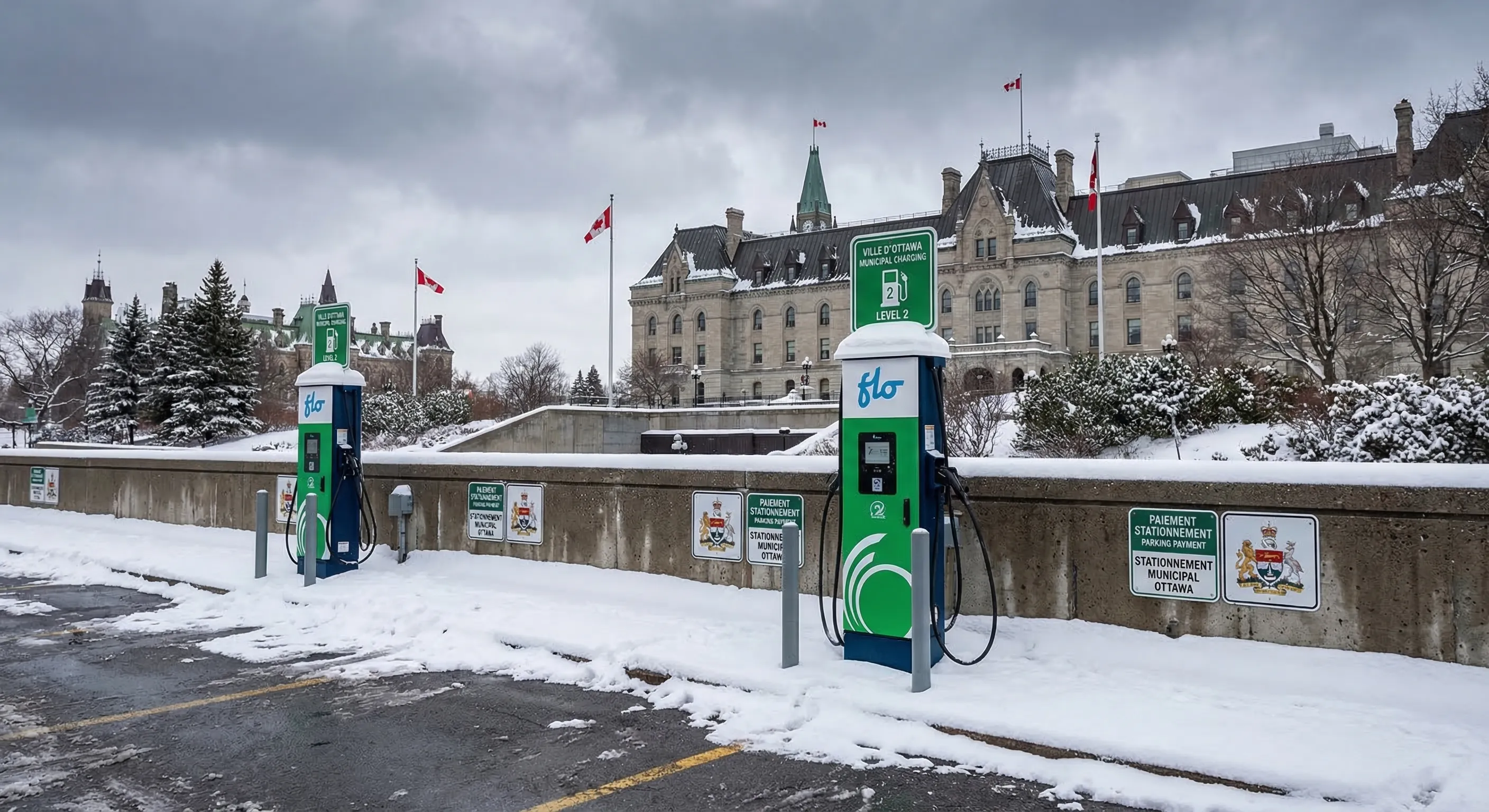
Ottawa occupies a unique position in Canada's EV incentive picture because of one thing most people don't immediately think about: the federal government. The largest single employer in the Ottawa metro area is the Government of Canada, and the government's commitment to fleet electrification and sustainable operations has resulted in EV charging infrastructure at federal buildings, campuses, and parking facilities that significantly exceeds what the city government alone has installed.
Federal Building Charging Infrastructure
Across the National Capital Region, federal buildings, including Confederation Heights, the Tunney's Pasture campus, Place du Portage in Gatineau, various DND facilities, Library and Archives Canada, Statistics Canada, and dozens of others, have Level 2 chargers in employee parking areas. Many are managed through ChargePoint or FLO accounts and are accessible to employees as a benefit.
For federal public servants who commute to these buildings and park on-site, workplace charging is effectively free. The government covers the electricity cost as part of building operations. A federal employee who drives their EV to Tunney's Pasture Monday through Friday and charges for 8 hours each day is getting 8 hours × 7.2 kW = 57.6 kWh per week of free charging, or roughly $5.76 per week at Ottawa's electricity rates. Over a 48-week work year, that's $277 in free charging per year. For someone working at a suburban campus like Ottawa Airport's government cluster, who might drive 50+ km per day, the workplace charging subsidy is even more valuable.
This federal-sector EV advantage is unique to the National Capital Region. It's not available in Calgary, Winnipeg, or Halifax, where federal employment is a much smaller share of the workforce. It's one of the underappreciated reasons why EV adoption rates among Ottawa federal public servants have tracked higher than comparable private-sector employment markets.
City of Ottawa Programs
Gear worth having
As an Amazon Associate, ThinkEV earns a small commission from qualifying purchases — at no extra cost to you.

VIOFO A229 Pro 4K Dash Cam
4K front plus 2K rear with parking mode and GPS. Your silent witness for insurance claims, with always-on sentry recording while parked.
As an Amazon Associate, ThinkEV earns from qualifying purchases — at no extra cost to you.
The City of Ottawa has installed Level 2 chargers at over 20 municipal facilities, community centres, libraries, arenas, city hall, and the charging is generally free. These are not high-density charging hubs; they're destination chargers at places you already visit. The Rideau Community Centre, Jim Tubman Chevrolet Community Centre, and several branch libraries have EV charging available in their parking lots.
Ottawa's Official Plan includes EV-ready requirements for new developments, residential and commercial buildings above a certain size must be built with conduit and electrical capacity for future Level 2 charger installation. This is a forward-looking requirement that doesn't help current EV owners today, but it means the stock of buildings with charging capacity grows every year.
Hydro Ottawa EV Programs
Hydro Ottawa does not currently offer a standalone Level 2 charger rebate program comparable to Toronto Hydro's $500 offering. However, Hydro Ottawa has partnered with the City of Ottawa on managed charging pilots and time-of-use pricing programs. Ottawa residential electricity customers can access time-of-use rates similar to the rest of Ontario, with off-peak rates at $0.076 per kWh, the same math as Toronto. Overnight charging at Ottawa's off-peak rate is among the cheapest electricity in eastern Canada.
Hydro Ottawa has also participated in a demand response program for EV chargers in select pilot neighbourhoods in Barrhaven and Kanata, where smart chargers were programmed to delay start times during grid peak events. Participants received bill credits for their participation. This is a limited program, but it signals the direction Hydro Ottawa is moving.
Gatineau, Across the River
If you live in Gatineau and commute across the river to Ottawa, your municipal situation is Quebec, not Ontario. Gatineau residents benefit from Hydro-Québec's exceptionally low electricity rates (one of the cheapest in the world at approximately $0.073 per kWh flat), access to Quebec's green plate HOV system, and the Roulez vert provincial rebate. Your EV commute across the Macdonald-Cartier or Champlain bridges gets you into Ottawa where you can access federal building charging or city municipal chargers. You get the best of both provincial frameworks in your daily routine.
Montréal
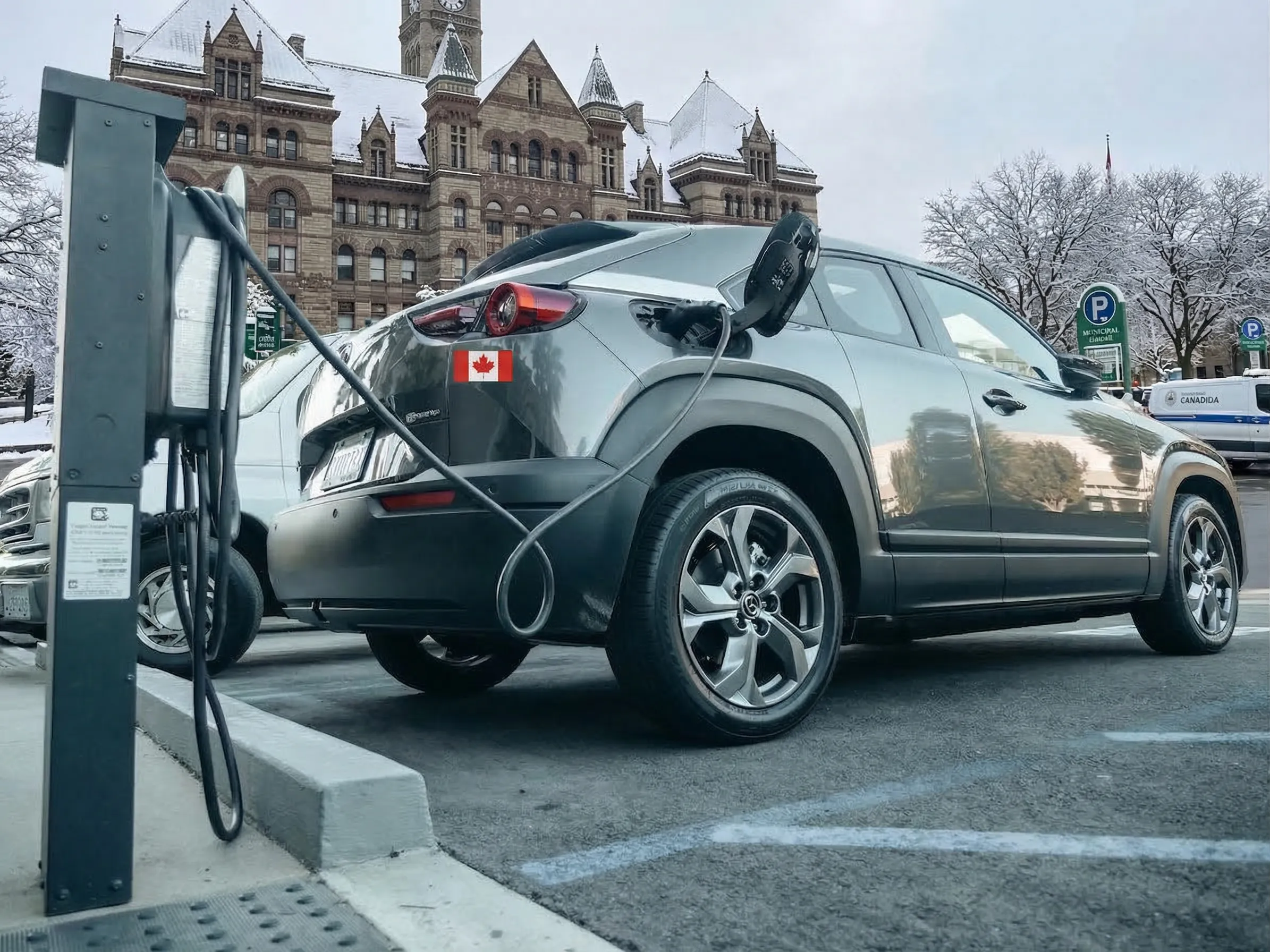
Montréal is the best city in Canada to drive an EV day-to-day. That conclusion follows from the numbers: cheap electricity, HOV access on every highway, one of the most developed public charging networks in the country, a mature municipal integration with Circuit électrique, and a city government that has made EV adoption a stated priority in its climate plan.
Hydro-Québec Electricity Rates
Start here because everything flows from this. Hydro-Québec charges residential customers approximately $0.073 per kWh flat rate for their electricity. There's no TOU complication, no tiered structure that punishes high consumption, just $0.073 per kWh for every kilowatt-hour you use. This is the cheapest residential electricity rate of any major utility in Canada and among the cheapest in the world for a jurisdiction with a diversified modern economy.
At $0.073 per kWh and 16 kWh per 100 km, you're paying $0.012 per kilometre to drive in Montréal. For comparison, a gas car at $1.75 per litre (Montréal gas prices with provincial fuel taxes) and 8.5 L/100 km costs $0.149 per kilometre. The EV is 92% cheaper to fuel. Even at Ontario's cheap off-peak rate of $0.076, Ontario drivers are paying more than Quebec drivers at all times, day or night.
On 20,000 km annually, the fuel cost in Montréal is $234 per year for an EV versus approximately $2,975 for a comparable gas vehicle. The annual fuel saving of $2,741 is, over a 7-year ownership period, $19,187, more than the entire purchase price difference between most mid-range EVs and their gas equivalents.
Quebec Roulez vert Rebate
The provincial Roulez vert program offers up to $7,000 for new battery-electric vehicles and up to $5,000 for used BEVs purchased through a dealer. Combined with the federal EVAP ($5,000 for new, nothing for used), Montréal buyers of new BEVs can stack up to $12,000 in combined rebates. For used BEV purchases, a category most of the country has no rebate for, the $5,000 Roulez vert is unique in Canadian EV policy.
The Roulez vert rebate has income caps at the top end, buyers with an annual income above $150,000 are not eligible, but the thresholds are high enough that most buyers qualify. The rebate is applied directly at the dealer; no post-purchase claim required.
HOV Access, Autoroute Network
Quebec's green licence plate grants EV owners single-occupancy HOV access on all designated autoroutes in the province. In the greater Montréal metro, that covers Autoroute 20, Autoroute 40, Highway 30, and the Autoroute 13/15 network through Laval. These are busy commuter corridors, and the HOV access during peak hours translates to meaningful time savings for suburban commuters.
Unlike Ontario's HOV program, which is well-established but limited to specific GTA highways, Quebec's green plate HOV access is province-wide and applies to every HOV-designated road in the province. Drive from Montréal to Québec City on Autoroute 20 in your EV? The HOV lane is yours for the entire stretch.
Circuit électrique Integration
The Circuit électrique is Hydro-Québec's public charging network, and in Montréal it is deeply integrated with the city's infrastructure in a way that makes public charging feel almost smooth. There are over 2,500 Level 2 charging stations on the Circuit électrique in greater Montréal, including at hundreds of municipal parking facilities, shopping centres, hospitals, universities, and transit nodes.
At many Montréal municipal parking lots, Circuit électrique Level 2 chargers are available, and in some cases the city has negotiated flat-rate charging inclusion with parking fees, you pay to park, the L2 charging is included. The charging rate on the Circuit électrique is set by the individual host (the lot operator), but Hydro-Québec sets the default rate at approximately $1.00-$1.50 per hour, which is below what comparable Level 2 public charging costs in most other Canadian cities.
For EV owners who work in the Plateau, NDG, Rosemont, or downtown Montréal and park in the street or in lots near their workplace, the density of Circuit électrique stations means opportunistic charging is genuinely available as a day-to-day strategy. This isn't something you can replicate in Calgary or even Toronto, the network density in Montréal is categorically better.
Ville de Montréal Parking, Free EV Zones
The City of Montréal has designated specific on-street parking zones and lot areas as EV-preferred, where EV drivers who are actively charging get free or reduced-rate parking for a limited window (typically 3 hours). In the Old Port, the Plateau-Mont-Royal, and several borough downtown cores, this policy is implemented. The intent is to incentivise charging behaviour rather than simply parking behaviour, you need to be actively charging to qualify for the EV rate.
This is a nuanced policy detail that matters for Montréal EV owners who work in the city and need to park street-side or in municipal lots during the workday. If you're plugged in, you're protected. If you park in an EV spot and don't plug in, you're subject to standard rates and enforcement.
Montréal's Plan Climate
The Ville de Montréal's Plan Climate 2020-2030 includes explicit targets for EV charging infrastructure expansion, EV-ready building requirements for all new construction above eight storeys, and a goal of electrifying the city's own fleet. Progress on fleet electrification has been faster than expected, the STM (Montréal transit) is actively converting its bus fleet, city maintenance vehicles are going electric, and the city has added EV-specific procurement language to most municipal contracting.
For residents, this translates to a city that is actively building out the infrastructure and policy environment to support EV ownership long-term, not just delivering one-time incentives that expire.
Québec City
Québec City benefits from all the provincial programs, Roulez vert, green plate HOV, Hydro-Québec's cheap electricity, at the same rates as Montréal. The municipal layer is less developed because Québec City is smaller, but several city-specific features are worth noting.
The City of Québec has partnered with the Circuit électrique for parking lot charging integration at several city-owned facilities, and the density of Level 2 chargers in the Haute-Ville (Upper Town) and around Place D'Youville is reasonable. For tourists driving EVs, and Québec City gets substantial EV tourism from Ontario and the US, the charging infrastructure in the historic core is actually quite good, with Level 2 chargers available at several Old City parking structures.
The commuter situation is simpler than Montréal because Québec City is more compact. Most residents can charge at home on Level 1 and supplement with workplace or public charging. The Autoroute 20 HOV lanes between Québec City and Lévis give green plate holders meaningful benefits during the morning and evening commute.
Hydro-Québec's rate of $0.073 per kWh applies identically to Québec City residents as to Montréalais. The cost of EV ownership in Québec City is the same as in Montréal from an electricity standpoint.
Halifax
Halifax is the most important city in Atlantic Canada for EV policy, both for what it's starting to do well and for what's still missing. The contrast with Montréal or Vancouver is stark, but the trajectory is upward.
The Nova Scotia provincial rebate is the most relevant program for Halifax EV buyers. Nova Scotia offers a $3,000 rebate on new BEV purchases and a $2,000 rebate on new PHEV purchases through the Clean Foundation's rebate program. The federal EVAP stacks on top for eligible vehicles, bringing the total to up to $8,000 for new BEVs. This is better than Ontario's zero provincial contribution and competitive with BC's current paused-CleanBC situation.
There is no Nova Scotia rebate for used EVs. The rebate is applied directly at participating dealers, confirm your dealer is enrolled in the program before you negotiate price.
Halifax Regional Municipality Programs
Halifax Regional Municipality (HRM) has been running a small but genuine pilot for free public Level 2 charging at eight HRM-owned sites: several community recreation centres, the Ferry Terminal, and a couple of municipal parking facilities near the downtown waterfront. The charging is free, HRM covers the electricity cost, and the infrastructure uses FLO hardware.
The eight sites are not enough to make HRM comparable to Montréal or Vancouver, but they represent a meaningful first step. HRM's 5-Year Electric Vehicle Strategy (2023-2028) includes targets for expanding the public charging network to 30+ HRM-owned sites by 2028, with a focus on neighbourhoods that have limited Level 2 density.
Nova Scotia Power Electricity Rates
This is where Halifax EV ownership becomes more expensive than most other major Canadian cities. Nova Scotia Power charges residential customers approximately $0.174 per kWh, among the highest rates in Canada, comparable to Ontario's on-peak TOU rate. The province's electricity generation mix includes significant coal and natural gas (though coal retirement is underway), which contributes to higher rates and lower carbon benefit per kWh compared to Quebec or BC hydro.
At $0.174 per kWh and 16 kWh per 100 km, electricity costs $0.028 per kilometre in Halifax. A gas car at $1.65 per litre (Atlantic pricing) and 8.5 L/100 km costs $0.140 per kilometre. The EV is still 80% cheaper to fuel, but the gap is narrower than in Quebec or BC. The absolute savings on fuel are roughly $1,880 per year at 20,000 km, meaningful, but not the $2,700 annual savings a Quebec EV owner achieves.
HOV Access
Nova Scotia does not have a provincial HOV lane network. Halifax does not have HOV lanes. There is no green plate program. This is a structural gap in Halifax's EV incentive ecosystem that has no easy municipal fix, building HOV infrastructure requires provincial investment in highway expansion and signage that the province has not committed to.
Hamilton
Hamilton is Ontario's industrial city making a real transition, both economically and, increasingly, in EV infrastructure. The city benefits from Ontario's green plate HOV access and Toronto Hydro does not serve Hamilton; Alectra Utilities and Hamilton Utilities Corporation are the relevant providers.
Alectra Utilities Programs
Alectra serves Hamilton (along with Mississauga, Brampton, Barrie, and parts of the GTA north). Alectra has been developing an EV charger rebate and managed charging program, though specifics on the Hamilton portion have been slower to roll out than in the Mississauga and Brampton service areas. Alectra offers periodic EV charger installation rebates for residential and small commercial customers in the Hamilton service area, though program availability varies by funding cycle.
HOV Access, QEW and Highway 403
Hamilton EV owners benefit significantly from Ontario's green plate HOV program. The QEW from Hamilton through Burlington and Oakville to Mississauga has HOV lanes on portions of the corridor, and the Highway 403 from Hamilton to Mississauga and onto the 401 network includes HOV-designated sections. For Hamilton commuters working in Mississauga or Toronto, the green plate HOV access reduces commute time meaningfully.
City of Hamilton Initiatives
Hamilton's Climate Change and Environment Committee has been pushing for expanded EV charging at city facilities and stronger EV-ready building requirements for new development. As of 2026, the city has Level 2 chargers at city hall, several recreation centres, and the GO Transit Hamilton GO Centre lot. Charger density is lower than Toronto or Ottawa, but the city is expanding.
The Municipal Infographic, City-by-City Data
Smaller Cities Punching Above Their Weight
Several smaller Canadian municipalities have developed EV programs that are proportionally impressive relative to their size and resources.
Victoria, BC
Victoria benefits from all BC programs, BC Hydro rates, SCRAP-IT, the (paused) CleanBC rebate, and green plate HOV access on Highway 1 and the Trans-Canada. The City of Victoria has gone further with an excellent EV charging integration at James Bay, Centennial Square, and the downtown parkades managed by the city. The density of charging per capita in Victoria is among the highest in Canada. The city has committed to EV-only charging infrastructure at all new municipal parking facilities constructed after 2023. For a city of 91,000, that's a genuine commitment.
Kelowna, BC
Kelowna's EV infrastructure has been driven partly by the city government and partly by tourism demand, the Okanagan wine country attracts EV tourists from Vancouver and Alberta, and wineries have installed chargers to serve them. The City of Kelowna has Level 2 chargers at the downtown cultural district, City Hall, and several waterfront parks. The proximity to the Coquihalla and the charger network along Highway 97 makes Kelowna a practical base for EV road trips in the Interior.
Charlottetown, PEI
Prince Edward Island has the most generous combined provincial rebate in Canada, the provincial $5,000 on top of EVAP's $5,000 gives PEI buyers a combined $10,000 rebate stack on new BEVs. Charlottetown, as the provincial capital, has the highest concentration of PEI's public charging infrastructure. The city's compact size makes range anxiety a non-issue, even an older EV with 200 km of range can complete a full day of Charlottetown errands and return home with range to spare. For a small city in a small province, the combination of maximum provincial rebates and manageable driving distances makes Charlottetown one of the most sensible places in Canada to own an EV.
Saskatoon and Regina
Saskatchewan has no provincial EV rebate and no formal municipal EV programs of significance in either major city. SaskPower's electricity rates are moderate, roughly $0.115 per kWh, and there are some public chargers in both cities, but the municipal incentive picture is essentially absent. If you're buying an EV in Saskatoon or Regina in 2026, you're relying on the federal EVAP and nothing else. The fuel savings still work out, gasoline costs in Saskatchewan are significant, but the lack of any government support at either level reflects the province's political posture on climate and transportation policy.
Stacking Municipal Programs with Federal and Provincial
The real financial planning exercise for Canadian EV buyers is understanding how municipal programs layer onto the federal and provincial programs. Here's how to think about it:
Layer 1, Federal EVAP: Up to $5,000 for new BEVs under $50,000 transaction value (Canadian-made vehicles exempt from price cap). Not available for used vehicles, not available for most Tesla models, the Model Y RWD base ($49,990) is now on the EVAP eligible list but higher trims exceed the cap; the Model 3 Long Range ($54,990) does not qualify. Not available for Chinese-manufactured vehicles.
Layer 2, Provincial Rebate: Varies dramatically. Quebec is $7,000 for new BEVs and $5,000 for used. PEI is $5,000 for new. Nova Scotia is $3,000 for new. Manitoba was $4,000 (expired March 31, 2026). BC was $4,000 (paused). Ontario is zero. Alberta is zero. Saskatchewan is zero.
Layer 3, Utility Charger Rebate: Manitoba Hydro is $500. Toronto Hydro is $500. BC Hydro is $350. FortisBC is $350. Alectra varies. Others are sparse or zero.
Layer 4, Municipal Perks: HOV lane access (Ontario green plate, Quebec green plate, essentially priceless for regular commuters). Parking discounts (Toronto Green P, Vancouver Park and Charge, Edmonton two-hour free, Ottawa federal building access). Free public L2 charging (Montreal Circuit électrique, Vancouver municipal lots, Ottawa city facilities, Edmonton municipal lots, Halifax pilot sites).
The maximum realistic Canadian stack in 2026 is a Québec buyer purchasing a new eligible BEV (say, a Chevy Equinox EV):
- Federal EVAP: $5,000
- Roulez vert: $7,000
- Utility (Hydro-Québec doesn't have a charger rebate, but other utilities stack here): $0
- Total purchase savings: $12,000
- Plus ongoing savings: HOV access, $0.073/kWh electricity, public Circuit électrique charging
For Ontario buyers, the stack is: $5,000 federal, $0 provincial, $500 utility rebate = $5,500 total purchase savings. But the HOV perk on the 401 adds $3,000-$8,000+ in annual time value depending on your commute.
For BC buyers: $5,000 federal (CleanBC paused), potentially $6,000 in SCRAP-IT, $350 utility = up to $11,350 when programs are fully active. Currently $5,350 at minimum with EVAP only.
For Alberta buyers: $5,000 federal, $0 provincial, $0 utility rebate, minimal municipal programs. The federal EVAP is all you get. The electricity is cheap and parking perks exist in some cities, but the financial support stack is the weakest in Canada for a major province.
What to Watch for in 2026 and 2027
Several municipal and provincial programs are in flux through 2026 and into 2027. Here's what I'm tracking:
BC CleanBC Status: The $4,000 BEV / $2,000 PHEV passenger rebate was paused in May 2025 and ended in November 2025, with the province stating that consumer rebates are now primarily Ottawa's responsibility. BC has revived EV rebates after past pauses, so a future return isn't impossible, but there's no commitment, and the refreshed 2026 Go Electric program targets commercial vehicles. For now, BC buyers get the federal $5,000 only.
Manitoba Status: Budget 2026 extended the $4,000 Manitoba rebate rather than letting it lapse at its original March 31, 2026 sunset. It now runs until the $25-million fund is exhausted, with no fixed end date, one of the country's only surviving provincial stacks (Tesla and Chinese-made EVs excluded).
Ontario Green Plate Expansion: The Ontario government has signalled intent to expand HOV lane infrastructure on several highway corridors, including new HOV designations on Highway 400 north of the 401 and potential extensions on the 401 east of the Pickering area. More HOV infrastructure means more daily value from the green plate.
Alberta EV Policy: Alberta remains the most significant hole in Canada's incentive map. The province is the largest EV market in Western Canada by absolute vehicle numbers, but it provides zero provincial financial support for EV purchases. Calgary and Edmonton city governments can only fill so much of that gap at the municipal level. Watch for any provincial policy shifts, even a modest $2,000 Alberta rebate would be significant given the size of the market.
Municipal Charger Expansion, Atlantic Canada: HRM is the most actively expanding municipal EV charging program in Atlantic Canada. The 5-year plan to reach 30+ sites by 2028 is credible based on the first two years of execution. Watch Saint John and Moncton for similar programs as the NB electricity utility continues its managed charging work.
Toronto Green P Expansion: The City of Toronto has committed to expanding EV charger coverage in Green P lots by another 30% in 2026. This matters for the large number of Toronto drivers who use municipal parking as their primary charging strategy.
FAQ
The Municipal Layer Is Where It Gets Real
The federal and provincial rebate is what most Canadians think about when they evaluate EV economics. It's important. But the municipal layer is where EV ownership either feels like a smart, supported choice or feels like a lone act of green voluntarism in an indifferent infrastructure environment.
Montréal has built a system where EV ownership is actively rewarded daily, cheap electricity, HOV access everywhere, hundreds of charging points integrated into the city's parking infrastructure, and a provincial rebate that's the most generous in Canada. The city is not just incentivising the purchase; it's building a system that makes the ownership experience genuinely better than driving a gas car.
Vancouver is close behind on infrastructure quality and electricity cost. Toronto's HOV benefit is significant for commuters. Ottawa's federal building charging is an incidental but real advantage for a significant portion of the city's workforce.
Calgary and Edmonton have cheap electricity and some parking perks but no purchase incentives beyond federal, no HOV program, and no provincial support. For Alberta EV buyers, the municipal layer is the thinnest in the country among major cities, and you need to be clear-eyed about that going in.
Halifax is improving. The municipal trajectory is positive, and the Nova Scotia provincial rebate is real, but the high electricity costs and absence of HOV infrastructure mean the daily EV experience there is less compelling than in BC or Quebec.
If you're in the market for an EV in 2026, the city you live in matters as much as the vehicle you choose. The same car in Montréal costs $12,000 less at purchase and $2,500 less per year to fuel than in Calgary. Over seven years, that's a $29,500 difference in total cost of ownership, almost enough to fund the entire car.
Know your city's programs, stack the incentives, and run the actual numbers before you sign.
For more on provincial rebate programs by region, see our EV rebates by province guide, our BC EV rebates guide, our Ontario EV incentives guide, and our Quebec Roulez vert guide.
Gear worth having
As an Amazon Associate, ThinkEV earns a small commission from qualifying purchases — at no extra cost to you.

70mai A810 4K Dual Dash Cam
4K front and 2K rear with STARVIS 2 HDR night vision and 24/7 parking surveillance, recording while parked without draining the 12V. A budget alternative to Tesla Sentry.
As an Amazon Associate, ThinkEV earns from qualifying purchases — at no extra cost to you.
Related Reading
Gear worth having
As an Amazon Associate, ThinkEV earns a small commission from qualifying purchases — at no extra cost to you.

PULIDIKI Car Cleaning Gel (Detailing Putty)
Press it into vents, buttons, and seams and it lifts out dust you did not know was there. Weirdly satisfying, genuinely useful.
As an Amazon Associate, ThinkEV earns from qualifying purchases — at no extra cost to you.

Founder & Chief Editor
Vlad Pereira is the founder and chief editor of ThinkEV.ca, the Canadian electric-vehicle publication he writes and edits from Courtenay, British Columbia. He covers EV pricing, federal and provincial rebates, charging costs, and the Chinese manufacturers now entering Canada, from the buyer's side rather than the press-fleet side. ThinkEV is a venture of Vlad Pereira Online; his writing on health, income and the long game lives at vladpereira.com.
Frequently asked questions
Which Canadian city has the best municipal EV incentives overall in 2026?
Do municipal EV incentives apply to used electric vehicles?
How do I get Ontario's green licence plate for HOV access?
Can I claim a utility charger rebate if I already own an EV but never installed a Level 2 charger?
What is the maximum combined federal, provincial, and municipal incentive stack available anywhere in Canada in 2026?
Does Tesla qualify for any of the municipal or provincial EV incentives in Canada?
Is free municipal EV charging in city lots actually available, or is it mostly theoretical?
More EV & road-trip finds
Affordable upgrades worth a look — tap any to check the price on Amazon.
 ★ 392
★ 392Large Cup Holder Adapter (32-40oz)
View on Amazon ★ 47,507
HOMEXCEL Microfiber Cloths (12-Pack)
View on Amazon ★ 55
★ 55LED Car Door Logo Projector Light
View on Amazon ★ 546
★ 546Funny Headrest Face Covers (2-Pack)
View on Amazon ★ 865
★ 865Collapsible Trunk Organizer
View on Amazon ★ 297
★ 297360-Degree One-Hand Dashboard Phone Mount
View on Amazon ★ 119
★ 119Foldable Waterproof Trunk Organizer
View on Amazon ★ 17,839
Qifutan Vent Phone Mount (Military-Grade Clip)
View on AmazonRead, Plan, Then Stay Current
Explore our expert articles to understand incentives and ownership costs, use the map to pressure-test charging reality, then subscribe so new EV coverage comes straight to you.
Continue Reading
Ontario EV Rebate 2026: $0 Provincial Since 2018
The Best Electric SUVs in Canada (2026): Ranked by Value
Do Teslas Qualify for Canada's EV Rebates in 2026?
EV Charging on Road Trips Across Canada, Is It Viable Yet?

Should I Wait for BYD to Come to Canada?