A roughly 19.67% combined Chinese shareholding in a Stuttgart-headquartered automaker is, in the conventional reading of global capital markets, a passive financial position: two minority stakes held since the 2010s by industrial investors whose own listed entities trade on European exchanges. Under the Motor Vehicle Modernization Act of 2026, that same shareholding may be enough to lock Mercedes-Benz out of the United States entirely. The reframe matters. The bill's drafters were aiming at BYD and SAIC, but the language they chose ("ownership or control" by entities tied to a foreign adversary, with no numeric floor) is broad enough to sweep in a German luxury brand that sold roughly 290,000 vehicles to American buyers last year.
A May 29th CNBC analysis surfaced the exposure directly, Mercedes-Benz may be shut out of the U.S. market under a bill aimed at Chinese automaker ownership, because the German automaker's largest shareholders are Chinese and that would run afoul of the Motor Vehicle Modernization Act of 2026 currently working its way through Congress. That is the event. The implication, that ownership-chain enforcement, untethered from a percentage threshold, hands NHTSA discretion the agency has no framework to exercise, is the policy story.
Key takeaways
- BAIC and Geely together hold ~19.67% of Mercedes-Benz AG, triggering the bill's undefined 'ownership or control' language.
- The Motor Vehicle Modernization Act of 2026 sets no numeric ownership threshold, leaving NHTSA, a vehicle safety agency, to define what 'control' means.
- A U.S. sales ban would threaten Mercedes-Benz's ~$25 billion American revenue and its Tuscaloosa, Alabama plant that builds GLE and GLS globally.
- The bill imports China's foreign-adversary designation without importing CFIUS's 25% voting-interest threshold, creating an enforcement gap legal scholars have already flagged.
- No other major Western auto market uses a shareholder-nationality test for market access, the U.S. bill is a structural outlier among peer jurisdictions.
The Bill: What the Motor Vehicle Modernization Act of 2026 Actually Says
The Motor Vehicle Modernization Act of 2026 is bipartisan legislation led in the House by Rep. Brett Guthrie. Its operative provision prohibits the manufacture, import, or sale of motor vehicles in the United States by any entity owned or controlled by a person or government from a designated "foreign adversary" nation. The current designation list, drawn from existing Commerce Department rules, covers China, Russia, Iran, North Korea, Cuba, and the Maduro regime in Venezuela. China is the operative country here; the others have no meaningful auto-export exposure to the U.S. market.
The drafting choice that turns this from a targeted instrument into a blunt one is the absence of a numeric ownership threshold. The bill defines neither "ownership" nor "control" in percentage terms. It does not adopt the 25% threshold used in CFIUS reviews under FIRRMA, nor the 10% beneficial-ownership trigger common in SEC disclosure rules, nor the 50% threshold used in many trade-remedy statutes. It simply says "ownership or control", and leaves the rest to NHTSA, an agency whose statutory expertise is vehicle safety standards, not foreign-investment adjudication.
Bill sponsors have publicly described the target as direct Chinese OEM entry, BYD, SAIC's MG brand, Geely's domestic-China nameplates, and the next wave of Chinese exporters. That is consistent with the political moment. But statutory language outlives political intent. Once enacted, the text governs; the floor speeches do not. And the text, as written, reaches every automaker with a Chinese shareholder of any consequence.
The Senate companion bill's status is not yet a matter of public record in a form that allows confident reporting. The House version is moving toward committee markup; no markup date has been confirmed by the relevant subcommittee. That uncertainty is itself a policy variable, Q3 fleet planning for European luxury brands now has to price in an unbounded legislative risk with no clear timeline for resolution.
Mercedes-Benz's Chinese Ownership Structure, by the Numbers
The two relevant stakes are roughly 9.98% held by BAIC Group, the Beijing-government-controlled state-owned enterprise, and roughly 9.69% held by Geely Holding, the privately held Hangzhou-based group that also owns Volvo Cars, Polestar, Lotus, and the London Electric Vehicle Company. Combined, the two positions represent approximately 19.67% of Mercedes-Benz AG's issued shares.
Neither stake, taken alone, crosses any conventional control threshold. Combined, they are still a minority position, and there is no evidence, public or otherwise, that the two holders coordinate their voting. Under standard German corporate-governance practice, a 19.67% combined non-coordinated holding does not constitute control. It does not appoint the CEO. It does not direct product strategy. It does not control the supervisory board.
But "standard corporate-governance practice" is not the standard the bill adopts. The bill adopts no standard at all, beyond "ownership or control." A NHTSA general counsel applying that text in good faith would have to choose between three positions: that any ownership counts (which would catch Stellantis, GM via SAIC joint-venture exposure, and a long tail of suppliers), that some unspecified percentage counts (which is policymaking by enforcement), or that only majority control counts (which renders the provision largely toothless against its stated targets).
Mercedes-Benz USA's U.S. exposure is material under any of these readings. Mercedes-Benz USA sold approximately 290,000 vehicles in the United States in 2024, generating roughly $25 billion in annual revenue. The U.S. is the brand's second-largest single-country market after China itself. A sales ban would not merely dent the income statement; it would force a multi-year capital-allocation reset across the group's manufacturing footprint, including the Tuscaloosa, Alabama assembly plant that builds GLE and GLS SUVs for global export.
Gear worth having
As an Amazon Associate, ThinkEV earns a small commission from qualifying purchases — at no extra cost to you.

Magnetic Windshield Snow Cover
Skip the scraping. Magnets hold it on, peel it off with the snow, and your defroster stops draining range on cold mornings.
As an Amazon Associate, ThinkEV earns from qualifying purchases — at no extra cost to you.
How "Foreign Adversary" Is Defined, and Where the Legal Line Blurs
The "foreign adversary" concept is not new in U.S. trade and security law. Commerce Department Information and Communications Technology and Services rules at 15 CFR Part 7 define the term by nation designation, not by ownership percentage. The Foreign Investment Risk Review Modernization Act of 2018, FIRRMA, uses a 25% voting-interest threshold to trigger mandatory CFIUS review of "covered transactions," but applies a broader "control" test for substantive review. Neither framework would, on its own, ban Mercedes-Benz from selling vehicles in the United States.
The Motor Vehicle Modernization Act of 2026 imports the nation-designation half of the ICTS framework without importing the threshold half. That is the structural problem. It also imports a separate legal fact: the People's Republic of China's National Intelligence Law of 2017, which obliges Chinese organizations and citizens, state-owned or private, to "support, assist, and cooperate" with national intelligence work when requested. Bill sponsors point to this statute as the reason ownership matters even at low percentages: any Chinese shareholder, in this reading, is a potential conduit for state direction.
Legal scholars have flagged the enforcement-discretion problem. With no numeric floor, the agency tasked with implementation must either issue a rule defining the threshold (a multi-year process subject to litigation under the Administrative Procedure Act) or proceed case-by-case, which produces inconsistent treatment of similarly situated firms. CFIUS itself spent more than a decade developing the case law that now informs its reviews; NHTSA would be starting from zero.
The closest precedent for this kind of ownership-driven exclusion is the CFIUS-driven unwind of certain Chinese investments in U.S. tech firms during the 2018–2020 period, and the more recent ICTS-rule actions against connected-vehicle software from China and Russia announced in early 2025. Both used percentage-and-control tests. Neither operated as a flat ban on a manufacturer's entire product line based on a passive minority shareholding in the parent.
Multi-Jurisdictional Comparison: How Other Markets Treat Chinese Auto Ownership
The U.S. approach in this bill is an outlier among major Western auto markets. No other jurisdiction has adopted a shareholder-nationality test as the basis for market access. Where governments have moved to limit Chinese auto exposure, they have done so through production-origin tariffs, subsidy-eligibility carve-outs, or cybersecurity reviews of specific vehicle subsystems, instruments that are narrower, more targeted, and more administrable.
The same Chinese-auto-exposure question lands very differently in each major jurisdiction:
- United States (proposed): Sales/import ban. Basis is shareholder nationality with no numeric threshold. Catches Mercedes as drafted.
- European Union: Countervailing duties of 17–45%. Basis is production origin and subsidy receipt. Does not catch Mercedes.
- Canada: EVAP rebate exclusion plus a 6.1% quota tariff. Basis is vehicle manufacturing origin. Does not catch Mercedes.
- Australia: No restrictions. Open market. Does not catch Mercedes.
- United Kingdom: Cybersecurity review under the PSTI Act, scoped to connected-vehicle data flows only. Does not catch Mercedes.
The European Union's countervailing duties on Chinese-made battery electric vehicles, levied at rates between 17% and roughly 45% depending on producer cooperation with the Commission's anti-subsidy investigation, apply to vehicles manufactured in China and exported to the EU. They do not apply to a Mercedes EQE assembled in Bremen, regardless of who owns the parent company's shares. The tool is targeted at the production decision, not the shareholder register.
Gear worth having
As an Amazon Associate, ThinkEV earns a small commission from qualifying purchases — at no extra cost to you.

Lectron Level 2 J1772 Charger (40A, WiFi)
Smart WiFi charger with real-time energy monitoring. 40A / 9.6 kW, J1772 with a NEMA 14-50 plug, schedule charging right from your phone.
As an Amazon Associate, ThinkEV earns from qualifying purchases — at no extra cost to you.
Canada's January 2026 tariff revision dropped the surtax on Chinese-built EVs from 100% to 6.1% within a 49,000-unit annual quota, while continuing to exclude Chinese-manufactured vehicles from EVAP rebate eligibility. The architecture mirrors the EU's, manufacturing origin is the test, not ownership chain. Mercedes-Benz Canada operates without restriction inside the complete pricing breakdown for EVs in Canada, where the rebate-eligibility architecture is laid out alongside sticker prices across segments.
Australia has gone the furthest in the opposite direction. The market is fully open to Chinese-made and Chinese-owned vehicles; BYD has been the top-selling EV brand in the country through Q1 2026. The United Kingdom has not adopted ownership-based restrictions, though connected-vehicle data flows are under review under the Product Security and Telecommunications Infrastructure Act.
The U.S. bill's basis, shareholder nationality without a numeric threshold, has no analog in any of the four comparable jurisdictions. That is not necessarily an argument against the approach. It is a flag that the policy choice is unusual, and that the administrability questions other governments worked through before adopting their tools have not been worked through here.
Gear worth having
As an Amazon Associate, ThinkEV earns a small commission from qualifying purchases — at no extra cost to you.
PULIDIKI Car Cleaning Gel (Detailing Putty)
Press it into vents, buttons, and seams and it lifts out dust you did not know was there. Weirdly satisfying, genuinely useful.
As an Amazon Associate, ThinkEV earns from qualifying purchases — at no extra cost to you.
Mercedes-Benz's Response and the Legislative Carve-Out Lobbying Play
Mercedes-Benz has retained Washington counsel and is reportedly pressing for an amendment that would insert a numeric ownership threshold into the bill, figures of 25% (aligning with the FIRRMA mandatory-filing trigger) and 50% (aligning with majority-control conventions) have surfaced in trade-press accounts. Either threshold would exempt Mercedes-Benz cleanly: the BAIC and Geely stakes, individually or combined, fall below both.
CBT News has reported that Mercedes-Benz dealers are facing inventory and contract uncertainty as the bill moves. The U.S. dealer network counts roughly 380 franchised points, and any ban, even one blocked in the Senate or vetoed at the White House, affects floor planning, dealer financing, and used-car residual forecasting in the interim. Uncertainty is a tax. The longer the bill remains alive without a threshold amendment, the more that tax compounds.
Legislative carve-outs of this kind are routine in CFIUS and ICTS contexts. Sponsors of broad-language bills typically accept threshold amendments at markup once the affected industries surface, on the theory that the political target, Chinese OEMs in this case, is preserved regardless. The question is whether the bill's sponsors view European luxury brands as collateral they are prepared to spend political capital protecting, or as additional pressure on Beijing they are content to leave in.
The forecast that is supportable on current evidence: probability of passage in current form is low. Probability of passage with a threshold amendment in the 25%–50% range is meaningfully higher. Probability of the issue disappearing entirely is very low, the political economy that produced this bill is not going away in the next election cycle, and a future version will look structurally similar even if this one stalls.
Collateral Exposure: Which Other Automakers Face Similar Ownership-Based Risk
Mercedes-Benz is the headline name, but it is not the most exposed automaker under the bill's current text. Volvo Cars is approximately 82% owned by Geely Holding. That is not a passive minority position; it is unambiguous control under any threshold the bill might eventually adopt. Volvo sold roughly 122,000 vehicles in the United States in 2024. A ban on Volvo would be, under the bill as written, easier to defend than a ban on Mercedes, because the ownership case is uncontested.
Polestar presents the more interesting structural case. Geely holds approximately 48% directly; the remainder is held in part by Volvo Cars (itself Geely-controlled), making the effective Chinese ownership stake higher than the headline 48% suggests. Polestar manufactures the Polestar 3 in Charleston, South Carolina, domestic production that, under a production-origin test like Canada's or the EU's, would exempt those vehicles. Under the U.S. bill's ownership test, domestic assembly is irrelevant. The shareholder register is the trigger. Readers can see how the same Chinese-investment question reshapes Canadian access to Chinese-built EVs through tariff and quota architecture, which uses an origin test rather than a shareholder test.
Stellantis carries a roughly 5.6% Dongfeng stake, a legacy of the pre-merger PSA Group arrangement. That percentage is below any plausible threshold the bill might eventually adopt and probably below the threshold at which NHTSA would attempt enforcement even in discretionary mode. But its presence illustrates the broader point: Chinese investment capital permeates the global automotive industry's ownership structures in ways that a clean ownership-chain test would have to engage with at scale, not as a one-off Mercedes question.
NHTSA would be required to adjudicate these ownership chains case by case if the bill passes without a threshold. The agency has no current framework, no relevant precedent, and no staff experienced in foreign-investment review. CFIUS exists precisely because this kind of adjudication requires specialized institutional capacity. Asking a vehicle-safety regulator to perform it is a structural mismatch, and the regulated industries, Mercedes-Benz, Volvo, Polestar, and the broader European-luxury and Korean import segments, would be the first to absorb the cost. The parallel debate over whether Chinese EVs constitute a security risk or just a competitive one is, in policy terms, the same argument with a different instrument attached.
The bill's stated target was BYD. The bill's likely first contact with the regulated economy is a Stuttgart shareholder list.
Gear worth having
As an Amazon Associate, ThinkEV earns a small commission from qualifying purchases — at no extra cost to you.

WixGear Magnetic Air Vent Phone Mount (2-Pack)
A magnet strong enough that your phone never flinches over potholes or rail crossings. Two in the box, one for each car.
As an Amazon Associate, ThinkEV earns from qualifying purchases — at no extra cost to you.
A Blunt Instrument in a Complex Ownership Landscape
The Motor Vehicle Modernization Act of 2026 is aimed at a real policy problem: direct Chinese OEM entry into the U.S. market under conditions of asymmetric subsidy and ownership opacity. The instrument the bill chooses is, by orders of magnitude, the bluntest available. Without a numeric ownership threshold, enforcement discretion becomes the de facto policy, and discretionary enforcement is worse than a clear rule for both the regulated firms and the agency carrying it out.
Canada's EVAP exclusion and the EU's countervailing-duty architecture demonstrate that origin-based trade tools can be designed with precision. They target the manufacturing decision, not the capital structure. They are administrable by agencies with existing expertise in customs classification and subsidy analysis. They have been litigated, refined, and survived WTO challenge. The U.S. has the same toolkit available. Choosing the ownership-chain route instead is a policy choice that should be argued on its merits, and the merits look weaker the closer the bill gets to markup.
Probability of passage as written is low. The lobbying response required from European automakers to keep it that way is itself a policy cost: legal fees, deferred capital decisions, and dealer-network anxiety, regardless of where the legislative process lands. The watch items from here: whether a threshold amendment surfaces at House subcommittee markup, whether the Senate companion picks up momentum, and whether Mercedes-Benz publicly discloses scenario planning in its next quarterly call. Any of those three will tell you more about the bill's trajectory than the floor speeches.
The bill is aimed at BYD and will, if passed unamended, land on a German luxury brand with two passive Chinese minority shareholders. That mismatch between target and instrument is the entire story.
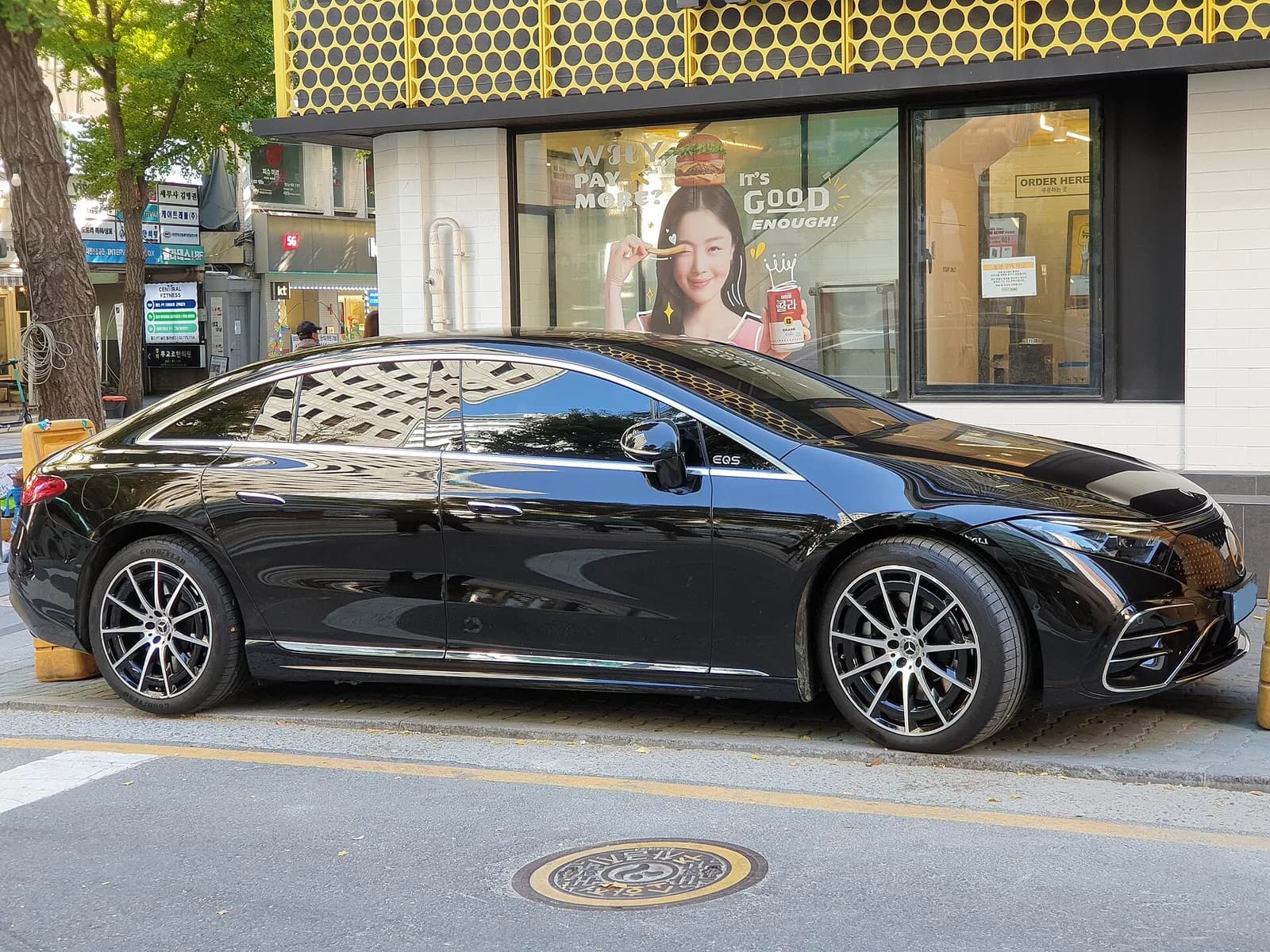
Hero image: Mercedes-Benz EQS 450+ by Damian B Oh, licensed under CC BY-SA 4.0 via Wikimedia Commons; resized and converted to WebP.
.jpg)
Gear worth having
As an Amazon Associate, ThinkEV earns a small commission from qualifying purchases — at no extra cost to you.
NOCO Boost Plus GB40 Jump Starter
A 1000A lithium jump starter that fits in your glovebox and works on any 12V battery. Your insurance against a dead 12V in a parking lot.
As an Amazon Associate, ThinkEV earns from qualifying purchases — at no extra cost to you.

Founder & Chief Editor
Vlad Pereira is the founder and chief editor of ThinkEV.ca, the Canadian electric-vehicle publication he writes and edits from Courtenay, British Columbia. He covers EV pricing, federal and provincial rebates, charging costs, and the Chinese manufacturers now entering Canada, from the buyer's side rather than the press-fleet side. ThinkEV is a venture of Vlad Pereira Online; his writing on health, income and the long game lives at vladpereira.com.
Frequently asked questions
Could Mercedes-Benz actually be banned from selling in Canada too?
What percentage of Mercedes does China actually own?
Why didn't lawmakers just set a clear ownership percentage cutoff?
Does China's 2017 National Intelligence Law actually matter here?
Is the Mercedes situation truly unique, or are other brands exposed?
More EV & road-trip finds
Affordable upgrades worth a look — tap any to check the price on Amazon.
 ★ 4,055
6-Speed Manual Shift Knob Display
View on Amazon ★ 12,396
K KNODEL Car Trash Can with Lid
View on Amazon ★ 297
★ 297360-Degree One-Hand Dashboard Phone Mount
View on Amazon ★ 61
★ 61Toddler Car Seat Snack and Cup Tray
View on Amazon ★ 17,839
Qifutan Vent Phone Mount (Military-Grade Clip)
View on Amazon ★ 12,051
Windex Electronics Screen Wipes
View on Amazon ★ 419
★ 419RGB Car Interior LED Strip Light
View on Amazon ★ 4,626
HoogaLife Hanging Car Diffuser (2-Pack)
View on AmazonRead, Plan, Then Stay Current
Explore our expert articles to understand incentives and ownership costs, use the map to pressure-test charging reality, then subscribe so new EV coverage comes straight to you.
Continue Reading
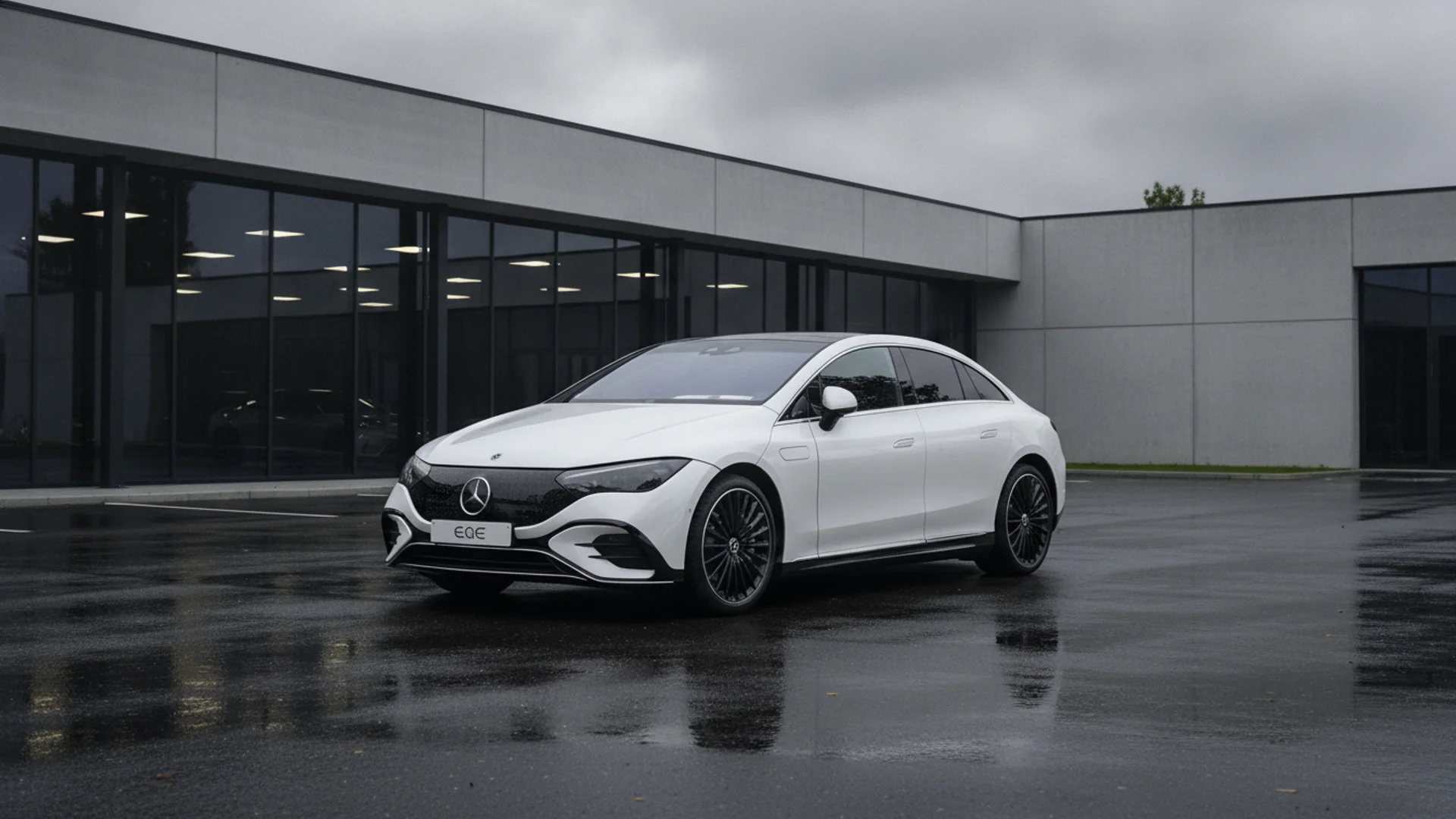
Mercedes Factory Closures: Two German Plants at Risk
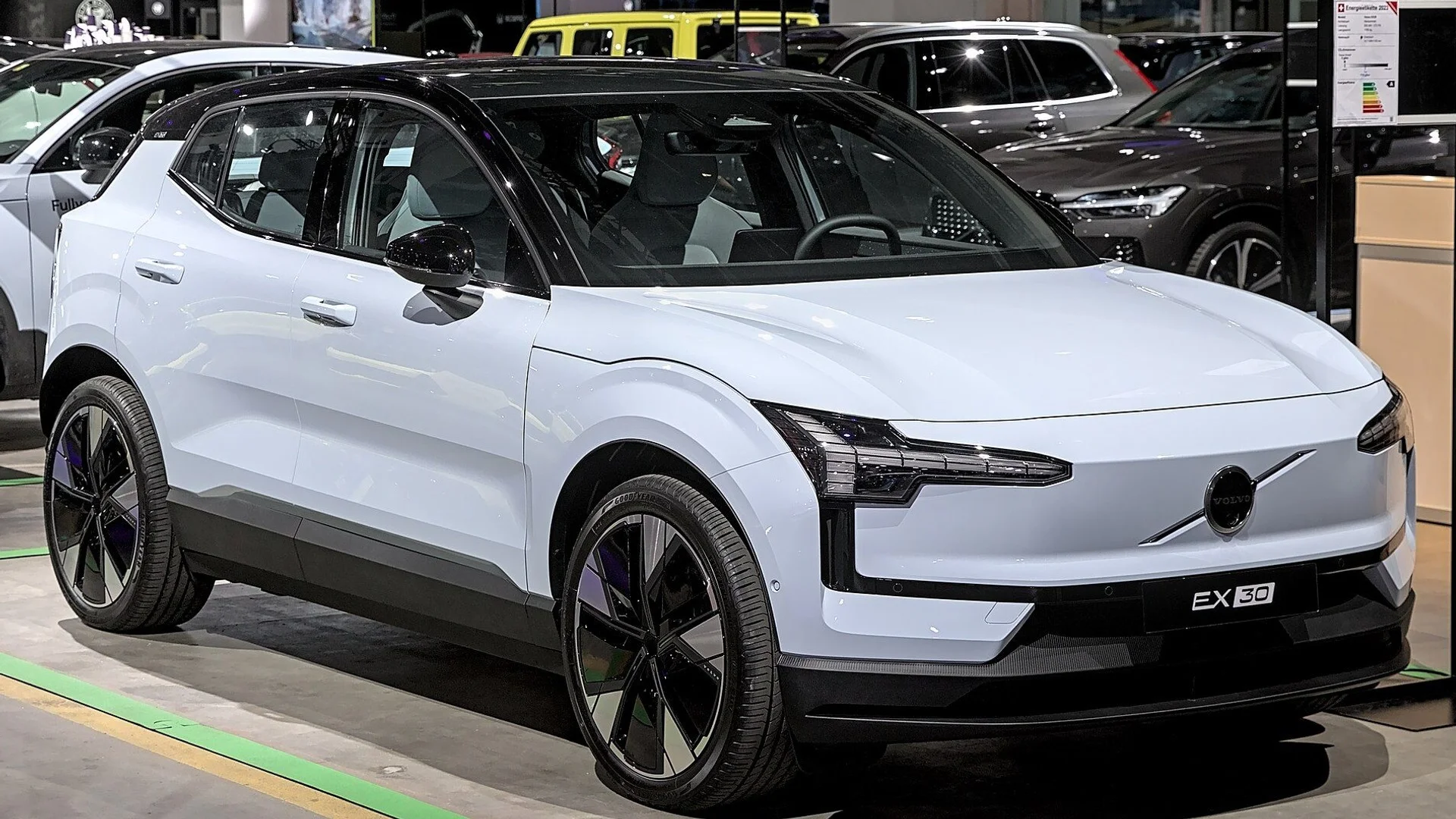
Volvo's Ghent Plant Becomes Geely's EU Tariff Back Door
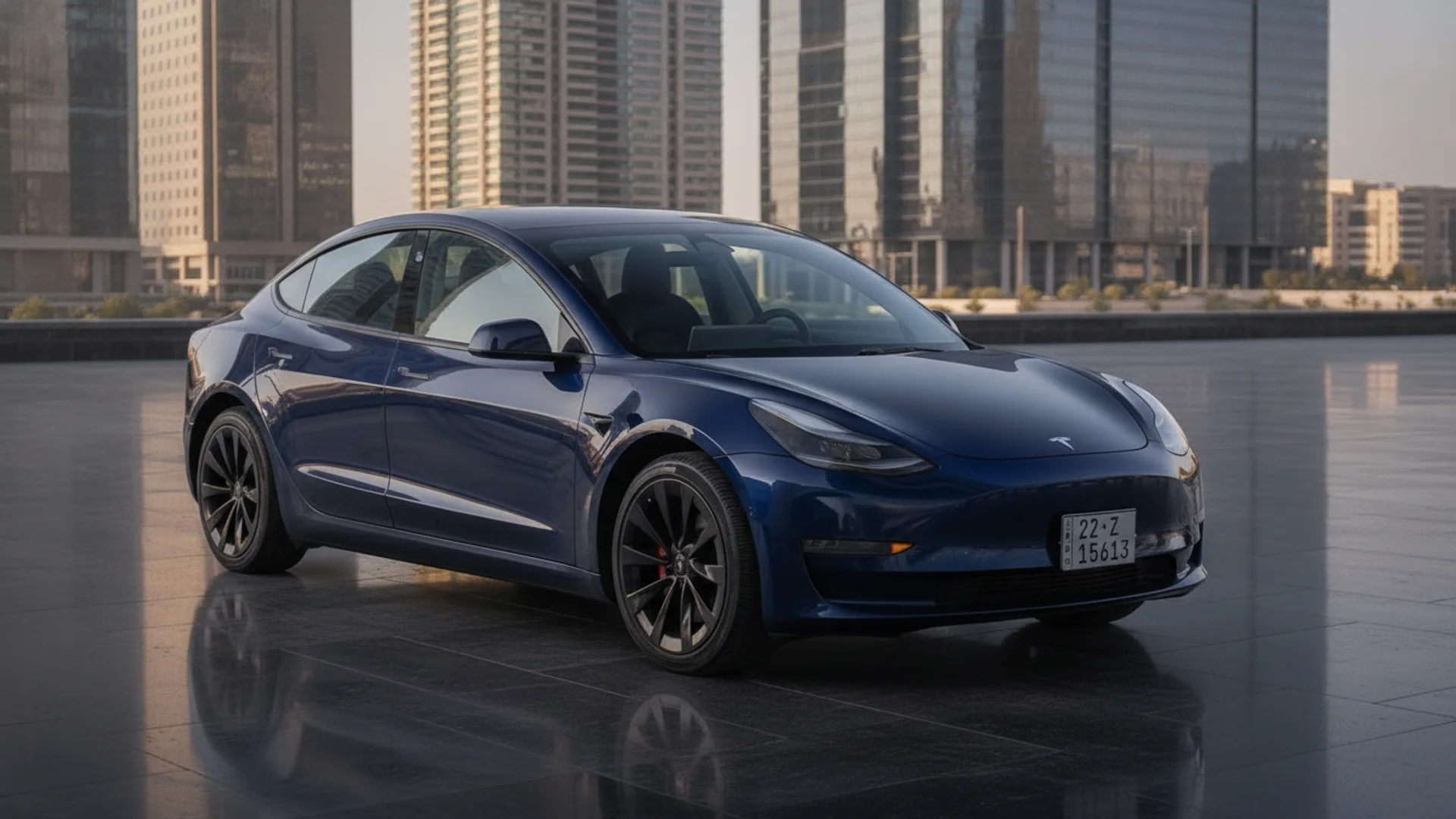
Tesla Q3 2026 Earnings: Flat Revenue, Falling Profits
BYD Denza B8 Suspension Trick Defeats Traffic Boot in Viral Clip

Zenos E10 Returns at £115,000, A Different Car Entirely