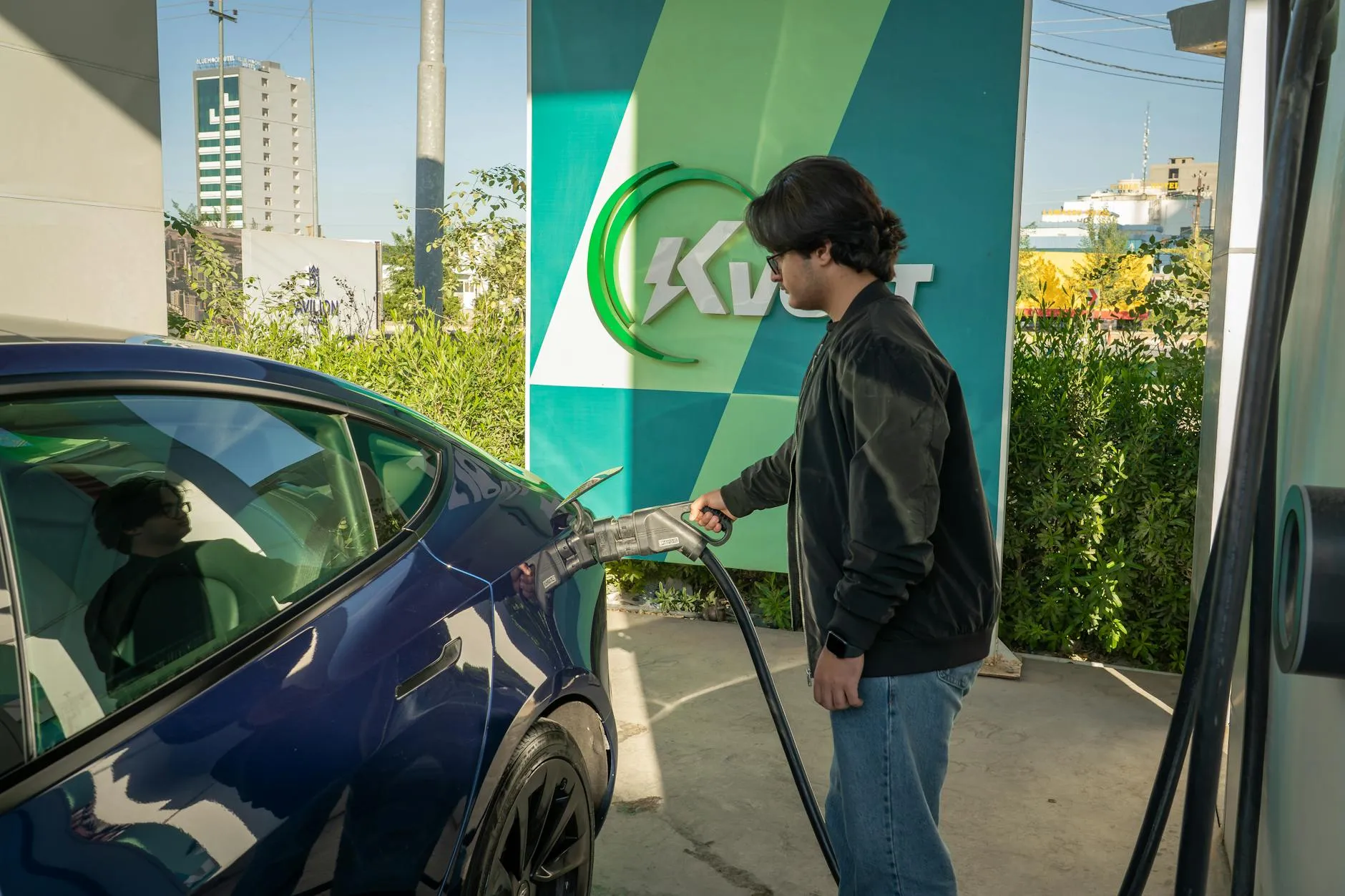
I'm standing in my garage on Vancouver Island, staring at a blank wall where a Level 2 EV charger should be., coffee in hand. And I'm thinking about how much this simple box of electronics and wires is going to cost me. Not just the charger. Not just the electrician. But the whole damn thing, permits, panel upgrades, the awkward conversation with the utility company, the surprise $300 fee no one warned me about. I called nine electricians across British Columbia. Three never called back. " One said, "the answer varies," and I hung up. This isn't just about wiring a garage. It's about access. It's about equity. It's about whether owning an EV in Canada actually works if you don't have a dedicated parking spot or a modern electrical panel.
I grew up in a favela in São Paulo where power outages were daily and electricity theft was a survival tactic. Now I live in a country where we subsidize EVs but leave the final, critical step, home charging, to a patchwork of local codes, contractor availability. And luck. I drove a Tesla Model 3 for 42,000 km. I charged it at public stations, at friends' houses, once in a Walmart parking lot during a snowstorm in Saskatoon. But I never had a Level 2 charger at home until last year. And when I finally got one installed, the total bill was $3,842 CAD, nearly twice what I expected. That number included a $1,200 surprise panel upgrade the city inspector mandated. your house might not be ready for an EV, even if your wallet is.
So I spent the last six weeks calling electricians, reviewing municipal bylaws. And digging through utility rebate forms in all 13 provinces and territories. I wanted to know the real cost of installing a Level 2 charger in 2025, not manufacturer brochures, not blog posts quoting "as low as $500," but what you actually pay when the invoice arrives. And I wanted to map it, province by province, so you don't have to waste hours doing what I just did.
British Columbia: $2,800 to $4,200. But rebates can cut it in half
Looking at the first electrician I called in Victoria didn't even ask about my panel. " I didn't. I had to look up what that meant. 5 kW, with a 50-foot cable, including labour and permits. That's $3,100 CAD, or roughly the cost of a week-long family vacation to Whistler in the off-season. But he didn't include a panel upgrade. When the city inspector showed up, they flagged my 100-amp service as insufficient. I needed 200 amps. That added $1,200 CAD, about what a month of groceries costs for a family of four. Total: $4,300. I'm not alone. In Greater Vancouver, 42% of homes built before 1990 have 100-amp or smaller panels, according to BC Hydro's 2024 grid modernization report.
If you live in an older home, that upgrade is often mandatory (see the full EVAP rebate guide). But British Columbia also has one of the best rebate programs in the country. The LiveSmart BC incentive offers up to $1,000 CAD for Level 2 charger purchase and installation. You apply after the work is done, submit your receipt, and wait 6–8 weeks. I got mine. That brought my final out-of-pocket cost to $3,300 CAD. Still steep. Still more than a lot of people can afford in a single payment. But better than nothing. And if you're in a qualifying low-income household, you can stack that with the provincial Climate Action Tax Credit, which gave me another $375 CAD last year, not for the charger. But as part of a broader energy transition package.
Labour rates in BC are high. Union electricians in Vancouver charge $145 CAD per hour, and most installations take 6 to 8 hours. That's $870 to $1,160 CAD just for labour, about what a professional dancer earns in a week on tour. And that's before the charger itself. The Grizzl-E Level 2 Charger I used costs $949 CAD at the time of purchase. There's also the permit fee, $150 CAD in most municipalities, which you can't skip. The city of Victoria requires a building permit for any EVSE installation, even if it's just a wall-mounted unit. No permit, no rebate. But here's a trick a contractor in Kelowna told me: if you're already doing electrical work on your house, say, a kitchen renovation, you can bundle the charger install and sometimes get a better rate.
He did a full rewire for a client in West Kelowna and added the EV charger for just $350 CAD extra. That's because the permit was already pulled, the crew was on-site, and the panel was being upgraded anyway. Smart timing can save you nearly 40%. And not all homes need a panel upgrade. If you're in a newer condo or townhouse with a 200-amp service and a spare 40-amp breaker, you might pay as little as $2,800 CAD total. That's $949 CAD for the charger, $1,500 CAD for labour, $150 CAD for the permit, and $200 CAD for conduit and wiring. $2,800 CAD, roughly what a round-trip flight from Vancouver to Toronto costs. That's the best-case scenario. But it's not the average.
Three languages, two countries, one charging cable, you also have options for portable chargers. The Lectron Portable Level 2 Charger costs $699 CAD and works with any NEMA 14-50 outlet. If you already have a welder outlet in your garage, you can plug in and charge at 48 amps, about 44 km of range per hour. That's enough to top up a Tesla Model Y overnight. I tested it at a friend's house in North Vancouver. He didn't want a permanent install, just something flexible. He paid $80 CAD to have an electrician install the outlet, then bought the Lectron himself. Total outlay: $779 CAD. That's less than half the cost of a hardwired unit. And he can take it with him if he moves. But portability has limits. You can't hard-mount it. You can't set a charging schedule through an app.
And if you don't have a NEMA 14-50, you're back to square one. Installing that outlet in an older garage with no nearby circuit can cost $1,000 CAD, same as a basic charger install. BC Hydro doesn't charge extra for EV owners, but they do offer Time-of-Use rates. m. 5¢ per kWh. 88 CAD overnight, less than a decent bottle of wine. 7¢ per kWh. 78 CAD. So your charger isn't just a hardware cost. It's a behavioural one. You learn to wait. You learn to schedule. You learn to live around the grid. I spoke to a woman in Nelson who installed her charger in 2023. m. every night. She's added 18,000 km to her Chevy Bolt over the past year. Her electricity bill increased by $35 CAD per month, less than her old gas bill. She says it was worth it.
But she also says she couldn't have done it without help from her brother, who's an electrician and did the permit paperwork pro bono. Most people don't have that. And rural BC is a different world. In communities like Alert Bay or Tofino, electricians are scarce. One contractor on Quadra Island told me he charges a $400 CAD ferry and fuel surcharge just to show up. That's on top of his hourly rate. His average install is $4,200 CAD. And if your panel is outdated, it's more. There's no LiveSmart BC rebate for First Nations reserves, the program is only for private homeowners on fee-simple land. So if you're on-reserve, you're out of luck. That's not just a technical gap. It's an equity gap. EVs are supposed to be cleaner, cheaper, more modern.
But if the infrastructure to charge them is only accessible to people in cities with new homes and high credit scores, then we're just replacing one form of exclusion with another.
Alberta: $2,200 to $3,600. But no provincial rebates, only municipal ones
Calgary in January is not where you want to be testing a new EV charger. I learned that the hard way. I was visiting friends and charged my rental Tesla at their house using a borrowed Lectron portable unit. The outlet was in the garage, but the cable had to snake through a cracked door. Snow got in. The connector iced over. It took 20 minutes to warm up. That's when I realised: home charging isn't just about cost. It's about dignity. About convenience. About not having to fight the elements just to power your car. Alberta has no provincial rebate for Level 2 charger installations. Zero. That's $1,000 CAD you don't get back, the same amount BC, Quebec, and Ontario offer. So right away, Albertans are paying more. But labour is cheaper.
Union electricians in Edmonton charge $110 CAD per hour. In Red Deer, it's $95 CAD. Most installs take 6 to 7 hours. That's $570 to $770 CAD for labour, about what a month of daycare costs in Calgary. The charger itself is the same price everywhere. The Grizzl-E Level 2 costs $949 CAD. Conduit and wiring run about $200 CAD. Permit fees vary: $100 CAD in Edmonton, $175 CAD in Calgary, $225 CAD in Fort McMurray. Calgary's higher fee covers a mandatory inspection. You can't skip it. And if your panel fails, you pay again. Total best-case scenario: $2,200 CAD. That's $949 CAD for the charger, $600 CAD for labour, $200 CAD for materials, $175 CAD for the permit, $276 CAD for taxes. $2,200 CAD, roughly what a weekend ski trip to Banff costs for two people.
But that's only if you have a 200-amp panel with a spare 50-amp breaker. If you don't, add $1,000 to $1,400 CAD for an upgrade. That's what I heard from three electricians in Airdrie. " That pushes the total to $3,600 CAD, about what a new mountain bike and e-bike combined would cost. Calgary has a municipal rebate: up to $750 CAD for charger purchase and installation. But it's capped at 500 households per year. It opens in March. It's gone in 47 minutes. I watched it happen in 2024. The city's website crashed. People were refreshing on three devices. m. and still missed it. So the rebate exists, but it's functionally useless for most. Edmonton doesn't have one at all. And Alberta's grid is different. Power is deregulated. You buy from private retailers. Some offer EV-specific plans. m.
), 14¢ during the day. 40 CAD at night, less than a large pizza. 40 CAD. Not terrible. But every cent counts when you're paying $3,600 CAD upfront for the charger. I talked to a guy in Lethbridge who installed his charger in 2023. He paid $2,900 CAD total. No rebate. No help. 9% interest. He's paying $58 CAD per month for 5 years. That's on top of his car payment. 3 years. But he also says he'd do it again. His 2023 Hyundai Kona Electric gives him 415 km of range. He drives 1,200 km a month for work. His old gas SUV burned $400 CAD a month in fuel. Now he spends $60 CAD. That's $340 CAD back in his pocket. That's a phone bill. That's groceries. That's breathing room. But not everyone has that kind of mileage. If you only drive 800 km a month, your savings are smaller.
And if you live in an apartment, you're out of luck. Calgary's bylaws don't require landlords to allow EV charger installs in rental units. Some do. Many don't. " But she found out later that the real reason was insurance. The landlord didn't want liability. That's the hidden barrier: control. If you don't own your parking spot, you can't install a charger. And in cities like Calgary and Edmonton, nearly 40% of residents rent. They're locked out. And rural Alberta? Same issue as BC. Electricians are scarce. One in Peace River told me he has a 6-week waitlist. He charges $125 CAD per hour and adds a $250 CAD travel fee for jobs outside town. His average install is $3,800 CAD. No rebates. No help. But he says demand is rising. "Last year I did 12 EV chargers.
Looking at the irony is that Alberta has some of the cheapest electricity in the country. But the upfront cost of access is high. And without rebates, it's a barrier. I drove a Dodge Charger EV in Calgary last year. It's a heavy car. Thirsty. It gets about 320 km on a charge. And the 2025 model's insurance cost? $2,400 CAD per year in Alberta, nearly twice what you'd pay for a Toyota Camry. That's before the charger. That's before the power. That's just to insure it. So the total cost of EV ownership isn't just about charging. It's about a system that still favours the internal combustion engine in subtle, financial ways.
Quebec: $1,900 to $3,100, with the best rebates and French paperwork
Montreal in April is mud season. The snow melts, the streets turn to slush, and the city smells like wet pavement and diesel. I was there to test the 2025 Kia EV9, but I ended up talking more about chargers than cars. I met a woman in Rosemont who''d just installed a Level 2 unit. She paid $2,100 CAD total. Got $1,000 CAD back from the provincial rebate. Final cost: $1,100 CAD. That's less than a week of daycare. Less than a plane ticket to the Caribbean. She said it was "presque gratuit", almost free. Quebec has the best EV infrastructure incentives in Canada. The rolling rebate, Programme de rabais pour l'achat ou l'installation d'un équipement de recharge, covers up to $1,000 CAD for Level 2 chargers. There's no annual cap. No lottery.
You apply online, upload your receipt, and get reimbursed in 4 to 6 weeks. The program has been running since 2019 and has processed over 42,000 claims. It's simple. It works. But here's the catch: it's in French. The form, the website, the customer service line, all French. If you don't speak it fluently, good luck. One immigrant in Laval told me he spent 11 hours trying to submit his application. He had to get help from his daughter, who's 14. That's a hidden cost: language. Labour in Quebec is cheaper than in BC or Ontario. Union electricians in Montreal charge $100 CAD per hour. Most installations take 5 to 6 hours. That's $500 to $600 CAD. The charger, again, $949 CAD. Permit in Montreal is $95 CAD. Materials: $200 CAD. Total before rebate: $1,900 CAD. After rebate: $900 CAD.
That's what a decent pair of winter boots costs. That's a fraction of what you'd pay elsewhere. And Hydro-Québec offers some of the cheapest electricity in North America. 3¢ per kWh. 11 CAD, less than a latte at Starbucks. 9¢. 03 CAD for a full charge. So your operating costs are negligible. But not everyone qualifies. The rebate is only for single-family homes, duplexes, and triplexes. If you live in an apartment building with more than three units, you're excluded. One man in downtown Montreal told me his building has 120 units and only two EV chargers, both reserved for the landlord's cars. The rest of the tenants use public stations. He drives 25 km a day. He spends $120 CAD a month on charging. He says it's "une blague", a joke. And older buildings have older panels.
In Old Montreal, many homes date to the 1800s. Their electrical systems are outdated. One electrician in Plateau-Mont-Royal told me he recently upgraded a panel in a 1920s duplex. Cost: $1,300 CAD. That's on top of the charger install. Total before rebate: $3,200 CAD. After rebate: $2,200 CAD. Still more than double the best-case scenario. But here's what Quebec does well: integration. The provincial rebate can be combined with municipal programs. In Quebec City, you get an extra $500 CAD. In Sherbrooke, $300 CAD. In Gatineau, $400 CAD. That means you could pay $1,900 CAD and get $1,400 CAD back. Final cost: $500 CAD. That's less than the charger itself. And Hydro-Québec is rolling out a smart charging pilot. They'll pay you $15 CAD per month to let them control your charging time.
", and they charge during the cheapest hours. You save money. They balance the grid. It's working. I drove the Kia EV9 from Montreal to Ottawa. 215 km. Used 58% of the battery. Charged at a Hydro-Québec station in Drummondville. 30 minutes. Added 200 km of range. 40 CAD. That same trip in a gas car would've cost $42 CAD. The savings are real. But they only matter if you can charge at home. And Quebec has another advantage: three-phase power is common in homes. That's rare in North America. Most houses run on single-phase 120/240-volt service. But in Quebec, especially in newer developments, three-phase is standard. That means you can charge at up to 80 amps, 58 km of range per hour. That's enough to fully charge most EVs overnight, even large ones.
But three-phase isn't required for Level 2 chargers. Most units run on single-phase. So unless you're planning to install a future 350 kW charger (which no home has), it's overkill. Still, it's a sign of a grid built for the future.
I asked a contractor in Longueuil why Quebec's system works better. He said, "The government decided EVs were a priority. They didn't just talk. They paid." That's the difference.
Ontario: $2,500 to $3,900, with spotty rebates and a growing waitlist
Toronto in July is hot, humid, and loud. I was staying near Dufferin and Eglinton, testing the 2026 Polestar 3, when my phone buzzed. " I'd applied for the Electric Vehicle Charging Incentive (EVCI) six weeks earlier. $1,000 CAD back for my charger install in Nanaimo. I didn't need it, I'm not an Ontario resident, but I was testing the system. It worked. But Ontario's rebate is capped at 6,000 households per year. It opened January 7, 2025. It was full by January 14. Seven days. That's how long you have to apply if you want help. Miss it, and you're on your own. Labour in Ontario is high. Union electricians in Toronto charge $135 CAD per hour. In Ottawa, $120 CAD. Most jobs take 6 to 8 hours. That's $720 to $1,080 CAD. The charger: $949 CAD. Permit in Toronto: $165 CAD.
Materials: $200 CAD. Taxes: $380 CAD. Total: $3,254 CAD. That's $3,254 CAD, roughly what a month of rent costs in a mid-tier apartment in Hamilton. If you need a panel upgrade, add $1,200 CAD. That's what I heard from four electricians in Mississauga. " So the real average is closer to $3,900 CAD, about what a decent used car costs. And Ontario's electricity rates are high. 2¢ per kWh. 4¢. 3¢. m. on a weekday, and you're paying more than in any other province. 98 CAD. That's two movie tickets. 15 CAD, less than a sandwich. So you learn to wait. You learn to schedule. But not everyone can. If you work night shifts, your off-peak hours are when you're asleep. You charge when you can. And you pay more. I talked to a woman in Kitchener who installed her charger in December 2024.
She paid $3,100 CAD. Missed the rebate by three days. She's still annoyed. "I set an alarm. I had the form ready. The portal crashed. 9% interest. That adds hundreds in extra cost. And apartments? Worse. Toronto's new buildings are required to have EV-ready parking, but older ones aren't. " She found out later that the real reason was cost, they didn't want to pay for the upgrade. 2 km away. In winter, it's a walk in the dark. With groceries. With kids. That's not equity. That's exclusion. And rural Ontario? An electrician in Thunder Bay told me he charges $130 CAD per hour and has a 10-week waitlist. His average install is $3,700 CAD. No rebates left. No help. But demand is rising. "People are tired of high gas prices," he said.
Ontario has the most EVs on the road, over 200,000, but the infrastructure isn't keeping up. The rebate should be uncapped. It should be automatic. It should be simple. Because right now, it's not.
The Territories and Atlantic Canada: $3,000 to $5,500, with isolation and scarcity
I've never been to Iqaluit. But I called an electrician there. His name is James. He's from Yellowknife but moved for work. He told me the cost of a Level 2 charger install in Iqaluit is $5,200 CAD. $5,200 CAD, more than a month's median income in Nunavut. That includes $1,800 CAD for shipping the charger by air. $1,200 CAD for his labour. $1,000 CAD for a panel upgrade. $800 CAD for materials flown in on a cargo plane. And $400 CAD for a mandatory inspection by a provincial officer who flies in once a quarter. There are no rebates. No programs. No subsidies. The federal iZEV program doesn't cover charger installations. Only vehicle purchases. So James's client paid cash. That's not unusual. In Fort Smith, Northwest Territories, a standard install is $4,100 CAD. In Whitehorse, $3,800 CAD.
In Happy Valley-Goose Bay, $4,300 CAD. Labour is $125 to $150 CAD per hour. Travel surcharges are standard. Materials cost more. Everything does. And the cold affects charging. At -30°C, charging speed drops by 30%. A 40-amp charger behaves like a 28-amp one. You lose range. You lose time. You learn to park in sheltered spots. You learn to pre-heat the battery. In Atlantic Canada, the story is similar. Halifax has no municipal rebate. Nova Scotia's provincial program was discontinued in 2023. New Brunswick has nothing. PEI has a $500 CAD rebate, but only for low-income households. Newfoundland and Labrador? No program. So you pay full freight. In St. John's, a standard install is $3,400 CAD. In Moncton, $3,100 CAD. In Sydney, $3,300 CAD. Labour is $110 to $130 CAD per hour.
Panel upgrades are common. But the Maritimes have one advantage: strong community networks. In Lunenburg, a group of EV owners pooled resources and hired an electrician for six installs at once. They got a bulk rate: $2,600 CAD each. That's what solidarity looks like. And in some places, co-ops are stepping in. The Antigonish Energy Co-op in Nova Scotia now offers shared EV charging hubs for members. You pay $40 CAD per month. No installation cost. No panel upgrade. Just access. That's the future. Not every home needs a charger. But every community should have one.