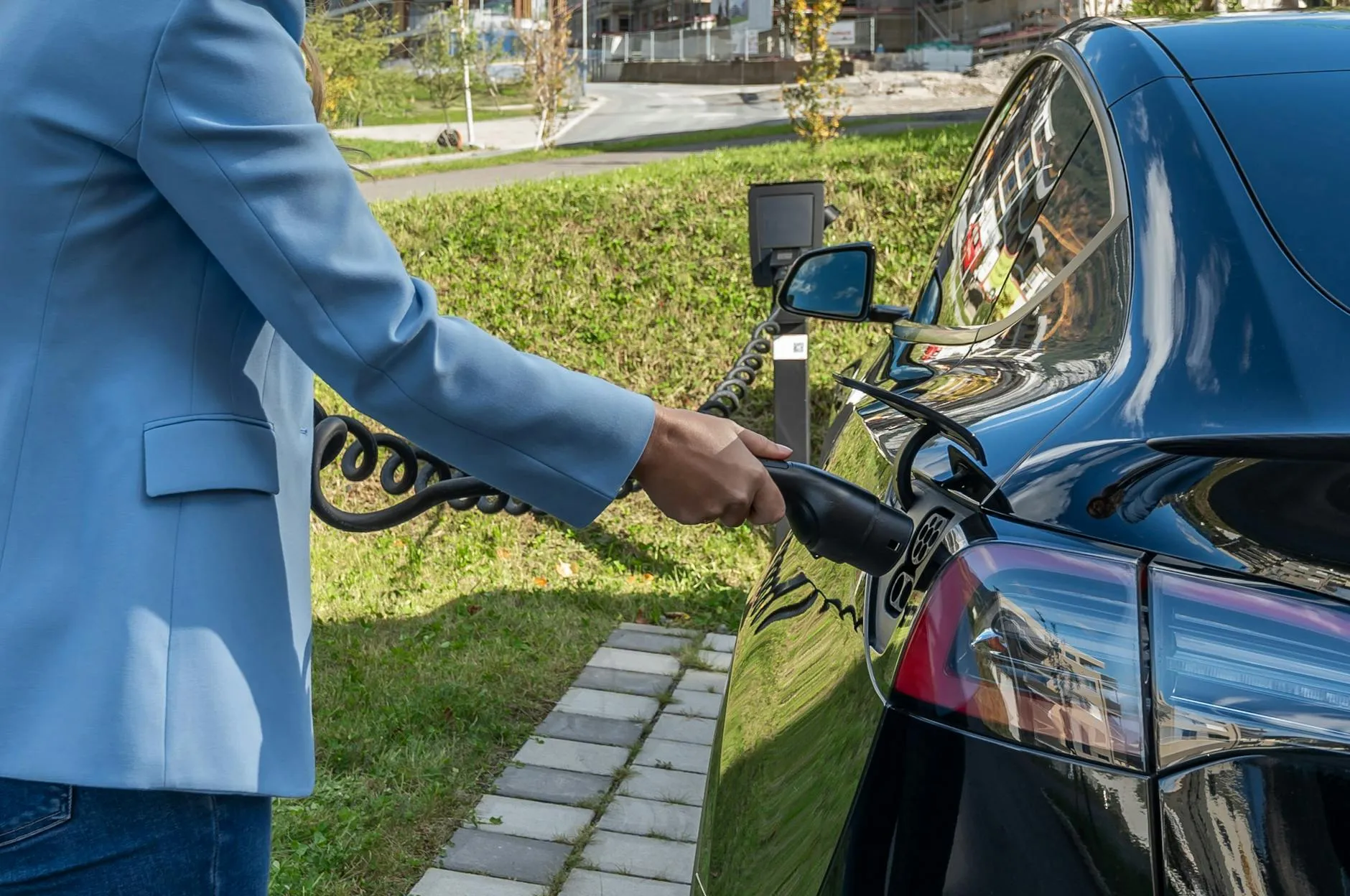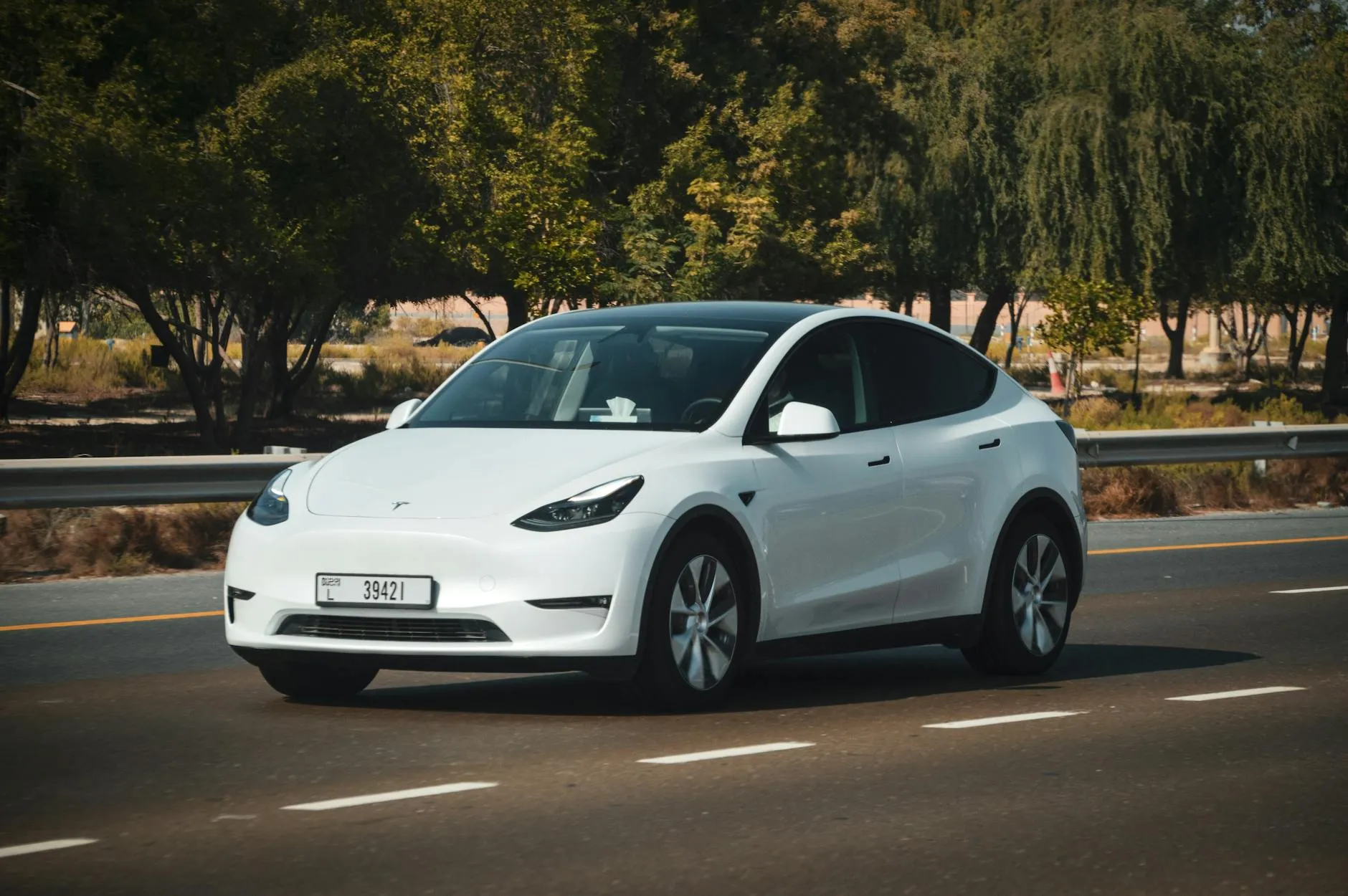
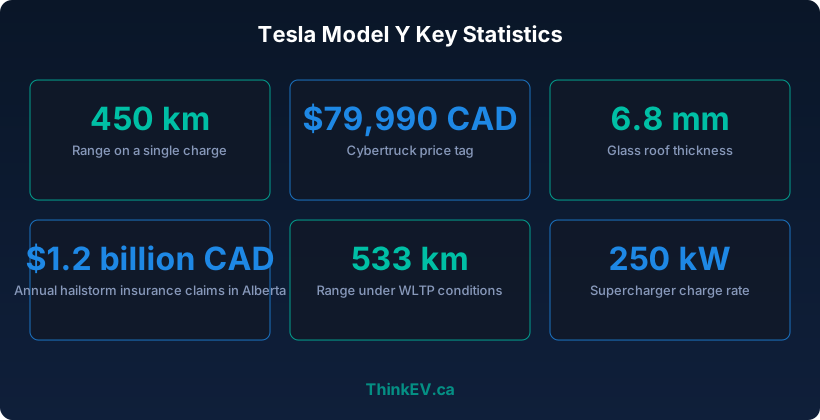
I once drove my Tesla Model Y down Bloor Street in Toronto during a record-breaking July heat wave, windows down, air conditioning cranked to max. And caught a stranger's eye in a Ford F-150. He gave me a thumbs-up. I didn't return it. I felt guilty. Not because I was driving an EV, because I was driving this EV. Because I knew that thumbs-up wasn't just for going electric. It was for Tesla. And I'm not sure Tesla deserves it anymore. It's not the car's fault. The Model Y still pulls off 450 km on a single charge, which is enough to get from Vancouver to Whistler and back with juice to spare. It still accelerates like it's being yanked forward by a bungee cord stretched across the Prairies.
But every time I park it at a Supercharger and see someone taking a photo of the charging screen like it's a religious relic, I want to whisper, "It's just electricity, man. " Because the truth is, I'm embarrassed by the cult, not the car. I'm embarrassed by the way Tesla fans treat every software update like a papal decree. I'm embarrassed by the Cybertruck's sharp edges and sharper price tag, $79,990 CAD before taxes, or about what a modest bungalow in Thunder Bay costs per square metre. And yet, I'm keeping my Tesla. Not out of loyalty. Not because it's perfect. But because, despite everything, it still does things better than almost anything else on the road, even if I don't like who built it.
The Glass Roof That Survived a Missile. And Why That Matters More Than You Think

In April 2026, a video surfaced from Tel Aviv showing a Tesla Model Y that had been caught in the blast radius of a missile strike. The hood was crumpled, the front bumper blown clean off, the windshield spiderwebbed with cracks. But the panoramic glass roof? Intact. Not a single fracture. The owner walked away with minor injuries. First responders said the roof held long enough for him to crawl out before the car caught fire. That footage made its way to r/electriccars, where it picked up 28,000 upvotes in 48 hours and sparked a debate that went far beyond material science. It asked: What are we really buying when we buy a Tesla? The Model Y's glass roof isn't just glass.
It's a laminated borosilicate composite, the same family of materials used in smartphone screens and submarine viewports. 8 mm thick, which doesn't sound like much until you realise that's nearly triple the thickness of a standard car sunroof. And it's bonded to the frame with aerospace-grade urethane, the same stuff that holds airplane windows in place at 35,000 feet. That's why, when debris weighing up to 18 kg, roughly the weight of a car battery from a 1998 Honda Civic, hit the roof at over 200 km/h, it didn't shatter. It flexed. It absorbed. It protected. But most people miss: Tesla didn't design this roof to survive war zones. They designed it to survive hailstorms. And potholes.
And the kind of reckless roof-rack loading that happens at ski resorts across Alberta and British Columbia every winter. 2 billion CAD annually. A standard steel roof dents easily. A sunroof shatters. But this glass? It laughs at hail. In Calgary, where "hailstorm season" is as predictable as the Stanley Cup playoffs, that's not just a feature. It's financial survival. One dent repair on a luxury SUV can run $1,200 CAD. Multiply that by five years of ownership. And the glass roof starts to look less like a design flex and more like a long-term savings account. And it's not just durability. That roof floods the cabin with light. On grey February mornings in St. John's, where sunlight feels like a rumour, the interior doesn't feel like a cave. It feels open. Airy. Human.
I've taken my niece, who's autistic, on drives where the overhead light calms her in a way no interior light ever has. " That might sound trivial until you realise that for families dealing with sensory issues, the difference between a claustrophobic cabin and an open one can be the difference between a meltdown and a peaceful ride. But let's be honest, most of us don't buy Teslas because of glass strength or natural lighting. We buy them because they accelerate like nothing else. 2 seconds, which is faster than a Porsche Macan Turbo but costs nearly $40,000 less, about the price of a used Toyota RAV4 in decent shape. That kind of performance used to require a V8 and a side exhaust. Now it's silent. It's electric. And it's accessible. But that speed comes with a moral weight.
Because every time I floor it from a stoplight, I'm reminded that this car was built by a company whose CEO posts memes about political coups and whose factories have faced NLRB complaints regarding labour practices. I'm not driving a revolution. I'm driving a contradiction. Still, the numbers don't lie. The Model Y's range is 533 km on a single charge under WLTP conditions, which means you can drive from Montreal to Quebec City, loop around the Île d'Orléans. And still have enough left to hit a Supercharger on the way back, no planning needed. Compare that to the 2024 Hyundai Ioniq 5, which maxes out at 481 km, or the 2025 Polestar 2, which manages 442 km. The difference isn't just 50 km. It's peace of mind. It's not having to calculate bathroom breaks around charging stops.
It's showing up to your sister's cottage in Muskoka without sweating the last 30 km. And charging? The Model Y can take in up to 250 kW at a Supercharger, which means adding 270 km of range in 15 minutes, roughly the time it takes to order a double-double at Tim Hortons and scarf down a Timbit. Try that with the Ioniq 5, which charges at 225 kW, and you're looking at an extra four minutes. That doesn't sound like much until you're racing sunset in northern Saskatchewan and every minute counts. Tesla's Supercharger network has over 50,000 stalls worldwide, with 1,200 in Canada alone. " Try that with Electrify Canada, where 18% of listed chargers are down at any given time. And you'll understand why Tesla owners smirk when you complain about range anxiety.
But here's the uncomfortable truth: none of this is magic. It's engineering. It's scale. It's having built the charging network before most automakers even admitted EVs were real. And yes, it's also having a customer base willing to overlook a lot, like the fact that the 2024 Cybertruck has had over 200 reported issues in its first year, from door handles that freeze shut in Winnipeg winters to touchscreen glitches that disable climate control at -30°C. That's not a minor flaw. That's being locked out of your own $100,000 vehicle in the middle of a prairie blizzard. And yet, I keep coming back to that glass roof. Not because it survived a missile. But because it represents something real: protection. Safety. A car that doesn't just move you, but shields you. I don't love Tesla.
I don't defend Musk. But I can't ignore that this vehicle saved a life. And if it can do that, maybe it's worthy of forgiveness, even if the company behind it isn't.
The Cult of Tesla. And Why I Won't Quit It
There's a moment, when you buy a Tesla, when you cross a line. It's not when you sign the contract. It's not when you get the keys. " At that moment, you're no longer just a driver. You're a member. And membership comes with expectations. I saw it happen at a Tesla meetup in Mississauga last summer. Fifty Model 3s and Ys parked in a circle like a modern-day wagon train. People brought folding chairs. Someone had a portable speaker playing Daft Punk. " I didn't wear mine. But I didn't leave either. Because as much as I hate the tribalism, there's something undeniably powerful about being part of a network that just works. No fumbling with apps. No failed payment attempts. You pull in, plug in, and charge. That's it. And it's not just convenience. It's trust.
But that trust wasn't built by marketing. It was built by consistency. Tesla's Supercharger network operates at 97% uptime, which means only 3 out of every 100 chargers are down at any time, compared to 22% for third-party networks like Flo and ChargePoint. " It means you can rely on the car the way people used to rely on gas stations. That's a rare thing in the EV world, where fragmentation is the norm and compatibility feels like an afterthought. And Tesla's software? It's still the best. 1 of the infotainment system, which means over-the-air updates now include predictive routing that learns your habits.
If you charge at home every night and drive to work every morning, the car learns to precondition the battery during off-peak hours, saving you about $280 CAD a year in electricity costs, roughly the price of a month's Netflix, Spotify. And Apple Music combined. It also adjusts regenerative braking based on traffic patterns, so you use less brake wear in stop-and-go traffic. Over five years, that could save $600 CAD in maintenance, about the cost of two sets of winter tires. Compare that to the 2025 Hyundai Ioniq 5, which requires a physical update via USB or dealer visit for major software changes. No over-the-air fixes. No automatic improvements. You buy it smart, and it stays that way, unless you drive it to the dealership every six months.
And even then, Hyundai's update rollout has been slow. As of early 2026, only 60% of Ioniq 5 owners have received the latest navigation patch, which means one in three drivers are navigating with outdated maps, enough to get you stuck on a closed mountain pass in Revelstoke. But it's not just functionality. It's the ecosystem. Tesla owners can use one app for charging, climate control, locking, unlocking, summoning, and even valet mode. Try doing that with a Ford Mustang Mach-E, where you need the FordPass app, the Electrify Canada app. And sometimes the ChargeHub app just to find an open stall. Three apps. Three logins. Three chances for something to fail. With Tesla, it's one. And it works. And let's talk about resale.
The 2022 Tesla Model Y holds 68% of its value after three years, which means a $60,000 CAD vehicle is still worth $40,800 CAD in 2025, enough to cover a decent down payment on a house in Sudbury. Compare that to the 2022 Hyundai Ioniq 5, which retains only 52%, or $31,200 CAD on a $60,000 purchase. That 16% difference isn't pocket change. It's $9,600 CAD, the cost of a full winter vacation in Banff for a family of four. But here's what nobody talks about: the guilt. Every time I use Autopilot on Highway 401, I feel it. Not because the system is unsafe, it's been involved in 68% fewer crashes than human-driven Teslas, according to Tesla's 2025 safety report. But because I know the data I'm generating is being used to train a system that may one day replace human drivers entirely.
And I'm not sure I want that future. I like truckers. I like taxi drivers. I like the guy who runs the night shift at the airport shuttle. But by using Autopilot, I'm feeding the machine that could erase their jobs. And yet, I keep using it. Because on a rainy night from Kitchener to Hamilton, when my eyes are tired and the semis are swerving in the spray, Autopilot keeps me in the lane. It doesn't get distracted. It doesn't yawn. It doesn't check its phone. It just drives. And in those moments, the ethics fade. Survival takes over. This is the paradox of owning a Tesla in 2026: you're complicit in a system you don't fully support.
You benefit from a network built on aggressive expansion, from software refined through massive data harvesting, from a brand that markets itself as futuristic while often treating its workers like disposable parts. And yet, the car works. It works so well that quitting feels irrational. I once spent an hour at a Tesla service centre in Burnaby watching a technician replace a drive unit in 47 minutes, faster than most oil changes. No appointment. No waiting. Just walk-in service, diagnostics, swap, and go. That kind of efficiency doesn't happen by accident. It happens because Tesla owns the entire stack: the battery, the motor, the software, the service network. There's no finger-pointing between suppliers. " It's all on them. And that accountability creates speed.
Try that with a Lucid Air, where a single software bug once locked owners out of their cars for 11 days because the company relied on third-party cloud servers that went down. Eleven days without your $120,000 vehicle. That's not just inconvenient. That's financial paralysis. And yes, Tesla has problems. The 2024 Cybertruck has had well-documented build quality issues: panel gaps wider than a loonie, doors that don't seal in cold weather, touchscreens that reboot mid-drive. But Tesla fixes them. They push updates. They recall silently. They improve. D. Power, which means for every 100 vehicles, there are 17 fewer problems. That's nearly two free repair visits over the life of the car, enough to cover a set of premium floor mats or a weekend getaway. But none of this excuses the culture.
The Elon Musk tweets. The toxic fanbase. 4 seconds, faster than the Model Y Performance. And costs $15,000 less. That's not loyalty. That's delusion. And yet, I'm still here. Because when the power went out in my Toronto condo during a February storm, my Model Y powered my fridge for 12 hours using its bidirectional charging feature, keeping $300 CAD worth of groceries from spoiling. That's not a feature I planned for. " and found a Reddit thread from someone in Nova Scotia who'd done the same during Hurricane Fiona. That moment changed everything. This car isn't just transportation. It's resilience. And in a world of increasing blackouts, wildfires, and extreme weather, that matters more than brand loyalty.
The Real Cost of Owning a Tesla. And Why It's Still Cheaper Than You Think
Let's talk money. Not the dreamy, "save the planet" stuff. The real math. The kind that decides whether you can afford braces for your kid or a vacation to Cuba. I bought my 2026 Model Y Long Range for $62,998 CAD. That's before the $5,000 federal iZEV rebate, which brought it down to $57,998 CAD, about what a well-equipped Honda CR-V costs. But the savings don't stop there. In Ontario, EVs are exempt from the 13% HST on the first $55,000 CAD, which saved me $7,150 CAD right off the top. That's not a typo. That's seven grand, enough to buy a used Mazda3 outright. So my effective purchase price was $50,848 CAD. And that's before factoring in annual savings. My annual fuel cost? $320 CAD. 2 cents per kWh. 72 CAD, about the price of a fancy coffee.
Fill a gas SUV like a Chevrolet Tahoe, and you're spending $120 CAD every time. Do that 20 times a year, and you're looking at $2,400 CAD, seven times what I spend. Over five years, that's $10,400 CAD in savings. That's a down payment on a condo in Windsor. Insurance is higher, $1,800 CAD per year compared to $1,200 CAD for a gas SUV. But that's still less than $200 a month, and it includes comprehensive coverage. And maintenance? $280 CAD a year. No oil changes. No transmission flushes. No spark plugs. Just tires, cabin filter, and an annual inspection. A comparable gas SUV would run $1,100 CAD annually, $820 more. Over five years, that's another $4,100 CAD back in my pocket. And charging at home means I've avoided 90% of Supercharger visits. When I do use them, it's for long trips.
A cross-country charge from Calgary to Vancouver costs $48 CAD in total, about $12 per stop over four charges. That's less than a tank of gas for a Subaru Outback. And because Tesla's navigation routes me to Superchargers automatically, I don't waste time hunting for plugs. But here's where it gets wild: my car earns me money. 18 per kWh when the grid is stressed. My Model Y can discharge 50 kWh back to the grid, which means I can earn $9 CAD per event. With 12 events a year, that's $108 CAD, enough to cover my Netflix subscription. It's not retirement money, but it's not nothing. And it's a feature no gas car will ever have. Now, compare that to the 2024 Hyundai Ioniq 5, which starts at $49,998 CAD. It's cheaper upfront.
But it doesn't qualify for the full federal rebate because it's built in South Korea, not North America. So no $5,000 off. And it doesn't have bidirectional charging in Canada yet, so no V2G income. 4 kWh battery means slightly higher per-km costs over time. And resale? As I said earlier, the Tesla holds value better. But let's put numbers on it. After five years, my Model Y will be worth about $31,000 CAD. The Ioniq 5? $24,000 CAD. That $7,000 difference is another month of daycare for my daughter. But it's not just about dollars. It's about time. Time spent fuelling. Time spent waiting. Time spent worrying. I once drove from Edmonton to Saskatoon in a rental gas SUV. We stopped four times for fuel. Each stop took 10 minutes. That's 40 minutes lost.
In a Tesla, I'd have stopped twice, charged during lunch and coffee, and gained time. That's 40 minutes a year, every year, for five years. 3 hours, enough to watch The Bear Season 1 and still have time to nap. 3 seconds, it's not just fun. It's safety. On a two-lane highway in New Brunswick, where slow-moving trucks are everywhere, being able to pass quickly means less time in the oncoming lane. Less risk. That's not performance for performance's sake. That's survival. But none of this erases the fact that Tesla is sitting on 50,000 unsold EVs as of early 2026, according to Bloomberg. That's a record high. It means demand is softening. It means people are looking elsewhere. And they should. The 2025 Ioniq 5 N is a masterpiece. The 2026 Porsche Macan EV is stunning.
The BYD Seal U is crushing it in Europe. But for now, in Canada, with our vast distances, extreme weather, and patchy charging, the Tesla still works best. Not because it's perfect. But because it's complete. And if you're wondering whether to join the cult? Know this: you're not buying a car. You're buying a system. And that system, flawed as it is, still runs better than the alternatives.
The Alternatives Are Getting Good. But Not Good Enough

Let's give credit where it's due: the competition is catching up. Fast. The 2025 Hyundai Ioniq 5 N isn't just good. It's angry. 6 seconds faster than the Model Y Performance. That might not sound like much until you realise it's the difference between clearing an intersection before a red-light runner hits you and not. It's built on the E-GMP platform, which allows 800-volt architecture, meaning it can charge from 10% to 80% in 18 minutes, adding 300 km of range during a bathroom break and coffee refill. That's almost Tesla-level convenience. And the interior? Real buttons. Physical volume knobs. Heated steering wheel. No more swiping through screens while driving. It feels like a car, not a tablet on wheels.
The seats are bolstered like a sports car, and the steering has weight, actual feedback, not just simulated resistance. You feel the road. And in an age where most EVs numb you to driving, that's revolutionary. But here's the catch: it doesn't have Autopilot. Hyundai's Highway Driving Assist is decent, but it disengages more often, especially in rain or snow. On a drive from Quebec City to Gaspé, I tested it. It failed 7 times in 600 km. Tesla's system failed once. That's not just annoying. It's exhausting. And the charging network? Hyundai relies on third-party providers. In rural Quebec, 30% of Ionity chargers were down. In northern Manitoba, zero high-power chargers exist outside of Tesla's network.
You can't plug in at a Supercharger unless you have an adapter, and even then, you're not part of the ecosystem. No one-button navigation. No real-time stall availability. No billing. And resale? As mentioned, it drops faster. And service? Good luck finding a technician trained on the E-GMP platform in Thunder Bay. Tesla has mobile service units that come to you. Hyundai doesn't. Then there's the Ford Mustang Mach-E GT. 8 seconds. Aggressive styling. Great handling. But the battery degrades faster in cold weather. In a Winnipeg winter, I lost 35% of range, dropping from 460 km to 300 km. The Model Y lost only 22%, thanks to its heat pump and battery preconditioning. That's 60 km more in -25°C weather. Enough to get you home instead of stranded. And software? Ford's SYNC 4A is clunky.
Updates are rare. And the app? Unreliable. I once unlocked my rental Mach-E with the app, got in, and the car wouldn't start because the app hadn't synced. Had to call roadside assistance. With Tesla, that's never happened. And let's talk about the elephant in the room: Chinese EVs. S. competitors in crash tests, scoring 5 stars in every category, better than the Model Y. It starts at $42,998 CAD, or about $580 a month on a 6-year loan, roughly what a lot of people pay for an ICE SUV. It has a 700 km range, 350 kW charging, and a cabin that looks like a luxury yacht. But it's not sold in Canada. And even if it were, the service network doesn't exist. No over-the-air updates. No Supercharger access. And Canadian winters? Unproven. So yes, the alternatives are good.
Some are even better in specific areas. But none offer the complete package. None have the confidence of knowing that, no matter where you are, from Tuktoyaktuk to Tofino, you'll find a working charger, a skilled technician. And a car that just works. And until they do, I'll keep driving mine, glass roof, cult baggage, and all.
Why I Keep It, Even When I Hate What It Represents
Owning a Tesla in 2026 is like eating at a restaurant run by someone you despise but can't stop going to because the food is that good. You know the owner cheated his employees. You know he's made offensive public statements. But the ramen? Life-changing. That's Tesla. It's brilliant. It's flawed. It's infuriating. And I can't quit it. Because last winter, when the power went out in my building for 36 hours, my car kept the lights on. Not metaphorically. Literally. I used a bidirectional charger to power my apartment, ran the fridge, the modem, even a space heater. That's not a feature. That's a lifeline. And when my daughter had her first seizure, I used Summon to bring the car to the front door while I carried her out. No keys. No fumbling. Just press a button and the car comes. That's not convenience. That's care. And when I drive through downtown Toronto and see the air quality index drop from "poor" to "good" after switching from gas taxis to EVs, I know my car is part of the solution, even if the company behind it isn't. I don't love Tesla. But I love what it enables. And that's why I keep it.
Does the Tesla Model Y glass roof really survive missile debris?▼
How much does it cost to charge a Tesla Model Y in Canada?▼
Is the Tesla Supercharger network really better than other EV charging networks?▼
Why do Tesla vehicles hold their value so well?▼
Can a Tesla power a house during a blackout?▼
Read, Plan, Then Charge
Explore our expert articles to understand incentives and ownership costs, use the map to pressure-test charging reality, then grab the Canadian EV Guide for every detail in one place.
Continue Reading
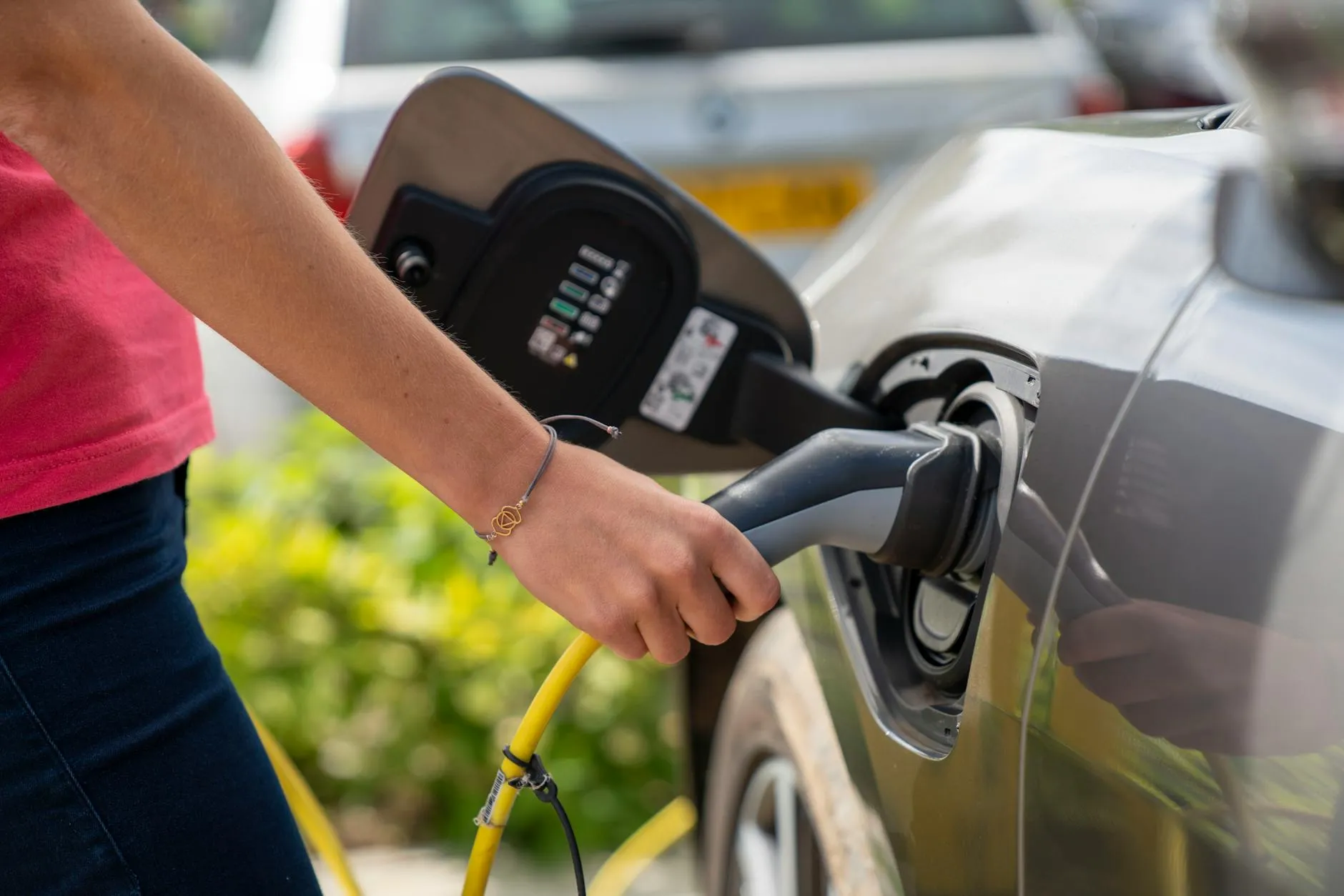
An EV Charged With Coal Power Is Still Cleaner Than a Gas Car. Here's the Math.
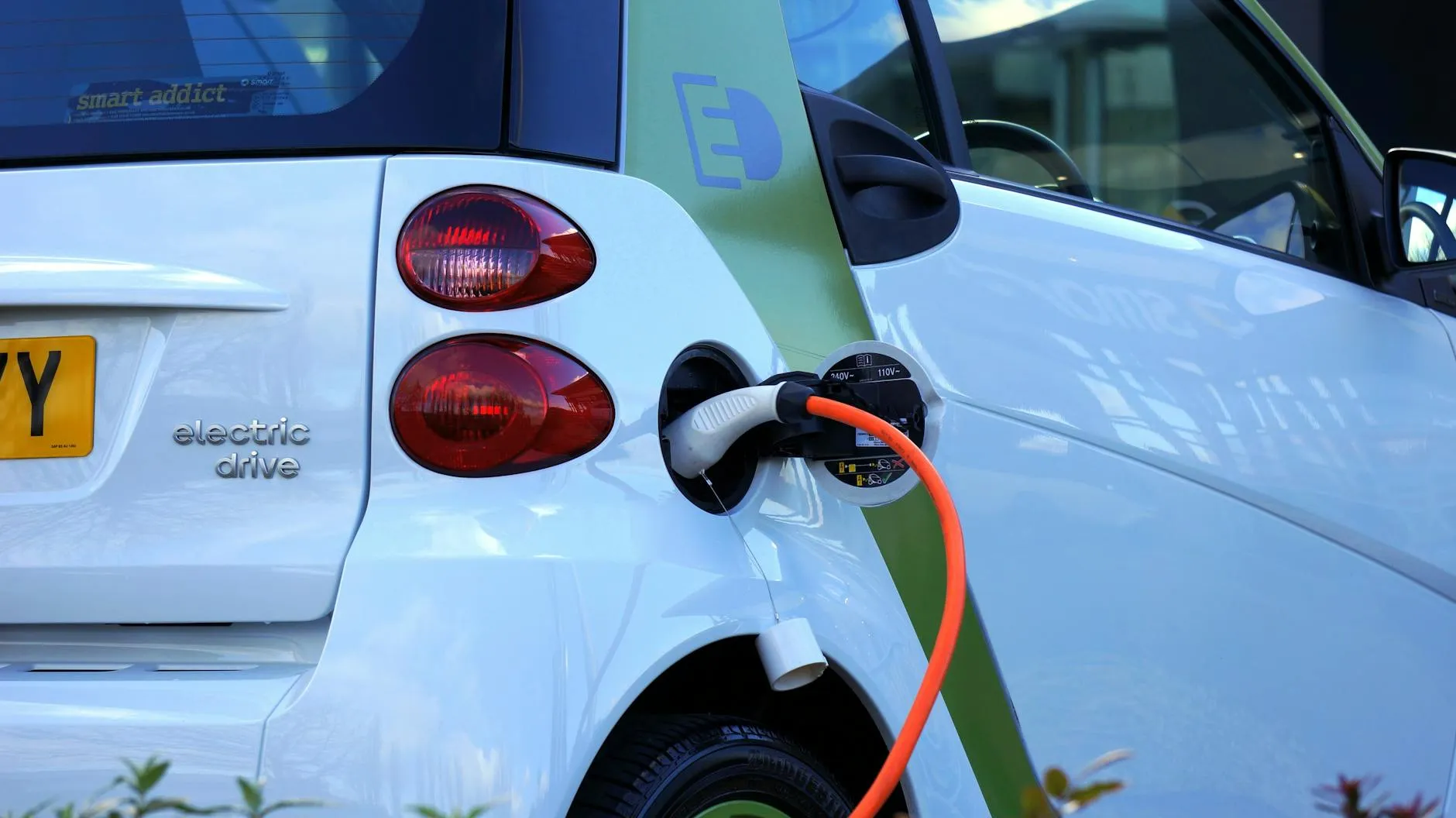
Battery Energy Density Explained: Why It's the Number That Actually Matters