Key takeaways
- Lion Electric, based in Montreal, builds electric school buses at their Saint-Jerome, Quebec factory. They've delivered over 800 units across North America since 2020.
- Children riding inside diesel school buses breathe PM2.5 fine-particle concentrations 5 to 10 times higher than ambient outdoor air, per a University of California study, exposure that electric buses eliminate entirely.
- Electric school buses cost roughly $350,000 to $400,000 versus about $120,000 for diesel, but savings on fuel and maintenance close most of that gap over a 12-year bus lifecycle.
- School buses sit idle 18+ hours per day, making them prime candidates for vehicle-to-grid (V2G) technology that could earn school districts $6,000 to $10,000 per bus per year.
- The Canada Infrastructure Bank has committed $500 million toward zero-emission school buses, with Quebec, BC, and Ontario leading adoption.
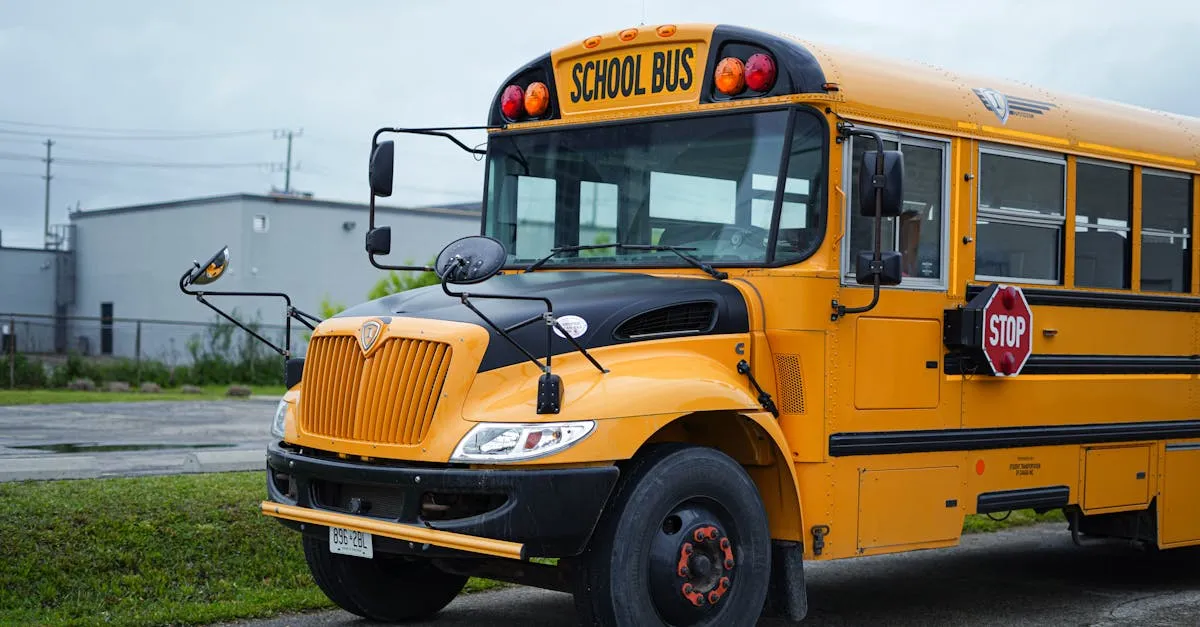
Early morning in a Longueuil, Quebec schoolyard. Frost on the windshields. Kids with backpacks and tuques, breath visible in the cold air. Between the orange pylons and the crossing guard sits a bright yellow school bus. A Lion Electric LionC, silent, with no exhaust hanging over the pickup zone.
That bus carries 72 kids twice a day. It does this without burning a single drop of fuel. And across Canada, hundreds more like it are starting to show up on school routes.
This isn't some pilot programme buried in a government press release. It's happening. Right now. In Quebec, British Columbia, Ontario, and a growing list of provinces. School districts are buying electric buses, putting them on real routes, and watching the numbers come in. The numbers are good.
But they're also complicated. The sticker price is steep. The charging setup takes planning. Winter range drops. Driver training changes. And the company making most of these buses, Lion Electric, has had its own share of financial headaches.
The costs, the savings, the provincial rollouts, and what it takes to push your district forward are all covered below. The numbers are good, and complicated.
The Diesel Problem Nobody Talks About at School Drop-Off
Diesel school buses are the single dirtiest vehicle most Canadian children ride in on a regular basis (Environment and Climate Change Canada, 2025). Not city transit. Not freight trucks. The yellow bus your kid climbs into every morning at 7:45 AM.
A standard diesel school bus burns between 35 and 50 litres of diesel per day. That's roughly 7,000 to 10,000 litres per year, depending on the route. Each litre of diesel produces about 2.7 kg of CO2 when burned. So one bus dumps somewhere between 19,000 and 27,000 kg of CO2 into the air every single school year. For context, that's about the same as three average Canadian passenger cars driven for a full year.
CO2 is not the worst of it.
Diesel exhaust contains fine particulate matter, often called PM2.5. These are tiny particles, small enough to pass through lung tissue and into the bloodstream. Nitrogen oxides, or NOx, come along too. Both are linked to asthma, bronchitis, and reduced lung function in children.
What makes school buses especially bad: the exhaust doesn't disperse into the general air. It goes right into the loading zone. Kids stand in it. They breathe it in while waiting to board. They breathe it inside the bus, too, because diesel exhaust seeps through gaps in the body, the door seals, and the floor.
A study from the University of California found that children riding inside diesel school buses are exposed to PM2.5 concentrations 5 to 10 times higher than the ambient outdoor air. That's not a Canadian study, but the physics of diesel exhaust and bus construction don't change at the border.
A child's commute to school exposes them to air quality worse than standing next to a busy highway.
Children are more vulnerable to air pollution than adults. Their lungs are still growing. They breathe faster, which means they inhale more pollutants per kilogram of body weight. Chronic exposure during childhood can cause permanent lung damage. It can worsen existing asthma. Some research links it to reduced cognitive performance in school. A kid breathing diesel fumes every morning may be losing focus before they even sit down in class.
And diesel buses idle. A lot. Drivers start the engine 10 or 15 minutes before the route begins, especially in winter. They idle at every stop. They idle in the school parking lot while kids file out. A bus might idle for 30 to 45 minutes per trip. That's concentrated exhaust exposure, right where children gather.
Canada has about 43,000 school buses. Most are diesel. Some are propane. A small number run on compressed natural gas. But diesel dominates the fleet, especially in older districts that haven't replaced buses in over a decade. In rural areas, buses can be 15 or even 20 years old. Those older models lack modern emissions controls. They're the worst offenders.
An electric bus produces zero tailpipe emissions: no PM2.5, no NOx, nothing at the pickup zone. The bus pulls up, kids get on, and the only sound is their backpacks hitting the seats.
Air quality inside the bus improves too. No engine fumes seeping through the floor. No exhaust recirculating through the heating system. Parents in Longueuil reported that their kids stopped smelling like diesel after school switched to Lion Electric buses. Small detail. Big quality-of-life change.
Noise pollution drops too. A diesel school bus at idle produces about 70 to 80 decibels. That's comparable to a vacuum cleaner running right next to you. Multiply that by 15 buses in a school parking lot and you've got a wall of noise twice a day. Electric buses at idle produce almost no sound. Schools near bus depots have reported a noticeable drop in ambient noise after switching.
The health argument alone is enough: millions of children are riding to school on vehicles that make them breathe toxic air. A fix exists, works, and is already on the road.
Lion Electric and the Made-in-Canada Advantage
If you follow the electric school bus space in North America, one name keeps showing up: Lion Electric. Based in Montreal, with a factory in Saint-Jerome, Quebec, Lion is the only major dedicated electric medium- and heavy-duty vehicle manufacturer in Canada.
They started building electric school buses in 2016. Since then, they've delivered over 800 units across Canada and the United States (Lion Electric, 2025). Their flagship school bus, the LionC, seats up to 72 passengers. It runs on a battery pack ranging from 126 kWh to 252 kWh, depending on the configuration. That gives it a range of 100 to 250 km on a single charge, which covers most school bus routes with room to spare.
I keep coming back to the fact that Lion built this from scratch. They didn't take a diesel bus and swap the engine. They designed the entire vehicle around electric power. The motor sits where the transmission used to go. The batteries sit low in the frame, under the passenger compartment. That low centre of gravity improves stability, which matters for a bus full of kids on winter roads.
Production happens at their 900,000-square-foot facility in Joliet, Illinois, for the U.S. market, and at Saint-Jerome for Canadian and some American orders. At full capacity, the Saint-Jerome plant can produce about 2,500 vehicles per year. They've been ramping up, but haven't hit full capacity yet.
And that's where the story gets complicated.
Lion Electric has struggled financially. Their stock price dropped from a peak of about $35 in 2021 to under $1 by late 2025. They've reported losses in every quarter since going public. Supply chain problems, slower-than-expected orders, and high manufacturing costs have all taken a toll. In early 2026, they announced a restructuring plan to cut costs and focus on their strongest product lines, including school buses.
Financial troubles don't mean the product is bad. They mean the market hasn't scaled fast enough to support the investment Lion made in manufacturing capacity. Building a factory costs money whether you're running at 30% capacity or 90%. Lion bet on faster adoption. Adoption is coming, but slower than their balance sheet needed.

But even with those struggles, Lion has a product that works. School districts that operate LionC buses report high satisfaction. The buses run reliably. Maintenance costs are lower. Drivers like them. Kids like the quiet ride. And when something does break, Lion's Canadian service network can respond faster than an American manufacturer shipping parts across the border.
Other players exist in this space, too. Blue Bird, based in Georgia, sells the All American RE electric school bus. Thomas Built Buses (owned by Daimler) has the Jouley. Both are strong options in the American market. But neither builds in Canada, and neither has the same focus on purpose-built electric design that Lion brings.
For Canadian school districts, buying Lion means supporting a domestic manufacturer. It means shorter supply chains for parts. It means service centres closer to home. And it means jobs in Quebec. About 1,400 people work at Lion's facilities. Those are manufacturing jobs in a country that's been losing them for decades.
Ottawa has noticed. Lion has received support from the Canada Infrastructure Bank and from Natural Resources Canada. Quebec's provincial government has also provided funding. These investments aren't charity. They're bets on a domestic industry that could supply North America's entire school bus fleet transition.
About 43,000 school buses operate in Canada. Another 480,000 run in the United States. Replace even half of those with electric versions over the next 20 years, and you're looking at a market worth tens of billions of dollars. Lion is positioned to capture a share of that market, if they can survive the financial rough patch.
Lion's restructuring plan focuses on two things: cutting overhead and securing more firm orders. If provinces accelerate their purchasing commitments, Lion's outlook improves. If orders stay slow, the company faces harder choices. Either way, their technology works. The question is whether the business survives long enough for the market to catch up.
Lion isn't the only path forward. But right now, for a Canadian-made electric school bus that's proven on real routes in Canadian winters, they're the strongest option we've got.
What It Costs and Where the Money Actually Goes
The sticker price of an electric school bus makes most school board treasurers wince. The full picture is more complex.
A new diesel Type C school bus costs between $110,000 and $130,000 CAD, depending on the spec. A comparable electric school bus from Lion Electric or Blue Bird runs between $350,000 and $400,000 CAD. That price buys you a vehicle that costs about three times what a diesel bus costs upfront. No way around that.
But school buses don't run for one year. They run for 12 to 16 years. And over that lifecycle, the cost picture flips.
Start with fuel. A diesel bus burns about 40 litres per day on an average route. At $1.65 per litre (a reasonable Canadian average in 2026), that's $66 per day in fuel. Over a 180-day school year, that's roughly $11,880 per year. Over 12 years, you're looking at approximately $142,560 in diesel, not counting price increases. And diesel prices have gone up every decade for the past 40 years. If prices rise even 3% per year, your 12-year diesel bill climbs past $165,000.
An electric bus on the same route uses about 100 kWh per day. At $0.10 per kWh (a typical off-peak rate in many provinces), that's $10 per day. Over 180 days, that's $1,800 per year. Over 12 years, that's $21,600 in electricity. Electricity prices are more stable than fuel prices, and in provinces with hydro power, they've barely moved in a decade.
So fuel savings alone come to about $120,960 over the life of the bus. That's comparing roughly $142,560 in diesel costs versus $21,600 in electricity costs over 12 years.
Now add maintenance. Diesel buses have engines, transmissions, exhaust systems, fuel injection systems, cooling systems, and emission control equipment. All of it breaks. All of it needs servicing. A diesel engine has hundreds of moving parts. Each one wears out on its own schedule.
A diesel school bus costs roughly $12,000 to $18,000 per year in maintenance. That includes oil changes every 5,000 km, filter replacements, brake work, exhaust repairs, transmission service, and engine overhauls. Some districts report spending $25,000 or more per year on older buses that should have been retired. Over 12 years, you're spending $144,000 to $216,000 per bus on maintenance.
Electric buses have fewer moving parts. No engine oil. No transmission fluid. No exhaust system. No catalytic converter. No diesel particulate filter. Brakes last longer because regenerative braking handles most of the stopping. The motor itself has one moving part. Annual maintenance costs for electric school buses run between $4,000 and $8,000 per year (Transport Canada, 2025). Over 12 years, that's $48,000 to $96,000.
Maintenance savings over 12 years: roughly $96,000 to $120,000 per bus.
Add the fuel and maintenance savings together. You're saving somewhere between $216,960 and $240,960 over the bus lifecycle, compared to diesel. The upfront premium for the electric bus was about $240,000 to $270,000. So the savings nearly close the gap on their own, and in some cases, they exceed it.
And that's before subsidies.
Federal money helps close the gap. The Canada Infrastructure Bank has committed $500 million specifically for zero-emission school buses (Canada Infrastructure Bank, 2025). That money flows as low-interest loans and, in some cases, direct capital contributions. Individual provinces add their own incentives. Quebec offers up to $150,000 per electric school bus. BC has a programme through CleanBC that covers a portion of the cost difference. Ontario's Green Bus programme kicked off in 2025.
After subsidies, the effective cost of an electric school bus drops to $200,000 to $250,000 in many provinces. With fuel and maintenance savings on top of that, the total cost of ownership over 12 years comes in lower than diesel. The math works. It just requires looking past the sticker price.
I keep coming back to the maintenance piece specifically. Diesel school buses break down. A lot. Engine problems, transmission failures, exhaust leaks, fuel system clogs. Each breakdown means a bus out of service, a route without coverage, and scrambling to find a replacement. Some districts keep spare buses on hand just for breakdowns. That's capital sitting idle. Electric buses have far fewer mechanical failure points. Districts that have deployed them report fewer missed routes and lower driver frustration.
One more cost most people miss: driver health. Diesel bus drivers breathe exhaust fumes every day. Chronic exposure causes respiratory issues. Workers' compensation claims, sick days, and recruitment problems all have real dollar costs. A district that can't recruit drivers because the job involves breathing diesel fumes all day has a staffing crisis on top of everything else. Electric buses eliminate that exposure entirely. Drivers report less fatigue, fewer headaches, and better job satisfaction.
For anyone who wants to compare the full lifecycle costs of electric versus gas-powered vehicles in detail, we've covered the broader picture in our total cost of ownership breakdown. The school bus math follows the same pattern: higher upfront, lower over time.
Gear worth having
As an Amazon Associate, ThinkEV earns a small commission from qualifying purchases — at no extra cost to you.

Grizzl-E Classic Level 2 EV Charger (40A)
Canadian-made and rated for minus 40C winters. 40A / 9.6 kW, NEMA 14-50, indoor/outdoor, 24-ft cable. The charger built for Canadian weather.
As an Amazon Associate, ThinkEV earns from qualifying purchases — at no extra cost to you.
Which Provinces Are Leading and What They've Learned
Quebec is ahead. No surprise, given that Lion Electric is based there. The province has deployed over 300 electric school buses across multiple districts. Most are LionC models. The Societe de transport de Laval was among the first to trial them, starting in 2018. By 2026, electric buses serve routes in Laval, Longueuil, Sherbrooke, Gatineau, Trois-Rivieres, and several rural districts.
Quebec's approach combines provincial subsidies with a provincial mandate. The government has said it wants all new school bus purchases to be zero-emission by 2030. That gives manufacturers, districts, and charging providers a clear signal: this transition is happening, plan for it. Clarity matters. When school boards know the rules won't change next election, they can sign long-term contracts.
Results from Quebec are encouraging. Drivers report that kids are calmer on electric buses. The quiet ride means less shouting, less stress, and fewer complaints from drivers about noise-related fatigue. Teachers at schools with electric bus pickup zones say the noise reduction is noticeable. Parents say their children don't come home smelling like diesel anymore. One parent in Sherbrooke told a CBC reporter: "My daughter used to have headaches after the bus ride. They stopped when the electric bus came."
Winter performance has been the big question. Quebec gets cold. Very cold. And battery range drops in cold weather, as anyone who reads ThinkEV's EV charging infrastructure coverage already knows. But school bus routes are short. Most run 60 to 90 km total per day. Even with a 30% winter range reduction, a bus with 200 km of rated range still handles the route with a large buffer. Quebec districts have run electric buses through winters at -25 and -30 degrees Celsius without stranding a single bus.
Districts do need to plug buses in overnight. Depot charging is standard. Most Quebec depots have installed Level 2 chargers (240V, 19.2 kW) that top up buses over 6 to 8 hours overnight. Some larger depots use DC fast chargers for midday top-ups when buses run double routes. The electricity costs remain a fraction of what diesel was. Quebec's hydro rates sit at about $0.07 per kWh, so a full bus charge costs roughly $17. Compare that to $66 in diesel per day.
British Columbia comes next. BC's CleanBC programme allocated $30 million for zero-emission school buses in 2024, with additional funding in 2025. Districts in the Lower Mainland, the Okanagan, and Vancouver Island have ordered electric buses. BC's milder coastal climate makes range less of a concern for districts in Vancouver and Victoria, though interior districts like Kamloops and Prince George face the same cold-weather questions as Quebec.
BC's experience highlights a different challenge: charging infrastructure at bus depots. Many depots were built decades ago with minimal electrical capacity. Adding 20 or 30 Level 2 chargers requires electrical panel upgrades, new transformer installations, and sometimes utility grid reinforcement. Those upgrades cost $200,000 to $500,000 per depot, which means roughly $10,000 to $25,000 per bus in infrastructure costs. Provinces and the federal government are covering some of those costs, but districts need to plan for them early.
BC has also been a testing ground for solar-assisted depot charging. One district in the Okanagan installed a solar canopy over its bus parking area. The panels generate about 40 kWh per day per bus parking spot during summer months. That doesn't cover the full charge, but it offsets 30% to 40% of the electricity cost during sunny months. In winter, the contribution drops, but the panels still help.
Ontario started later but is moving fast. The province launched a pilot programme in 2024 with 50 electric buses across several districts, including Ottawa, Hamilton, Peel Region, and Durham. Early feedback matches Quebec and BC: lower operating costs, quieter rides, and fewer breakdowns. The Ottawa pilot reported zero unscheduled maintenance events in the first six months of operation. Zero. Try getting that from a fleet of diesel buses.
Ontario's challenge is scale. The province operates about 18,000 school buses. That's the largest fleet in Canada by far. Converting even 10% per year means ordering 1,800 buses annually. Manufacturing capacity from Lion and other suppliers isn't there yet. So Ontario's transition will be gradual, probably 15 to 20 years to full fleet conversion.
Other provinces are watching. Alberta announced a feasibility study in 2025 focused on Edmonton and Calgary districts. Saskatchewan has a small pilot with four buses in Saskatoon. Manitoba hasn't committed yet, though Winnipeg's school division has expressed interest. The Atlantic provinces are in early planning stages, with Nova Scotia the furthest along.
What every province has learned so far:
- Route planning matters. Electric buses work best when routes are mapped to battery capacity with a 30% winter buffer.
- Depot charging is essential. Overnight Level 2 charging is the cheapest and most reliable approach.
- Driver training takes a few days. Regenerative braking feels different from air brakes. Drivers need hours on the road before they're comfortable.
- Cold-weather preconditioning helps. Buses that warm their batteries before departure maintain more range and protect battery health.
- Parent and community buy-in comes fast. Once people see (and hear) an electric bus in action, opposition drops to almost nothing.
Vehicle-to-Grid: School Buses as Giant Batteries
Electric school buses don't just save money on fuel. They can make money sitting in a parking lot.
School buses have the most predictable schedule of any vehicle on the road. They run morning routes from roughly 6:30 AM to 9:00 AM. They run afternoon routes from about 2:30 PM to 5:00 PM. The rest of the time, about 18 to 20 hours per day, they sit at the depot doing nothing. On weekends, they sit all day. During summer break, they sit for two months straight.
That's a lot of idle battery capacity. A LionC with a 252 kWh battery pack holds enough energy to power about eight average Canadian homes for a full day. Now multiply that by a fleet of 50 buses. You've got 12,600 kWh of storage. That's a mobile power plant sitting in a parking lot, and it's doing nothing between 9 AM and 2 PM every school day.
Vehicle-to-grid, or V2G, is the technology that lets those parked buses send electricity back to the grid. During peak demand periods, when everyone turns on air conditioning or electric heat, grid operators need extra power. They can draw from those bus batteries instead of firing up expensive (and often gas-powered) peaker plants.
In exchange, the grid operator pays the bus owner for the electricity. Rates vary by province and by time of day, but V2G payments in pilot programmes have ranged from $0.15 to $0.30 per kWh discharged. A bus that provides 40 kWh back to the grid on a weekday evening could earn $6 to $12 per session. Over a school year, those payments add up to roughly $2,000 to $4,000 per bus. Over the full year, including summer and weekends when buses sit idle all day, estimates reach $6,000 to $10,000 per bus per year.
That price buys you a significant offset against the higher purchase cost. A fleet of 30 buses earning $8,000 each per year in V2G revenue brings in $240,000 annually. Over 12 years, that's $2.88 million in revenue from batteries that would otherwise contribute nothing.
That is not the ceiling.
V2G can also provide grid stabilisation services. Frequency regulation, voltage support, demand response. These are technical services that grid operators pay for. Power grids need to balance supply and demand in real time. Too much supply, and voltage spikes. Too little, and you get brownouts. Batteries can absorb or release energy in milliseconds, which makes them ideal for these balancing acts. Electric school buses, with their large batteries and predictable availability, are perfect providers.
Gear worth having
As an Amazon Associate, ThinkEV earns a small commission from qualifying purchases — at no extra cost to you.

PULIDIKI Car Cleaning Gel (Detailing Putty)
Press it into vents, buttons, and seams and it lifts out dust you did not know was there. Weirdly satisfying, genuinely useful.
As an Amazon Associate, ThinkEV earns from qualifying purchases — at no extra cost to you.
Summer is especially interesting. School buses sit idle for July and August. That's 60+ days of full-day V2G availability, right when electricity demand peaks due to air conditioning. A fleet of 50 buses could provide 5,000 to 8,000 kWh per day to the grid during summer peak hours. At peak pricing, that's $750 to $2,400 per day in revenue for the fleet. Over two summer months, you're looking at $45,000 to $144,000 in V2G income from a fleet that otherwise costs money while doing nothing.
Some pilots are already running. In the United States, the Dominion Energy programme in Virginia has connected school buses to the grid. They've shown that V2G works reliably and generates real revenue. Beverly, Massachusetts ran a similar pilot. The buses discharged power during peak hours and recharged at night when electricity was cheap. The district earned revenue that offset a portion of its electricity costs.
In Canada, New Brunswick Power ran a small V2G trial in 2025 with promising results. Hydro-Quebec has been studying V2G integration for school bus fleets since 2024. BC Hydro has expressed interest in a pilot programme for the Lower Mainland.
Getting V2G to work isn't trivial, though. V2G needs bidirectional chargers. Most current EV chargers only push power one way, from the grid to the battery. Bidirectional chargers cost about $15,000 to $25,000 per unit, compared to $5,000 to $10,000 for a standard Level 2 charger. They also need communication protocols that let the grid operator signal when to draw power and when to stop.
Lion Electric has been working on V2G compatibility for their buses. The LionC supports bidirectional charging with compatible equipment. But the full ecosystem of bidirectional chargers, grid integration software, and utility agreements is still developing in Canada. Standards like ISO 15118, which governs vehicle-to-grid communication, are being adopted but aren't universal yet.
Ontario's Independent Electricity System Operator (IESO) is studying how distributed battery assets like school bus fleets could participate in the wholesale electricity market. If IESO opens its capacity auction to V2G school buses, the revenue potential could increase further.
Beyond revenue, the emergency backup potential is compelling. During power outages, a fleet of charged school buses could serve as emergency power for schools, community centres, or even entire neighbourhoods. After the 2024 ice storm in Quebec, several districts with electric buses discussed using them as mobile generators. A single LionC could power an emergency shelter for 24 to 48 hours. The technology exists. The regulatory framework hasn't caught up yet, but conversations are happening.
V2G turns school buses from a cost centre into an asset: from $12,000 a year in fuel to $8,000 a year in revenue while the bus sits idle. For cash-strapped school districts, that difference can determine whether a programme survives.
How Canada Compares to the U.S.
Push for Clean School Buses
South of the border, the United States launched the EPA Clean School Bus Program in 2022 with $5 billion USD in funding over five years. It's the largest school bus electrification programme in the world. By early 2026, the programme had awarded funding for over 8,500 electric school buses across all 50 states (U.S. EPA, 2026).
Canada's effort is smaller in absolute numbers but comparable per capita. The $500 million from the Canada Infrastructure Bank, combined with provincial programmes, puts Canada on track to deploy between 2,000 and 3,000 electric school buses by 2028. The U.S. aims for 10,000 to 12,000 in the same timeframe. Given that the U.S. has roughly 10 times Canada's population, the per-capita investment is similar.
But the programmes differ in structure. And those structural differences affect how fast buses actually reach school routes.
EPA rebates work like direct grants. Districts apply, get approved, and receive funding that covers most or all of the cost difference between diesel and electric. It's straightforward. The money flows directly to the buyer. A school district in rural Georgia can apply for the same rebate as one in downtown Chicago. The simplicity is the strength.
Canada's approach is more layered. The Infrastructure Bank provides financing, often as loans with favourable terms, not outright grants. Provincial programmes add subsidies on top. Districts sometimes need to stack multiple funding sources to make the numbers work. That complexity slows things down. A district in Missouri can apply for one EPA grant and get an answer in months. A district in Manitoba might need to work through federal, provincial, and municipal programmes, each with their own timelines, forms, and approval processes.
This isn't a small problem. School board administrators are busy people. They manage budgets, staffing, facilities, and a hundred other things. Adding a multi-layered funding application process on top of that creates friction. Some districts don't bother because the paperwork is too much. Canada needs to simplify the application process. One form. One approval. One cheque. Quebec comes closest to this model, which is part of why Quebec leads in deployment.
Canada has one structural advantage over much of the United States: provinces with cheap, clean electricity. Quebec's hydro rates are among the lowest in North America, roughly $0.07 per kWh. BC Hydro rates are similarly low, around $0.09 to $0.11 per kWh. Manitoba Hydro is even cheaper. This means the fuel savings for electric school buses are especially large in these provinces, which makes the economic case stronger than in American states that rely on coal or gas for electricity and charge $0.15 to $0.25 per kWh.
In Texas, an electric school bus saves less on fuel because electricity isn't cheap. In Quebec, the savings are dramatic. Same bus. Same routes. Different economics based on where you plug in.
American rollouts have also revealed some problems that Canada can learn from. Delivery delays were a major issue. Districts that received EPA funding in 2022 didn't always get their buses until 2024 or 2025. Manufacturing capacity couldn't keep up with demand. Charging infrastructure installations ran behind schedule. Some districts received buses before the chargers were installed and had no way to use them. Those buses sat in parking lots, unplugged and useless, while charger installations worked through utility approval backlogs.
Canada can avoid some of these problems by coordinating bus orders with charging infrastructure timelines. Quebec has done this well. The province requires a charging readiness plan before approving bus purchases. You don't get funding for a bus until you prove you can charge it. BC is adopting a similar approach. Ontario should follow.
Another American lesson: prioritise communities that need it most. The EPA programme directs extra funding to low-income school districts and communities with high air pollution. These are often the same districts where children face the worst diesel exhaust exposure because they ride older buses on longer routes with less funding for fleet replacement. Canada's programme should follow this model. Rural and northern communities, where buses travel longer distances and diesel exposure is highest, should get priority. A school bus in Iqaluit is doing more damage, and more good when replaced, than one in downtown Toronto where kids mostly walk or take transit.
Both countries face the same supply constraint. There aren't enough electric school buses being manufactured to meet demand. Lion Electric, Blue Bird, and Thomas Built are all ramping up production, but the combined output in 2026 is maybe 5,000 to 7,000 units for all of North America. That's not close to enough to replace the 520,000+ diesel school buses operating across both countries. This transition will take decades, not years.
Regulation adds another push. Federal emissions standards provide a policy backstop. As regulations tighten on medium- and heavy-duty vehicle emissions, diesel school buses will eventually become non-compliant. That creates a regulatory push to complement the financial incentives. Sooner or later, districts won't have the option to buy new diesel buses even if they wanted to.
Real Challenges: Winter Range, Depot Charging, and Driver Training
Electric school buses aren't perfect. Anyone who tells you otherwise is selling something. The challenges are real, and districts need to plan for them honestly. Ignoring these problems leads to bad outcomes and bad press, which slows adoption for everyone.
Winter range is the most visible concern. Lithium-ion batteries produce less energy in cold temperatures. The chemical reactions inside the cells slow down. The electrolyte thickens. At -20 degrees Celsius, an electric bus might lose 25% to 35% of its rated range. A bus rated for 200 km could drop to 130 or 140 km in deep cold.
For most school routes, this isn't a deal-breaker. The average Canadian school bus route runs 60 to 90 km per day. Even with a 35% winter range drop, a 200 km bus still covers the route with a solid buffer. But some rural routes run longer, 120 to 150 km, and those require careful planning. A district in northern Ontario with 140 km routes can't buy the smallest battery option and hope for the best.
Districts in cold regions need to size their batteries for winter, not summer. You don't buy a 126 kWh bus for a 120 km route in Saskatchewan. You buy the 252 kWh version and accept that you'll only use half the battery most of the year. That extra capacity costs $30,000 to $50,000 more upfront, but it provides the winter margin you need.
Cabin heating is another drain. In a diesel bus, heat comes from the engine. It's free waste heat. In an electric bus, heat comes from the battery. Running the cabin heater on a cold morning draws 5 to 10 kWh per hour from the same battery that powers the motor. On a -25 degree morning, a bus running heat for a two-hour route loses 10 to 20 kWh to heating alone. That's 10% to 15% of a smaller battery pack. Heat pumps help. They're two to three times more efficient than resistive heaters. Newer electric buses, including recent LionC models, use heat pumps as standard equipment.
Battery preconditioning matters too. If a bus sits outside overnight at -20 degrees, the battery is cold when the driver starts it. Cold batteries charge slower and discharge less efficiently. Districts that park buses in heated garages or use overnight trickle charging (which generates enough heat to keep batteries warm) get better morning performance. Some districts run a low-power charge cycle from 4 AM to 6 AM specifically to warm the pack before departure.
Depot charging is the backbone of electric school bus operations. Buses come back from morning routes by 9:30 AM and don't leave again until 2:00 PM. That's 4.5 hours of midday charging time. Then they return from afternoon routes by 5:30 PM and sit overnight until 6:00 AM. That's 12.5 hours of overnight charging.
Most districts install Level 2 chargers for overnight charging. A 19.2 kW Level 2 charger can deliver about 230 kWh over 12 hours. That's enough to fully charge even the largest battery option. The cost per charger, installed and wired, runs about $5,000 to $10,000.
But the depot itself needs electrical capacity. A depot with 30 buses, each drawing 19.2 kW simultaneously, needs 576 kW of available power just for charging. Many older depots were wired for lights, a small office, and maybe a block heater circuit. They don't have anywhere close to 576 kW. Some have as little as 100 kW of total service capacity.
Upgrading the electrical service at a bus depot costs $200,000 to $500,000, depending on the current state and the utility's requirements. In some cases, the utility needs to install a new transformer or upgrade the local distribution line. Those costs can push into the millions for very large depots with 50 or more buses.
Smart charging software helps a lot. Instead of all 30 buses charging at full power at the same time, the system staggers them. It starts with the buses that need the most charge. Others wait. As early buses finish, power shifts to the next group. This "load management" approach can cut the required electrical capacity by 40% to 50%, which saves hundreds of thousands of dollars in infrastructure upgrades.
Driver training is another real factor. Electric buses handle differently from diesel in several ways.
Regenerative braking is the biggest adjustment. When a driver lifts off the accelerator in an electric bus, the motor acts as a generator and slows the vehicle. It feels like engine braking, but much stronger. In a diesel bus, coasting is normal. In an electric bus, the vehicle slows noticeably as soon as you lift your foot. Drivers need to recalibrate their muscle memory. The first few trips can be jerky if a driver isn't prepared for the regen effect. But after a day or two, most drivers prefer it. Regen braking gives finer speed control than hydraulic brakes alone.
And the silence catches drivers off guard. Diesel buses announce themselves. You can hear them coming from a block away. Electric buses are quiet. Pedestrians, cyclists, and other drivers don't always notice them. Districts train electric bus drivers to be extra alert at crosswalks, in parking lots, and around schools where kids might dart out. Some buses add external noise generators that emit a low hum at speeds below 30 km/h, similar to what passenger EVs use.
Training programmes run about one to two full days. Lion Electric provides driver training as part of the purchase package. Blue Bird does the same. Districts report that after two weeks on the road, most drivers prefer the electric bus and don't want to go back to diesel. The smooth acceleration, quiet cabin, and lack of diesel vibration reduce fatigue. One driver in Laval told a Quebec news crew: "I used to come home with a headache. Now I come home rested."
Cold-weather operations require specific procedures too. Drivers need to know how to precondition the battery. They need to understand that running the cabin heater draws from the same battery that powers the motor. On very cold days, some districts adjust routes slightly, cutting a few non-essential stops to preserve range.
None of these challenges are unsolvable. Every one of them has a known solution that districts in Quebec and BC have already tested. They all require planning, training, and upfront investment. But districts that have gone through the process consistently say the same thing: the transition was easier than they expected, and they wouldn't go back to diesel.
Gear worth having
As an Amazon Associate, ThinkEV earns a small commission from qualifying purchases — at no extra cost to you.

WixGear Magnetic Air Vent Phone Mount (2-Pack)
A magnet strong enough that your phone never flinches over potholes or rail crossings. Two in the box, one for each car.
As an Amazon Associate, ThinkEV earns from qualifying purchases — at no extra cost to you.
How Parents and Communities Can Push for Electric School Buses
You don't need to wait for your school district to figure this out on its own timeline. Parents and community members can speed up the transition. And given the health stakes for children breathing diesel fumes twice a day, there's every reason to push.
Start with your school board. Most Canadian school districts have elected trustees. They hold public meetings. They accept delegations from community members. A group of five or ten parents presenting data on diesel exhaust and children's health, combined with the financial case for electric buses, can shift the conversation. Trustees pay attention when parents show up with numbers. They pay even more attention when those parents bring their kids.
Bring the numbers. Print out the cost comparison from this article. Show the 12-year lifecycle math. Point to the subsidies available from the Canada Infrastructure Bank and your province. Trustees respond to data, especially when it shows they can spend less money over time while also protecting children's health. Frame it as a financial win that also happens to be good for kids. That's hard to argue against.
Ask specific questions at school board meetings:
- How old is the current bus fleet? Buses over 10 years old are the worst polluters and the best candidates for replacement.
- Has the district applied for any federal zero-emission bus funding?
- What's the district's plan for bus fleet renewal over the next 5 years?
- Has anyone contacted Lion Electric or another manufacturer for a quote and a demonstration?
- What would it take to get a single electric bus on a trial route for one school year?
That last question is powerful. Most opposition to electric school buses comes from uncertainty. "Will it work in our climate? Will drivers like it? Will it handle our routes?" A one-bus trial answers all of those questions. And once a district has one electric bus, the drivers and parents who experience it become advocates for more. Quebec's rollout started exactly this way. One bus in one district. Then three. Then thirty. Then three hundred.
Provincial and federal representatives matter too. Write to your Member of Parliament. Tell them you support continued funding for the Canada Infrastructure Bank's school bus programme. Mention the federal emissions standards and how electric school buses fit into Canada's climate commitments. MPs track constituent mail. A dozen letters about school buses from one riding gets attention.
Contact your provincial representative about expanding provincial incentives. If you're in a province that doesn't have a school bus electrification programme yet (Alberta, Saskatchewan, Manitoba, or any of the Atlantic provinces), ask why not. Point to what Quebec and BC have done. Ask your province to match those programmes. Provincial politicians are competitive. Nobody wants to be the last province on the list.
Community groups can do more than individual parents. Parent-teacher organisations, health advocacy groups like the Canadian Lung Association, and environmental organisations can all amplify the message. A coalition of parents and a local lung health chapter presenting together at a school board meeting carries more weight than one person with a printed spreadsheet.
Some districts have used community fundraising to help cover the cost gap. A school in Vermont raised $50,000 through a community campaign to help buy its first electric bus. Canadian communities could do the same, especially in areas where provincial subsidies don't fully cover the cost difference. A GoFundMe for "get diesel fumes away from our kids" writes itself.
Social media works too. Document the diesel exhaust at your child's school. Take a photo of 15 buses idling in the parking lot with black exhaust rising. Share the health data. Tag your school board, your local paper, and your elected officials. Local media picks up these stories regularly. A parent in Hamilton got provincial attention after posting a video of diesel buses idling next to a playground at pickup time.
And if you're a teacher, administrator, or school staff member, you can push from the inside. Ask your union to include clean school transportation in their advocacy platform. Raise it at staff meetings. Talk to your facilities manager about depot electrical capacity. Check whether your district has applied for available federal funding. Sometimes the answer is no, not because anyone opposes it, but because nobody got around to filling out the form.
The transition from diesel to electric school buses will happen. Federal policy, provincial funding, and basic economics guarantee it. The question is how fast. Community pressure is the single most effective way to speed up the timeline in your district.
Parents in Longueuil didn't get electric buses because some bureaucrat decided it was time. They got them because community members, health advocates, and local politicians pushed for it. That same approach works anywhere in Canada.
Children breathe that air every morning. Parents have every reason to push their districts to change it.
Gear worth having
As an Amazon Associate, ThinkEV earns a small commission from qualifying purchases — at no extra cost to you.
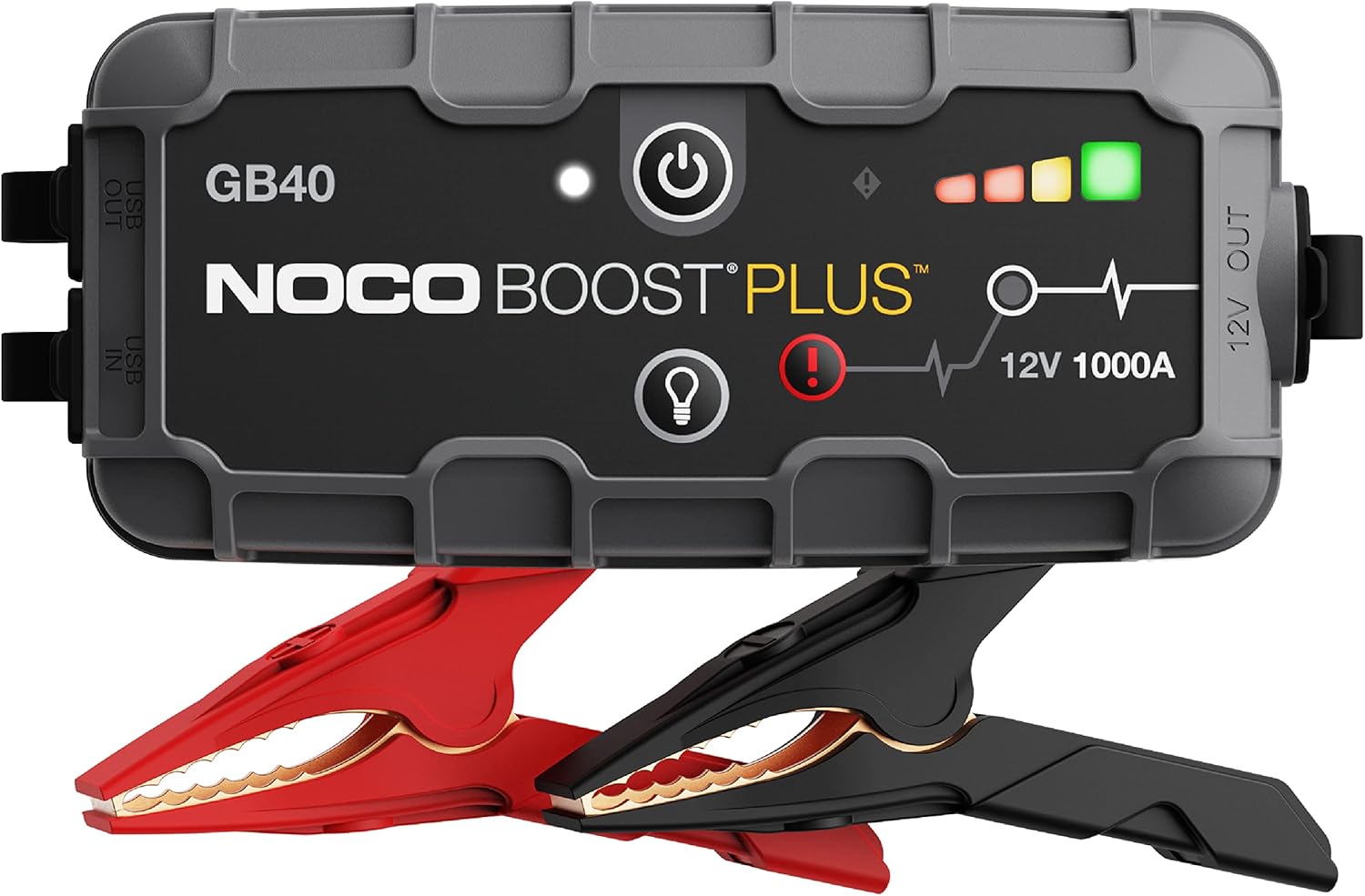
NOCO Boost Plus GB40 Jump Starter
A 1000A lithium jump starter that fits in your glovebox and works on any 12V battery. Your insurance against a dead 12V in a parking lot.
As an Amazon Associate, ThinkEV earns from qualifying purchases — at no extra cost to you.

Founder & Chief Editor
Vlad Pereira is the founder and chief editor of ThinkEV.ca, the Canadian electric-vehicle publication he writes and edits from Courtenay, British Columbia. He covers EV pricing, federal and provincial rebates, charging costs, and the Chinese manufacturers now entering Canada, from the buyer's side rather than the press-fleet side. ThinkEV is a venture of Vlad Pereira Online; his writing on health, income and the long game lives at vladpereira.com.
Frequently asked questions
How much does an electric school bus cost in Canada?
Can electric school buses handle Canadian winters?
Who makes electric school buses in Canada?
What is vehicle-to-grid (V2G) and how does it apply to school buses?
How long does it take to charge an electric school bus?
Is the Canada Infrastructure Bank funding still available for electric school buses?
How can I advocate for electric school buses in my district?
More EV & road-trip finds
Affordable upgrades worth a look — tap any to check the price on Amazon.
 ★ 12,051
Windex Electronics Screen Wipes
View on Amazon ★ 314
★ 314Mini USB LED Ambient Lamps (4-Pack)
View on Amazon ★ 4,055
6-Speed Manual Shift Knob Display
View on Amazon ★ 27,769
Car Cup Holder Coasters (4-Pack)
View on Amazon ★ 297
★ 297360-Degree One-Hand Dashboard Phone Mount
View on Amazon ★ 61
★ 61Toddler Car Seat Snack and Cup Tray
View on Amazon ★ 17,839
Qifutan Vent Phone Mount (Military-Grade Clip)
View on Amazon ★ 8,681
Chemical Guys Complete Car Wash Kit
View on AmazonRead, Plan, Then Stay Current
Explore our expert articles to understand incentives and ownership costs, use the map to pressure-test charging reality, then subscribe so new EV coverage comes straight to you.
Continue Reading
Norway's -27C Winter EV Test: Chinese Cars Beat Tesla
BYD 1.5MW Charging Canada: 400 km in Five Minutes
BYD Seagull Canada Price: The $15K-$20K EV in 2026
Canada EV Sales February 2026: The Growth Streak
Canada EV Sales January 2026: The Record Numbers