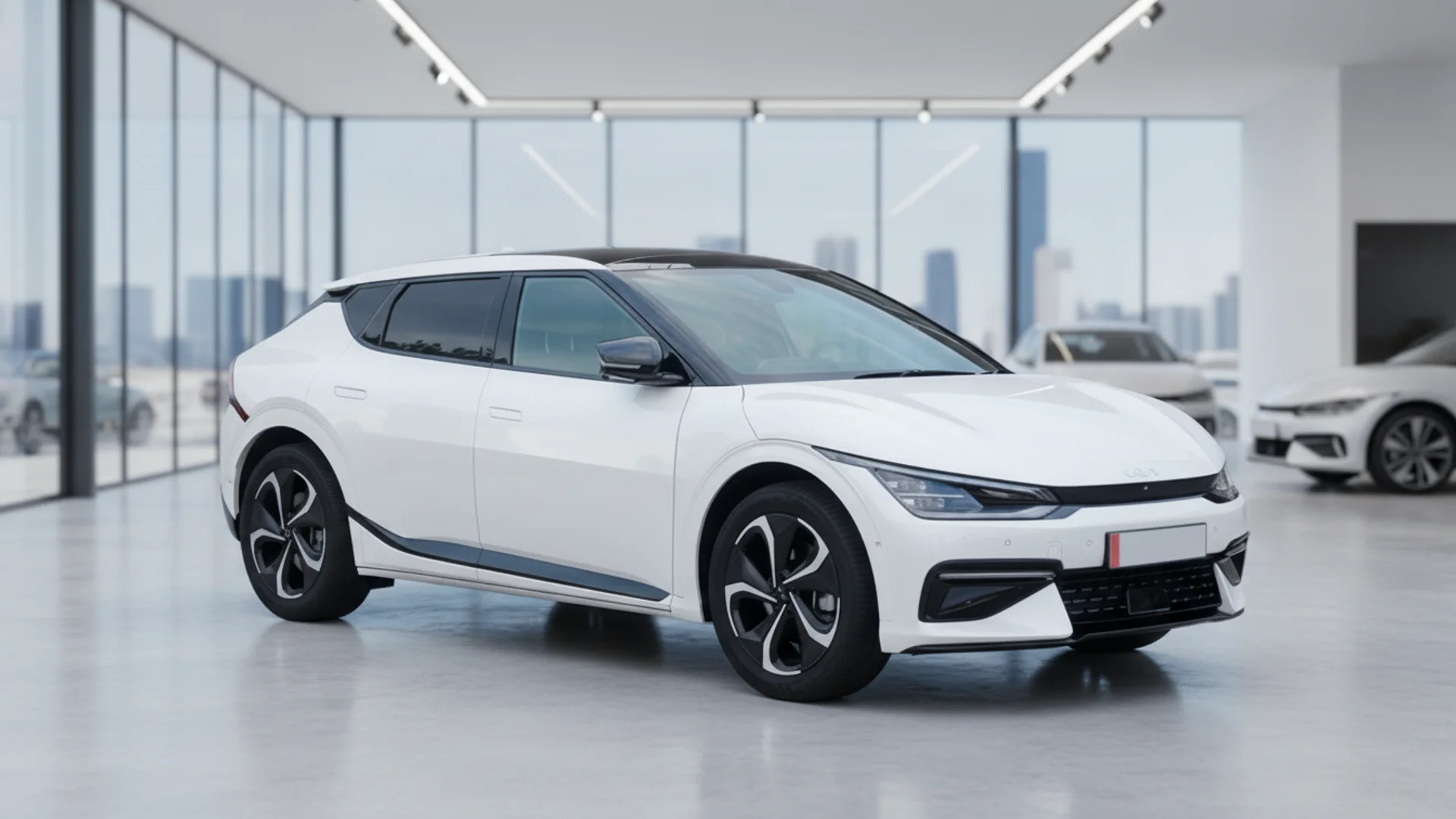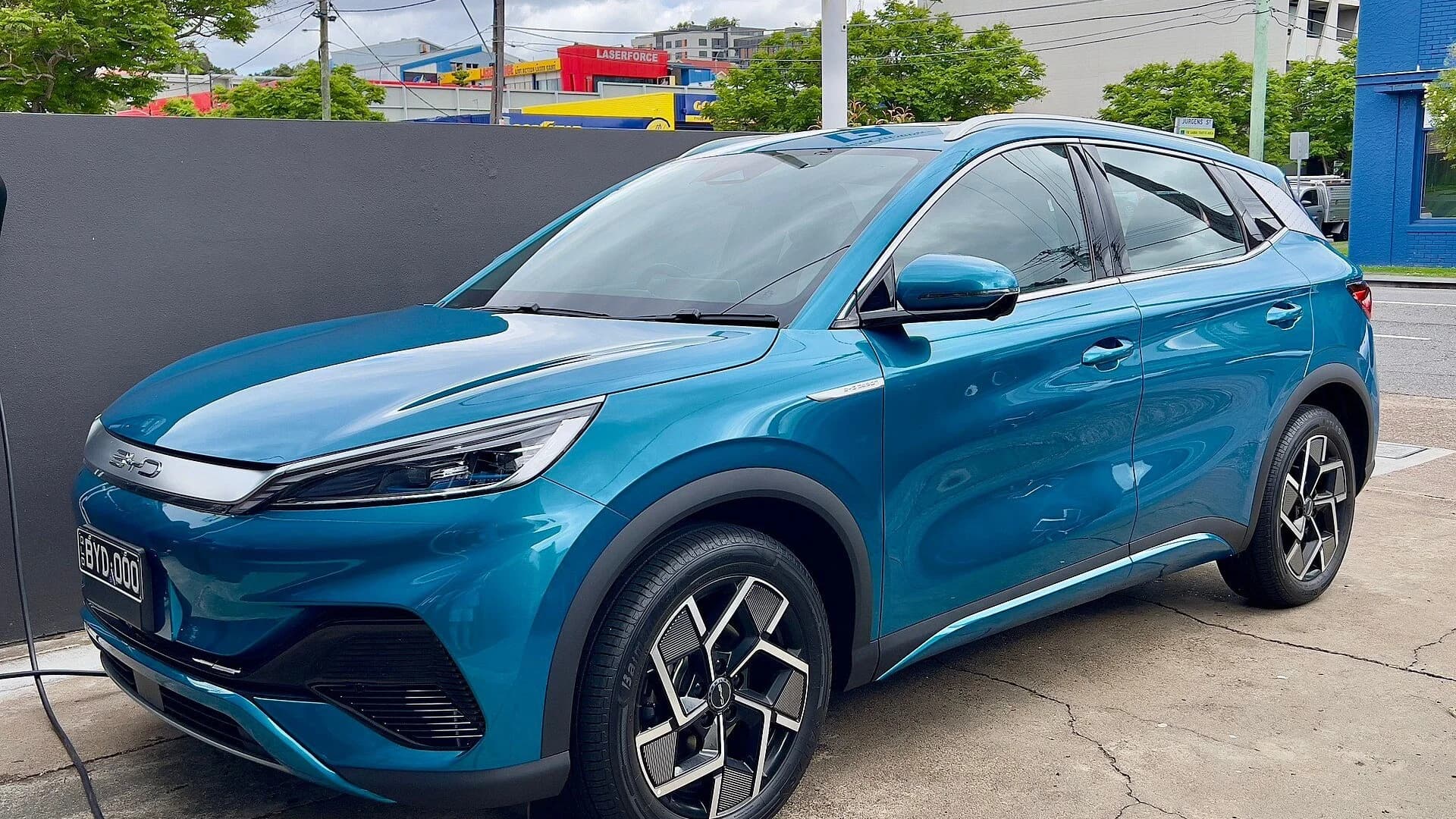
New urban buses in Chinese cities are now bought electric by default, procurement is effectively 100%, and the question of whether to replace a diesel with a battery-electric is settled municipal paperwork. The passenger-car number most outlets cite, more than half of new sales, belongs to a different market entirely, and treating the two as one curve is how analysts miss what is actually happening on the ground.
Key takeaways
- China's urban bus fleet hit 100% electric procurement years ago, the diesel debate is settled municipal paperwork.
- Delivery scooters and courier trikes electrified so quietly they don't appear in national passenger-vehicle share at all.
- Domestic Chinese brands hold roughly 80% of passenger EV volume, concentrated in urban buyers with home charging access.
- Canada's EVAP rebate treats fleet procurement and retail adoption as one curve, Chinese data argues they need separate programs.
- Long-haul trucks lag not from reluctance but from thin charging corridors and depot margins that punish range anxiety harder.
Four Vehicle Classes, Four Separate Adoption Curves
The buses are done. Procurement replacement is routine, and the diesel-versus-battery conversation is a budget line, not a strategic choice. Nobody leads with that number because a finished transition doesn't fit the S-curve chart.
Two-wheelers and the small urban-logistics vehicles electrified years ago, delivery scooters, courier trikes, the micro-EVs threading between apartment blocks. Most of them don't appear in the national passenger-vehicle share at all, which is one way for a transition to finish quietly.
Passenger cars crossed the symbolic line in 2025, with heterogeneous consumer response to technological and market change doing the structural work the policy charts give to subsidies. Domestic brands hold roughly 80% of that volume, concentrated in urban buyers with home charging and dense fast-charging networks around them. The subsidy-incidence research places direct purchase support inside a broader transition that includes battery-cost decline and product quality, subsidies alone did not make this market.
Long-haul trucks and rural light vehicles are the laggards. The refuelling economics are different, the charging corridor investment is thinner, and depot-to-depot logistics operate on margins that punish range anxiety more than retail does. This is not reluctance. It is a different problem.
Gear worth having
As an Amazon Associate, ThinkEV earns a small commission from qualifying purchases — at no extra cost to you.

Portable Level 2 EV Charger (40A, NEMA 14-50)
Throw it in the trunk and charge anywhere with a 240V outlet. 40A portable with NEMA 14-50 plug. Your road-trip insurance policy.
As an Amazon Associate, ThinkEV earns from qualifying purchases — at no extra cost to you.
Gear worth having
As an Amazon Associate, ThinkEV earns a small commission from qualifying purchases — at no extra cost to you.

Digital Tire Pressure Gauge
Low tires quietly cost 5 to 10 percent of your range. A 10-second check with an accurate digital gauge keeps every kWh on the road.
As an Amazon Associate, ThinkEV earns from qualifying purchases — at no extra cost to you.
What the Single Percentage Hides, and Why It Matters for Canada
Aggregating four markets into one national share is politically convenient and analytically useless. It flattens a finished transition (buses), a finished-but-uncounted one (two-wheelers), a mid-stage one (passenger cars), and a barely-started one (long-haul) into a single talking point.
Canada's current federal rebate, EVAP, which launched in February 2026 and pays up to $5,000 on a BEV while excluding China-built vehicles, is designed around a single retail curve. The predecessor iZEV program operated the same way. Chinese experience argues that fleet procurement (transit authorities, delivery operators) and retail adoption are governed by different economics and should be tracked, and incentivised, as separate programs. The segmentation logic applies closer to home too: Canadian city-level adoption rates diverge by nearly 10 points between Metro Vancouver and Calgary, which is a segmentation story the national number also hides.
The brand side carries the same lesson. Domestic Chinese brands now command roughly 80% of China's EV sales, and the four BYD models most often named as likely Canadian launch candidates each target a different one of these curves, not a single market. The urban bus number is effectively 100%, and it is the one nobody mentions.
Gear worth having
As an Amazon Associate, ThinkEV earns a small commission from qualifying purchases — at no extra cost to you.

PULIDIKI Car Cleaning Gel (Detailing Putty)
Press it into vents, buttons, and seams and it lifts out dust you did not know was there. Weirdly satisfying, genuinely useful.
As an Amazon Associate, ThinkEV earns from qualifying purchases — at no extra cost to you.
Gear worth having
As an Amazon Associate, ThinkEV earns a small commission from qualifying purchases — at no extra cost to you.

WixGear Magnetic Air Vent Phone Mount (2-Pack)
A magnet strong enough that your phone never flinches over potholes or rail crossings. Two in the box, one for each car.
As an Amazon Associate, ThinkEV earns from qualifying purchases — at no extra cost to you.
The Number Canada Should Track Separately in 2027
The useful metric for next year is not national EV market share. It is two numbers reported apart: fleet procurement (transit, delivery, municipal) and private retail. If NRCan continues to publish them welded together, the policy response will keep aiming at a target that has already moved. The critical-metal recycling constraint flagged in the Nature analysis arrives on top of whichever curve matures first, and right now, that is the one nobody is counting.
Gear worth having
As an Amazon Associate, ThinkEV earns a small commission from qualifying purchases — at no extra cost to you.

NOCO Boost Plus GB40 Jump Starter
A 1000A lithium jump starter that fits in your glovebox and works on any 12V battery. Your insurance against a dead 12V in a parking lot.
As an Amazon Associate, ThinkEV earns from qualifying purchases — at no extra cost to you.

Founder & Chief Editor
Vlad Pereira is the founder and chief editor of ThinkEV.ca, the Canadian electric-vehicle publication he writes and edits from Courtenay, British Columbia. He covers EV pricing, federal and provincial rebates, charging costs, and the Chinese manufacturers now entering Canada, from the buyer's side rather than the press-fleet side. ThinkEV is a venture of Vlad Pereira Online; his writing on health, income and the long game lives at vladpereira.com.
Frequently asked questions
Does China's 100% electric bus number include rural transit routes?
Why does Canada's EVAP rebate exclude Chinese-built vehicles specifically?
Are two-wheeler sales counted in China's EV market share figures?
When might long-haul electric trucks become viable in China?
Does Canada publish fleet and retail EV adoption numbers separately?
More EV & road-trip finds
Affordable upgrades worth a look — tap any to check the price on Amazon.
 ★ 15,014
Spigen Tempered Glass for Tesla Model 3/Y
View on Amazon ★ 119
Foldable Waterproof Trunk Organizer
View on Amazon ★ 392
Large Cup Holder Adapter (32-40oz)
View on Amazon ★ 47,507
HOMEXCEL Microfiber Cloths (12-Pack)
View on Amazon ★ 164
Solar-Powered LED Ambient Light
View on Amazon ★ 1,083
Crystal Push-Start Button Ring (2-Pack)
View on Amazon ★ 4,424
Sun Visor Card and Document Organizer
View on Amazon
TP-Link Kasa Smart Plug with Energy Monitoring
View on AmazonRead, Plan, Then Stay Current
Explore our expert articles to understand incentives and ownership costs, use the map to pressure-test charging reality, then subscribe so new EV coverage comes straight to you.
Continue Reading
BMW iX3 Cleared 500 Miles: The Regulatory Math
BYD Dolphin Cargo e-Van: What Fleet Buyers Get
BYD IS Aiming for Growth This Year, 13% Growth in China?
Canada's EVAP EV Rebate 2026: Every Update Tracked
New or Used EV: Which Is the Smarter Buy in 2026?