Range Energy published a white paper this week arguing its battery-powered trailer saves fleets slightly more diesel than a Tesla Semi in most modelled scenarios, without asking anyone to buy a new tractor. With diesel at record highs, the retrofit pitch lands differently than it would have a year ago.
Key takeaways
- Range Energy's October 2026 white paper claims its eTrailer beats the Tesla Semi's median savings without requiring fleet operators to buy new tractors.
- The Tesla Semi's best-case savings of up to $404,000 over 10 years require depot charging; public charging flips the math against it.
- A Tesla Semi Long Range runs $290,000 plus $60,000 in charger installation versus an eTrailer that bolts onto tractors fleets already own.
- Canada's EVAP rebate program covers passenger BEVs only, the eTrailer's Canadian TCO case runs on diesel savings alone, no federal rebate.
- If Range cannot name a 100-unit fleet customer by end of 2027, the retrofit thesis stays a white paper.
The Numbers: What Range's White Paper Actually Claims
The headline from Range's October 2026 analysis is narrower than the marketing suggests. Fleets can save money with the Range eTrailer, and can theoretically save more money with the Tesla Semi, but the numbers are relatively close in the most common scenario, and the Tesla scenarios have a much wider spread depending on what implementation you consider. The eTrailer edges ahead in the median case; the Semi wins the ceiling case, if you can build the floor it needs.
That floor is charging. If you only use public chargers rather than your own depot, the Tesla Semi will be more costly because energy will be more expensive to your fleet than if you bought it at commercial utility rates. Translate that: the Semi's best-case math assumes the fleet owns its own depot charging, which means capital on top of capital.
Electrek's TCO work earlier this year put the shape of that Semi case in dollars. The Tesla Semi saves fleets between $147,000 and $404,000 over 5 to 10 years of ownership, but those savings hinge almost entirely on what operators pay for electricity and the price of diesel, which is spiking right now. A $257,000 spread between the pessimistic and optimistic case is not a rounding error. It is the entire shape of the fleet decision.
The capital stack behind that spread is the part Range is quietly pointing at. The Tesla Semi Long Range costs $290,000 plus a $60,000 depot charger installation, compared against a new Freightliner Cascadia at $165,000, though that diesel truck price is already climbing toward $238,000 due to tariffs. Call it $350,000 per truck plus charging, versus a trailer that bolts onto a tractor the fleet already owns. The eTrailer is not trying to beat the Semi on peak savings. It is trying to beat it on the capital exposure needed to realise any savings at all. The strongest objection here is that a trailer with its own battery and motors adds tare weight to a diesel tractor that was never engineered to pull it, and every kilogram of trailer battery is a kilogram of payload the fleet cannot bill for. Range's winter data concedes the point and reframes it: the fuel burn avoided on the tractor side outweighs the payload penalty on routes where the trailer regenerates on grade and brakes, which is most of what long-haul Canadian freight actually looks like. For context on the Semi's rollout trajectory, see Tesla Semi's European launch and Einride's 500-unit order.
Gear worth having
As an Amazon Associate, ThinkEV earns a small commission from qualifying purchases — at no extra cost to you.

Lectron Level 2 J1772 Charger (40A, WiFi)
Smart WiFi charger with real-time energy monitoring. 40A / 9.6 kW, J1772 with a NEMA 14-50 plug, schedule charging right from your phone.
As an Amazon Associate, ThinkEV earns from qualifying purchases — at no extra cost to you.
Gear worth having
As an Amazon Associate, ThinkEV earns a small commission from qualifying purchases — at no extra cost to you.

TP-Link Kasa Smart Plug with Energy Monitoring
Track exactly how much electricity your Level 1 charger uses and schedule it for off-peak hours. Know your real cost per kWh.
As an Amazon Associate, ThinkEV earns from qualifying purchases — at no extra cost to you.
The Retrofit Bet Narrows the Gap
The engineering case for the Semi is real. Designing it as an EV from the outset saves weight because its battery and chassis share structural duties instead of duplicating them, and its three-motor setup disconnects the two-motor axle during cruising, leaving one efficiency-focused motor to handle constant-speed cruising, even when loaded up. The Semi packs 548 kilowatt-hours in Standard Range form and 822 kWh in the Long Range. Those are serious numbers, achieved by designing the truck as a battery first.
Range's bet is that most North American fleets will not get to buy that truck in volume this decade, and the ones that do will not have the charging to make the ceiling case real. The eTrailer sidesteps the question entirely. It also has operational miles behind it now, not just a spreadsheet: Range completed a multi-year winter testing program validating the performance of its production-ready eTrailer system, marking a key step toward commercial deployment of its trailer electrification platform. Winter validation is the one piece white papers can't fake, and the one Canadian fleet operators read first. For the broader context on why cold-weather performance decides EV economics up here, see Norway's -27°C winter EV test, where Chinese EVs outperformed Tesla.
The named comparison that matters is not Semi vs. eTrailer in isolation, it is Semi vs. eTrailer vs. the Freightliner Cascadia the fleet already parks overnight. The Cascadia at today's climbing $238,000 tariff-inflated price is the baseline the Range pitch is actually measured against, not the $290,000 Semi. Replacing a tractor costs the fleet a tractor. Hitching an eTrailer costs the fleet a trailer slot it was going to buy anyway on its normal replacement cycle. That is a different procurement conversation and a different capex line.
For Canadian fleets specifically, there is a policy gap worth naming. EVAP, the federal rebate program that replaced iZEV in February 2026, is written around passenger BEVs. Trailer-only electrification sits in a category no one has clarified. Until Transport Canada or NRCan says otherwise, the eTrailer's Canadian TCO case runs on the diesel-saved math alone, no rebate cushion.
Gear worth having
As an Amazon Associate, ThinkEV earns a small commission from qualifying purchases — at no extra cost to you.
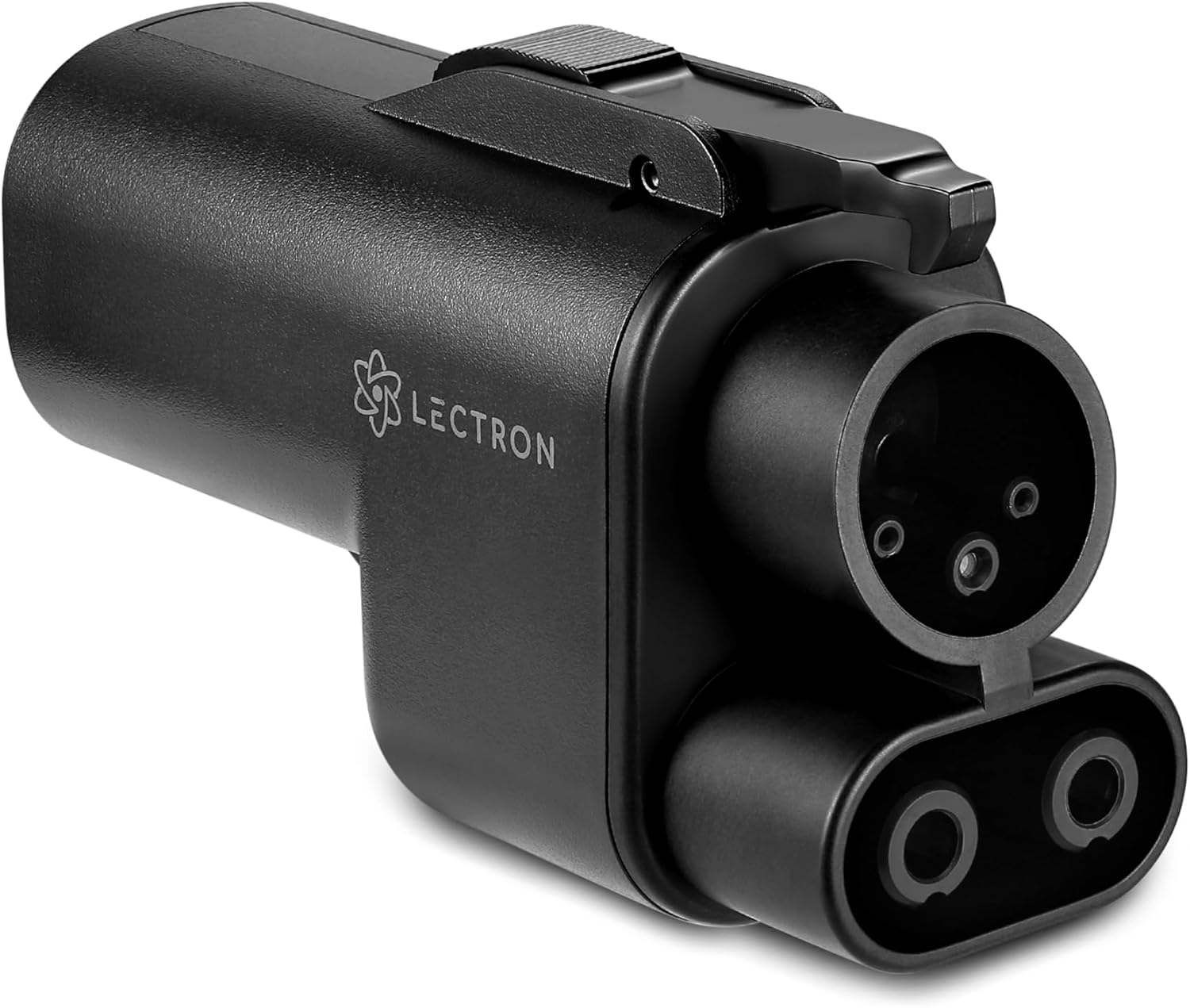
Lectron NACS to CCS Fast-Charge Adapter
Unlock every CCS fast charger for your Tesla, up to 500A DC. Never get stranded at a non-Tesla DC station again.
As an Amazon Associate, ThinkEV earns from qualifying purchases — at no extra cost to you.
Gear worth having
As an Amazon Associate, ThinkEV earns a small commission from qualifying purchases — at no extra cost to you.

Tesla Key Card Holder with AirTag Slot
Stop fishing the keycard out of your wallet, and slot an AirTag in case the car wanders off in a lot.
As an Amazon Associate, ThinkEV earns from qualifying purchases — at no extra cost to you.
Record Diesel Prices Set the Timer
At today's diesel prices, both options pay back faster than they did last year. Only one of them asks the fleet to spend $350,000 per truck to find out. The Semi is the right answer if you are building a dedicated corridor with your own depot charging. The eTrailer is the right answer if you already own fifty tractors and a yard. Those are not the same fleet.
If diesel stays above current levels through Q2 2027, the retrofit economics on the eTrailer become difficult to argue against for mid-size Canadian carriers, the ones who were never going to place a 500-unit Semi order in the first place. Two checkpoints to flag on the calendar: Range's first fleet-scale deployment contract, and whether it clears a hundred units before the end of 2027. If it does, trailer-level electrification is the near-term story and the Semi is the long one. If Range cannot name a hundred-unit fleet customer by then, the retrofit thesis stays a white paper. For the underlying engineering of why battery design decides this fight, see why battery energy density is the number that actually matters.
Gear worth having
As an Amazon Associate, ThinkEV earns a small commission from qualifying purchases — at no extra cost to you.
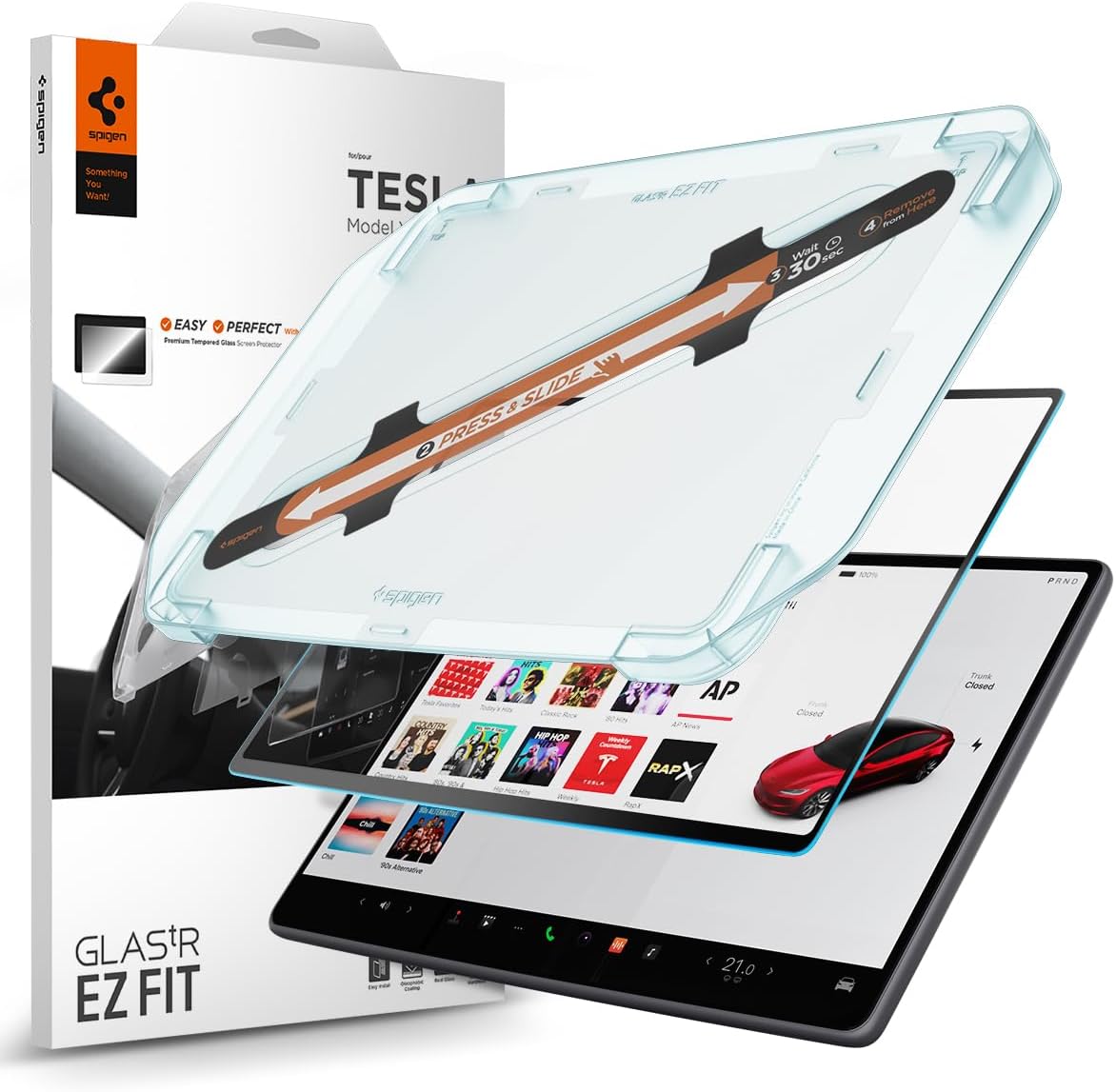
Spigen Tempered Glass for Tesla Model 3/Y
Tempered-glass protection for the touchscreen that kills fingerprints and scratches. Two minutes to install, lasts the life of the car.
As an Amazon Associate, ThinkEV earns from qualifying purchases — at no extra cost to you.

Founder & Chief Editor
Vlad Pereira is the founder and chief editor of ThinkEV.ca, the Canadian electric-vehicle publication he writes and edits from Courtenay, British Columbia. He covers EV pricing, federal and provincial rebates, charging costs, and the Chinese manufacturers now entering Canada, from the buyer's side rather than the press-fleet side. ThinkEV is a venture of Vlad Pereira Online; his writing on health, income and the long game lives at vladpereira.com.
Frequently asked questions
Does the eTrailer qualify for Canada's EVAP rebate?
How much does the eTrailer weigh down payload capacity?
Why does public charging hurt the Tesla Semi's economics?
Has the eTrailer been tested in Canadian winters yet?
What milestone should I watch to know if this thesis is real?
More EV & road-trip finds
Affordable upgrades worth a look — tap any to check the price on Amazon.
 ★ 87
Car Window Sun Shades for Kids (4-Pack)
View on Amazon ★ 68
WeatherTech FloorLiner for Tesla Model 3
View on Amazon ★ 12,051
Windex Electronics Screen Wipes
View on Amazon ★ 314
Mini USB LED Ambient Lamps (4-Pack)
View on Amazon ★ 900
Personalized Photo Car Air Freshener
View on Amazon ★ 979
Leather Headrest Purse Hook
View on Amazon ★ 297
360-Degree One-Hand Dashboard Phone Mount
View on Amazon ★ 121
Foldable Windshield Sun Umbrella
View on AmazonRead, Plan, Then Stay Current
Explore our expert articles to understand incentives and ownership costs, use the map to pressure-test charging reality, then subscribe so new EV coverage comes straight to you.
Continue Reading
China's EV Transition Is Four Different Markets, Not One
Tesla Semi Moves Into Europe, Gets Largest Order to Date
BYD Dolphin Cargo e-Van: What Fleet Buyers Get
Tesla Q3 2026 Earnings: Flat Revenue, Falling Profits

BYD Denza B8 Suspension Trick Defeats Traffic Boot in Viral Clip