Key takeaways
- The Norway El Prix winter range tests recorded a -33.1% range loss for the Zeekr 7X, placing it in the top ten performers but still representing a meaningful reduction.
- The existing 6.1% tariff under the quota system creates a workable path, but Zeekr still needs to complete Canadian certification.
- If the 6.1% quota rate proves workable, Volvo could shift EX30 supply back to Shanghai, making it meaningfully cheaper.
- The Lotus Eletre is already here at $119,900 CAD, but is not a vehicle for most buyers.
Geely bought Volvo from Ford for $1.8 billion USD in 2010, a deal that looked audacious at the time and looks visionary now. What started as a single acquisition became a global empire: Polestar, Lotus, Lynk & Co, and Zeekr all trace back to the same Hangzhou headquarters. Most Canadian buyers have no idea they're already driving a Geely product.
The Empire Behind the Brands
Geely is not a boutique Chinese automaker trying to punch above its weight. It is one of the largest automotive groups on the planet, and it has spent fifteen years acquiring recognisable Western brands to give itself a distribution network, engineering credibility, and consumer trust that purely homegrown Chinese brands have struggled to build from scratch.
The portfolio spans continents and segments. Volvo Cars, acquired in 2010 from Ford for $1.8 billion USD, a steal that looked audacious at the time and looks visionary now. Polestar, spun out as an independent EV brand in 2017. Lotus, the storied British sports car maker, majority acquired in 2017. Lynk & Co, a youth-oriented subscription brand. Proton, Malaysia's national automaker. And Zeekr, launched in 2021 as Geely's premium EV-focused sub-brand targeting exactly the buyers who might otherwise choose a BMW or Mercedes-Benz electric vehicle.
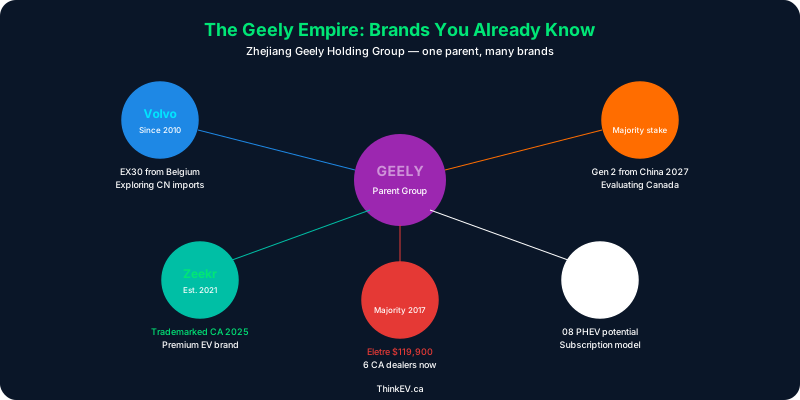
Geely is not trying to enter Canada, it is already here, in force, and has been for years. The question is how many of its remaining brands follow.
Zeekr: The Brand That Should Be on Your Radar
Zeekr trademarked its name in Canada in 2025, and that is not an administrative formality. Trademark registration is how automotive brands signal genuine commercial intent to regulators and investors. Zeekr is coming. The only open question is timing.
The vehicle most likely to lead that entry is the Zeekr 001, a fastback wagon that has earned genuine respect from European automotive journalists, which is saying something, given how reluctant that particular crowd tends to be about Chinese vehicles. It occupies BMW 3 Series pricing territory, which puts it in a range Canadian premium buyers actually consider. This is not a budget play. Geely is positioning Zeekr as a legitimate luxury alternative, not a discount option.
What the Zeekr 001 does well, it does very well. The interior quality has been consistently praised as competitive with German alternatives at similar price points. The fastback wagon body style fills a genuine gap in the Canadian market, where practical-but-stylish wagons have essentially disappeared as manufacturers abandoned the segment for crossovers. Performance figures are strong. Range figures are competitive.
Where Zeekr faces a real challenge is cold-weather performance. The Norway El Prix winter range tests recorded a -33.1% range loss for the Zeekr 7X, placing it in the top ten performers but still representing a meaningful reduction. For British Columbia's Lower Mainland, that number is acceptable. For Edmonton in January, it needs to be part of an honest conversation. You can read more about how Chinese EVs performed in that testing in our Norway Winter EV Test breakdown.
Gear worth having
As an Amazon Associate, ThinkEV earns a small commission from qualifying purchases — at no extra cost to you.

ChargePoint Home Flex Level 2 Charger (50A)
Premium 50A / 12 kW charger with the best app ecosystem. Hardwired or NEMA 14-50, with real-time energy tracking and smart scheduling.
As an Amazon Associate, ThinkEV earns from qualifying purchases — at no extra cost to you.
My read: Zeekr's Canadian timing will depend heavily on how the tariff situation evolves. The existing 6.1% tariff under the quota system creates a workable path, but Zeekr still needs to complete Canadian certification. A realistic estimate for Canadian availability would be 2027 or later.
Lynk & Co: The Subscription Experiment
Lynk & Co is the Geely brand that tries hardest to be different, and in Europe it has genuinely been different. The subscription model, pay a monthly fee, get access to a vehicle, skip the ownership complexity, found a real audience among urban professionals who wanted flexibility over asset accumulation. The Lynk & Co 08 PHEV is a well-specified plug-in hybrid that would compete directly with vehicles like the Kia Sorento PHEV or the Toyota RAV4 Prime in the Canadian market.
The subscription model that worked in Amsterdam will require significant adaptation for Canada. Canadians, particularly outside of Toronto and Vancouver, have a different relationship with vehicle ownership. The distances involved, the scarcity of urban density, and the cultural expectation of owning rather than subscribing to a car mean Lynk & Co would need a conventional sales path to gain meaningful volume.
The 08 PHEV's plug-in hybrid drivetrain is actually well-suited to the Canadian context in a way that pure electrics are not yet. Range anxiety disappears. Cold-weather concerns are significantly reduced. The vehicle can function as a conventional hybrid when charging is inconvenient and as an electric for daily commuting. If Lynk & Co enters Canada, this is likely the vehicle that makes the most sense as a first offering.
Gear worth having
As an Amazon Associate, ThinkEV earns a small commission from qualifying purchases — at no extra cost to you.

VIOFO A229 Pro 4K Dash Cam
4K front plus 2K rear with parking mode and GPS. Your silent witness for insurance claims, with always-on sentry recording while parked.
As an Amazon Associate, ThinkEV earns from qualifying purchases — at no extra cost to you.
Volvo, Polestar, and the Chinese Production Question
Volvo's relationship with Chinese manufacturing is more complicated than most buyers realise. Before the 2024 tariff escalation, Volvo was importing the EX30, its smallest and most affordable electric vehicle, from its Shanghai facility. The tariffs changed the calculation. Volvo pivoted EX30 production to its Ghent, Belgium facility to maintain Canadian market access. Our Volvo EX30 Canada review covers the full picture.
What is genuinely interesting is that Volvo is now "investigating the opportunity" for Chinese imports again. That is diplomatic language for watching the tariff situation closely and keeping options open. If the 6.1% quota rate proves workable, Volvo could shift EX30 supply back to Shanghai, making it meaningfully cheaper.
Polestar's situation is similarly nuanced. The second-generation Polestar 2 production is scheduled to begin in China in 2027, and the brand is actively evaluating Canadian availability. Polestar already has Canadian sales infrastructure, service relationships, and brand recognition. If tariff conditions allow, the path to market is shorter than any brand starting from zero.
Lotus Eletre: Already Here, Already Expensive
At $119,900 CAD, the Eletre is not a vehicle for most buyers. It is a full-size electric SUV with hypercar DNA and a price tag to match. Two demo vehicles are arriving in Canada in late summer 2026, and the current dealer network of six locations is set to expand to approximately twelve.
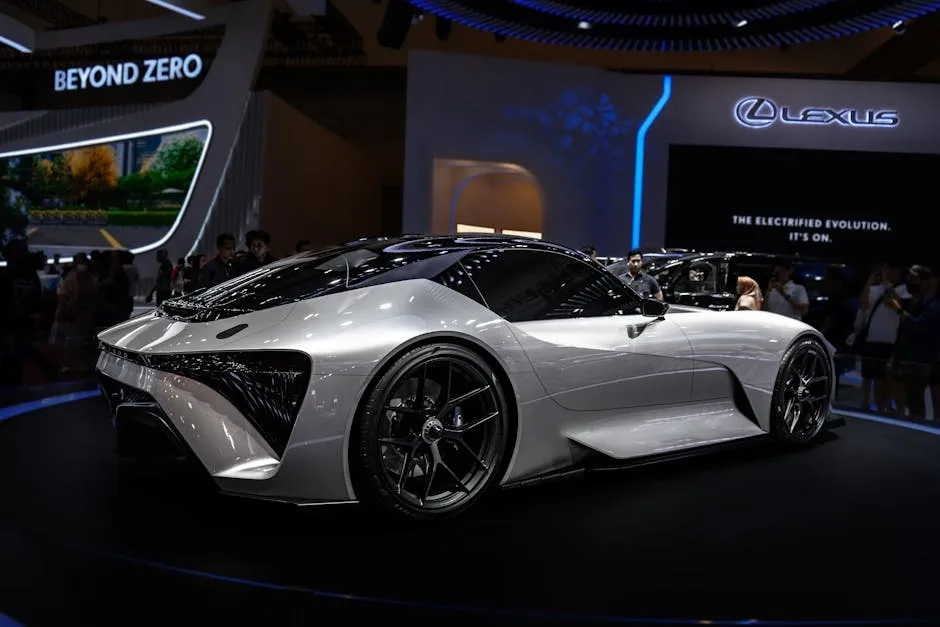
What makes the Eletre's position interesting: Lotus has brand equity that Geely did not have to build from scratch. The name carries weight with performance enthusiasts. The Eletre's performance credentials, over 900 horsepower in top specification, are legitimate enough to justify the connection.
Gear worth having
As an Amazon Associate, ThinkEV earns a small commission from qualifying purchases — at no extra cost to you.

Grizzl-E Classic Level 2 EV Charger (40A)
Canadian-made and rated for minus 40C winters. 40A / 9.6 kW, NEMA 14-50, indoor/outdoor, 24-ft cable. The charger built for Canadian weather.
As an Amazon Associate, ThinkEV earns from qualifying purchases — at no extra cost to you.
The Eletre also matters because it establishes Geely's ability to operate at the ultra-premium end of the Canadian market without the tariff complications that affect its more mainstream brands.
The Competitive Advantage: Shared Platforms and Engineering at Scale
What makes Geely genuinely formidable is not any single brand or vehicle, it is the engineering infrastructure shared across all of them. The SEA (Sustainable Experience Architecture) platform underpins the Zeekr 001, influences the Volvo EX30, and feeds development knowledge into other brands across the group. When Geely invests in battery thermal management, that knowledge does not stay inside one brand's engineering team.
This platform sharing creates a compounding advantage. Every dollar Geely invests in battery technology, software development, or manufacturing efficiency gets amortised across multiple brands and multiple markets. Zeekr and Lynk & Co vehicles are not just rebranded Volvos with different badges. They represent genuine engineering investment, developed on platforms that have been stress-tested across millions of kilometres of real-world use.
For the Canadian buyer considering a Geely-group EV, this shared platform story explains why vehicles like the Zeekr 001 feel sophisticated beyond what their brand recognition might suggest. See our Chinese EV Brands Guide for a broader view.
What Canadian Buyers Should Know
The most important thing to understand about the Geely empire's Canadian expansion is that the tariff environment is the primary variable, not technology readiness, not consumer interest, not dealer network capacity.
For Canadian buyers in the market for a premium EV in 2026, the practical advice is straightforward. If you need a vehicle now, Polestar and Volvo give you Geely engineering with established service networks and no tariff complication. If you can wait twelve to eighteen months, the Zeekr and Lynk & Co options may add genuine competition. And if you are in the ultra-premium bracket, the Lotus Eletre is real, it is arriving, and it is worth taking seriously.
Geely's empire is already in Canada, it has been since 2010. The remaining brands are closing the distance.
Gear worth having
As an Amazon Associate, ThinkEV earns a small commission from qualifying purchases — at no extra cost to you.

PULIDIKI Car Cleaning Gel (Detailing Putty)
Press it into vents, buttons, and seams and it lifts out dust you did not know was there. Weirdly satisfying, genuinely useful.
As an Amazon Associate, ThinkEV earns from qualifying purchases — at no extra cost to you.
Related Reading
- Chinese EV Brands Coming to Canada: Complete Guide 2026, The full competitive field
- Volvo EX30 Canada Review 2026, How the EX30 landed in the Canadian market
- Norway Winter EV Test: Chinese EVs Beat Tesla, Cold weather range data from the El Prix test
Gear worth having
As an Amazon Associate, ThinkEV earns a small commission from qualifying purchases — at no extra cost to you.

WixGear Magnetic Air Vent Phone Mount (2-Pack)
A magnet strong enough that your phone never flinches over potholes or rail crossings. Two in the box, one for each car.
As an Amazon Associate, ThinkEV earns from qualifying purchases — at no extra cost to you.

Founder & Chief Editor
Vlad Pereira is the founder and chief editor of ThinkEV.ca, the Canadian electric-vehicle publication he writes and edits from Courtenay, British Columbia. He covers EV pricing, federal and provincial rebates, charging costs, and the Chinese manufacturers now entering Canada, from the buyer's side rather than the press-fleet side. ThinkEV is a venture of Vlad Pereira Online; his writing on health, income and the long game lives at vladpereira.com.
Frequently asked questions
Is Zeekr related to Volvo?
When will Zeekr be available in Canada?
Is the Volvo EX30 made in China?
What is the Lotus Eletre?
Does Geely own Polestar?
More EV & road-trip finds
Affordable upgrades worth a look — tap any to check the price on Amazon.
 ★ 68
★ 68WeatherTech FloorLiner for Tesla Model 3
View on Amazon ★ 4,050
Touchscreen Mist Screen Cleaner Kit
View on Amazon ★ 419
★ 419RGB Car Interior LED Strip Light
View on Amazon ★ 4,626
HoogaLife Hanging Car Diffuser (2-Pack)
View on Amazon ★ 865
★ 865Collapsible Trunk Organizer
View on Amazon ★ 848
★ 848Coiled USB-C to USB-C Car Cable (2-Pack)
View on Amazon ★ 87
★ 87Car Window Sun Shades for Kids (4-Pack)
View on Amazon ★ 268
★ 268Anti-Slip Leather Steering Wheel Cover
View on AmazonRead, Plan, Then Stay Current
Explore our expert articles to understand incentives and ownership costs, use the map to pressure-test charging reality, then subscribe so new EV coverage comes straight to you.
Continue Reading
Denza Z9GT Spotted in Melbourne: 1000km Range, 9-Min Charge
MG Motors Philippines Launches S5 EV at ₱1.4M

Tesla Confirms Next-Gen Roadster Reveal October 1 in Waco

BYD Denza Z9 GT Adds $50K Tri-Motor Trim to China's Top GT
Audi A2 e-tron: 401-Mile Range, ~$45,000 Entry Point