Key takeaways
- The Charger Daytona R/T starts around $80,000 CAD.
- The Model 3 Performance lands at $69,990 CAD.
- That is a $10,000 gap, not a chasm, but not trivial either.
- It has a 15.4-inch touchscreen, over-the-air updates, and a 0-100 km/h time of 3.1 seconds that will embarrass almost anything you line up next to at a stoplight.
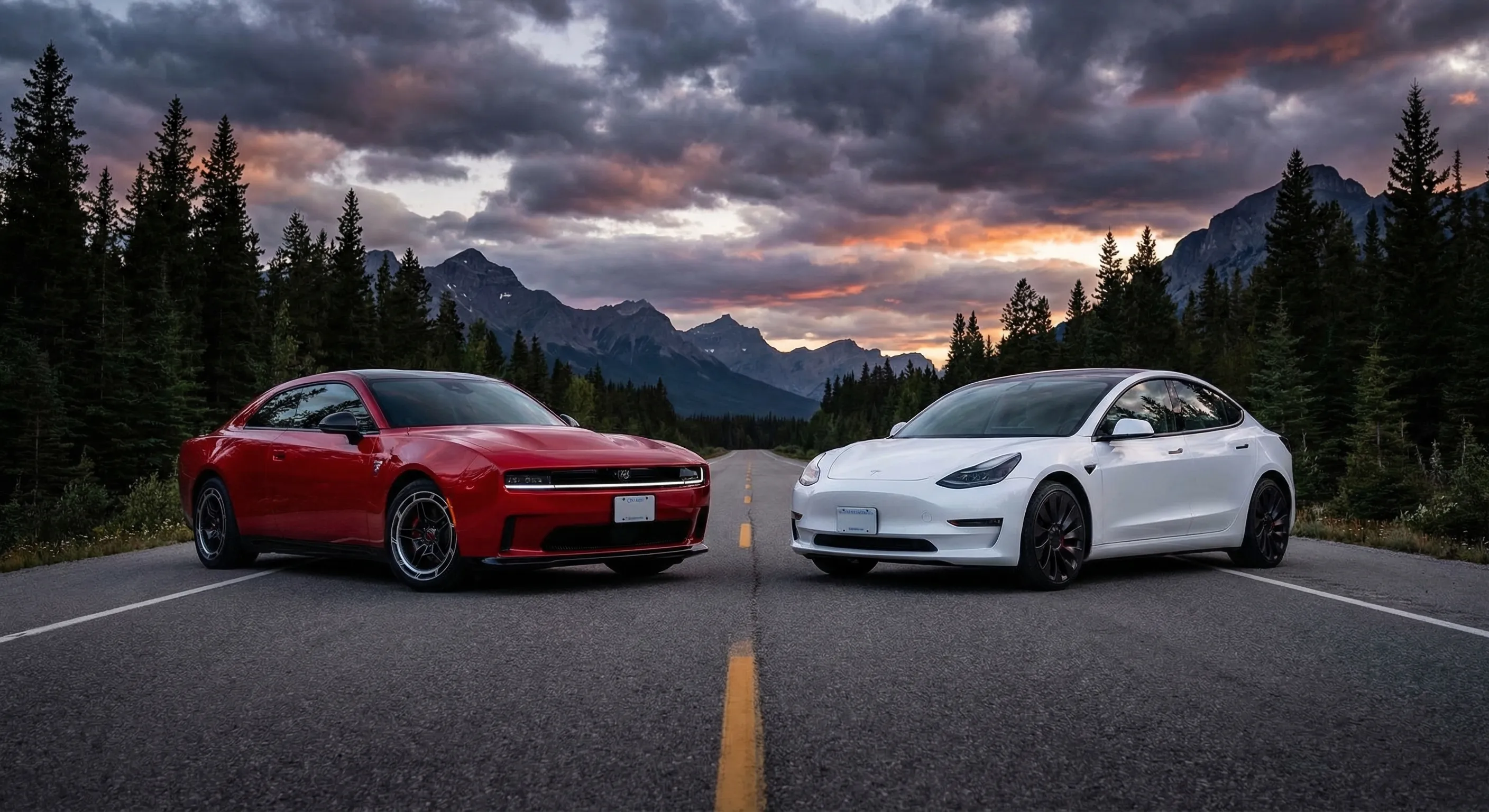
Two cars. Two completely different ideas about what a fast electric vehicle should be. On one side, you have the Dodge Charger Daytona, a car that exists to remind you that Dodge survived the electrification mandate, and it did not go quietly. Wide-body stance, a synthetic exhaust note called Fratzonic Chambered Exhaust, and enough American attitude to make your neighbours come out of their garages. On the other side sits the Tesla Model 3 Performance, a car that is, at this point, a known quantity. Efficient. Fast. Loaded with software. Lower priced. The kind of car that keeps getting better after you buy it because Tesla pushes updates while you sleep.
I am not writing this as someone who is going to crown one car and dismiss the other. I am writing this as someone who cares about how much things actually cost, how they actually perform in a Canadian winter, and whether the premium you are paying buys you something real or just a feeling. Both of these cars are impressive. Both have real weaknesses. And for most Canadian buyers, the math on one of them is dramatically more favourable, but it depends entirely on what you are asking from the car.
Let me put the decision frame right up front, because I know some of you are here for the short answer: If you are buying with your head, the Model 3 Performance wins on almost every practical axis, range, charging infrastructure, total cost of ownership, and all-weather capability. If you are buying with your gut, if you want a car that turns heads, makes noise by choice, and feels like a departure from the cold efficiency of Silicon Valley, the Charger Daytona is a more interesting purchase than its price tag initially suggests, and it is getting better as Dodge figures out its EV positioning.
Here is the full picture.
THE DECISION FRAME
This comparison is relevant because these two cars sit close enough in the market that cross-shopping is real. The Charger Daytona R/T starts around $80,000 CAD. The Model 3 Performance lands at $69,990 CAD. That is a $10,000 gap, not a chasm, but not trivial either. Both are fast, both are electric, both are aimed at buyers who want more than basic transportation.
Where they diverge is philosophy.
Dodge built the Charger Daytona to feel like a Charger, not to feel like an EV. The entire design brief was "muscle car that happens to be electric." They gave it a 126 dB synthetic exhaust note. They gave it a six-speed eRupt transmission, a multi-speed transmission on an electric car, which is engineering that exists entirely for feel and driver engagement rather than efficiency. The Charger Daytona is a car that knows it needs to court the car community, the muscle car enthusiasts, the people who would normally never consider going electric. It is doing that job.
Tesla built the Model 3 Performance to be the fastest, most efficient, most connected version of a practical electric sedan. It does not make noise. It does not have a fake transmission. It has a 15.4-inch touchscreen, over-the-air updates, and a 0-100 km/h time of 3.1 seconds that will embarrass almost anything you line up next to at a stoplight. It is also cheaper, gets significantly more range, and sits on the most reliable fast-charging network in North America.
The choice between them is not about which one is better as a piece of engineering. Both are excellent. It is about which one fits your life, your driving habits, your budget, and your appetite for compromise.
Here is the short version:
- Buy the Model 3 Performance if you want maximum range, the Supercharger network, AWD standard, lower operating costs, and a car that is still getting software improvements in year three.
- Buy the Charger Daytona if you want something that makes you feel something beyond mere fast transportation, you can handle rear-wheel drive in winter with proper tires, and the $10,000 premium over the Model 3 Performance does not sting your budget.
Neither recommendation is wrong. But one of them is the financially obvious choice for most Canadians.
PRICE AND VALUE: WHAT YOUR DOLLAR ACTUALLY BUYS
The Dodge Charger Daytona R/T starts at approximately $80,000 CAD. That is the entry-level RWD version with 496 horsepower and the standard Fratzonic exhaust. If you want the Scat Pack (more power, dual motors, AWD), prices climb higher, Dodge has not fully published Canadian Scat Pack pricing but expect north of $90,000. The SRT Banshee, the range-topper with 670 horsepower, is positioned as a halo car and will price accordingly, well above $100,000 CAD when it arrives.
The Tesla Model 3 Performance lands at $69,990 CAD as of 2026 pricing. It comes with AWD standard, 460 horsepower across dual motors, 528 km of NRCan-rated range, and the full Supercharger network access baked in. There is no upgrade needed to get the capable version, this is the capable version.
Neither car qualifies for the federal iZEV/EVAP rebate. The $55,000 base price cap for the program eliminates both vehicles from eligibility. In provinces like BC or Quebec that have their own provincial rebate programs, both cars also miss the cut at these price points. You are paying full sticker on both.
Let me put the price gap in five-year terms, because that is how cars should be evaluated.
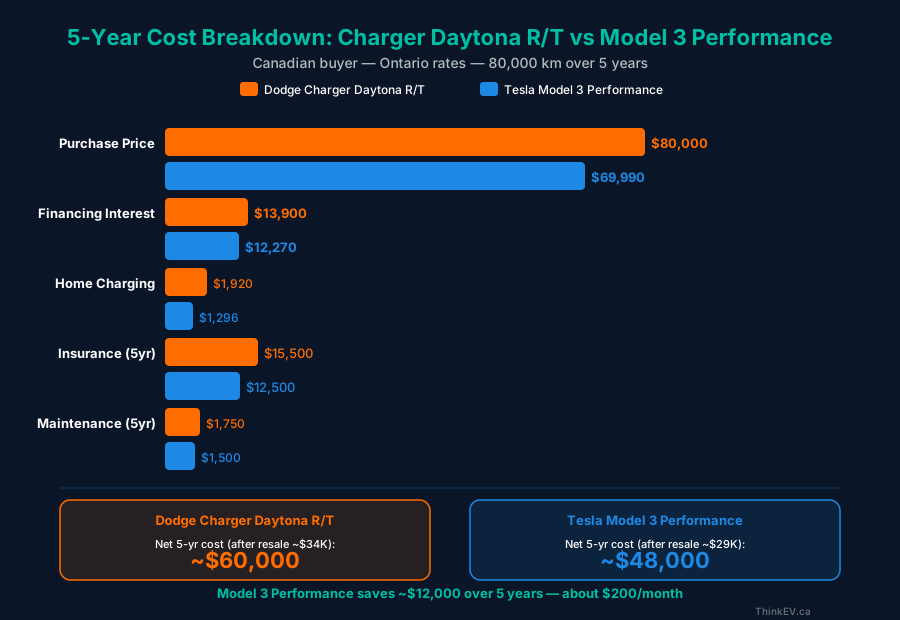
Estimated five-year cost of ownership:
-
Dodge Charger Daytona R/T (~$80,000):
- Purchase price: $80,000
- Financing at 6.5% over 60 months: approximately $1,565/month, total interest ~$13,900
- Home charging (80,000 km at ~20 kWh/100 km, at $0.12/kWh average): ~$1,920
- Insurance (higher MSRP, RWD, Dodge muscle car history): estimate $2,800-$3,400/year Ontario, lower elsewhere
- Maintenance (electric, minimal): ~$1,500-$2,000 over five years
- Resale at five years: Dodge EVs are newer to market, residual values less established, estimate 40-45% of MSRP, so approximately $32,000-$36,000
- Net five-year cost (purchase minus resale, plus interest plus operating): approximately $55,000-$65,000
-
Tesla Model 3 Performance (~$69,990):
- Purchase price: $69,990
- Financing at 6.5% over 60 months: approximately $1,371/month, total interest ~$12,270
- Home charging (80,000 km at ~13.5 kWh/100 km, at $0.12/kWh average): ~$1,296
- Insurance: $2,200-$2,800/year Ontario, lower elsewhere
- Maintenance: ~$1,200-$1,800 over five years
- Resale at five years: Tesla holds value well in Canada, estimate 38-45% of MSRP, so approximately $26,600-$31,500
- Net five-year cost: approximately $44,000-$52,000
The Model 3 Performance's five-year advantage is roughly $11,000-$13,000 over the Charger Daytona. That is real money. On a monthly basis over five years, it is about $185-$215 per month that stays in your account.
The Daytona needs to deliver $185/month worth of additional satisfaction to justify itself. For some buyers, the experience absolutely does. The question is whether you are one of them.
One practical note for Canadian buyers: Check your province's insurance regulations carefully. Ontario's insurance rates for performance cars, especially American muscle, can run significantly higher than quoted national averages. The Charger Daytona's classification and MSRP will likely put it in a higher insurance tier than the Model 3 Performance in most provinces. Get actual quotes from your insurer before comparing costs on paper.
PERFORMANCE: HOW THE NUMBERS FEEL ON THE ROAD
On paper, the Tesla Model 3 Performance is faster. Its 3.1-second 0-100 km/h time puts it ahead of the Charger Daytona R/T's approximately 4.0-second sprint. The Model 3 Performance hits a governed top speed of 261 km/h. The Daytona R/T tops out around 248 km/h.
But here is where the story gets more interesting than the spec sheet.
The Model 3 Performance delivers its performance the way all modern Teslas do: instantaneous, linear, and utterly without drama. You put your foot down, and the car moves forward with force. It is impressive. The first time you do it, and the fifth time, and probably the fiftieth. But it is also somewhat predictable in character, the torque comes, the car goes, the tyres sometimes howl in anger. It is the performance of a very well-engineered appliance.
The Charger Daytona does something different. Dodge engineered a six-speed eRupt transmission for this car. An electric motor does not need a multi-speed transmission, it makes full torque from zero RPM, and most EVs use a single-speed reduction gear because it is simpler, lighter, and more efficient. Dodge added gears anyway, because their target buyer wants to feel gear changes. They want the rhythm of a transmission. They want to hear the Fratzonic exhaust bark on each upshift.
The result is a performance car that feels less efficient but considerably more theatrical. Whether that is a positive or a negative depends entirely on what you came to the car to get.
Acceleration feel comparison:
-
Model 3 Performance: Smooth, brutal, immediate. Full torque from a standstill. The sensation of being firmly pushed into your seat, then arriving at speed before you've quite processed what happened. Very precise. No surprises.
-
Charger Daytona R/T: Weighted, building, with gear changes punctuating the experience. The Fratzonic exhaust system generates a sound that is genuinely convincing as a muscle car exhaust, it is not a speaker playing a recording, it is a resonating chamber tuned to the eRupt transmission's torque output. It does not sound like a Hellcat. But it sounds like something, and that something is more emotionally engaging than silence.
Handling:
The Model 3 Performance benefits from Tesla's structural battery pack, the battery is part of the car's structure, giving it exceptional torsional rigidity. Combined with a low centre of gravity (the heaviest component is in the floor), it handles with confidence and precision. The Track Pack option adds performance-tuned suspension, stickier Michelin Pilot Sport tires, and higher cooling capacity for sustained track use. It is a capable performance car in the corners.
The Charger Daytona is a large, heavy vehicle by electric car standards. Its dimensions are close to the outgoing ICE Charger, this is not a compact sports sedan, it is a full-size muscle car with an EV drivetrain. The R/T's rear-wheel drive configuration means you need to respect it in low-traction conditions, but on a dry piece of road it behaves with classic American muscle character: confidence at the rear, willingness to rotate, and a chassis that rewards drivers who understand how to use rear-wheel drive.
Track use:
For track days, the Model 3 Performance with the Track Pack is probably the more developed tool. Tesla's thermal management is excellent and the car sustains performance across multiple hot laps without the kind of power reduction that some EVs suffer. The Charger Daytona's track credentials are less established, it is early days for this platform, and the eRupt transmission introduces mechanical complexity that pure single-speed EVs do not have.
For street use, both cars are more than fast enough. The Model 3 Performance will win almost every stoplight confrontation it enters. The Daytona will make more people look up from their phone to watch you leave.
RANGE AND BATTERY: THE PRACTICAL CASE
Here is where the Model 3 Performance builds a commanding lead that the Charger Daytona has real trouble matching.
Official NRCan-rated range:
- Tesla Model 3 Performance: 528 km
- Dodge Charger Daytona R/T: 402 km
That is a 145 km difference. In the EV world, that gap is significant. It is the difference between a Kelowna-to-Vancouver direct run (395 km) being comfortable or requiring a charging stop. It is the difference between a Toronto-to-Ottawa drive (450 km) fitting in one charge or not.
The gap comes from several factors:
First, efficiency. The Model 3 Performance uses approximately 16.4 kWh/100 km according to NRCan. The Charger Daytona R/T uses approximately 25.0 kWh/100 km, nearly double. The Daytona is a large, heavy vehicle with a muscle car drag profile. It was not designed to be efficient; it was designed to be dramatic. The eRupt multi-speed transmission also adds drivetrain losses that a single-speed EV does not have.
Second, battery size versus energy output. The Daytona R/T has a 100.5 kWh usable battery. The Model 3 Performance has an 82 kWh battery. Despite the Daytona having a larger battery by 22%, the Tesla gets 36% more range from it. That efficiency delta is the whole story.
Real-world range, summer:
At highway speeds in warm weather:
- Model 3 Performance: Expect 460-510 km of real range at 110 km/h, more if you drive conservatively.
- Charger Daytona R/T: Expect 330-370 km of real range at 110 km/h. The big body and large frontal area eat into range at highway speeds quickly.
Real-world range, Canadian winter:
This is where it gets serious for drivers in Alberta, Saskatchewan, Manitoba, Ontario north of the GTA, or anywhere in Atlantic Canada or Quebec that sees regular temperatures below -15°C.
Cold weather reduces EV range by 20-40% depending on temperature and heating load. At -20°C:
- Model 3 Performance: Expect 330-410 km. The heat pump system is mature, Tesla has been refining this since the Model Y in 2021. Cold soak affects the battery, but preconditioning before a drive minimizes the impact.
- Charger Daytona R/T: Expect 240-310 km. Starting from a lower summer range, the winter reduction brings it to a point where drivers in colder climates will need to plan charging stops on any trip longer than 250 km.
What these numbers mean for actual Canadian road trips:
Let us say you want to drive from Calgary to Banff and back (180 km total), then continue on to Canmore and Lake Louise. In summer, both cars handle this easily with charge to spare. In a January deep freeze, the Model 3 Performance does it without stress. The Daytona R/T does it, but you are watching the range display more carefully.
For a Toronto-to-Kingston run (260 km), both cars handle it in either season. For Toronto to Ottawa (450 km), the Model 3 Performance does it in summer without a charging stop. In winter it probably needs a quick top-up. The Charger Daytona R/T needs a charging stop in summer and possibly two in winter.
The range advantage of the Model 3 Performance matters more as trips get longer and temperatures get lower. For a daily commuter in a city who charges at home every night, both cars are fine. For someone doing regular inter-city drives in a cold climate, the Tesla's range advantage is a genuine quality-of-life difference.
CHARGING: THE INFRASTRUCTURE REALITY
This section will be direct because the infrastructure picture is clear.
The Supercharger network versus everything else:
Tesla operates approximately 700 Supercharger stalls across Canada. They are on major corridors, they are reliable (uptime above 95%), they are fast (up to 250 kW peak), and the car's navigation preconditions the battery on the way to the station so you arrive ready to accept maximum charge rate. You do not need a charging app, you do not need a credit card, you do not need to troubleshoot. You plug in, the car handles the session, and you get on with your stop.
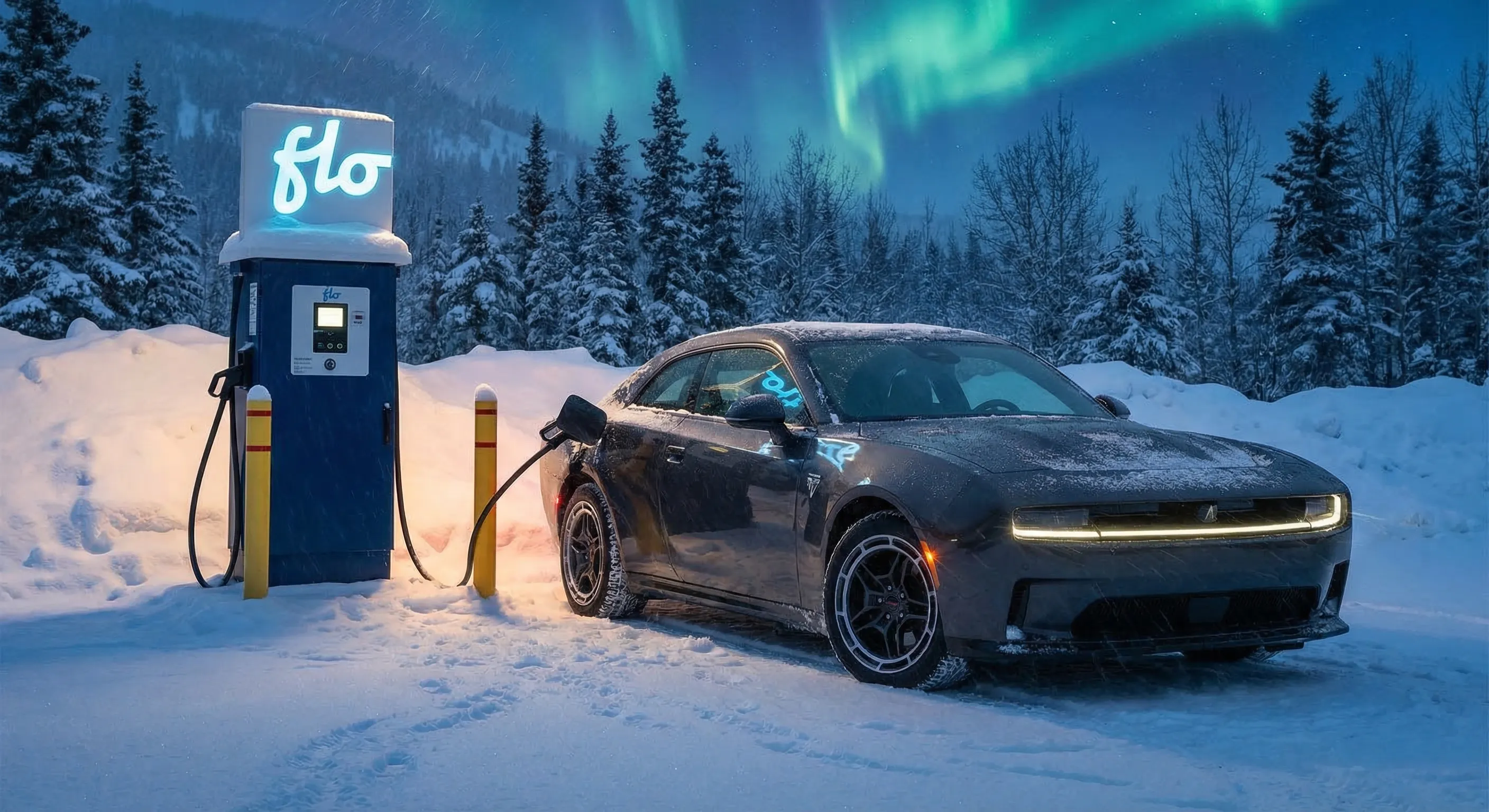
The Charger Daytona uses CCS (Combined Charging System) and charges at up to 150 kW peak. The CCS network in Canada includes Electrify Canada, Petro-Canada Fast Charge, Flo, ChargePoint, and various provincial and municipal networks. The coverage is improving, but it is not the Supercharger network. Reliability varies significantly by station and operator. Finding a CCS station offline, with a software error, or occupied by a queue is more common than on the Supercharger network.
Charging speed in practice:
- Tesla Model 3 Performance at 250 kW Supercharger: 10-80% in approximately 22-25 minutes. At a 150 kW Supercharger (V2), 10-80% in approximately 35-40 minutes.
- Dodge Charger Daytona R/T at 150 kW CCS: 10-80% in approximately 40-50 minutes. The 100.5 kWh battery is large, but 150 kW is the max, and Canadian Electrify Canada stations often deliver below their rated peak due to power sharing between stalls.
Home charging:
Both cars charge on Level 2 (240V) at home. A 48-amp Level 2 charger like the Grizzl-E delivers approximately 11.5 kW. Full charge from near-empty:
- Model 3 Performance (82 kWh): approximately 7-8 hours
- Charger Daytona R/T (100.5 kWh): approximately 9-10 hours
Both charge overnight from any normal driving day. Daily commuters who plug in every night will not notice any practical difference. The charging gap only manifests on road trips.
Charging cost at home (monthly estimate for average Canadian driver):
-
British Columbia (BC Hydro): ~$0.10-0.13/kWh
- Model 3 Performance (1,500 km/month, 16.4 kWh/100 km): ~$25-$32/month
- Charger Daytona R/T (1,500 km/month, 25 kWh/100 km): ~$37-$49/month
-
Ontario (off-peak TOU rate ~$0.076/kWh):
- Model 3 Performance: ~$19-$23/month
- Charger Daytona R/T: ~$28-$36/month
-
Alberta (regulated rate ~$0.14-$0.17/kWh):
- Model 3 Performance: ~$34-$42/month
- Charger Daytona R/T: ~$53-$64/month
The Daytona's energy cost at home is roughly double the Model 3 Performance's on a per-kilometre basis. Over five years and 120,000 km, that difference adds up to approximately $1,500-$3,500 depending on your provincial electricity rate. It is not the biggest number in the ownership equation, but it is consistent and real.
Gear worth having
As an Amazon Associate, ThinkEV earns a small commission from qualifying purchases — at no extra cost to you.

Grizzl-E Classic Level 2 EV Charger (40A)
Canadian-made and rated for minus 40C winters. 40A / 9.6 kW, NEMA 14-50, indoor/outdoor, 24-ft cable. The charger built for Canadian weather.
As an Amazon Associate, ThinkEV earns from qualifying purchases — at no extra cost to you.
DESIGN: MUSCLE CAR PRESENCE VS AERODYNAMIC EFFICIENCY
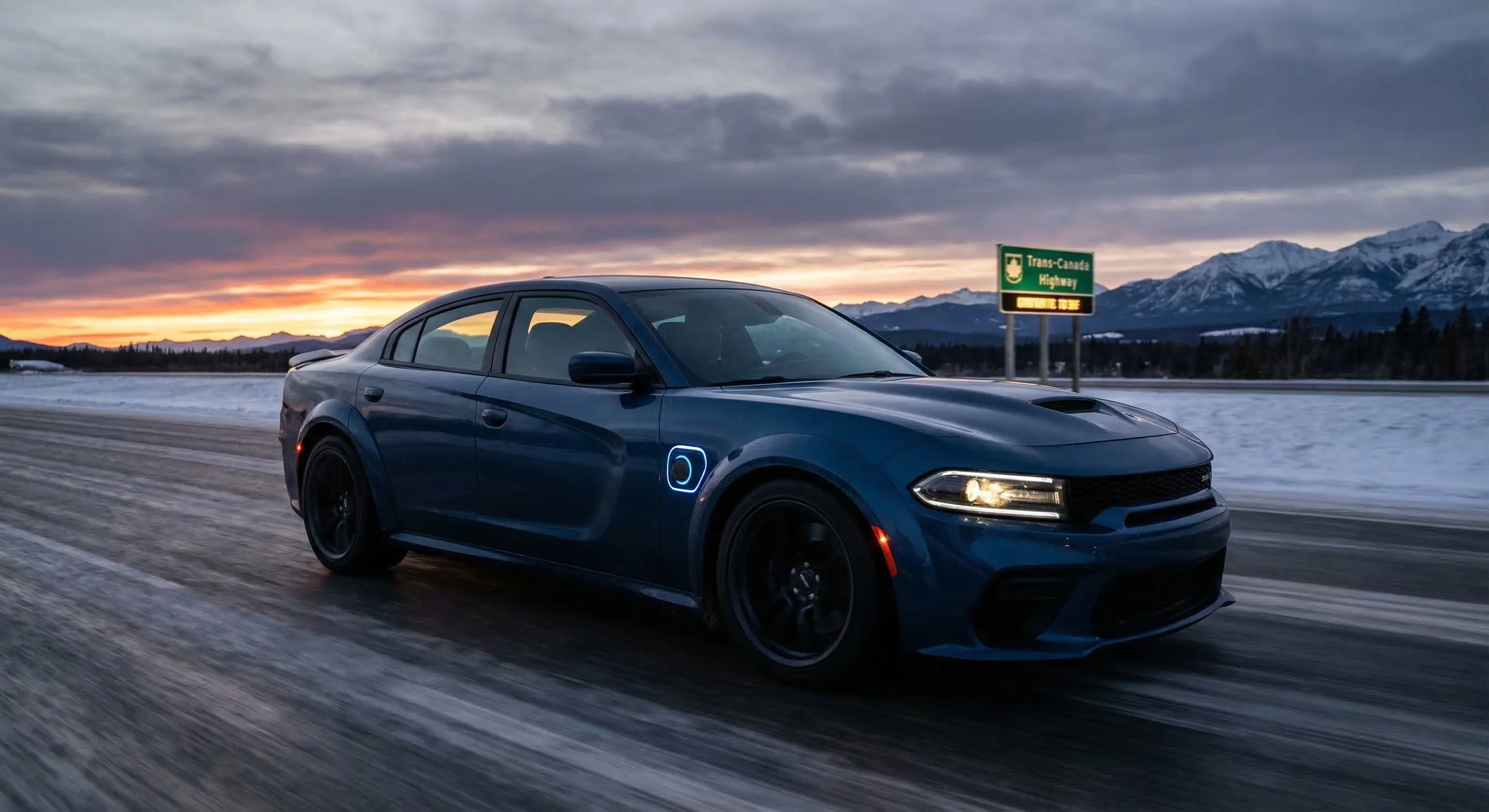
Let me tell you what both cars are trying to do, because that frames everything else about how they look.
The Dodge Charger Daytona is built around a single principle: it must feel like a Charger. Not a Tesla competitor that happens to share the Charger name for brand purposes, but a genuine continuation of the Charger legacy in electric form. Dodge spent significant engineering resources making this car wide, low, aggressive in its proportions. The long hood. The fastback roofline. The broad rear haunches. The front fascia designed to echo the classic 1969 Daytona with its aggressive front splitter and wide grille opening. This car knows what it is and wears it aggressively.
The result is a vehicle that commands attention in parking lots and on the street. People stop. People photograph it. People ask what it is. If you value that kind of social gravity from a car, the Daytona delivers it every single day. You are never invisible in this thing.
The Daytona's drag coefficient is approximately 0.34 Cd. For comparison, a modern half-ton pickup truck runs around 0.36 Cd. The Charger's muscular proportions are not aerodynamically efficient. That is a deliberate design choice. Dodge traded range for presence, and they did it knowingly.
The Tesla Model 3 Performance, by contrast, has a drag coefficient of approximately 0.219 Cd. It is one of the most aerodynamically efficient production cars sold in Canada at any price point. The smooth underbody, the flush-mount door handles, the carefully optimized roofline, everything about the Model 3's shape is in service of moving through air cleanly. The result is a car that blends into traffic competently. It does not announce itself. The Performance variant's red brake callipers and specific badging are subtle signals that mean something only to people who pay attention. Everyone else sees a nice-looking sedan.
Interior contrast:
The Charger Daytona's interior leans into muscle car aesthetics with a modern EV twist. Wide supportive seats, a steering wheel that looks muscular rather than minimalist, and a driver-focused cockpit that communicates "this is a driver's car." The digital gauges and infotainment are integrated into a design that still feels deliberately American, big, confident, purposeful. It is not BMW's iDrive level of material quality, but it is a comfortable, engaging space that fits the car's personality.
The Model 3 Performance's interior is what it is: clean to the point of clinical. A 15.4-inch screen handles almost everything. The cabin is quiet, the materials in the Performance trim are improved over base Model 3 variants, and the overall sense is of a very well-built technology appliance. It is not warm or characterful in the way the Daytona is. It is precise, functional, and increasingly familiar to the large number of Canadians who have driven a Tesla at this point.
One practical note: the Charger Daytona's interior is large. This is a big car, and the rear seat space reflects that. Adults fit comfortably in the back seat with real legroom. The Model 3 Performance's rear seat is more compact, fine for most adults, but noticeably smaller on longer journeys.
Cargo space:
- Model 3 Performance: approximately 594 litres trunk + 88 litres frunk = 682 litres total
- Charger Daytona: approximately 486 litres trunk, no meaningful frunk
The Model 3 wins on cargo practicality, though the Daytona's trunk is usable for real-world luggage loads.
Gear worth having
As an Amazon Associate, ThinkEV earns a small commission from qualifying purchases — at no extra cost to you.
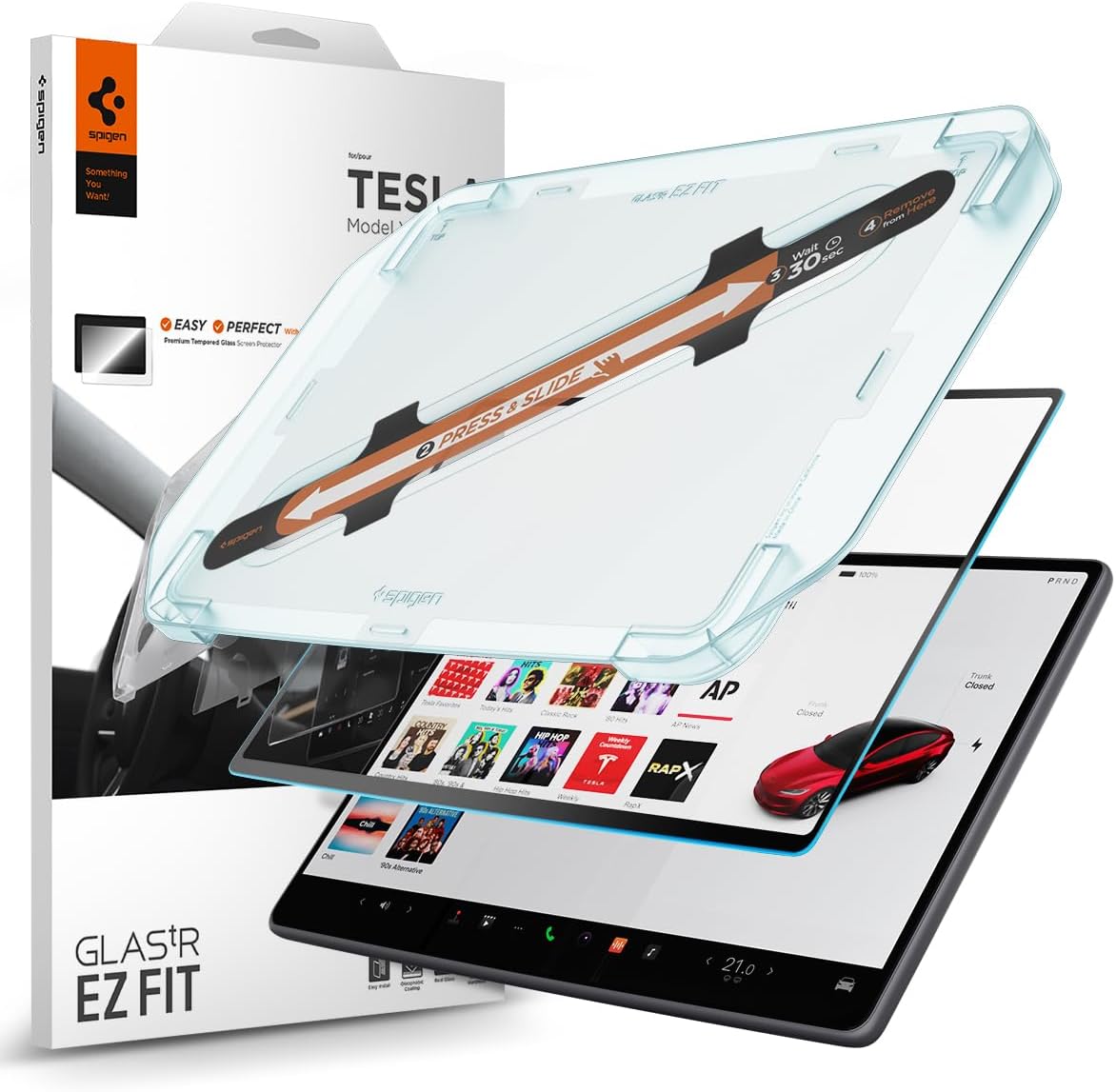
Spigen Tempered Glass for Tesla Model 3/Y
Tempered-glass protection for the touchscreen that kills fingerprints and scratches. Two minutes to install, lasts the life of the car.
As an Amazon Associate, ThinkEV earns from qualifying purchases — at no extra cost to you.
WINTER PERFORMANCE: THE CANADIAN NECESSITY
Winter driving is not optional in most of Canada. It is the condition that determines whether an EV is actually practical for nine months of the year or just three. Let me be blunt about both cars.
The all-wheel drive situation:
The Tesla Model 3 Performance comes with AWD standard. Two motors, front and rear, with independent torque control. In rain, slush, and snow with winter tires, it is composed and confidence-inspiring. The dual-motor system does not dramatically reduce range compared to adding AWD to the BMW i4, because the Performance model was designed as a dual-motor car from the ground up.
The Dodge Charger Daytona R/T is rear-wheel drive. AWD is available in the Scat Pack trim at a higher price point. If you live in a climate that gets real winter, and most Canadian drivers outside the Lower Mainland do, you either need to budget for the AWD Scat Pack or accept that you will be relying entirely on winter tires to keep the R/T in control.
RWD with proper winter tires is manageable. I am not going to tell you it is undriveable. But on an icy Edmonton street or a snow-covered highway outside Fredericton, there is a genuine difference in how confident you will feel in an AWD car versus a RWD one. The Daytona R/T requires more driver awareness and more respect in low-traction conditions than the Model 3 Performance.
Winter range reality check:
At -25°C, both cars lose significant range. Here is what that looks like in practice:
- Model 3 Performance at -25°C: approximately 300-380 km of real range. Preconditioning reduces the gap. Tesla's heat pump is efficient. The car warms up fast when plugged in before departure.
- Charger Daytona R/T at -25°C: approximately 220-280 km of real range. Starting from 402 km rated range with a larger efficiency penalty from the heavier body and larger cabin to heat.
For a Winnipeg driver doing a 60 km daily round trip, both cars are fine even in the deepest winter, you are not coming close to either car's cold-weather range limit. For a driver doing regular 200+ km trips between cities in winter, the Model 3 Performance handles it with less planning overhead.
Winter tire recommendation:
Both cars require proper winter tires in Canada. Not all-seasons, winters. The Model 3 Performance comes on 20-inch wheels in Performance spec. Winter tire sets at this size run $1,000-$1,500 installed. The Charger Daytona R/T runs on 20-inch wheels as well. Budget accordingly.
Recommended Canadian winter tires: Michelin X-Ice Snow, Bridgestone Blizzak WS90, Nokian Hakkapeliitta R5. All tested for Canadian conditions, all available in the relevant sizes.
Preconditioning:
Both cars support battery and cabin preconditioning from their respective apps. Tesla's integration is more smooth, the car automatically preconditions the battery when you route to a Supercharger, optimizing charge rates. The Dodge app offers similar manual scheduling. Either way, plug in the night before a cold morning, schedule the departure time, and your car will be warm and ready to drive at full efficiency.
TECHNOLOGY AND SOFTWARE
Tesla's software ecosystem:
The Model 3 Performance runs Tesla's software platform, which receives over-the-air (OTA) updates on a regular basis. Your car in 2028 will have features that do not exist in 2026. Autopilot is standard; the Full Self-Driving (FSD) package is available for purchase, though its capabilities in Canada depend on regulatory approval as of this writing. The 15.4-inch touchscreen controls nearly everything, climate, mirrors, seat adjustments, wiper speed, Autopilot settings, charging schedule. The UI is mature, responsive, and consistent.
One persistent frustration for some Tesla owners: no Apple CarPlay or Android Auto support. Tesla has its own navigation, its own streaming music integration, its own app ecosystem. If you rely heavily on Waze, Google Maps, or Apple Maps for Canadian route planning, you are adapting to Tesla's navigation rather than using your preferred app. Tesla's navigation is good, routing to Superchargers automatically, integrating real-time traffic, timing charging stops efficiently. But it is its own world, and some buyers find that limiting.
Dodge's tech platform:
The Charger Daytona runs Uconnect 5, Dodge's infotainment system. It supports wireless Apple CarPlay and Android Auto out of the box. For drivers who already have their navigation, music, and communication apps set up on their phone, this is smooth. You get into the car, your phone connects, and everything works the way it already does. It also has a 10.25-inch digital instrument cluster and a 12-inch infotainment screen. The interface is well-organized and familiar.
The Daytona also receives OTA updates, though Dodge's update cadence is slower and less feature-rich than Tesla's. You are buying the car as it exists today with incremental refinements over time, rather than buying a platform that evolves continuously.
Driver assistance:
- Model 3 Performance: Autopilot (lane centering, adaptive cruise control) is standard. Work through on Autopilot, Summon, and other features are available. FSD is a paid addition.
- Charger Daytona: Active safety suite including adaptive cruise control, lane keep assist, and blind spot monitoring are standard. Less advanced than Tesla Autopilot in terms of automation capability.
For most daily driving, both cars are fully capable. The Tesla's Autopilot advantage matters most on long highway drives where it reduces fatigue on the 401 or Trans-Canada corridors.
SOUND: FRATZONIC VS SILENCE
This section deserves its own discussion because it is genuinely central to the Charger Daytona's identity and the most divisive thing about it.
Dodge fitted the Daytona with what they call Fratzonic Chambered Exhaust. It is not a speaker playing a recording of an old Hemi. It is a physical resonating chamber, tuned to the eRupt transmission's torque output, that amplifies the natural sounds the electric drivetrain makes and adds harmonics to create something that sounds muscular. From outside the car at full acceleration, it is legitimately impressive, a deep, rising growl that tops out at 126 dB.
The driver can adjust the volume and character through drive modes: Eco, Sport, Track, and Custom. The sound changes with each mode, and Track mode turns it up to something that would bother your neighbours at 6 AM.
From inside the car, the sound is tuned to come through the speakers in a way that feels integrated, not like a video game effect. It is imperfect, enthusiasts who have driven both the Daytona and a real V8 Hellcat will notice the difference, but it is more convincing than any other attempt at artificial EV sound I have come across, and that includes most European competitors' equivalent systems.
The Tesla Model 3 Performance is quiet. At full acceleration, you hear tire noise, wind at speed, and the slight whine of the electric motors under heavy load. That is it. Some drivers find this meditative. Others find it oddly unsatisfying given how fast the car is actually going. There is something cognitively strange about being pushed back in your seat at serious g-forces while the cabin remains nearly silent. You adjust to it, and most Model 3 Performance owners come to love the silence. But it is a real personality difference.
If sound matters to you, if the acoustic experience of driving is part of why you drive enthusiastically, the Charger Daytona is the only electric car on the Canadian market that makes a genuine attempt to give you that. Whether Dodge's solution is the right answer is a matter of taste, but the attempt is real and the result is better than expected.
RELIABILITY AND OWNERSHIP EXPERIENCE
Tesla's track record in Canada:
Tesla has been selling cars in Canada since 2013. There is a substantial base of Model 3 owners in every major Canadian market. The cars have a known reliability profile. The good: very low mechanical complexity (fewer moving parts than any ICE car, no transmission oil, no spark plugs, no timing belts), good battery durability, frequent software fixes for any issues that emerge. The less good: panel gaps and build quality consistency have historically been an issue on some units; touchscreen-dependent controls mean a software glitch can affect multiple car functions simultaneously; service centre access outside major cities can mean multi-week waits for non-emergency repairs.
For warranty, Tesla offers:
- 4 years / 80,000 km basic vehicle warranty
- 8 years / 192,000 km battery and drive unit warranty (minimum 70% retention)
Dodge Charger Daytona's track record:
The Charger Daytona is new. There is not yet a substantial long-term reliability dataset for this specific platform. The Stellantis eRupt platform is derived from significant investment in EV architecture, but the multi-speed transmission is an unusual mechanical choice that introduces complexity absent from most EVs. Early production vehicles had some software issues that were corrected via OTA updates. The platform's long-term durability is genuinely unknown at this point.
For warranty, Dodge offers:
- 3 years / 60,000 km basic vehicle warranty
- 8 years / 160,000 km battery and electric motor warranty
Note: Tesla's basic warranty is 4 years / 80,000 km versus Dodge's 3 years / 60,000 km. The battery warranty gap (192,000 km vs 160,000 km) is also meaningful for Canadian buyers who put significant kilometres on their vehicles.
Stellantis has a well-established dealer network across Canada, which means service access in smaller markets is generally better than Tesla's limited service centre footprint. If you live in Lethbridge, Sudbury, or Fredericton, finding a Dodge dealer is easy. Getting a Tesla serviced may require a longer wait or a trip to a major city.
THE CANADIAN FEDERAL REBATE SITUATION
Both cars miss the federal iZEV/EVAP rebate threshold of $55,000 base MSRP. This is not news, but it bears repeating because a $5,000 federal rebate changes the math significantly. At $80,000 CAD for the Daytona R/T and $69,990 for the Model 3 Performance, neither qualifies.
British Columbia's CleanBC Go Electric rebate program tops out at $55,000 MSRP, so neither car qualifies there either. Quebec's Roulez vert program has an $80,000 cap for new EVs as of 2026, meaning the Model 3 Performance at $69,990 could qualify for up to $4,000 in Quebec, while the Daytona R/T at ~$80,000 sits at the exact edge. Confirm current thresholds with Quebec's TEQ program before purchase, as caps adjust periodically.
For Ontario buyers: there is no provincial EV rebate as of 2026. Full sticker on both cars.
The rebate situation favours the Model 3 Performance modestly in provinces with caps above $69,990. It does not change the fundamental price dynamic, but $4,000 back in Quebec is not nothing.
LONG-TERM DEPRECIATION AND RESALE VALUE
This section matters more than most people realize, because the car with the highest resale value effectively costs you less money to own even if it starts at a higher price. In Canada's used EV market, we have enough data on Tesla to make reasonable projections. We have much less for the Charger Daytona, which introduces real uncertainty.
Tesla Model 3 depreciation in Canada:
Tesla Model 3 vehicles have historically depreciated more slowly than most EVs in Canada, though the gap has narrowed as Tesla volume has increased. A Model 3 purchased in 2023 typically retained 60-70% of its value at three years and 50-60% at five years in strong markets (BC, Quebec, Ontario). The Model 3 Performance, as a performance variant, tends to hold value slightly better than base trims because the buyer pool for performance EVs is smaller and willing to pay. At five years, a Model 3 Performance purchased at $69,990 today might realistically be worth $28,000-$35,000 in the Canadian used market, depending on mileage and condition.
Charger Daytona depreciation uncertainty:
The Daytona is too new to have real depreciation data. American muscle cars historically depreciate aggressively in Canada, the used market for a niche product in a smaller country is narrower than the US, which pushes prices down. EV muscle cars are even newer territory. There are two scenarios: either the Daytona holds value well because it is desirable and supply is constrained, or it depreciates faster because the CCS charging situation and the niche appeal of electric muscle limits the resale buyer pool. I would be cautious about assuming strong resale value on the Daytona without real-world Canadian market data to back it up. If you plan to trade in after three to four years, the uncertainty itself is a risk to factor into your decision.
The practical implication: if you are financing a $80,000 Daytona and the resale value is disappointing at trade-in, you could find yourself in a negative equity position if your financing terms are not structured carefully. Work with your dealer to understand their projected residual values before committing, and compare against the Model 3 Performance's more predictable depreciation curve.
The total picture:
When you add up purchase price, financing costs, energy costs, maintenance, insurance, and resale value, the Model 3 Performance's five-year ownership cost advantage over the Charger Daytona R/T is likely in the $11,000-$18,000 range, depending on your province, driving habits, and how each car's resale value performs. That is a meaningful number. It does not mean the Daytona is a bad financial decision, it means you are paying for the experience, the character, and the heritage of an American muscle car in electric form. Some buyers will find that trade-off worthwhile. Many will not.
WHO EACH CAR IS ACTUALLY FOR
I have been doing this long enough to know that specs do not always predict purchases. People buy cars for reasons that do not always show up in a cost-benefit analysis. Let me be honest about who each car actually serves.
The Model 3 Performance is for:
- Buyers who do road trips regularly and want a charging infrastructure that simply works without planning anxiety.
- People who commute in cold Canadian climates and want AWD standard without paying a premium for it.
- Buyers who care about five-year ownership cost and want the lower-cost option that does not meaningfully sacrifice on performance.
- Drivers who have come around to the tablet-on-wheels interior philosophy and actually appreciate the minimalism.
- Anyone who wants a car that will be better in software in two years than it is today.
- Practical enthusiasts who just want to be fast and efficient.
The Charger Daytona is for:
- Buyers who grew up with American muscle cars and have been waiting for an electric option that does not feel like a betrayal of that heritage.
- Drivers who value the social experience of a car, the looks, the sound, the presence, as much as the performance statistics.
- People who want Apple CarPlay without compromise and find the Tesla ecosystem's closed nature limiting.
- Buyers who want rear-wheel drive as a deliberate choice for driving character, with winter tires as the understood mitigation.
- Anyone willing to pay the premium for something that feels distinct from every other EV on the road.
- Stellantis loyalists who want to stay within the brand's dealer network.
These are not value judgements about either buyer. If you want a car that makes you feel something every time you drive it, and the Charger Daytona does that and the Model 3 Performance does not, then the Daytona is the right buy for you. Life is long and you will drive this car a lot. Pick the one you actually want to get into.
THE REAL VERDICT
On every practical metric, range, charging infrastructure reliability, total ownership cost, winter AWD standard, software maturity, and federal/provincial rebate eligibility, the Tesla Model 3 Performance wins. It is $10,000 cheaper. It gets 145 km more range. It charges on Canada's most reliable fast-charging network. It comes with AWD as standard equipment. It will have more features in 2028 than it does today.
The Charger Daytona R/T wins on character, presence, sound, Apple CarPlay integration, dealer network accessibility, and the specific satisfaction of driving something that feels like it was built for people who care about how a car makes them feel rather than how it scores in a spreadsheet. If you live in a market where Stellantis dealers are more accessible than Tesla service, it also wins on serviceability.
My recommendation depends entirely on what you are optimizing for.
If you are optimizing for value and practicality: Buy the Model 3 Performance. It is the financially obvious choice and it is an excellent car. You will not regret the purchase.
If you are optimizing for driving character and emotional engagement: The Charger Daytona is worth the premium if you can handle RWD in winter (with proper tires) and are comfortable with the longer charging stop times on road trips. Just go into it knowing the range and charging tradeoffs clearly.
If you are buying with AWD as a non-negotiable: Wait for the Charger Daytona Scat Pack pricing to be fully confirmed in Canada, or go with the Model 3 Performance and bank the savings.
That is a good problem to have.
Gear worth having
As an Amazon Associate, ThinkEV earns a small commission from qualifying purchases — at no extra cost to you.

WeatherTech FloorLiner for Tesla Model 3
Deep-channel liners that trap every drop of slush and salt. The difference between a ruined interior and a showroom-fresh cabin after a Canadian winter.
As an Amazon Associate, ThinkEV earns from qualifying purchases — at no extra cost to you.
Related Reading
Gear worth having
As an Amazon Associate, ThinkEV earns a small commission from qualifying purchases — at no extra cost to you.
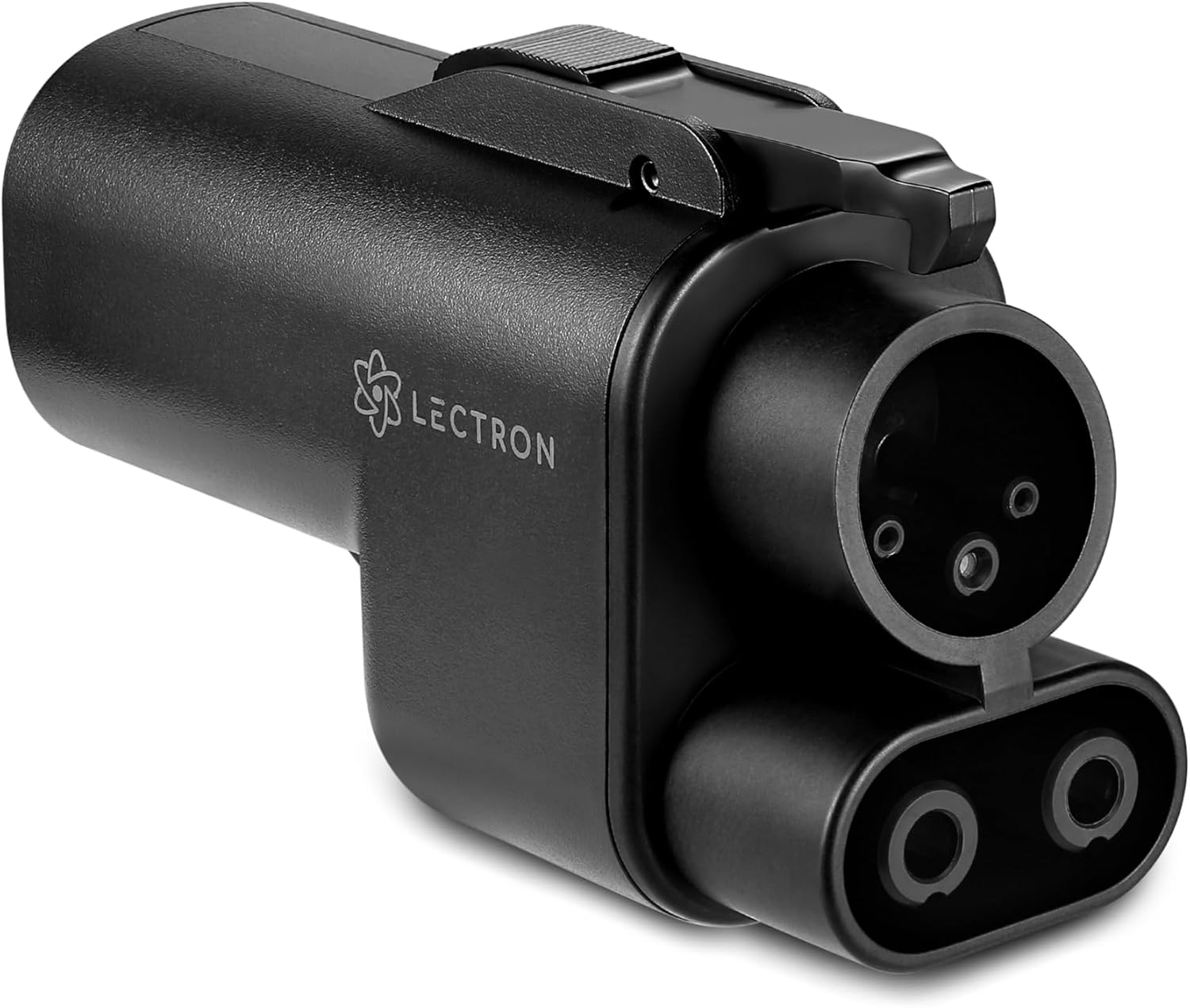
Lectron NACS to CCS Fast-Charge Adapter
Unlock every CCS fast charger for your Tesla, up to 500A DC. Never get stranded at a non-Tesla DC station again.
As an Amazon Associate, ThinkEV earns from qualifying purchases — at no extra cost to you.

Founder & Chief Editor
Vlad Pereira is the founder and chief editor of ThinkEV.ca, the Canadian electric-vehicle publication he writes and edits from Courtenay, British Columbia. He covers EV pricing, federal and provincial rebates, charging costs, and the Chinese manufacturers now entering Canada, from the buyer's side rather than the press-fleet side. ThinkEV is a venture of Vlad Pereira Online; his writing on health, income and the long game lives at vladpereira.com.
Frequently asked questions
Does the Dodge Charger Daytona qualify for the federal EV rebate in Canada?
How does the Charger Daytona handle Canadian winters compared to the Model 3 Performance?
What is the Fratzonic Chambered Exhaust on the Charger Daytona, and is it any good?
How does the 0-100 km/h time compare between the two cars?
Which car has better charging infrastructure in Canada?
Does the Charger Daytona support Apple CarPlay?
What are the warranty terms for each car in Canada?
What is the real-world energy cost difference between the two cars?
More EV & road-trip finds
Affordable upgrades worth a look — tap any to check the price on Amazon.
 ★ 1,340
Car Seat Gap Filler (Universal)
View on Amazon ★ 721
★ 72145W USB-C Fast Car Charger
View on Amazon ★ 121
★ 121Foldable Windshield Sun Umbrella
View on Amazon ★ 17,839
Qifutan Vent Phone Mount (Military-Grade Clip)
View on Amazon ★ 9,349
Auto Detailing Brush Set (10-Piece)
View on Amazon ★ 419
★ 419RGB Car Interior LED Strip Light
View on Amazon ★ 1,349
Cool Swinging Duck Dashboard Ornament
View on Amazon ★ 4,424
Sun Visor Card and Document Organizer
View on AmazonRead, Plan, Then Stay Current
Explore our expert articles to understand incentives and ownership costs, use the map to pressure-test charging reality, then subscribe so new EV coverage comes straight to you.
Continue Reading
Longest-Range Electric Cars You Can Buy in Canada (2026)
Tesla Model Y vs Toyota RAV4: 5-Year Cost Canada
Rivian R1T vs F-150 Lightning: Canada 2026 Test
EV vs Gas: 5-Year Cost of Ownership in Canada
BMW i4 vs Tesla Model 3: Is the $11K Premium Worth It?