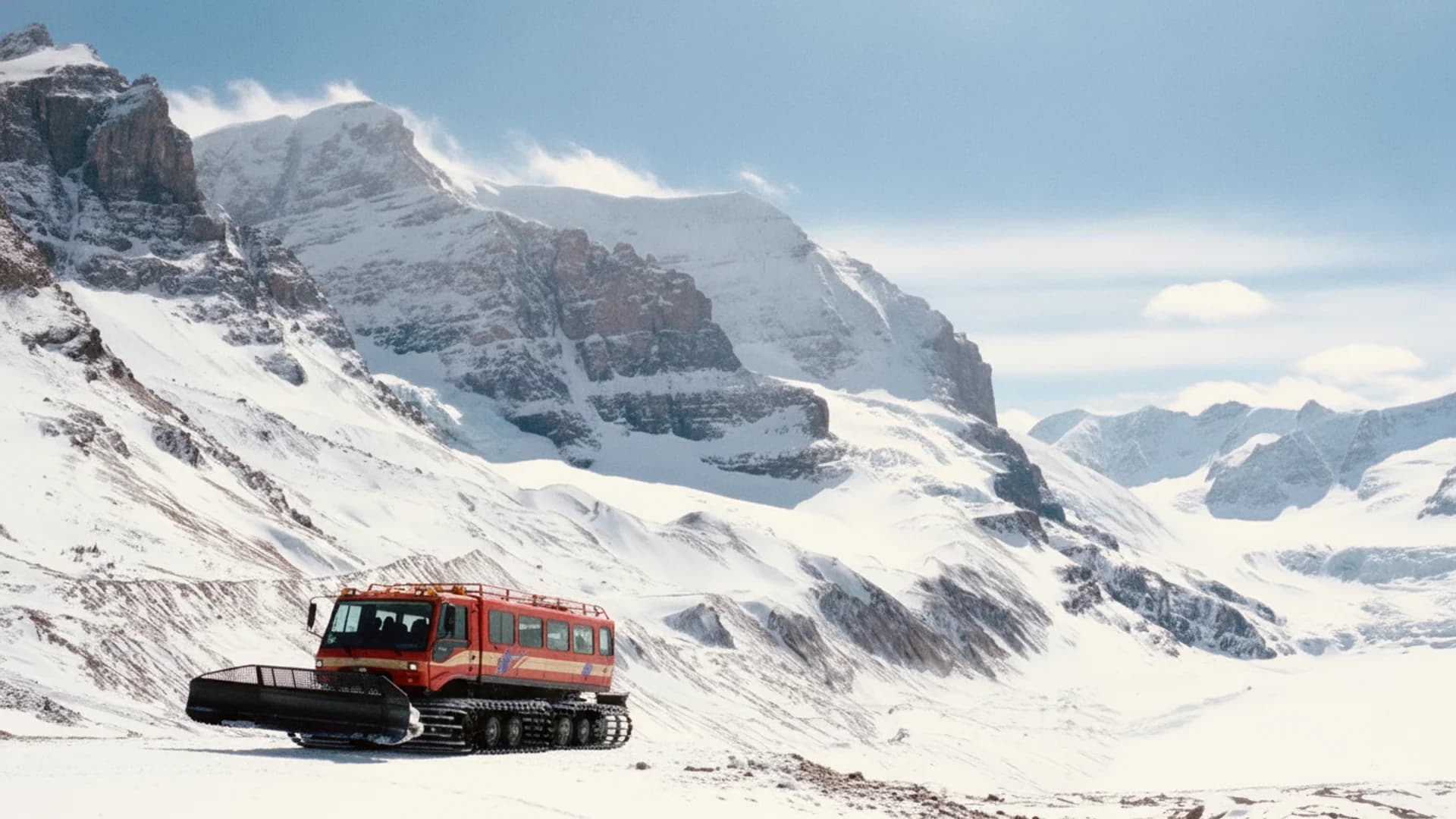
Diesel engines have been roaring across Athabasca Glacier for decades. That sound just stopped.
On a variable May morning at the toe of the Athabasca Glacier, a new kind of machine hummed quietly onto the ancient ice, Pursuit's electric Ice Explorer, what the company says is the world's first. Not a retrofit. Not a hybrid. A purpose-built 52-passenger electric off-road bus, climbing onto a shrinking glacier that diesel buses had been industrialising since the 1980s.
The press release reads like green tourism boilerplate. The engineering underneath does not.
Key takeaways
- Pursuit's purpose-built 52-passenger electric Ice Explorer is already operating commercially on Athabasca Glacier in Jasper National Park.
- The bus carries a 530 kWh battery pack, roughly five Lucid Air Grand Touring packs, engineered for sub-zero glacier duty cycles.
- Athabasca Glacier's toe has retreated roughly 1.5 kilometres since the late 1800s, and diesel buses were contributing to the problem they were touring.
- Noble Northern, a Canadian heavy-EV specialist, co-developed the vehicle from scratch because glacier duty cycles destroy retrofitted EVs.
- The current rollout is one unit, the full diesel fleet remains in the lot, with no published conversion timeline from Pursuit.
The world's first electric glacier bus is actually operating
This isn't a concept render or a Q4 promise. Pursuit Attractions and Hospitality launched the vehicle as part of the Columbia Icefield Adventure in Jasper National Park, Alberta, and it is operating on Athabasca Glacier right now.
It carries 52 guests per run. It hauls them up steep moraine, onto live ice, and back, the same route the diesel fleet has been running for forty years, minus the engine noise and the exhaust plume.
The build partner matters. Pursuit didn't yank a powertrain out of a city bus and call it a day. The vehicle was co-developed with Noble Northern, a Canadian heavy-EV specialist, from a blank sheet. That distinction, purpose-built versus converted, is the whole story. Glacier duty cycles eat retrofitted EVs alive.
Pursuit is publicly traded (NYSE: PRSU). They don't get to soft-launch a unit that bricks in front of paying customers. The fact that the bus is in commercial service in May, not "coming soon," is the receipt that the engineering actually closed.
530 kWh battery in sub-zero conditions, that's the hard part
The pack is 528 kWh, quieter, lighter, and cleaner than the diesel machines it's meant to replace, according to AutoNews. Motor Illustrated pegs it at 530 kWh. Either way, it's roughly five Lucid Air Grand Touring battery packs welded into one chassis that has to climb ice.
Cold-weather battery degradation is the part nobody outside the EV engineering trade wants to talk about. Lithium chemistry loses available capacity in sub-zero air. Range on a Model Y in a Calgary January is a different number than range on the same Model Y in July. Now imagine that variable applied to a 52-passenger bus operating at elevation, on a glacier, where "running out" isn't an inconvenience, it's a search-and-rescue call.
That's the design problem Noble Northern had to solve. Not "can we make an electric bus." Can we make one that delivers a guaranteed duty cycle when the operating environment is the same surface the engineers are worried about preserving.
The lighter chassis is the underrated win. Diesel Ice Explorers are tank-heavy. Lower vehicle mass means less pressure per square inch on ice that's already losing volume year over year. The bus is, in a literal mechanical sense, easier on the thing it's there to show you.
Gear worth having
As an Amazon Associate, ThinkEV earns a small commission from qualifying purchases — at no extra cost to you.

Heavy-Duty Outdoor Timer (Preconditioning)
Schedule your Level 1 charger or block-heater outlet, rated for the outdoors. Warm the battery on grid power before you leave, not on your range.
As an Amazon Associate, ThinkEV earns from qualifying purchases — at no extra cost to you.
The glacier is retreating. Running diesel on it was always absurd.
Athabasca Glacier has lost significant mass over the last century. The toe has retreated roughly 1.5 kilometres since the late 1800s. Visitors used to walk a few minutes from the highway to touch ice. Now there's a shuttle ride between the road and where the glacier starts.
For decades, the tour vehicle showing you that retreat was a diesel bus actively contributing to it. The optics were brutal. The science was worse. Pursuit framing the switch as Canada's ancient Columbia Icefield "entering the electric era" lands harder when you remember what the diesel era was doing to the place.
Parks Canada pressure was real. Operating heavy diesel on a federally managed retreating glacier in the climate-disclosure era was a license risk Pursuit didn't need to keep underwriting. The pivot isn't entirely virtue. It's also operational hygiene.
The sensory shift on the ice is the part visitors will actually notice. Silence. You hear the glacier, meltwater, wind, the occasional groan of ice settling, instead of a 14-litre diesel idling beside you. That changes what a glacier tour is.
Gear worth having
As an Amazon Associate, ThinkEV earns a small commission from qualifying purchases — at no extra cost to you.

Grizzl-E Classic Level 2 EV Charger (40A)
Canadian-made and rated for minus 40C winters. 40A / 9.6 kW, NEMA 14-50, indoor/outdoor, 24-ft cable. The charger built for Canadian weather.
As an Amazon Associate, ThinkEV earns from qualifying purchases — at no extra cost to you.
Why this is harder than electrifying a city bus route
City buses charge at a depot, run a predictable route, and have grid backup at every terminus. None of that exists on a glacier.
Columbia Icefield is remote. The infrastructure to charge a 530 kWh bus in a Rocky Mountain national park had to be designed and installed alongside the vehicle. That's a parallel engineering project that got almost no coverage because the bus is the photogenic part.
The duty cycle is brutal: off-road tires built for ice, grades that would embarrass a city transit map, surface conditions that swing from packed snow to bare rock to live meltwater on the same run. This is closer to mining-equipment engineering than transit engineering.
Compare it to electrifying a fixed urban transit network, the policy and grid map for fleet electrification is hard enough when the vehicles return to a wired depot every night. Strip away the depot, the grid, the predictable route, and the moderate climate, and you're left with the Athabasca problem. Pursuit and Noble Northern solved a harder version of an already hard problem.
And they did it on the first try in commercial service. There's no Beta program for paying tourists at 2,000 metres.
Gear worth having
As an Amazon Associate, ThinkEV earns a small commission from qualifying purchases — at no extra cost to you.

EcoNour 27-inch Snow Brush and Ice Scraper
An aluminum brush and scraper combo that clears a windshield fast without scratching. Non-negotiable for Canadian mornings.
As an Amazon Associate, ThinkEV earns from qualifying purchases — at no extra cost to you.
The community response: "finally" beats "greenwashing"
The cynical take wrote itself. Tourism operator slaps battery on bus, holds press event, calls it a climate solution. It's the genre.
That's not the response this got. CTV's framing, the world's first electric vehicle bringing guests to one of Jasper National Park's iconic attractions, set the tone, and the broader tourism and EV discourse followed. Jasper locals have watched glacier tourism industrialise for forty years; they've earned the right to be cynical, and they mostly weren't.
The reason is specificity. A diesel bus retrofitted with a battery and rebranded would have been greenwashing. A purpose-built electric vehicle, in commercial service, on the most photographed glacier in North America, built with a Canadian partner, that's a different artifact. The skeptics didn't get a press release to mock. They got a working bus.
Pursuit is also signaling direction for the broader glacier tourism industry. New Zealand, Iceland, Argentina, Switzerland, every operator running diesel on retreating ice just got benchmarked. The next press conference in any of those markets either matches this or explains why it can't.
For the long view of how unusual this kind of purpose-built EV is in the history of the category, the longer history of the electric car is worth a look. Glacier buses weren't on the 1900s prediction list.
What the press release didn't say out loud
One unit. That's the number nobody printed in bold.
Columbia Icefield Adventure runs a fleet of massive Ice Explorers, multiple vehicles, multiple runs a day, peak-season volume that one electric bus cannot absorb. The current rollout is, charitably, a pilot. The diesel fleet is still in the parking lot.
Pursuit hasn't published a timeline for converting the rest of the fleet. The press release talks about "evolution" and "thoughtful" rollout, the vocabulary of a company that doesn't want to commit to a 2028 or 2030 conversion date in writing. Understandable. Battery costs, supply timelines, and the second-unit engineering review all need to clear before anyone signs that purchase order.
But the question for readers tracking this honestly: is this one bus the start of a fleet conversion, or is it the climate-comms unit that runs alongside the diesel fleet for the next decade? The press release answers neither.
Track the second unit. That's the signal. If Pursuit orders Ice Explorer #2 from Noble Northern within twelve months, the fleet conversion is real and the cost curve closed faster than anyone outside the company predicted. If twelve months pass with no second order, the first one was a flagship and the diesel fleet is the business.
The same question hangs over every Chinese EV brand currently routing through Canadian regulators, which Chinese EV groups are actually serious about the market versus which ones shipped one homologation unit and called it a launch. Pursuit gets the same scoreboard.
Gear worth having
As an Amazon Associate, ThinkEV earns a small commission from qualifying purchases — at no extra cost to you.

Magnetic Windshield Snow Cover
Skip the scraping. Magnets hold it on, peel it off with the snow, and your defroster stops draining range on cold mornings.
As an Amazon Associate, ThinkEV earns from qualifying purchases — at no extra cost to you.
The Electric Ice Explorer Is The Real Thing
The electric Ice Explorer is the real thing. Built from scratch, operating commercially, solving a duty cycle harder than any city transit network. That's the story.
Whether it stays the story depends entirely on the second purchase order. Watch the parking lot at the Glacier Discovery Centre next May. Count the diesel buses.
Gear worth having
As an Amazon Associate, ThinkEV earns a small commission from qualifying purchases — at no extra cost to you.

Extendable 3-in-1 Snow Brush and Scraper
Telescopes to 46 inches so you can sweep a whole roof and windshield without climbing on the car.
As an Amazon Associate, ThinkEV earns from qualifying purchases — at no extra cost to you.

Founder & Chief Editor
Vlad Pereira is the founder and chief editor of ThinkEV.ca, the Canadian electric-vehicle publication he writes and edits from Courtenay, British Columbia. He covers EV pricing, federal and provincial rebates, charging costs, and the Chinese manufacturers now entering Canada, from the buyer's side rather than the press-fleet side. ThinkEV is a venture of Vlad Pereira Online; his writing on health, income and the long game lives at vladpereira.com.
Frequently asked questions
Is this the only electric Ice Explorer, or is the whole fleet converted?
How does the battery handle glacier temperatures without losing range?
Where does the charging infrastructure come from in a remote national park?
Why purpose-built instead of converting an existing diesel Ice Explorer?
Does the lighter electric chassis actually reduce damage to the glacier?
More EV & road-trip finds
Affordable upgrades worth a look — tap any to check the price on Amazon.
 ★ 2,941
Microfiber Cleaning Cloths (Multi-Pack)
View on Amazon ★ 537
★ 537USB Star Projector Roof Light
View on Amazon ★ 4,055
6-Speed Manual Shift Knob Display
View on Amazon ★ 27,769
Car Cup Holder Coasters (4-Pack)
View on Amazon ★ 721
★ 72145W USB-C Fast Car Charger
View on Amazon ★ 61
★ 61Toddler Car Seat Snack and Cup Tray
View on Amazon ★ 17,839
Qifutan Vent Phone Mount (Military-Grade Clip)
View on Amazon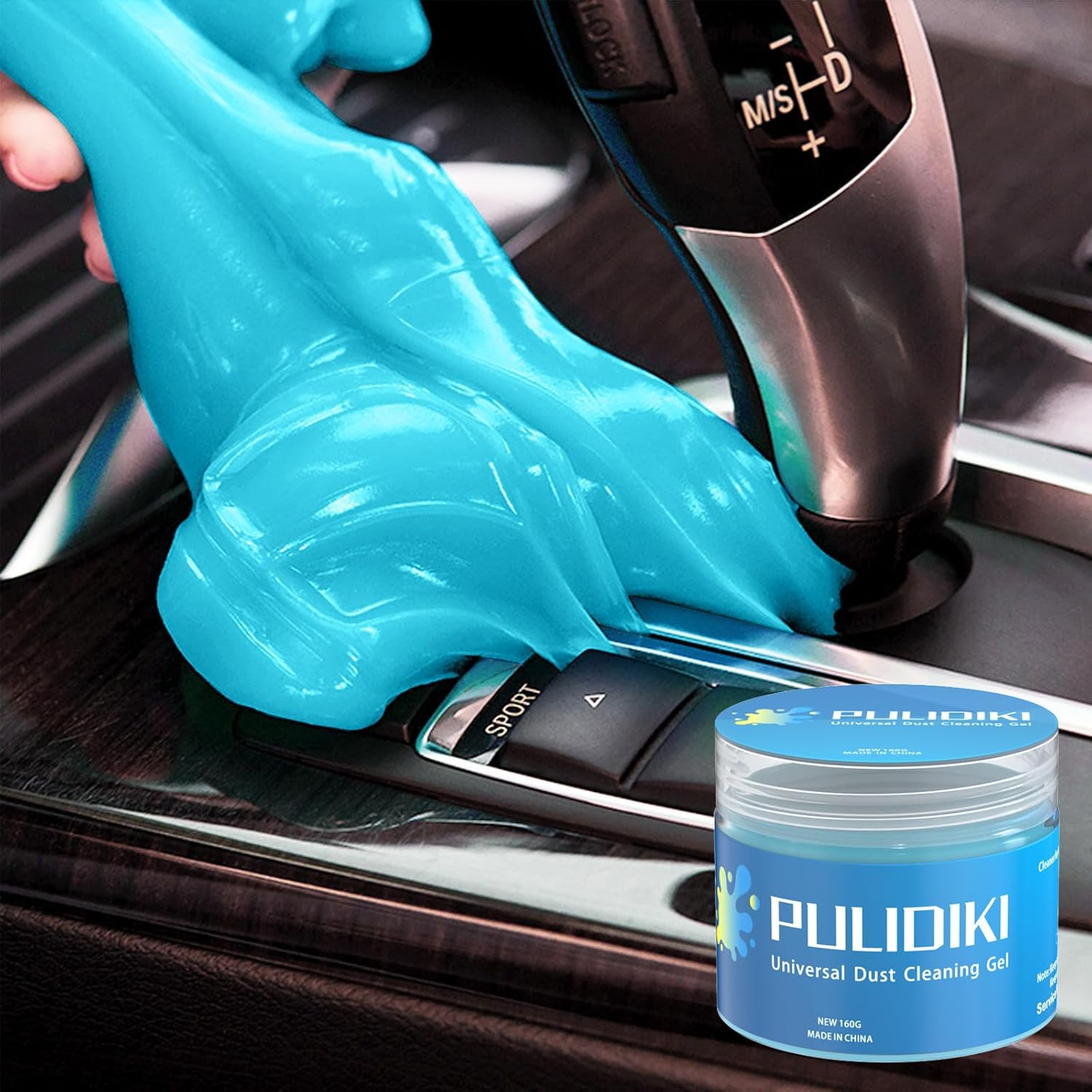 ★ 96,686
PULIDIKI Car Cleaning Gel (Detailing Putty)
View on AmazonRead, Plan, Then Stay Current
Explore our expert articles to understand incentives and ownership costs, use the map to pressure-test charging reality, then subscribe so new EV coverage comes straight to you.
Continue Reading
Tesla Q3 2026 Earnings: Flat Revenue, Falling Profits
BYD Denza B8 Suspension Trick Defeats Traffic Boot in Viral Clip
Zenos E10 Returns at £115,000, A Different Car Entirely
Jaecoo J5 EV Uber Discount: $31,500 Fleet Math Changes
VW ID.4 80% Charge Cap Rolls Out This Week, With Opt-Out