Toyota promised solid-state batteries, a dedicated new platform, and a luxury EV that would finally matter. Instead: cancelled.
The Lexus LF-ZC is dead. The low-slung Lexus LF-ZC electric sedan is dead. Toyota is scrapping plans to launch the next-gen luxury EV, which was expected to enter production later this year with advanced new batteries and a dedicated platform. That's not a delay. That's not a "strategic pause." That's a flagship EV programme getting buried before a single production unit rolls off a line.
And the framing the press cycle landed on, "global EV slump forces tough choices", is exactly the cover story Toyota wants you to accept.
Don't.
Key takeaways
- Toyota scrapped the LF-ZC entirely, not delayed, not retooled, cancelled before a single production unit shipped.
- The LF-ZC was supposed to prove Toyota could deliver solid-state batteries, a promise dangling since 2017.
- Lexus redirected resources to SUVs, a margin decision, not a consumer insight, while BMW and Hyundai keep selling EV sedans.
- The LF-ZC debuted at the 2023 Japan Mobility Show as Toyota's proof-of-concept for a dedicated EV platform, and the ES is now the last Lexus sedan standing, restricted to EV-and-hybrid variants after the LS was cut.
- The Lexus IS is still on sale in 2026 on a platform launched in 2013, now four facelifts deep.
The LF-ZC Was Toyota's Last Credible EV Argument
The LF-ZC wasn't a halo concept. It was the proof-of-concept Toyota needed.
When the LF-ZC rolled onto the stage at the 2023 Japan Mobility Show, it carried more weight than any car at the booth. Solid-state battery tech. A new dedicated EV platform. A premium sedan that would compete in the segment where BMW's i-cars, Mercedes' EQ line, and the Tesla Model S have spent half a decade trading punches. This was Toyota signalling, finally, that it had a real BEV strategy.
Then the timeline started slipping. That supposed production timeline had already slipped, with reports stating that the launch this year had been moved to mid-2027. Now, new information points to Toyota halting work on the mass-production LF-ZC sedan.
A 2026 production target became 2027. Then 2027 became never.
This was the car that was supposed to demonstrate Toyota could ship the battery chemistry it has been pre-announcing since 2017. The car that was supposed to prove Lexus could do dedicated-platform EVs and not just rebadged compliance crossovers. Killing it is not a tactical move, it's an admission that the underlying programme couldn't deliver. For a sense of what a competitive luxury EV sedan looks like when an automaker actually ships the thing, see the BYD Seal versus Tesla Model 3 comparison.
The case for the defence: solid-state is genuinely hard, every OEM has missed its battery roadmap, and a cancelled programme is cheaper than a recalled one. Fair. But Lexus didn't quietly retool the LF-ZC around a conventional pack and ship it as a placeholder. It killed the whole car. That's not engineering caution. That's a brand walking away from its only credible answer.
Blaming "EV Slump" Is Convenient Cover
Toyota's decision to cancel the LF-ZC follows a wider Japanese pullback from EVs in recent months. The official line is global EV sales softness. Demand isn't where forecasts said it would be. Buyers are hesitant. Margins are tight.
All of that is partially true. None of it is a full explanation.
BMW's i5 is selling. Mercedes' EQE is selling. Hyundai's Ioniq 6 is selling. Tesla's Model 3 refresh is selling. The "nobody wants premium EV sedans" narrative is a story that conveniently lets Japanese OEMs explain why they've spent a decade losing the segment they used to own. The truth is that buyers want premium EV sedans from manufacturers who actually ship premium EV sedans on the timeline they promise.
Toyota's global EV market share is embarrassing relative to its overall footprint. The world's largest automaker by volume sells a rounding error of battery-electric vehicles. That's not a market problem. That's an execution problem dressed up as a market problem.
The slump is real. It's also being stretched well past its actual shape to justify a retreat that was already in motion. The Canadian regulatory environment isn't going to wait, federal greenhouse-gas emissions standards are tightening regardless of whether Toyota feels ready.
Gear worth having
As an Amazon Associate, ThinkEV earns a small commission from qualifying purchases — at no extra cost to you.

WeatherTech FloorLiner for Tesla Model 3
Deep-channel liners that trap every drop of slush and salt. The difference between a ruined interior and a showroom-fresh cabin after a Canadian winter.
As an Amazon Associate, ThinkEV earns from qualifying purchases — at no extra cost to you.
Pivot to SUVs Is a Margin Play, Not a Market Read
Here's what's actually happening: Lexus is redirecting resources toward SUVs and higher-riding segments. Nikkei Asia reported it. Autoblog confirmed it. The wire ran with it.
SUVs have fatter margins. That's the entire thesis.
This is a finance-department decision being dressed up as a consumer-insight decision. "Customers prefer SUVs" is true at the aggregate level, but it has been true for fifteen years. It wasn't a revelation when the LF-ZC programme was greenlit, and it isn't a revelation now. What changed is the spreadsheet, the sedan programme's projected return per dollar of capex got beaten by the SUV programme's projected return, and the sedan got killed.
The limo-like LS will be missed, but German luxury sedans have once again asserted market dominance and held on to what remains of the market, cancelling out nearly all other competitors including Lexus. But the ES keeps the luxury sedan flame burning within the company and serves as a reminder of where it came from.
Gear worth having
As an Amazon Associate, ThinkEV earns a small commission from qualifying purchases — at no extra cost to you.

ChargePoint Home Flex Level 2 Charger (50A)
Premium 50A / 12 kW charger with the best app ecosystem. Hardwired or NEMA 14-50, with real-time energy tracking and smart scheduling.
As an Amazon Associate, ThinkEV earns from qualifying purchases — at no extra cost to you.
Translation: the LS is gone. The IS is a fossil. The ES is the last sedan standing, and even it's being narrowed to EV-and-hybrid-only. The Lexus sedan lineup isn't being evolved. It's being quietly euthanised, with the SUVs left to carry the brand.
The counter-read is that Lexus is just doing what Porsche did, concentrate on the SUVs that print money (Cayenne, Macan) and let the sedans coast. The problem with that comparison: Porsche actually shipped the Taycan first, then the electric Macan, and built EV credibility before retreating to its profit centres. Lexus is retreating without ever having arrived. That's a defensible strategy in a spreadsheet. It's also not what Lexus told anyone two years ago.
Reddit Already Wrote the Eulogy
The community reaction is the tell.
r/electricvehicles greeted the cancellation with resignation, not outrage. No threads demanding answers. No petitions. Just a shrug and the same comment repeated in different forms: classic Toyota. Announce something ambitious, walk it back, repeat.
That's the credibility problem in three words.
Toyota loyalists, the people whose Camrys hit 400,000 km and whose Land Cruisers survive war zones, are running out of ways to defend the EV pattern. The brand's mechanical reputation is intact. Its EV credibility is a different ledger entirely, and the entries on it have been red for years. Every cancelled concept compounds the damage. Every Akio Toyoda hydrogen quote compounds it more.
The bZ4X launched, got recalled for wheels falling off, and never recovered its narrative. The LF-ZC was supposed to be the reset. Now the reset is cancelled, and the next reset doesn't have a name yet.
Gear worth having
As an Amazon Associate, ThinkEV earns a small commission from qualifying purchases — at no extra cost to you.

PULIDIKI Car Cleaning Gel (Detailing Putty)
Press it into vents, buttons, and seams and it lifts out dust you did not know was there. Weirdly satisfying, genuinely useful.
As an Amazon Associate, ThinkEV earns from qualifying purchases — at no extra cost to you.
What Toyota Actually Needs to Do
Stop announcing concept EVs that won't survive the next budget review.
Lexus refuses to retire the third-generation IS, which was launched in 2013 and has undergone three facelifts. So while it may look pretty similar to everything else Lexus is selling these days, it's one of the oldest cars still on sale today. A thirteen-year-old platform on its fourth facelift is not a product strategy. It's a placeholder where a strategy used to be.
Meanwhile, BYD launched the Han, revised the Seal, iterated the Dolphin, and started shipping intelligent-driving stacks across the lineup in the same window the LF-ZC spent "in development." The contrast is brutal. One company is shipping; the other is staging concept reveals. BYD's pace is documented in the Xuanji A3 and God's Eye rollout, and it's the reason the gap keeps widening.
The new ES 350h and 350e are on sale now with the 500e expected next month. Good. That's the right move. It should have happened three years ago, and there should be three more cars behind it.
The fix isn't more concepts. It's fewer concepts and more cars on dealer lots. Lexus has the engineering depth to build a competitive premium EV sedan. What it's missing is the institutional willingness to commit capital to a programme without bailing the moment the quarterly forecast wobbles.
Gear worth having
As an Amazon Associate, ThinkEV earns a small commission from qualifying purchases — at no extra cost to you.

WixGear Magnetic Air Vent Phone Mount (2-Pack)
A magnet strong enough that your phone never flinches over potholes or rail crossings. Two in the box, one for each car.
As an Amazon Associate, ThinkEV earns from qualifying purchases — at no extra cost to you.
The Score for Toyota's EV Decade
Years of solid-state battery promises. Years of delays. Now a flagship cancellation.
That's the scoreboard.
Rivals built real cars. Toyota built press releases, mobility-show concepts, and a hydrogen roadmap that the rest of the industry quietly stopped attending. The reliability reputation the brand earned with internal combustion does not transfer to EV credibility on its own, buyers want to know the car will ship, will work, and will get software updates that don't brick the infotainment. None of those questions get answered by cancelling the programme that was supposed to answer them.
2026 is not the year to be retreating on EV sedans. It's the year to be shipping them. Canadian buyers are about to get a BYD Seal at a tariff-rolled-back price point that lands squarely in the segment Lexus just vacated. Tesla's Model 3 isn't going anywhere. Hyundai's Ioniq 6 is winning awards. The premium-EV-sedan segment isn't dead, Lexus just decided not to compete in it.
What I'd watch next: whether the rumoured Corolla EV survives its own development cycle, or whether Toyota does this again in eighteen months and blames the same slump. The bet I'd take: if Toyota cancels or "indefinitely delays" the Corolla EV inside the next four quarters, the bZ-and-LF-ZC pattern hardens into a brand fact, not a brand phase, and Lexus spends the back half of the decade selling hybrid sedans into a market that has moved on. What would change my mind is a dated, capex-committed EV sedan on the production calendar, not another mobility-show silhouette under a spotlight. If it ships, the brand has a pulse. If it doesn't, the LF-ZC won't be the last cancellation worth writing about, just the most expensive one of the year.
The bottom line: Toyota's EV decade has a scoreboard now, and the score is press releases 47, production cars 1.
Gear worth having
As an Amazon Associate, ThinkEV earns a small commission from qualifying purchases — at no extra cost to you.
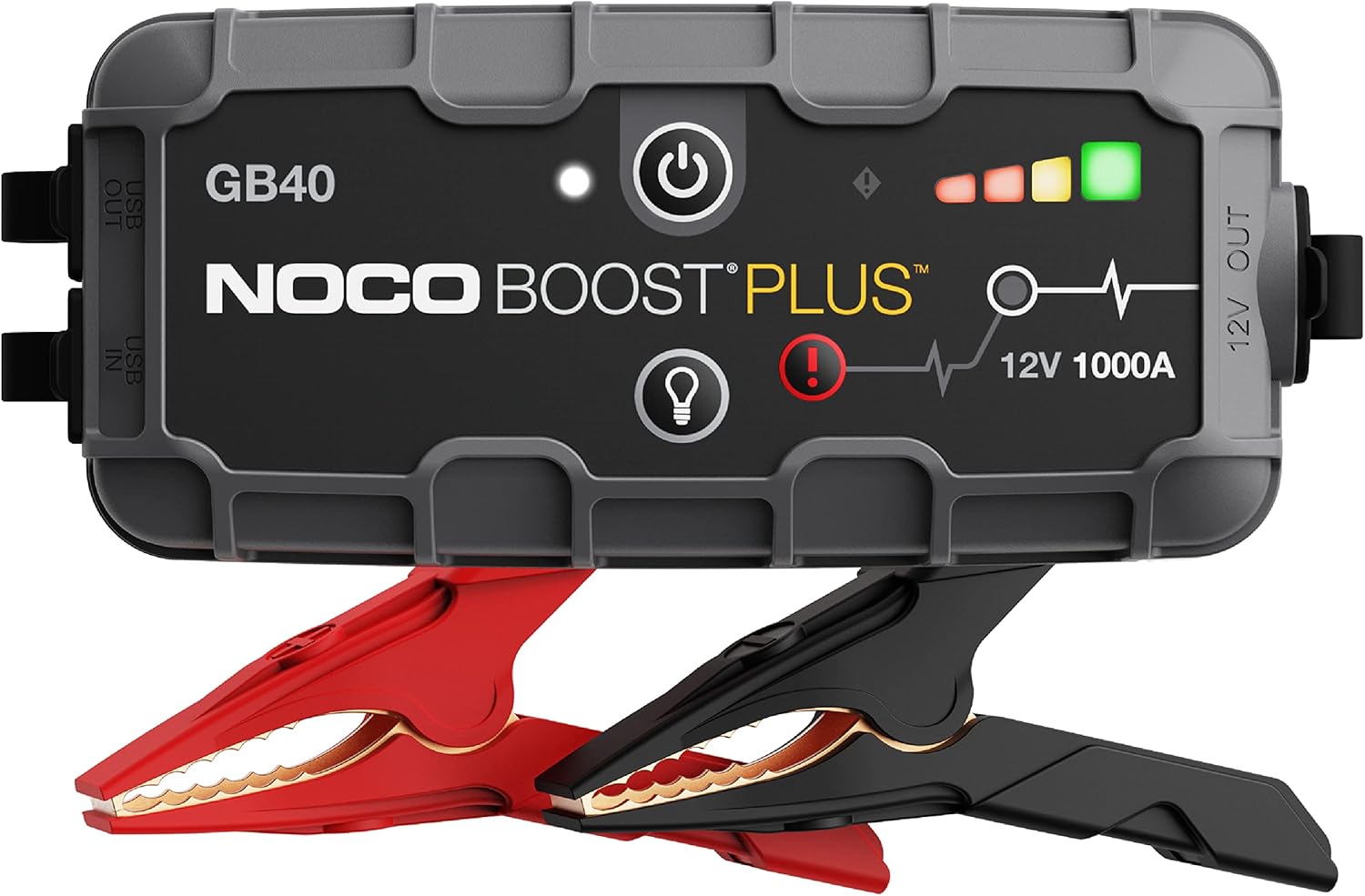
NOCO Boost Plus GB40 Jump Starter
A 1000A lithium jump starter that fits in your glovebox and works on any 12V battery. Your insurance against a dead 12V in a parking lot.
As an Amazon Associate, ThinkEV earns from qualifying purchases — at no extra cost to you.

Founder & Chief Editor
Vlad Pereira is the founder and chief editor of ThinkEV.ca, the Canadian electric-vehicle publication he writes and edits from Courtenay, British Columbia. He covers EV pricing, federal and provincial rebates, charging costs, and the Chinese manufacturers now entering Canada, from the buyer's side rather than the press-fleet side. ThinkEV is a venture of Vlad Pereira Online; his writing on health, income and the long game lives at vladpereira.com.
Frequently asked questions
Will Lexus release any other electric sedan to replace the LF-ZC?
Did solid-state battery problems actually cause the cancellation?
Which premium EV sedans are actually available to Canadian buyers now?
How does Canada's regulatory timeline interact with Toyota's retreat?
Is the Lexus IS still a viable option for sedan buyers?
More EV & road-trip finds
Affordable upgrades worth a look — tap any to check the price on Amazon.
 ★ 2,941
Microfiber Cleaning Cloths (Multi-Pack)
View on Amazon ★ 314
★ 314Mini USB LED Ambient Lamps (4-Pack)
View on Amazon ★ 401
★ 401Crochet Daisy Rear-View Mirror Charm
View on Amazon ★ 27,769
Car Cup Holder Coasters (4-Pack)
View on Amazon ★ 17,242
LISEN Mini USB-C Car Charger (54W)
View on Amazon ★ 61
★ 61Toddler Car Seat Snack and Cup Tray
View on Amazon ★ 392
★ 392Large Cup Holder Adapter (32-40oz)
View on Amazon ★ 47,507
HOMEXCEL Microfiber Cloths (12-Pack)
View on AmazonRead, Plan, Then Stay Current
Explore our expert articles to understand incentives and ownership costs, use the map to pressure-test charging reality, then subscribe so new EV coverage comes straight to you.
Continue Reading
BYD Aims to Outsell Toyota as China Sales Fall 29%

Toyota Sued Over a Cut of a $9B Tariff Refund
Tesla Pauses Model 3 Premium Orders in Canada, Blames the Quota. The Numbers Tell a Different Story

Peugeot RCZ Returns With a 1,000-Volt Solid-State Battery

Citroën 2CV Returns: €15,000 EV, Egg Compartment Intact