Wang Chuanfu just admitted BYD can't build batteries fast enough.
That's not a crisis. That's a demand problem every automaker on Earth would trade their pension for.
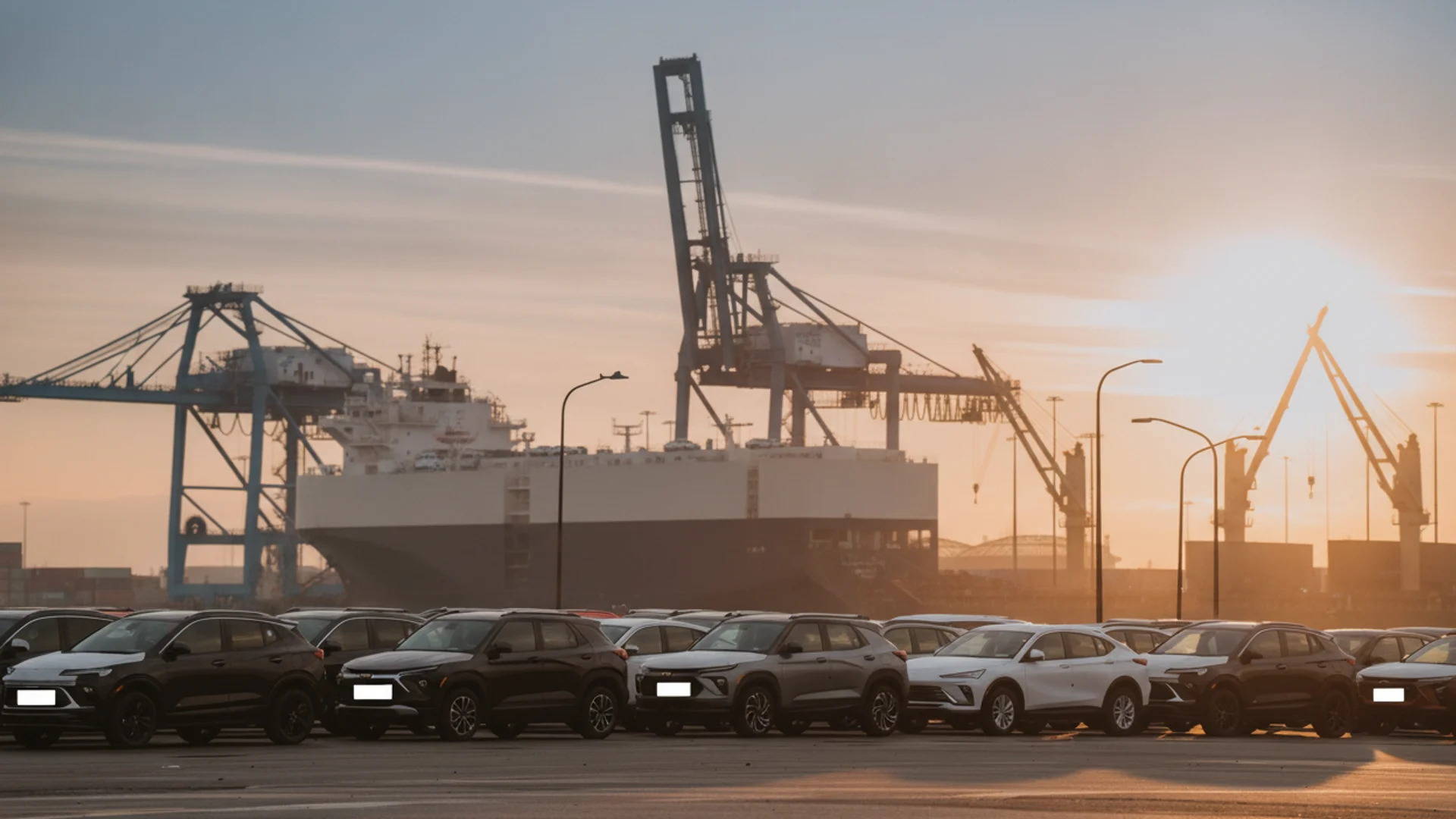
The world's largest EV maker, the company that overtook Tesla in 2025 by nearly 600,000 units, stood on a stage on May 15 and told the room its factories are running tight. Not because of safety. Not because of recalls. Because customers want the new flash-charge models faster than BYD can hand them over. BYD's 5-minute flash charging models have been hugely popular, but it has resulted in tight battery supply conditions, the company founder revealed.
Every legacy OEM struggling to sell EVs in 2026 just heard that and felt something between envy and indigestion.
This matters because BYD just signalled to investors that it is demand-constrained rather than demand-soft, signalled to competitors that external Blade 2.0 supply is off the table for now, and forced CATL's strategy team into a conference room to redraw scenarios.
Key takeaways
- BYD sold 2.25 million battery EVs in 2025, outpacing Tesla by roughly 620,000 units.
- Wang Chuanfu publicly confirmed Blade 2.0 battery production can't keep up with demand for 5-minute flash-charge models.
- External Blade 2.0 supply to competitors is effectively off the table until BYD can supply itself.
- Silicon-carbon anodes replacing graphite are the material change behind BYD's headline 1,000km CLTC range numbers.
- Based on CATL's Shenxing ramp pattern, BYD's supply tightness likely resolves somewhere around mid-2027.
The founder said the quiet part out loud
Most companies bury supply problems. They blame "calibration", "rolling launches", "regional staging". They invent vocabulary to avoid the word shortage.
Wang Chuanfu picked up the microphone at the 2026 Yangwang Business Research Institute conference and said it directly. Battery production is tight. Demand has outpaced capacity. More output is coming online, and monthly sales are still expected to climb.
This is significant for two reasons.
The first reason is corporate. Founders of public companies do not volunteer supply constraints unless they want a specific audience to hear them. Wang has two audiences here, investors and partners. Investors hear "we are demand-constrained, not demand-soft". Partners hear "do not bother asking us about external Blade 2.0 supply for at least another quarter". Both messages travel for free, in one sentence, at a high-prestige industry venue. That is excellent corporate communication, dressed as candour.
The case against reading Wang's statement this charitably is fair to put on the table. A sceptic would argue founders also volunteer supply constraints when they're trying to get ahead of a delivery miss before analysts catch them in it, a kind of pre-emptive guidance dressed as a humblebrag. That reading is plausible in the abstract. It collapses against the specific numbers, though, because BYD's monthly sales trajectory in the months leading up to the announcement was climbing, not flattening, and a founder smoothing a delivery miss would be steering investor expectations down, not signalling that more capacity is coming online. The mechanics don't fit.
The second reason is competitive. The single most important question hovering over the Chinese battery industry right now is whether BYD will open Blade 2.0 to external buyers. FAW Group already uses Blade cells in models like the Hongqi E-QM5 and Bestune NAT, and in February 2024 BYD reached a strategic agreement with US-based supplier BorgWarner, under which FinDreams Battery serves as BorgWarner's sole supplier of Blade battery cells and licenses related intellectual property. So the question isn't whether BYD sells Blade cells outside, it already does. The question is whether it scales that business to the point where it threatens CATL's LFP dominance.
Wang just told everyone the answer is "not yet". And the reason is the best possible one: BYD can't even supply itself.
That is not the language of a company in trouble.
That is the language of a company telling the market its biggest constraint is a queue at the door.
Five-minute charging did exactly what BYD promised, maybe too well
Roll back to March. BYD launched Flash Charging in the Denza Z9 GT and the Yangwang U7, two halo cars priced where halo cars live. Marquee numbers. Marketing in three colours. Most observers filed it under "expensive proof of concept" and waited to see whether the architecture would migrate down-market.
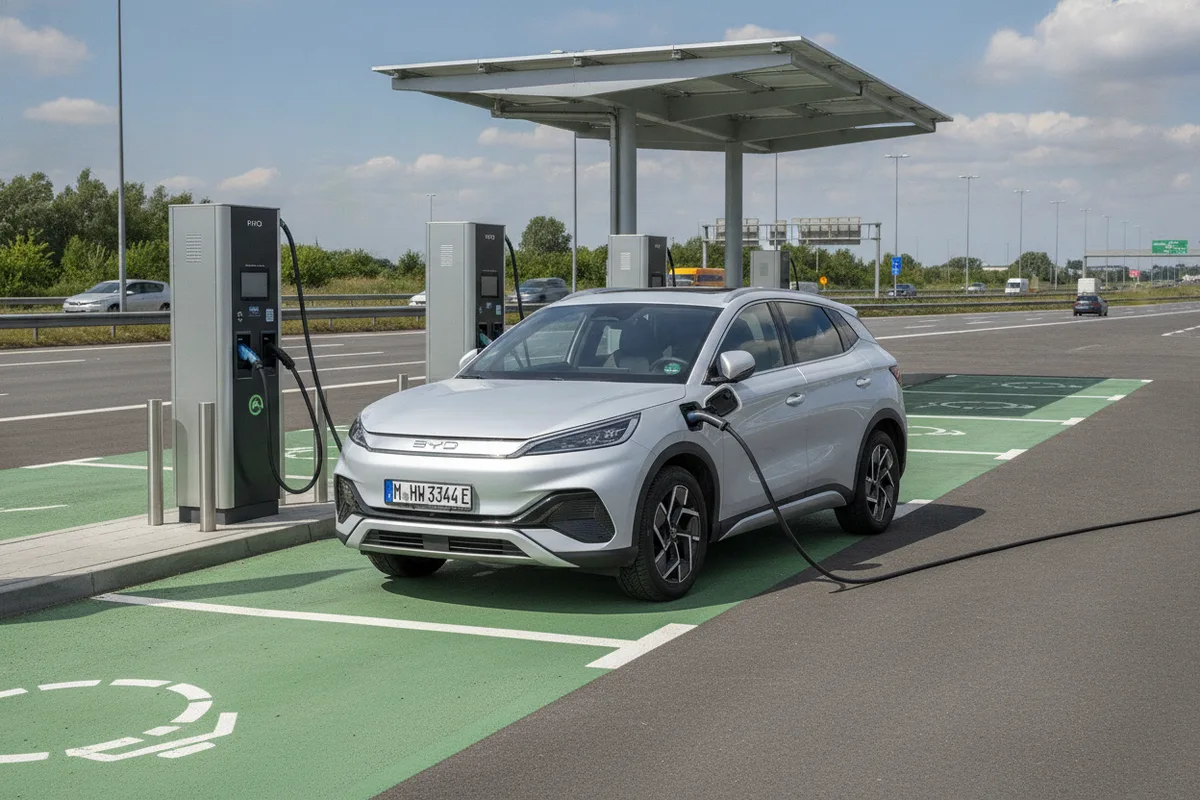
It migrated. BYD launched its new Flash Charging system, enabling EV charging in as little as 5 minutes, in luxury vehicles like the Denza Z9 GT. Now, it's rolling out to some of its best sellers.After introducing its new Blade Battery 2.0 and Flash Charging system last month, BYD confirmed the Yangwang U7, an ultra-luxury electric sedan, would be the first vehicle equipped with the new tech.
Then it kept migrating.
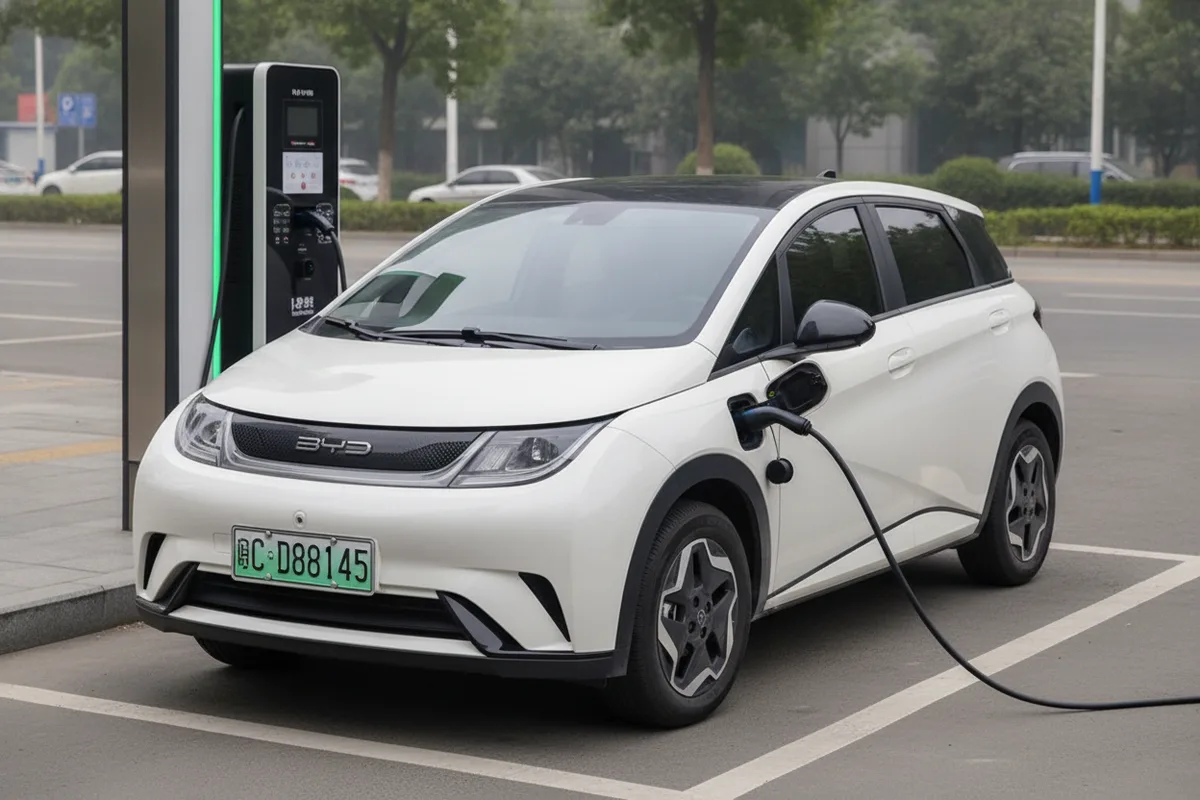
The Han, the Tang, the Seal, the Sealion, the volume nameplates, the cars BYD actually moves in seven-figure quantities, started getting the Blade 2.0 + Flash Charging stack. And the demand profile predictably went vertical, because consumers in China do not need a long briefing to understand the value proposition. Five minutes. A thousand kilometres of CLTC range. The energy-density leap comes from a silicon-carbon anode replacing graphite, the single material change doing most of the work behind the headline range numbers.
Of course it sold faster than BYD could build it.
The accounting here is that BYD's product team out-executed its own supply chain. That happens to good companies. Apple lived inside that problem for the entire iPhone 4 cycle. Tesla lived inside it during the Model 3 ramp. The car industry has a name for it: "high-class problem". The problem is high-class because the solution is purely industrial, pour concrete, install lines, hire technicians, wait twelve months. It is not a problem of demand discovery, brand position, or product-market fit. Those are the problems that kill car companies. BYD does not have any of those.
The cleanest historical comparison isn't actually Tesla, it's the CATL Shenxing ramp three years ago. Shenxing went from luxury debut to mainstream cascade across roughly 14 months, and CATL spent most of 2024 unable to meet contracted volumes for OEMs that had signed before launch. The pattern is identical. A breakthrough cell shows up in a halo product, performance numbers travel faster than the marketing budget, demand front-loads onto the volume nameplates, and the cell maker spends a year and a half building lines as fast as concrete cures. BYD is roughly six months into a curve CATL took eighteen months to walk through. If the pattern holds, the supply tightness resolves somewhere in mid-2027.
What BYD has, in the meantime, is a factory queue. The factory queue is being lengthened on purpose.
Every quarter that queue exists, more buyers wait, more deposits accumulate, more Western dealers in markets like Europe and Australia get told their allocation just slipped a month. That is not a press-release-friendly fact. It is, however, the most bullish operational signal an EV manufacturer can produce in 2026.
This context becomes clearer when examining the technical breakdown of how BYD's Blade Battery changed the industry and its implications. The current shortage is the second-order effect of getting that architecture right the first time.
Gear worth having
As an Amazon Associate, ThinkEV earns a small commission from qualifying purchases — at no extra cost to you.

Emporia Smart Level 2 EV Charger (48A)
Budget-friendly 48A charger with WiFi and per-session energy tracking. Best bang for buck if you want smart features under 500 dollars.
As an Amazon Associate, ThinkEV earns from qualifying purchases — at no extra cost to you.
This is what winning looks like, and it's messy
The numbers matter.
BYD sold 2.25 million battery EVs in 2025. Tesla sold 1.63 million. The gap (roughly 620,000 vehicles) is larger than the entire annual output of several legacy OEMs' EV divisions combined. BYD did not get to that position by accident, and it is not going to lose that position to a battery supply pinch that the company itself has flagged as temporary.
Stripped of the marketing language, here is what just happened:
BYD told the world its biggest single problem is that customers want its cars faster than its battery lines can keep up. There is no version of that statement that is bad news for BYD's stock, BYD's brand, or BYD's negotiating position with suppliers, partners, and governments.
The friction is real, though. Every model BYD upgrades with Flash Charging pulls demand forward from quarters that haven't happened yet. Dealers in China are already reporting customers willing to wait two and three months for a flash-charge variant rather than take an immediate-delivery older trim. That is a measurable shift in willingness-to-wait, and it is exactly the consumer behaviour BYD's marketing has been engineering for three years.
The gap between "announced" and "available" is now BYD's biggest operational problem.
It is also the cleanest competitive moat in the EV business.
While Ford, GM, Stellantis, and Toyota are paying engineers to ask why customers don't want their EVs more, BYD is paying engineers to ask how to build more lines faster. Those are not the same problem. They are not even adjacent problems. One is solvable with capital. The other is solvable with a miracle, or a reorganisation, or both.
The Toyota comparison sharpens this. Toyota's flagship next-generation battery commitment, its solid-state line, currently targets 2028 for a limited run of roughly 20,000 vehicles. Twenty thousand. BYD is supply-constrained at a monthly run-rate that, in any given quarter, exceeds Toyota's entire planned solid-state output for the back half of the decade. The Japanese major's "future" is the Chinese major's "Tuesday morning". That is not a slogan. That is the production gap legacy OEMs need to close while running uphill against tariffs, labour disputes, and dealer networks that still earn most of their margin on service intervals an EV doesn't need.
If you want to understand why competition like this is good for buyers, including Canadian ones, see why Chinese EV brands entering Canada is positive competition, not a threat. The pressure BYD is putting on incumbents is the pressure that produces better cars at better prices, on every continent.
CATL is watching this very carefully
BYD's Blade 2.0 supply tightness is not just a BYD story. It is a CATL story, told from the other side of the table.
Industry analyst commentary has been circling a specific scenario for the past eighteen months: if BYD successfully cascades flash charging technology down to mainstream 150,000-yuan-class vehicles and opens battery supply to third parties, it could divert 10-15% of CATL's LFP orders. That is not a hypothetical. That is a number CATL's planners model in their sleep.
Wang Chuanfu's May 15 statement quietly delays that scenario.
BYD cannot threaten CATL's LFP order book with a battery it cannot make enough of. As long as Blade 2.0 lines are running flat-out feeding BYD's own vehicle assembly plants, third-party Blade contracts at the volume CATL would actually notice are mathematically impossible. Every quarter BYD stays supply-constrained is a quarter CATL holds its ground without firing a shot.
That sounds like CATL caught a break. It isn't.
Gear worth having
As an Amazon Associate, ThinkEV earns a small commission from qualifying purchases — at no extra cost to you.

WeatherTech FloorLiner for Tesla Model 3
Deep-channel liners that trap every drop of slush and salt. The difference between a ruined interior and a showroom-fresh cabin after a Canadian winter.
As an Amazon Associate, ThinkEV earns from qualifying purchases — at no extra cost to you.
The supply constraint is temporary by design. BYD is investing in capacity. New lines are scheduled. The constraint will resolve, and when it does, BYD will have both the production volume and the credibility, built up during eighteen months of demonstrated demand, to walk into Geely, Chery, Xpeng, Stellantis, or any number of OEMs and pitch Blade 2.0 supply contracts with the data already in hand.
CATL's defensive position rests on two things: scale and Shenxing. Scale, BYD can match through capex. Shenxing, CATL's own ultra-fast LFP architecture, the one delivering 400 km in 10 minutes, is the genuine competitive answer, and it ships today in volumes BYD currently cannot. The next twelve months are a foot race between BYD building Blade 2.0 capacity and CATL pushing Shenxing Plus into more OEM contracts. Whoever locks in the most binding multi-year supply agreements during this window owns the LFP segment through 2030.
The bear case on BYD's third-party play is also worth saying out loud. CATL has fifteen years of supplier-relationship infrastructure with non-Chinese automakers. BYD has a vertical-integration culture that has historically made it a difficult external partner, its incentives to favour its own vehicle assembly during shortages are structural, not optional, and every prospective OEM customer knows it. That is the reason a Stellantis or a VW will sign Shenxing contracts faster than Blade contracts even at notionally equivalent terms. Trust travels at the speed of track record. BYD is building one. It does not yet have one at the scale CATL does.
CATL's window to defend market share is the same window as BYD's supply tightness. Months, not years.
This is the kind of competitive geometry that almost never shows up in a press release, and it just got revealed in a single sentence at a research institute conference. Read the news that way.
For more on how battery chemistry is reshaping the competitive landscape between LFP, NMC, and incoming solid-state options, see the battery guide nobody made simple enough. The Blade 2.0 vs. CATL Shenxing question is the next chapter of that argument.
Gear worth having
As an Amazon Associate, ThinkEV earns a small commission from qualifying purchases — at no extra cost to you.

Grizzl-E Classic Level 2 EV Charger (40A)
Canadian-made and rated for minus 40C winters. 40A / 9.6 kW, NEMA 14-50, indoor/outdoor, 24-ft cable. The charger built for Canadian weather.
As an Amazon Associate, ThinkEV earns from qualifying purchases — at no extra cost to you.
What the community is actually saying
Predictably, the discourse split along brand-loyalty lines within hours.
The sceptical reading, louder on X than on Chinese-language platforms, was that "tight supply" is corporate code for quality holdbacks. The theory goes: BYD pushed Blade 2.0 to market quickly, found cell-consistency issues at scale, and is now slowing distribution while it tightens manufacturing tolerances. The shortage narrative, in this reading, is the polite face on a yield problem.
That theory does not survive contact with the evidence.
BYD has made no public statement linking battery supply to safety. The opposite, actually, the company has spent the past month aggressively demonstrating Blade 2.0 robustness, including an eight-hour livestreamed teardown in which bloggers ground, sawed, and hammered the pack with no fire. That is not the behaviour of a company quietly hiding a yield problem. Companies hiding yield problems do not invite the internet to attack their batteries with power tools for an entire workday.
That said, the sceptics have one defensible point worth conceding: 10C charging means each cell has to withstand massive current surges in an extremely short time, imposing unprecedented demands on cell consistency, thermal management, and cycle life. If yield issues do exist at the bleeding edge of Blade 2.0 production, they would show up exactly as supply tightness, and they would be invisible to outside observers until warranty claims surface in 2027 or 2028. The position is not "no yield issues exist", it is "no evidence of yield issues exists, and the public-facing behaviour is the opposite of cover-up posture". Those are different claims. The second one is the one the record supports.
The Chinese-language reading on Weibo is closer to the truth: demand is real, sales trajectory supports the supply-constraint story, and the press conference framing is consistent with a company telling investors what it cannot tell competitors directly.
The interpretive split also tracks the broader split in how Chinese-EV news lands in Western versus domestic markets. In China, "BYD oversold itself" is a story about momentum. In parts of the Western press, the same fact set gets filtered through a narrative of distrust, every BYD announcement is a Trojan horse for something else. That framing reflects geopolitics more than it reflects manufacturing.
For Canadian readers in particular, the question is whether the flash-charge models even reach this market in the near term. With Canada's tariff on Chinese EVs cut from 100% to 6.1% in January 2026 with a 49,000-unit quota, there is a path. But BYD shipping Blade 2.0 cars to Canada in 2026 requires BYD having spare Blade 2.0 cars to ship, which, per Wang, it currently does not.
The Canadian launch timetable just got longer, not shorter. Which means the 49,000-unit quota, already small relative to Canada's annual light-vehicle market, is now competing against European and Australian dealer networks that have been waiting longer, paid deposits earlier, and signed allocation contracts that pre-date Canada's tariff reduction. Canada is at the back of a queue it hadn't realised was a queue.
Gear worth having
As an Amazon Associate, ThinkEV earns a small commission from qualifying purchases — at no extra cost to you.

Lectron Level 2 J1772 Charger (40A, WiFi)
Smart WiFi charger with real-time energy monitoring. 40A / 9.6 kW, J1772 with a NEMA 14-50 plug, schedule charging right from your phone.
As an Amazon Associate, ThinkEV earns from qualifying purchases — at no extra cost to you.
The reframe: this announcement is actually bullish
Strip everything else away, and here is what BYD just communicated to the global EV industry.
We have built a battery that customers will queue for. We have built a charging system that customers will queue for. We have built halo cars that demonstrate both, and we are now migrating that stack down into the volume segment. Our biggest single constraint is the speed at which we can pour concrete and install production lines. We expect that constraint to ease over the next several quarters. Until it does, please direct all third-party Blade 2.0 supply inquiries to a future date.
That is the press release nobody wrote, but everybody in the industry just received.
The endgame Wang Chuanfu is steering toward is the 150,000-yuan flash-charge EV. In Canadian dollars, that's roughly $29,000 CAD before tariff and freight, a car with 1,000+ km of CLTC range and a five-minute fill-up, available to buyers whose previous ceiling was a Corolla Hybrid. If BYD lands that product anywhere close to that price point in 2027, the entire mainstream EV competitive landscape resets. Not the luxury segment. Not the early-adopter segment. The mainstream. The Civic-Corolla-Sentra middle of every automotive market on Earth.
This is the bet. The current shortage is the price of getting there first.
The legacy OEMs who spent 2025 wondering whether to bet bigger on EVs just got handed a piece of information that should make that decision easier. The Chinese mainstream EV with halo-tier charging tech is not a 2030 problem. It is a 2027 problem. The company that will build it is currently constrained by how fast it can hire battery technicians.
If that is not an industry inflection point, nothing is.
Three things would change this read:
Third-party Blade 2.0 supply announcements. The moment those land, and they will, is the moment CATL's competitive position changes materially. The first external customer will be a Chinese OEM rather than a Western one; the Western pickup comes later, once BYD has the production base to negotiate from strength.
Cadence of capacity-build disclosures. If BYD's quarterly capex updates show Blade 2.0 line additions tracking ahead of schedule through Q3 and Q4 2026, the bullish read holds. If those disclosures slip or get vague, particularly on monthly cell output figures, which BYD has historically been transparent about, that is the signal that something other than pure demand is constraining throughput, and the sceptics' yield-issue theory deserves a second look.
The 150,000-yuan vehicle launch itself. A 2027 ship date at the implied spec gives legacy OEMs roughly one product cycle to respond before market share moves. A slip into 2028, or a launch meaningfully more expensive than the 150,000-yuan anchor, stretches the timeline by eighteen months and hands Toyota a reprieve it doesn't currently deserve.
For background on the broader battery longevity question, particularly BYD's headline cycle-life claims, see why BYD's 10,000-cycle claim deserves more scrutiny than it's gotten. The flash-charge story and the cycle-life story are eventually going to converge into a single conversation about whether anyone outside BYD can verify what BYD says about its own cells. That conversation has not happened yet. It will.
Bottom line: when the founder of the world's largest EV manufacturer admits his factories can't keep up with his customers, the correct read is not "BYD is struggling". The correct read is "BYD just lapped the industry, and the industry hasn't realised the lap counter ticked over".
Watch the capacity build-outs. Watch the third-party contracts. Watch the price points.
That is the bullish read: a supply constraint driven entirely by demand.
Gear worth having
As an Amazon Associate, ThinkEV earns a small commission from qualifying purchases — at no extra cost to you.

ChargePoint Home Flex Level 2 Charger (50A)
Premium 50A / 12 kW charger with the best app ecosystem. Hardwired or NEMA 14-50, with real-time energy tracking and smart scheduling.
As an Amazon Associate, ThinkEV earns from qualifying purchases — at no extra cost to you.

Founder & Chief Editor
Vlad Pereira is the founder and chief editor of ThinkEV.ca, the Canadian electric-vehicle publication he writes and edits from Courtenay, British Columbia. He covers EV pricing, federal and provincial rebates, charging costs, and the Chinese manufacturers now entering Canada, from the buyer's side rather than the press-fleet side. ThinkEV is a venture of Vlad Pereira Online; his writing on health, income and the long game lives at vladpereira.com.
Frequently asked questions
Will the battery shortage delay BYD vehicles available in Canada?
What exactly changed inside the Blade Battery 2.0?
Can BYD sell Blade 2.0 cells to other automakers right now?
How does this affect CATL and the broader battery market?
Is Wang Chuanfu's public admission unusual for a CEO?
More EV & road-trip finds
Affordable upgrades worth a look — tap any to check the price on Amazon.
 ★ 692
★ 692USB-A to USB-C CarPlay Adapter (3-Pack)
View on Amazon ★ 61
★ 61Toddler Car Seat Snack and Cup Tray
View on Amazon ★ 17,839
Qifutan Vent Phone Mount (Military-Grade Clip)
View on Amazon ★ 4,050
Touchscreen Mist Screen Cleaner Kit
View on Amazon ★ 314
★ 314Mini USB LED Ambient Lamps (4-Pack)
View on Amazon ★ 4,055
6-Speed Manual Shift Knob Display
View on Amazon ★ 4,424
Sun Visor Card and Document Organizer
View on Amazon ★ 308
★ 308Coiled Lightning Car Cable for iPhone (2-Pack)
View on AmazonRead, Plan, Then Stay Current
Explore our expert articles to understand incentives and ownership costs, use the map to pressure-test charging reality, then subscribe so new EV coverage comes straight to you.
Continue Reading
BYD Aims to Outsell Toyota as China Sales Fall 29%
BYD Great Seagull: A Bigger $10,000 EV Hatch Is Coming
10–97% in 9 Min: Sunwoda Joins the Flash Charging Race
Denza Z9GT Spotted in Melbourne: 1000km Range, 9-Min Charge

BYD Denza Z9 GT Adds $50K Tri-Motor Trim to China's Top GT