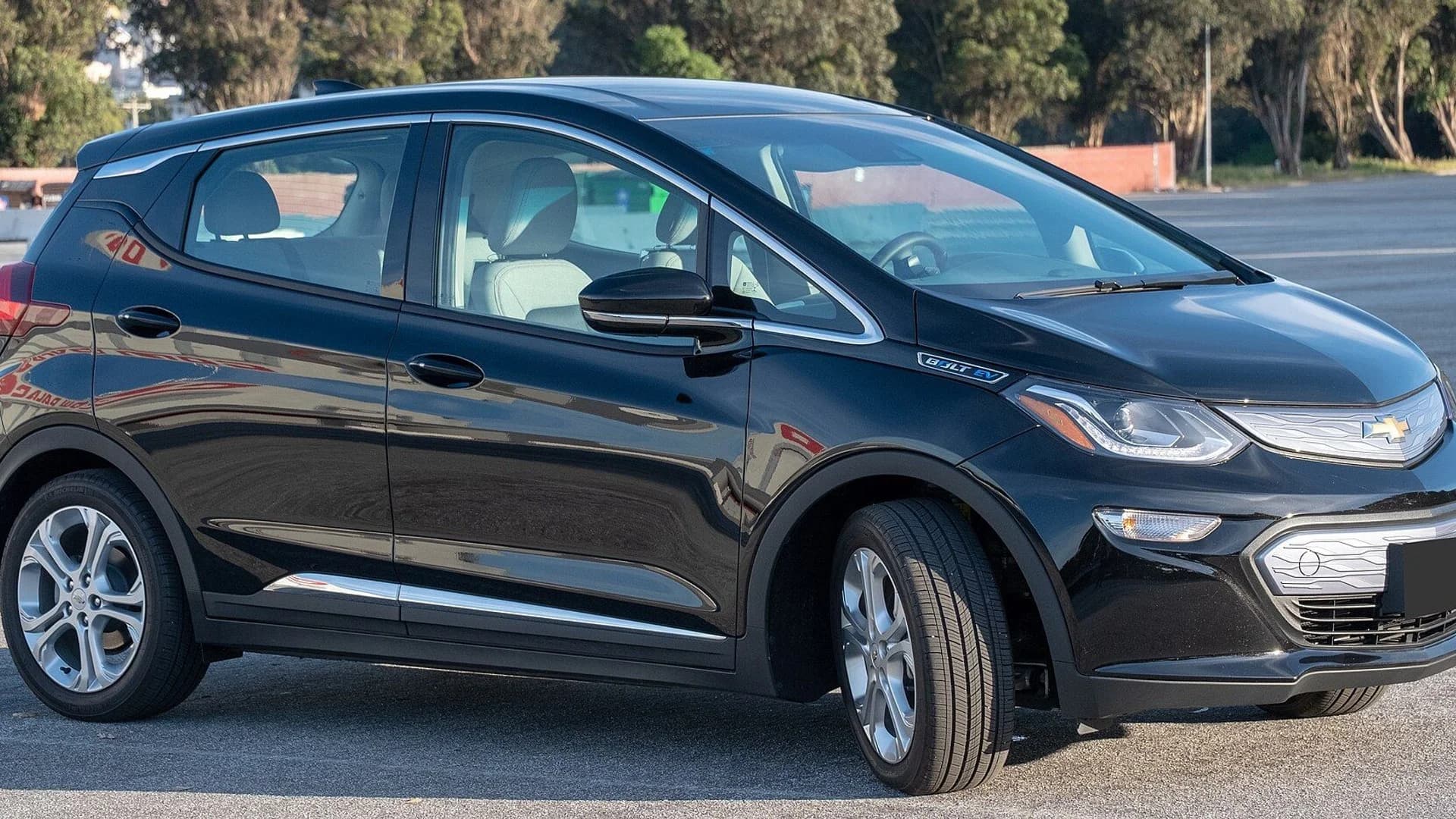
Michigan resident Stanley Kpenkann was driving home in a rented Chevy Bolt, running low on battery, and pulled into a Hyundai dealership to use its EVgo fast charger. Forty-four minutes later, he owed $418. The station was listed as public in the EVgo app. The rate was not a glitch.
Key takeaways
- Elder Hyundai's EVgo station charged $5/kWh plus $5/minute simultaneously, producing a $418 bill for 44 minutes.
- The dealer claimed rates were meant to deter non-customers, a padlock does that; a $220 time fee is revenue.
- Neither the US nor Canada requires charger screens to display rates before a session starts.
- EVgo refunded Kpenkann only after Detroit's WXYZ ran the story, media pressure, not regulation, fixed it once.
- Tesla Superchargers in Canada run $0.30–$0.45/kWh; the Elder Hyundai session cost what ten Ontario fast-charges would.
The Math Behind a $418 Forty-Four-Minute Charge
Elder Hyundai was charging customers $5 per kWh, plus another $5 for every minute connected, both meters running simultaneously. On a 44-minute session, the time fee alone lands at roughly $220 before a single electron gets priced, and the $418 total follows from there.
Tesla Superchargers in Canada run $0.30–$0.45 per kWh; a typical Canadian DC fast-charge session lands at $25–$40. The Elder Hyundai session cleared that ceiling by more than ten times. The dealer's stated rationale, passed through the local ABC affiliate's report, was that the rates were meant to deter non-customers, not to generate revenue. A pricing scheme designed as a repellent is still a pricing scheme when it hits your credit card.
Dealers are private businesses, the EVgo listing was a courtesy, and $5/kWh is the price of not being a customer, that argument collapses on contact with the app. The moment a station carries a "public" tag in a network directory, the driver's expectation is set by the network, not the landowner, and EVgo, not the dealer, is the brand on the sign. If Elder Hyundai wanted to repel non-customers, the working tool is a padlock, not a $220 time meter dressed up as a rate card. When the app says public and the receipt says $418, the label is doing work the landowner never intended.
Gear worth having
As an Amazon Associate, ThinkEV earns a small commission from qualifying purchases — at no extra cost to you.

Lectron Level 2 J1772 Charger (40A, WiFi)
Smart WiFi charger with real-time energy monitoring. 40A / 9.6 kW, J1772 with a NEMA 14-50 plug, schedule charging right from your phone.
As an Amazon Associate, ThinkEV earns from qualifying purchases — at no extra cost to you.
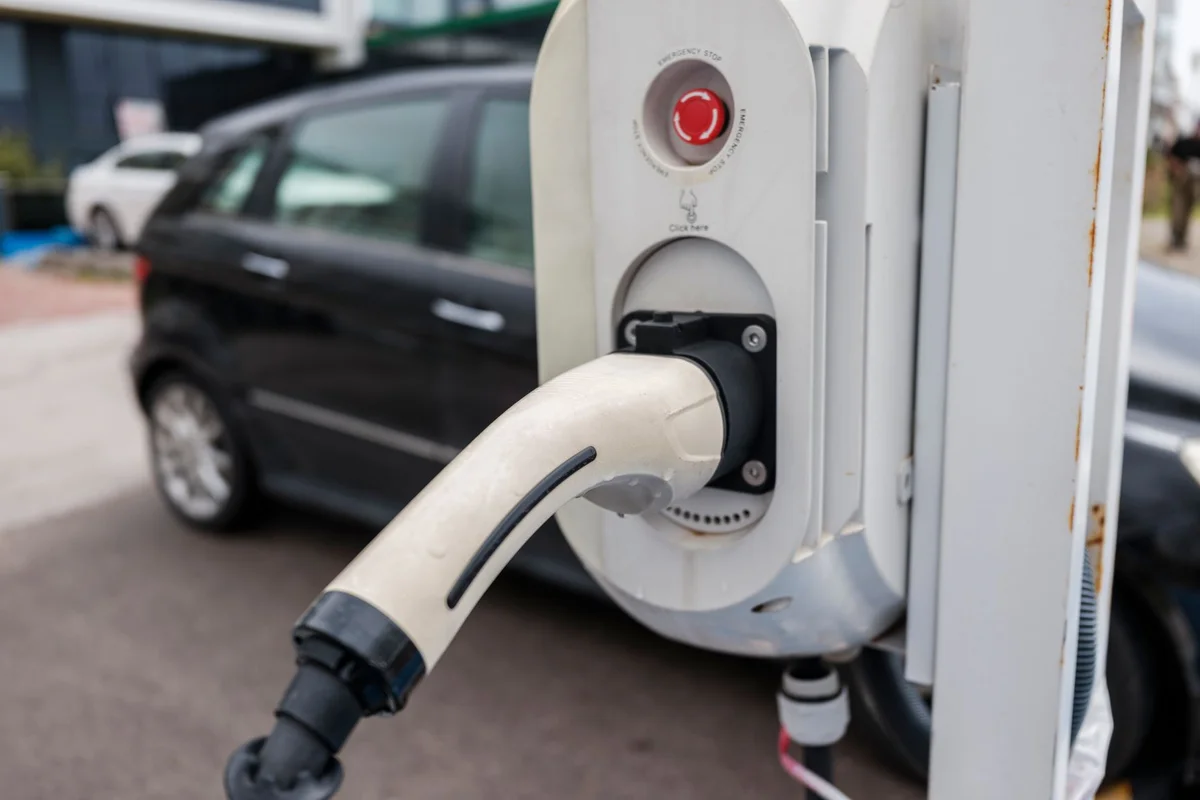
Roughly 16,800 US public DC fast ports exist as of mid-2026, and a meaningful slice sit on dealer lots gated by store hours and operator discretion. Dealership chargers are almost all Level 2, which isn't exactly helpful, no one is going to leave a car at a dealership for hours. The EVgo unit at Elder Hyundai was the exception, a DC fast charger, publicly listed, gated only by whatever rate the dealer felt like typing in.
Gear worth having
As an Amazon Associate, ThinkEV earns a small commission from qualifying purchases — at no extra cost to you.

TP-Link Kasa Smart Plug with Energy Monitoring
Track exactly how much electricity your Level 1 charger uses and schedule it for off-peak hours. Know your real cost per kWh.
As an Amazon Associate, ThinkEV earns from qualifying purchases — at no extra cost to you.
Thousands of dealership chargers appear in EVgo, ChargePoint, and PlugShare with a "public" tag and none of the pricing discipline the label implies. Store hours limit access. Security gates limit access. Dealer discretion sets the price. Neither the US nor Canada requires rate disclosure on the charger's screen before a session starts, the disclosure lives in app fine print, if it lives anywhere. That is a Wild West by omission, not design, but the outcome is the same for the driver holding the receipt.
Contrast this with the Tesla Supercharger network, which built its scale by bypassing dealers entirely and running one operator with one posted rate. Whatever else one thinks of Tesla, a Supercharger stall in Windsor and one in Winnipeg charge the same way, on the same app, at a rate the driver knows before the handle clicks. The dealer-EVgo model inverts every one of those defaults, different operators, different rates, different disclosure, same "public" pin on the map.
The comparison points make the gouging vivid rather than debatable. A Canadian public DC fast-charge session runs $25–$40. Toronto's city-operated Level 2 lots charge $1.50 per hour. The deeper cost breakdown lives in the province-by-province charging-cost guide. Elder Hyundai's session was priced roughly what a driver in Ontario would spend on ten fast-charges, for one.
The lasting damage is the first-time EV driver who reads this, decides public charging is a scam, and never plugs in outside their garage again. For condo and apartment dwellers without a home port, the shared-charging economics still favour electric by a wide margin at any realistic rate, the $5/kWh figure Electrek flagged is an outlier stapled to a national headline, not the median experience.
Gear worth having
As an Amazon Associate, ThinkEV earns a small commission from qualifying purchases — at no extra cost to you.

Grizzl-E Classic Level 2 EV Charger (40A)
Canadian-made and rated for minus 40C winters. 40A / 9.6 kW, NEMA 14-50, indoor/outdoor, 24-ft cable. The charger built for Canadian weather.
As an Amazon Associate, ThinkEV earns from qualifying purchases — at no extra cost to you.
Gear worth having
As an Amazon Associate, ThinkEV earns a small commission from qualifying purchases — at no extra cost to you.

ChargePoint Home Flex Level 2 Charger (50A)
Premium 50A / 12 kW charger with the best app ecosystem. Hardwired or NEMA 14-50, with real-time energy tracking and smart scheduling.
As an Amazon Associate, ThinkEV earns from qualifying purchases — at no extra cost to you.
The Fix That Isn't Coming
EVgo was contacted to report the error, and the charge was refunded after WXYZ Detroit ran the story. Media pressure worked once. That is the exception, not the mechanism.
No US or Canadian regulator currently mandates rate transparency on the charger screen before a session begins at dealer-operated EVSE. Until one does, the practical position for any EV driver is unglamorous: treat dealership chargers as last-resort emergency infrastructure, and never authorise a session without reading the rate line first. The dealer-lot fringe is a small slice of Ontario's broader charging infrastructure, but it is the slice that produces headlines.
The policy ask is small and specific: mandatory rate disclosure on the physical unit at session start, in dollars per kWh and dollars per minute, before the plug locks. Not in the app. On the screen. The checkpoint to watch is Transport Canada's ZEV consultation cycle, if the next round closes without on-unit rate-disclosure language for third-party-hosted EVSE, the loophole is confirmed policy, not oversight. Until that shows up in a rulebook, the next $418 receipt is already being printed somewhere.
Gear worth having
As an Amazon Associate, ThinkEV earns a small commission from qualifying purchases — at no extra cost to you.

Magnetic EV Charger Plug Cover
A magnetic cap that keeps rain, road salt, and grit out of your home charger handle between sessions.
As an Amazon Associate, ThinkEV earns from qualifying purchases — at no extra cost to you.

Founder & Chief Editor
Vlad Pereira is the founder and chief editor of ThinkEV.ca, the Canadian electric-vehicle publication he writes and edits from Courtenay, British Columbia. He covers EV pricing, federal and provincial rebates, charging costs, and the Chinese manufacturers now entering Canada, from the buyer's side rather than the press-fleet side. ThinkEV is a venture of Vlad Pereira Online; his writing on health, income and the long game lives at vladpereira.com.
Frequently asked questions
Is the EVgo app required to show pricing before a session starts?
Can a dealer legally set any rate they want on a public network?
Did the driver actually get a refund?
How does this compare to what Canadians typically pay to fast-charge?
Are dealership chargers generally reliable for road-trip planning?
More EV & road-trip finds
Affordable upgrades worth a look — tap any to check the price on Amazon.
 ★ 2,941
Microfiber Cleaning Cloths (Multi-Pack)
View on Amazon ★ 164
★ 164Solar-Powered LED Ambient Light
View on Amazon ★ 401
★ 401Crochet Daisy Rear-View Mirror Charm
View on Amazon ★ 27,769
Car Cup Holder Coasters (4-Pack)
View on Amazon ★ 17,242
LISEN Mini USB-C Car Charger (54W)
View on Amazon ★ 61
★ 61Toddler Car Seat Snack and Cup Tray
View on Amazon ★ 17,839
Qifutan Vent Phone Mount (Military-Grade Clip)
View on Amazon ★ 96,686
PULIDIKI Car Cleaning Gel (Detailing Putty)
View on AmazonRead, Plan, Then Stay Current
Explore our expert articles to understand incentives and ownership costs, use the map to pressure-test charging reality, then subscribe so new EV coverage comes straight to you.
Continue Reading
BMW's 20% IONNA Discount and OEM-Gated Charging
Hyundai Genesis Recall: Park Outside Warning Hits 94,622
2027 Hyundai IONIQ 5 Base Price Goes Up $250 to $35,250
Octopus Charge: One Free App, 211,000 EV Chargers
Hyundai IONIQ 9 Calligraphy Black Ink Launches at £79,320