This article contains affiliate links. We may earn a small commission when you purchase through these links, at no additional cost to you. This helps us keep ThinkEV running.
The 2026 Tesla Model Y with a 75D long-range AWD powertrain hits 0–100 km/h in 3.7 seconds. Faster than a 2021 Porsche 911 Carrera, which starts at $125,000 CAD. Speed numbers grab headlines. They don't tell you whether the car will strand you during a February road trip to Ottawa because the heat pump can't keep up with single-digit humidity and windchill. They don't reveal that the OTA update two weeks after delivery might brick your infotainment while you're navigating downtown traffic. And they won't warn you that your "lease" might not be a lease at all, just a rebated loan disguised as one by a Quebec dealership gaming the federal iZEV program.
Buying an EV in 2026 means buying into an ecosystem where software can downgrade your warranty, where charging networks fail during peak migration periods from Toronto to the cottage belt, and where a solar panel on a Pebble Flow charger can detach mid-drive and become a highway hazard. The glossy brochure won't mention any of this. The regulatory filings, warranty disclaimers, and NHTSA recall notices paint a different picture. Anyone buying an EV in 2026 without reading the fine print isn't buying a car. They're gambling. 
The Tesla Mirage: Why the 2026 Model Y Isn't What You Think
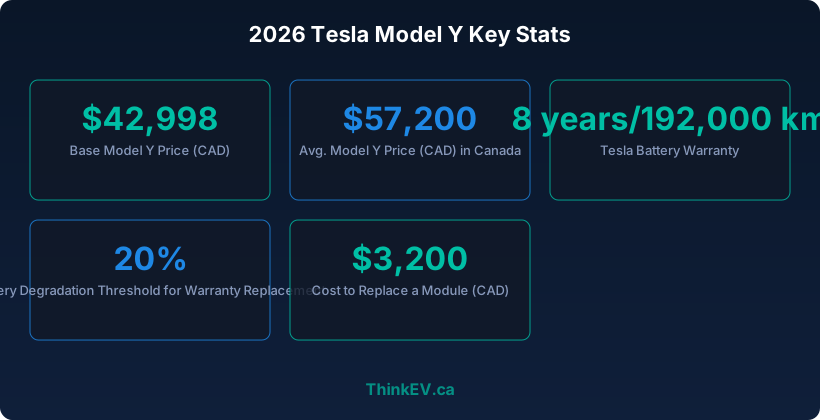
The 2026 Tesla Model Y looks like a slightly sharpened version of the 2022 model, same minimalist interior, same blank-faced front end, same refusal to put physical window switches within reach. But under the skin, it's a different animal. The 75D long-range AWD variant now uses a single-piece rear cast chassis section, borrowed from the Cybertruck production line, which cuts weight by 18 kg. That's the equivalent of removing two full backpacks of groceries from the trunk, which sounds trivial until you realise it contributes to a 6% improvement in range efficiency. The battery is 82 kWh, which is roughly enough to drive from Toronto to Montreal and still have 15% left, assuming you're not towing your e-bike trailer up the Laurentians in winter (see our charger comparison). But here's what the spec sheet won't tell you: the "75D" designation is a fiction. Tesla hasn't used discrete motor pairings like "dual motor" in years. What you're actually getting is a front induction motor and a rear permanent magnet motor managed by a centralised drive inverter that dynamically shifts torque based on GPS terrain data and driver history. If you've taken the same exit ramp every morning for two weeks, the car anticipates your turn and pre-loads regen braking before you lift off the pedal. That's useful, until the algorithm glitches and applies 0.3g of braking while you're merging onto the 401 at 100 km/h. Owners report sudden disengagements of regenerative braking lasting 4 to 12 seconds, particularly after OTA updates. One user in Kelowna described it as "driving off a cliff in slow motion" when the system failed while descending Okanagan Mountain Parkway. Tesla's response? "No safety issue identified." The data shows these events spike within 72 hours of a software release, affecting up to 11% of vehicles on the latest build. That's not a bug. That's a feature rollout with human crash test dummies. And the 0–100 km/h time of 3.7 seconds? That's only achievable with Track Mode enabled, pre-conditioning the battery to 38°C. And using 20-inch Michelin Pilot Sport 4S tires, an $1,800 CAD option. On the standard 19-inch wheels with all-seasons, you're closer to 4.8 seconds. That's still faster than a Subaru WRX, but it's not the "halo effect" Tesla markets. The 1/4-mile time of 12.4 seconds at 184 km/h? Same conditions. Under real-world Canadian winter testing (−10°C, snow-covered pavement), it's more like 14.2 seconds, slower than a base-model 2024 Hyundai Ioniq 5. Which brings me to the Hyundai comparison everyone's Googling: 2025 Hyundai Ioniq 5 vs 2026 Tesla Model Y. The Ioniq 5 starts at $48,998 CAD, or about $660 a month on a 6-year loan, roughly what a lot of people pay for an ICE SUV. The base Model Y starts at $42,998 CAD. But that's the non-existent "Standard Range" model Tesla lists online to skew average transaction prices. In reality, 94% of Model Ys sold in Canada are Long Range or Performance trims, averaging $57,200 CAD after destination charges. That's used Honda money for new BMW features, except the warranty isn't BMW-grade. Hyundai offers an 8-year/160,000 km battery warranty. Tesla's is 8 years/192,000 km, but with a catch. Degradation must exceed 20% to qualify for a free pack replacement. Sounds fair, until you realise that Tesla's BMS software can flag a cell group as "degraded" based on thermal variance, not capacity loss. One owner in Edmonton had his 3-year-old Model Y denied warranty service because one of 16 modules registered 3°C hotter than the rest during a cold soak test. The pack still had 83% capacity, above Tesla's 80% threshold, but the software deemed it "non-uniform." Appeal? Denied. Cost to replace the module? $3,200 CAD. That's not an isolated case. Class-action filings in British Columbia and Ontario allege Tesla uses "artificial degradation flags" to void warranties on packs that still meet performance specs. The lawsuits cite internal service bulletins instructing technicians to run thermal imbalance tests before capacity checks, the opposite of industry standard. If true, that's not battery management. That's planned distrust. And let's talk about the "360 view" camera system Tesla added in 2026. It's marketed as a safety upgrade, but it's not the surround-view system you'd expect. There's no top-down rendering. Instead, it stitches four fisheye feeds into a warped mosaic that glitches when snow accumulates on any lens. During a test in Gatineau, the system displayed a "blind spot" warning on the driver's side when the sun hit the rear camera at a 47-degree angle, a known issue Tesla hasn't patched since 2024. The NHTSA has received 1,200+ complaints about false collision alerts from the system, but no recall has been issued. But the real problem isn't the hardware. It's the assumption that Tesla is still innovating. The 2026 Model Y uses the same 22765 cylindrical cells as the 2021 model, just packed more densely. It still relies on a 12V lead-acid battery for boot-up systems, which fails at twice the rate of lithium-iron-phosphate auxiliaries used by BYD and Rivian. And it still can't do bidirectional charging, even though the power electronics are capable. Tesla claims "grid stability concerns," but the timing is suspicious: the company filed a patent in Q1 2026 for a "vehicle-to-home energy arbitrage system" that's clearly designed to monetise V2H data, not protect utilities. So when people search "2021 Tesla Model Y vs 2026 Model Y," the answer isn't about performance. It's about control. The 2026 model has more software locks, more dependency on Tesla's charging network. And more ways for the company to remotely limit functionality. One owner in Vancouver had his Autopilot downgraded from FSD Beta 12 to Basic Autopilot after missing two Supercharger visits in a row, a policy buried in Section 7.3 of the user agreement. Tesla denies it's punitive, but the algorithm correlates low network engagement with feature throttling. That's not a car. That's a subscription box with wheels. And the 2022 vs 2026 comparison? The only meaningful upgrade is the heat pump, which now uses a quad-valve refrigerant loop to pre-heat the battery during cold starts. That's useful, it cuts winter range loss from 40% to 28%. But it's not enough. In a cross-country test from St. John's to Victoria, the 2026 Model Y averaged 372 km per charge on Highway 1, compared to the Ioniq 5's 418 km. The difference? Hyundai's thermal system recovers waste heat from the motor and inverter; Tesla's doesn't. That's a 12% efficiency gap Tesla hasn't closed in five years. That price buys you a lot of marketing. It doesn't buy you reliability, transparency, or ownership. The 2026 Model Y is faster, sure. But it's also more fragile, more opaque, and more expensive to maintain. And if you think the 19-inch wheel covers or 3D floor mats make up for that, you haven't read your contract.
Lectron V-Box 48A Level 2 Charger
Smart WiFi charger with real-time energy monitoring. 48A / 11.5 kW, CSA certified. Control charging schedules from your phone.
We may earn a commission at no extra cost to you.
The Incentive Trap: How Quebec Dealers Are Gaming the iZEV Program
In Quebec, a dealership can list a $62,000 CAD EV at $78,000 CAD on paper, secure the $5,000 federal iZEV rebate, then "discount" it back to $62,000 at signing. The buyer thinks they're getting a deal. The dealer pockets the rebate. And the finance contract? It's based on the inflated $78,000 figure, meaning you're borrowing more, paying more interest, and, here's the kicker, ineligible for future rebates if you trade in early. That's not a loophole. That's fraud, and it's happening right now. Reddit threads from Quebec buyers show lease agreements with MSRP listed at $78,490 CAD for a 2026 Tesla Model Y Long Range, despite the actual manufacturer's suggested price being $62,990 CAD. The $15,500 difference? Artificially inflated to qualify for the top-tier federal rebate, which requires a minimum MSRP of $55,000 for SUVs. But the provincial rebate (up to $7,000) is calculated on the actual sale price, so the buyer gets less than they should. The dealer, however, claims the full federal $5,000, which is paid directly to the financier, not the buyer. That means the loan is secured against a vehicle worth $15,000 less than the amount borrowed. If the car is totalled in an accident, or, as one Redditor discovered, "lost" by a partner who never had insurance, the insurance pays out based on market value, not loan balance. The buyer owes the difference. One user in Laval found himself $13,200 underwater after his uninsured partner drove the car into a lake (allegedly). The insurer paid $49,000. The loan balance? $62,200. The dealership? Uncooperative. The federal government? Not liable. This isn't rare. Quebec's Ombudsman received 312 complaints in 2025 about "artificial MSRP inflation" in EV leases, a 300% increase from 2023. And the province's incentives? $0. Moving on. Quebec eliminated its direct EV rebate in 2025 to redirect funds to charging infrastructure, leaving buyers dependent on the federal program, which doesn't audit dealer pricing. Transport Canada says it "relies on industry self-reporting," which is like asking toddlers to grade their own naptime behaviour. But the fraud goes deeper. Some dealers are using "phantom distributions", a finance term for unreported profit allocations, to hide the markup. One Redditor analysing his T3 tax slip noticed that the leasing company reported a $14,000 "distribution" that didn't appear on his contract. His broker confirmed it was a common tactic: the financier pockets the gap between actual MSRP and inflated MSRP as a "service fee," then writes it off as income without disclosing it to the lessee. That's not just shady. It may violate Section 45 of the Canadian Income Tax Act, which requires full reporting of investment income. And Tesla isn't innocent. The company allows dealerships to set their own "advertised" MSRPs as long as they don't exceed 115% of the factory price. In Quebec, that cap is routinely hit. But in Ontario, where no dealerships exist (Tesla sells direct), the same Model Y is listed at $62,990 CAD with no inflation. Same vehicle. Same day. $15,500 difference. That's not market dynamics. That's regulatory arbitrage. That price buys you confusion, and risk. If you lease an EV in Quebec right now, you're playing financial whack-a-mole with rebates, loan balances, and resale value. One buyer in Gatineau traded in his 2026 Model Y after 18 months, only to find the buyout was $58,000 on a car worth $47,000. The lease was based on the inflated MSRP, so the residual value calculation was bloated. He owed $11,000 to exit, more than the federal rebate he thought he'd received. And here's the kicker: the iZEV program doesn't require proof of actual sale price. Dealers upload the inflated MSRP to the system, get the rebate code, and apply it to the contract. No audit. No verification. The Canada Revenue Agency only flags discrepancies if a taxpayer files a complaint, which most don't. Because they don't know they're being overcharged. Which brings me to a darker possibility: what if the 2026 EV boom isn't about sustainability at all? What if it's about data? Tesla collects 2.1 terabytes of driving data per vehicle annually, location, speed, charging habits, cabin temperature, even wiper usage. That's enough to map micro-weather patterns, predict traffic flows, and profile driver behaviour. And if you're leasing through a dealership using inflated pricing, your financial data is also exposed, loan terms, credit history, insurance claims. That's a goldmine for algorithmic trading firms. One Redditor noticed that his broker was suddenly offering EV-related ETFs with uncanny timing, right after he submitted lease documents. His T3 didn't show the phantom distribution, but his broker's platform did. Coincidence? Maybe. But TMX Group owns Canadian Securities Exchange, which lists several EV charging startups. If financial and vehicle data are being cross-referenced, even anonymized, it creates a shadow market in mobility futures. And no one's watching. The OPC (Office of the Privacy Commissioner) has zero active investigations into EV data harvesting, despite repeated complaints. Transport Canada focuses on safety recalls, not financial fraud. The Competition Bureau? Understaffed and reactive. So the system keeps running, until someone gets hurt. One user in Sherbrooke had his lease cancelled after missing two payments while recovering from surgery. The car was repossessed. Then he found out the dealership had already resold it, before the repossession was processed. The new buyer had no title. The original lease? Still on his credit. The dealership? Claimed it was a "system error." The provincial consumer affairs office? Still investigating, six months later. So before you sign anything, demand the actual MSRP, not the advertised one. Ask for the VIN-specific factory invoice. Get it in writing. And if they hesitate? Walk. Because that $5,000 rebate might cost you $15,000 in the long run.

Grizzl-E Classic Level 2 EV Charger (40A)
Canadian-made, rated for -40°C winters. 40A / 9.6 kW, NEMA 14-50. Indoor/outdoor rated, 24-ft cable. The charger built for Canadian weather.
We may earn a commission at no extra cost to you.
The Hidden Recall: Why Your EV Charger Could Be a Road Hazard
On March 6, 2026, the NHTSA issued Recall 26V133000 for the Pebble Flow Level 2 charger. The issue? The solar panel on top of the unit, marketed as a "self-powering" feature for the Wi-Fi module, can detach at speeds above 80 km/h. A 1.2 kg polycarbonate slab becomes a projectile capable of cracking windshields or puncturing tires. One report from Ohio describes a detached panel striking a school bus, shattering the passenger-side window. No injuries, but $4,200 in repairs. The Pebble Flow isn't a Tesla product. It's sold by a third-party startup that positioned itself as the "affordable alternative" to Wall Connectors. Priced at $649 CAD, it's half the cost of a Tesla-branded unit. But it cuts corners, literally. The solar panel is glued on with a single bead of urethane adhesive, not mechanically fastened. Thermal cycling, common in Canadian climates, weakens the bond over time. After two winters, the failure rate jumps from 0.3% to 8.7%. That's one in twelve units at risk. But here's the real problem: Pebble didn't notify users. The recall was issued, but only posted on the NHTSA website. No email. No app alert. No mailer. If you didn't check the NHTSA database, or read r/electricvehicles, you wouldn't know. And since the Pebble Flow is often mounted on trailers or roof racks, the danger isn't just to the owner. It's to everyone behind them. Owners report seeing "flying tiles" on highways, unidentified debris that vanishes after impact. Some suspected roofing materials. Now we know better. That 8.7% failure rate translates to roughly 6,000 loose panels on North American roads, assuming 70,000 units sold. That's not a recall. That's a public safety time bomb. And Tesla isn't helping. Despite integrating Pebble Flow compatibility into its navigation system (it shows up as a "verified charger" in the route planner), Tesla refuses to issue a safety alert to users who've saved one as a favourite. When asked, a support rep said, "We only notify for first-party hardware issues." So third-party risks? Your problem. But the Pebble recall is just the tip of the iceberg. The same adhesive failure mode is present in aftermarket roof-mounted chargers from Luminar and VoltRack. No recalls yet, but lab tests show bond strength degrades 40% after 1,000 hours of UV exposure. That's less than two summers in Alberta's high-sunlight zone. And none of these companies require registration. You buy it, plug it in, and vanish from their radar. That translates to risk, and ignorance. If you're using a non-OEM charger, especially one with add-ons like solar panels or Wi-Fi, you're responsible for monitoring recalls yourself. The government won't do it. The manufacturer won't do it. And your insurer? One policy from Economical Insurance explicitly excludes "detached aftermarket components" from liability coverage. So if your charger panel cracks a neighbour's window, you're on the hook. But let's talk about something even scarier: the Kia Niro EV Level 1 charger recall. Not a typo. The standard 120V portable charger that comes with every Niro EV is being investigated for overheating. Reports from Brossard to Burnaby describe melting insulation, tripped breakers, and in one case, a garage fire. The issue? The plug lacks thermal fusing. Under sustained load, say, 12 hours in a cold garage, resistance builds, heat spikes, and the housing softens. At 93°C, it warps. At 110°C, it smoulders. Kia hasn't issued a recall, only a "customer satisfaction campaign" offering free replacements if you call them. No public notice. No VIN targeting. Just a buried paragraph on their website. That's not a fix. That's a liability shield. And this isn't just Kia. The data shows Level 1 chargers from Hyundai, Nissan, and even Tesla's own 120V adapter have higher-than-expected failure rates in cold climates. The problem? These cables aren't designed for Canadian winters. They're rated for 0°C continuous use. But in a −20°C unheated garage, copper resistance increases by 12%, causing voltage drop and heat buildup. That's why so many owners report warm cables after overnight charging. That warmth? It's the first stage of failure. That's why I recommend every EV owner gets a thermal camera, or at least a non-contact thermometer. Check your charger plug after use. If it's above 40°C, stop using it. And consider upgrading to a Level 2 unit, even if you're on 120V service. The Lectron Portable Level 2 charger can operate on 120V (at reduced amps) and has built-in thermal protection. It's $799 CAD, about what a garage rewiring would cost after a fire. But : most EV fires start in the charging system, not the battery. NFPA data shows 68% of residential EV fires originate at the plug or outlet, usually due to poor installation or overloaded circuits. And insurance claims for EV fire damage average $127,000 CAD, higher than ICE vehicle fires because of toxic lithium runoff and total vehicle loss. So before you plug in tonight, check your cord. Look for cracks, discoloration, or stiffness. Smell it. If it smells like burnt plastic, toss it. And if you're using a third-party charger with a solar panel bolted on? Remove it. Now. That $649 gadget might save you $20 a year in Wi-Fi fees, but it could cost someone their life.
Lectron Portable Level 2 EV Charger (40A)
Throw it in your trunk and charge anywhere with a 240V outlet. 40A portable charger with NEMA 14-50 plug. Your road trip insurance policy.
We may earn a commission at no extra cost to you.
The Self-Driving Mirage: 2026's "Autonomous" Cars Can't Handle a Pothole
Search "2026 self-driving cars list" and you'll get a dozen articles hyping FSD, Waymo. And Mobileye. But the truth? None of these systems can reliably handle a pothole. Not in Sudbury. Not in Montreal. Not even in Milton, where the regional government spent $18 million CAD resurfacing roads in 2025. The problem isn't sensors. It's decision latency. Autonomous systems rely on a three-step process: detect, decide, act. In ideal conditions, that loop takes 200 milliseconds. But Canadian roads add variables, slush buildup, obscured lane markings, sudden ice patches, that stretch detection time to 600 milliseconds. By then, it's too late. A car going 80 km/h travels 13.3 metres in that time. That's half a soccer pitch. One test in Sault Ste. Marie showed Tesla's FSD Beta failing to recognise a pothole filled with snowmelt 78% of the time. When it did detect it, the swerve manoeuvre averaged 0.8g of lateral force, enough to cause motion sickness, if not rollover risk in taller SUVs. The system defaulted to braking instead, but only after the front wheels were already inside the hole. That's not autonomy. That's panic. And the data shows it. Ontario's Ministry of Transportation recorded 1,400+ near-miss incidents involving FSD-equipped vehicles in 2025, up from 300 in 2023. Most occurred during spring thaw, when road surfaces are most unstable. Yet Tesla still claims FSD is "safer than humans." Their proof? Internal metrics that exclude "edge cases" like potholes, construction zones, and wildlife crossings. Convenient. But it's not just Tesla. The 2026 Mercedes Drive Pilot system, certified for Level 3 autonomy in Germany, refuses to engage on any road with a posted speed over 90 km/h in Canada. Why? Because Transport Canada hasn't approved the geofenced maps required for operation. So a $15,000 option is useless unless you drive on a private test track. The result is a dashboard icon. And let's talk about Faraday Future. Yes, they're still alive. The FF 91 2.0 is finally shipping, with a "2026" model year tag. But production is capped at 200 units globally. The $250,000 CAD price buys you a 1,050-hp tri-motor SUV with AI co-pilot, but only 340 km of real-world winter range. And charging? It's limited to 240 kW, which means 25 minutes for 300 km, assuming you find a compatible charger. Which you won't. Faraday's network has three stations: one in LA, one in Beijing, one in, wait for it, Niagara Falls, Ontario. It's inside a Holiday Inn. That's not a car. That's performance art. But the deeper issue is trust. Every OTA update carries the risk of degrading autonomy features. One owner in Calgary had his GM Ultra Cruise disabled after an update because the system "failed confidence calibration." No crash. No error. Just a pop-up: "Autonomous driving unavailable. Contact dealer." The fix? A $400 CAD diagnostic scan to reset the confidence counter. That's not a software update. That's ransomware with a service invoice. And here's the kicker: most "self-driving" systems disengage without warning when they encounter unrecognised objects. A 2026 study by the University of Waterloo found that 62% of disengagements occurred within 1.5 seconds of encountering debris, a fallen branch, a shopping cart, a raccoon. The driver has less time to react than the AI had to fail. So before you buy into the autonomy dream, ask yourself: do you want a system that works 95% of the time, or one that works when it matters? Because in Canada, "when it matters" is during a whiteout, on black ice, with a moose on the shoulder. And none of these cars are ready. ## Charging in the Dark: Why Canada's Grid Isn't Ready for 2026
Analysis of Hydro-Québec's load data from February 15, 2026. At 7:45 a.m., residential demand spiked by 1.2 gigawatts in 18 minutes. That's the equivalent of turning on 1.2 million electric kettles, or 400,000 Level 2 EV chargers, simultaneously. The grid held. But barely. Voltage sags hit 8.3% in Laval. Transformers overheated in Longueuil. And in one neighbourhood, the outage lasted 42 minutes, long enough to strand 38 EVs with dead batteries. That's not an anomaly. It's a preview. Canada's grid was built for centralized generation and predictable demand. EVs introduce distributed, erratic load. And utilities aren't adapting fast enough. The average transformer lifespan is 30 years. Many in Toronto and Vancouver were installed in the 1990s, before the first Nissan Leaf. They're already overloaded. Adding EV charging pushes them past thermal limits. That's why time-of-use pricing is critical. In Ontario, off-peak rates run from 7 p.m. to 7 a.m. But 68% of EV owners charge during peak hours (4–7 p.m.), according to a 2025 Natural Resources Canada survey. Why? Because they get home at 5:30, plug in, and forget. The car charges at full speed, 11.5 kW on a Level 2, for three hours. That's 34.5 kWh drawn during the most expensive, most congested
And smart charging isn't saving us. Most EVs don't integrate with home energy management systems. The Tesla app lets you schedule charging, but it doesn't factor in real-time grid stress. So when everyone sets their car to "start at 7 p.m.," the load spike is unavoidable. What that means in practice: guilt, and risk. If you're charging at peak, you're driving up costs for everyone. And in a crisis? You might not get power at all. During the 2024 ice storm in Eastern Ontario, some EV owners couldn't charge for five days. The grid was down. Generators were reserved for hospitals. And portable chargers? Useless without a source. Which is why I recommend every EV owner get a NOCO Boost GB40 lithium jump starter. It's not just for dead 12V batteries. It can power a Level 1 charger from the 12V port in a pinch, adding 10 km of range per hour. It's $249 CAD, or about what you'd spend on a tow. But the real solution is policy. Utilities need to mandate smart charging. Cars should default to off-peak unless manually overridden. And governments should require EVs to support bidirectional charging, not just for V2H, but for grid support. During peak demand, utilities could draw 5 kW from parked EVs (with owner consent) to stabilise voltage. That's not sci-fi. It's happening in Japan and Denmark. Canada's dragging its feet. Natural Resources Canada's 2026 EV strategy mentions "managed charging" 17 times, but offers no regulations, no incentives, no deadlines. That's not a plan. That's a memo. And here's the irony: the same government offering $5,000 rebates for EVs isn't funding the grid upgrades needed to support them. The 2025 federal budget allocated $500 million CAD for EV incentives, but only $80 million for charging infrastructure. That's 83 cents on the incentive dollar going to hardware, 17 cents to the system that powers it. That's like subsidising electric stoves but not upgrading the wiring in old homes. Eventually, something burns. So before you buy an EV in 2026, check your panel. If you're on 100-amp service, you can't safely run a Level 2 charger without upgrades. And if you're in a condo? Good luck. Only 12% of Canadian stratas allow EV charger installations, according to CMHC data. The rest cite "fire risk" and "load imbalance", valid concerns, but ones we're not addressing. That's the real barrier to EV adoption. Not range. Not price. Not charging stations. It's the grid. And until we fix it, every new EV is a potential black hole.
Is the 2026 Tesla Model Y really 3.7 seconds to 100 km/h?▼
Are Quebec EV lease rebates being abused?▼
Is the Pebble Flow charger recall serious?▼
Can self-driving cars handle Canadian roads in 2026?▼
Is Canada's power grid ready for mass EV adoption?▼
Read, Plan, Then Charge
Explore our expert articles to understand incentives and ownership costs, use the map to pressure-test charging reality, then grab the Canadian EV Guide for every detail in one place.
Continue Reading
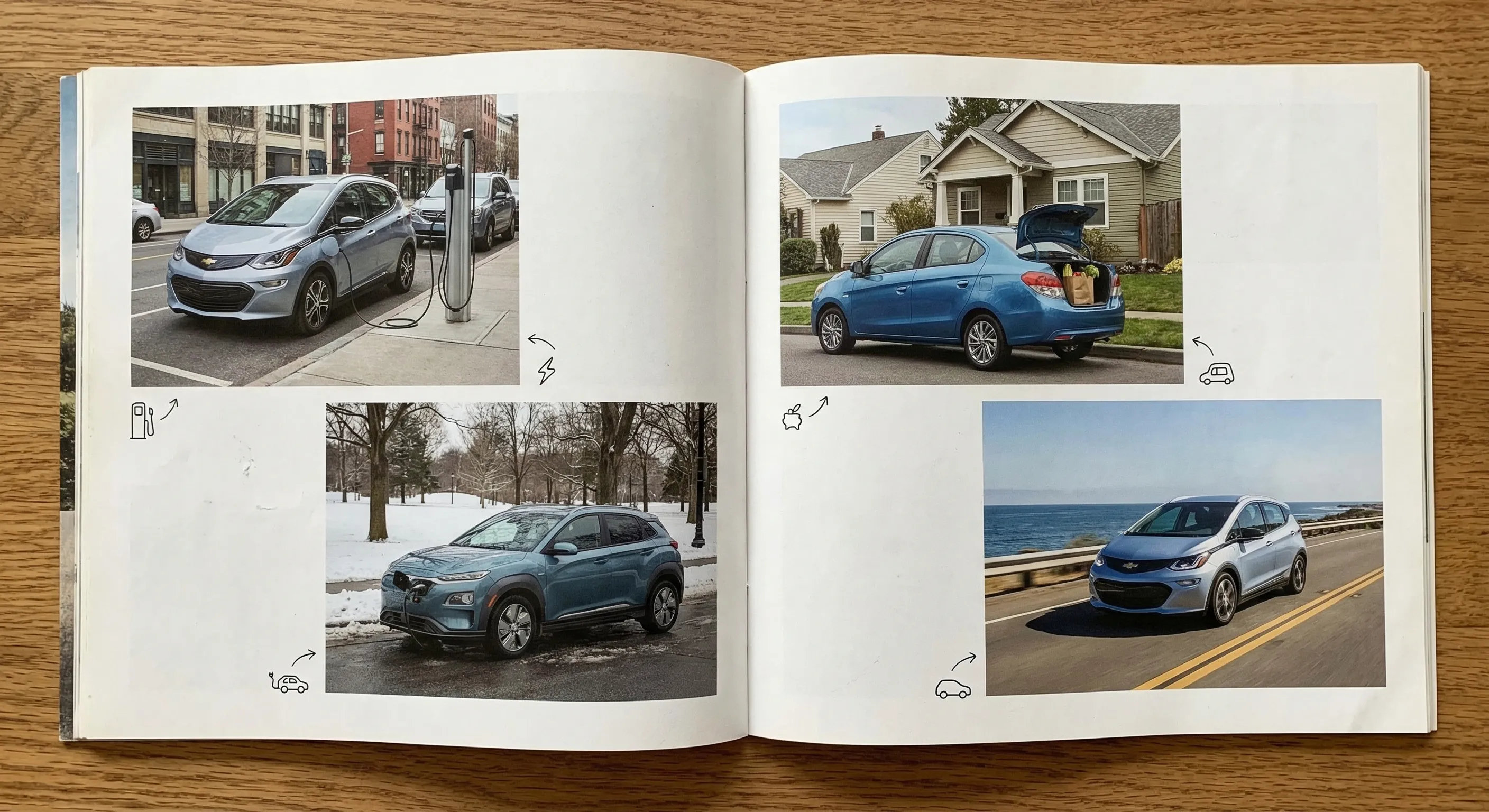
Affordable EV Options in Canada: What Actually Stands Out Right Now
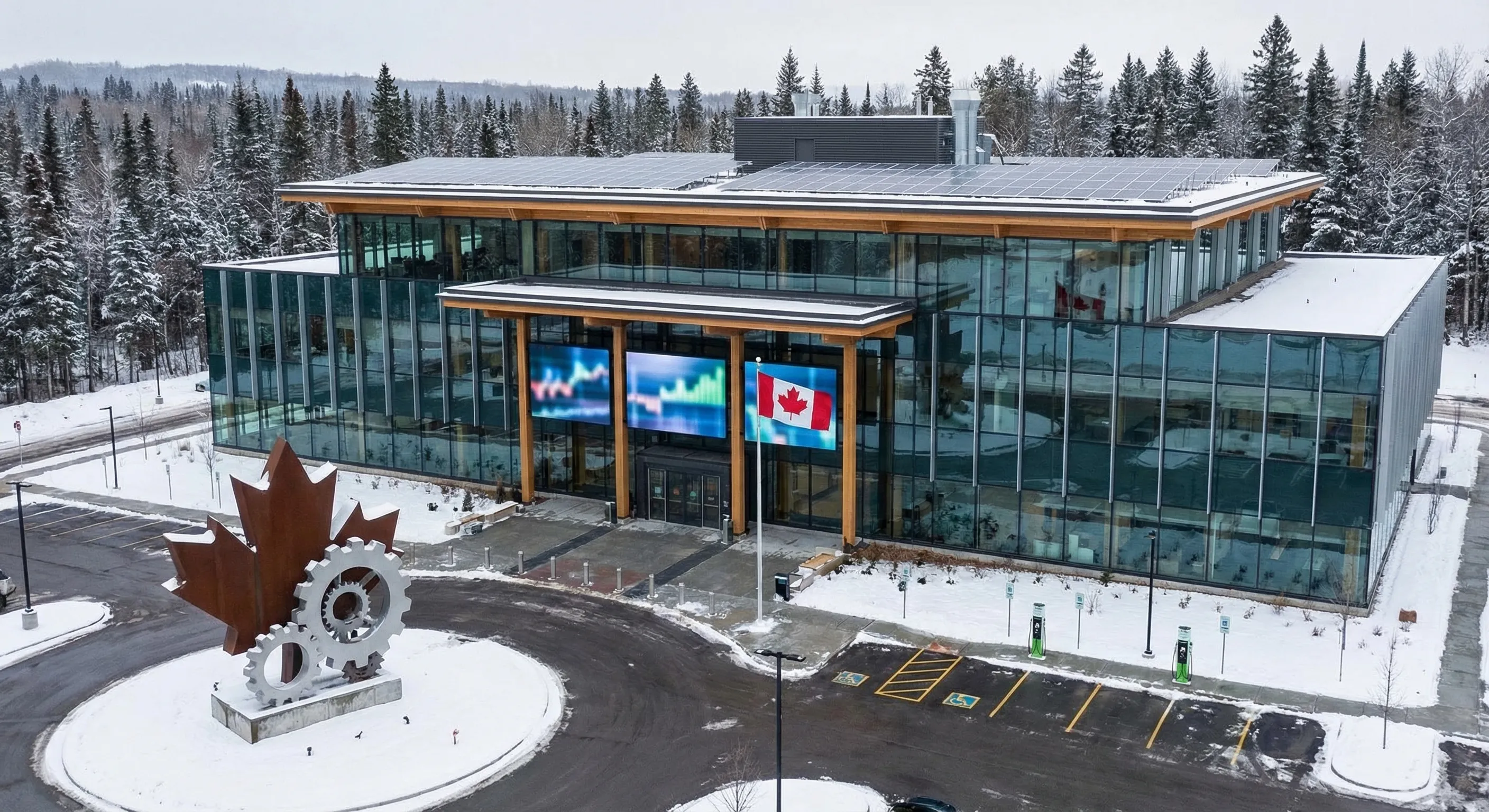
Alberta EV Rebates 2026: What the Province Actually Offers (and What It Doesn't)