Toyota's global UX platform decision, not design taste, is why the 2028 Lexus RX is getting a new screen. The free-standing display the prototype is expected to carry over from the ES and TZ is a platform-convergence move, costed at the group level, with implications for software amortisation, safety-rating compliance, and the sticker price gap between US and European buyers. The exterior camouflage is a distraction; the dashboard is the policy story.
A camouflaged RX prototype was caught near the Nürburgring, prepared for a mid-cycle refresh that will reach American dealers as a 2028 model year vehicle with no major updates to the front bumper and lights.Autoblog's read of the same prototype is sharper still, telling the 2028 RX apart from the current model won't be easy, and with no apparent changes to the headlights and no major updates to the fascia, the facelift won't grab attention. That is the point. The substantive changes are inside the cabin and inside Toyota's regulatory exposure spreadsheet, not on the grille.
A screen upgrade is the visible artefact of a group-wide software-platform decision, and the decisions that actually determine whether the 2028 RX clears its 2028–2030 commercial window are about CO2 compliance, screen-distraction rule-making, and where the vehicle is welded. None of those show up in spy photos.
Key takeaways
- Toyota's group-wide HMI standardisation, not design preference, explains why the 2028 RX gets a new free-standing screen.
- The RX is the last holdout on the old architecture; the 2028 refresh brings it to parity with the ES, NX, and TZ.
- One shared HMI stack across half a dozen nameplates cuts Toyota's per-unit software cost on a 100,000-vehicle nameplate.
- Competing X5, GLE, and Q7 all upgraded their displays since 2024, the RX screen gap showed up directly in dealer comparison feedback.
- The prototype shows no visible 48V mild-hybrid or revised PHEV system, which tightens Lexus's EU CO2 compliance exposure through 2030.
Why Lexus Is Standardizing Infotainment Across the RX, ES, NX, and TZ
The free-standing screen architecture is no longer a Lexus design experiment; it is the group default. The ES adopted it in the 2024 model year. The TZ launched with it. The next-generation Lexus UX and the broader 2028 Lexus line, covering the RX medium SUV, ES medium premium, TX large SUV, LBX compact SUV, and RZ 450e compact SUV, share the same generation of digital cockpit assumptions. The RX is the last major holdout on the prior architecture. The 2028 refresh closes the gap.
The economic logic is not subtle. A single HMI stack, common bootloader, common over-the-air update channel, common safety-relevant graphics pipeline, amortises across roughly half a dozen nameplates instead of one. Per-unit software cost on a 100,000-vehicle SUV nameplate is meaningful at the group EBIT line. Standardising means Toyota's software engineers maintain one validated HMI build against the regulators of every market the group ships into, rather than five. That is what platform convergence buys at scale.
The timing aligns with Toyota's announced 2025–2027 digital cockpit roadmap, which prioritises an Android Automotive-influenced architecture across both Toyota and Lexus brands. The RX, as Lexus's volume anchor, was always going to receive the standardised stack at the next available refresh window. That window is 2028.
There is a useful precedent. BMW consolidated iDrive across its lineup in the iDrive 8 generation before refreshing its volume SUVs. Mercedes pushed MBUX onto the entire passenger range before the GLE's most recent update. The pattern is consistent across the German luxury cohort, standardise the stack first, then refresh the body. Lexus is following the same sequence two years behind. The implication for buyers is that the 2028 RX will not be the last RX to carry this screen, it will be the first.
Readers tracking how convergent platforms reshape the broader market will find more context in the analysis of whether differences between EV manufacturers now reduce to personal taste. The same convergence dynamic that has flattened EV powertrains is now flattening luxury HMI.
The RX's Market Position Makes This Refresh Commercially Significant
The Lexus RX is Lexus. At peak years the nameplate has cleared 100,000 US units annually, making it the brand's volume anchor and the single largest contributor to North American Lexus revenue. A mid-cycle refresh on a vehicle this central is not a styling exercise. It is a capital-allocation decision designed to extend the fifth-generation lifecycle by two to three model years before a full redesign is required.
The competitive set for the RX is the BMW X5, the Mercedes GLE, and the Audi Q7. All three German rivals have either added or upgraded their primary infotainment displays since 2024. The X5 carries the iDrive 8.5 curved display introduced in 2022. The GLE inherited the MBUX Superscreen architecture from the 2023 E-Class refresh. The Q7 received MMI updates aligned with the broader Audi digital cockpit standardisation. The RX, on the outgoing architecture, has been the only mid-size luxury SUV in its segment without a free-standing or curved primary display in the 2025 cohort.
This is the gap the 2028 refresh closes. The infotainment parity question has been a recurring criticism in the press cycle covering the current RX, and it has shown up in dealer-reported customer-comparison feedback. Standardising onto the group HMI brings the RX to feature parity with the German cohort on the dimension that has been most visible in side-by-side showroom comparisons.
No interior images of the prototype have surfaced yet (the test mule was caught moving), and current expectations are that Lexus will refresh the RX either late this year or early in 2027, arriving as a 2027 or 2028 model year. The model-year designation matters for tariff and CO2 accounting purposes, which I will return to below.
The structural point: a screen change on a 100,000-unit nameplate is not cosmetic. It is a fleet-cost decision with implications for warranty exposure, software-update obligations, and the depreciation curve that retained-value indices feed back into lease residuals. Refresh decisions on the RX are commercial decisions of consequence, not editorial ones.
Gear worth having
As an Amazon Associate, ThinkEV earns a small commission from qualifying purchases — at no extra cost to you.

WeatherTech FloorLiner for Tesla Model 3
Deep-channel liners that trap every drop of slush and salt. The difference between a ruined interior and a showroom-fresh cabin after a Canadian winter.
As an Amazon Associate, ThinkEV earns from qualifying purchases — at no extra cost to you.
Powertrain Regulatory Pressure: What the Prototype Does Not Show
The prototype shows no visible evidence of a 48V mild-hybrid upgrade or a meaningfully revised PHEV system. That absence matters more than the screen.
The EU's fleet-average CO2 regulation tightens from 93.6 g/km in 2025 to 49.5 g/km by 2030. The current RX 450h+ plug-in hybrid qualifies for favourable CO2 accounting under the existing framework, but the accounting weights for PHEVs are scheduled to tighten over the same window. A facelift that does not upgrade the PHEV system locks Lexus into the current accounting treatment for the remaining lifecycle of the fifth-generation RX. The compliance gap widens by default.
Canada's regulatory exposure is different but worth naming. The Electric Vehicle Affordability Program (EVAP) excludes luxury-tier pricing, and the RX PHEV is comfortably above the cap. The vehicle would not qualify for a Canadian federal incentive regardless of whether the refresh upgrades the powertrain. The Canadian compliance question for Lexus runs through the federal Availability Standard and the provincial ZEV mandates rather than through consumer-side incentives.
The US picture is more fluid. Federal incentive policy on PHEVs has shifted with each administration, and the RX PHEV's eligibility is currently constrained by sourcing requirements that Japan-built vehicles have difficulty clearing. A refreshed RX without a powertrain upgrade does not change that position.
There is a third-jurisdiction wrinkle Japan's own fleet-fuel-economy regulation has not been the binding constraint on the RX's powertrain strategy, but the 2030 targets are stiffening. The home-market regulator is increasingly aligned with EU directions on PHEV accounting weights, which means the home-market freedom Toyota has historically enjoyed on hybrid-system iteration is narrowing.
For readers tracking how regulatory pressure is reshaping the broader luxury EV question, the post on Lexus's cancelled next-generation electric sedan covers the corollary, when the BEV roadmap retreats, the PHEV lineup has to carry more compliance weight, and the powertrain decisions on a refresh like this one start mattering more.
Multi-Jurisdiction Screen-Size and Safety Regulations the New HMI Must Clear
A free-standing screen is not a free architectural choice. It clears regulators on three continents only after passing distraction-protocol testing, and the protocols have moved.
Gear worth having
As an Amazon Associate, ThinkEV earns a small commission from qualifying purchases — at no extra cost to you.
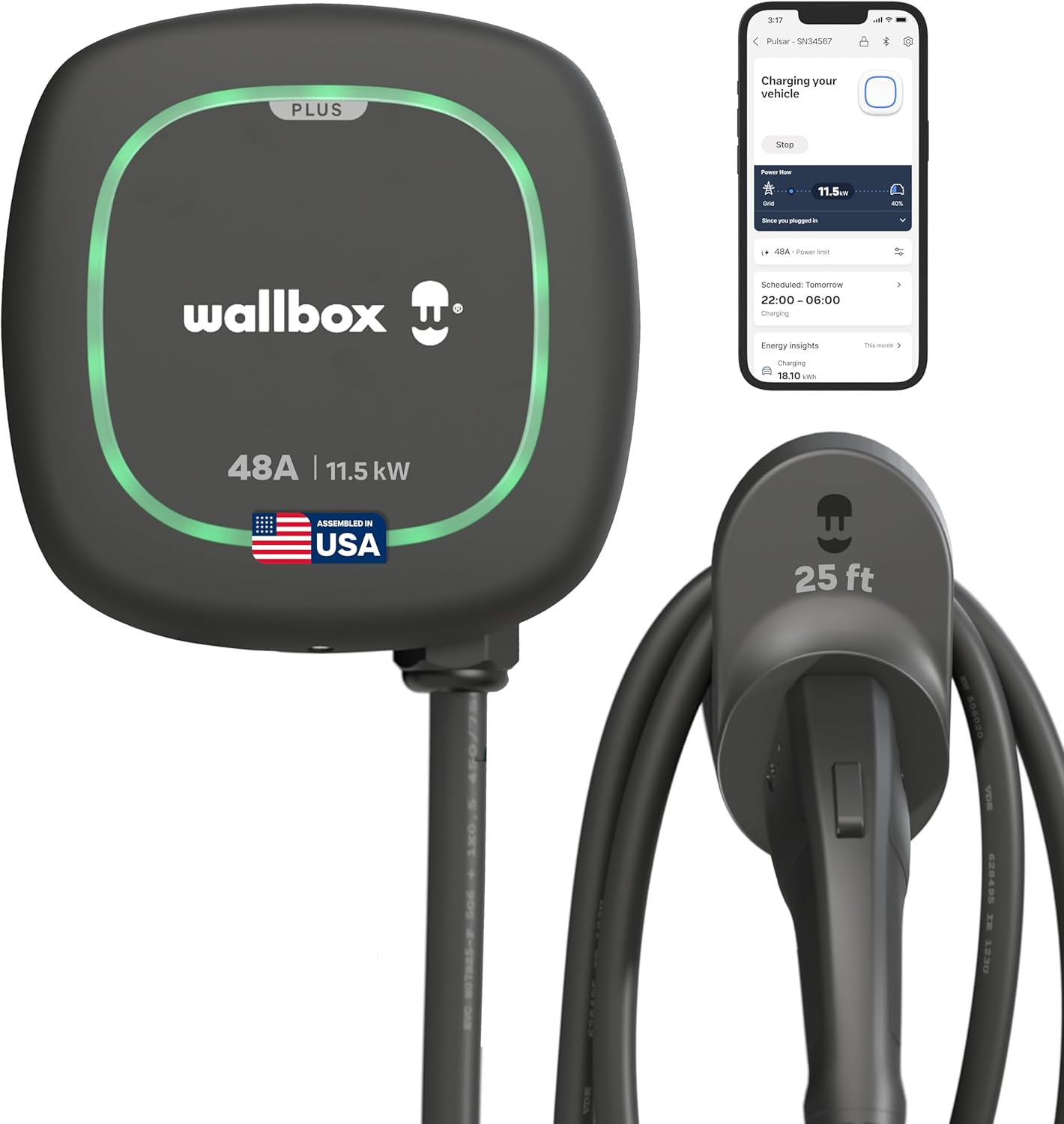
Wallbox Pulsar Plus 48A Level 2 Charger
Compact, sleek charger with app control and power sharing for two EVs. 48A / 11.5 kW, NEMA 14-50. Looks as good as your EV.
As an Amazon Associate, ThinkEV earns from qualifying purchases — at no extra cost to you.
In the US, NHTSA's voluntary driver-distraction guidelines, first issued in 2012 and updated in 2023, cap visual-demand tasks at two seconds per glance with a total of twelve seconds across a task. Free-standing displays, physically separated from the dashboard plane and often positioned higher in the driver's eyeline, face more scrutiny in compliance testing than embedded displays, because the geometry changes the time it takes a driver's eyes to return to road centre. The 2028 RX HMI build will need to clear this testing not as an OEM courtesy but as a precondition for the safety-rating evidence the group submits.
Euro NCAP's 2026 protocol adds HMI distraction as a rated safety category for the first time. This is the consequential change. Until 2026, HMI behaviour fed into the overall Adult Occupant or Assist scores indirectly. From 2026 forward, it carries its own rated score that buyers, fleet managers, and lease-residual indices will all see. A new display architecture launching into the 2026-spec testing window is being graded on a curve that did not exist when the architecture was designed.
Japan's MLIT has proposed driver-monitoring integration requirements tied to large-screen deployments, and while the proposal is not yet binding, the timing of the RX refresh puts it squarely in the window where the rule-making will land. Australia's ANCAP adopts Euro NCAP protocols with a roughly 12-month lag, which means a 2028 RX in the Australian market faces 2026-spec testing, the same elevated HMI scrutiny the European cars cleared.
The implication is that the same HMI stack must clear four distinct regulatory regimes with non-aligned timelines and non-aligned scoring rubrics. Toyota Group's decision to standardise was always partly defensive: a common stack is easier to certify against moving targets than five bespoke stacks.
Gear worth having
As an Amazon Associate, ThinkEV earns a small commission from qualifying purchases — at no extra cost to you.

HOMEXCEL Microfiber Cloths (12-Pack)
Twelve lint-free cloths for the touchscreen, glossy trim, and glass. The streak-free way to clean an EV cabin.
As an Amazon Associate, ThinkEV earns from qualifying purchases — at no extra cost to you.
Tariff Exposure: Where the 2028 RX Is Built and What That Costs
The RX is built at Toyota's Kyushu plant in Japan. That fact has become the largest unresolved variable in the 2028 pricing model.
The US administration's 25% auto tariff, announced in April 2025 and applied to Japanese-origin vehicles, lands directly on the RX cost basis. On a US base price in the neighbourhood of USD 55,000, a 25% tariff line item works out to USD 13,750 in landed-cost exposure before any pricing-strategy decisions. Whether Lexus absorbs that, passes it through, or splits it between MSRP and dealer margin is the open commercial question for 2028, and the answer determines whether the screen upgrade arrives in a market where the RX is still competitively priced against the X5 and GLE.
Canada's tariff position is different. The Canadian MFN auto tariff sits at 6.1% post-January 2026 quota adjustment and applies to Japanese-origin vehicles under the standard MFN schedule rather than under any preferential agreement. The Canadian-market RX absorbs a meaningful but materially smaller tariff line than the US-market equivalent. The cross-border arbitrage that briefly favoured Canadian Lexus pricing in 2025 narrows but does not close.
The EU-Japan Economic Partnership Agreement keeps the tariff on passenger vehicles at 0%. European RX pricing is structurally insulated from the trade environment that is reshaping the North American market. The same vehicle, with the same screen, with the same Kyushu VIN, arrives in three markets with three different cost bases, and the gap between the US and EU figures could reach the USD 13,750 cited above, depending on currency moves and final pricing.
This is the part of the 2028 RX story that has the most direct bearing on whether the refresh succeeds commercially. A platform-standardised screen and a closed feature-parity gap matter only if the vehicle is priced into the segment. Tariff exposure is the variable that determines whether it is. The Canadian buyer should expect the relative-value position of the RX against German competitors to compress in 2028, not collapse, but compress.
Technology Cycle Benchmarking: How Competitors Got Here First
The free-standing screen is not new. The question worth asking is how late Lexus arrived to it.
BMW debuted the iDrive 8.5 curved display in the 2022 X1 and rolled it across the lineup through 2023 and 2024. Mercedes introduced the MBUX Superscreen in the 2023 E-Class and propagated it through subsequent refreshes. Hyundai and Kia adopted a 12.3-inch plus 12.3-inch dual-screen standard across the Ioniq and EV6 ranges by 2022. By the time the 2024 Lexus ES received the free-standing screen, the broader luxury and near-luxury market had been on the same architecture for two full model years.
The RX, as Lexus's flagship SUV, sits four years behind on this specific HMI generation. That is a real lag on the metric, primary display architecture, that buyers most consistently raise in side-by-side showroom comparisons. The 2028 refresh closes it. It does not establish a lead.
There is a less-discussed driver of the broader screen-size arms race: Android Automotive OS licensing economics. The OS supports larger and more flexible display configurations at no additional per-unit licensing cost, and OEMs that have committed to AAOS have pushed display dimensions partly because the marginal cost is glass and assembly, not software. The competitive race to bigger screens is partly genuine UX iteration and partly an artefact of the licensing structure underneath. Lexus's standardised stack lands in this economic environment, not the pre-2022 environment in which screen size was bounded by software cost.
For the broader question of how convergent platforms reshape what brand differentiation actually means in 2026, the comparison of Mercedes-AMG's GT 4-Door against the Porsche Taycan covers the parallel argument for performance EVs, the architecture is no longer the differentiator, the integration is.
Gear worth having
As an Amazon Associate, ThinkEV earns a small commission from qualifying purchases — at no extra cost to you.

Windex Electronics Screen Wipes
Pre-moistened wipes that cut fingerprints off the center screen in seconds. Keep a pack in the door pocket.
As an Amazon Associate, ThinkEV earns from qualifying purchases — at no extra cost to you.
A Screen Upgrade Wrapped in Platform Logic, Not Design Ambition
The 2028 Lexus RX refresh resolves a feature-parity gap that has been visible to buyers and to the press for three model years. It does not resolve the powertrain compliance trajectory, and it does not resolve the tariff exposure on Japan-origin production.
Regulatory pressure in the EU and Japan, not consumer-demand signals, is the stronger driver of the refresh timeline. The Euro NCAP 2026 protocol's new HMI scoring category, the EU fleet CO2 tightening from 93.6 g/km to 49.5 g/km across the lifecycle, and the moving target on Japan's home-market accounting weights all converge on the same window. The screen upgrade is timed to clear those rules with a standardised stack the group can certify once.
A refreshed RX with a new HMI clears the 2028 market window. Without a PHEV upgrade, it faces a tighter compliance environment by 2030, and without a manufacturing-footprint change, it faces sustained tariff exposure in its largest market. The screen is the visible change. The unresolved variables are the consequential ones. Watch the powertrain disclosures at the official reveal, that, not the dashboard photography, will tell you what Lexus actually decided about the next four years of the RX.
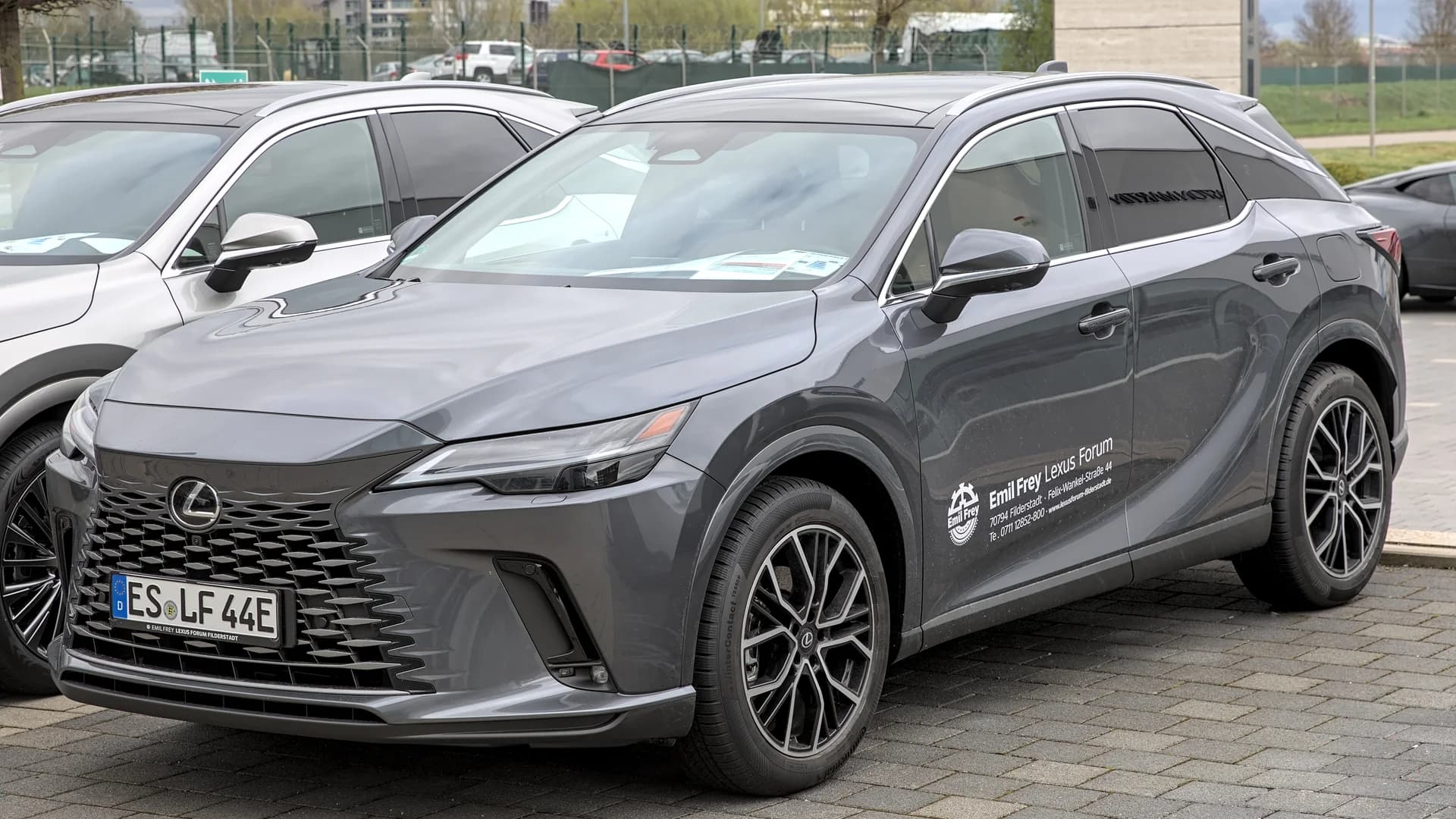
Hero photo: Lexus RX 450h+ © Alexander-93, CC BY-SA 4.0, via Wikimedia Commons, resized and converted to WebP.
Gear worth having
As an Amazon Associate, ThinkEV earns a small commission from qualifying purchases — at no extra cost to you.

PULIDIKI Car Cleaning Gel (Detailing Putty)
Press it into vents, buttons, and seams and it lifts out dust you did not know was there. Weirdly satisfying, genuinely useful.
As an Amazon Associate, ThinkEV earns from qualifying purchases — at no extra cost to you.

Founder & Chief Editor
Vlad Pereira is the founder and chief editor of ThinkEV.ca, the Canadian electric-vehicle publication he writes and edits from Courtenay, British Columbia. He covers EV pricing, federal and provincial rebates, charging costs, and the Chinese manufacturers now entering Canada, from the buyer's side rather than the press-fleet side. ThinkEV is a venture of Vlad Pereira Online; his writing on health, income and the long game lives at vladpereira.com.
Frequently asked questions
Will the 2028 RX PHEV qualify for Canadian federal EV incentives?
How different will the 2028 RX actually look from today's model?
Is the new screen design a Lexus decision or a Toyota group mandate?
Does the prototype show any powertrain upgrades alongside the screen change?
When will 2028 RX models actually reach Canadian dealerships?
More EV & road-trip finds
Affordable upgrades worth a look — tap any to check the price on Amazon.
 ★ 268
★ 268Anti-Slip Leather Steering Wheel Cover
View on Amazon ★ 4,050
Touchscreen Mist Screen Cleaner Kit
View on Amazon ★ 537
★ 537USB Star Projector Roof Light
View on Amazon ★ 401
★ 401Crochet Daisy Rear-View Mirror Charm
View on Amazon ★ 865
★ 865Collapsible Trunk Organizer
View on Amazon ★ 848
★ 848Coiled USB-C to USB-C Car Cable (2-Pack)
View on Amazon ★ 61
★ 61Toddler Car Seat Snack and Cup Tray
View on Amazon ★ 392
★ 392Large Cup Holder Adapter (32-40oz)
View on AmazonRead, Plan, Then Stay Current
Explore our expert articles to understand incentives and ownership costs, use the map to pressure-test charging reality, then subscribe so new EV coverage comes straight to you.
Continue Reading
Tesla Q3 2026 Earnings: Flat Revenue, Falling Profits
BYD Denza B8 Suspension Trick Defeats Traffic Boot in Viral Clip

Zenos E10 Returns at £115,000, A Different Car Entirely
Jaecoo J5 EV Uber Discount: $31,500 Fleet Math Changes
VW ID.4 80% Charge Cap Rolls Out This Week, With Opt-Out