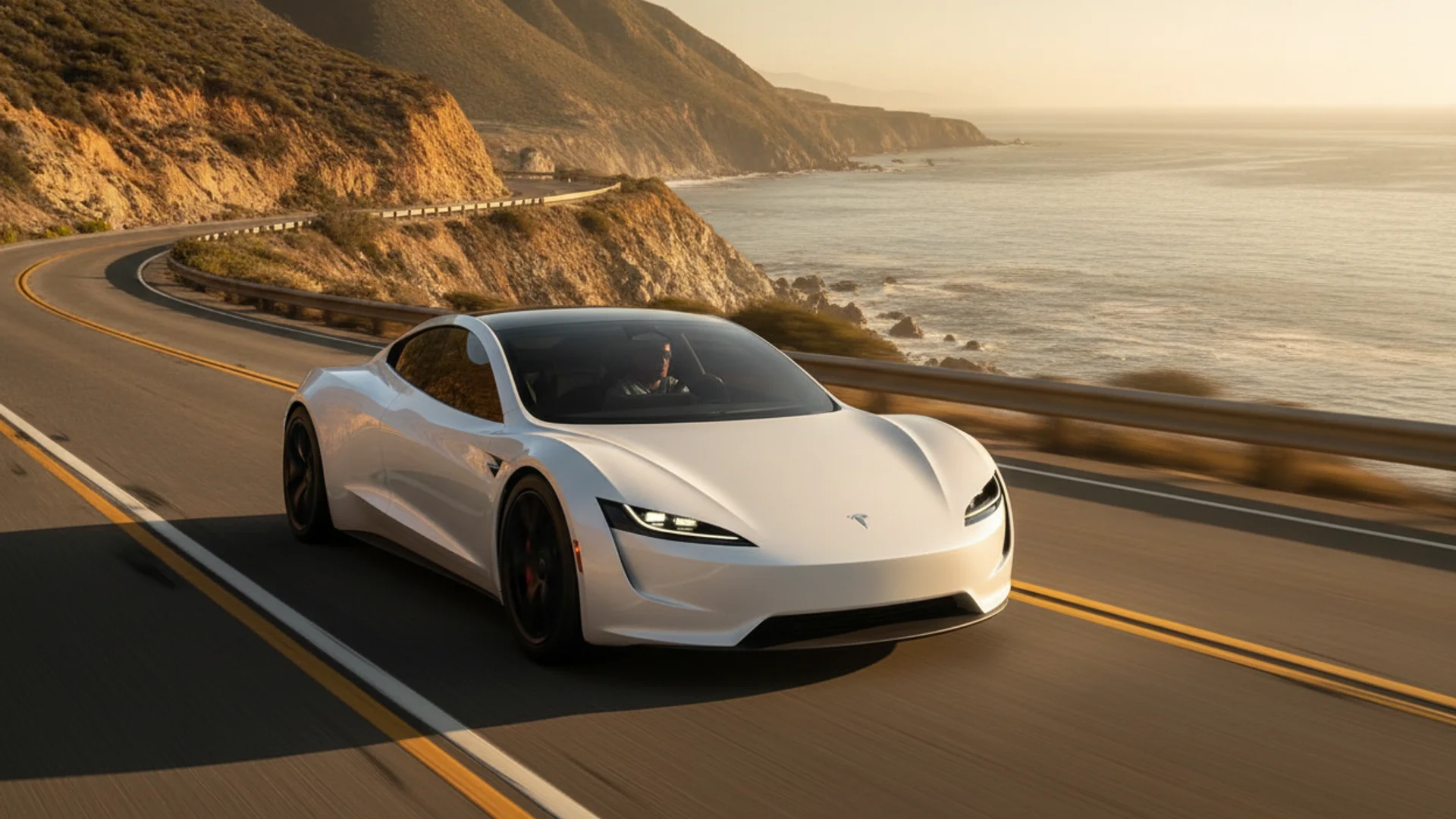
1,200 km. 1,000 trucks. 2032. Those are the three numbers Colombia just put on the table with Ruta-E, a heavy-duty electric freight corridor that will run from Bogotá through Barranquilla to Cartagena across more than 1,200 kilometres of the country's most important commercial route. It is the first time a Latin American government has named a corridor at this scale for freight electrification.
Key takeaways
- Colombia's Ruta-E corridor spans 1,200 km from Bogotá through Barranquilla to Cartagena, linking the capital to its main Atlantic port, the first freight-electrification corridor of this scale announced by a Latin American government.
- Ruta-E is designed to support more than 1,000 commercial electric vehicles on Colombian roads by 2032.
- Logistics operator TCC already runs 20 electric FKR 3.4 trucks across Bogotá, Medellín, Barranquilla, and Cartagena as the proof of concept.
- The real constraint is the grid, not the trucks: Colombia has one charger for every 337 EVs, with infrastructure running about eight months behind schedule.
What Ruta-E Actually Commits To
The headline number is the fleet target, not the kilometres. The Ruta-E corridor is being built with charging infrastructure sized to support more than 1,000 commercial EVs on Colombia's roads by 2032. That is a specific fleet figure tied to a specific build-out, the kind of paired commitment that either holds or visibly doesn't. There is no hedge in the math.
Geography makes the route obvious. Bogotá is the country's largest city and its main financial and cultural hub, with Cartagena and Barranquilla among the other principal urban areas. Bogotá–Cartagena is the dominant port-to-capital freight artery. Electrifying it is the logical first move, not an experimental one.
Operationally, the model is already in the field. The logistics sector has been one of the most active in Colombia's fleet electrification, and TCC operates 20 electric trucks, the FKR 3.4 EV, on urban routes in Bogotá, Medellín, Barranquilla, and Cartagena. Ruta-E extends that intracity logic onto the intercity spine. The 20 trucks were the proof of concept. The corridor is the scale step at roughly 60-times the rolling fleet.
Then there is the context problem. Latam Mobility frames Ruta-E as consolidating one of the country's most important commercial routes under a vision of clean, modern, intermodal mobility, the framing is ambitious; Colombia's current charging deployment is not. One charger for every 337 EVs already on the road, with infrastructure delays running roughly eight months behind schedule, is the constraint that decides whether Ruta-E ships or slips. Grid interconnection timelines at substations along the route, not vehicle availability, are the binding variable.
Gear worth having
As an Amazon Associate, ThinkEV earns a small commission from qualifying purchases — at no extra cost to you.

Lectron Level 2 J1772 Charger (40A, WiFi)
Smart WiFi charger with real-time energy monitoring. 40A / 9.6 kW, J1772 with a NEMA 14-50 plug, schedule charging right from your phone.
As an Amazon Associate, ThinkEV earns from qualifying purchases — at no extra cost to you.
Gear worth having
As an Amazon Associate, ThinkEV earns a small commission from qualifying purchases — at no extra cost to you.

TP-Link Kasa Smart Plug with Energy Monitoring
Track exactly how much electricity your Level 1 charger uses and schedule it for off-peak hours. Know your real cost per kWh.
As an Amazon Associate, ThinkEV earns from qualifying purchases — at no extra cost to you.
Why the Route Matters Beyond Colombia
Freight runs fixed routes. Fixed routes are exactly where charging economics pencil out first, before passenger networks reach density, and a 1,200 km port-to-capital spine with predictable daily duty cycles is as close to a textbook electrification case as Latin America has produced. The commercial-EV economics of small-format electric cargo vans prove the duty-cycle logic at the urban end; Ruta-E tests whether the same math holds at heavy-duty intercity scale.
Passenger EV momentum is arriving in parallel, which matters for shared infrastructure economics. Tesla opened its first Supercharger stations in Colombia in May 2026, with a Bogotá and Medellín rollout to expand the country's EV network, and the public DC fast-charging rollout that reshapes Latin American corridor economics is the kind of build that lets freight and passenger networks share substation capacity. Freight and passenger build-outs reinforcing each other on the same corridor is the pattern that worked in Europe. It is the pattern Colombia is now testing.
The freight case is structural. The Bogotá–Cartagena route carries port access, perishables, and cold-chain pharma, the kind of cargo that runs on predictable schedules and rewards stable energy costs. A diesel-to-electric switch on this artery is not a marginal climate gesture. It is a freight-economics bet that depends on grid execution, not vehicle availability.
For benchmarks, the EU's TEN-T core network requires recharging pools every 60 km for heavy-duty trucks by 2030, that is the corridor density Ruta-E will eventually be measured against. NACFE's Run on Less – Electric DEPOT logged real fleets covering 200-plus kilometre daily routes on existing chargers. Ruta-E's 1,200 km with a 1,000-truck target lands Colombia in that conversation, which is more than any other Latin American freight market can currently claim.
Gear worth having
As an Amazon Associate, ThinkEV earns a small commission from qualifying purchases — at no extra cost to you.

Grizzl-E Classic Level 2 EV Charger (40A)
Canadian-made and rated for minus 40C winters. 40A / 9.6 kW, NEMA 14-50, indoor/outdoor, 24-ft cable. The charger built for Canadian weather.
As an Amazon Associate, ThinkEV earns from qualifying purchases — at no extra cost to you.
Gear worth having
As an Amazon Associate, ThinkEV earns a small commission from qualifying purchases — at no extra cost to you.

ChargePoint Home Flex Level 2 Charger (50A)
Premium 50A / 12 kW charger with the best app ecosystem. Hardwired or NEMA 14-50, with real-time energy tracking and smart scheduling.
As an Amazon Associate, ThinkEV earns from qualifying purchases — at no extra cost to you.
The Trucks Will Follow The Chargers, In That Order
The corridor is credible infrastructure logic. Freight runs fixed routes, and fixed routes are where charging grids pencil out first, before passenger density, before consumer adoption curves. TCC's 20-truck urban fleet is the existence proof; Ruta-E is the scale step.
The 1,000-truck target by 2032 is achievable if the charging build doesn't slip. The number to watch is not the announcement, it is the count of operational charging points along the corridor at the end of 2027. If that number lags, the 2032 fleet target becomes a press release. If it tracks, Colombia will have the first serious Latin American freight-electrification corridor on the board. The trucks will follow the chargers, in that order, the way they did on China's G60 corridor.
Gear worth having
As an Amazon Associate, ThinkEV earns a small commission from qualifying purchases — at no extra cost to you.

Magnetic EV Charger Plug Cover
A magnetic cap that keeps rain, road salt, and grit out of your home charger handle between sessions.
As an Amazon Associate, ThinkEV earns from qualifying purchases — at no extra cost to you.

Founder & Chief Editor
Vlad Pereira is the founder and chief editor of ThinkEV.ca, the Canadian electric-vehicle publication he writes and edits from Courtenay, British Columbia. He covers EV pricing, federal and provincial rebates, charging costs, and the Chinese manufacturers now entering Canada, from the buyer's side rather than the press-fleet side. ThinkEV is a venture of Vlad Pereira Online; his writing on health, income and the long game lives at vladpereira.com.
Frequently asked questions
What is already running on the route as proof of concept?
Why is the grid, not the trucks, the real constraint?
What number should you watch to know if the 2032 target is on track?
Does this affect Canadian EV buyers or freight operators?
More EV & road-trip finds
Affordable upgrades worth a look — tap any to check the price on Amazon.
 ★ 4,055
6-Speed Manual Shift Knob Display
View on Amazon ★ 12,396
K KNODEL Car Trash Can with Lid
View on Amazon ★ 12,834
P3 Kill A Watt Electricity Usage Monitor
View on Amazon ★ 61
★ 61Toddler Car Seat Snack and Cup Tray
View on Amazon ★ 17,839
Qifutan Vent Phone Mount (Military-Grade Clip)
View on Amazon ★ 47,507
HOMEXCEL Microfiber Cloths (12-Pack)
View on Amazon ★ 314
★ 314Mini USB LED Ambient Lamps (4-Pack)
View on Amazon ★ 4,626
HoogaLife Hanging Car Diffuser (2-Pack)
View on AmazonRead, Plan, Then Stay Current
Explore our expert articles to understand incentives and ownership costs, use the map to pressure-test charging reality, then subscribe so new EV coverage comes straight to you.
Continue Reading
Swaptopus: CATL and Octopus Bet on Truck Battery Swaps
How Charging Networks Decide Stall Count Per Site

Cops Used 'LMAO' To Search 19,000 License Plate Cameras
Denza Z9GT Spotted in Melbourne: 1000km Range, 9-Min Charge
MG Motors Philippines Launches S5 EV at ₱1.4M